



On this pageWhat a smoke chamber is, and why you have never seen yours8 sections+7
- What a smoke chamber is, and why you have never seen yours
- Why a rough smoke chamber causes problems you can see in your living room
- Does the code actually require smoke chamber parging?
- How to tell whether you actually need it
- Five questions to ask before you sign anything
- What the work looks like when it is done right
- How VIO helps when smoke chamber parging is on the table
- The bottom line on smoke chamber parging
Quick answer
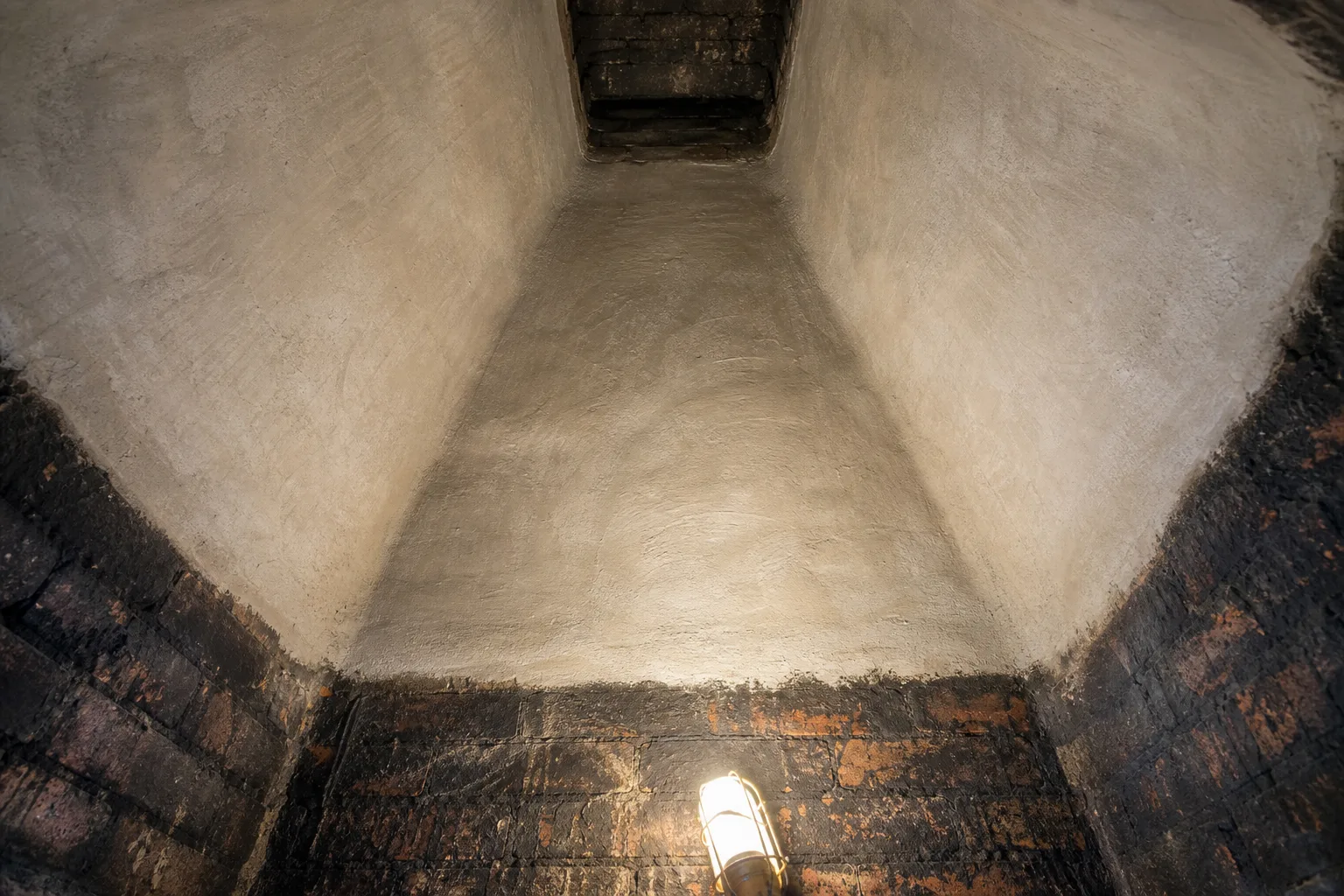
Smoke chamber parging is the process of coating the inside of a fireplace's smoke chamber with refractory mortar so the surface is smooth instead of stair-stepped. The smoke chamber sits above the damper and funnels smoke into the flue. NFPA 211 calls for these inner surfaces to be parge coated smooth with insulating refractory mortar, and the International Residential Code requires corbeled surfaces to be parged smooth using mortar meeting ASTM C 199.
The sweep knelt down at your firebox, pointed a light straight up, held a phone or a tablet at an angle you could not see, and came back out with a sentence. Somewhere in that sentence were the words smoke chamber parging, and somewhere after it was a number.
You nodded. You walked them to the door. Then you sat down and typed the words into a search bar, because you have absolutely no way to judge what you were just told.
That is a reasonable place to be. It is also a solvable one. There is a way to know whether the recommendation you just received is real, and it comes down to one line of code language and five questions you can ask out loud. Both are in this article.
What follows is not a sales page. It is the explanation, the standard, and the checklist.
What a smoke chamber is, and why you have never seen yours
Start at the hearth and go up.
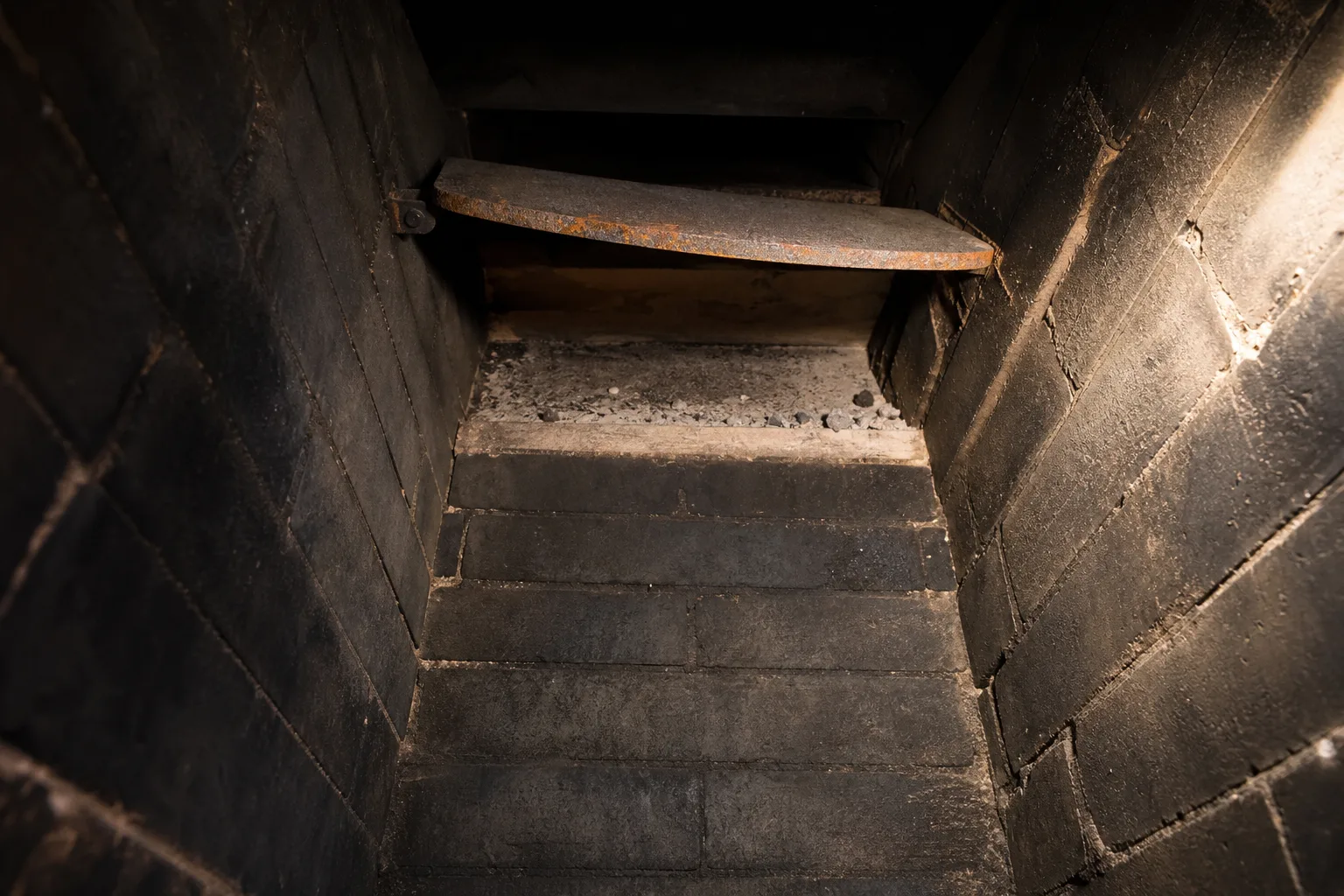
First there is the firebox, the part you actually look at, lined with firebrick and stained black from use. Above the firebox the opening narrows into the throat. Sitting in the throat is the damper, usually a cast iron or steel plate on a hinge, operated by a handle or a knob, and usually rusty.
Behind the damper is a flat horizontal ledge called the smoke shelf. It catches debris and it does a job in the draft that most people never think about.
And above all of that sits the smoke chamber.
Good to know: People mix up the smoke shelf and the smoke chamber constantly. The shelf is the flat ledge. The chamber is the tapering space above it. When a chimney company quotes parging, they are talking about the chamber, not the shelf.
The parts, from the hearth up
The smoke chamber is shaped like a funnel turned upside down. Wide at the bottom, where it sits over the firebox, narrowing as it rises to meet the flue.
That shape is the whole point of it. A firebox is a big open volume. A flue is a relatively small vertical shaft. Everything burning in the first has to be gathered up and squeezed into the second, and the smoke chamber is the piece of masonry that does the gathering. It helps to picture how a chimney works as one connected column of moving air, because this part is the hinge in the middle of it.
Here is the part that explains why this whole topic feels so uncomfortable. You cannot see it.
Stand at your fireplace, crouch, look up. You will see the underside of the damper and not much else. The chamber is above your line of sight from every position a person can reasonably get into without lying on the hearth with a mirror. The only people who have ever laid eyes on your smoke chamber are the ones who came to inspect it.
So when someone recommends smoke chamber parging, you are being asked to buy a repair to a part you have never seen, on the word of the only person who has seen it. That is not a character flaw in you or in them. It is a structural feature of this particular transaction, and the rest of this article is about closing that gap.
Why a rough smoke chamber causes problems you can see in your living room
To understand parging you have to understand how these chambers were built.
What corbelling is
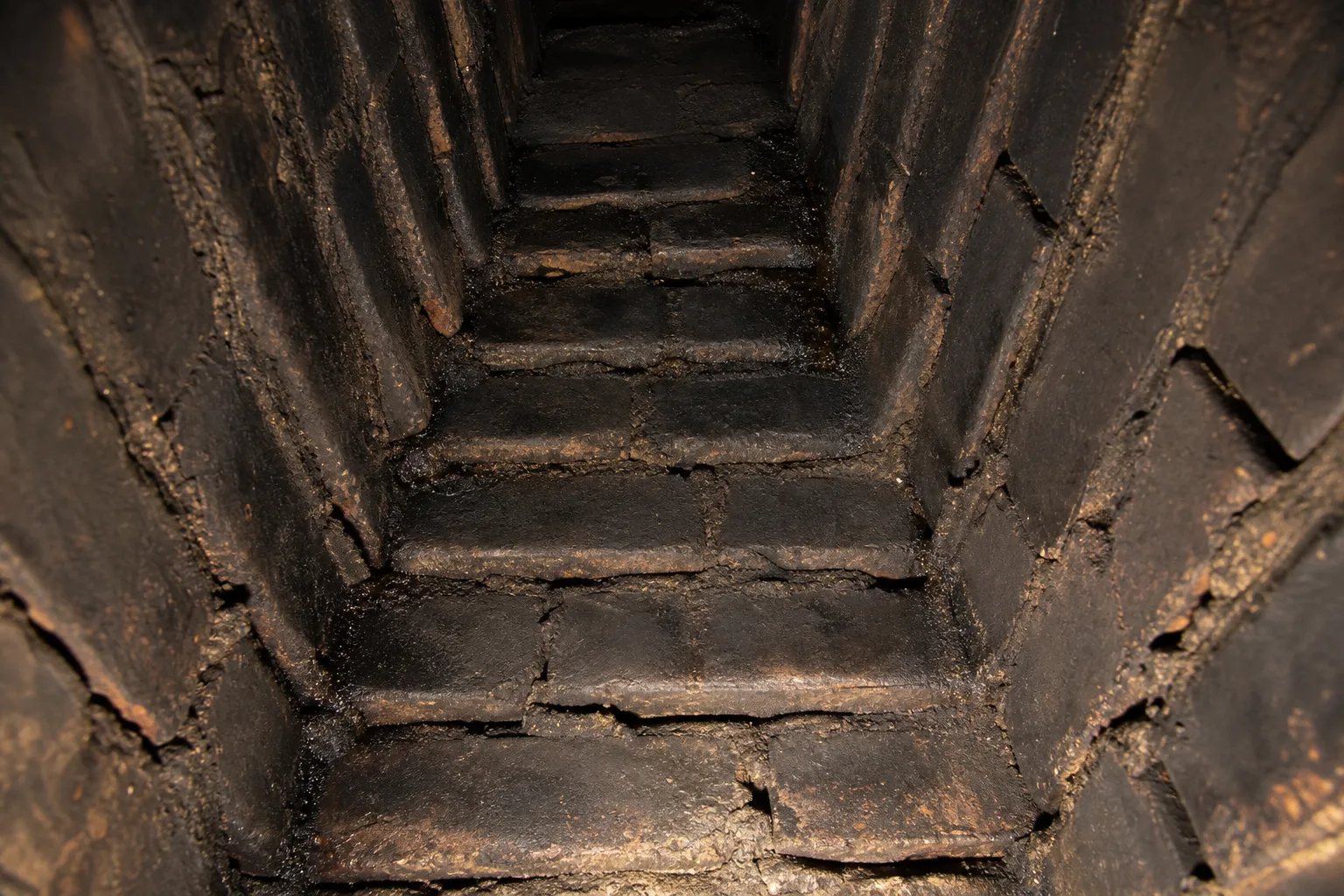
The traditional way to build a tapering masonry chamber is corbelling. Each course of brick is set slightly inward from the course below it, so the wall steps its way in as it rises.
It works. It is also, from the inside, a staircase.
Picture the inner face of a corbelled chamber: dozens of small ledges, each one a right angle, each one with a mortar joint along it. Now picture hot combustion gas moving up through that.
Gas moving over a stair-stepped surface tumbles. It hits each step, rolls, and loses some of the smooth upward momentum that makes a chimney pull. Parging a corbelled surface smooth reduces that turbulence and improves how the system drafts. That is the primary argument for the work, and it is a real one.
The secondary argument is deposits. Soot and creosote need somewhere to land, and the corners of a stepped chamber are exactly the kind of somewhere they like. Open or eroded mortar joints give them even more surface to grip. A smooth chamber does not eliminate deposits, but it gives them far less to hold onto.
From the field: A chamber that has never been parged tends to announce itself at the corners first. The flat faces of the brick can look tolerable while the shadowed inside angles of each step are packed with buildup. When a company shows you a photo, look at the corners, not the middle.
The symptoms a homeowner actually notices
Nobody experiences a rough smoke chamber. You experience what it does.
Smoke that rolls out of the opening in the first few minutes after lighting, before the flue warms up and takes over. A fire that never really draws until it has been going twenty minutes or more.
A smell in the house on humid days in July, when the chimney is stone cold and air is sliding down instead of up, carrying the odor of everything caked on the inside of the system with it.
Any of those can come from other causes. A blocked chimney cap, an undersized flue, a house that is too tight, a liner problem. None of them proves the chamber is the culprit. But a rough, deteriorated smoke chamber is on the suspect list for all of them, and if somebody has just recommended smoke chamber parging after looking at a fireplace that behaves this way, the recommendation at least fits the evidence.
The question is whether a standard actually backs it up.
Does the code actually require smoke chamber parging?
Yes. This is the part almost nobody puts in writing, so here it is in plain language.
What NFPA 211 says
NFPA 211 is the standard for chimneys, fireplaces, vents and solid fuel burning appliances. Its language on this is short and unambiguous: the inner surfaces of the smoke chamber are to be parge coated smooth, with an insulating refractory mortar.
That is the whole basis for smoke chamber parging as a category of work. It is not a technique somebody invented to fill a slow week. It is written into the standard that governs the assembly.
One honest note on citations. The section number you will see quoted in the trade is 11.2.1.13, and that number traces to the 2006 edition. Editions get renumbered. If a company cites a section to you, the substance is what matters, not the digits.
What the IRC says, in plain numbers
The International Residential Code covers the same part with specifics you can hold onto. Section R1001.8 of the IRC sets out smoke chamber construction, and the numbers are these.
The front, back and side walls need a total minimum thickness of 8 inches of solid masonry.
Where the inside of the chamber is formed by corbelled masonry, the walls are not to be corbelled more than 30 degrees from vertical.
Where prefabricated smoke chamber linings are used, or where the walls are rolled or sloped instead of stepped, the inside surface is not to be inclined more than 45 degrees from vertical.
And the line that matters most here: where the inside surface is formed by corbelled masonry, that inside surface is to be parged smooth, with refractory mortar conforming to ASTM C 199.
That is a material specification, not a brand. ASTM C 199 is the standard the mortar has to meet. Products marketed for this work are rated for high heat, and you will see temperature figures on the bags, but the code's requirement is the standard, not the number on the packaging.
What this does not mean about your house
Read those paragraphs again and notice what they describe: how a smoke chamber is to be built and repaired. They are construction language.
Plenty of American fireplaces were built before this detail was enforced the way it is now, by masons who corbelled a chamber, closed up the wall, and moved on. Local jurisdictions adopt their own edition of the IRC on their own timeline, and an existing assembly is generally not made illegal by a newer edition.
Myth vs. fact: Myth: an unparged smoke chamber means your house failed inspection. Fact: the code language governs how a chamber is built and repaired, and many older chambers predate its enforcement. What you have is a condition to evaluate, not a citation to answer.
So a sweep telling you your chamber is unparged is not telling you that you are in violation. They are telling you about the condition of a part. Whether that condition needs money spent on it is the next question, and it is a better question.
How to tell whether you actually need it
Smoke chamber parging is not automatically the right call just because a chamber could be parged. Some chambers are past the point where smoothing the surface fixes anything. Almost no page on this subject makes that distinction. Here it is.
There are four states a chamber can be in, and the correct answer is different for each.
| What you might be told | What that looks like up there | Is parging the right answer | What to ask |
|---|---|---|---|
| Sound, smooth, previously parged | A continuous tapering surface, gray or buff colored, no visible steps or open joints | No. Cleaning and monitoring | "Can you show me the surface you are calling sound?" |
| Rough corbelling, joints intact | Stepped brick courses, shadowed corners, mortar still in place | Yes, this is the textbook case | "Is the masonry behind it solid, or does it need work first?" |
| Deteriorated joints, missing mortar | Steps plus gaps where mortar has fallen out, voids at the corners | Usually yes, but the joints get repaired before anything is smoothed over | "Are you repointing before you parge, or just coating over it?" |
| Structurally compromised chamber | Displaced brick, large voids, heat damage, a chamber that was built wrong | No. This is a rebuild conversation | "Is a smooth coating actually fixing this, or hiding it?" |
That last row is the one to pay attention to.
Parging, rebuilding, and doing nothing
Parging is a surface treatment. It smooths and it seals joints. What it does not do is make a badly built or badly deteriorated chamber into a good one.
If a chamber was corbelled far past what the code allows, or if brick has shifted, or if there are real voids running back into the masonry, a smooth coat on the inside face is cosmetic. It will look fantastic in the after photo and it will not have addressed the actual condition. That is a fireplace restoration conversation, not a coating conversation.
Safety note: A chamber with open joints is not only a draft problem. Gaps in that masonry are a heat path toward the framing that surrounds the chimney. That is the reason the evaluation deserves more of your attention than the price does.
When smoke chamber parging is the wrong repair
The company that tells you parging will not solve your problem is the company worth hiring.
That sounds like a slogan. It is actually a practical filter. Anyone can recommend the profitable version of a repair. The judgment you are paying for is the ability to say "smoothing this would be a waste of your money, here is what is really going on."
If two companies look at the same chamber and one recommends a straightforward parge while the other recommends repointing first, or a rebuild, or wants to look at the flue liner before committing, you have learned something. Not that one of them is lying. That the condition is ambiguous enough to deserve a second look.
Which brings us to the five questions.
Holding a quote for smoke chamber parging and not sure it is real? A second qualified look starts with a phone call. VIO connects you with independent chimney companies near you. Insist on an estimate in writing before any work starts, from us or from anyone.
Call (513) 655-6702
Five questions to ask before you sign anything
None of these require you to know anything technical. They just require you to ask. Whoever quoted you smoke chamber parging should be able to answer all five without a pause.
1. Can I see the photo of what you found?
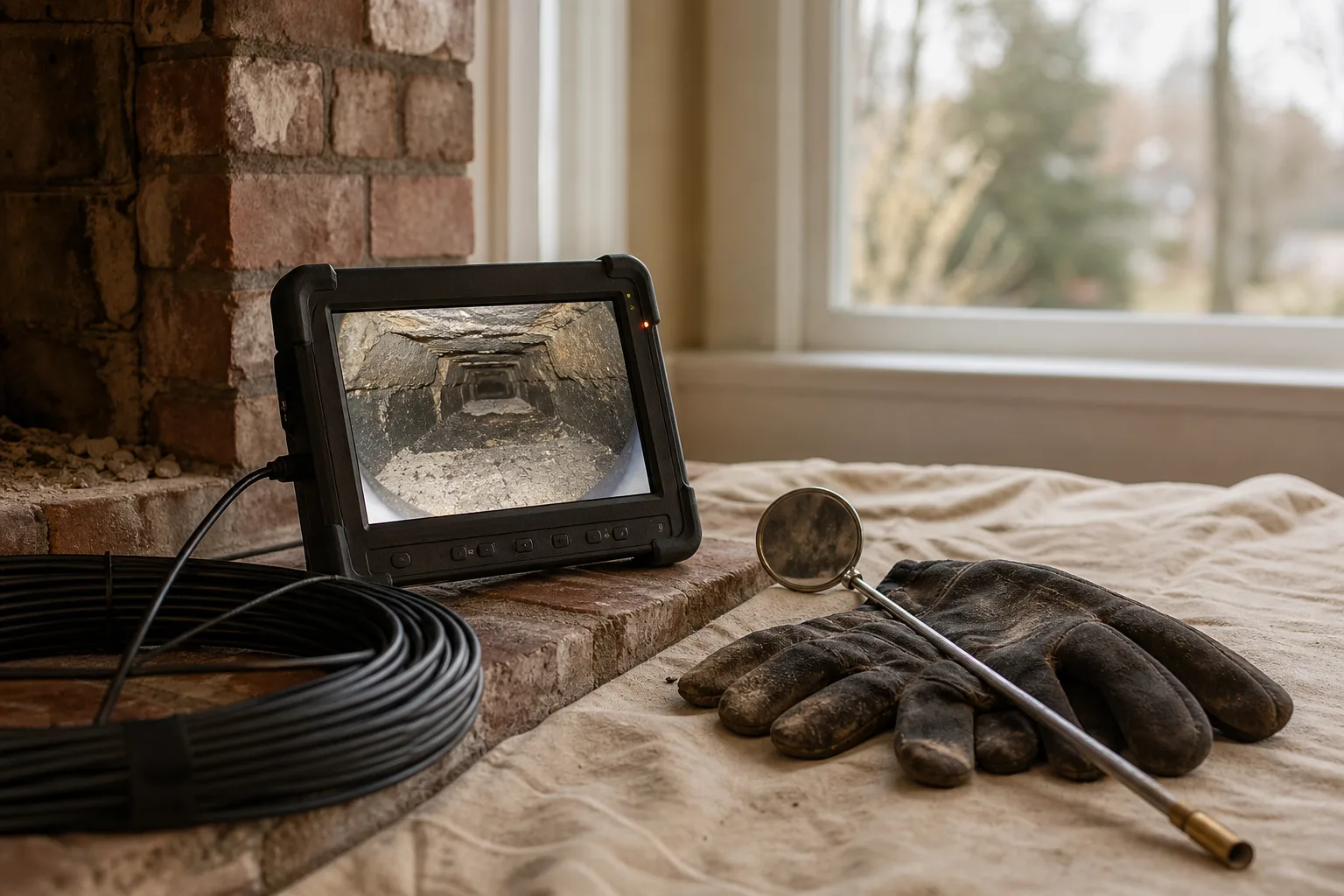
Everything about this job happens in a place you cannot look. A company that inspected your chamber has images or video from a mirror, a pole camera, or a phone on a selfie stick. Ask to see them, and ask them to point out the specific condition they are pricing.
2. Will I get a photo from the same angle when you are finished?
This is the single most useful question on the list. An after photo from the same position turns an invisible repair into a visible one.
3. What material are you using, and does it meet ASTM C 199?
You do not need to evaluate the answer. You need to hear that there is one. A company that works to the standard will name the standard back to you without hesitating.
4. Will the chamber be cleaned to bare masonry first?
Refractory mortar is going onto a surface. If that surface is still carrying soot and creosote, the bond is compromised. Preparation is most of this job.
5. What is your plan for access, including the damper?
Reaching the chamber means working up through the throat. Sometimes the damper assembly has to be removed or worked around. You want to know that in advance, not on the day.
Pro tip: Ask for the before photo and the after photo from the same angle, and ask for them before the work is scheduled rather than after it is done. A company that documents its own work as a matter of habit is telling you something about the work itself, before you have even looked at the pictures.
What the work looks like when it is done right
This section is not instructions. It is a description of what smoke chamber parging actually looks like happening in your living room, so you can tell a real job from a fast one.
Preparing the chamber
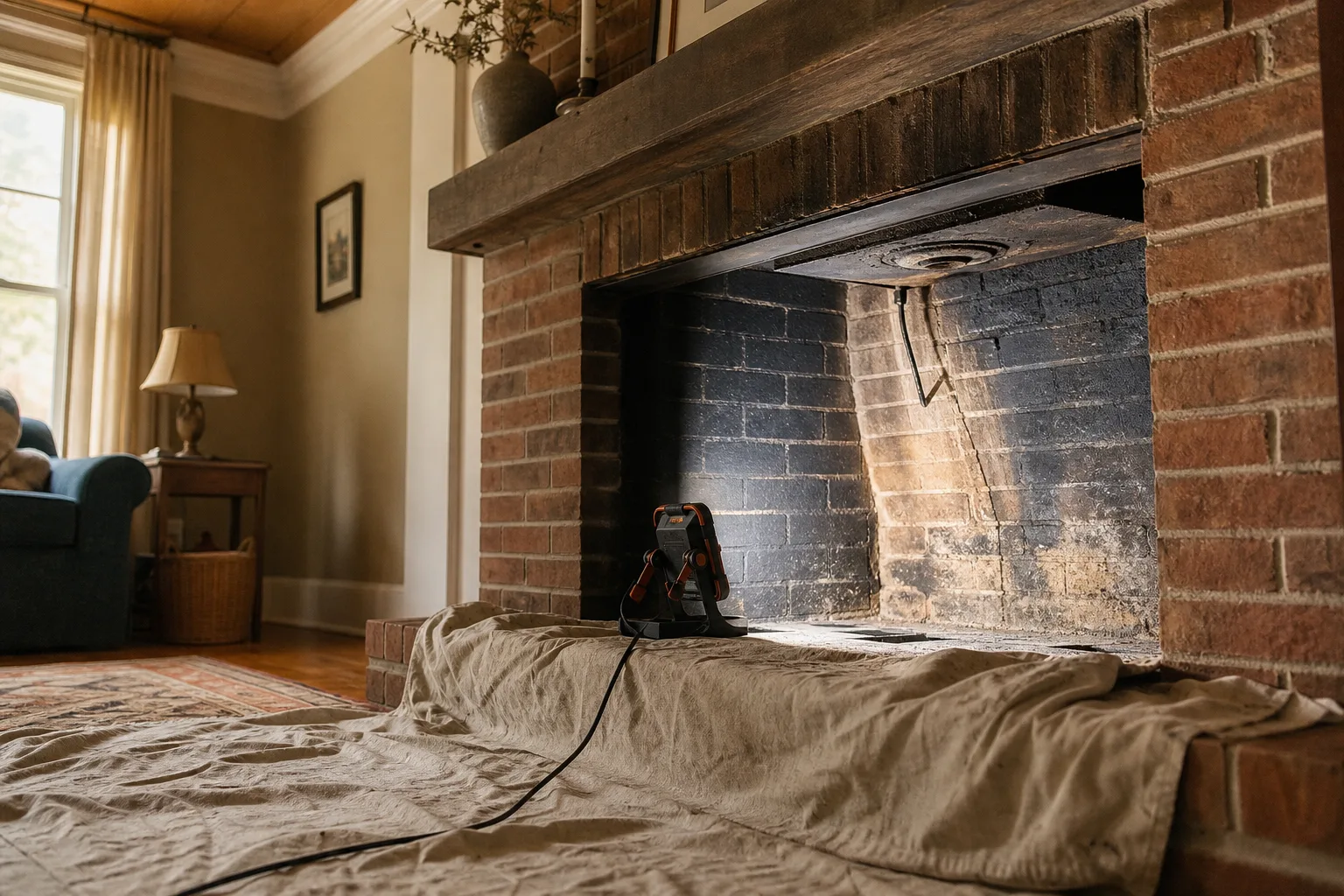
Drop cloths go down over the hearth and the floor in front of it, because this work makes a mess and soot travels. A work light goes up. A vacuum comes in.
Then the chamber gets cleaned. Not brushed at the flue and called done, cleaned, up inside the chamber, back to masonry that mortar can actually bond to. If joints are open or the mortar has failed, that gets repaired at this stage, before anything is smoothed over.
Applying the mortar
Refractory mortar meeting ASTM C 199 gets mixed and worked onto the inner faces of the chamber, filling the steps and the corners and building the stepped surface into a continuous tapering one.
Some of this is done by hand with trowels and long handled tools, with the technician lying or crouched half inside the firebox and reaching up. Some applications use spray equipment from below. Both are legitimate; what matters is coverage, thickness and bond, not the delivery method.
Then it cures. Then somebody photographs it.
Why this is not a weekend project
Safety note: Working the inside of a smoke chamber means reaching overhead, into a confined space you cannot see into directly, on an assembly that runs at high temperature during use and passes through the framed parts of your house. This article deliberately does not tell you how to do it yourself.
Smoke chamber parging is a trade job with a real failure mode. Mortar that does not bond falls off. A coating applied over a condition that needed repair hides the condition. Neither failure announces itself from the hearth.
How VIO helps when smoke chamber parging is on the table
Here is the plain version of what we do.
VIO is a referral service. We do not perform chimney work. We connect homeowners with independent local chimney companies, and those companies do the inspections and the repairs.
That is worth saying clearly on a page like this one, because the recommendation you are weighing came from the company that inspected your chimney, not from us. What we can do is get you a second set of eyes on the same chamber.
Asking for a second opinion is normal. It is not an insult to the first company, and any competent contractor has been on both sides of it. If your quote holds up, you sign it with more confidence than you had yesterday. If it does not, you found that out before the money moved.
Insist on an estimate in writing before any work starts, from us or from anyone. A scope you can read is a scope you can compare.
And if you do not have a quote at all, and you got here because your fireplace smokes into the room every time you light it, the move is an inspection first. Smoke chamber parging might be part of the answer. It might not be the answer at all.
The bottom line on smoke chamber parging
The standard is real. NFPA 211 calls for the inner surfaces of a smoke chamber to be parge coated smooth with insulating refractory mortar, and the IRC requires corbelled surfaces to be parged smooth with mortar meeting ASTM C 199. Nobody made this up.
What is not automatic is whether your chamber needs the work now, and whether parging is the right repair for the condition you actually have. That is a judgment about a specific piece of masonry, made by someone who has looked at it.
So use the five questions. Ask for the before photo and the after photo. Ask what the material is and whether the chamber gets cleaned to bare masonry first. Ask what happens to the damper.
A company that answers those five easily has probably done the work right for a long time. A company that gets annoyed by them has told you something too.
Get eyes on your smoke chamber before the first cold night. Tell us what your fireplace is doing and we will match you with an independent chimney company in your area that can inspect the chamber and show you photographs of what is up there.
Call (513) 655-6702
Symptom checker
What is your chimney doing?
Tap the closest match for an honest first answer.