


On this pageHow to choose a chimney sweep near me7 sections+6
- How to choose a chimney sweep near me
- What a professional chimney sweep visit should include
- How to verify CSIA certification and basic business credentials
- Questions to ask before you book
- Red flags that may signal a chimney sweep scam
- What fair service should look like from arrival to follow up
- When sweeping alone is not enough
Quick answer
Choose a chimney sweep near me by verifying the assigned technician’s credentials, liability insurance, local business identity, inspection process, and written scope. Ask what the quote includes, require evidence for hidden defects, and never approve added cleaning or repairs without a clear explanation and your consent.
How to choose a chimney sweep near me
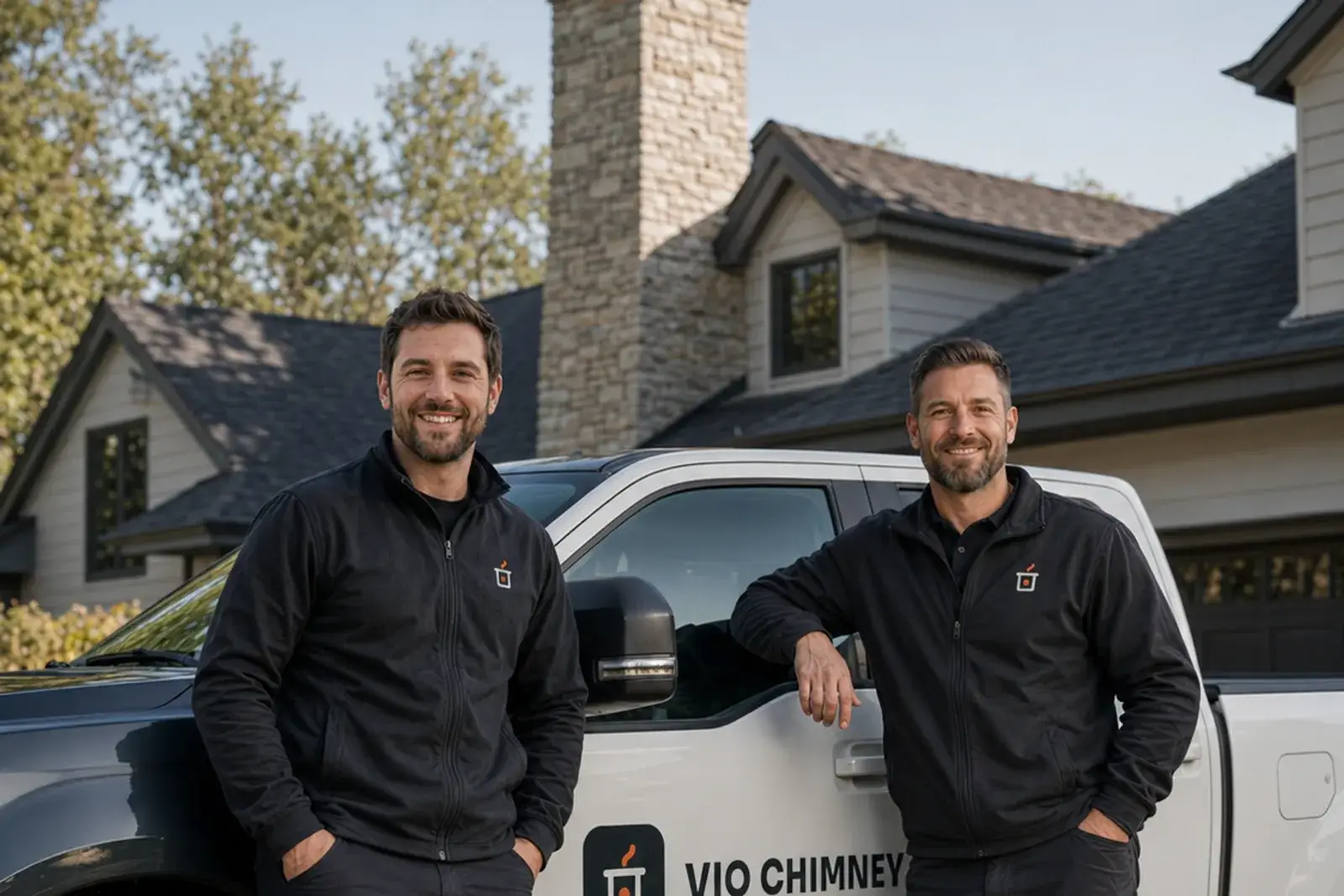
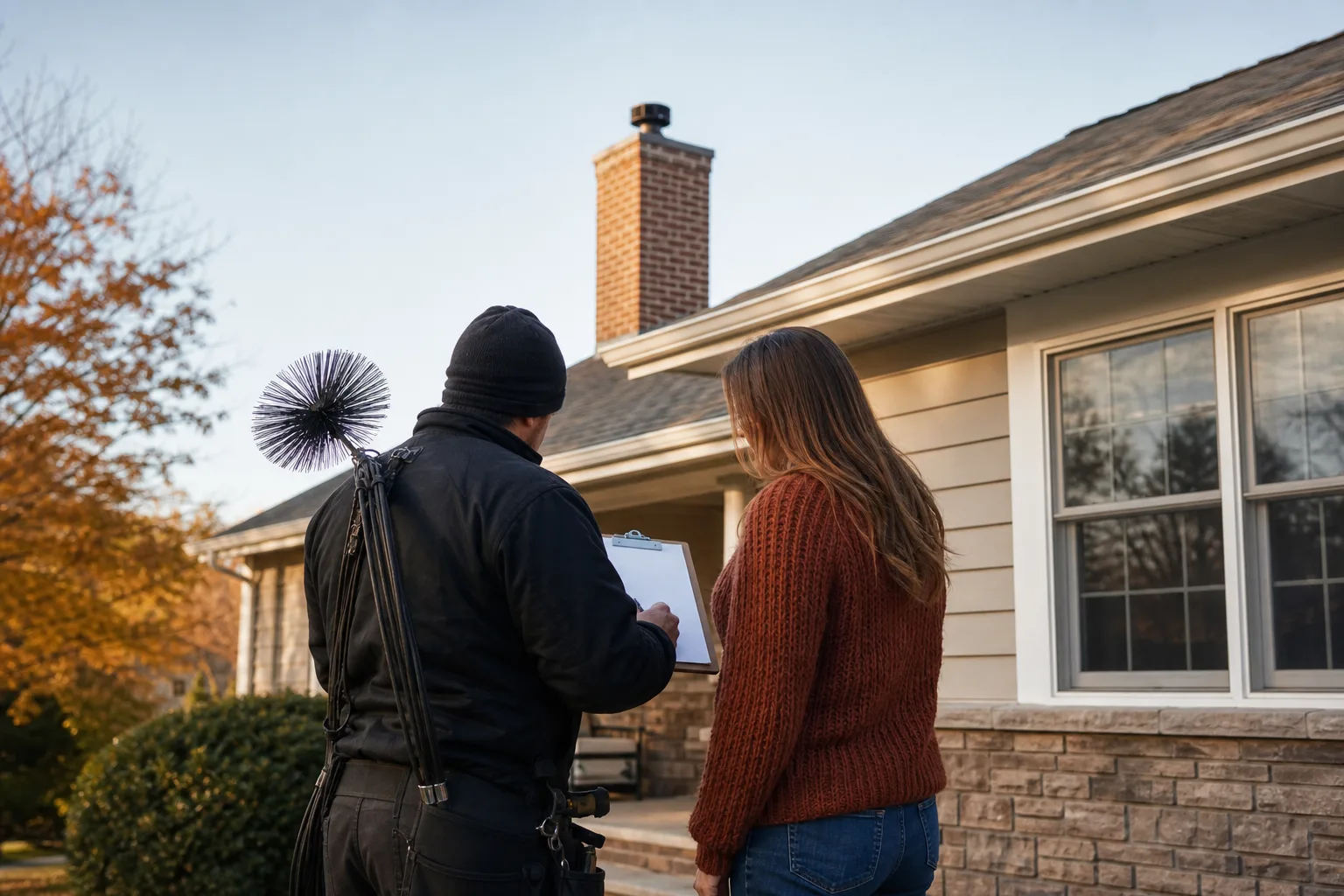
Choose a chimney sweep near me by checking the company’s local identity, technician qualifications, insurance, inspection process, and written scope before comparing quotes. A dependable sweep should explain what the visit includes, where the company works, and how any additional work will be approved before asking for payment.
Choosing a chimney sweep near me solely by the lowest advertised offer can hide meaningful differences in service. One quote may cover basic brushing, while another includes an accessible component check, camera images, cleanup, and a written condition report.
Use this short screening checklist before booking:
- Confirm the service area. Make sure the company regularly serves your address and is not simply forwarding the job to an unknown subcontractor.
- Verify the business identity. Look for a consistent company name, working phone number, and physical business information.
- Ask about the technician. Find out who will arrive, what training that person has, and whether certification can be verified.
- Compare written scopes. Check whether each quote includes sweeping, inspection, documentation, and cleanup.
- Read recent reviews. Look for repeated comments about punctuality, dust control, clear explanations, and how unexpected findings were handled.
Reviews are most useful when you read for patterns rather than isolated praise or complaints. A long trail of customers mentioning clean hearths, photographs of defects, and respectful communication says more than a collection of short comments with no description of the work.
Pro tip: Ask each company to describe what you will receive at the end of the appointment. A verbal “everything looks fine” is less useful than a written summary identifying what was cleaned, what was visible, and whether any areas could not be examined.
Insurance also belongs in the comparison. Chimney work may involve ladders, roof access, heavy equipment, and work around an appliance connected to the home, so confirm that the company carries current liability coverage rather than accepting a vague assurance.
Ready for a clear scope before anyone arrives? Request a local service appointment or call (513) 655-6702 to discuss the chimney, appliance, access, and reason for the visit.
What a professional chimney sweep visit should include
A professional sweep visit should include work area protection, an initial check of accessible chimney components, removal of soot and deposits, dust control, cleanup, and a clear account of what the technician found. The sweep should also explain whether the appointment includes an inspection and which areas remain hidden from direct view.
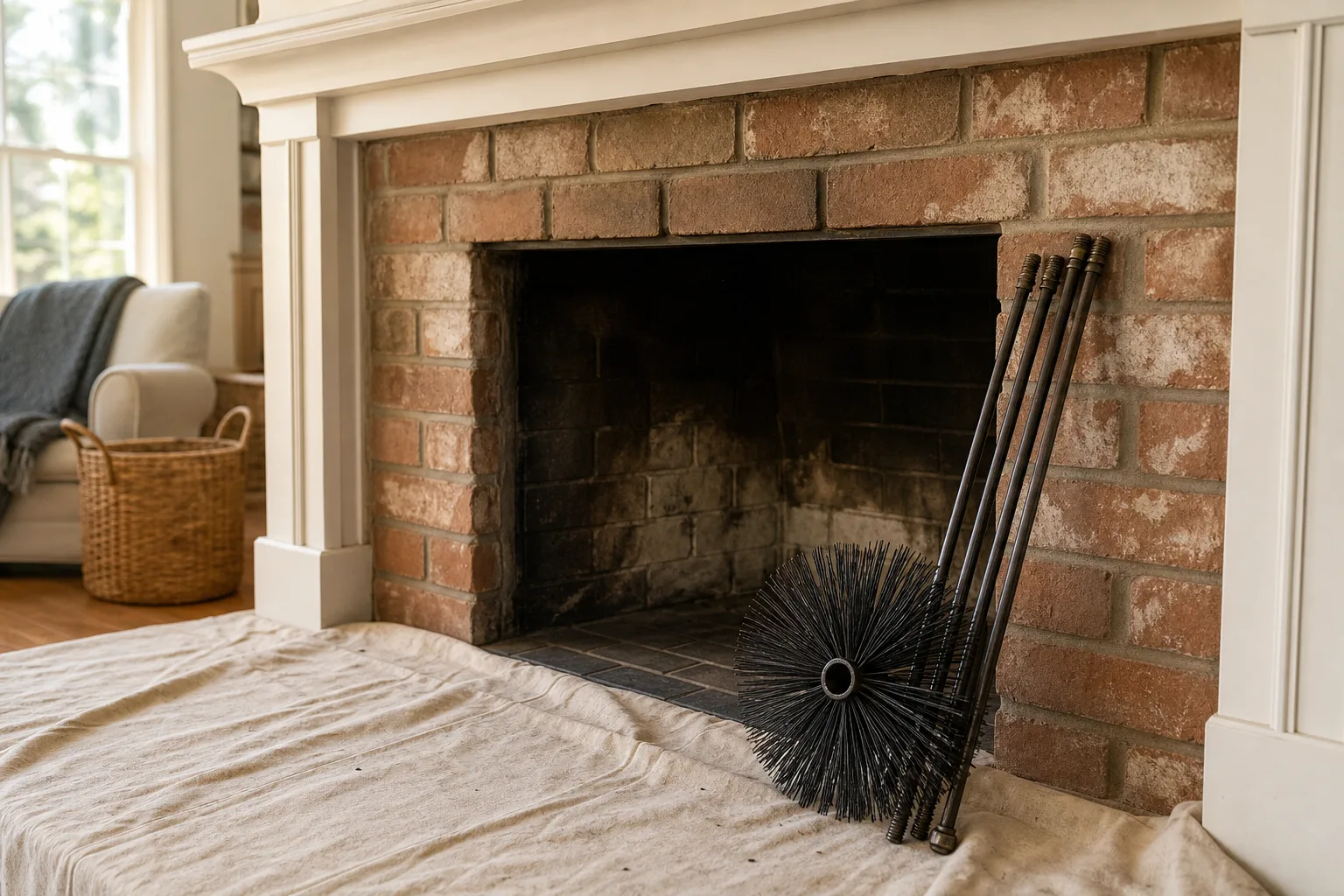
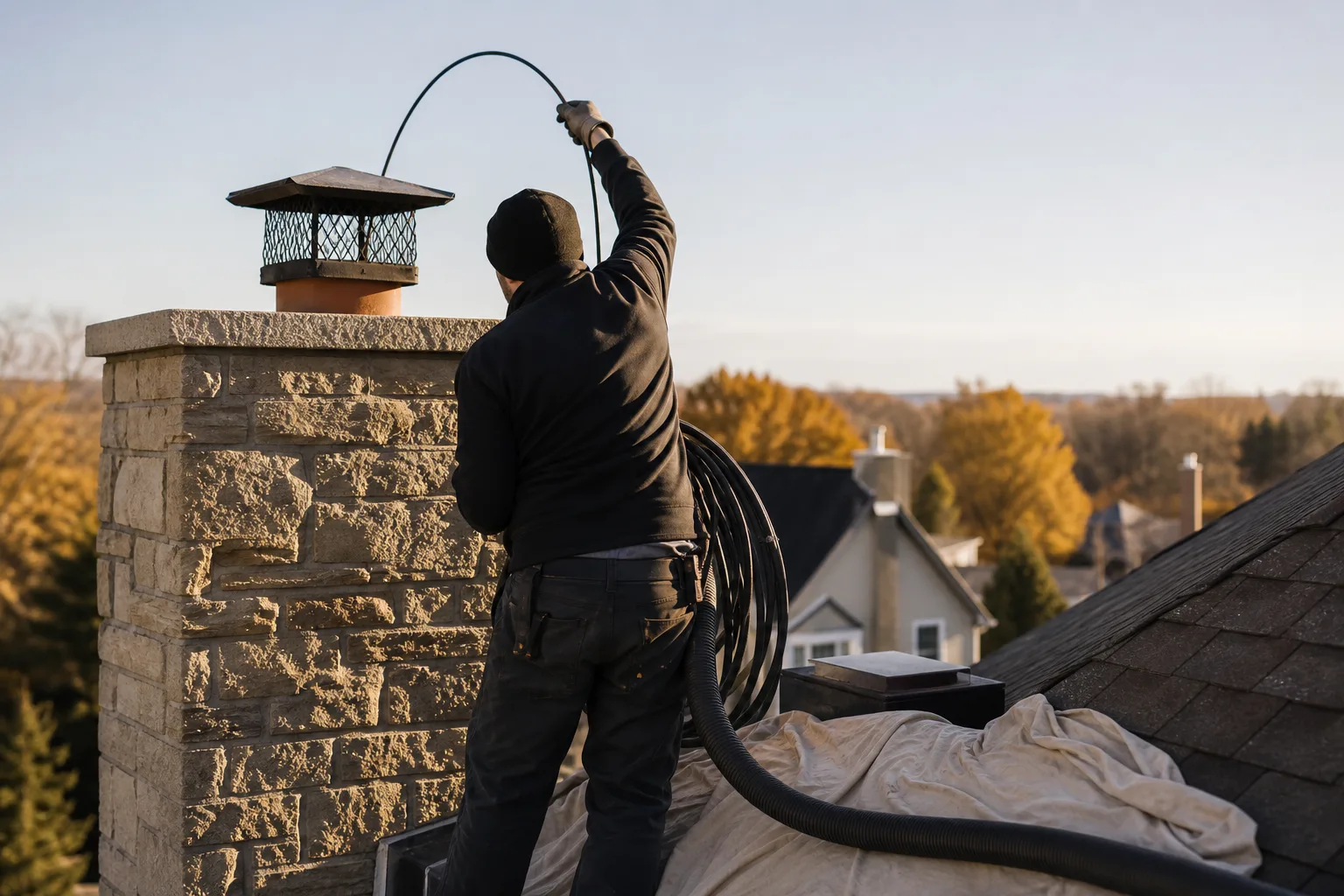
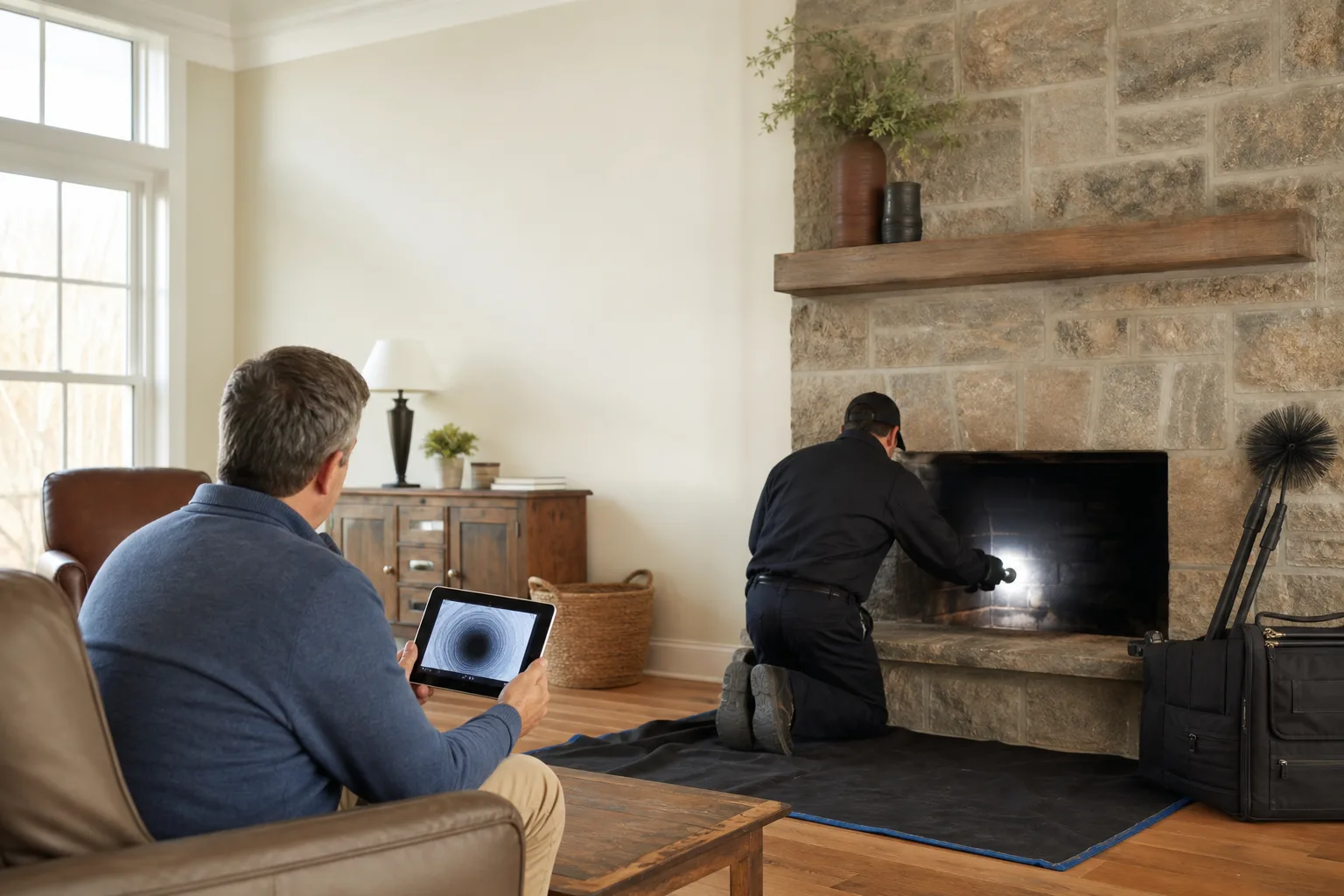
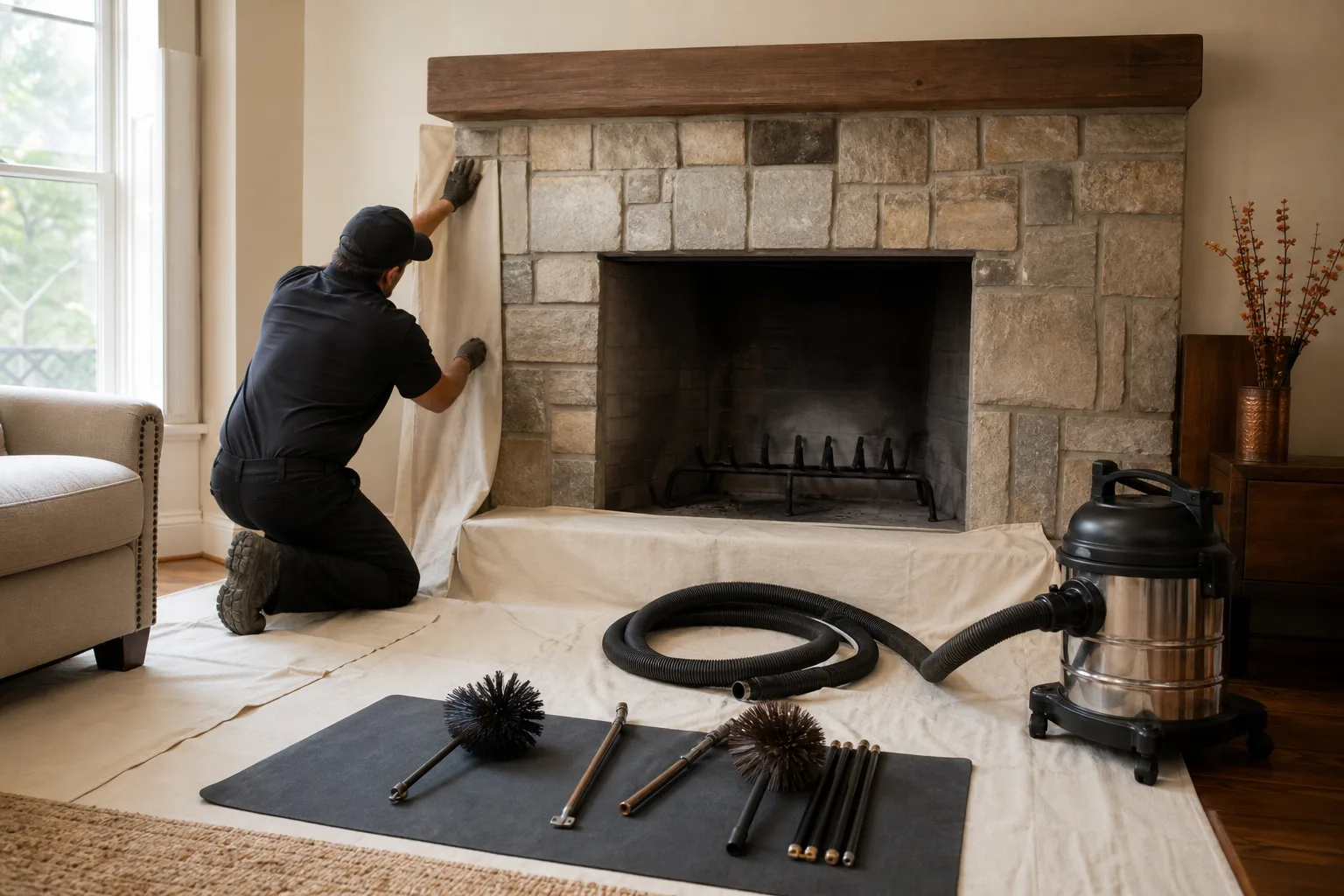
Before brushing begins, the technician should confirm the appliance and flue being serviced. Floor coverings, hearth protection, and a controlled vacuum system help keep soot out of the room, while lights, mirrors, or a camera may be used to examine accessible sections before and after cleaning.
Sweeping and inspection are related, but they are not interchangeable:
| Service | Main purpose | Typical result |
|---|---|---|
| Sweeping | Removes soot, loose creosote, and accessible obstructions | A cleaner flue and confirmation of what was removed |
| Visual inspection | Checks accessible portions of the chimney and venting system | Notes on visible condition and apparent defects |
| Camera examination | Provides a closer look at concealed flue surfaces | Images or video of areas that cannot be viewed directly |
| Repair assessment | Determines the likely scope of corrective work | A separate recommendation or proposal |
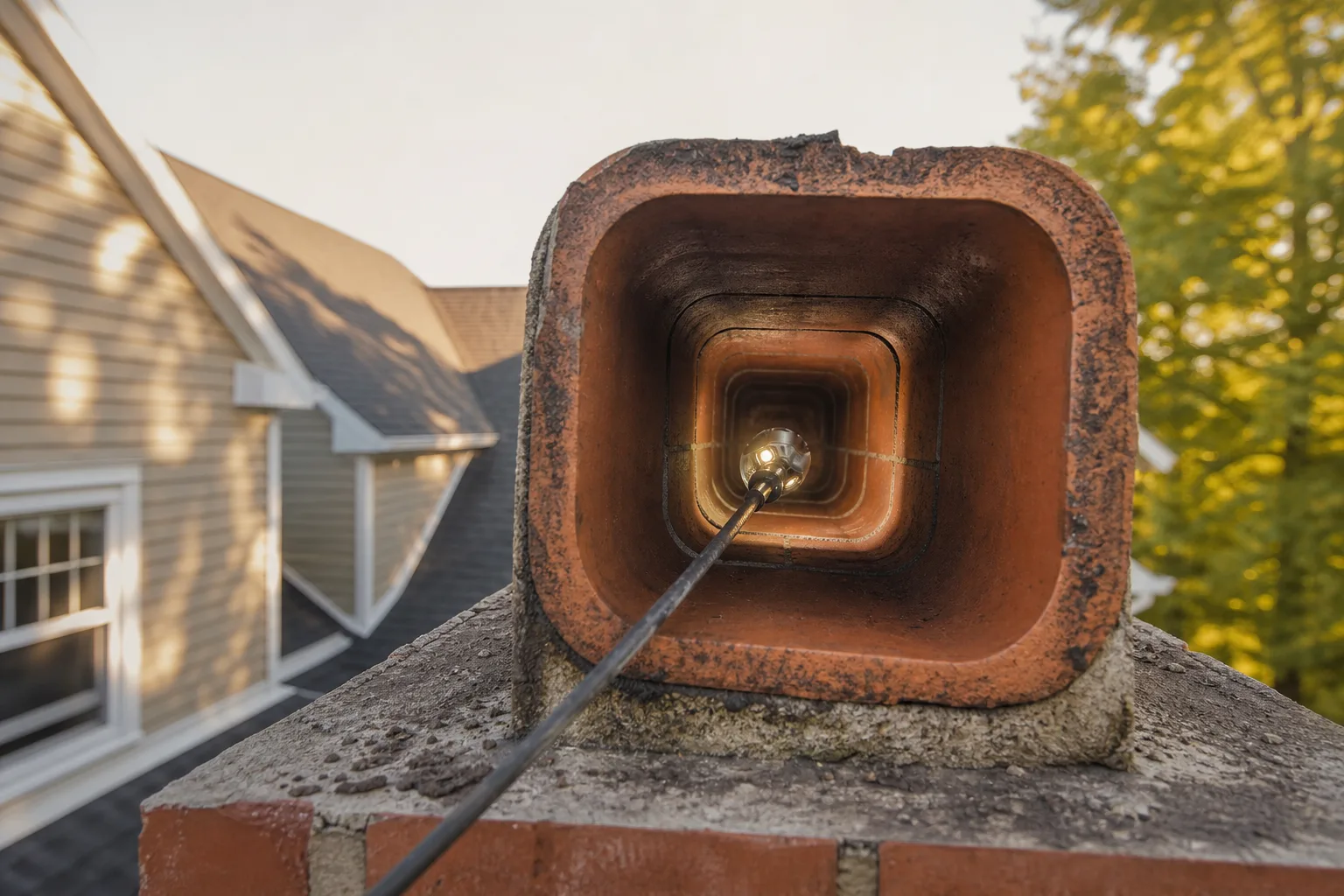
A routine visit often includes a basic visual review, but you should ask what level of inspection is included rather than assuming. A camera can reveal open joints, damaged liner sections, or deposits that cannot be judged from the fireplace opening, though camera use alone does not turn every visit into a higher-level inspection under NFPA 211.
The published chimney sweep guide can help readers understand the work sequence in more detail, while the chimney sweep service page explains what to expect when arranging professional care. The company should still state the scope for your appointment because appliance type, flue design, roof access, and chimney condition can change the process.
From the field: A flue can brush clean while still showing damage underneath the deposits. Experienced technicians commonly inspect again after sweeping because cracks, gaps, and loose material may become visible only after soot and creosote have been removed.
At closeout, expect a written summary stating what was serviced and what conditions were observed. Significant findings should be supported with clear photos or video when possible, especially if the damaged area cannot be seen from the hearth or cleanout door.
Repair recommendations should be separated from the cleaning service so you can understand what was completed and what remains optional or necessary. If a condition limits safe use, the technician should describe the location, evidence, and reason for that restriction in plain language rather than relying on alarming labels.
How to verify CSIA certification and basic business credentials
Verify CSIA certification by searching for the individual technician in the Chimney Safety Institute of America directory, not merely by spotting a certification logo on a website, advertisement, or vehicle. Confirm that the listing matches the person scheduled to perform or supervise the work and that the credential is current.
A company may employ both certified and noncertified staff, so ask for the technician’s full name before the appointment. If the person who arrives differs from the person named during booking, you can pause and verify the new technician before allowing work to begin.
Good to know: Certification belongs to an individual, not automatically to every employee working under the same company name. A logo can indicate that someone associated with the business has training, but the directory helps you confirm the technician assigned to your chimney.
Basic business checks matter alongside certification. Ask for proof of current liability insurance, confirm that contact information works, and make sure estimates and receipts use the same business identity you researched. Depending on the jurisdiction and repair scope, local contractor licensing or permits may also apply.
A physical business identity does not always mean a public showroom. It does mean the company should be traceable through consistent registration, contact, insurance, and billing information rather than operating through a changing phone number and an unmarked payment request.
CSIA certification supports knowledge of chimney systems, inspection practices, and accepted service methods, but it is not a substitute for good conduct on site. You should still evaluate whether the technician protects the room, documents hidden defects, answers questions directly, and asks permission before moving beyond the agreed scope.
Credentials are one part of the hiring decision, not a reason to stop asking questions. A qualified sweep should be comfortable explaining limitations, including when an area could not be accessed or when a different inspection level is needed.
Questions to ask before you book
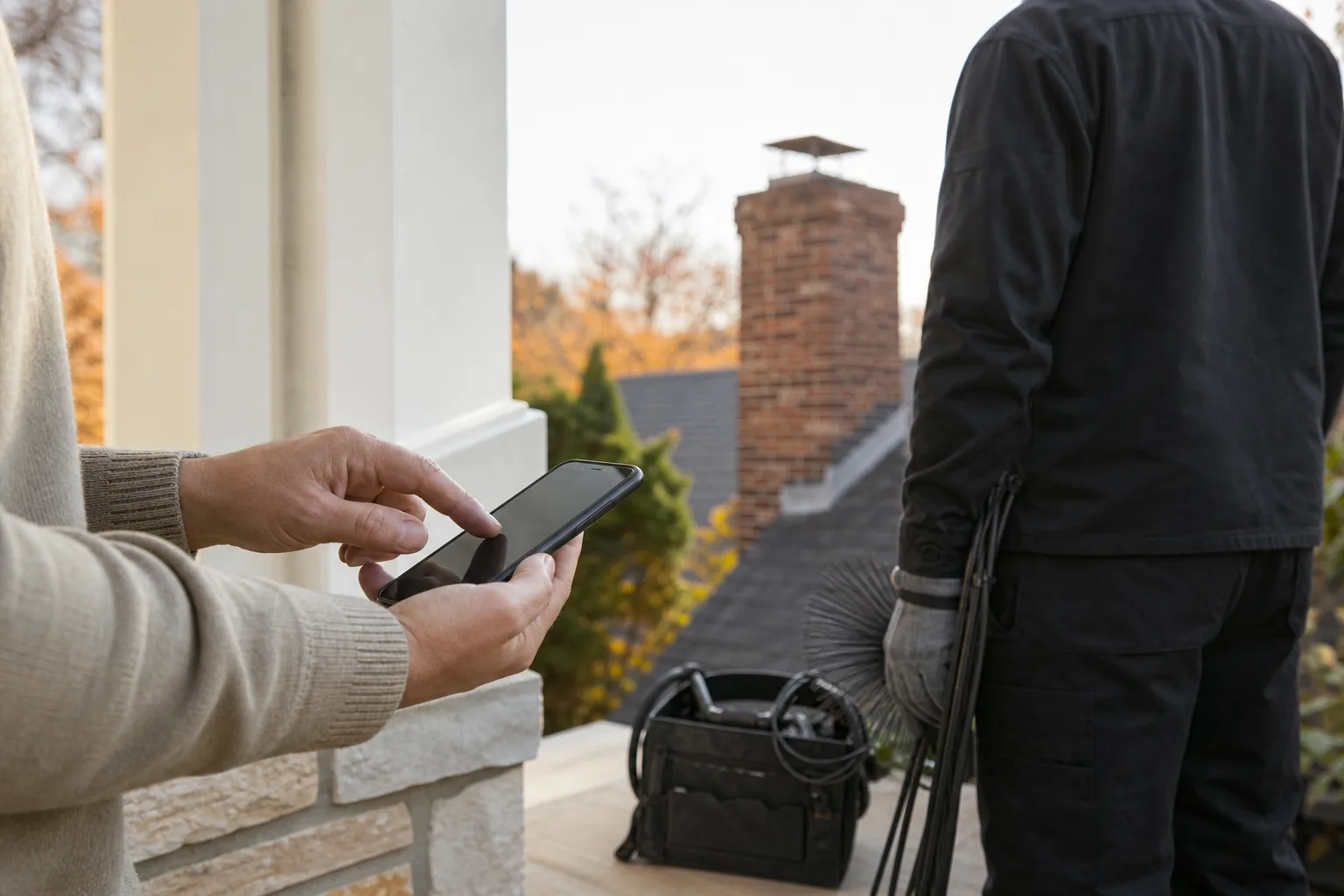
Before booking, ask exactly what the quote includes, who will perform the work, what inspection is provided, and what circumstances could change the price. Confirm that no added cleaning, inspection, or repair will begin without your approval and that you will receive a written service report.
Use these questions during the call or booking exchange:
- What does the quoted service include? Ask specifically about sweeping, accessible component checks, camera use, cleanup, and documentation.
- What could change the price? Heavy deposits, multiple flues, difficult roof access, appliance disconnection, or an obstruction may require a different scope.
- Who will perform the work? Request the technician’s name and ask whether that person is currently CSIA certified.
- Do you carry liability insurance? Ask whether proof can be provided before the appointment.
- What inspection is included? Confirm which parts will be viewed and how concealed flue conditions will be documented.
- Will you ask before doing additional work? Require approval before the technician adds services or begins repairs.
- What report will I receive? Ask whether findings, images, completed work, and use restrictions will be provided in writing.
NFPA 211 recognizes different inspection levels based on the circumstances and access required. A routine service with no system changes may call for a basic examination, while NFPA 211 requires a Level 2 inspection in specific circumstances — a sale or transfer of the property, a change to the appliance or venting system, an operating malfunction, a chimney fire, or an external event likely to have caused damage. Ask the sweep to explain which level fits your situation and why.
Safety note: If you suspect a chimney fire, see fallen liner material, smell persistent smoke, or have been told to stop using the appliance, mention that before the appointment. Those conditions may require more than routine sweeping, and the scheduler should allow suitable time and equipment for evaluation.
Practical terms should also be settled in advance. Confirm accepted payment methods, cancellation or rescheduling policies, parking and access needs, whether someone must be home, and whether the technician expects access to the roof, attic, basement, cleanout, or appliance connection.
A trustworthy company can describe the likely visit without promising an outcome before seeing the chimney. Firm assurances that every system will take the same time, require the same tools, or remain at the same scope can be unreliable when height, access, deposits, and hidden conditions vary.
Want to book with the scope and expectations settled first? Request a qualified local visit or call (513) 655-6702 to describe your chimney and arrange the appropriate service.
Red flags that may signal a chimney sweep scam
If you searched for a chimney sweep near me, do not let a low introductory offer or a frightening diagnosis rush your decision. A trustworthy sweep can explain what was found, show where it was found, and give you time to consider repairs that fall outside the original cleaning.
Be cautious when a technician declares the chimney unsafe but cannot provide clear photographs, camera footage, or a plain explanation of the defect. Some hazards do require the fireplace or appliance to remain unused, but the written report should identify the affected component and explain why use should stop.
| What you hear or see | What a professional should provide |
|---|---|
| “Your chimney could catch fire tonight” | Images, the location of the deposit or damage, and a clear use recommendation |
| “There is hidden liner damage” | Camera footage or other visual evidence from the flue |
| “This price is only available right now” | A written scope that you can review without pressure |
| “We only take cash” | Normal payment choices and a written receipt |
| A cheap offer that grows after arrival | An explanation of changed conditions and approval before added work |
Alleged concealed damage deserves particular scrutiny. If a crack, gap, or missing liner section cannot be seen from the firebox, roof, or another accessible area, ask the technician to show it with a chimney camera and identify its location in the flue.
Pro tip: Ask the technician to narrate camera footage as it is recorded. You should be able to connect the image to a specific flue, height, joint, or appliance rather than receiving an unexplained close-up later.
Vague business names, disconnected phone numbers, missing insurance information, and refusal to leave a receipt are further warning signs. A sweep should not begin demolition, apply a coating, install a liner, or perform another major repair without your written approval.
Safety note: If a technician identifies a genuine fire or carbon monoxide concern, stop using the appliance until the condition is properly evaluated. Pausing use is sensible, but it does not require you to approve an expensive repair on the spot.
When the diagnosis is unclear or the proposed work is substantial, end the visit politely and seek another qualified opinion. Keep the report, images, estimate, and any invoice so the next technician can evaluate the same claims.
Ready for a straight answer? Request a documented service visit or call (513) 655-6702 before approving work you do not understand.

What fair service should look like from arrival to follow up
A fair chimney sweep near me visit should begin with confirmation of the agreed scope, protection of the room, and a brief review of access or safety concerns. The technician should control dust, explain findings in plain language, and request permission before doing anything beyond the approved service.
You can help by clearing furniture, decorations, ash containers, and fragile items from the fireplace or appliance area. Keep children and pets in another room, and make sure the technician can reach cleanout doors, utility spaces, attics, or other agreed access points.
A prepared sweep brings floor coverings, a suitable vacuum, brushes, lighting, and inspection tools. Foot traffic should remain contained, doors should be handled respectfully, and the hearth area should be left at least as clean as it was when the work began.
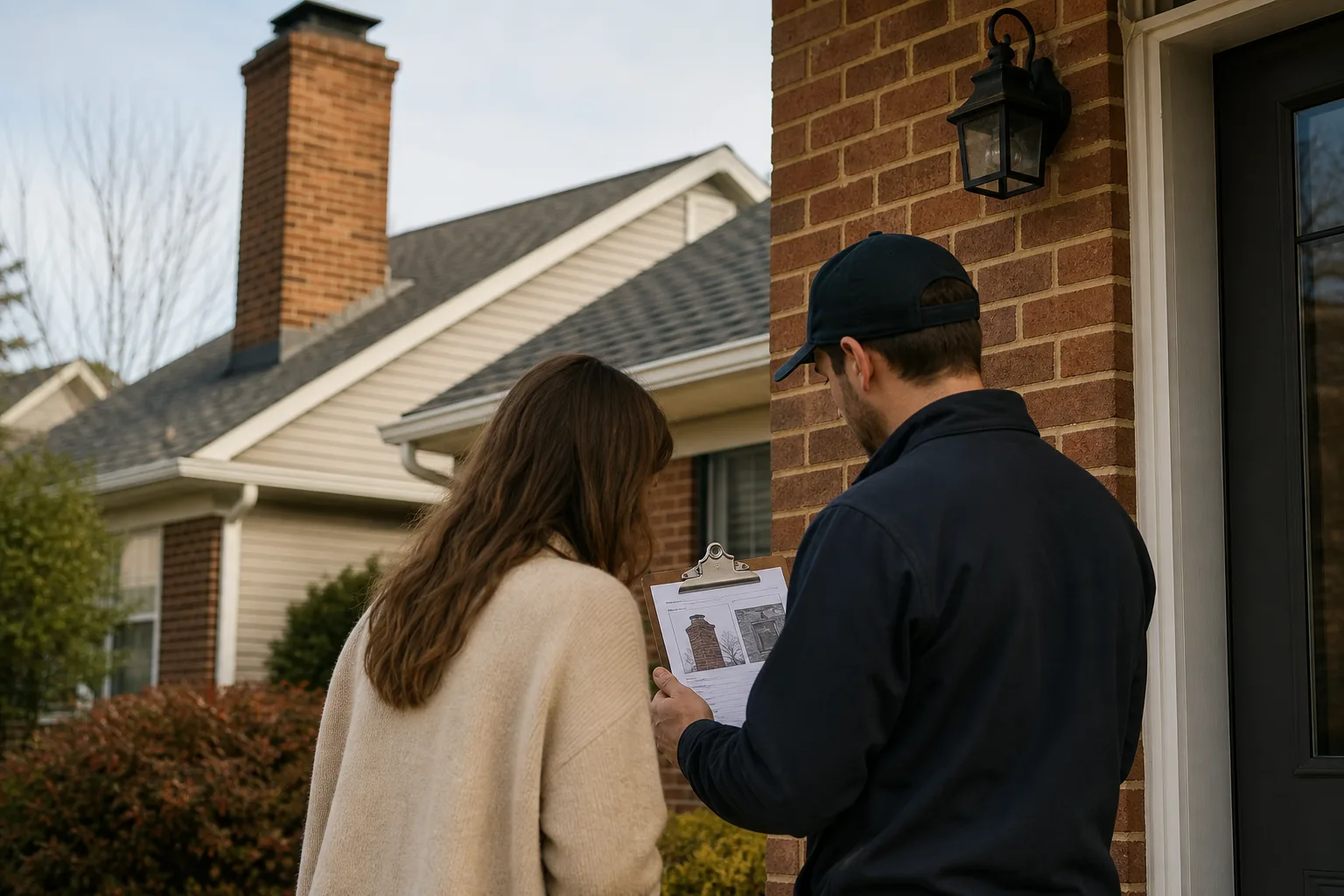
Before the appointment, make these simple observations from the ground. Do not climb onto the roof or lean a ladder against the chimney.
- Check the chimney top. Use binoculars to look for a tilted cap, obvious missing pieces, or vegetation touching the structure.
- Check the fireplace opening. Remove personal items and note loose brick, staining, fallen debris, or unusual odors.
- Check appliance access. Make sure furniture and stored belongings do not block the hearth, stove, cleanout, or connector pipe.
- Check recent symptoms. Write down smoke backup, water entry, animal sounds, or recurring debris so nothing is forgotten during the visit.
From the field: Homeowners often remember a smoky startup or a damp odor only after the equipment is packed away. A short symptom list helps the sweep connect intermittent problems with weather, draft, water entry, or an obstruction.
Closeout documentation should state what was swept, which accessible parts were examined, what conditions were observed, and whether further inspection or repair is recommended. Useful reports also include images of significant findings, recommended next steps, and any instruction not to use the fireplace or appliance.
Chimney height, roof access, appliance type, deposit level, flue configuration, and existing damage can change how long the visit takes or what tools are needed. A firm promise made without asking about the system may be less reliable than a conditional quote that clearly lists possible changes.
Good to know: An unexpected condition does not give a technician automatic permission to expand the job. You should receive an explanation and approve the revised scope before additional work begins.
Follow-up should be specific rather than persistent. If repairs are suggested, the written recommendation should separate urgent safety concerns from maintenance that can be planned.
Want a visit with clear expectations? Arrange a local chimney appointment or call (513) 655-6702 to discuss access, documentation, and the work you need.
When sweeping alone is not enough
Sweeping removes soot, combustible deposits, and many flue obstructions, but it does not repair the chimney. Cracked liners, deteriorated masonry, leaking flashing, failed caps, damaged connector pipes, and appliance installation problems require separate evaluation and, when confirmed, appropriate repair.
Glazed creosote may resist normal brushing because it has hardened into a dense, shiny layer. The sweep should explain the treatment options and limitations rather than claiming that repeated brushing alone will restore the flue.
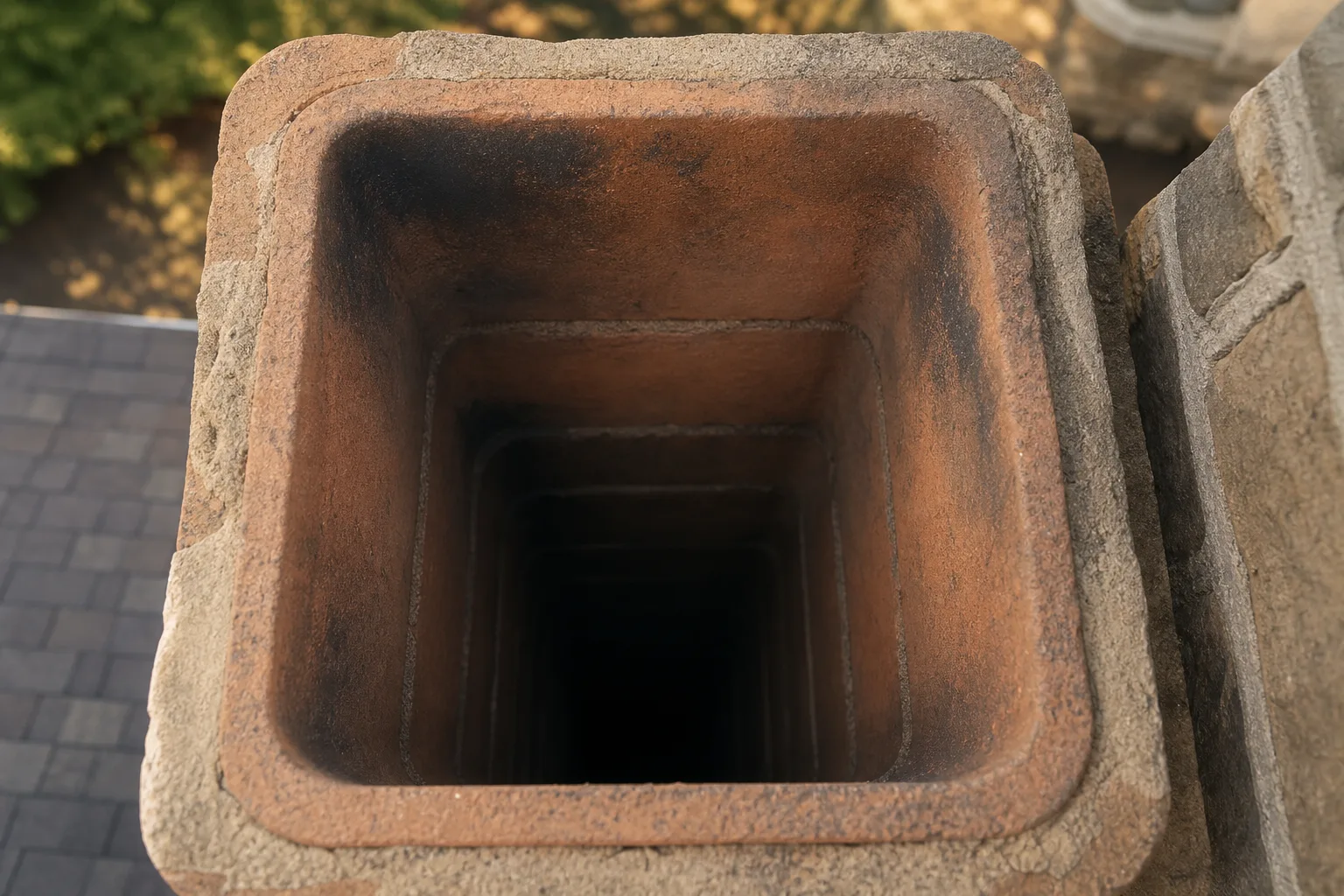
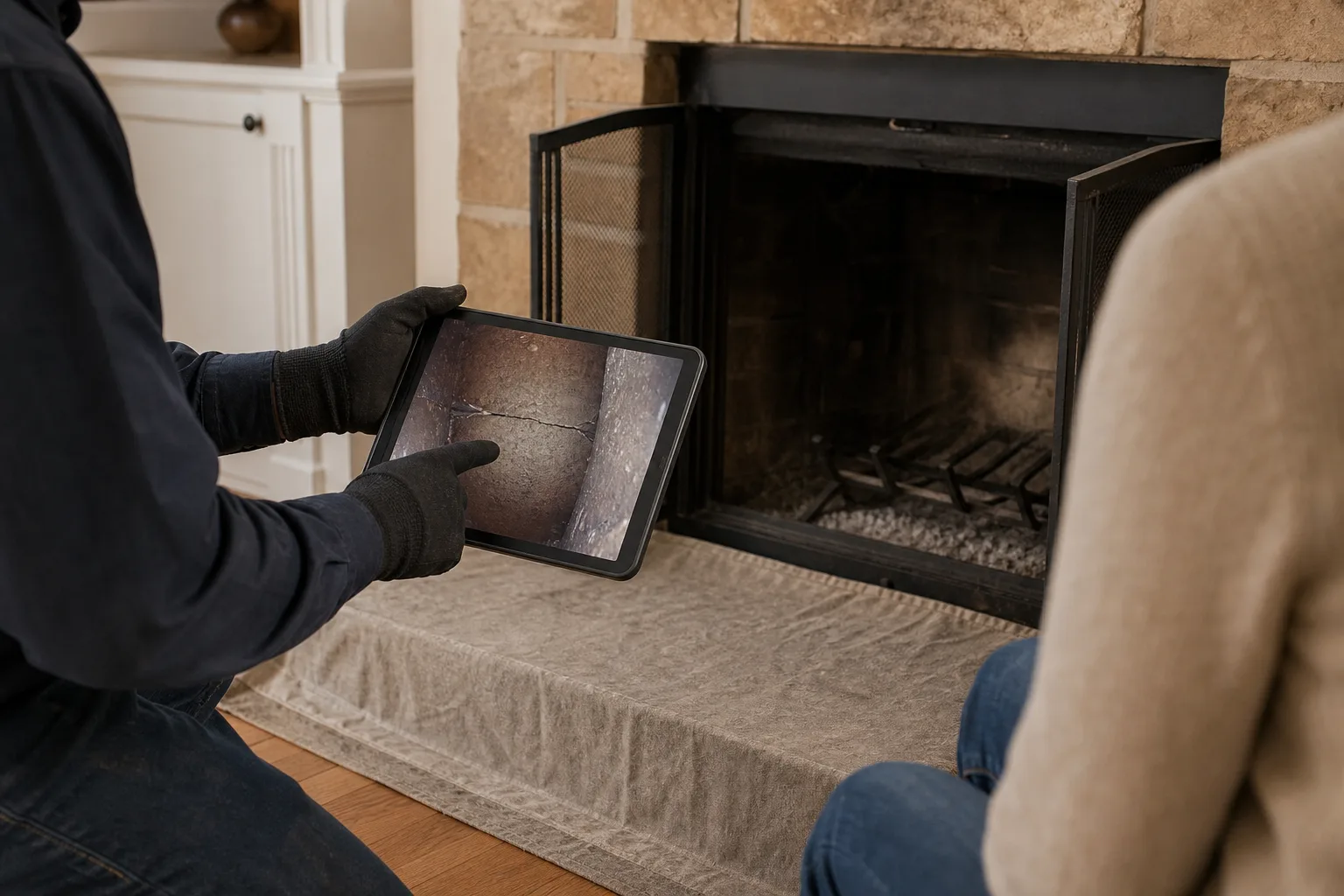
Evidence of a chimney fire also changes the job. Puffy deposits, warped metal, cracked flue tiles, displaced joints, or heat damage may call for a more detailed inspection before the system is used again, including camera coverage of areas that cannot be viewed directly.
Myth vs. fact: Myth: A clean flue is automatically a safe flue. Fact: Sweeping can expose cracks, gaps, water damage, or loose materials, but removing deposits does not correct those defects.
Water staining, efflorescence, rust, damp odors, and loose masonry point to moisture entry that cleaning cannot stop. The source may be at the cap, crown, flashing, mortar joints, or another exterior transition, so the recommendation should identify the likely entry point and explain how it will be confirmed.
Recurring bird nests, leaves, or other blockages may indicate a missing or damaged cap. Repeated debris without an obvious exterior source can also signal loose liner or masonry materials, which should be identified before another fire is lit.
Inaccessible flue areas deserve more inspection, not guesswork. Bends, offsets, concealed connector sections, and multiple flues can prevent a direct view, so a camera or a higher level of inspection may be needed to establish the condition of the full venting path.
Routine cleaning, inspection, and repair are related services, but they are not interchangeable. Readers comparing routine cleaning options should use a chimney cleaning near me resource to assess the cleaning scope, then ask separately how hidden conditions will be inspected and how any repair recommendation will be documented.
A qualified sweep should leave you knowing what was removed, what remains unresolved, and whether the system can be used. If you are ready to arrange a local visit, request service or call (513) 655-6702 for a clear scope and written findings.
Symptom checker
What is your chimney doing?
Tap the closest match for an honest first answer.