



On this pageWhat a chimney sweep does and why the service matters7 sections+6
- What a chimney sweep does and why the service matters
- Signs your chimney may need cleaning
- How often to schedule sweeping and inspection
- What happens during a professional chimney sweep visit
- How to prepare your home for the appointment
- Understanding findings, cleaning limits, and possible repairs
- Choosing a qualified service and planning next steps
Quick answer
A chimney sweep removes soot, creosote, debris, and accessible obstructions from a chimney and connected venting. Schedule service when an inspection finds deposits or blockages, and have the system inspected at least annually under NFPA 211 guidance.
What a chimney sweep does and why the service matters
A professional chimney sweep removes soot, creosote, debris, and accessible nesting material from a chimney and its connected venting system. This work helps reduce the chance of a chimney fire, clears restrictions that can interfere with draft, and gives the technician an opportunity to spot visible conditions that may affect safe operation.
For a masonry fireplace, cleaning may include the flue, smoke chamber, smoke shelf, damper area, and firebox. For a wood stove or another vented heating appliance, the work may also involve accessible connector pipe and appliance venting, depending on the service agreement and how the system is assembled.
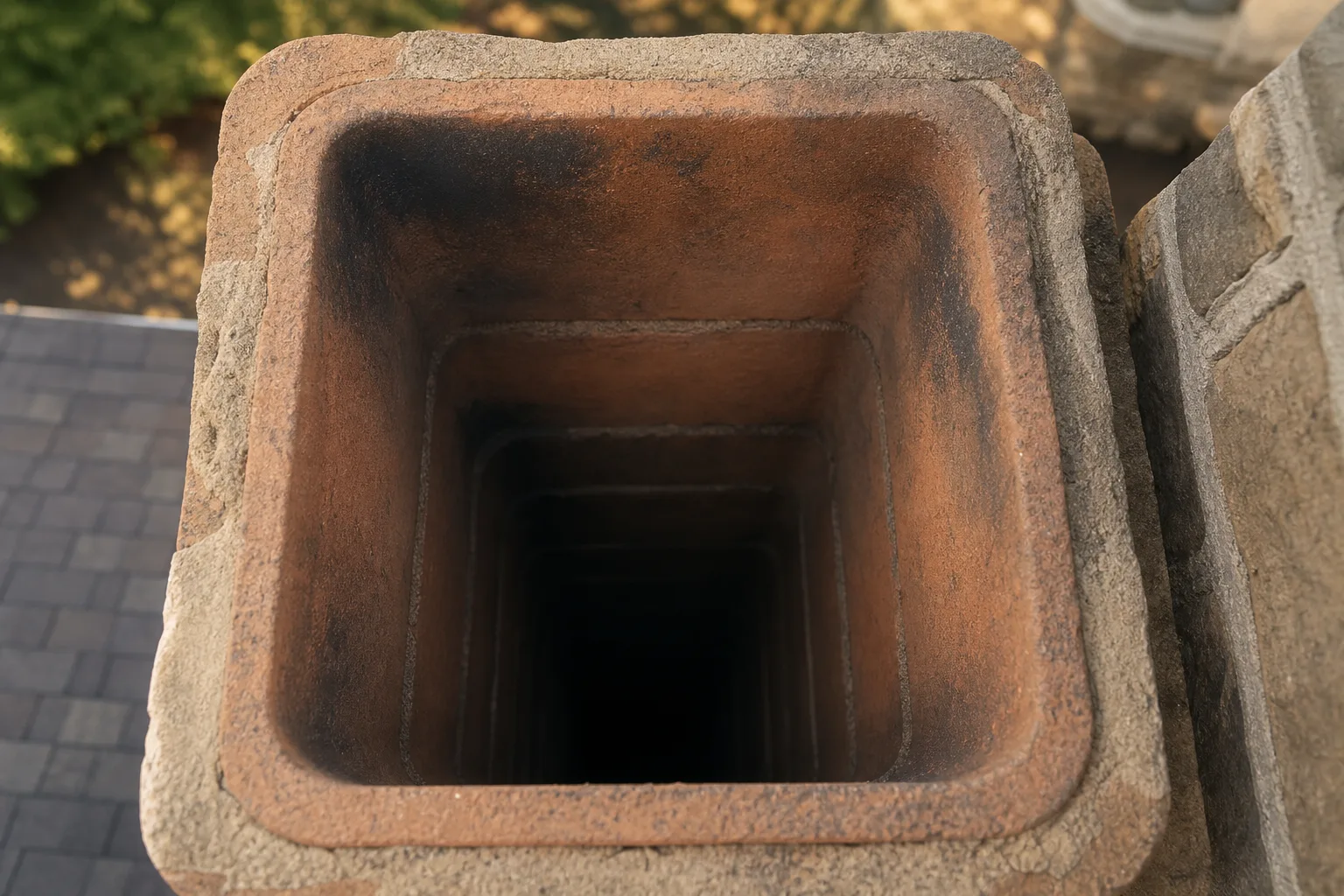
Creosote forms when smoke cools and condenses inside a flue. It can appear as loose flakes, crunchy deposits, sticky material, or hard glazed buildup, and each form responds differently to cleaning. Soot is generally easier to remove, while glazed deposits may resist standard brushes and require a separate treatment plan.
Animal nests, leaves, and broken masonry can also restrict a flue. A technician may remove reachable debris during routine service, but live animals, protected species, tightly packed nesting material, or debris lodged behind damaged components may require a different approach.
Good to know: A brush passing through the flue does not prove that the liner is sound. Cleaning opens the passage, while inspection evaluates the condition of the surfaces and components that can be seen.
Sweeping is not a repair. It will not seal cracked flue tiles, close gaps between liner sections, rebuild deteriorated mortar, stop a flashing leak, replace a missing cap, or correct a damaged appliance. If cleaning exposes a defect, the technician should document it and explain whether the system can remain in use, needs further evaluation, or should stay out of service until repaired.
Routine cleaning and chimney inspection are related, but they are not interchangeable. Cleaning removes deposits and obstructions, while an inspection considers the visible condition, installation, clearances, and suitability of the venting system for its appliance. A basic visual condition check should accompany a cleaning because freshly exposed surfaces may reveal cracks, corrosion, displaced parts, or signs of water entry.
The scope of that condition check should be clear before work begins. A standard visit may include readily accessible areas without dismantling construction or opening concealed spaces, and it may not include a camera scan unless one is requested or recommended. Roof conditions, flue geometry, appliance design, and deposit coverage can also limit what the technician can confirm.
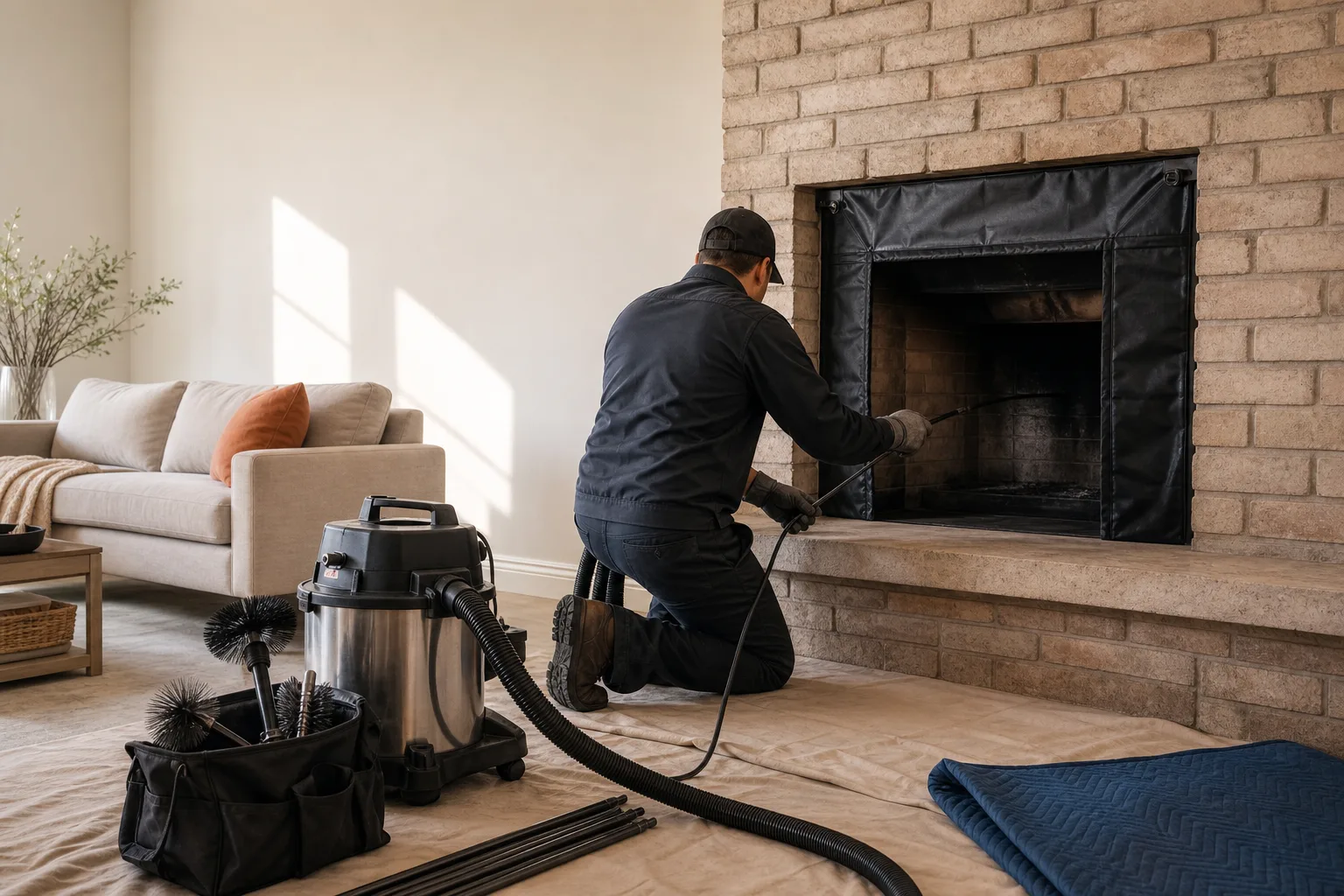
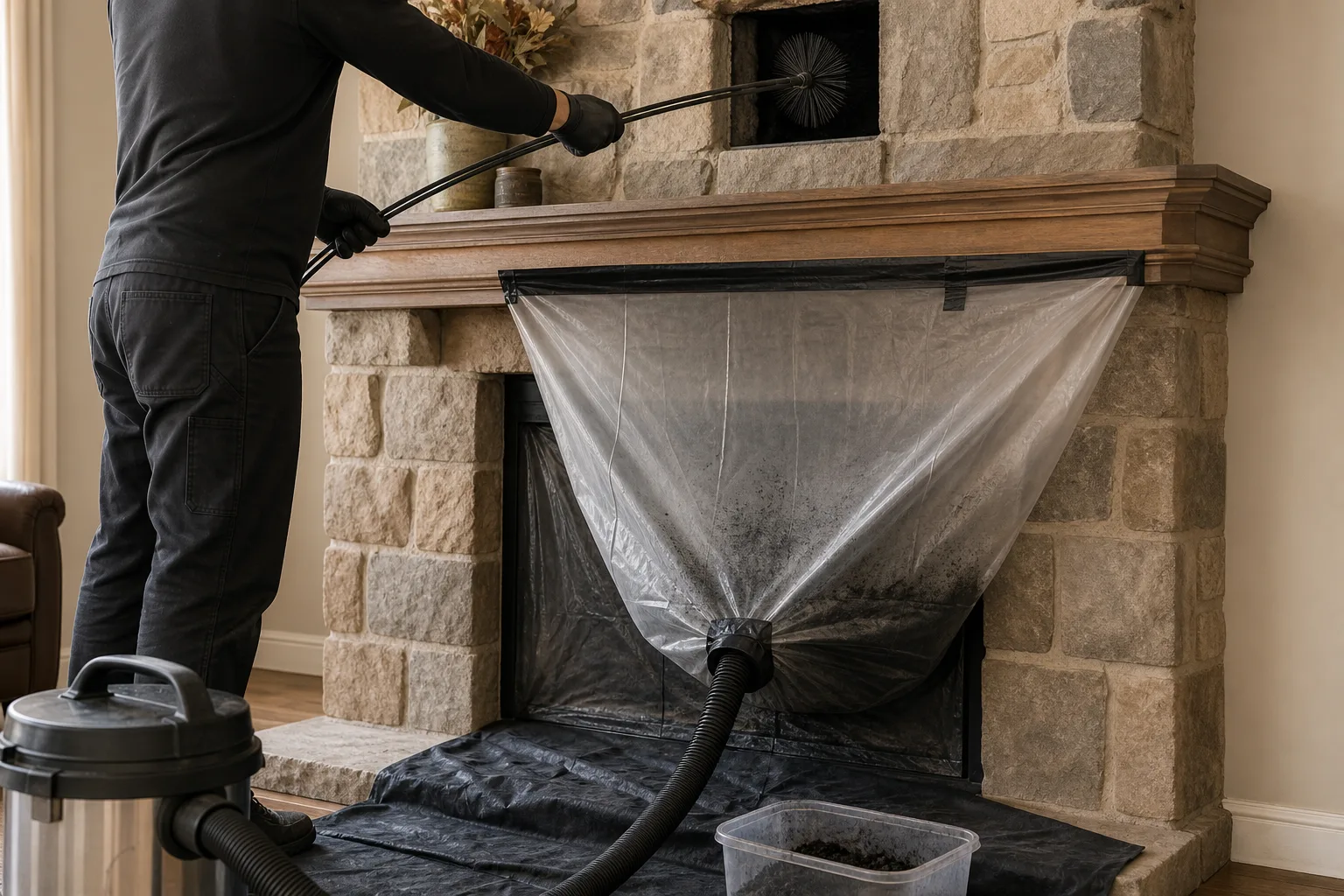
Professional dust control usually includes floor protection, a sealed fireplace opening or controlled appliance access, and a vacuum designed to capture fine soot. Some brushing methods keep the vacuum running while rods move through the flue, helping contain loosened material inside the work zone. No responsible technician should promise that chimney work creates zero dust, but soot should not be allowed to spread through the room under normal service conditions.
Service time varies with the number of flues, chimney height, access, appliance setup, and the type and amount of buildup. A straightforward, accessible system with light deposits takes less time than a tall flue with offsets, a difficult connector, or hardened creosote. The technician should pause and discuss the situation if the work turns out to require specialized removal, additional inspection, or repairs outside the agreed scope.
Pro tip: Leave the damper, doors, and appliance controls in their normal positions before the appointment. The technician can then see how the system was last operated and check for sticking, misalignment, or debris before moving anything.
Signs your chimney may need cleaning
Strong smoky odors, falling soot, visible deposits, weak draft, smoke entering the room, and debris collecting in the firebox can all indicate that a chimney needs attention. These symptoms do not always mean buildup is the only problem, so cleaning should be paired with a check for blockages, damage, moisture, and appliance or house pressure issues.
A stale, tar-like odor often becomes more noticeable during warm or humid weather because air may move down the chimney and carry creosote odors indoors. Odor alone does not show how much material is present, but a sudden change or persistent smell is a sound reason to have the flue checked.
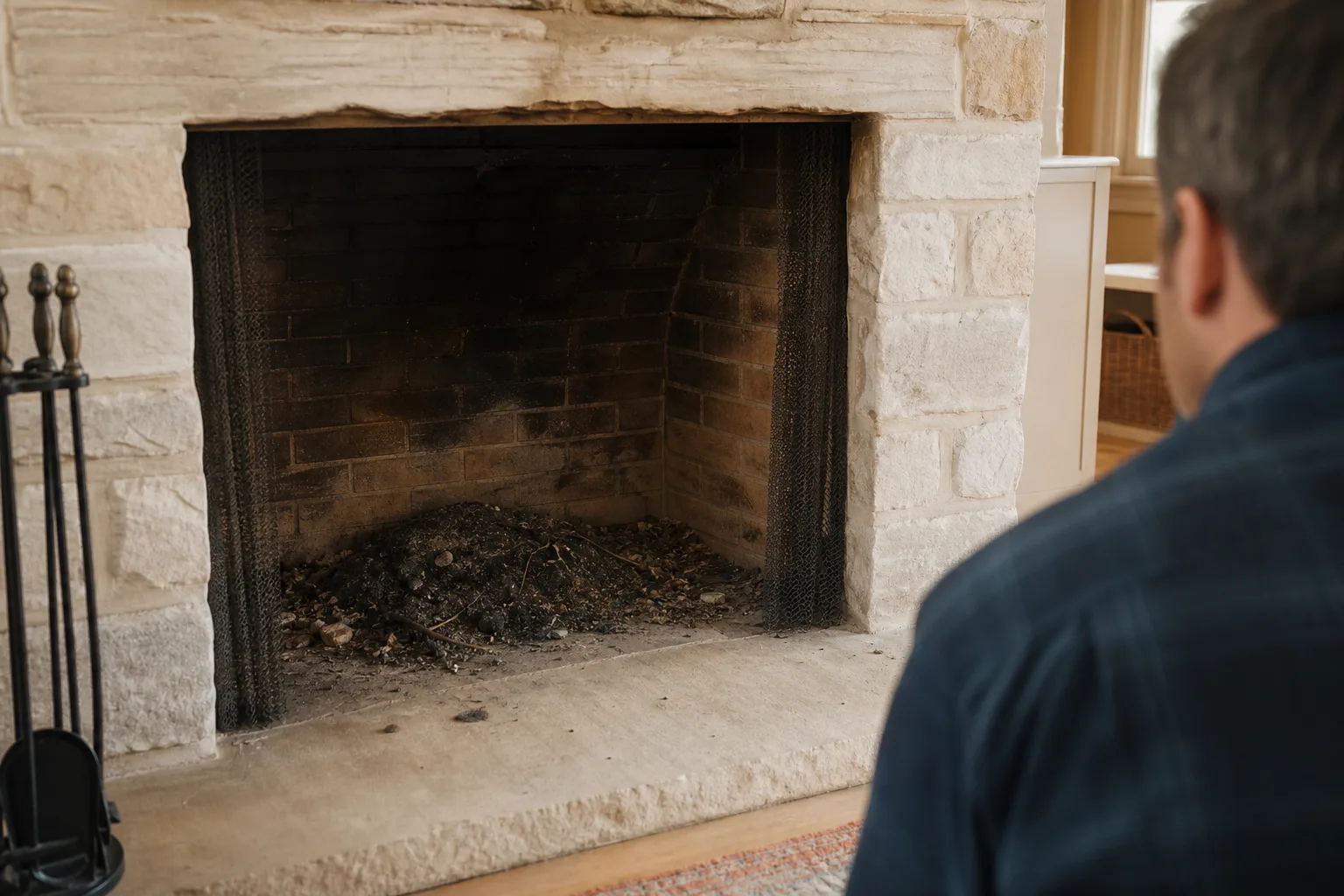
Black flakes or powder falling onto the smoke shelf, damper, hearth, or appliance baffle suggest deposits are loosening above. Pieces that look shiny, puffy, or melted may be associated with heavier creosote or a previous high-temperature event. Avoid reaching into an unknown blockage or trying to knock it loose from below, since debris can fall unexpectedly and damaged liner pieces may have sharp edges.
Visible buildup near the flue entrance is another warning sign, though the lower opening does not represent the entire chimney. Deposits may be heavier near the top, around bends, or where an exterior chimney stays cooler. A light-looking area at the bottom therefore cannot confirm that the rest of the passage is clean.
Poor draft can cause slow ignition, lazy flames, repeated kindling failures, or smoke spillage when a door or damper is opened. A dirty or blocked flue is one possible cause, but a closed damper, missing combustion air, an oversized flue, a cold chimney, exhaust fans, or an improperly connected appliance can produce similar symptoms.
Smoke entering the room requires attention even if it happens only during startup or windy weather. First confirm that the damper and any required air controls are open, but stop using the appliance if smoke continues to spill. Repeated backup can expose occupants to combustion gases and deposit soot on walls, ceilings, and furnishings.
Safety note: If a carbon monoxide alarm sounds, move everyone to fresh air and follow the alarm manufacturer’s emergency instructions. Do not silence the alarm and relight the fireplace or heating appliance to see whether it happens again.
A chimney fire is not always a loud event with flames coming from the top. Some fires burn briefly or remain confined inside the flue, leaving glazed deposits, warped metal, cracked tiles, missing mortar, or heat damage without an obvious indoor sign. A sudden roaring sound, intense heat, a sharp smoky smell, sparks outside, or unexplained changes in draft should be treated as possible evidence of a chimney fire.
After a suspected chimney fire, stop using the system and arrange an inspection before lighting another fire. Cleaning by itself cannot establish that the liner and nearby construction escaped damage. The same caution applies when liner fragments appear in the firebox or cleanout, since broken pieces may indicate that the flue no longer contains heat and gases as intended.
Prompt professional attention is also appropriate when:
- A carbon monoxide alarm activates while a vented appliance is operating.
- Smoke repeatedly enters occupied rooms despite correct damper and air control settings.
- Birds, nesting material, leaves, or masonry debris appear to block the flue.
- The liner is known or suspected to be cracked, corroded, displaced, or incomplete.
- A chimney fire may have occurred, even if the appliance now appears to work normally.
- Water, rust, or fallen masonry suggests that the venting system has deteriorated.
When safe venting is uncertain, leave the fireplace or heating appliance off. If you are seeing these warning signs, you can request service for cleaning and an inspection before using the system again.
How often to schedule sweeping and inspection
Schedule a chimney sweep when inspection shows deposits or obstructions that need removal, rather than relying on one fixed interval for every home. Fuel type, appliance use, burning habits, flue design, chimney location, and the amount and form of buildup all affect how quickly service becomes necessary.
NFPA 211 calls for chimneys, fireplaces, and vents to be inspected at least annually, with cleaning, maintenance, and repairs performed as needed. An annual inspection does not mean every chimney will need the same cleaning each year. It provides a regular opportunity to assess deposits, damage, blockages, and changes that may have occurred since the last use season.
Wood-burning systems can accumulate creosote at different rates even when two households burn a similar amount of fuel. Frequent fires, damp wood, restricted airflow, oversized flues, cool exterior chimneys, and long smoldering burns all encourage smoke to condense before it exits. A hot, well-established fire using properly seasoned wood generally produces less creosote than repeated smoky fires, but inspection is still needed to confirm actual conditions.
Fireplaces used only on holidays or during power outages should not be ignored. Birds and other animals can build nests, caps can loosen, mortar can deteriorate, and water can enter while the system sits idle. Long periods of disuse can also leave owners unaware of a past leak or blockage until the next fire is lit.
Gas and oil appliances create different deposits than wood-burning appliances, but their vents still need periodic inspection. Corrosion, condensation, debris, disconnected vent sections, improper sizing, and animal entry can interfere with exhaust flow. A clean-burning fuel does not remove the need to verify that combustion gases have a clear, correctly configured path outdoors.
Pellet appliances and other solid-fuel systems may produce fine ash that collects in internal passages, vent sections, and termination points. Their maintenance schedule should account for the appliance instructions as well as the condition of the connected venting. Appliance cleaning and chimney or vent cleaning may be separate services, so homeowners should confirm what is included.
Pro tip: Keep a simple record of fuel use, unusual smoke events, and the date of each inspection. A technician can make a better service recommendation when there is a clear history rather than a guess about the last cleaning.
Scheduling before the regular heating season gives time to address cleaning or repair findings before the first cold spell. An appointment after the season can also work well because deposits are removed before humid summer air increases odor, and the system is less likely to sit for months with acidic soot or creosote against its surfaces.
Certain events justify an inspection without waiting for the usual annual visit. Arrange one after a known or suspected chimney fire, a severe storm that may have damaged the cap or masonry, a lightning strike, a major leak, nearby construction, or a long period when the system was unused. An inspection is also sensible after buying a home or changing an appliance, since prior maintenance and compatibility may be uncertain.
The technician’s documented findings should guide future timing. A system that builds deposits quickly may need checks or cleaning more often during active use, while another may remain relatively clean between annual inspections. Burning habits can change that pattern, so an old schedule should not override what is currently visible inside the flue.
What happens during a professional chimney sweep visit
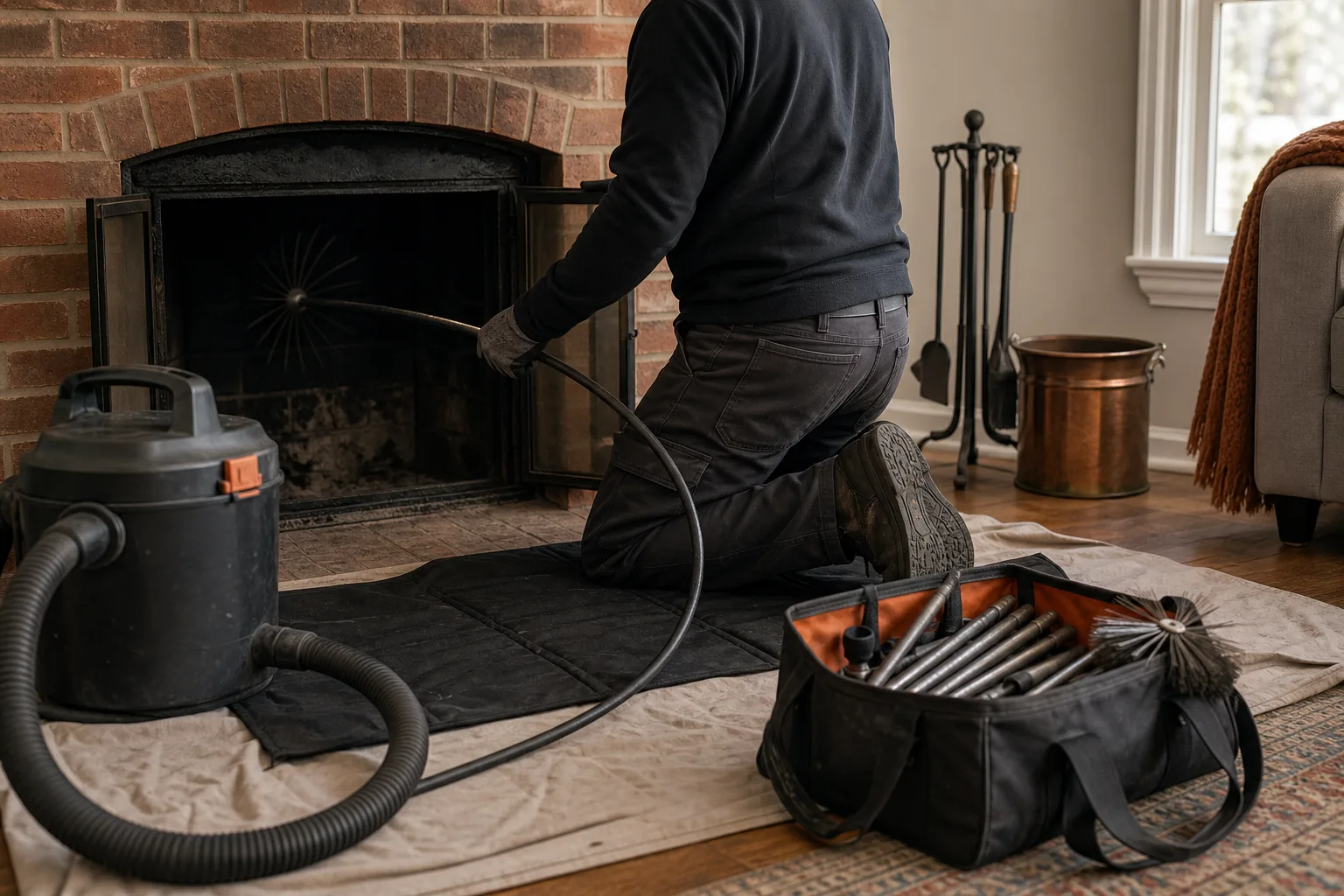
A professional visit typically begins with a brief discussion of the appliance, recent performance, known leaks, smoke problems, and prior chimney work. The technician then checks access, reviews the visible setup, protects the work area, and chooses a cleaning method suited to the flue construction and deposit type.
Floor coverings are placed around the fireplace or appliance, and nearby openings may be sealed or controlled to contain soot. A suitable vacuum is positioned to capture loosened particles without pulling excessive room air through the work area. The technician should also check that the appliance and ashes are cool enough to handle safely.
Before brushing, the technician may examine the firebox, damper, smoke chamber, cleanout, connector pipe, or appliance outlet. This first look helps identify loose liner pieces, active animal entry, severe blockage, standing water, damaged components, or other conditions that could make ordinary cleaning unsafe or ineffective.
Brushes and rods are selected according to the liner’s material, shape, size, and condition. Clay tile, listed metal liners, factory-built chimney sections, and appliance venting do not all call for the same brush. Using an unsuitable tool can fail to remove deposits or can damage a liner, so more aggressive equipment is not automatically better.
Safety note: A technician should not step onto a wet, icy, steep, or deteriorated roof simply because top access was expected. Cleaning from below, rescheduling exterior work, or using another safe access plan is preferable to taking an avoidable fall risk.
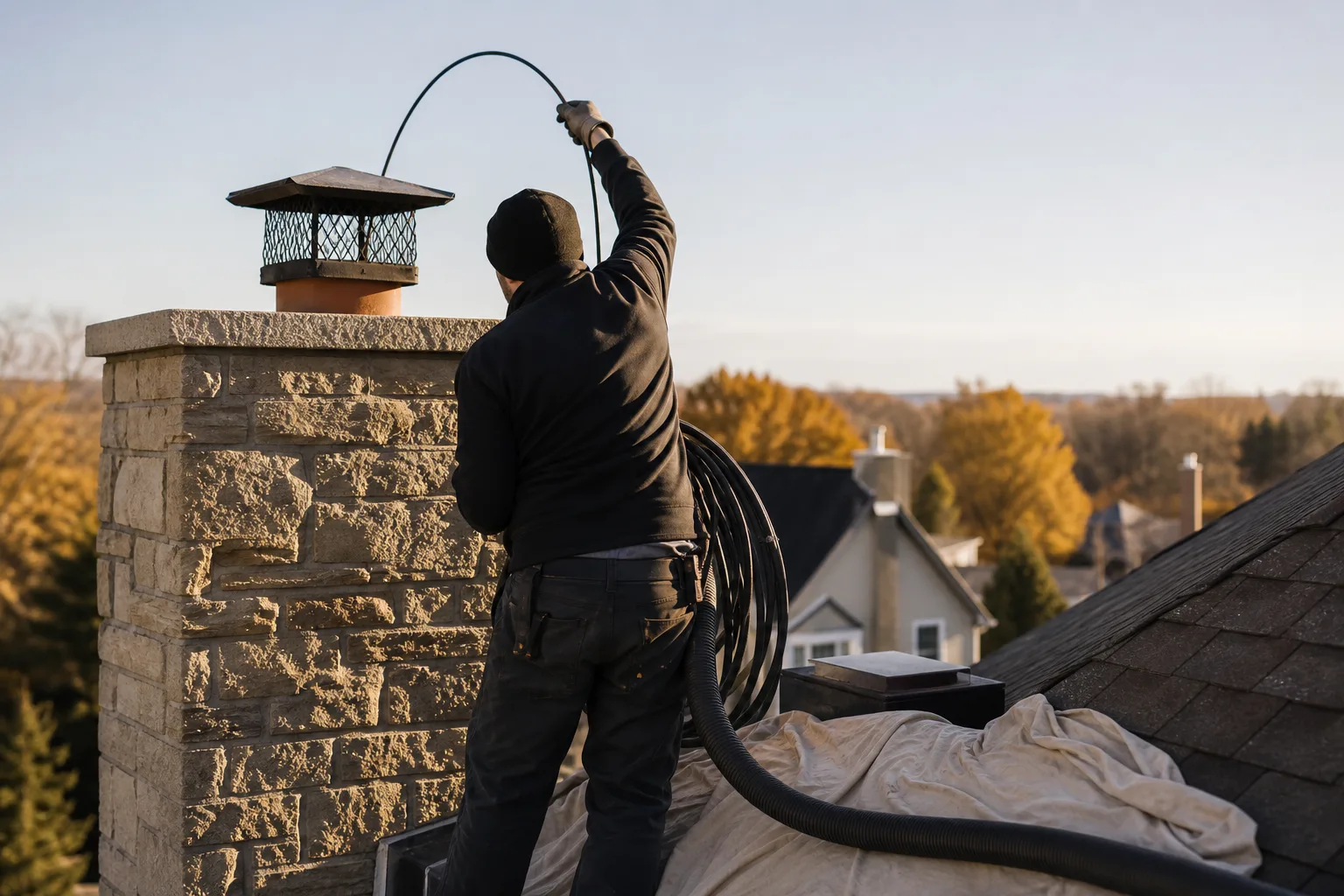
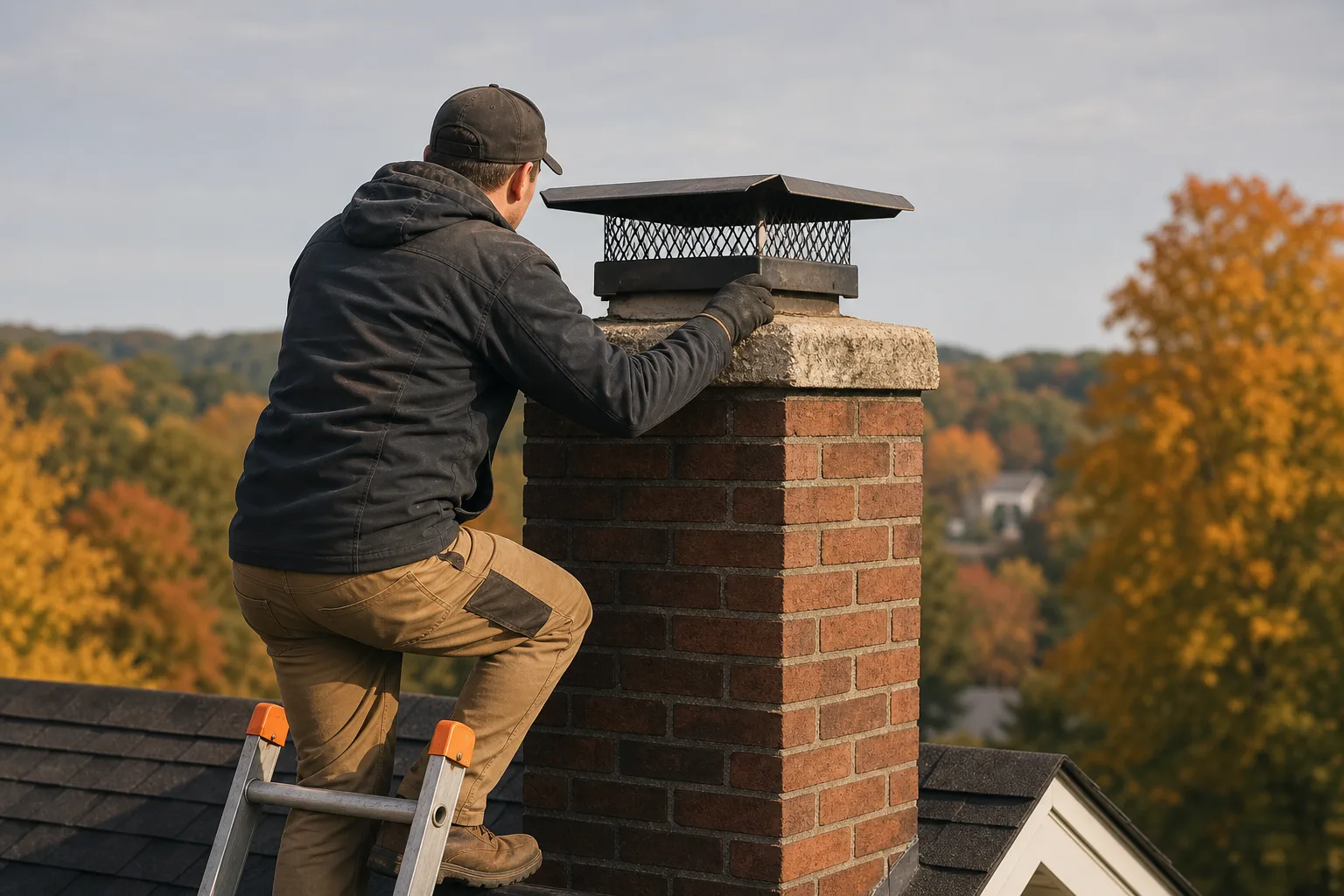
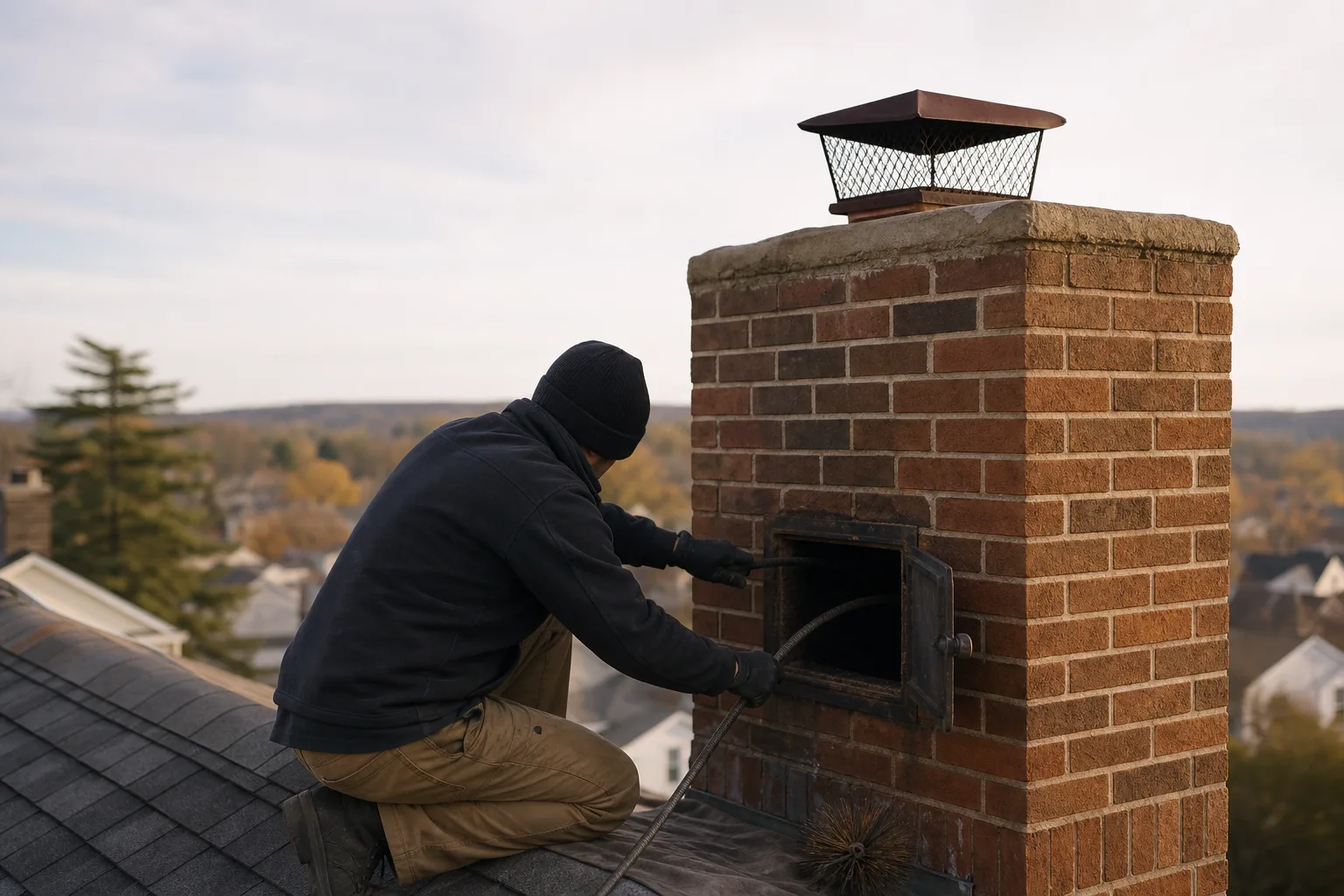
Cleaning may be performed from the fireplace or appliance opening, from the chimney top, or from both ends. Bottom-up methods can reduce the need for roof access and work well for many flues, while top-down access may provide a better approach to certain caps, offsets, smoke chambers, or blockages. Chimney height, roof pitch, weather, liner configuration, and the location of cleanout doors determine which method makes sense.
During cleaning, rods move the brush or another approved tool through accessible sections while the vacuum controls loosened material. The technician may make several passes, changing the brush or direction when the flue has offsets or deposits of different textures. Removed material should be collected from the firebox, smoke shelf, cleanout, or appliance rather than left where it can fall back into the system.
Areas addressed during the visit may include:
- The chimney flue and accessible liner surfaces.
- The smoke chamber and smoke shelf of a masonry fireplace.
- The damper frame, damper plate, and nearby ledges.
- The firebox and accessible ash or cleanout areas.
- Connector pipe serving a stove or heating appliance.
- Accessible appliance venting and termination components.
- Caps or screens that can be reached safely and are included in the agreed service.
Not every item on that list is part of every appointment. Some connector pipes need to be disconnected for complete access, some appliances have internal passages requiring separate maintenance, and some smoke chambers cannot be fully reached with standard tools. The service description should identify which flue and appliance are included, especially in a home with multiple fireplaces or heating systems.
Routine brushes can remove loose soot and many brushable creosote deposits, but hard glazed material may remain bonded to the liner. Packed nesting material, construction debris, collapsed tiles, or deposits behind offsets may also resist ordinary methods. When standard cleaning cannot restore an open passage without risking damage, the technician should stop and explain the available next steps.
A post-cleaning review typically includes another visual check of accessible areas and a discussion of what was removed. The technician should point out visible cracks, gaps, corrosion, water staining, damaged dampers, missing components, or remaining deposits. Photos are useful when findings are above the firebox or in another area the homeowner cannot readily see.
Good to know: Ask whether a photo shows the condition before cleaning or after cleaning. The distinction matters because loose deposits can hide a sound surface, while cleaning can expose a crack or gap that was previously concealed.
A standard visual review has limits, particularly when deposits remain, the flue has offsets, or the liner cannot be seen from its openings. A video scan or higher level of inspection may be recommended after a chimney fire, when the appliance or fuel type changes, when a property transfers ownership, or when hidden damage is suspected. The need for additional evaluation should be tied to a specific condition, not presented as an unexplained upgrade.
Specialized deposit removal may require different tools, chemical treatment used according to its instructions, or a return visit. Masonry repairs, liner work, cap replacement, leak correction, and appliance alterations are generally separate from routine cleaning. The homeowner should receive a clear explanation of what can be used now, what needs further evaluation, and what work must be completed before the next fire.
If your chimney is due for cleaning or its condition is uncertain, request service online or call our team to discuss the appliance, access, and inspection needs before booking.
How to prepare your home for the appointment
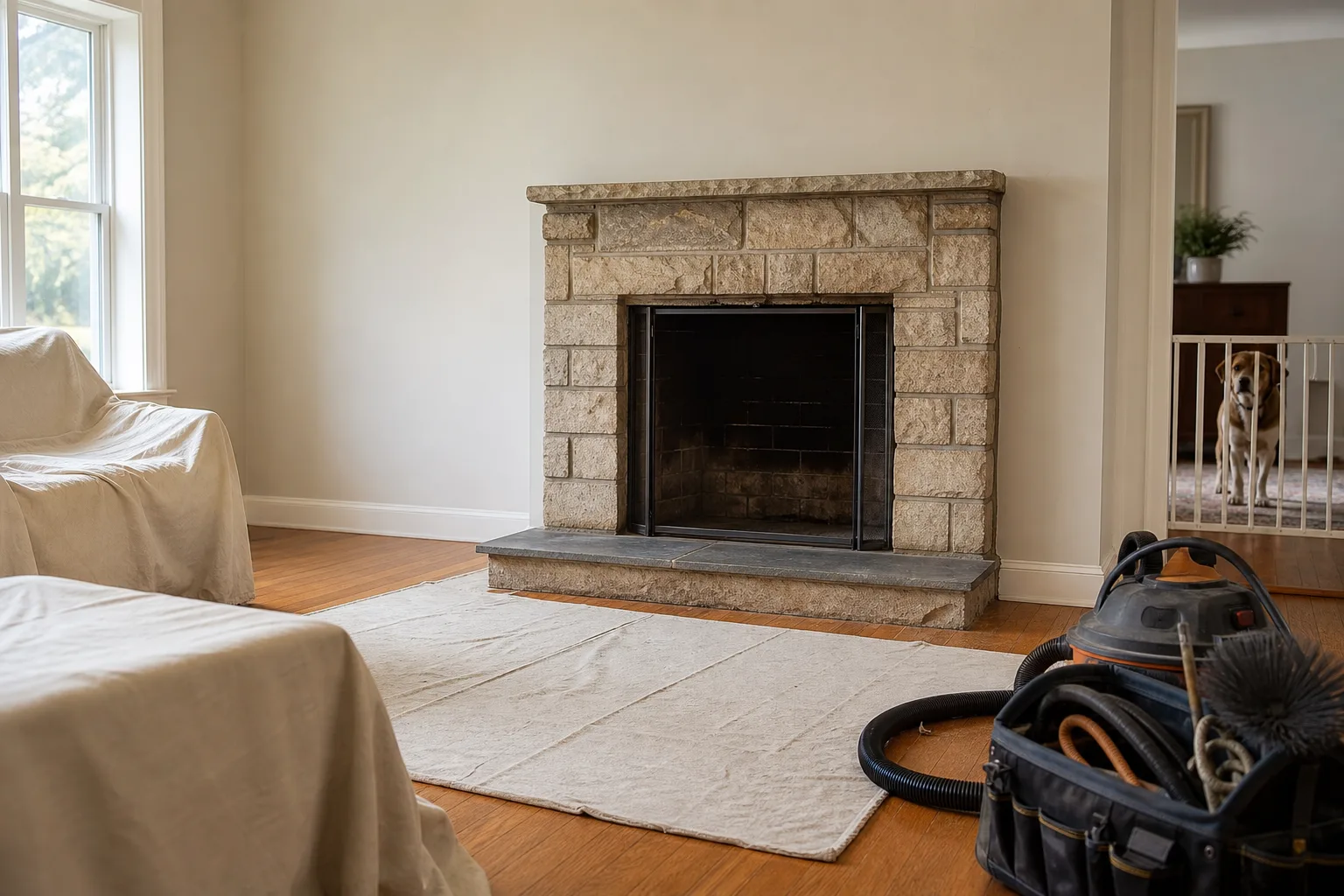
A chimney sweep can work more safely and keep the room cleaner when the fireplace or heating appliance is cool, accessible, and free of nearby belongings. Stop using it early enough for the firebox, ashes, grate, connector pipe, and surrounding surfaces to cool completely. Do not add water to hot ashes, since this can create a heavy paste and may damage masonry or metal components.
Leave ashes in place unless the service provider asks you to remove them. Ash depth, fallen debris, and pieces of flue material can offer useful clues about draft problems or deterioration. If ash removal is requested, place only fully cooled material in a metal container with a tight fitting lid and store it away from combustible surfaces.
Clear decorations, baskets, fireplace tools, rugs, and fragile objects from the immediate work area. Move furniture far enough away to give the technician room for protective coverings, rods, brushes, lighting, and vacuum equipment. Keep a practical path open from the entry door to the fireplace or appliance, including enough space to carry equipment without brushing against walls or furnishings.
Access may be needed beyond the room containing the fireplace. Unlock attic, basement, crawlspace, utility room, and exterior gates when those areas contain venting, cleanout doors, chimney supports, or appliance connections. If the chimney can only be approached through a narrow side yard or fenced area, mention that before the visit so the technician can plan for access.
Secure dogs, cats, and other pets in a separate room before equipment comes inside. Vacuums and rotating rods can startle animals, while an open entry door creates an easy escape route. Children should also remain outside the work zone until tools and protective coverings have been removed.
Pro tip: Take down anything attached to the mantel or fireplace screen that could vibrate loose during brushing. A technician may also ask you to temporarily disable a nearby ceiling fan so it does not move airborne dust beyond the protected area.
Share known problems at the start of the appointment, even if they seem unrelated to cleaning. Tell the technician about smoky odors, water stains, falling tile fragments, unusual appliance shutdowns, animal activity, past chimney fires, and any carbon monoxide alarm. Records from earlier inspections, liner work, masonry repairs, leak investigations, or appliance installations can help explain changes that are not obvious from a standard visual check.
Make sure the technician knows which fireplaces and heating appliances are included in the appointment. Separate flues within the same chimney may serve different appliances, and cleaning one does not mean the others were inspected or swept. Confirming the scope before work begins prevents confusion when the final report is reviewed.
If you are unsure whether the fireplace is cool enough or which access points will be needed, request service and describe the setup when scheduling. A few details in advance can help the visit proceed without avoidable delays.
Understanding findings, cleaning limits, and possible repairs
A cleaning report may describe several deposit types because they do not respond to the same tools. Loose soot is usually dry and powdery, while brushable creosote may appear flaky, crunchy, or tar-like. These materials can often be removed with standard sweeping equipment when the surfaces are accessible and the deposit has not hardened into a glaze.
Glazed creosote is dense, shiny, and strongly bonded to the flue surface. Ordinary brushing may remove little of it, and aggressive scraping can damage clay tile, mortar joints, or some liner systems. Specialized removal may be advised, but the suitable method depends on the liner material, deposit depth, and condition of the flue.
Safety note: A dark, smooth flue surface is not automatically clean. Glazed deposits can resemble part of the liner, so the appliance should not be used until the technician has explained what remains and whether additional removal or inspection is needed.
A blockage differs from normal buildup because it restricts the venting path. Common obstructions include nesting material, leaves, masonry fragments, damaged liner sections, and debris from a missing or displaced cap. Accessible material may be removed during service, but a tightly packed nest, collapsed liner, or blockage in an unsafe location can require another method or a separate visit.
Animal material also requires care. A sweep may remove abandoned nesting debris from accessible areas, but live animals, protected species, insects, or contaminated material may call for wildlife or pest assistance. Installing or repairing a suitable cap is often discussed after the flue is clear, particularly when repeated entry has occurred.
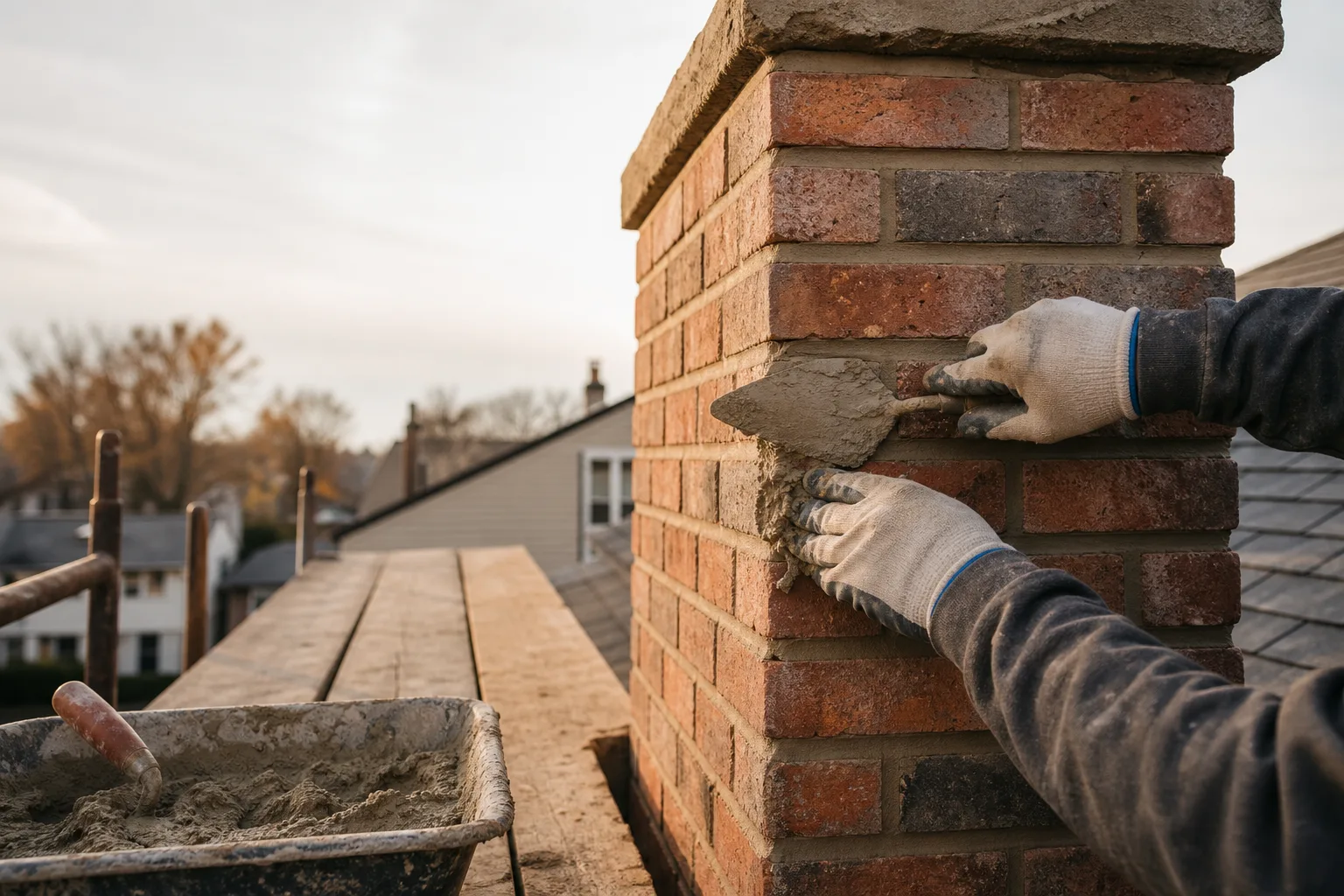
Cleaning removes deposits, but it does not seal cracks or rebuild damaged components. Common masonry findings include cracked flue tiles, open liner joints, loose mortar, deteriorated crowns, spalled brick, and gaps where water can enter. A brush can expose these conditions by removing soot, but it cannot correct them.
Metal components have their own failure patterns. A technician may find corrosion, separated connector pipe joints, a distorted damper, a damaged metal liner, or an appliance adapter that does not fit correctly. Missing caps, torn flashing, and water stains may point to exterior defects that require roof or masonry work rather than additional sweeping.
Clearance concerns are less visible but can affect safe operation. Framing or other combustible material may be too close to the chimney, connector pipe, or appliance, particularly around concealed floor and roof penetrations. A routine visit cannot always confirm clearances inside finished walls, so signs of improper construction may lead to a higher level of inspection or limited access to concealed areas.
Not every observation requires immediate repair. Minor surface wear, early corrosion, or an exterior maintenance item may be suitable for monitoring, while an active blockage, damaged vent connector, open flue joint, or evidence of a chimney fire can justify stopping use. The technician should separate conditions that affect operation now from items that can be scheduled or watched over time.
Good to know: Small pieces of orange or tan material in the firebox may be flue tile rather than ordinary ash. Save a sample or photograph it before cleanup, since its color, thickness, and shape can help the technician identify where it came from.
A video scan or more detailed inspection may be recommended when the flue cannot be adequately viewed, when defects are suspected, or after an event that could have caused damage. Chimney fires, lightning, severe weather, building movement, water entry, and a long period of disuse can all justify closer examination. Specialized cleaning and repair estimates should be treated as separate steps when the initial service did not include them.
Ask for clear photographs or video of significant findings whenever conditions allow. A useful written description identifies the location, the affected component, what was observed, and why it matters. Labels such as “damaged” or “unsafe” are more helpful when supported by images and a plain explanation of the venting or fire risk.
The final discussion should also state what could not be confirmed. Roof conditions, concealed construction, inaccessible flue sections, heavy deposits, or an appliance that could not be moved may limit the inspection. Knowing those limits helps you decide whether to authorize a scan, arrange another trade, plan a repair, or keep the system out of service until more information is available.
Choosing a qualified service and planning next steps
A qualified chimney sweep should explain the service scope, inspection limits, cleaning method, and likely next steps before asking you to approve work. Look for clear answers about technician training, insurance, dust control, roof access, and written reporting. The provider should also be willing to explain how unexpected blockages, glazed deposits, live animals, or damaged components will be handled.
Ask practical questions before scheduling:
- Which fireplace, appliance, flue, connector, and cleanout areas are included?
- Does the visit include a visual inspection, and what parts can normally be viewed?
- Will photographs or a written condition report be provided?
- How will floors, furnishings, and nearby surfaces be protected?
- Could roof access be needed, and what happens if weather or roof conditions make access unsafe?
- What training has the assigned technician received, and is the business insured for this work?
- Will additional work require separate approval before it begins?
Training matters because fireplaces, factory built systems, masonry chimneys, wood stoves, inserts, and heating appliances have different venting requirements. A technician should know when a brush type, rod system, or cleaning direction could damage a component. The technician should also recognize when the observed condition falls outside the scheduled service and needs a more detailed inspection or another qualified trade.
Dust control should be described in concrete terms. Protective floor coverings, sealed appliance openings when appropriate, and a vacuum designed for fine soot are common parts of a controlled setup. No provider can promise that every trace of dust will be eliminated, but the work plan should keep soot from being intentionally released into the living area.
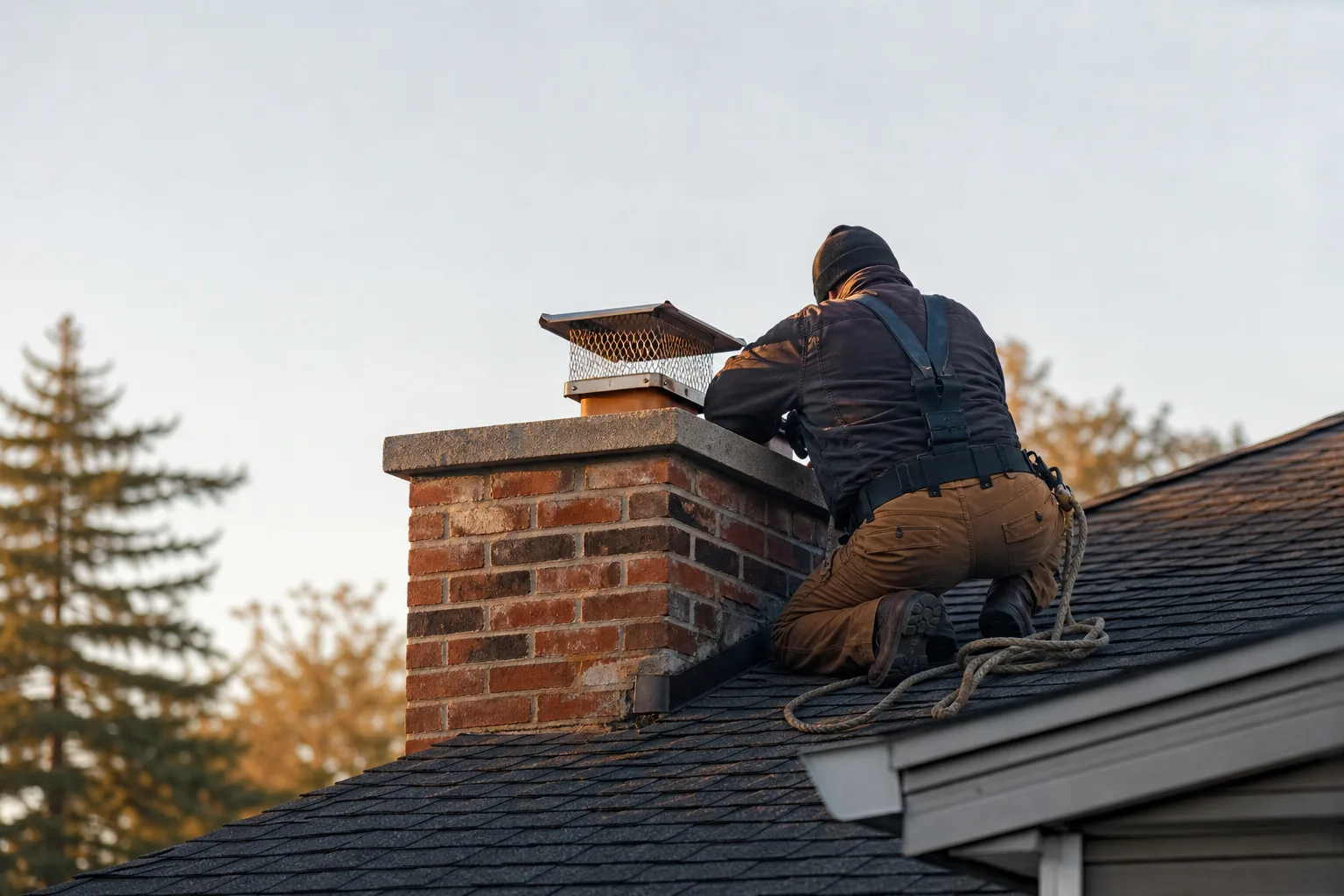
Roof access is not always necessary, and it should never be treated casually. Chimney design, cap configuration, deposit location, weather, roof pitch, surface condition, and safe ladder placement all affect the chosen method. A responsible technician may work from below, combine top and bottom cleaning, or reschedule an exterior portion when conditions are unsafe.
Pro tip: Ask who decides whether roof access is safe on the day of service. The technician on site should be able to decline unsafe access without pressure to climb because a particular method was assumed during scheduling.
Be cautious with vague descriptions such as a basic sweep that do not identify the included flue or appliance. A low initial quote may leave out connector pipes, smoke chambers, cleanout areas, inspection work, or difficult deposits. Compare the stated scope rather than assuming every provider includes the same tasks under the same service name.
Pressure to approve immediate repairs without evidence is another warning sign. Some defects do require prompt action, but the recommendation should include a location, photographs when possible, and an explanation of how the condition affects use. If the issue is not an immediate hazard, you should have room to review the findings and ask questions before deciding.
Service cost varies with chimney height, roof and appliance access, flue size, deposit type, liner condition, and the number of connected systems. Video scanning, difficult blockage removal, glazed creosote treatment, animal related work, and specialized equipment may change the scope. A written quote should say what is included, what is excluded, and how additional conditions will be priced or approved.
Build the maintenance plan from documented conditions rather than a fixed cleaning promise. The report should indicate whether the system was cleaned adequately, whether any deposits remain, which repairs affect current use, and when another inspection is recommended. Keep that report with appliance manuals and earlier chimney records so future changes are easier to recognize.
Safe burning habits can slow deposit formation between visits. Use fuel suitable for the appliance, avoid prolonged smoldering fires, maintain the airflow required by the appliance, and do not burn household trash or treated materials. Changes in odor, draft, soot fall, or smoke movement should prompt attention rather than waiting for the next planned appointment.
Moisture control also belongs in the maintenance plan because water can damage masonry, liners, dampers, and metal venting. Keep the cap, crown, flashing, masonry joints, and nearby drainage conditions under observation. Interior stains, rust, damp odors, or recurring efflorescence should be investigated before repeated wetting causes more deterioration.
Good to know: Put the service report and photos in a folder you can find during the next appointment. Side by side records help a technician distinguish a stable condition from a crack, stain, or corrosion area that is getting worse.
Set a reminder for the recommended inspection period, but schedule sooner after a suspected chimney fire, severe storm damage, extended disuse, or repeated smoke backup. Stop using the appliance if safe venting becomes uncertain, if a carbon monoxide alarm activates, or if damaged venting is discovered.
To arrange cleaning or an inspection, request service online or call to discuss the chimney, appliance, access, and symptoms before booking.
Symptom checker
What is your chimney doing?
Tap the closest match for an honest first answer.