



On this pageWhat a pellet stove installation cost actually covers7 sections+6
- What a pellet stove installation cost actually covers
- Freestanding stove or fireplace insert: how the cost splits
- The venting decision that moves your pellet stove installation cost most
- Labor, permits, and the parts of the job you cannot see
- What pushes your pellet stove installation cost up or down
- How to read a pellet stove installation estimate
- How VIO helps with your pellet stove installation cost
Quick answer
Pellet stove installation cost is built from the appliance, the vent system, labor, floor protection, electrical work, a permit, and any chimney work required. The venting route is the variable that moves it most: a short pass through an exterior wall involves far less material and labor than running a listed liner up an existing masonry chimney, which also requires the flue to be evaluated first.
If you are searching for pellet stove installation cost, you want a single number, and the published guides answer with a band wide enough to be almost useless once you are holding a real quote.
The band is wide for a reason, and the reason is not that installers disagree about what to charge.
A pellet stove install is not one job. It is an appliance, a vent path, a floor, an electrical circuit, a permit, and sometimes a chimney inspection and sweep with liner work behind it. Any one of those can be trivial at your house or the largest line on the page.
One decision does more to place your job inside that band than the appliance you choose. Two neighbors on the same street can buy the identical stove and pay very differently.
We will get to that decision. First, the parts.
What a pellet stove installation cost actually covers
The figure on the showroom tag is the appliance. The figure on your invoice is the appliance plus six or seven other things, and those other things are where quotes diverge.
| Line item | Relative scale | What can move it |
|---|---|---|
| The stove or insert | Largest single item of the group | Heat output, insert versus freestanding, finish and controls |
| Vent system and materials | Modest on a short run, substantial on a long one | Run length, number of elbows, wall route versus chimney route |
| Chimney work and liner | The widest spread of anything here | Chimney height, liner material, condition of the flue |
| Installation labor | A serious share on every version of the job | Hours on site, complexity of the route, access |
| Hearth pad or floor protection | Toward the lower end of the group | Material, required footprint, what the appliance spec calls for |
| Electrical | Hinges on one condition | Whether a receptacle is already within reach |
| Permit and inspection | Toward the lower end of the group | Set locally, and entirely jurisdiction dependent |
| Removing the old appliance | Toward the lower end of the group | Weight, access, disposal |
Those are relative positions, not a quote. Every published pellet stove installation cost is an average of houses that are nothing like yours, useful for orientation and useless as a prediction.
Good to know: the price on the showroom tag is the appliance by itself. The vent, the pad, the labor, the circuit and any chimney work are all still ahead of it. Budgeting for the stove alone is budgeting for one line on an itemized estimate.
The line items that get left out of the budget
Three of the rows above are worth a closer look, because they are the easiest to leave out of your own math.
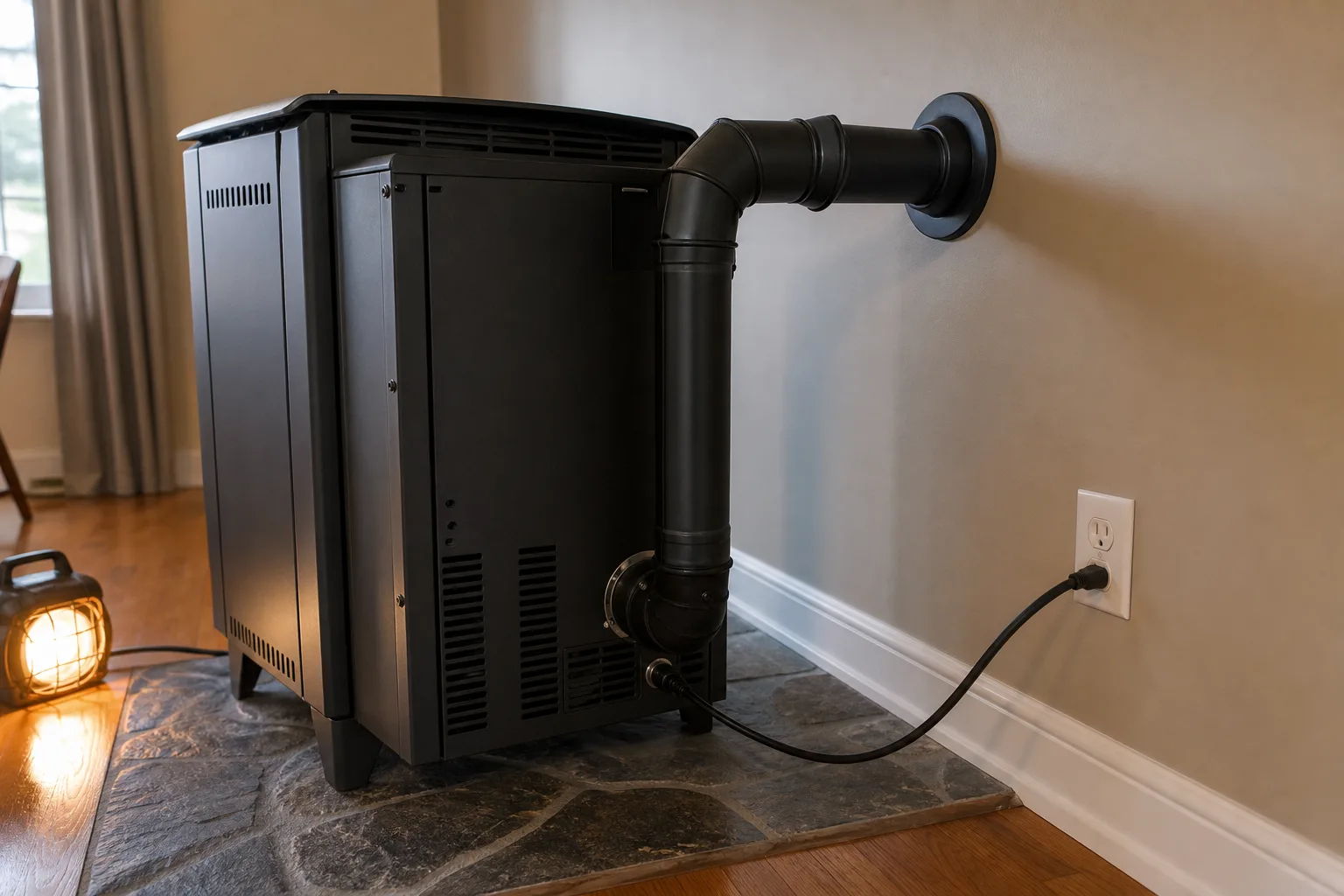
Electrical. A pellet stove is not a wood stove with better fuel. It runs an auger, a combustion blower and a control board, and all of that needs household power. If there is no receptacle within reach of where you want the stove, an electrician becomes part of your install.
Floor protection. A hearth pad under and in front of the stove is a common requirement, sized to the manufacturer's spec. Whether your existing floor qualifies is a question for that spec rather than for a general rule.
Getting rid of what is already there. If a cast iron stove or an old insert is sitting where the new one is going, someone has to move it out of the house. That is labor, and there can be a disposal fee behind it.
Freestanding stove or fireplace insert: how the cost splits
The two paths look similar on a price list and behave differently on install day, and they pull a pellet stove installation cost in opposite directions.
Freestanding pellet stoves
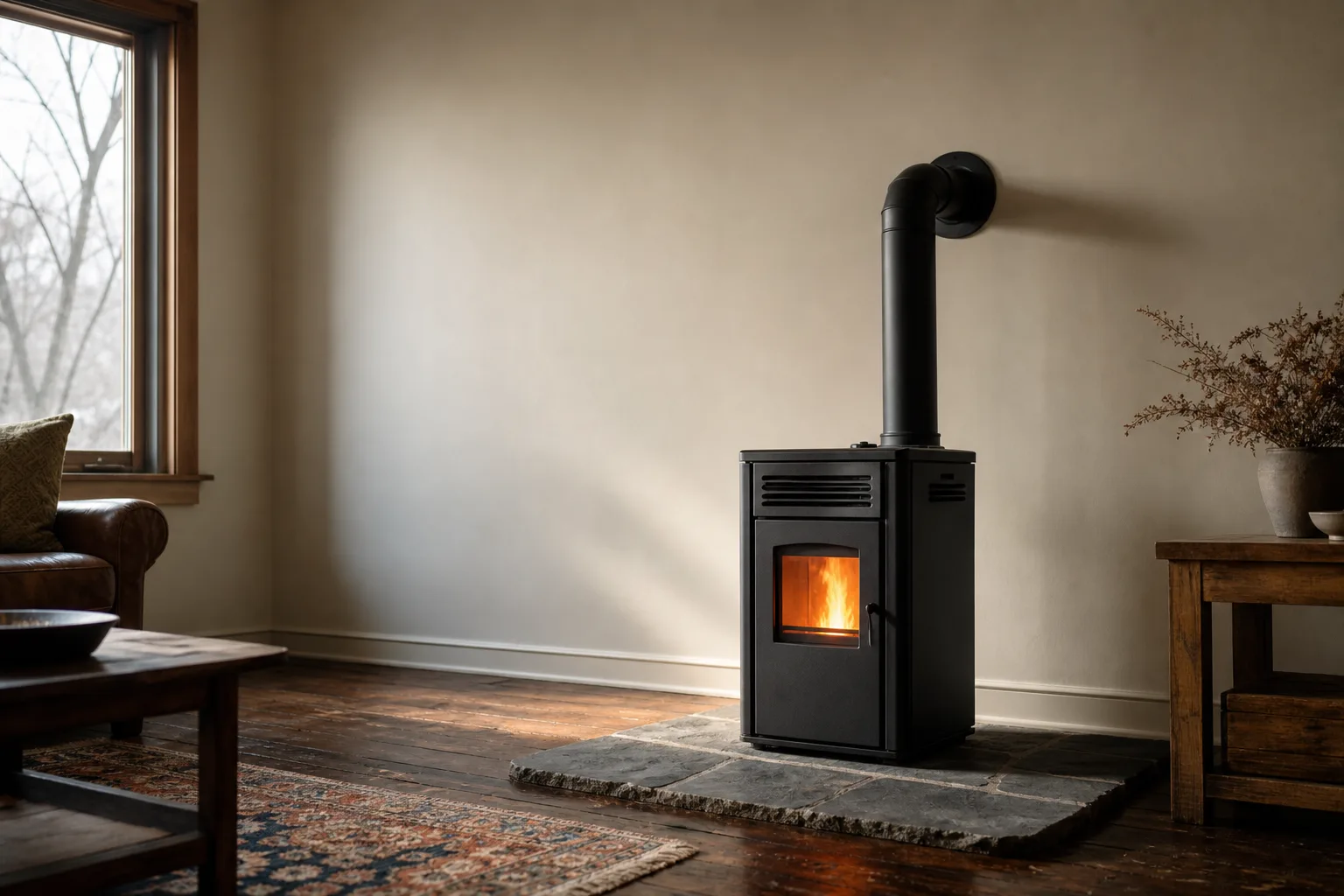
A freestanding unit sits on a hearth pad and vents out through a nearby exterior wall.
The vent run on this arrangement can be short, with few elbows and a single penetration. Less material and fewer hours on site follow from that, when the stove can legally sit where you want it.
The tradeoff is floor space, and committing to a location that has both a workable vent path and access to power.
The shape of a straightforward job looks like this: a mid-size freestanding unit against an exterior wall, a short and mostly straight vent path, a receptacle already on that wall, and nothing unusual in the way.
Pellet inserts in an existing fireplace
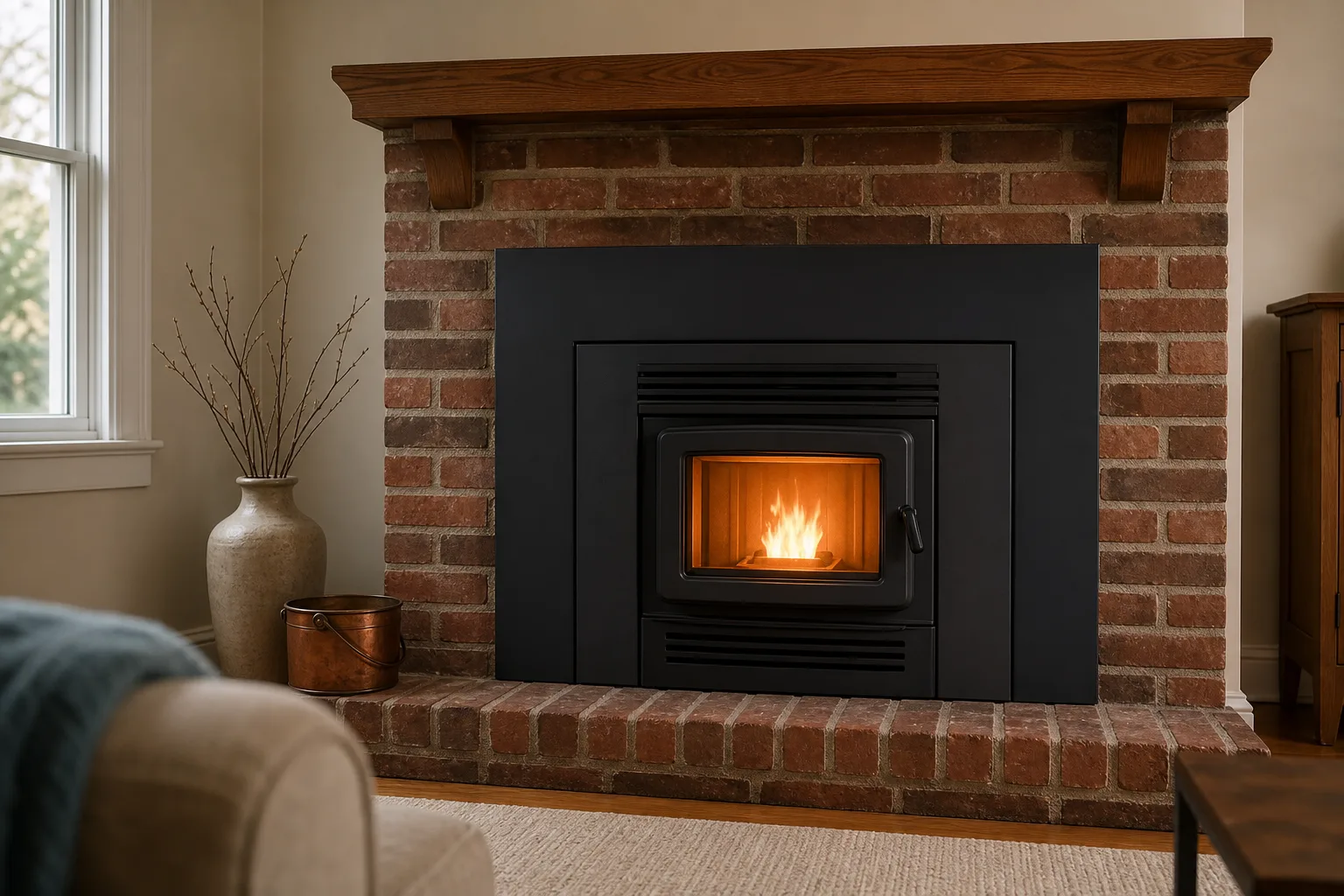
An insert slides into a masonry fireplace opening and covers the old firebox with a surround panel. You keep your floor space and you use an opening your house already has.
What you take on instead is the chimney. The insert needs a properly sized, listed liner running up the flue, and the flue has to be sound enough to accept one. That is why insert jobs can land anywhere in the band, including above it.
Myth vs. fact: you will read that pellet stoves do not need a chimney. It is misleading, and what it hides is that the vent system is where the budget question actually lives. A pellet stove needs a listed vent system. Whether that system is a short pass through your exterior wall or a full liner running up your masonry stack depends on your house, not on the appliance.
The venting decision that moves your pellet stove installation cost most
This is the decision from the top of the article.
Pellet appliances vent through Type PL pellet vent, commonly 3 or 4 inch double wall pipe. What varies, and what your budget hangs on, is where that pipe goes.
Route one: straight out through an exterior wall
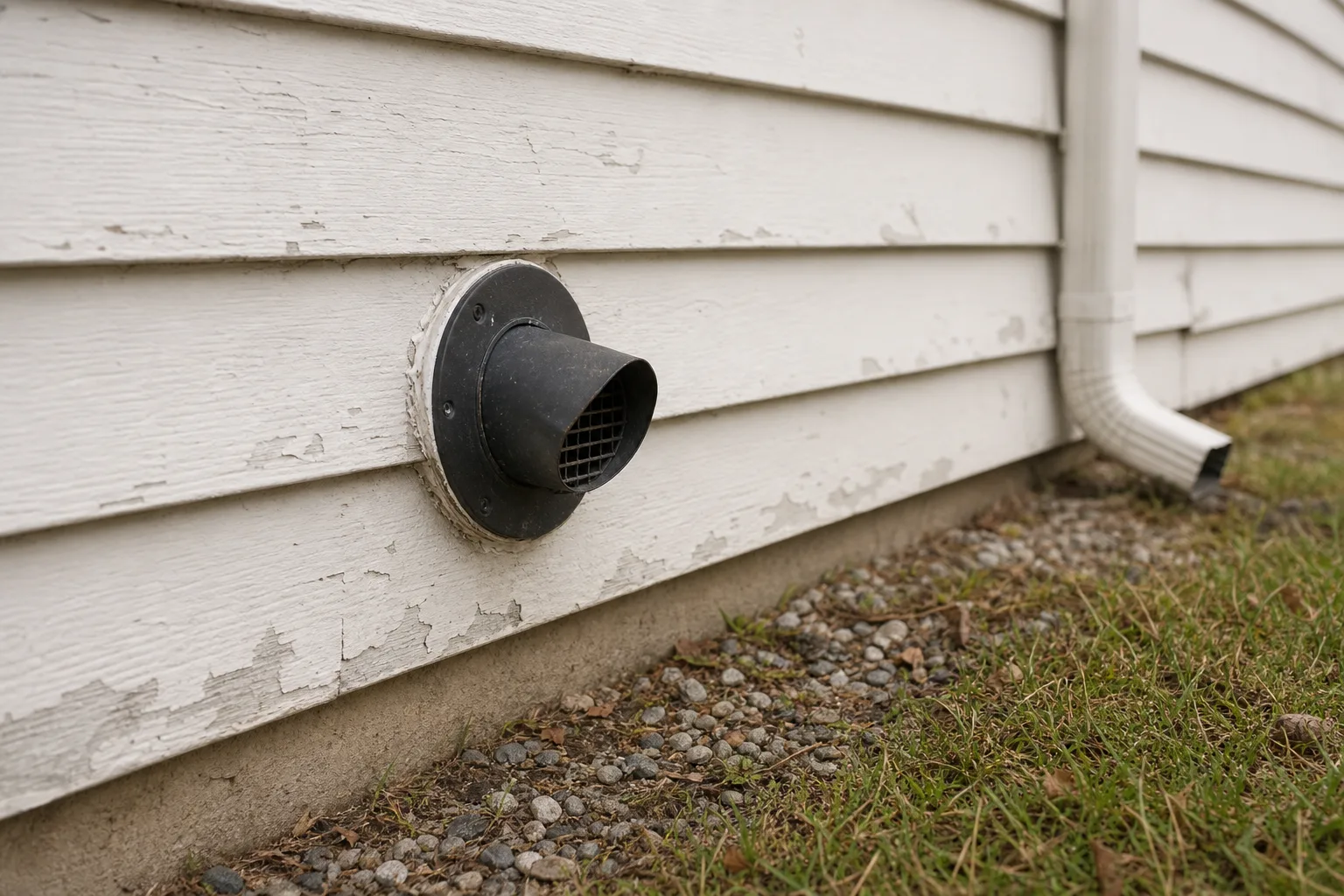
The pipe leaves the back or top of the stove, rises a short vertical section, and passes through the exterior wall via a thimble to a termination cap on the outside. Short run, few elbows, one penetration.
This is the arrangement that keeps the vent materials list short and the day on site predictable.
The rules that govern where that cap can land are specific. It has to sit at least 12 inches above grade, and higher where snow gets deep. It must be at least 3 feet from any door or window that opens, a minimum of 4 feet horizontally from or 1 foot above any door, window or gravity air inlet, and at least 3 feet above any forced air inlet within 10 feet horizontally.
Those clearances are the reason an installer can tell you the stove cannot go where you wanted it.
Route two: up an existing chimney with a liner
If you are putting an insert into a masonry fireplace, or the only workable stove location is nowhere near an exterior wall, the vent goes up the chimney inside a liner.
Now you are in a different budget, and this is the version of a pellet stove installation cost that catches people off guard. The liner is its own material line, the chimney evaluation is its own line, and any repair the flue turns out to need sits on top of both.
The chimney has to be evaluated before anyone can price it honestly. A stack that has not been used in years may be fine, or it may need repair before it can take a liner.
Safety note: a listed pellet stove has to be installed exactly as the manufacturer specifies, and that includes the brand and listing of the vent system. Mixing vent components across brands voids the appliance listing. Commonly cited clearance to combustibles for pellet vent falls between 1 and 3 inches, but the number on the product label is the one that governs, not the number in any article.
How to guess which route your pellet stove installation cost is heading toward
Stand where you want the stove and answer three questions.
Is there an exterior wall within a few feet, and is the ground outside that wall clear of doors, windows and air intakes by the distances above? If yes, you are probably looking at the wall route.
Is there an existing masonry fireplace you want to fill, or is your preferred spot in the middle of the house? Then you are probably looking at a liner, and your budget needs a chimney line in it.
Is there a receptacle within reach? If not, add an electrician either way.
You cannot settle this from the couch, and neither can anyone quoting you over the phone. Somebody has to look at the wall and the flue. Until they do, the rest of your budget is provisional.
Not sure which venting route your house needs?
That one answer sits underneath every number on the estimate, and it takes someone standing in front of your chimney to settle it. Tell us about your setup and we will match you with a local company that installs pellet stoves and can look at the actual vent path before quoting.
Request Service, or call (513) 655-6702.
Labor, permits, and the parts of the job you cannot see
Labor is a serious share of the total on every version of this job, and it climbs as the work moves from a short pass through a wall toward routing a vent up a chimney.
The hours are where the story is. A straightforward wall vent can be a single day on site. Route the vent up a chimney, or through an attic, and the hours multiply.
What the crew is actually doing for those hours
It looks like a small job from the outside. It is not.
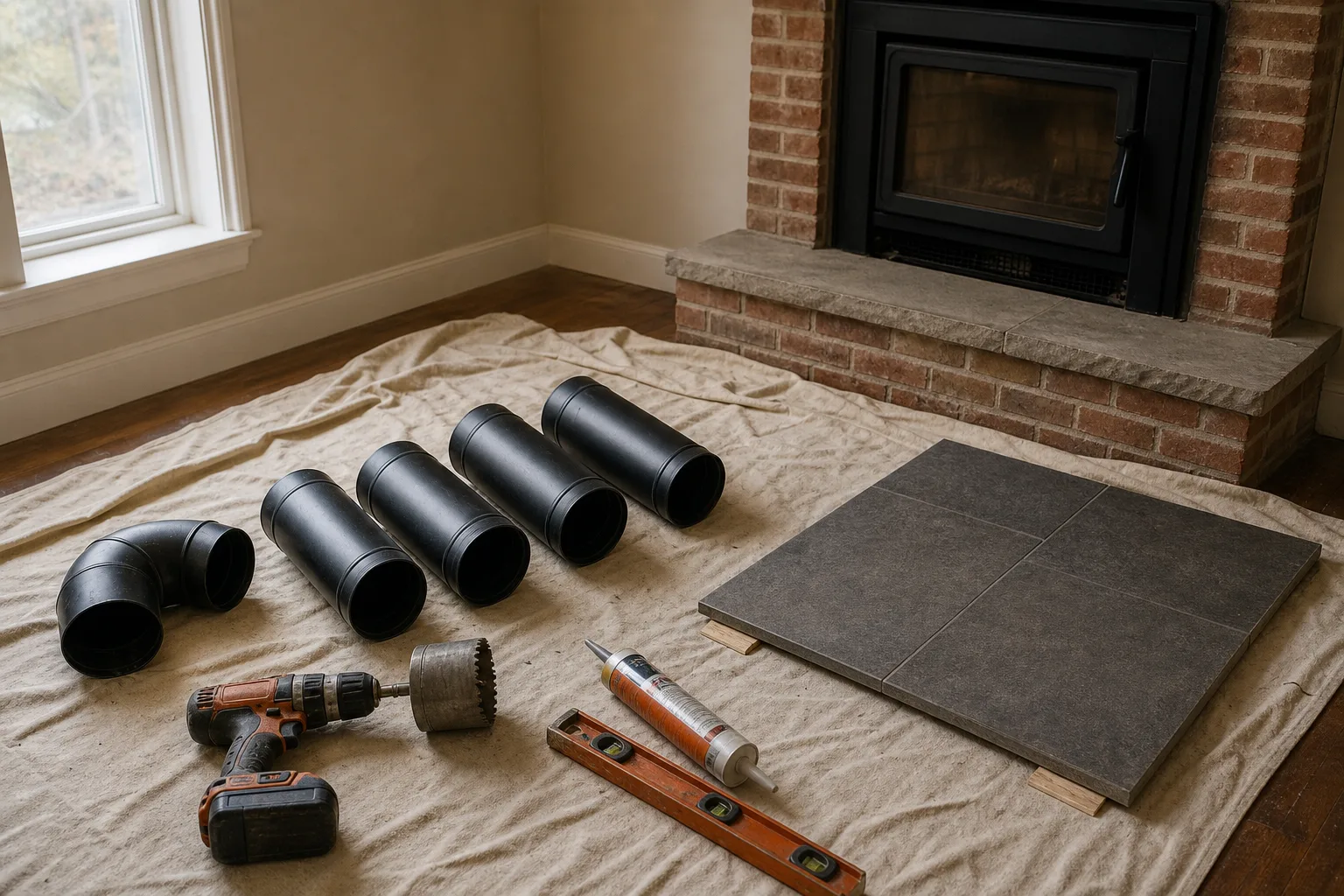
The floor gets protected and the hearth pad gets set and shimmed level, because a stove that is not level does not feed pellets correctly. The stove gets positioned to the manufacturer's clearance spec, not to where it looks best.
Then the vent path gets measured, the penetration gets cut, the thimble gets set, the pipe sections get assembled and sealed, and the cap gets flashed so the wall stays dry. After that the unit gets wired in, started, and run through a burn to confirm the draft and the feed rate.
Somewhere in there, someone checks that the room can supply the combustion air the appliance needs.
Permits and the inspection you may not have counted on
Permit requirements and fees are set locally and are genuinely jurisdiction dependent. Confirm both with your building department before the install gets scheduled, rather than assuming either way.
The inspection is the piece that is easy to overlook. NFPA 211 sets out when a Level 2 inspection applies: at the sale or transfer of the property, upon changes to the system, after a malfunction, after a chimney fire, and after an external event likely to have caused damage. Whether your install lands on that list is worth raising when you book rather than deciding from this page.
From the field: the electrical question is the one to settle first, because it is the easiest to leave until the day of the install. Confirm what the appliance needs and whether a receptacle is within reach of where the stove will sit, then put that answer in front of whoever is quoting the job.
A one line quote that reads "install pellet stove" with a figure next to it is not an estimate. It is a number you are being asked to fund without seeing the parts.
What pushes your pellet stove installation cost up or down
Run this list against your own house before you talk to anyone. Every item on it moves a pellet stove installation cost in one direction or the other, and much of it you can answer standing in the room.
- Length of the vent run. Every extra foot and every elbow adds material and time.
- Wall construction. Cutting through vinyl siding over frame is one job. Cutting through brick or stone is another.
- Distance from a receptacle. Within reach, one less trade on the job. Across the room, an electrician.
- Whether a chimney is involved. The fork that changes the shape of the whole job. Liner, evaluation, possible repair.
- Condition of that chimney. An old stack may need work before it can accept a liner.
- Floor protection. Whether your existing floor meets the spec or a pad has to be built.
- An old appliance in the way. Removal and disposal are real labor.
- Regional labor rates. Rates differ by market.
- Access. A basement install with a tight stairwell is more work to reach than a ground floor living room.
Pro tip: walk the vent path before you call anybody. Stand where the stove goes, look at the wall behind it, look at what is outside that wall, and find the nearest receptacle. The answer to "where does the pipe go" is what the quote gets built on.
One more thing belongs in your budget math. The federal tax credit for biomass stoves, which covered a percentage of purchase and installation up to an annual cap, expired after December 31, 2025. As of 2026 there is no federal credit for a new pellet stove. What is left is state and local programs and utility rebates, which vary by region and are worth checking before you sign anything.
How to read a pellet stove installation estimate
This is the part to keep. When a pellet stove installation cost finally lands in your inbox as a written quote, hold it against this list.
A written estimate worth trusting names the exact stove, model number included, not "pellet stove." It names the vent system by brand and listing, because a listed appliance has to be installed with the vent system its manufacturer specifies. It states the total vent footage and describes the route.
It specifies the hearth pad or floor protection and what it is made of. It says plainly whether electrical work is included or excluded, and if excluded, says so in words rather than by leaving it off.
It assigns responsibility for the permit. It says who is arranging the inspection. It accounts for hauling the old appliance away, or states that you are keeping it.
And the one that is easiest to leave out: it says what happens if the chimney turns out to need work. An estimate that goes quiet on that question has left that variable unpriced.
Pro tip: get the vent brand in writing. If an installer will not commit on paper to the listed vent system that matches your stove, that is worth knowing before you compare anything else.
If two quotes are far apart, look at what each one includes before you look at the totals. One may have priced the vent route, the electrical and the chimney contingency while the other left them to be discovered later.
How VIO helps with your pellet stove installation cost
VIO is a referral network, not a contractor. We do not install pellet stoves ourselves. What we do is connect you with independent local companies that do this work in your area.
For this situation, that matters because of the venting question. You need somebody who can look at your exterior wall, your flue and your hearth space and tell you which route your house actually takes, before a number gets attached to it. That is a chimney question as much as a stove question, so say so when you book and ask that the vent path and the flue be looked at as part of the visit.
On estimates, the move is yours: insist on a written estimate before any work starts, and do not let work begin without one in your hands. Use the checklist above on whatever comes back, and ask for the vent system, the electrical and the chimney contingency to be itemized. The company we match you with is an independent local business, and its license, its insurance and its certifications are yours to ask for and yours to verify.
The stretch ahead of the heating season is a sensible time to have the chimney looked at and to gather quotes, rather than during the months you want to be burning in it. That is the whole point of understanding a pellet stove installation cost before you are committed to one.
Get a real number for your house
You have the parts list. The next step is a written estimate from a company that has seen your wall, your chimney and your hearth space. We will connect you with an independent local company that works in your area.
Request Service, or call (513) 655-6702.
Symptom checker
What is your chimney doing?
Tap the closest match for an honest first answer.