



On this pageWhat Chimney Service Actually Means7 sections+6
- What Chimney Service Actually Means
- The Annual Inspection and the Annual Sweep Are Not the Same Promise
- The Three Inspection Levels, in Plain English
- What Happens During a Chimney Service Visit, Step by Step
- What Drives the Cost of Chimney Service
- How to Vet a Chimney Company Before You Book
- How VIO Helps With Chimney Service
Quick answer
Chimney service is the umbrella term for three different jobs: inspection, sweeping, and repair. NFPA 211 calls for a chimney inspection at least once a year, with cleaning and repairs done as needed, so the inspection is the annual step and the sweep follows from what it finds. Common work includes flue sweeping, camera inspection, cap and chase cover replacement, damper repair, relining, crown and masonry repair, and waterproofing.
Chimney service is one of those phrases people type into a search bar precisely because they do not know what to type instead. You are not shopping yet. You are trying to find out what the thing is called.
Something set this off. The first genuinely cold night arrived and the fireplace has not been lit since you moved in. There is a sour, smoky smell in the living room in the middle of July. A home inspector wrote one vague line about the flue and now there is a closing date on the calendar. A neighbor two streets over had a chimney fire, and you have not really stopped thinking about it.
So you search, and you get ten companies who would all like to sell you a visit.
Nothing wrong with that. Those companies do real work. But a page that exists to book an appointment structurally cannot tell you when you do not need one, and that is the single most useful thing anybody could tell you right now.
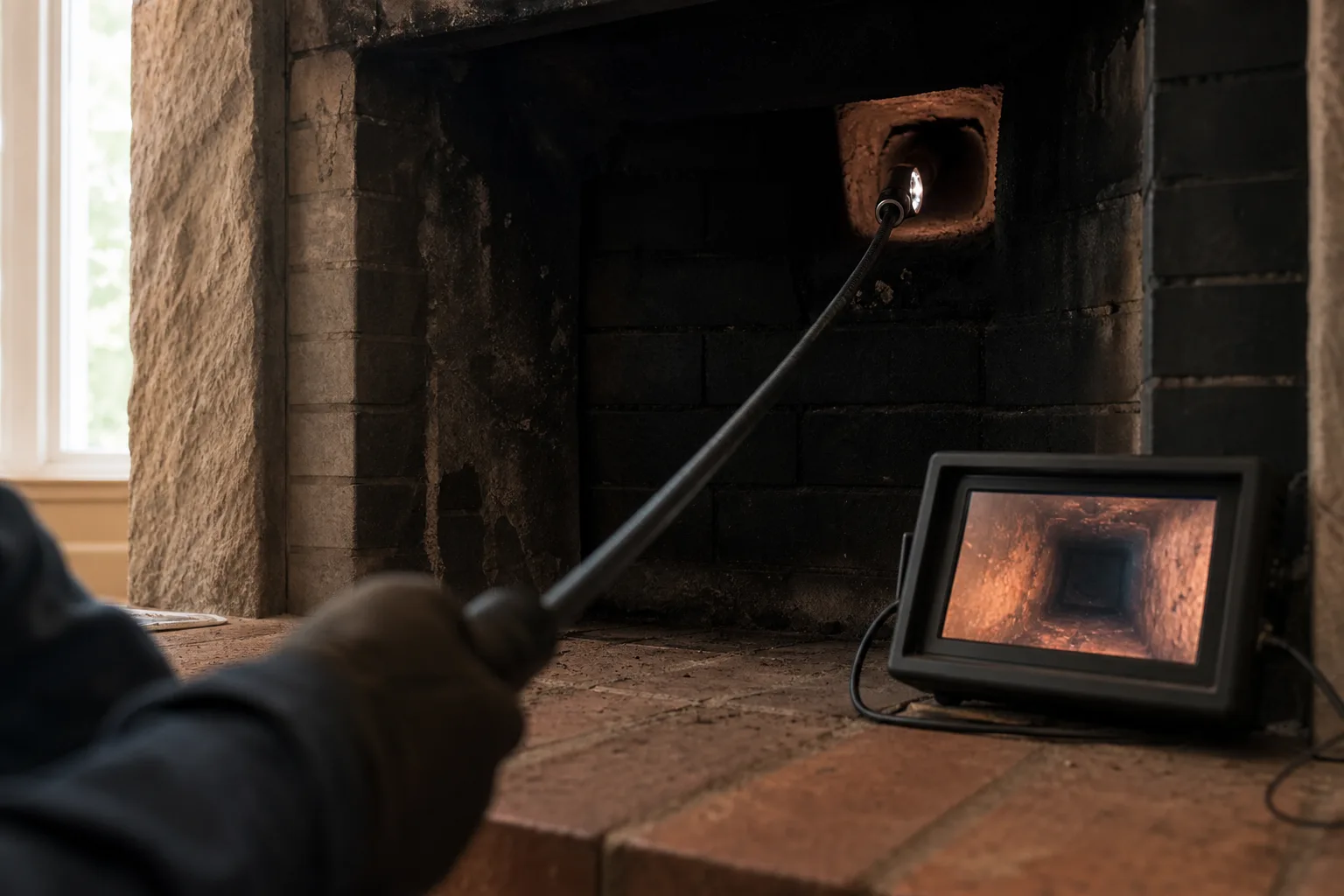
Picture the part of this you are actually dreading. A technician is up on your roof with a camera on the end of a fiberglass rod. He climbs down, turns the screen toward you, points at something dark and cracked, and names a price. You have no way to know whether any of it is true.
By the end of this page you will. There is one sentence that separates a real recommendation from a manufactured one, and it comes in the cost section below. First, the vocabulary, because the reason that moment on the roof feels so awful is that somebody is asking you to make a decision in a language you do not speak.
What Chimney Service Actually Means
Chimney service is an umbrella term. Underneath it sit three genuinely different activities that companies blur together constantly, and pulling them apart is most of the battle.
Sweeping, inspection, and repair are three different things
Sweeping is cleaning. A technician removes creosote, soot, and any blockage from the flue, cleans out the firebox, and hauls the debris away. It is mechanical work with brushes, rods, and a vacuum.
Inspection is looking and reporting. Nobody cleans anything. Somebody qualified examines the system and tells you its condition, and the useful ones give you photographs.
Repair is everything that follows a bad inspection: relining, a new cap or chase cover, damper work, crown repair, tuckpointing the mortar joints, flashing, waterproofing.
Most companies bundle a basic inspection into a sweep, which is why the two words get treated as synonyms. They are not synonyms, and in the next section that distinction is going to save some of you a bill.
Here is the fast way to work out which one you are actually looking for.
| What you noticed | What you probably need first |
|---|---|
| The fireplace has sat unused for years and nothing about the system has changed | A Level 1 inspection. Sweeping only if it finds deposits. |
| A sour, smoky smell in warm, humid weather | An inspection. This is often moisture, draft, or a missing cap, not dirt. |
| Smoke rolls into the room when you light a fire | An inspection focused on draft, damper position, and blockage. |
| Water stains on the wall or ceiling beside the chimney | An exterior inspection of the crown, cap, and flashing. |
| You are selling, buying, or transferring the house | A Level 2 inspection. It is required at sale or transfer. |
| There was a chimney fire, or an external event likely to have caused damage, such as severe weather or an impact to the stack | A Level 2 inspection, before the appliance is used again. |
| Birds, scratching sounds, or debris falling into the firebox | A cap and flue check. |
The parts a chimney service actually touches
You do not need to become a mason. You do need six words, because these are the six things a technician will name at you.
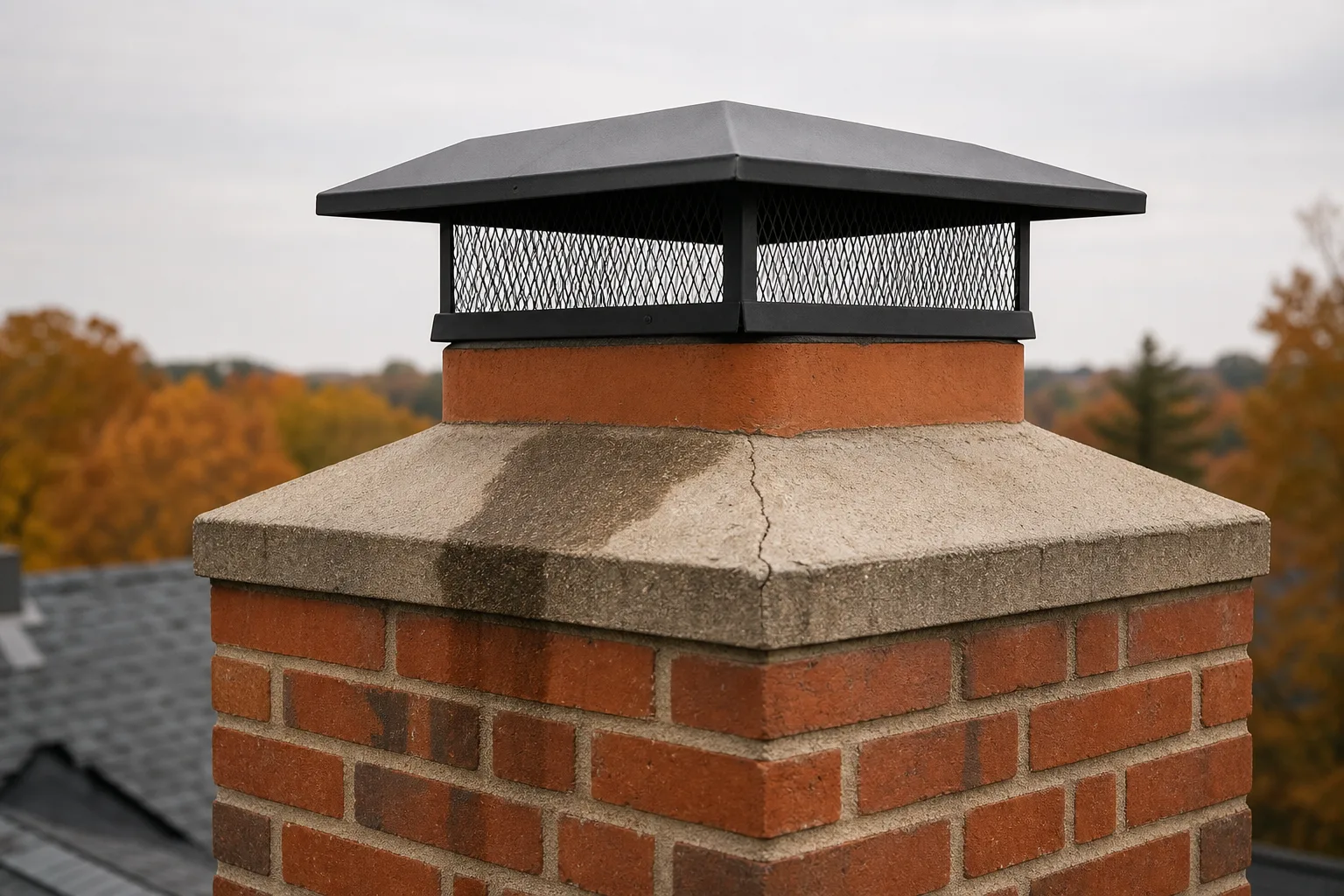
The cap is the metal hood on top, usually stainless or painted steel, with mesh sides. That mesh is the spark arrestor, and it also keeps rain, leaves, birds, and squirrels out of your flue.
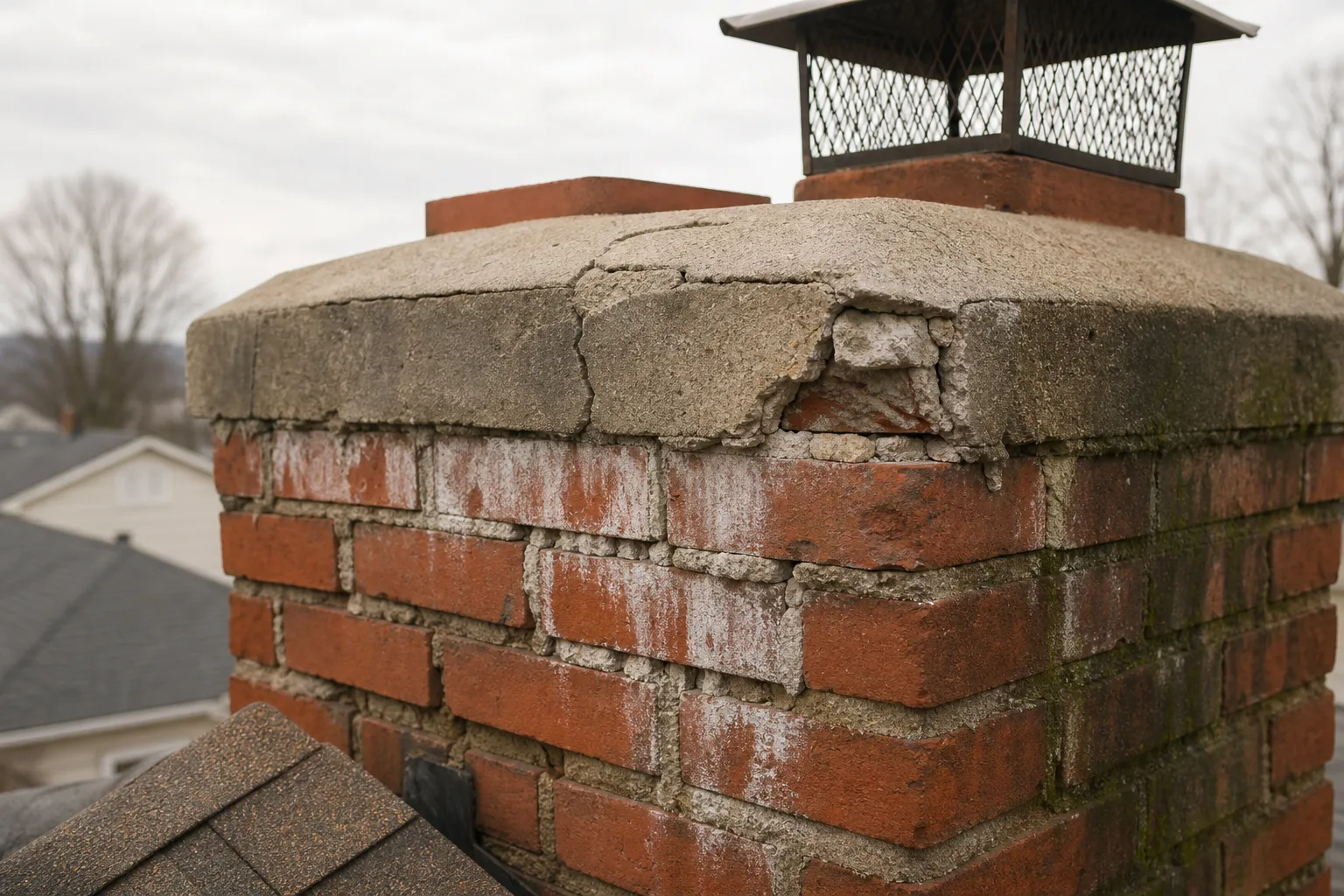
The crown is the sloped concrete or mortar slab that covers the top of the brickwork and sheds water off the stack. On a factory built chimney there is no crown. There is a metal chase cover doing the same job.
The flue liner is the pipe inside the pipe: clay tile in a masonry chimney, or stainless steel where a chimney has been relined or built at the factory. It is what actually contains the heat and the exhaust.
The damper is the pivoting plate above the firebox that opens and closes the flue. The flashing is the layered metal at the roofline that seals the gap between the stack and the shingles, and it is a leak point worth looking at whenever water shows up near the chimney.
Good to know: cap, crown, and chase cover get used interchangeably by people who should know better. The cap is the hood over the opening. The crown is the masonry slab it sits on. The chase cover is the metal top on a factory built chimney that replaces the crown entirely. If somebody quotes you a "chimney cap" repair on a prefab chimney, ask which one they mean.
The Annual Inspection and the Annual Sweep Are Not the Same Promise
This is the part the ten selling pages will not put in bold, so here it is in bold.
The annual obligation is the inspection. The sweep happens when the chimney needs it.
What NFPA 211 actually asks for
NFPA 211 is the standard American chimney work is measured against, and its long-standing requirement, quoted consistently across the trade, is that chimneys, fireplaces, and vents be inspected at least once a year for soundness, freedom from deposits, and correct clearances, with cleaning, maintenance, and repairs performed if necessary.
Read the last three words again. If necessary.
An inspection every year is not negotiable if you burn anything. A sweep every year is a conclusion, not a rule, and the inspection is what produces it.
Companies merge the two because merging them sells a sweep. That is not fraud and I am not calling it fraud. It is just marketing, and knowing the difference changes what you say on the phone.
When you probably do not need a sweep this year
There is no page on the first search results page that will tell you this, so I will.
If you burned two or three fires all winter, in a properly sized fireplace, burning wood that was properly seasoned first, there is a reasonable chance an inspection this year finds a thin layer of dry powdery soot and nothing that calls for a full sweep.
If you have a gas log set that has never been converted from wood and is vented correctly, your flue is not accumulating creosote the way a wood burner does. It still needs eyes on it every year, for blockage, for the liner, for carbon monoxide risk, but the sweeping conversation is different.
If nothing has been burned in the fireplace at all since the last inspection, the deposits have not changed. The masonry, the cap, and the flashing have, because weather does not care whether you lit a fire.
None of that means skip the inspection. It means the inspection is the thing you schedule, and the sweep is the thing you agree to afterward, on evidence.
Myth vs. fact: the creosote-remover logs sold at hardware stores. The honest answer is that they are not a replacement for mechanical sweeping and they are not a replacement for an inspection. Their manufacturers position them as a supplement, and that is roughly where the evidence sits. Burning one does not mean a brush does not need to go up the flue, and it certainly does not mean somebody does not need to look.
And there is a second reason the inspection matters more than the sweep, which is that not all inspections are the same size.
The Three Inspection Levels, in Plain English
NFPA 211 recognizes three levels of chimney inspection. They are cumulative, so each one contains everything below it. Knowing which one you are buying is the difference between a fair invoice and a confusing one.
| Level 1 | Level 2 | Level 3 | |
|---|---|---|---|
| What it covers | Readily accessible portions of the chimney and the appliance connection | Everything in Level 1, plus a video scan of the flue interior | Everything in Levels 1 and 2, plus concealed areas |
| Camera inside the flue | Not required | Yes | Yes |
| Attic, crawl space, roof | Not required | Accessible attic, crawl space, and basement areas | Yes |
| Demolition | No | No | Yes, concealed components are opened up |
| When it applies | Routine annual check, nothing about the system has changed | Sale or transfer, system change, malfunction, chimney fire, external event | A serious hazard is suspected and cannot be seen any other way |
Level 1
A visual inspection of the parts that can be reached without tools or dismantling. No camera required, no roof access required.
This is the correct default. If nothing about your system has changed and it is being used the same way it has always been used, Level 1 is what your annual inspection should be.
If a company quotes you a Level 2 for a routine yearly check on an unchanged system, that is a fine question to ask about. Sometimes there is a good answer. Sometimes there is not.
Level 2, and the five things that trigger it
Level 2 adds a camera scan of the inside of the flue and a look at accessible attic, crawl space, and basement areas. It is not an upgrade you buy for peace of mind. It is required in five specific situations:
- Sale or transfer of the property. This one catches people mid-closing.
- A change to the system. New appliance, different fuel, a change to the shape or material of the flue.
- An operating malfunction. Something is not drafting or venting the way it should.
- A chimney fire.
- An external event likely to have caused damage. Severe weather, an earthquake, something struck the stack.
If one of those five applies to you, a Level 1 is not enough and you should not accept one.
Safety note: after a chimney fire or an impact to the stack, stop using the appliance until a Level 2 has been done. A flue that has been through a fire can look completely normal from the firebox and be cracked where only a camera can see it. Blocked or damaged flues on any fuel-burning appliance are also a carbon monoxide problem, not only a fire problem.
Level 3
Level 3 involves removal or demolition: opening a wall, taking off a crown, getting behind something that cannot otherwise be examined. It happens when a serious hazard is suspected and the evidence is hidden.
Most homeowners will never buy one. If somebody proposes one, they should be able to point at the specific finding from the Level 2 that made it necessary.
What Happens During a Chimney Service Visit, Step by Step
Here is the part almost nobody writes down. If you know the shape of a normal visit, you can feel it when a visit goes sideways.
Before they arrive
Do not burn anything for at least 24 hours. A warm flue is unpleasant to work in and a hot one is unworkable.
Clear a path to the fireplace and move the rug. Put the dog somewhere else, because doors will be open and a shop vac will be running.
If you have paperwork from a previous chimney service, an old inspection report, a receipt for a reline, put it on the mantel. It changes what the technician looks for.
Inside the house
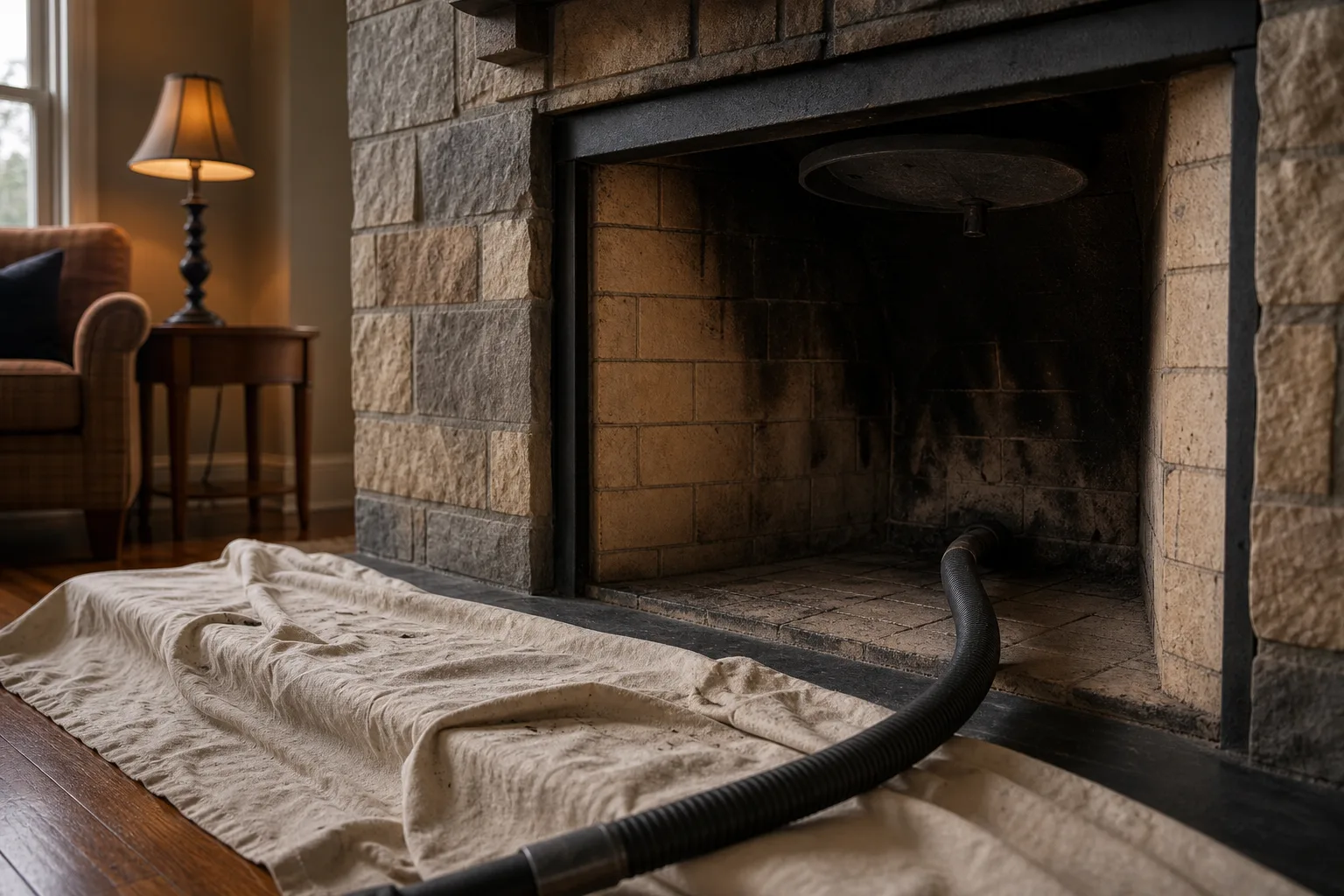
The visit should start with containment, not with brushes. Drop cloths down, the fireplace opening sealed off with a cover or sheeting, and a vacuum running so soot goes into a filter instead of onto your ceiling.
Then the firebox: ash out, damper checked for movement and seal, smoke chamber and smoke shelf examined.
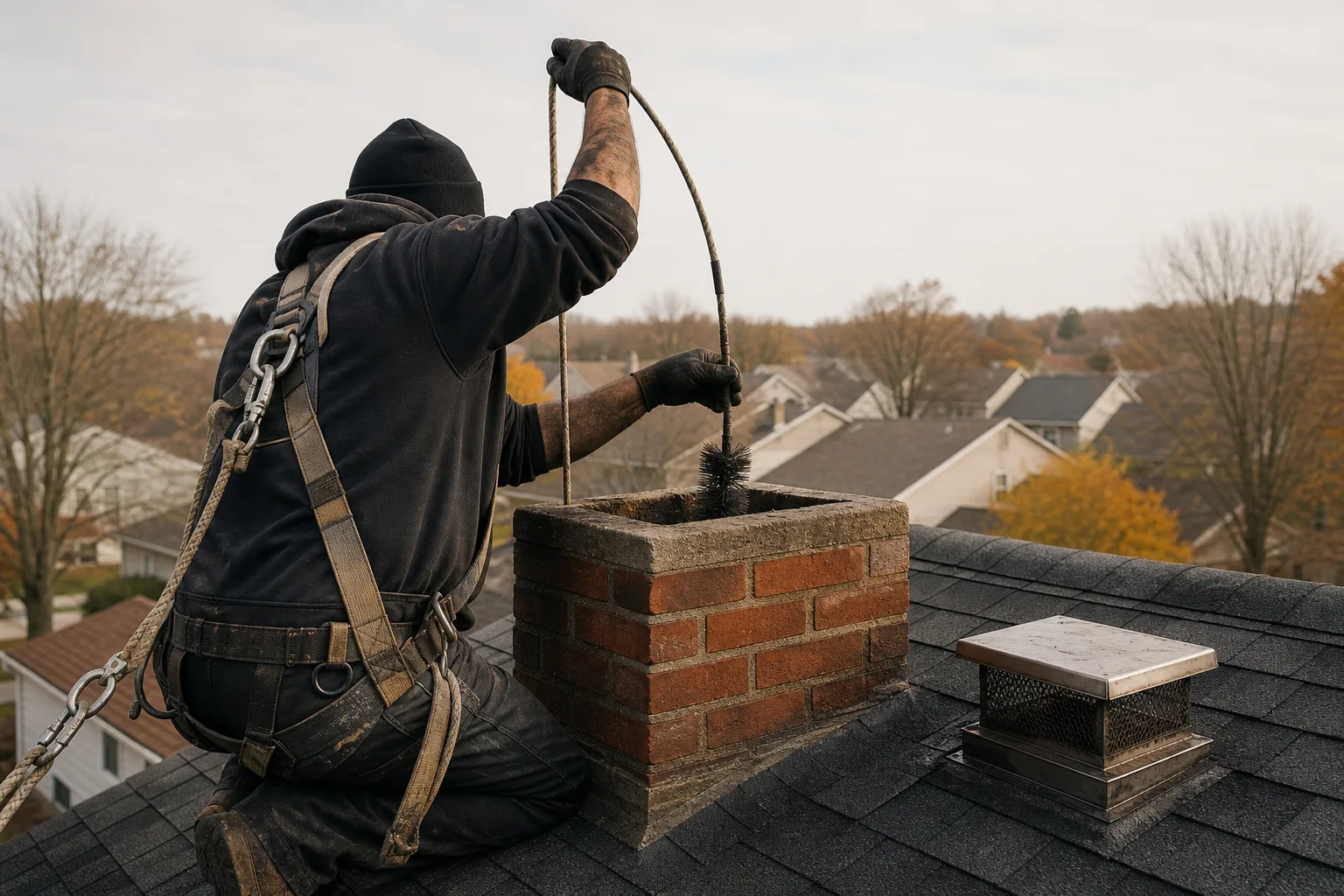
Then the sweeping itself, usually rods and a brush sized to your flue, worked from the bottom, the top, or both depending on the chimney and the company's method.
If a camera is part of what you are paying for, it goes up the flue and you should be standing there watching the screen. Ask to see it. A company doing this properly wants you to look.
On the roof
Not every chimney service visit involves the roof, and that is not automatically a problem. A Level 1 does not require roof access.
When somebody does go up, they are looking at the cap and its mesh, the crown or chase cover for cracks and ponding, the top course of masonry, and the flashing where the stack meets the shingles.
Rust streaks running down the siding of a factory built chase, or a white powdery bloom across the brick, are the kind of thing that gets found up there and photographed.
The walkthrough at the end
This is the moment that decides whether the whole visit was worth anything.
You should get a plain description of what was found, ideally with photographs, and a clear line between "this needs attention now" and "this is worth watching."
If any repair is recommended, it should come with an explanation of what it is for and what happens if it waits.
A technician who cleans your chimney, hands you a card, and leaves without telling you the condition of the system has sold you half a service.
From the field: the containment setup tells you almost everything about how the rest of the visit will go. A crew that tapes off the opening, lays cloth, and runs the vacuum before touching a brush is a crew that also documents what it finds. Sloppy containment and careful reporting rarely travel together.
Ready to get this scheduled? You know what the visit should look like now. If you want us to match you with an independent chimney company near you, tell us what your chimney is doing and we will take it from there. Call (513) 655-6702.
What Drives the Cost of Chimney Service
I am not going to print a price range, and you should be a little suspicious of any page that does. The spread between a one-flue ranch in a low-cost market and a three-story Victorian with a failing liner is not a range, it is two different industries.
What is useful is knowing which levers move the number, because those are the levers a quote is built on.
What makes a job bigger
Which service you are actually buying. An inspection, a sweep, and a repair are three price categories, not three flavors of one.
The inspection level. A camera scan takes longer and requires equipment. Level 2 costs more than Level 1 for real reasons.
Access. A single-story house with a shallow roof pitch and a chimney near the eave is a different job from a steep three-story slate roof that needs staging and fall protection.
Condition. Light powdery soot brushes off. Creosote that has hardened into a shiny glazed layer, the third degree stuff, does not, and removing it takes the kind of rotary cleaning work a sweep brings or chemical treatment and considerably more time.
How many flues you have. A lot of houses have one chimney with two or three flues inside it, one for the fireplace and one for the furnace or water heater. Each is separate work.
Masonry or factory built. A cracked masonry crown, spalling brick, and open mortar joints are mason's work. A rusted chase cover on a prefab chimney is sheet metal work. Neither is the other.
Whether repair follows. This is where the number really moves, and it is exactly where the trust question lands.
Telling an honest chimney service recommendation from a manufactured one
Here is the sentence I promised you at the top.
An honest recommendation can tell you what it is for in one plain sentence, and can tell you whether it can wait.
That is it. Run every proposed repair through it.
"Your crown is cracked and water is getting into the top of the masonry, which will keep freezing and spalling the brick. It is not dangerous this month, but I would not leave it two more winters." That passes. It names the part, the mechanism, and the timeline.
"Your chimney is unsafe, we should reline it, we can start Tuesday" does not pass, because you cannot tell what is unsafe, why relining is the fix, or what happens if you get a second opinion first.
The tells that something is manufactured are consistent. There is urgency without a mechanism. There are no photographs of the defect. The price arrives before the diagnosis does. The recommendation is a bundle you are not allowed to itemize. And asking whether it can wait produces irritation instead of an answer.
Pro tip: ask two questions about any recommended repair, out loud, in front of the technician. What is this for? What happens if I do it next spring instead? Somebody who knows your chimney answers both without effort. Somebody who is working from a script will not enjoy the second one.
Second opinions are normal in this trade and nobody serious is offended by one.
How to Vet a Chimney Company Before You Book
You do not need to become an expert. You need about six questions and the willingness to ask them.
What to ask on the phone
Screenshot this. Use it on whichever chimney company you call.
- What credential do the technicians who would come out hold, and can I verify it?
- Are you insured, and will you send me the certificate?
- Is the inspection a Level 1 or a Level 2, and why that one for my situation?
- Is a camera scan included, or is it extra?
- Will I get photographs of anything you find?
- Does the visit include the firebox, damper, cap, and crown, or only the flue?
- If you find something, do you provide the estimate in writing before any work starts?
That last one is the one people skip, and it is the one that matters most.
What to ask for in writing
Get the scope in writing before anyone starts. Not a verbal number in your driveway, and not a total with no line items.
A usable written estimate names the specific work, separates the diagnosis from the repair, and distinguishes what is being done now from what is being recommended for later.
If a company will not put its estimate in writing before starting, that is your answer, and it took one question to get it.
Good to know: CSIA certification is a certification, not a government license. There is no national chimney license in the United States and state and local requirements vary widely. So do not ask "are you licensed" as though there is one universal answer. Ask what credential the company holds, then verify it yourself.
How VIO Helps With Chimney Service
Here is exactly what VIO is, in one sentence, because you have earned a straight answer after all that.
VIO is a referral service. We do not sweep chimneys, we do not reline flues, and we do not send our own crews, because we do not have any. We match homeowners with independent local chimney companies, and those independent companies do the work.
That is not a limitation we are apologizing for. It is the reason we can write a page like this one. We have no sweep to sell you, so we have no reason to tell you that you need one.
What we do for your situation specifically: you tell us what your chimney is doing, and we point you at a company near you that handles that kind of chimney service, rather than leaving you to guess between ten search results that all look identical.
On estimates, insist on getting it in writing before any work starts, from the company we match you with or from anyone else you call. That is your move to make, and it is the one worth making every time.
And take the questions from the section above into that call. The point of this page was never to send you to us. It was to make sure that whoever ends up on your roof is talking to somebody who knows what a normal chimney service visit looks like.
That is the whole game with chimney service. Get the inspection every year, let the findings decide the sweep, make every recommendation explain what it is for and whether it can wait, and get it in writing before anybody starts.
Ready when you are. Take the checklist above into the call, whoever you call. If you would rather we start the shortlist for you, VIO matches homeowners with independent local chimney companies. Call (513) 655-6702.
Symptom checker
What is your chimney doing?
Tap the closest match for an honest first answer.