



On this pageWhat the phrase actually covers7 sections+6
- What the phrase actually covers
- The kinds of chimney specialists, and why the difference matters
- What you are seeing, and which chimney specialists it points to
- The credential you can check yourself
- Inspection levels: what you are actually buying
- What to ask chimney specialists before you hire them
- How VIO helps you find chimney specialists
Quick answer
Chimney specialists is an umbrella term for several distinct trades rather than a single qualification. It covers sweeping, inspection, masonry restoration, relining, caps and crowns, flashing and water entry, and appliance venting work. The credential a homeowner can verify independently is CSIA certification, which is held by an individual technician rather than by a company. Ask which trade your job falls under, and ask which NFPA 211 inspection level a quote covers.
Some of the companies that call themselves chimney specialists are exactly that. The phrase still will not tell you which ones, because chimney specialists is a description of a field rather than a qualification somebody had to sit an exam for.
That is worth knowing before you start calling, and it is not a complaint about anybody. It is just how the words work.
So the useful question is not "who is a specialist." It is narrower and a lot more answerable: what kind of work does my chimney actually need, and how do I check that the person quoting me knows how to do it?
Both of those have real answers. The first comes from knowing that the phrase covers several genuinely different trades, and the second comes from a credential you can verify yourself, from your own couch, without taking anybody's word for it.
I will get to that credential. First, the field.
What the phrase actually covers
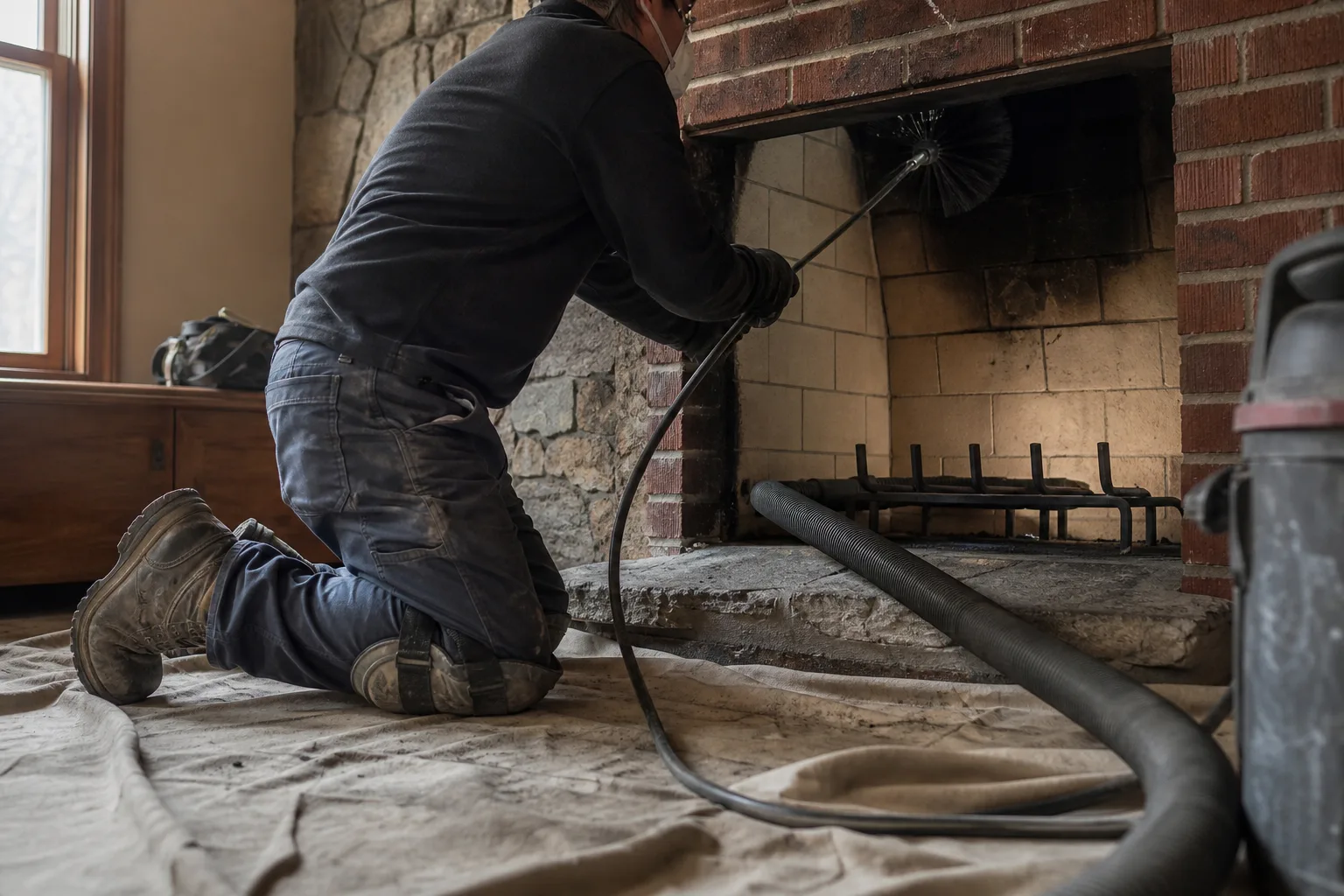
A chimney is not one system. It is masonry, a liner, a top, a roof seal and an appliance, and those are separate bodies of knowledge that happen to stack on top of each other in the same structure.
That is why chimney specialists is a plural noun doing the work of about seven different job descriptions.
A category of work, not a qualification
The phrase names a category, the way "contractor" names a category. It is not a title issued by an examining body, and a company printing it on a truck has not thereby been assessed by anyone.
Worth saying plainly, because it causes real confusion: there are businesses whose actual registered name is built from these same words. This page is about the trade, not about any particular company, and nothing here is a comment on any business that uses the phrase as its name.
Good to know: The chimney certification that can be checked belongs to an individual technician, not to a company. A business can advertise certification because one person on staff holds it. The useful question is whether the certified person is the one coming to your house.
Why the distinction changes who you call
A flue full of deposits and a crown that has cracked apart are both chimney problems. They are not the same job, they do not use the same tools, and they are not performed the same way.
If you call for the wrong one, the visit can end with somebody telling you that you need a different appointment.
Knowing the vocabulary before you dial is the whole advantage here. That is what the next section is for: the trades that sit underneath the phrase chimney specialists.
The kinds of chimney specialists, and why the difference matters
Here is the field, broken into the work rather than into company names. The right-hand column is the part to actually use: it is what to say on the phone so that the company on the other end knows what you are asking for.
| The work | What it concerns | What to ask for by name |
|---|---|---|
| Sweeping | Removing combustible deposits from the flue | "a sweep" |
| Inspection | Evaluating and documenting the system against the NFPA 211 levels | "a Level 1 inspection" or "a Level 2 inspection" |
| Masonry and restoration | Brick, mortar joints, the crown, and rebuilds above or below the roofline | "tuckpointing," "a crown repair," "a partial rebuild" |
| Relining | The flue liner itself, whether clay tile or a stainless steel liner | "a reline," and ask what material |
| Caps, crowns and chase covers | The top of the chimney and how it sheds water | "a cap," "a chase cover" |
| Flashing and water entry | The seal where the chimney passes through the roof plane | "the flashing" |
| Appliance and venting work | Installing and servicing the appliance the chimney serves | name the appliance itself |
Those rows are not degrees of difficulty. They are different trades that share a structure, and a general chimney service call can touch more than one of them.
Where one company's strength does not transfer
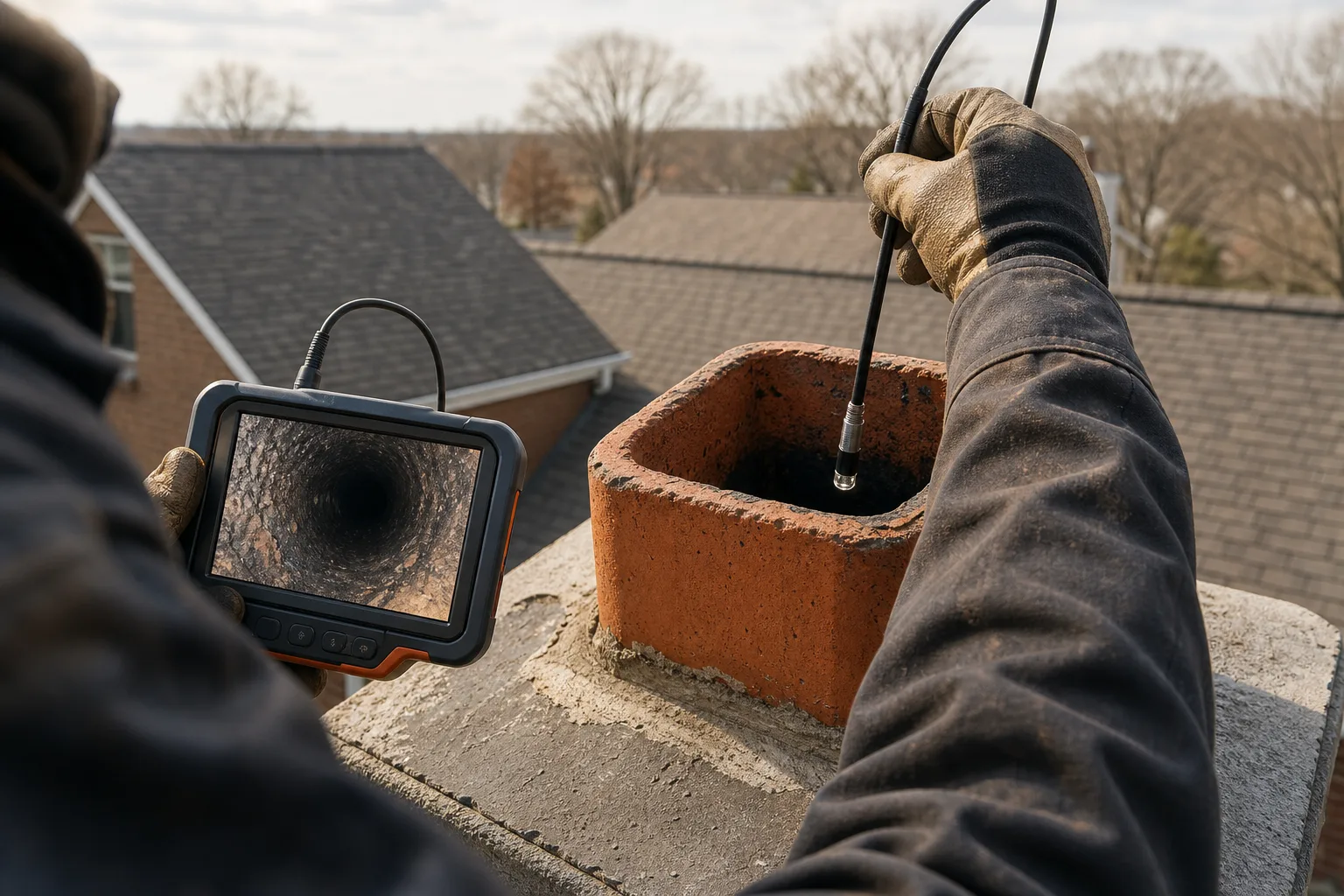
Sweeping removes combustible deposits from the flue. Inspection is evaluation and documentation work, measured against defined levels. Masonry is construction, and something like brick chimney repair has more in common with bricklaying than with sweeping. Relining concerns the flue liner itself, whether that is clay tile or a stainless steel liner. Appliance work can sit under separate state credential requirements entirely.
A company can be genuinely good at one of those and have no particular standing in another. That is not an accusation, it is the shape of the trade, and it is the reason a single phrase covering all of it does not narrow anything down for you.
Which is fine, as long as you are the one doing the narrowing.
Myth vs. fact: The myth is that "chimney specialists" describes a level a company has reached. The fact is that it describes a field. The qualification exists separately from the phrase, it belongs to a person rather than to a business, and it can be looked up.
What you are seeing, and which chimney specialists it points to
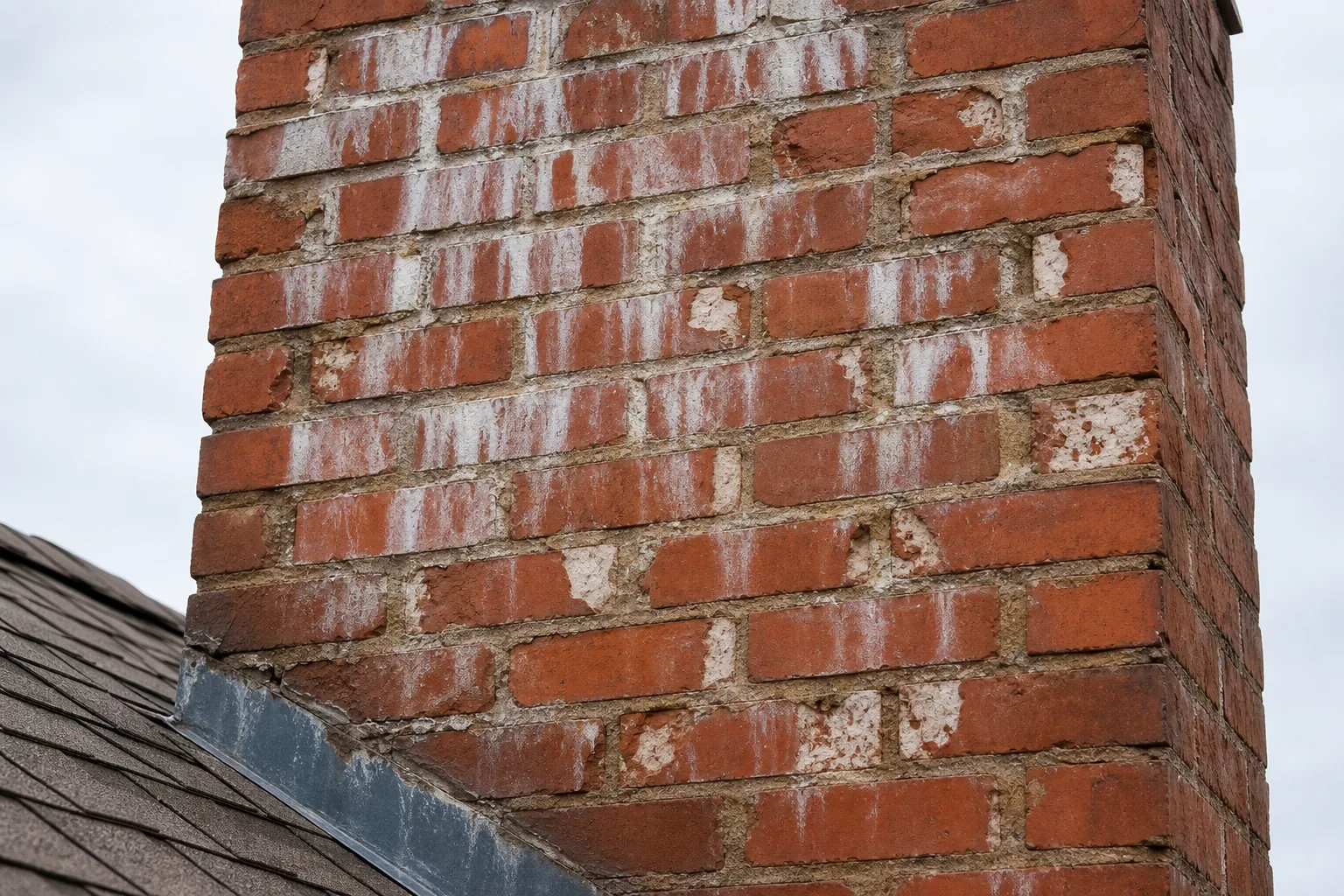
A chimney problem can announce itself from the ground, on a day you were thinking about something else. A stain. A shape that looks wrong. A smell.
Here is how to turn that into a phone call that goes somewhere.
Treat this table as what to have looked at, not as a diagnosis. A visible sign at the bottom of a chimney can have more than one explanation, and working backward from it is the inspection's job rather than yours.
| What you can see | Where it sits | What to have looked at |
|---|---|---|
| A white, chalky bloom in streaks down the brick | Outside face of the stack, running downward | Water moving through the masonry. Ask for masonry and water-entry evaluation |
| Brick faces flaking, popping or crumbling away | Upper stack and the weather side | Spalling. Ask for a masonry assessment of the stack |
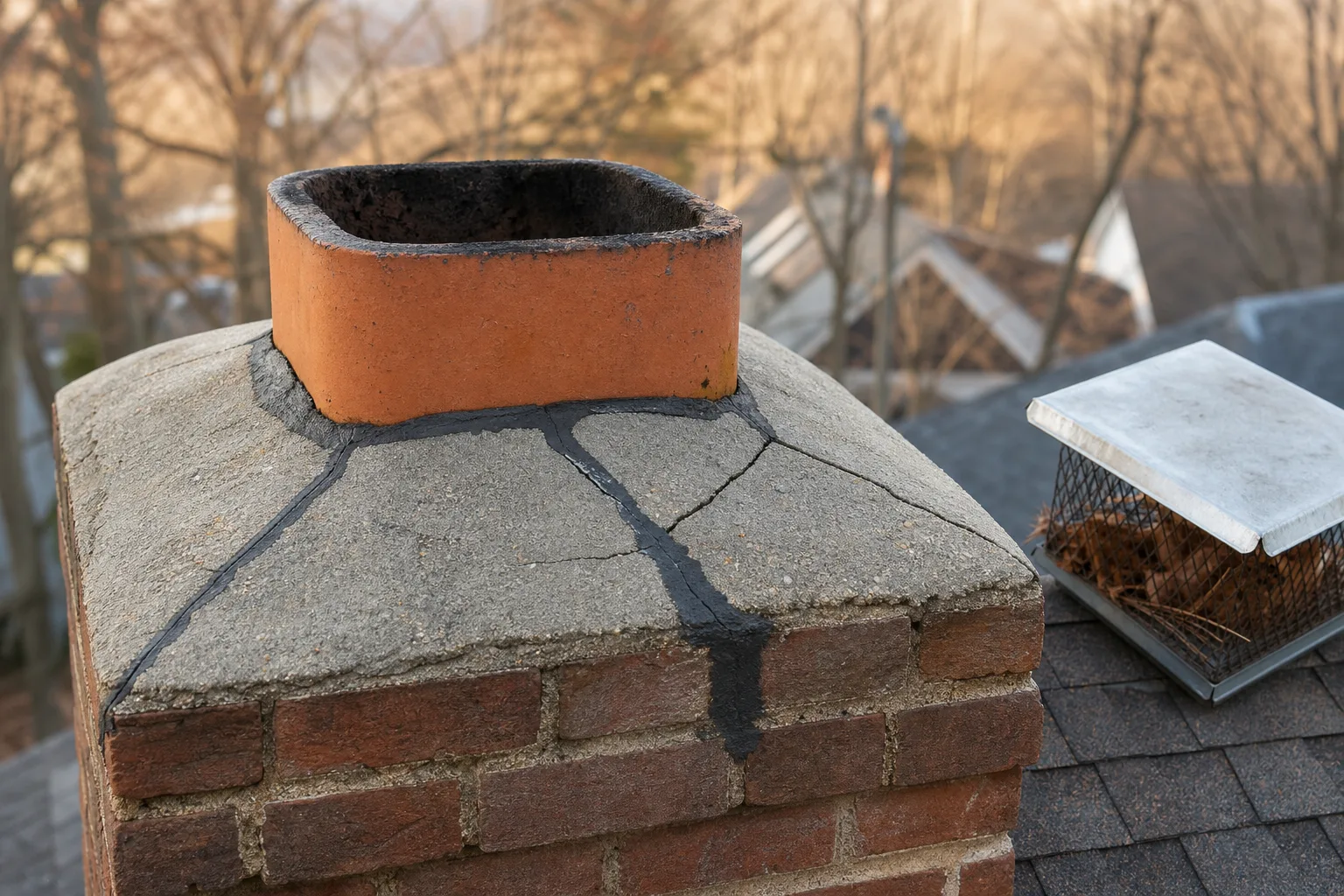
| A cracked or broken top slab, sometimes patched | The crown, at the very top | Crown condition. Ask whether it can be repaired or needs rebuilding |
| Rust streaks, a bent lid, mesh packed with debris | The cap, above the flue tile | Cap condition, and whether the screen or the cap can still be removed for cleaning |
| Staining on the ceiling or wall beside the chimney | Interior, at or near the roofline | Flashing and water entry. Ask for the roof seal to be inspected |
| Smoke pushing back into the room | Firebox and above | A venting problem. Ask for an inspection before the next fire |
| An odor from the fireplace in warm weather | Firebox and flue | Deposits and airflow. Ask for an inspection that includes the flue interior |
The right-hand column is deliberately not a repair. It is a request for someone to look, which is the correct first purchase here. Water showing up at the roofline, for instance, is a question about the flashing around the chimney rather than about the flue.
Safety note: An active chimney fire is not on that table, because it is not a thing to stand outside and assess. If a fire is burning in the chimney, get everyone out of the house first and call 911 from outside. Do not stay inside to adjust the appliance, close a damper or open windows.
Not sure which kind of specialist your chimney needs?
Tell us what you are seeing and what you burn, and we can connect you with an independent local chimney company that can inspect the system and document what it finds.
Call (513) 655-6702
The credential you can check yourself
Here is the thing I said I would come back to.
There is a certification in this trade that a homeowner can verify independently, and it does not require trusting a website, a badge graphic or a number of years printed on a truck.
It is the closest thing to a straight answer on whether the chimney specialists you are considering have been assessed by anybody.
What CSIA certification requires
CSIA is the Chimney Safety Institute of America, a non-profit educational organization founded in 1983. It works on safety practices in the installation, service and use of chimney, fireplace and venting systems.
Its credential is the CSIA Certified Chimney Sweep. Earning it means attending a review session and passing an exam built on the trade's standard sweeping reference and on NFPA 211, then passing a second, open-book exam on the International Residential Code.
Keeping it means accumulating continuing education units inside each three-year recertification cycle. So the credential is not a one-time event that sits on a wall afterward.
What it establishes is that a person passed those exams and has kept up the education. It is not a warranty on any particular job, and it should not be presented as one.
How to verify it without taking anyone's word for it
CSIA maintains an online locator that lets you search for certified sweeps in your area. That is the part worth using, because it turns a claim into something you can check for yourself.
The certification attaches to the technician, not to the business. A company can accurately say it has certification on staff while sending somebody else to your house, and that is not deception, it is just how an individual credential works inside a business.
Pro tip: Ask for the name of the certified technician and whether that person is the one attending your appointment. It is a reasonable question, it is easy to answer, and the answer tells you something either way.
There are separate credentials covering appliance installation and service, including gas work, and some states require specific credentials for gas appliances. Those are issued by different bodies with different requirements. If a company cites one, ask which body issued it and what it covers, then check with that body directly.
One thing I would not lean on: length of time in business. A long-established company may well be excellent. But years of operation is not itself a measure of technical competence, and it is not something you can verify a specific technician against.
Inspection levels: what you are actually buying
When you book an inspection, you are buying a defined scope. NFPA 211 sets out three of them, and knowing which one is on the invoice is the difference between an informed purchase and a hopeful one.
This is also the vocabulary chimney specialists use among themselves, so using it correctly changes the tone of the call.
Level 1
A Level 1 covers the readily accessible portions of the chimney exterior and interior, plus the accessible portions of the appliance and the chimney connection.
It applies where there have been no changes to the system and the system is going to be used the same way it has been.
One detail worth knowing before you book: rooftop access is not established as being within Level 1 scope. If you want the top of the stack looked at, say so when you book, and ask what the inspection covers.
The crown and metal chimney caps sit at the very top of the chimney. The flashing sits lower down, where the chimney passes through the roof plane. Either way, it matters whether anyone is going up there.
Level 2
A Level 2 includes everything in a Level 1, plus the accessible portions of the chimney exterior and interior including attics, crawl spaces and basements. It addresses proper clearances from combustibles in accessible locations.
It also includes a video scan that records the interior of the flue.
The standard sets out its own triggers, and each stands on its own terms: sale or transfer of the property, changes to the system such as the fuel, the appliance, or the shape or material of the flue, after a chimney fire, after an external event likely to have caused damage, and on malfunction.
Whether any of those apply to your chimney is a question to raise when you book rather than something to settle from this page.
Level 3
A Level 3 addresses the construction and condition of the concealed portions of the chimney structure and the flue. Completing one can require removal or destruction of permanently attached portions of the chimney or the building structure.
Its trigger, on its own terms, is a suspected concealed hazard that a Level 1 or a Level 2 cannot evaluate without that access.
The two clocks
NFPA 211 section 14.2.1 provides for inspection at least once a year. The standard's trigger for cleaning is a deposit threshold of one eighth of an inch.
Those are two separate provisions. Neither replaces the other, and neither is contingent on the other. The calendar governs the inspection. The one-eighth-inch deposit threshold is the standard's stated trigger for cleaning.
We go through that second clock in more detail in our guide to how often to clean a chimney, because it has a longer answer than it looks like it should.
Pro tip: Ask which level you are being quoted for before you ask for the number. If it is a Level 2, ask for the video from the flue scan afterward. It is recorded footage of your own chimney, and it is reasonable to want to see it.
What to ask chimney specialists before you hire them
Everything above was background. This is the part to keep.
You do not need to know how to sweep a flue to hire well. You need five questions and a sense of what a real answer sounds like, and then the conversation does the filtering for you.
Five questions worth asking chimney specialists
Say these out loud, in this order. They are ordinary questions, and a company that works this way answers them without friction.
-
"Who is coming, and is that technician CSIA certified?" A useful answer is a name, and a straight yes or no. Vagueness here is itself information, given that the certification belongs to a person rather than to the business.
-
"Which inspection level is this quote for?" A useful answer is "Level 1" or "Level 2," not "a full inspection." The levels are defined in NFPA 211, and a company working to them can say which one without hesitating.
-
"Does this include the roof, or is it from the ground and the firebox?" Rooftop access is not established as part of Level 1 scope, so this is worth settling before the appointment rather than discovering afterward.
-
"What will the written estimate itemize?" A useful answer breaks the work into named line items: the inspection, the sweep, the masonry, the parts. A single number for "chimney work" is a number you cannot evaluate.
-
"Is this a sweeping job, a masonry job, a lining job, or appliance work?" This is the question this whole article has been building toward. Naming the trade tells you what you are buying, and it tells you whether the answer matches what you were seeing in the first place.
What to insist on for yourself
Two things, and they are yours to handle rather than anybody's to offer you.
One thing to insist on for yourself, whoever you end up hiring: get the estimate in writing before any work starts, and do not let work begin without one in your hands.
The second is verification. Ask for the license details, the insurance details and the certification, then check them yourself rather than accepting them as described. Chimney specialists who are used to being asked will have this ready.
From the field: Two companies can return two very different numbers for what sounds like the same job, because the two numbers are scoped differently. Before setting them side by side, ask each one which inspection level its number covers and what the estimate itemizes. The comparison becomes meaningful once both are describing the same scope.
How VIO helps you find chimney specialists
Here is what we are, stated plainly, because you should know who you are talking to.
VIO is a referral service. We do not sweep flues, we do not lay brick, and we do not employ, dispatch or supervise the people who do. What we do is connect homeowners with independent local chimney companies.
So when you tell us what your chimney is doing, what you burn and where you are, we can connect you with an independent local chimney company that works in your area and can look at the system.
The company we match you with is an independent local business, and its license, its insurance and its certifications are yours to ask for and yours to verify. We would rather tell you that than imply an assurance we are not in a position to give.
Everything in this article stays useful after that introduction. The five questions are still the five questions, and they work just as well on chimney specialists you found on your own as on a company we connect you with.
One more thing, and it matters more than it sounds.
An inspection can come back with nothing that needs doing. That is a legitimate result and a good outcome, not a wasted call, and a company that is willing to deliver that answer is telling you something worth knowing about how it operates.
Mid-September sits ahead of the heating season. That makes it a sensible stretch in which to have a chimney looked at and to gather quotes, rather than during the months you want to be burning in it.
Start with someone who will look before they quote
Describe your chimney and your situation, and we can connect you with an independent local chimney company in your area. You ask for the license, the insurance and the certification. We just get you to the door.
Call (513) 655-6702
Symptom checker
What is your chimney doing?
Tap the closest match for an honest first answer.