



On this pageHow Often to Clean Chimney: The Straight Answer8 sections+7
- How Often to Clean Chimney: The Straight Answer
- An Inspection and a Cleaning Are Not the Same Service
- How Often to Clean Chimney by Fuel Type and Burn Volume
- The Ten-Minute Check That Tells You Whether You Are Overdue
- The Three Stages of Creosote, and Why They Change the Answer
- How You Burn Changes How Often to Clean Chimney
- When the Standard Asks for More Than the Annual Look
- How VIO Helps You Settle How Often to Clean Chimney at Your House
Quick answer
How often to clean chimney systems depends on two separate rules. NFPA 211 calls for an inspection every twelve months, no matter how little you burn. The cleaning itself is condition-based: CSIA recommends sweeping once soot or creosote reaches about one eighth of an inch, or sooner if any glaze has formed. Heavy wood burners often need a sweep every season, while occasional users may go several years between them.
There is a smell that shows up in August. It comes out of a fireplace nobody has lit since March, it fills the room on the first humid stretch of the month, and it smells like an old campfire that got rained on.
That smell is what sends a lot of people looking up how often to clean chimney flues in the first place. Others arrive after a black flake turns up on the hearth rug, or after smoke rolled back into the living room on the first cold night of the season.
Here is the short version: an inspection every twelve months, and a cleaning whenever that inspection says one is due.
The calendar is only half the answer, though. The other half is sitting on the wall of your flue right now, and you can go look at it tonight with a flashlight and an old screwdriver.
How Often to Clean Chimney: The Straight Answer
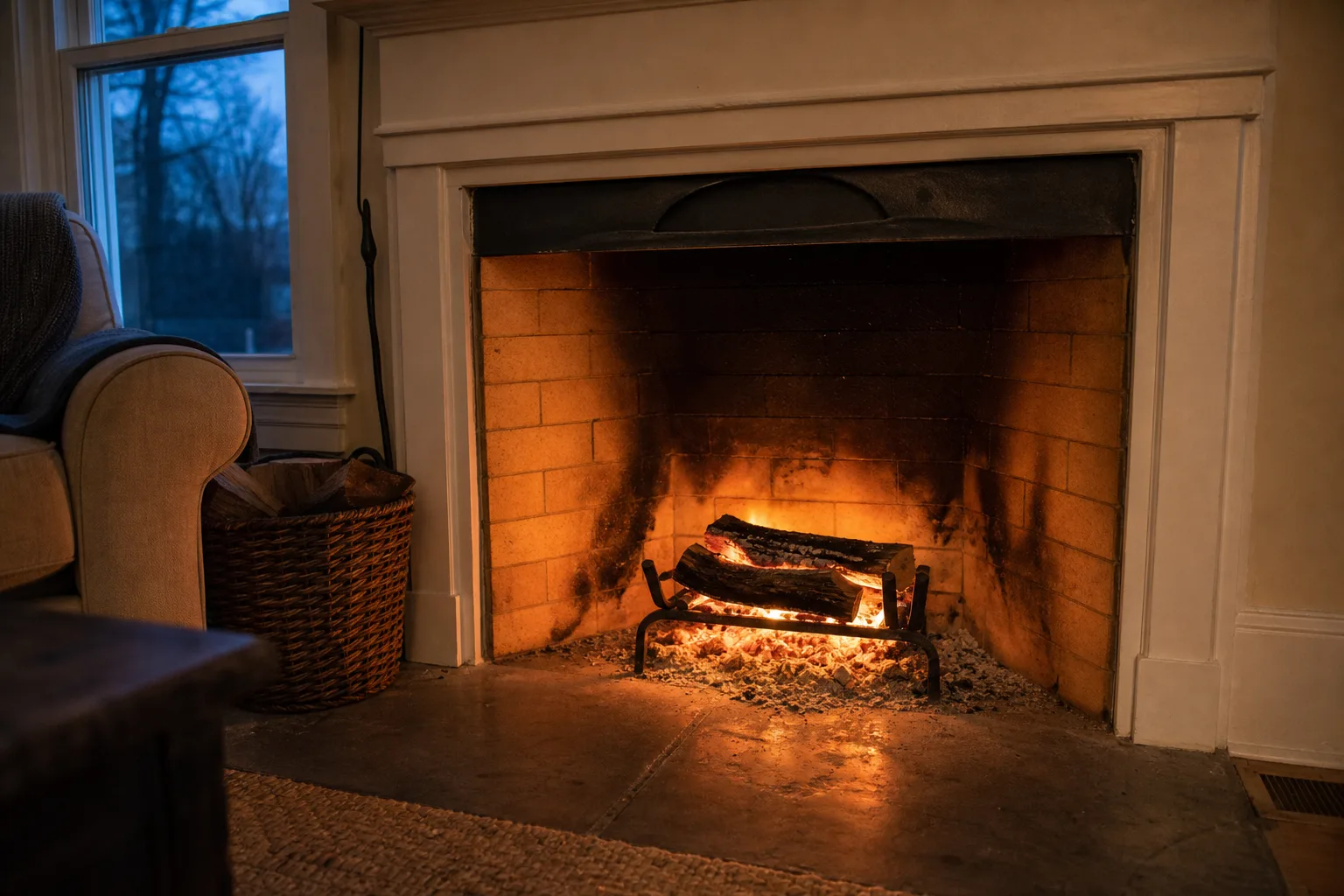
The standard the whole trade works from is NFPA 211, the National Fire Protection Association's rulebook on chimneys, fireplaces, vents and solid fuel-burning appliances. It says chimneys and venting systems are to be inspected at least once every twelve months.
Read that word again. Inspected.
The annual rule attaches to the inspection, not to the sweep. Cleaning is a separate decision, and it is triggered by what is actually inside the flue.
The Chimney Safety Institute of America puts a number on that trigger: sweep when sooty buildup reaches about an eighth of an inch, and sooner than that if any glaze has formed in the system.
So when someone tells you "once a year," they are not wrong, exactly. They are answering a slightly different question than the one you asked.
A household that burns two or three ceremonial fires at Christmas may go years between sweeps and still pass every annual inspection. A household heating with a wood stove from October through April can cross the eighth-inch line before spring.
Same standard. Wildly different schedules. The variable is not the calendar, it is the deposit.
That is why the useful answer to how often to clean chimney systems is always two answers stacked together: book the inspection annually, and let the flue itself tell you when the sweep is due.
Myth vs. fact: The "chimney sweeping log" sold at hardware stores is marketed as if it replaces a sweep. Whatever those products accomplish chemically, none of them physically remove deposits, and none of them inspect anything. A log cannot see a cracked tile or a nest above the smoke chamber.
An Inspection and a Cleaning Are Not the Same Service
Conflating these two is the most common reason people get how often to clean chimney systems wrong in both directions, paying for work they did not need or skipping work they did.
What a Level 1 inspection actually covers
A Level 1 inspection is the routine annual one. A technician looks at the readily accessible parts of the chimney and the appliance: the firebox, the damper, the smoke chamber, the accessible exterior of the stack, the crown, the cap on top of the flue, the flashing where the stack meets the roof.
They are checking three things. Is the structure sound. Is the flue free of obstruction and excessive deposit. Are the clearances to combustible framing still correct.
It is a diagnostic visit. It produces information: what is in there, what condition it is in, and whether it needs to be swept.
What a sweep actually removes
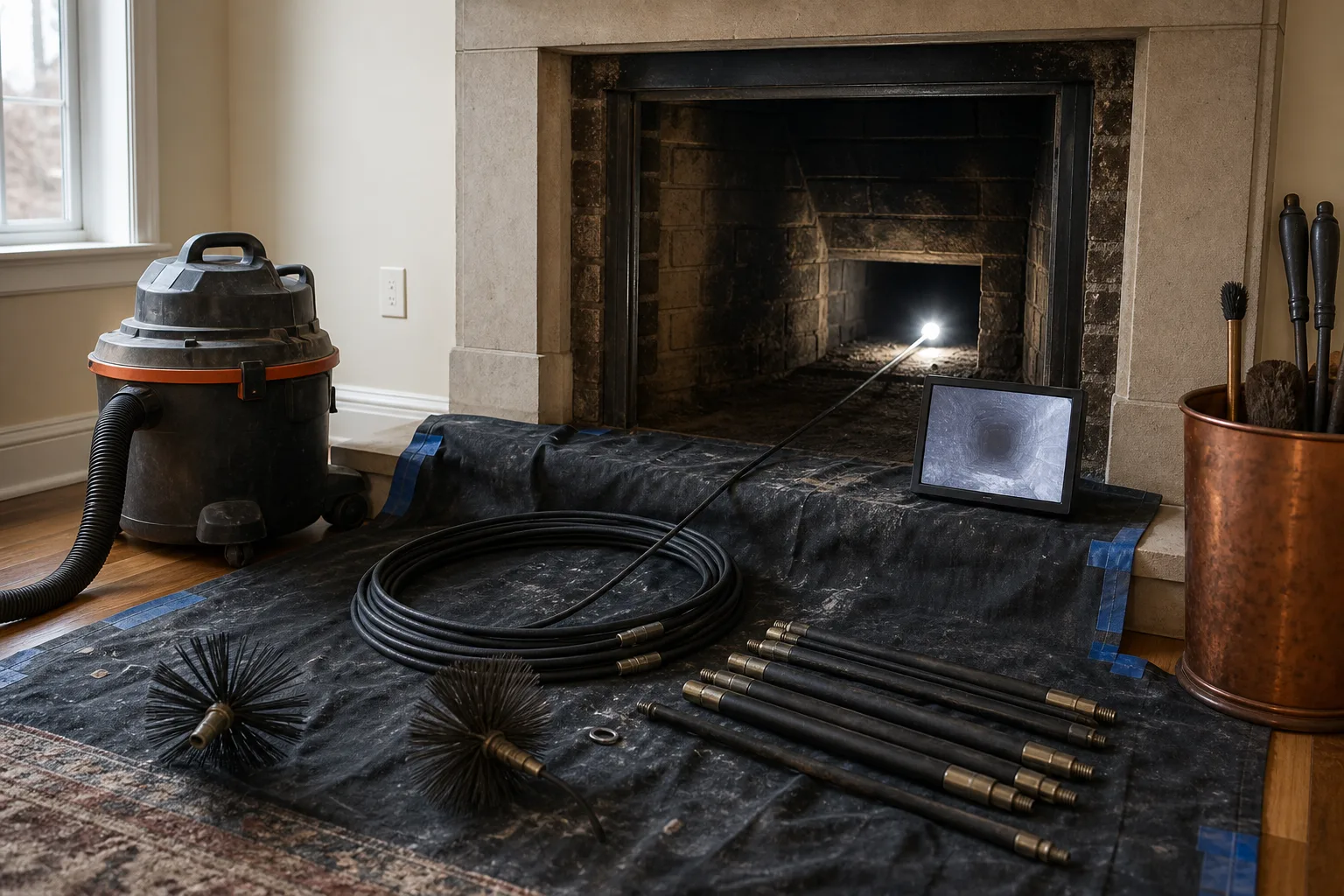
A sweep is the physical removal of deposit from the flue. Drop cloths go down over the hearth, a vacuum runs to keep soot out of your house, and rods with a brush head get worked up the flue from the firebox, from the roof, or both.
Out comes creosote and soot, plus whatever else moved in. Nests are common, as is masonry grit in an older chimney whose tiles are shedding.
Most companies that offer routine chimney service bundle the two, which is usually the sensible way to buy it. But they are separable, and if you have been told your chimney "needs cleaning" without anyone describing what they found in there, that is a fair thing to ask about.
Good to know: The twelve-month rule is about the inspection. If your chimney did not need sweeping this year, skipping the sweep is fine. Skipping the look is not, and that holds even for a fireplace you never light, because the things that go wrong in an unused chimney are structural, not sooty.
How Often to Clean Chimney by Fuel Type and Burn Volume
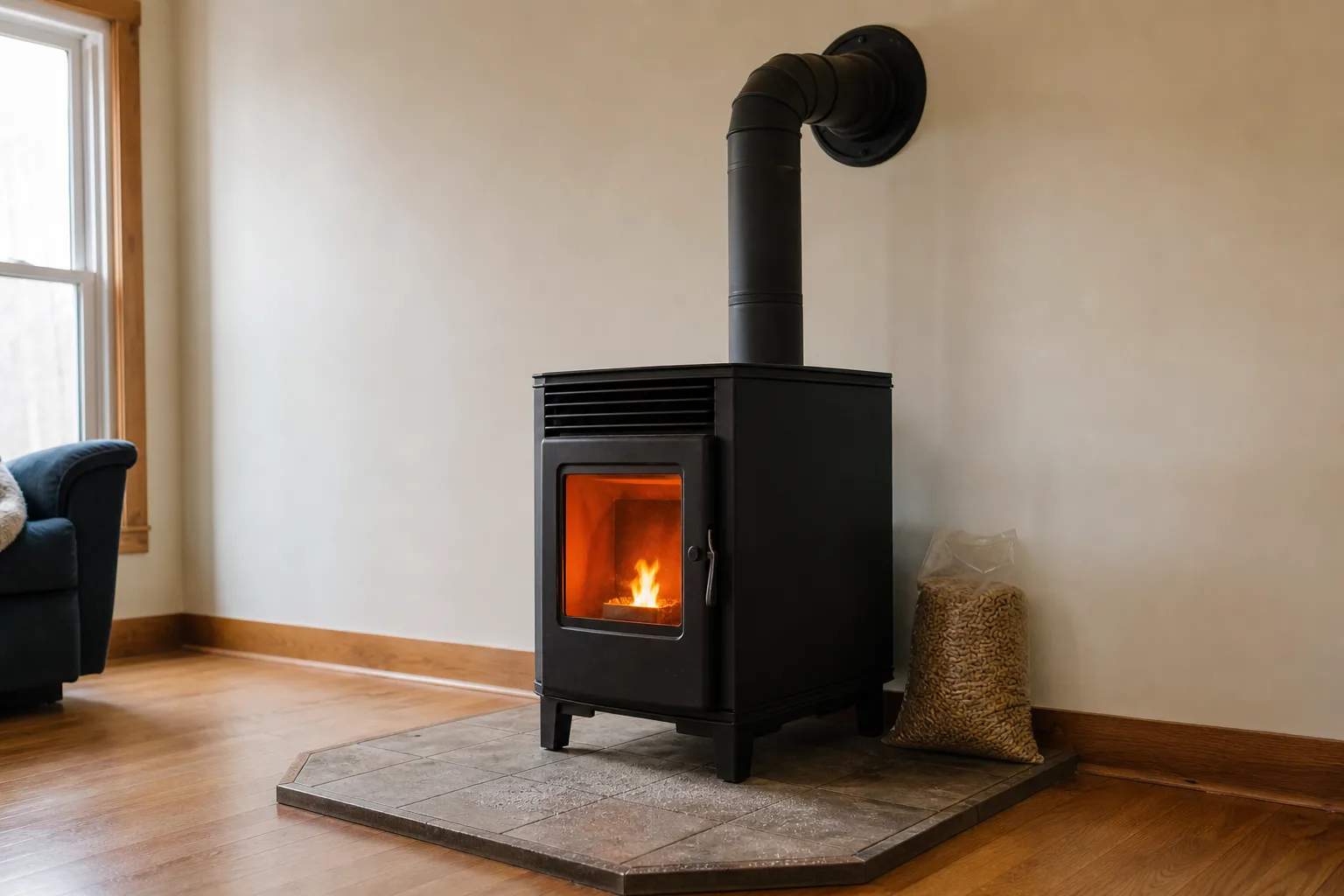
How often to clean chimney flues depends first on what you are burning, because a pellet stove and an open masonry fireplace have almost nothing in common except a pipe going up.
| Your setup | Inspection | When a sweep typically comes due | Move it up if |
|---|---|---|---|
| Open wood fireplace, a handful of fires a winter | Every 12 months | Often not annually; the inspection decides | You burn softwood or damp wood, or you smell the flue in summer |
| Open wood fireplace, weekly through the season | Every 12 months | Commonly once a season | Buildup crosses an eighth of an inch before spring |
| Wood stove or insert, primary heat source | Every 12 months | Commonly once a season, with the inspection setting the interval | Long smoldering burns, damp fuel, or any glaze appears |
| Pellet stove, regular use | Every 12 months | At the start of every burning season | You have burned roughly two to three tons since the last cleaning |
| Gas fireplace or gas log set | Every 12 months | Commonly every two to three years | The pilot behaves oddly, or you see soot on the logs or glass |
| Oil-fired appliance venting into a chimney | Every 12 months | Per the inspection | Any change to the appliance or the flue |
Open wood-burning fireplaces
An open fireplace draws a lot of room air up the flue, which keeps flue temperatures moderate and the deposit relatively dry and flaky. It also means you are burning a lot of wood for not much heat.
If you light it a few times a winter, an annual inspection with a sweep every few years is a common pattern. If it runs most weekends from November on, plan on a sweep each season and treat that as the baseline rather than the maximum.
Wood stoves and inserts
A stove or a cast iron fireplace insert is a sealed appliance, and that changes the math. You control the air, which means you can starve the fire, which means you can run the flue cool for hours at a time.
Cool flue plus wood smoke equals deposit. A stove used as a primary heat source commonly reaches the sweep threshold within a single season, and the inspection is what determines whether it has.
Pellet stoves
Pellet appliances burn a manufactured, dry fuel and produce far less creosote than cordwood. What they produce instead is fly ash, a lot of it, in venting with tight passages that clog.
CSIA guidance for a regularly used pellet appliance is cleaning at the start of every burning season. The other trade rule of thumb goes by fuel volume: after roughly two to three tons burned.
Gas fireplaces
The idea that a gas fireplace never needs attention, which usually travels alongside confusion over whether gas fireplaces need a chimney at all, is one of the most durable pieces of bad information on this subject. Gas appliances vent combustion byproducts and moisture, and those corrode metal and masonry over time.
The annual inspection applies here exactly as it does to wood. Cleaning runs a longer interval, commonly every two to three years depending on use.
Pro tip: If you have an insert and you find yourself running it choked down at its lowest setting most of the time to keep the room comfortable, the appliance may be oversized for the space. An oversized stove that never gets to run hot is one of the more reliable ways to build a difficult deposit, and no sweeping schedule fixes the underlying problem.
The Ten-Minute Check That Tells You Whether You Are Overdue
Every article about how often to clean chimney flues repeats the eighth-inch rule. Almost none of them tell you how a person standing in their own living room is supposed to measure an eighth of an inch of soot on a wall they cannot see.
You can. It takes about ten minutes and you already own the tools.
Do it on a cold flue, meaning nothing has been burned for at least a day. Then work through this:
- Put down a drop cloth or an old towel in front of the firebox. Soot travels.
- Wear gloves you do not care about, and safety glasses if you have them. Debris falls when you poke at a smoke chamber.
- Open the damper all the way. Fully open, not cracked.
- Get a bright flashlight and a hand mirror if you have one. A phone flashlight works.
- Reach up past the damper into the smoke chamber, the funnel-shaped space just above the throat.
- Scrape the wall with the tip of a flat screwdriver or an old key. Drag it a few inches.
- Look at the blade, and look at the mark you left on the wall.
Now read the result.
If the blade comes back with a light film of black powder and the wall underneath shows through where you dragged, you are in good shape. That is a normal season's worth of dry soot.
If the blade lifts crunchy black flakes, or you can feel the tool bite into a layer with some thickness to it, you are at or past the line. An eighth of an inch is not much: it is half of a quarter inch, and a layer you can feel as a distinct crust under the tool is in that neighborhood.
If what you find is shiny, hard and will not scrape off, stop. That is a different problem entirely, and the next section explains why.
One honest caveat. The smoke chamber is the most accessible part of the system and usually the dirtiest, so it tells you a lot, but not everything. The upper flue, the crown, the cap and the liner joints are invisible from your hearth rug, which is what the annual inspection is for.
From the field: The readings that surprise people most are on chimneys their owners describe as barely used. A fireplace lit occasionally, burning wood that sat outside uncovered, run with the damper half closed to stop the draft from stealing heat, can put down a deposit that looks nothing like "barely used" when somebody finally scrapes the wall.
Found buildup on the blade?
Tell us where you are and what you burn, and we will match you with an independent chimney company near you. We ask every company in the network to put its estimate in writing before any work starts, and you should insist on exactly that.
Call (513) 655-6702, or request service online.
The Three Stages of Creosote, and Why They Change the Answer
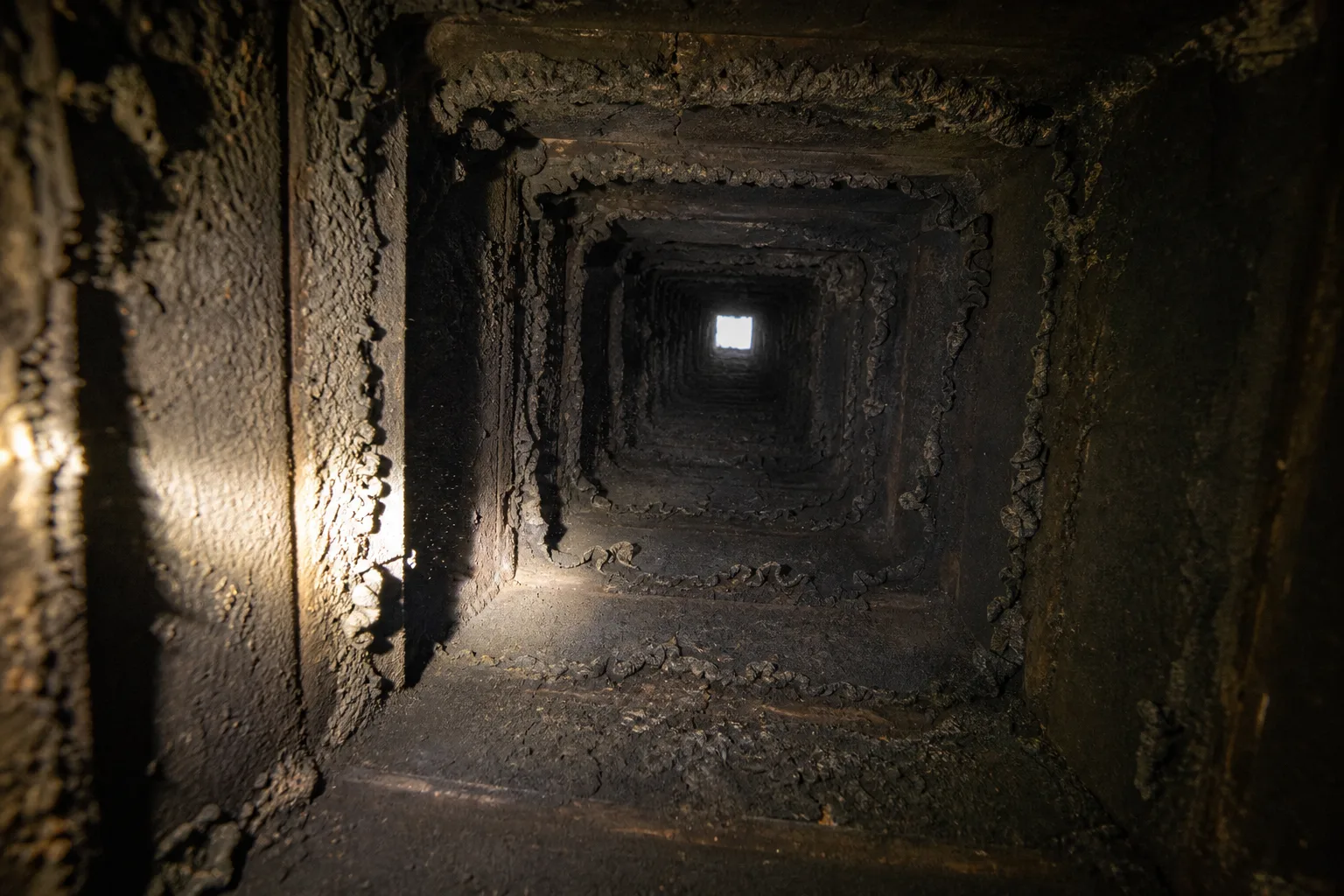
Homeowners get told "creosote is bad." The trade knows there are three distinctly different substances hiding behind that one word, and which one you have changes the answer to how often to clean chimney flues more than anything else on this page.
Stage 1: dry, flaky soot
Light, powdery, matte black or brown. It dulls a flashlight beam rather than reflecting it, and it smears like charcoal dust between gloved fingers.
This is what a well-run fire with properly seasoned wood leaves behind, and it is the easy case. A standard chimney brush takes it off.
Stage 2: hard, crunchy flakes
Dull black, with texture. Small hard chunks and flakes, something like burnt cornflakes, stuck to the flue wall rather than sitting on it.
Stage 2 means the fire has been running cooler than it should, the wood has been wetter than it should, or both. A brush alone often will not do it, and the technician moves to rotary tooling.
Stage 3: glazed creosote
This one looks wet even when it is bone dry. A hard, shiny black lacquer coating the flue tile, smooth, reflecting the flashlight straight back at you.
Glaze forms when unburned volatiles condense on the flue wall and then get baked in place, cycle after cycle. It is highly combustible, it ignites at relatively low temperatures, and it is bonded to the liner rather than resting on it.
Removing stage 3 is a real job. It generally takes a chemical treatment to break the glaze down, followed by mechanical removal, sometimes across more than one visit. Where the deposit is severe, the liner itself may need replacing, which moves the job out of sweeping and into chimney repair work.
Safety note: If your ten-minute check turns up a shiny, hard coating that will not scrape, stop burning and have the system looked at before you light another fire. A brush will not touch stage 3, and running a hot fire under a glazed flue is the condition that starts chimney fires.
How You Burn Changes How Often to Clean Chimney
Two neighbors can burn the same number of cords in the same style of fireplace and end up with completely different flues. Volume is the variable everybody talks about. Behavior is the variable that actually decides.
How often to clean chimney when you burn unseasoned wood
Wet wood is the biggest lever here, and it is not close.
Green or rain-soaked wood spends the first part of every burn boiling off water instead of making heat. Flue temperatures stay low, the smoke carries a heavy load of unburned volatiles, and those volatiles condense on the first cool surface they touch, which is the inside of your chimney.
Seasoning firewood properly generally takes somewhere between six months and two years split, stacked off the ground and covered on top with the sides left open, depending on species and climate. Oak sits at the long end. Ash and most softwoods sit at the short end.
Burn that instead of last month's storm damage and you can genuinely move yourself down a tier on the sweep schedule.
Why a slow overnight fire costs you more than a hot one
The overnight burn is the other big lever. Load the stove, choke the air down to a whisper, and you get eight hours of low heat instead of three hours of real heat.
You also get eight hours of cool, smoky, oxygen-starved combustion venting into a cool flue. That is the recipe for stage 2 and stage 3 deposit, written out step by step.
Nobody is going to stop banking a fire overnight in January. Just know which side of the ledger it lands on, and expect the flue to want more attention than a neighbor who burns hot and short.
Good to know: A flue that is oversized for its appliance behaves much the same way a choked fire does. A small modern stove vented into a big old masonry flue built for an open fireplace never gets that flue properly warm, and the deposit reflects it. This is one of the more common reasons a homeowner who does everything right still ends up with a dirty chimney, and it is a liner question rather than a sweeping question.
When the Standard Asks for More Than the Annual Look
The twelve-month Level 1 inspection is the baseline. NFPA 211 also names specific moments when a deeper Level 2 inspection is required, and almost nobody knows this part.
A Level 2 is required when:
- The property is sold or otherwise transferred.
- Anything about the system changes: a different fuel, a new appliance, a new or relined flue, a change in flue shape or size.
- The system malfunctions, including a smoke or draft problem that appeared out of nowhere.
- There has been a chimney fire, even a small one you were not sure about.
- An external event may have damaged the chimney, such as severe weather, a lightning strike or an earthquake.
A Level 2 adds a video scan of the full flue and a look at accessible attic and crawlspace runs, hunting for cracked tiles, gaps at liner joints and clearance problems a Level 1 cannot see.
If you bought your house in the last few years and nobody ran a camera up the flue, you are sitting on an unmet trigger. Worth closing before you lean on the fireplace for another winter.
The last piece of the how often to clean chimney question is when in the year to do it. Everybody in America remembers their chimney in October. Late spring and summer are quieter on the schedule, and a flue swept in June is just as clean in November as one swept in November.
How VIO Helps You Settle How Often to Clean Chimney at Your House
Here is the part most sites on this topic leave out, so let us be plain. VIO is a referral network. We do not sweep chimneys and we do not employ technicians. The company that shows up is an independent local business that sets its own crews and its own pricing.
What we do is the matching. When you request service, you tell us what you have, an open masonry fireplace, an insert, a pellet stove, a gas log set, how hard you run it, and what you found on the blade. We route that to a company in your area that handles routine inspections and sweeps, not only emergency repairs.
That distinction matters. Plenty of outfits would rather sell a reline than book a Level 1, and a homeowner whose real question is how often to clean chimney flues at their own house should not have to fight through a sales process to get an inspection on the calendar.
On money: we ask every company in the network to put its estimate in writing before any work starts, and you should insist on exactly that. If someone quotes you verbally and starts unpacking rods, slow the visit down.
Still not sure whether you are overdue?
That is what the annual inspection is for, and it is about the least expensive thing you will ever do for a chimney. Tell us your setup and we will match you with a local company that handles it.
Call (513) 655-6702, or request service online.
Symptom checker
What is your chimney doing?
Tap the closest match for an honest first answer.