



On this pageWhat Masonry Cleaning Actually Removes, and What It Cannot Fix7 sections+6
- What Masonry Cleaning Actually Removes, and What It Cannot Fix
- Read the Stain Before You Reach for the Hose
- Why the Chimney Is the Hardest Masonry Cleaning Job on the House
- Pressure, Chemicals, and the Damage You Can Do in One Afternoon
- The Right Order: Look, Repair, Wait, Then Clean
- DIY or Hire: The Honest Split
- How VIO Helps With Masonry Cleaning and the Repairs Behind It
Quick answer
Masonry cleaning removes surface deposits like dirt, carbon, algae and mineral salts from brick, stone and concrete, using one of three method families: water and detergent, chemical cleaners, or abrasive blasting. The stain decides the method. Trade guidance keeps pressure on brick low, roughly 500 to 1,000 psi, and lower still on soft or historic brick. Failing mortar joints should be patched and left to harden for at least seven days before any washing starts.
You noticed it on a Tuesday, probably. Walking to the car, something made you look up, and by that evening you were reading about masonry cleaning.
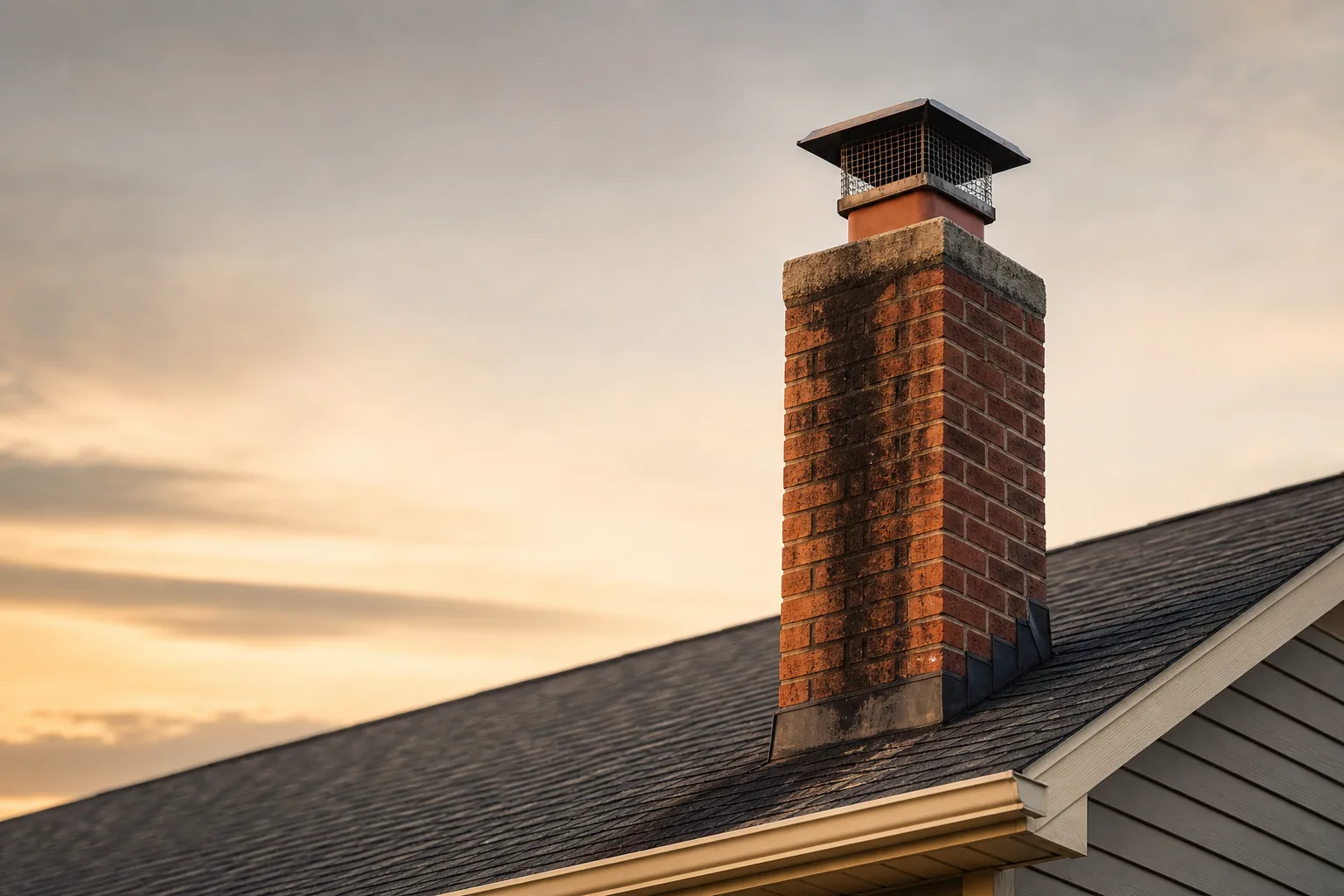
A dark wash running down one face of the chimney. Or a chalky white haze on brick that was clean when you bought the place. Or orange streaks bleeding out from under the metal cap.
Nothing is broken and nothing is leaking, so you started wondering whether masonry cleaning with a rented pressure washer and one free Saturday would fix it.
Here is the part that changes the plan. That stain has a name, and the name tells you what to do next.
Some of what you see washes off in an afternoon with a hose and a soft brush. Some of it is a report on what water is doing inside your wall, and scrubbing it accomplishes nothing. And a couple of them mean the pressure washer will do more damage in twenty minutes than the weather did in twenty years.
So before method, diagnosis. That order is backwards from almost everything else written on this subject, and it is the right one.
What Masonry Cleaning Actually Removes, and What It Cannot Fix
Masonry cleaning is the removal of surface deposits from brick, stone, concrete, and terra cotta. Dirt and airborne carbon. Biological growth like algae and mold. Mineral salts carried out of the wall by water. Paint, graffiti, mortar smears left by a sloppy build.
That is the honest scope. It is surface work.
The three method families
Water and detergent. Low-pressure washing, sometimes with a mild soap, sometimes with nothing but water and patience. The gentlest option, and it handles more than people expect on dirt and light growth.
Chemical cleaning. Proprietary cleaners formulated for specific stain types. The important thing is that chemical cleaning does not strip the fired outer skin off the brick the way abrasive methods do.
Abrasive cleaning. Sandblasting and its relatives. A commercial and restoration tool, used by people who understand what it costs the material. It removes the brick's protective skin. Treat it as something that exists, not as something on your menu.
What a wash will never fix
Here is where most articles on masonry cleaning quietly mislead you.
A clean chimney is not a sound chimney. Washing does not close a crack, does not replace a crumbling mortar joint, does not repair a split crown, and does not put the face back on a spalled brick. It makes the damage easier to see, which is genuinely useful, and that is all it does.
If your joints are soft and sandy and your bricks are flaking, cleaning is not your first move. Repair is.
Read the Stain Before You Reach for the Hose
This is the part I would bookmark.
Every stain on residential masonry comes from somewhere specific, and the source decides whether masonry cleaning is the answer or a distraction. Find yours.
| What you see | What it means | Will washing remove it | What it actually needs |
|---|---|---|---|
| Dark brown to black vertical streaks from the top of the stack, often continuing onto the shingles | Commonly associated with creosote: rain can pick up the color from inside the flue and carry it down the outside | Partially, and it can return while the source is there | An inspection of the flue and the cap to confirm the source |
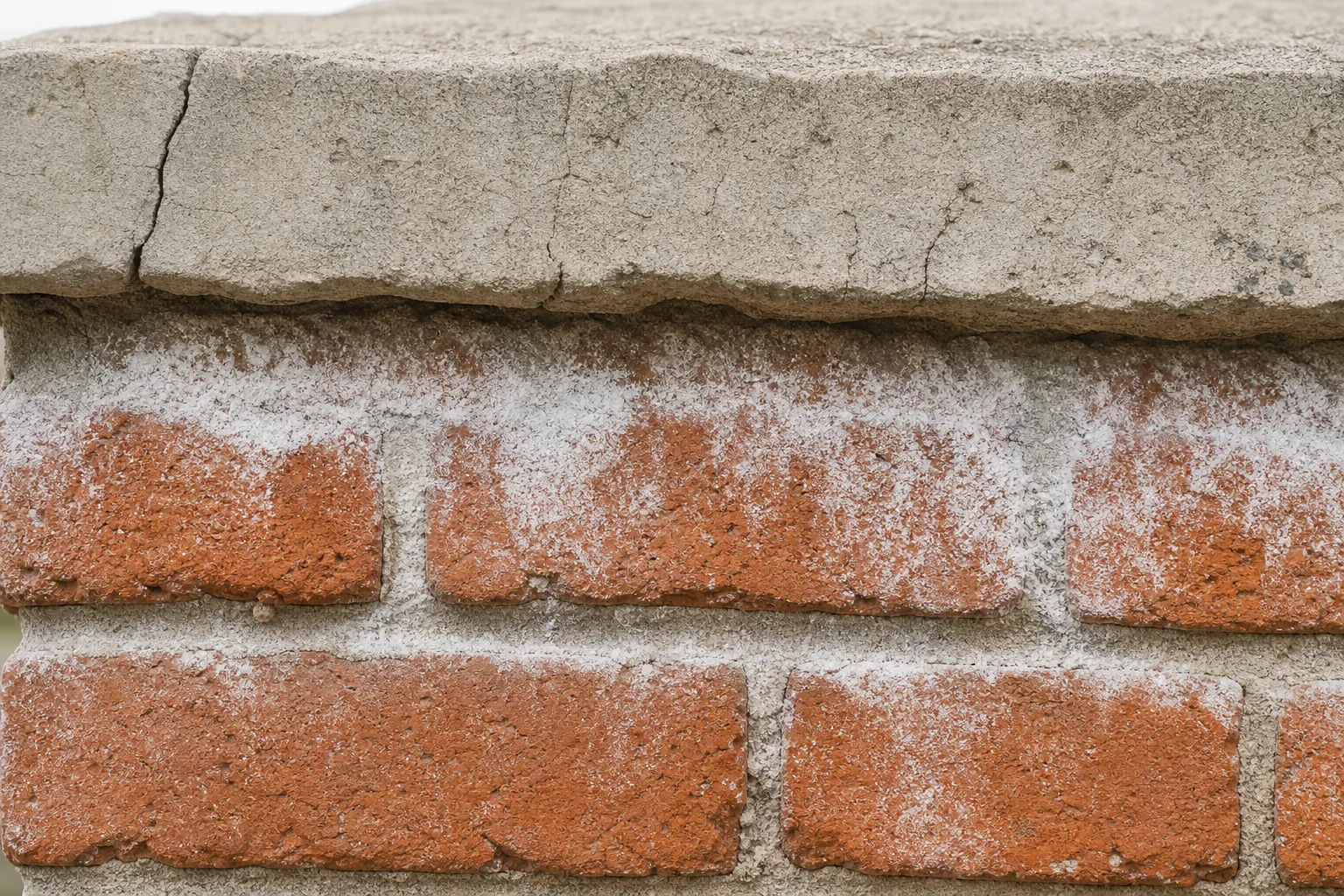
| Chalky white powdery bloom, patchy, often near the crown or the base | Efflorescence. Water-soluble salts carried to the surface by moisture moving through the masonry | It comes back. It was never dirt | Find the water path: crown, cap, flashing, joints |
| Orange-brown vertical runs starting at a metal part | Rust from a cap, chase cover, or flashing. Water is sitting on metal | The streak, yes. The source, no | Inspection of the metal part and why it stays wet |
| Green to black film, even rather than streaked, on the shaded face | Algae and biological growth. Shade plus retained moisture | Yes, this one genuinely cleans up | Cleaning, plus better drainage where possible |
| Brick faces popped off, showing a rougher lighter interior, often clustered | Spalling. Water in the brick froze, expanded, and broke the face away | No. Nothing to remove | Masonry repair. Do not pressure wash spalled brick |
Black streaks running down the stack
The black wash is the one that makes people call. It looks like the chimney is dirty in a way that shames the house.
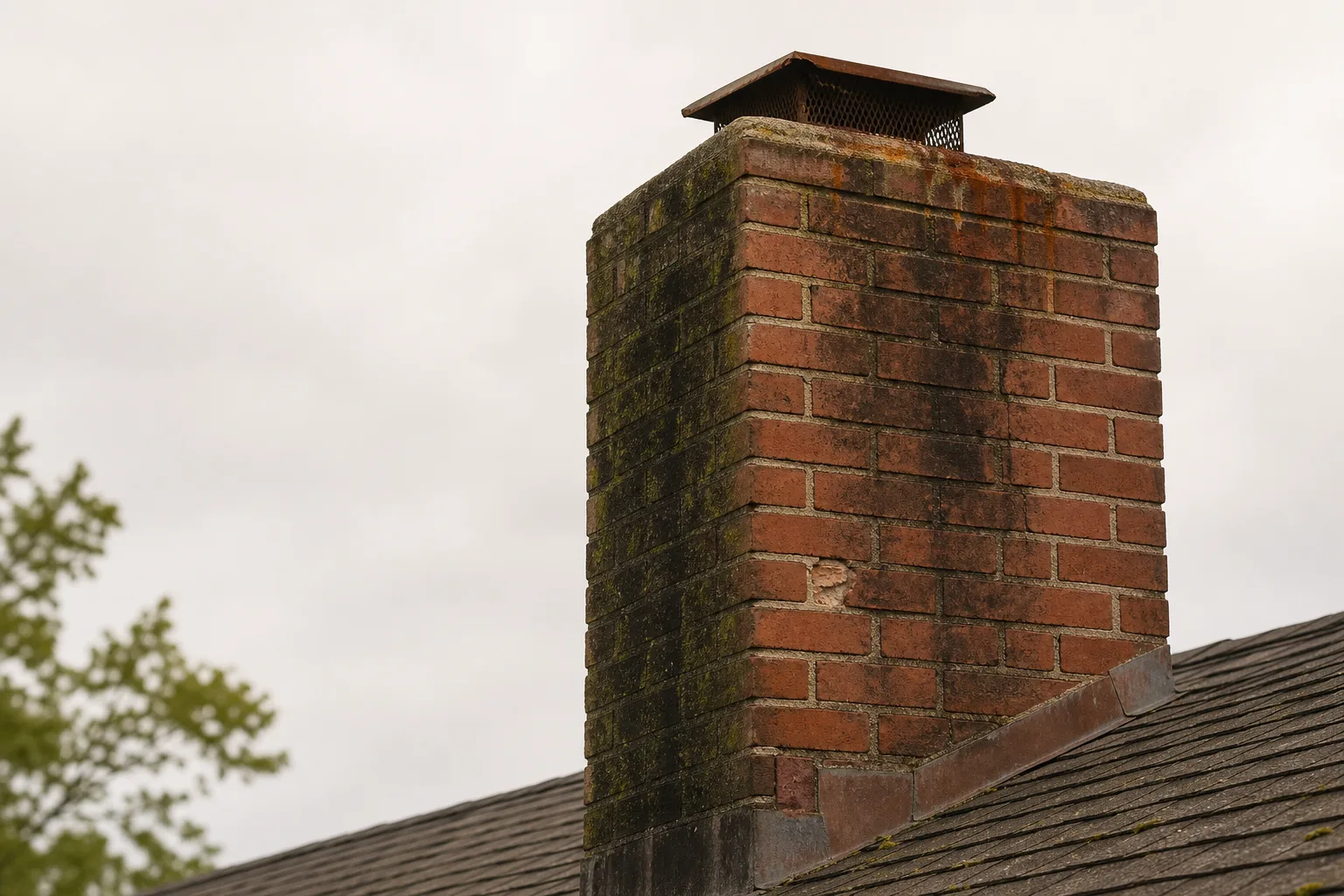
Black streaking of this kind is associated with creosote, the residue burning wood leaves inside the flue. Where that is the cause, rain gets in, picks up the color, and runs it down the outside, which is why the streaking tends to start at the top and often continues onto the roof. An inspection is what confirms it.
You can improve the look of it. You cannot make it stop by scrubbing, because the source is inside. Heavy exterior streaking is usually a prompt to look at how often the flue is actually being swept, which is a different conversation from washing brick.
Chalky white bloom
Efflorescence. The white deposit that shows up on brick and makes homeowners assume something is growing.
Nothing is growing. Those are water-soluble salts, and they reached the surface because moisture moved through the masonry and carried them out. The bloom is not the problem. The bloom is the receipt.
Good to know: You can scrub efflorescence off in an hour and watch it reappear, and that is not a failure of your technique. The Brick Industry Association notes that chemical cleaning cannot remove crystalline efflorescence, because of how the crystals attach to the surface. More to the point, as long as water keeps moving through the wall, the salts keep arriving.
Orange rust runs
Rust streaking is extremely common on factory-built systems that carry a flat metal chase cover instead of a brick crown. When orange runs down the sidewalls of a chase, water is almost always the culprit.
It shows up on masonry chimneys too, usually from the cap or the flashing.
The streak itself cleans. The metal that produced it is still sitting there getting wet.
Green-black film on the shaded side
The good news entry in the table. Algae on a north-facing or overhung wall is genuine surface dirt, it responds to appropriate cleaning, and it is the stain most likely to justify a Saturday.
Bear in mind that the shade and moisture that grew it are permanent features of your house, so treat this as maintenance rather than a one-time fix. Maintenance, not diagnosis.
Why the Chimney Is the Hardest Masonry Cleaning Job on the House
Every other masonry surface on an American house gets some protection. Walls have eaves. Foundations have grade and gutters. Steps have a porch roof.
The chimney has nothing.
Weather on all four sides
It stands above the roofline with weather hitting all four faces, no overhang, and a horizontal top that collects every inch of rain falling on it. Then add the internal load: combustion moisture and acidic condensation working from the inside out.
So masonry cleaning on a chimney means the most weather-beaten brick on the property, usually the oldest-looking, and almost always the hardest to reach. Every decision about it gets made from a ladder or a roof.
From the field: The chimney is the one masonry surface on a house with no roof over it, and it shows. When a homeowner points at the stack and says the brick up there looks worse than the brick on the wall below, they are usually right, and it is not their imagination. It is decades of exposure the rest of the house never took.
The parts that stain first
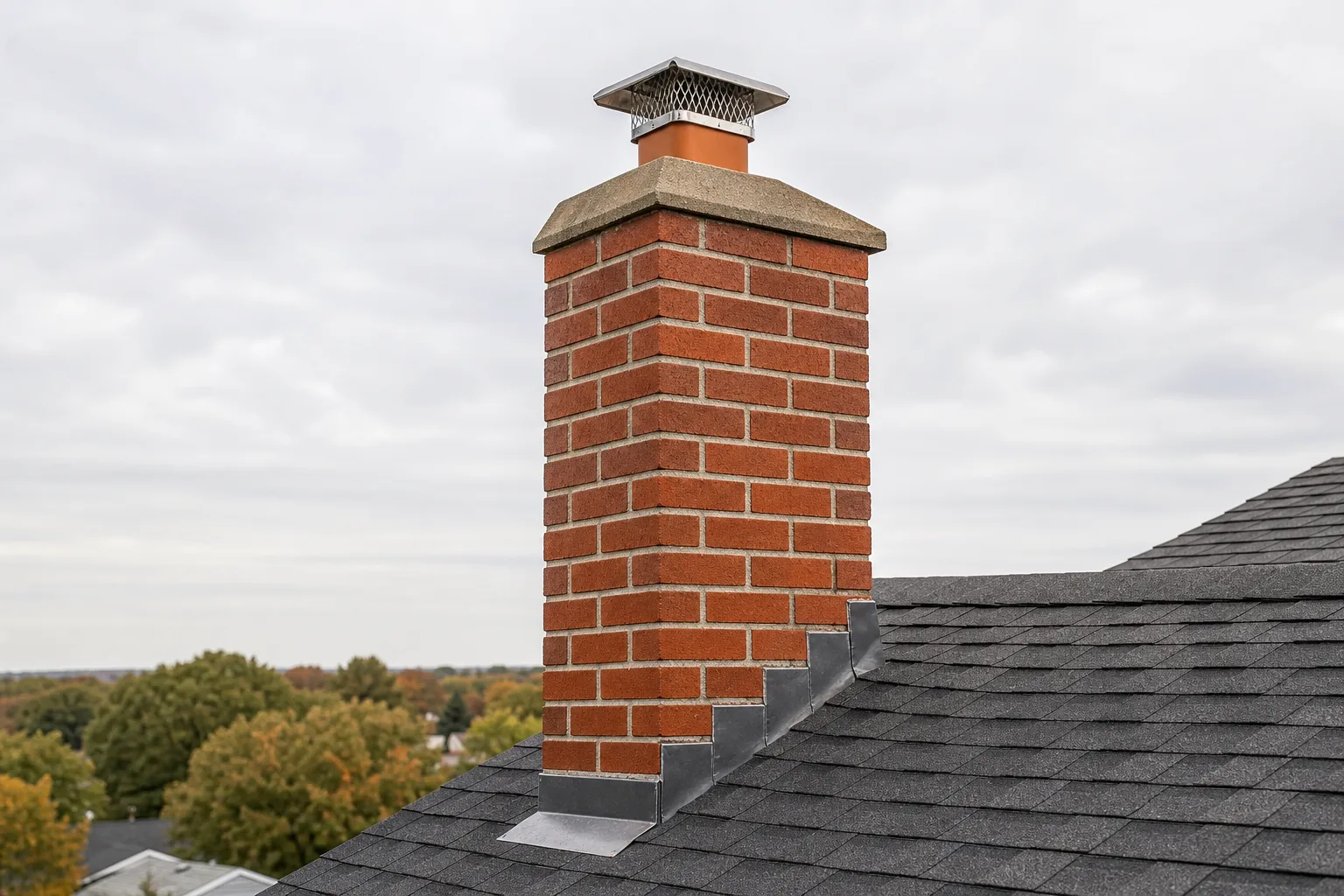
The cap. A mesh-sided box with a lid over the flue opening, keeping rain and animals out. Caps are commonly made of galvanized or stainless steel, sometimes copper, and metal sitting in the weather can corrode.
The crown. The sloped concrete wash covering the top of the stack around the flue tile. When it cracks, water goes straight in, and dark or rust-colored streaking on a crown says it is staying wet.
The flue tile. Orange-tan, square or round, protruding a few inches above the crown. It is the top of the clay flue liner running down inside the stack.
The chase cover. On factory-built systems, a flat metal pan on top of a sided box. The classic source of orange streaking.
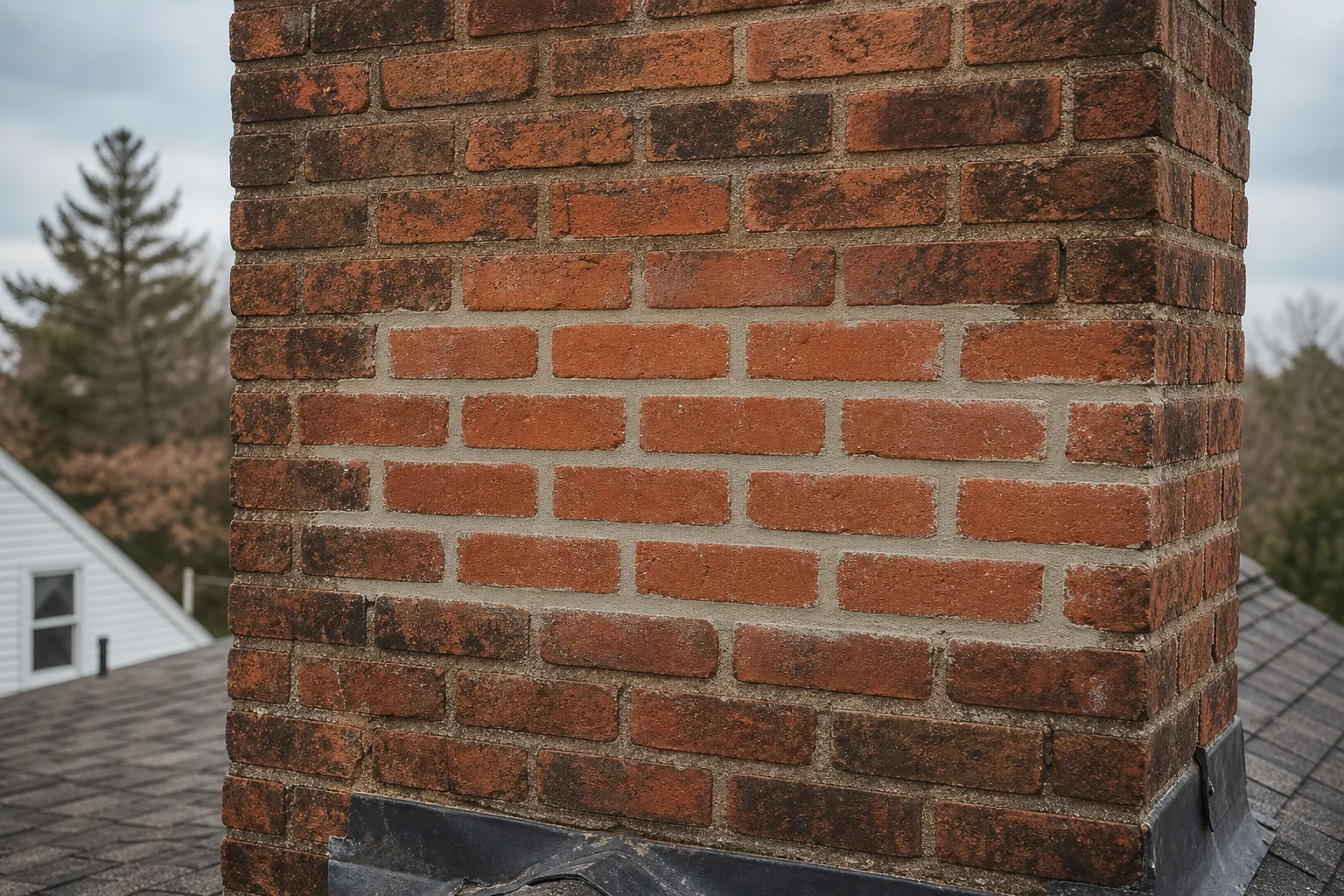
The mortar joints. Healthy joints are hard. Failing joints are crumbly and sandy and you can dig them out with a screwdriver, which is a test worth doing before you aim anything at them.
The flashing. Metal at the roof-to-chimney junction, stepped along the slope. A frequent leak point and a frequent rust source.
Pressure, Chemicals, and the Damage You Can Do in One Afternoon
The uncomfortable truth about masonry cleaning is that the tools which clean brick are the same tools that destroy it.
The difference is entirely in the settings and the judgment. Same machine, same wall, two completely different outcomes.
What the pressure numbers actually mean
Brick Industry Association guidance on cleaning brickwork is the reference document the rest of the industry paraphrases. The reported ceiling for most brick cleaning is around 1,200 psi, and softer or historic brick should be treated much lower, in the range of 400 to 600 psi.
Brick manufacturers and cleaning contractors converge on roughly 500 to 1,000 psi as the safe working range.
Read that as a range, not a setting. The number that suits a 1990s hard-fired face brick is wrong for a soft century-old brick. Nobody can hand you one figure over the internet, and anyone who does has not looked at your wall.
Go too high and the result is well documented. High pressure strips the fired protective skin off the brick and forces moisture into the wall, which produces cracking and long-term water damage.
The brick looks great for a season. Then it does not.
Myth vs. fact: The myth is that more pressure means cleaner brick, so you may as well turn it up. The fact is that the fired outer skin is the part doing the waterproofing, and once pressure takes it off, the brick underneath is softer and thirstier than the surface it replaced. You do not get it back.
Acid, and the one rule that matters
The Brick Industry Association advises against unbuffered muriatic acid, which is hydrochloric acid, on brick. Unbuffered high-strength acid solutions tend to create further staining and to attack the mortar joints themselves.
There is a second layer. Improper use of hydrochloric acid in cleaning solutions is a recognized cause of chloride efflorescence appearing afterward. The aggressive shortcut can hand you the exact white bloom you were trying to remove.
Many proprietary cleaners do contain acid, but their formulations include buffering and other chemistry that make them safer and easier to use correctly. Buying the formulated product instead of the raw jug is not a beginner's compromise. It is what the guidance points to.
The test patch nobody bothers with
Every serious source says the same thing about any acid or proprietary cleaner: test it on an inconspicuous area first. It is an easy step to skip, and it is the step between you and a permanently discolored wall.
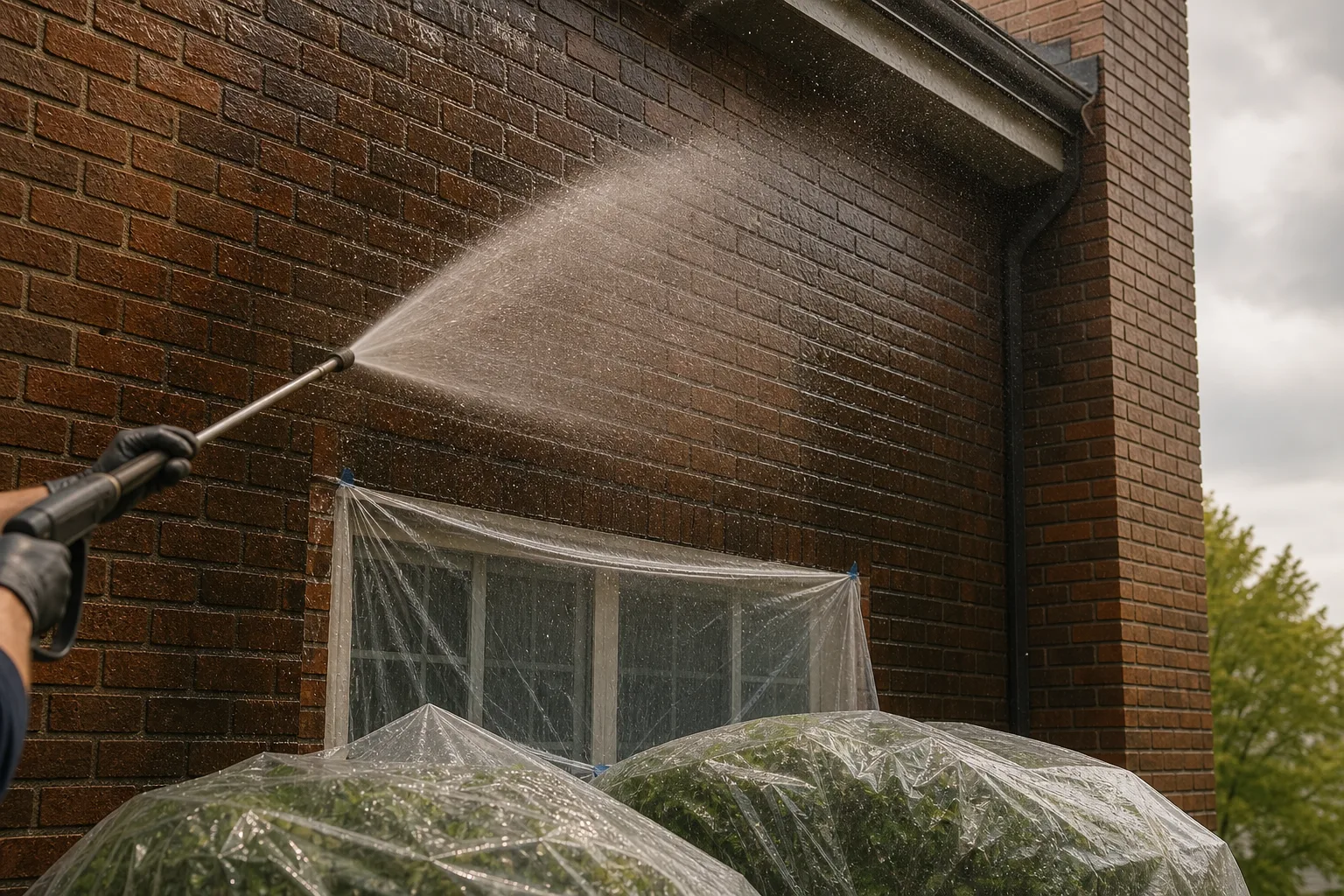
Pro tip: Pick a patch that is honest, not a hidden corner behind the downspout that has never seen sun. Saturate the masonry with plain water first, so the wall drinks water instead of chemistry. Use a wide fan tip and keep the wand well back. Then judge it dry, not wet. Everything looks good wet.
Safety note: Most of this happens on a ladder or a roof, holding something that either sprays at pressure or burns skin. Eye protection is not optional. Sheet the plantings and windows below the work area before you start, because runoff goes where gravity sends it. If the honest answer to "am I comfortable doing this at that height" is no, that is a complete and sufficient reason to hand the job over.
The Right Order: Look, Repair, Wait, Then Clean
Search this subject and nearly every result starts at step three. Mix the cleaner. Saturate the brick. Scrub. Rinse.
The trade does not start there. It starts with a walk-around.
The reason is mechanical, not philosophical. A wall with open joints and spalled faces has holes in it. Push water at a wall with holes in it and the water goes in, behind the brick, toward the framing. You will have washed the outside and soaked the inside.
Why seven days of hardening is not optional
Damaged mortar joints should be patched and given at least seven days to harden before the wall gets washed. Fresh mortar is not waterproof and it is not strong. Wash it early and you undo the repair you just paid for.
Good to know: That seven-day window is one reason a masonry cleaning job can end up split across two visits, and it tends to catch homeowners off guard. If your chimney needs repointing before it needs washing, the calendar is measured in weeks, not in one Saturday. Plan it that way and it goes fine.
The walk-around checklist, before any water:
- Probe the mortar joints with a screwdriver. If they crumble, stop. Repair comes first.
- Look for spalled brick faces where the surface has popped off. Note where they cluster.
- Check the crown for cracks and for dark or rust-colored streaking.
- Check the cap or chase cover for rust, gaps, and anything sitting loose.
- Check the flashing at the roof line for lifted edges and rust.
- Identify your stain from the table above, so you are choosing a method instead of guessing.
- Sheet the plantings, windows, and anything under the work area.
- Confirm enough water volume to rinse continuously, because cleaner drying on the wall is its own problem.
- Run the test patch. Let it dry. Look at it dry.
If the first five turned up problems, the cleaning conversation is on hold and the repair conversation has started. That is not a sales pitch. That is the order the material demands.
DIY or Hire: The Honest Split
I am not going to tell you that every square foot of brick on your property requires a professional. It does not, and you would stop believing me if I said it.
Some masonry cleaning is legitimately a weekend job. Some is not. The line is clearer than you would think.
Masonry cleaning jobs a homeowner can handle
Green-black algae on a shaded wall you can reach from the ground, with a garden hose, a soft masonry brush, and a mild detergent. Slow, unglamorous, effective.
General dirt and grime on sound brick, meaning hard joints and intact faces, using a pressure washer at the low end of the range with a wide fan tip.
Light growth on a low garden wall, on steps, on a foundation face. Anywhere you have both feet on the ground and a wall that passed the screwdriver test.
The common thread is reachable, sound, and diagnosed. Miss any one of the three and you are in the other column.
The jobs where the wand makes it worse
Anything on the chimney above the roofline. The access alone rules it out for most people.
Any wall where the joints failed the screwdriver test, until the repointing is done and cured.
Any brick that is actively spalling. There is nothing to clean off a spalled face, and pressure accelerates what is already happening.
Efflorescence you have already cleaned once and watched return. A second cleaning will not resolve it any better than the first.
Historic or soft brick, where the safe pressure range drops and the margin for error goes with it. Old brick is not simply older. It is a different material with a different tolerance.
If your list runs longer in this column, that is your answer, and it is worth finding chimney specialists who work on masonry rather than a general washing outfit.
Not sure if that stain is safe to wash off?
Tell us what you are seeing on the brick and we will match you with a local masonry and chimney company that can look at it before anything gets sprayed. Request service, or call (513) 655-6702.
How VIO Helps With Masonry Cleaning and the Repairs Behind It
Here is where you probably are right now. You can name the stain. You have a rough sense of which column you are in. What you do not have is the name of somebody who will climb up and look at it.
That is the part VIO handles.
VIO is a referral service. We do not do masonry cleaning ourselves and we do not employ crews. We match homeowners with independent local companies that do this work. The company we match you with is the one that shows up, looks at the brick, and quotes the job.
You describe the stains, the age of the brick, and what you have already tried. We route it to companies in your area that handle both the cleaning and the masonry repair that often turns out to be the real job.
That combination matters here more than on most work. A masonry cleaning call that turns into a repointing conversation halfway through is not a bad outcome, and if it happens you want it handled by the same people rather than restarting your search. It helps to walk in knowing roughly what the repair side of chimney work involves.
We ask every company in the network to put its estimate in writing before any work starts, and you should insist on exactly that. It is the simplest protection you have on a job where the scope can shift once somebody is standing at the top of a ladder looking at the crown.
One more thing about timing.
Spalling is a freeze-thaw process. Water gets into a hairline crack in a brick face, freezes, expands, widens the crack, and takes the face off. That machinery runs all winter.
The crack that is cosmetic in September is doing work in January.
Which is why the stretch before heating season is the right window. The weather still cooperates with exterior masonry work and with mortar curing, and anything repaired now is not spending the winter taking on water.
Get eyes on the chimney before the first freeze.
Describe the stains, the age of the brick, and your zip code. We pass it to independent local companies in our network and they take it from there. Request service, or call (513) 655-6702.
Symptom checker
What is your chimney doing?
Tap the closest match for an honest first answer.