



Quick answer
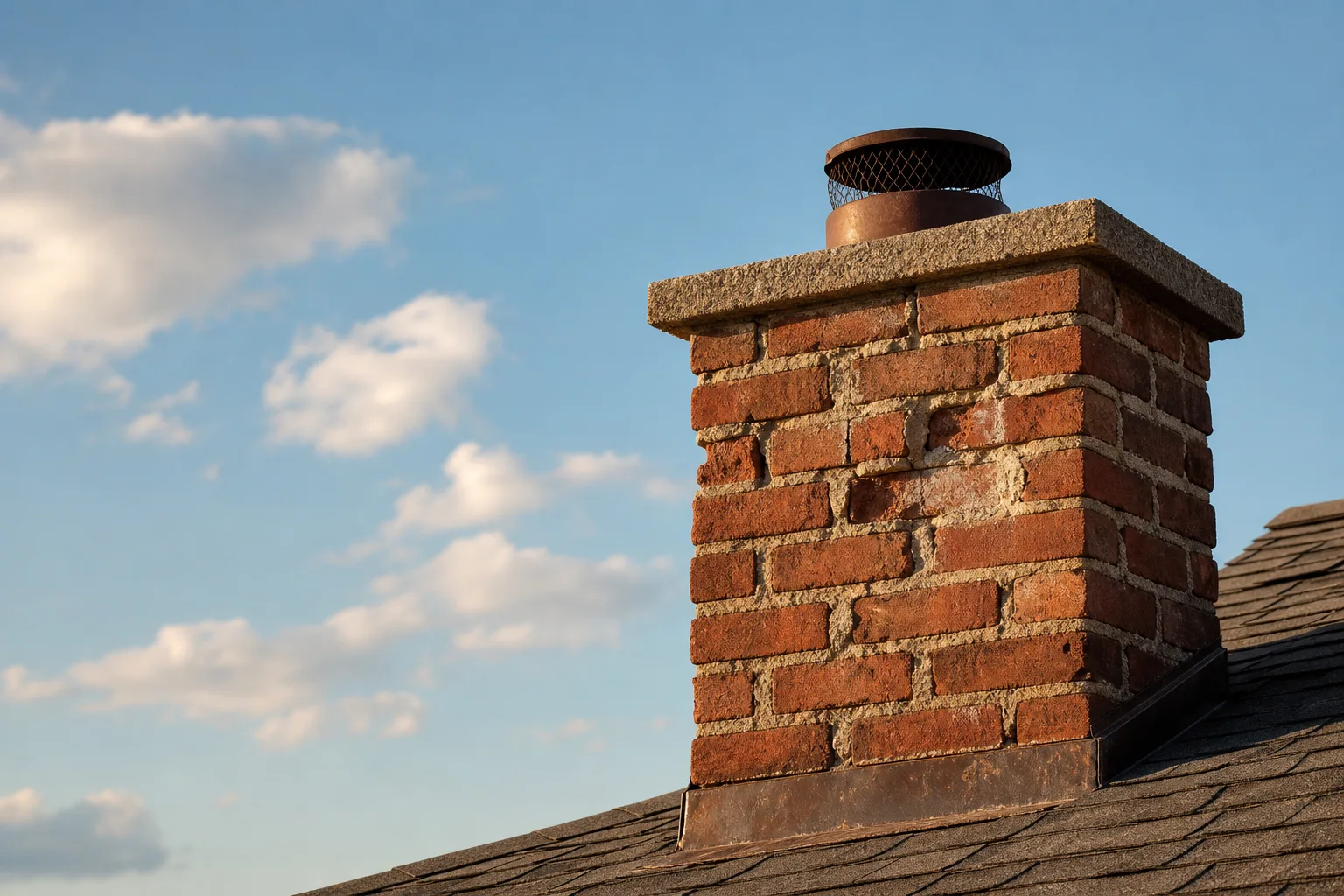
Masonry work covers four different jobs: repointing failed mortar joints, rebuilding structures that have lost integrity, crown and waterproofing work, and flashing repairs at the roofline. Which one you need depends on whether the mortar failed or the brick and structure did. Crumbling joints on sound brick are routine maintenance. Leaning stacks, widespread spalling, or active leaks into the house are urgent and need hands-on assessment, not a guess from the ground.
Most people type "masonry work" into a search bar for one reason: they saw something on their house that looked wrong. A brick face flaking off like a bad sunburn. A gap between two bricks where the gray stuff used to be. A brown ring on the living room ceiling that shows up only after a hard rain. They don't know what the repair is called, so they search the broadest word they know and hope the internet sorts it out.
Here's the problem with that word. Masonry work covers three or four completely different jobs that share almost nothing except the material. Grinding out failed joints and packing in fresh mortar is a slow, fussy, surgical job. Taking a chimney down to the roofline and stacking it back up is demolition followed by construction. Chasing a leak that only looks like a masonry problem is detective work. Same word, wildly different scope, wildly different price. And the difference between them almost never comes down to the bricks. It comes down to the mortar between them.
So this guide isn't a service menu. It's a translation. By the time you finish it you should be able to look at your own wall or chimney, name what you're seeing, know whether it's a this-month problem or a next-spring problem, and ask a contractor the two or three questions that separate the good ones from the guy with a trowel and a magnetic sign.
What masonry work actually covers
Strip away the marketing and masonry work on a house falls into four buckets.
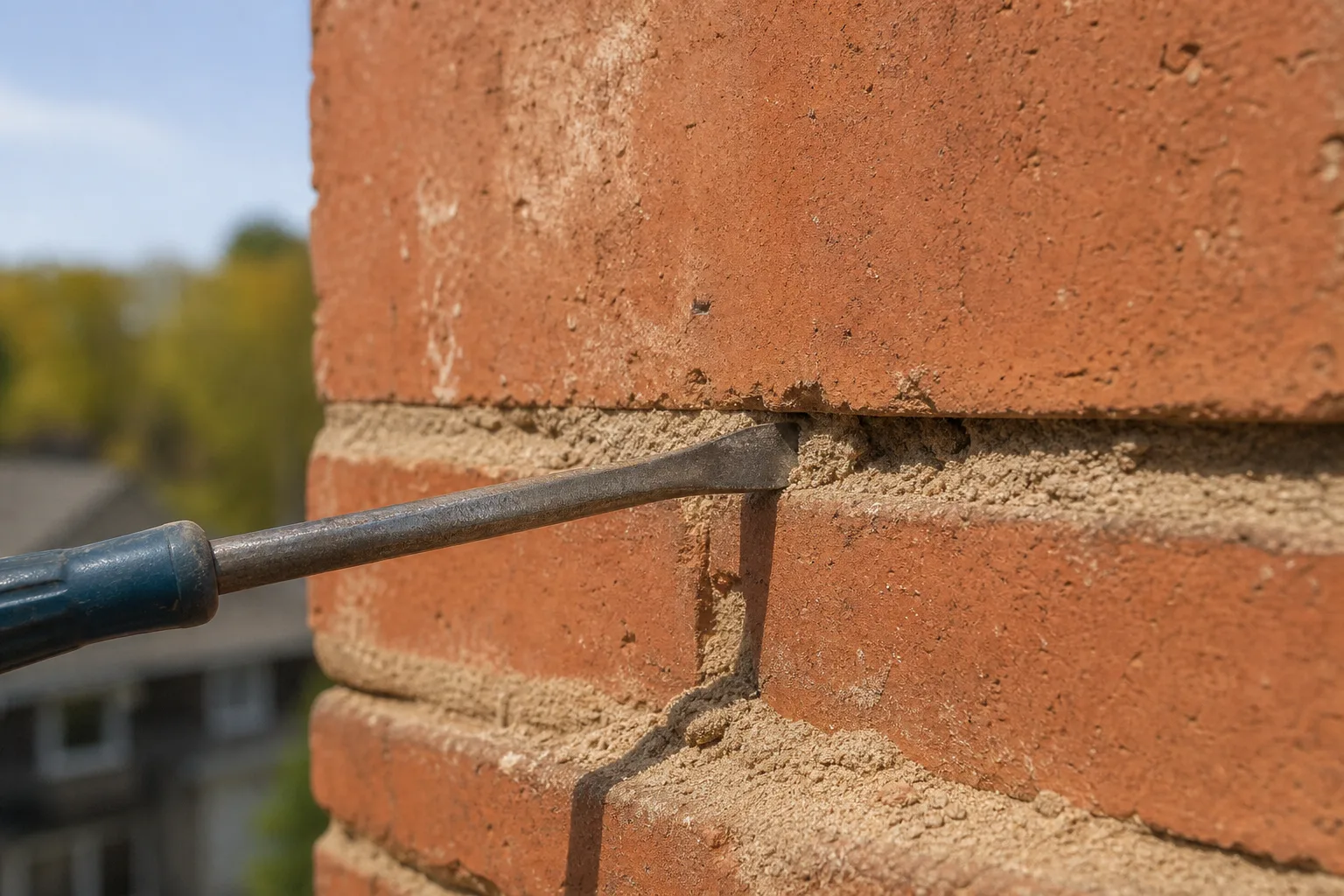
Pointing and repointing. The mortar joints between bricks are sacrificial. They're supposed to be softer than the brick, and they're supposed to fail first. That's the design, not a defect. When they crumble, you grind the old joint out to a consistent depth and pack new mortar in. On a chimney this is the single most common repair there is, which is why chimney repointing near me gets searched so heavily. Done right it disappears. Done wrong it's a smear of gray across the face of your brick that you'll look at for twenty years.
Rebuilding. When the structure itself has lost integrity (bricks shifted, the stack leans, the top courses are loose enough to rock by hand), you don't patch. You take it apart to sound material and rebuild. Partial rebuilds above the roofline are common on chimneys because that's the section with weather hitting it from every direction at once.
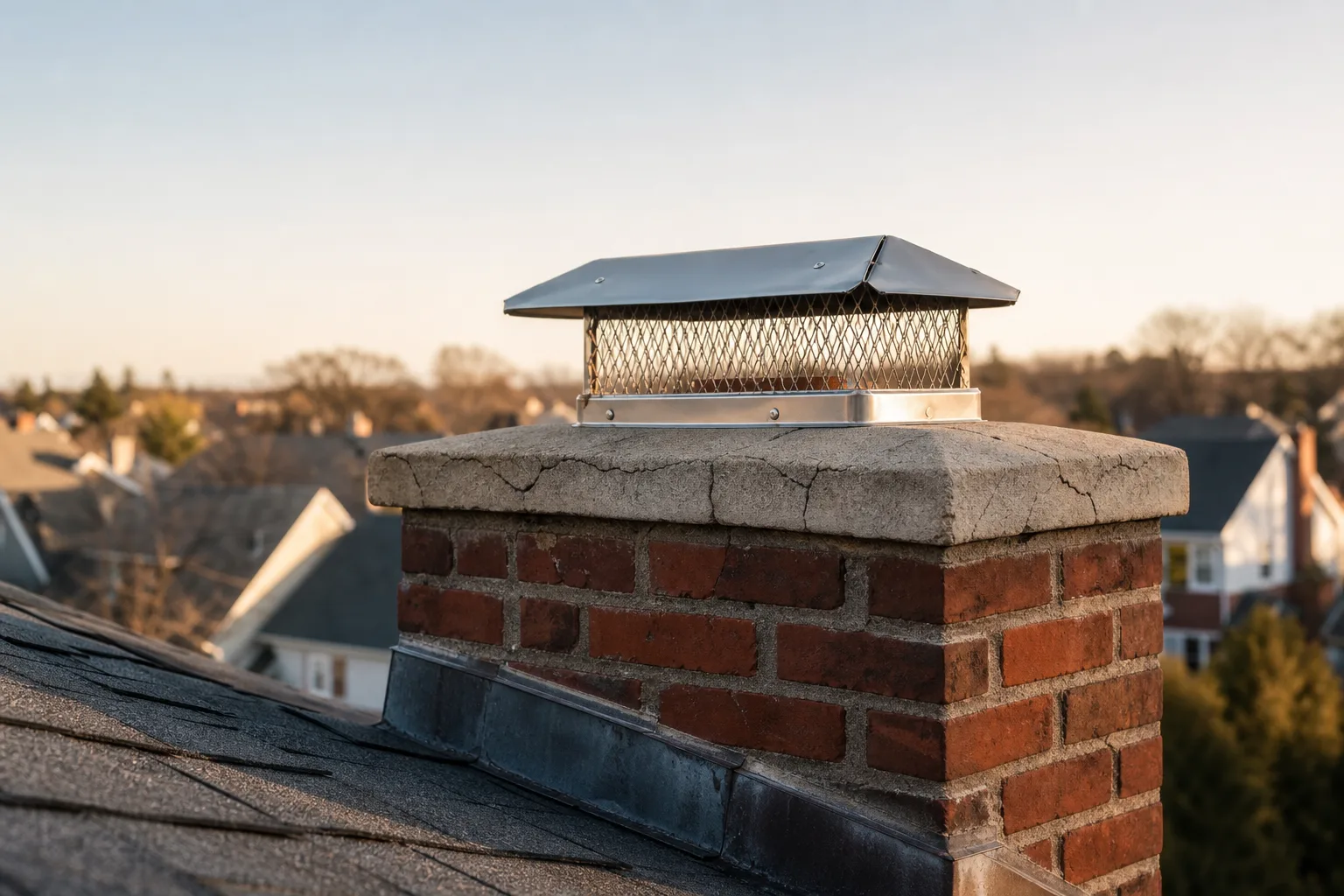
Waterproofing and crown work. The concrete slab on top of a chimney takes the worst punishment on the whole structure, and when it cracks, water goes straight down inside the brick where nobody can see it. Vapor-permeable sealers, crown repairs, and chimney cap work all live here. This is the cheap end of masonry work and it prevents the expensive end.
Flashing and the gray zone. Flashing is metal, not masonry, but it's embedded in masonry, and it's where a huge share of "my chimney leaks" calls actually resolve. A mason who doesn't understand chimney flashing repair will repoint a perfectly fine chimney and hand you a bill while the leak keeps going.
Myth vs. fact: Myth: crumbling mortar means the bricks are bad. Fact: it usually means the mortar did exactly its job. Mortar is engineered to be the weak link so that it, and not your brick, absorbs movement and moisture cycling. Replacing failed mortar on sound brick is routine maintenance. Panicking and replacing brick that's still solid is how people spend money they didn't need to spend.
The reason those four buckets get flattened into one phrase is that most homeowners can't tell them apart from the ground. Which brings us to the part that actually saves you money.
How to read what you're looking at
Get within arm's reach if you safely can: a ladder against the house, not on the roof. If you can't, a phone camera at full zoom from the yard tells you more than you'd think. Here's what the common symptoms mean.
You can rake a joint out with a key or a fingernail. The mortar has gone punky. If a screwdriver sinks in past a quarter inch with light pressure, that joint is done doing structural work. Repointing territory.
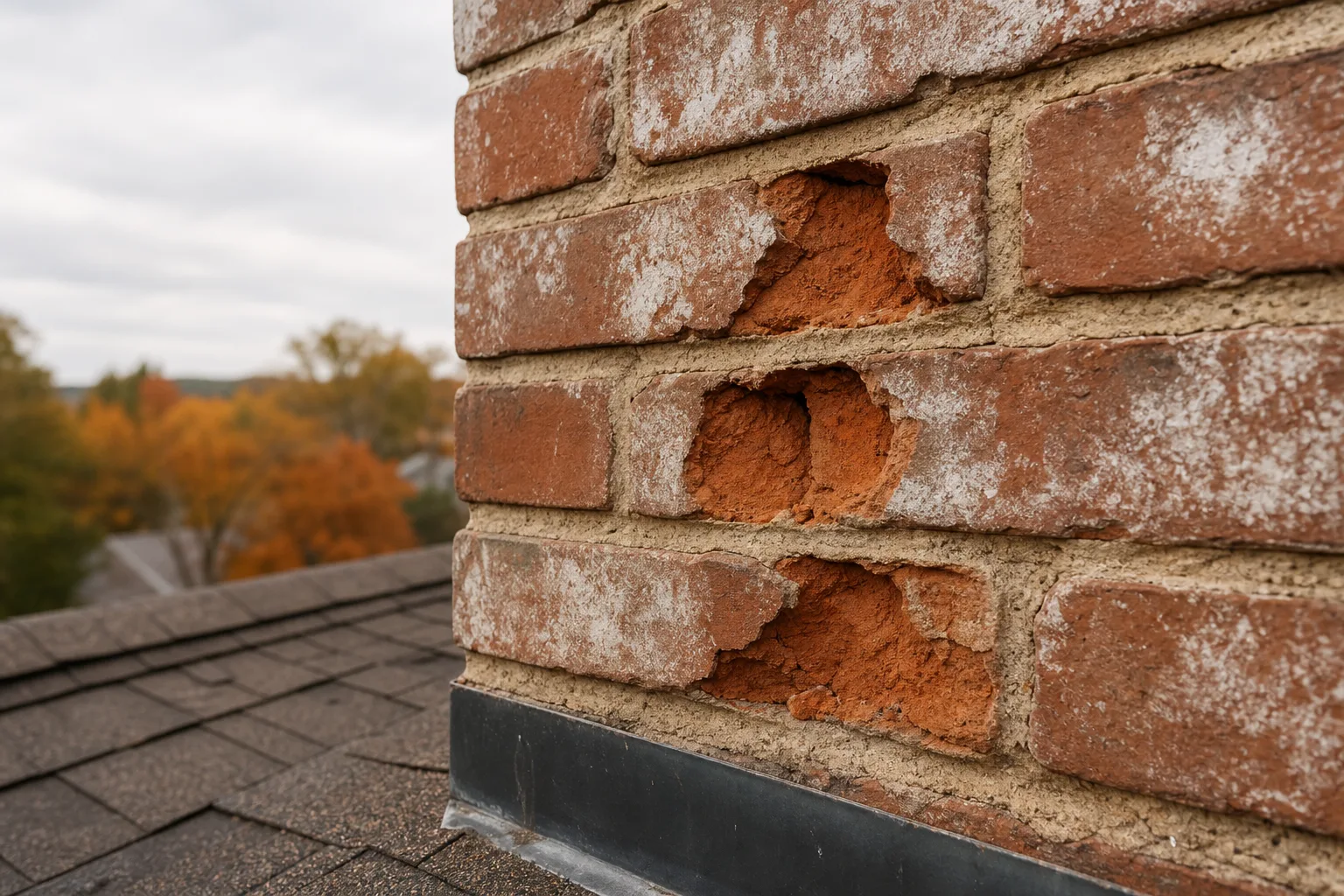
The face of the brick is flaking, popping, or shedding in sheets. That's spalling. Water got into the brick, froze, and expanded. Spalling is not cosmetic. Once the hard fired face of a brick is gone, the soft interior soaks up water like a sponge and the decay accelerates. Scattered spalling gets individual bricks swapped. Widespread spalling on a chimney stack usually means rebuild.
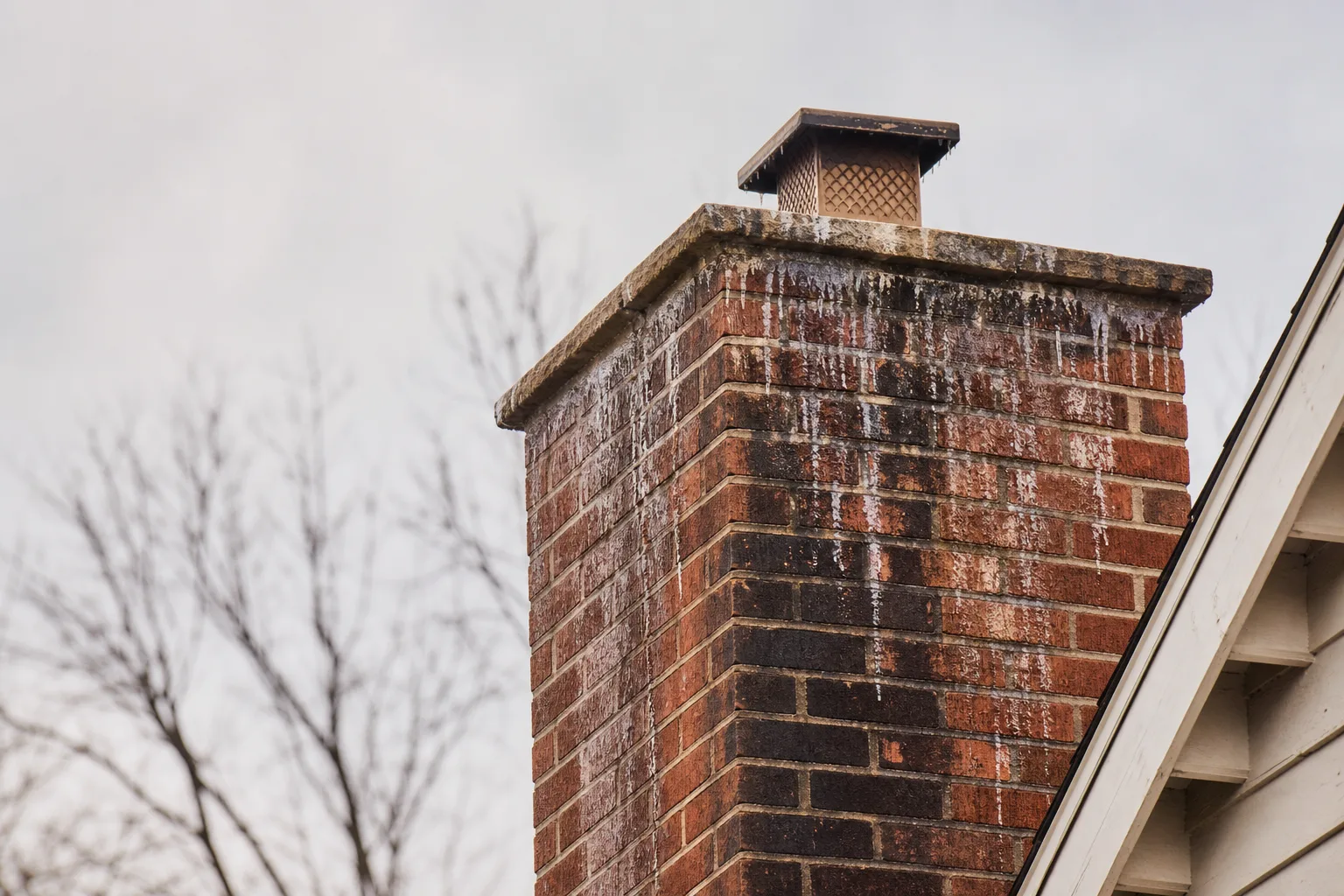
White chalky bloom on the brick. Efflorescence: mineral salts carried out of the masonry by water moving through it. The stain itself is harmless. What it tells you is not: water is actively traveling through that wall.
A visible lean, a stair-step crack, or a gap where the chimney meets the roof. Structural. Stop assessing and call someone.
Rust stains running down the brick. Something metal inside is corroding, often a damper, a liner, or the flashing behind the stack. Worth a look at your chimney liner situation before you spend a dollar on the exterior.
Safety note: Do not go up on a roof to inspect a chimney. People fall doing exactly this, and the information you gain from six feet closer is almost never worth it. Masonry inspection is one of the few home tasks where the DIY version is genuinely more dangerous than the problem you're inspecting.
One more thing worth understanding, because it explains a lot of otherwise-baffling repair recommendations: bricks and mortar from different eras are not interchangeable. Soft historic brick laid in lime mortar will be destroyed by hard modern Portland-based mortar. The new joint refuses to move, so the brick moves instead, and it loses. If your house is old and a contractor doesn't ask about mortar type, that tells you something about the contractor.
What's urgent and what can wait
This is the question everybody actually has and almost nobody asks directly. Not all masonry damage is on the same clock.
Handle it now: anything structural, anything actively leaking into the house, any chimney you're planning to burn in this season with visible deterioration in the flue or crown, and any spalling that's exposing brick cores heading into winter. Water plus a Cincinnati freeze cycle turns a small problem into a large one faster than any other mechanism in home repair.
Handle it this season, but you have some runway: general mortar deterioration on a stack that's still plumb and stable, a cracked but intact crown, cosmetic efflorescence, and worn caps. These want attention before the freeze, not before Friday.
Genuinely can wait: minor hairline crazing in the crown, isolated cosmetic staining, and interior firebox mortar wear that isn't exposing anything behind it.
Pro tip: If you're getting masonry work done anyway, do the waterproofing and crown work in the same visit. The setup (access, ladders, staging) is a real share of the cost on any small masonry job. Bundling the cheap preventive work into a trip you're already paying for is the highest-payoff decision on this whole list.
From the field: The chimneys that surprise homeowners are almost never the ugly ones. Ugly is visible, and visible gets addressed. The ones that turn into rebuilds are usually the ones that looked fine from the driveway while water ran down inside the brick for years from a crown crack nobody could see from the ground.
If your masonry problem is attached to something you burn in, the exterior repair is only half the question. A stack that's been taking on water may have flue damage you can't see, and that's a job for a camera and an inspection, not a guess. A proper chimney inspection near me search is the right next step there, and NFPA 211 calls for a Level 2 inspection, not a visual once-over, in specific circumstances: at the sale or transfer of the property, after a chimney fire, when the appliance malfunctions, after an external event likely to have caused damage to the chimney, and on certain system changes such as a change in fuel type, a change in the appliance, or relining of the flue. Note the qualifier on external events. A storm or lightning strike triggers it when there's reason to think the structure took damage, not automatically every time the wind blows.
Call us before you decide anything
You don't need to know what it's called. Tell us what you're looking at: "the gray stuff is falling out," "there's a stain on my ceiling," "a piece of brick landed in the yard", and we'll tell you what it is. We'll also tell you when the honest answer is that nothing needs doing yet, because a customer who trusts us in August is a customer who calls us in January.
VIO Chimney: (513) 655-6702. Prefer not to call? Request service and we'll come to you.
Repoint, rebuild, or replace
Here's where the money is, and where you most want to understand what you're being told. The three options aren't a spectrum of quality; they're responses to three different conditions.
| Repoint | Partial rebuild | Full rebuild | |
|---|---|---|---|
| Condition it fixes | Mortar failed, brick and structure sound | Deterioration concentrated above roofline; base is solid | Structural failure, leaning, widespread spalling top to bottom |
| What actually happens | Joints ground out to depth, repacked, tooled to match | Stack dismantled to sound course, rebuilt with new and salvaged brick | Structure removed and rebuilt, often from the foundation |
| Disruption | Low: exterior only | Moderate: roof access, staging | High: multi-day, possible interior work |
| Weather sensitivity | Mortar needs above-freezing curing conditions | Same, plus roof safety | Same, plus longer exposure window |
| How long it holds | Decades when matched correctly | Decades; it's new construction | Longest, because everything failing was replaced |
| The trap | Skim-coating over bad joints instead of grinding them out | Rebuilding the top while ignoring why it failed | Being sold this when a partial would do |
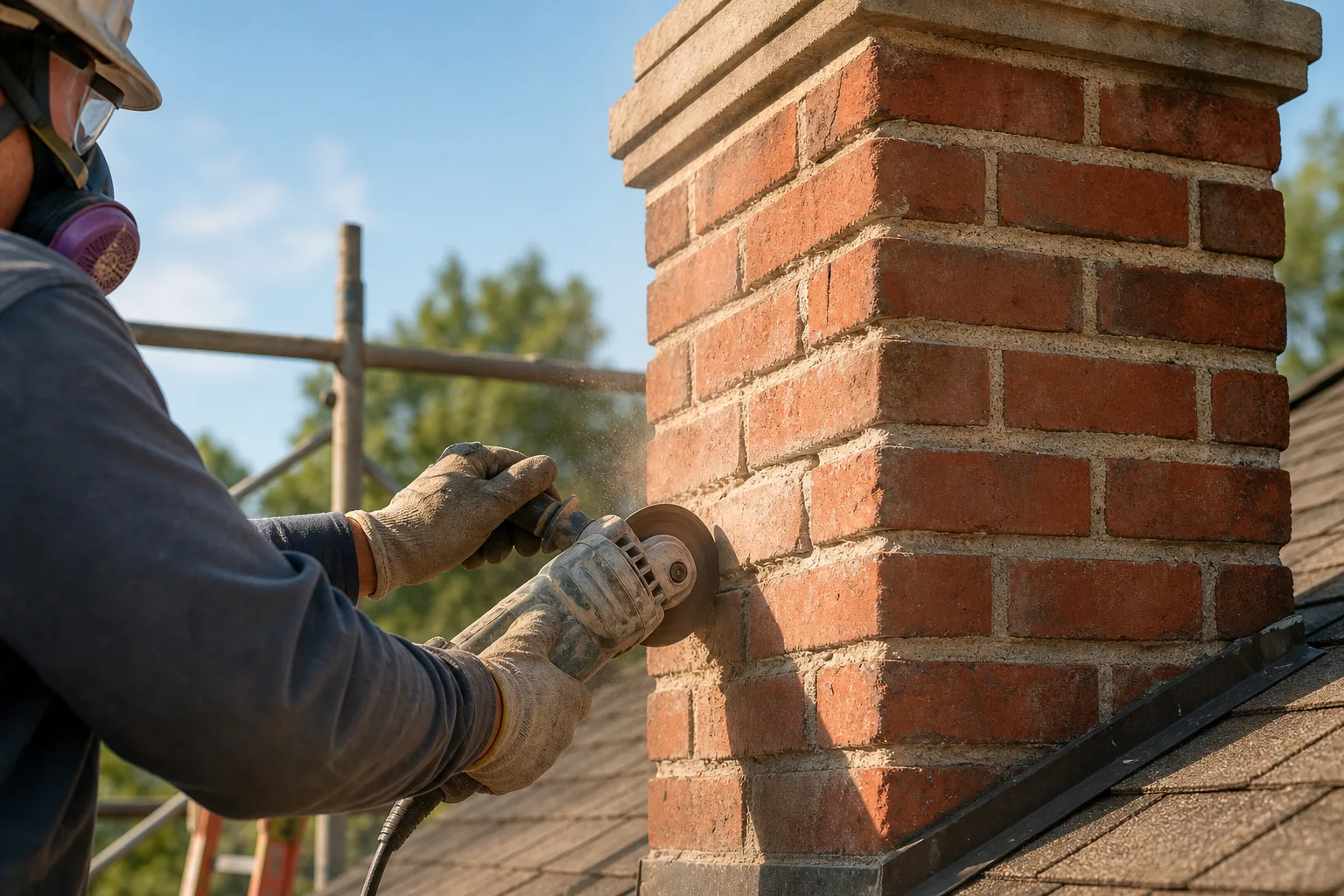
That last row matters more than the rest of the table. The most common bad outcome in residential masonry work isn't a rebuild that should've been a repoint: it's a repoint that was really a smear. Grinding out joints properly is slow and loud and dusty. Buttering fresh mortar over crumbling joints looks nearly identical on day one and fails within a few seasons, because the new material is bonded to failed material. If a repointing quote comes in dramatically below the others and the job takes an afternoon, you now know why.
Worth knowing what "grinding to depth" means, since it's the line item that separates the two. A repointed joint needs old material removed to roughly two to two and a half times the joint's width, squared off at the back rather than tapered, so the new mortar has enough surface and enough thickness to bond and cure properly. Shallower than that and you've made a veneer. It looks like mortar, it's shaped like mortar, and it pops out in sheets the first time the wall moves. This is also why the good version of the job is unpleasant to be around. Angle grinders, silica dust, and a crew in respirators for a day or two is what correct looks like from your driveway. A quiet crew with buckets and no dust is a warning sign, not a courtesy.
For chimney-specific structural work, the deeper walkthrough lives in our fireplace chimney repair guide.
Materials, and why matching them is the whole game
Masonry looks like stacking. It isn't. It's chemistry with a curing schedule.
Mortar type. Modern mortars are classified by compressive strength: Type N, Type S, Type M and so on, running from softer to harder. The instinct is to reach for the strongest. That instinct is wrong on most residential brick. The mortar should be weaker than the masonry unit it joins, so that stress and moisture movement get absorbed by the joint rather than by the brick. Overly hard mortar on soft brick is one of the few repairs that leaves a wall in worse shape than no repair at all.
Brick matching. Color, size, and texture all drift across manufacturing eras, and you cannot fully match a fifty-year-old weathered brick with something off a pallet. Good masons plan for this: salvage brick from a less visible elevation for the patch, and put the new brick where nobody looks.
Joint tooling. The finish profile on a joint (concave, weathered, raked, struck) isn't decoration. It determines how water sheds off the wall. A raked joint on a weather-exposed elevation is a shelf that holds water. New work should be tooled to match the existing profile unless there's a specific reason not to.
Sealers. If a sealer is applied at all it should be vapor-permeable: it stops liquid water from getting in while letting vapor out. Film-forming sealers trap moisture inside the masonry, and trapped moisture plus a freeze cycle is precisely the mechanism that causes spalling. A well-meant waterproofing job with the wrong product accelerates the damage it was meant to prevent.
Good to know: Mortar doesn't dry, it cures, and it needs temperature and moisture to do it. That's the real reason masonry work bunches into the warm months here. It isn't scheduling preference; it's that fresh mortar which freezes before curing never reaches its designed strength, and you can't tell by looking.
How to hire without getting burned
Masonry has a low barrier to entry and a long feedback delay. Bad work looks fine for a season or two, which is exactly long enough for the crew to be gone. Screen accordingly.
Use this before you sign anything:
- They inspected the chimney or wall up close (ladder, roof, or camera), not from the truck window
- They can tell you why the masonry failed, not just what they'll replace
- The quote specifies grinding depth for repointing, not just "repoint chimney"
- Mortar type is named, and they asked about the age of the house
- Brick matching is addressed in writing if any units are being replaced
- Flashing and crown are assessed as part of the diagnosis, not sold as extras later
- Current liability insurance and workers' comp, verified, not "we're covered"
- A written scope with a start condition, not just a price
- They're willing to say some part of it doesn't need doing yet
- Photos of the actual condition, taken during their inspection, that you get to keep
That last one is my favorite filter. Anyone comfortable with their diagnosis will happily hand you the evidence. Anyone who won't is either not equipped to document the work or doesn't want you getting a second opinion on the same photos.
Two more habits worth having. Get the diagnosis and the price as separate conversations where you can. A contractor describing the failure mechanism before naming a number tends to be reasoning rather than quoting from a script. And be suspicious of urgency that arrives before assessment. Real urgency in masonry is provable: here's the lean, here's the loose course, here's the water path. Urgency you can't see is a sales tactic.
If the work touches an appliance or a flue, whoever does it should understand venting, not just brick. The same company that handles your chimney sweep service is usually better positioned to catch a masonry problem that's actually a draft problem, or a leak that's actually a chimney cap replacement problem.
What Ohio weather does to brick
Everything above is general masonry. This part is local, and it's why masonry work in this region is not the same job it is in a dry climate.
The mechanism is freeze-thaw. Masonry absorbs water. Water expands when it freezes. Ohio doesn't freeze once in December and thaw once in March. It cycles, repeatedly, across a single winter, and each cycle drives micro-fractures a little deeper into brick and mortar that were sound in October. The damage isn't caused by cold. It's caused by the transitions, and this region hands out a lot of them. Our Cleveland freeze-thaw masonry damage guide breaks down the mechanism in more detail; the physics is identical down here in the southwest corner of the state.
Three practical consequences.
Water intrusion is the root cause of nearly all of it, so the highest-value masonry work you can buy is usually the least glamorous: a sound crown, a proper cap, working flashing, and a permeable sealer. Second, timing is real. Mortar wants curing weather, so a repoint deferred from September to December isn't deferred: it's deferred to spring. Third, chimneys take it worse than walls because they're exposed on four sides plus the top, with no interior heat on most of their exposed length once you're above the roofline.
Pro tip: After any severe storm or high-wind event, look at your chimney from the ground with binoculars or a zoomed phone camera. You're looking for a displaced cap, a fresh crack in the crown, lifted flashing, or brick fragments in the gutters. Two minutes in the yard catches problems that otherwise announce themselves in February through your ceiling.
You came in with one vague phrase and you should be leaving with a vocabulary. That's a better position than most people are in when they make this decision.
If you can name what you're seeing (punky joints, spalled faces, efflorescence, a cracked crown, a lean), you can describe it accurately over the phone and get a real answer instead of a generic one. If you can't name it, that's fine too, and it's not a reason to put off the call. Describing it plainly works: what you see, where, and when it started. That's enough for anyone competent to know what to look for.
The one thing not worth doing is waiting for it to get more obvious. Masonry damage is progressive by nature, and the mechanism that drives it — water in, freeze, expand, crack, more water in — accelerates on its own. Every season it stays open, it gets a little cheaper to have fixed last year.
Take the list and make the call
Run the hiring checklist above on us. Ask why the masonry failed. Ask what mortar type and what grinding depth. Ask to see the photos. We'd rather be measured against those questions than against the lowest number on your counter.
VIO Chimney: (513) 655-6702. Or request service and we'll take a look, tell you what we find, and tell you straight if it can wait.
Symptom checker
What is your chimney doing?
Tap the closest match for an honest first answer.