



On this pageHow Often Should You Clean Your Chimney? The Short Answer9 sections+8
- How Often Should You Clean Your Chimney? The Short Answer
- Inspection and Cleaning Are Two Different Jobs
- How Often Should You Clean Your Chimney Based on What You Burn
- What If You Don't Know When It Was Last Cleaned?
- Creosote Is the Real Clock
- The Signs Your Chimney Is Telling You
- When You Genuinely Don't Need a Sweep Yet, and When You Can't Wait
- How VIO Helps You Get a Straight Answer
- Before the First Fire
Quick answer
How often should you clean your chimney depends on two clocks. NFPA 211 calls for an inspection at least once a year for every chimney, gas, wood or pellet. Sweeping is condition based: a wood system needs cleaning when creosote reaches 1/8 inch, which usually lands somewhere between every cord and every two cords of wood burned. Pellet venting is commonly cleaned around every 2 tons.
Ask ten people how often should you clean your chimney and you will hear "once a year" ten times. That number is not wrong, but it answers a question you probably did not ask.
The annual rule is about having someone look at your chimney. Whether it actually needs sweeping this fall depends on something most homeowners have never counted.
So, the honest version. Have the chimney inspected at least once a year, no exceptions. Have it swept when what is inside says so, which for some houses is every season and for others every third one.
The difference between those two sentences is worth real money and, in a bad year, a lot more than money.
This guide gives you the number first, then hands you a way to work out your own. It also tells you when a sweep genuinely is not needed yet, which most chimney company websites will not.
How Often Should You Clean Your Chimney? The Short Answer
Have it inspected at least once a year, every year, without exception. Have it cleaned when the inspection, or the 1/8 inch deposit threshold, says cleaning is necessary.
NFPA 211, the national standard for chimneys, fireplaces, vents and solid fuel burning appliances, is direct about it. Section 14.2.1 says chimneys, fireplaces and vents shall be inspected at least once a year, and cleaned and repaired if necessary.
Read that twice. The annual obligation is the inspection. The cleaning follows from what the inspection finds.
Good to know: the calendar decides when your chimney gets looked at. What you burn decides when it gets swept. Two different clocks, and confusing them is why so many homeowners either overpay or wait too long.
How Often Should You Clean Your Chimney vs. How Often to Have It Inspected
Inspection is annual and universal. Gas, wood, pellet, a fireplace you have not lit since the Obama administration, all of it, once a year.
Sweeping is conditional. A flue that has taken one cord of oak this winter is in a very different state than a flue that saw four fires on Christmas week.
That is why "once a year" is both the right starting point and a slightly lazy answer. It tells a light user to buy a service they may not need, and it lets a heavy user believe one visit is enough.
The rest of this page is about getting you off the generic answer and onto yours.
Inspection and Cleaning Are Two Different Jobs
Here is the thing nobody bothers to spell out. When you call a chimney company and ask for "a cleaning," you are asking for the second half of a service whose first half is the part that actually protects you.
A sweeping removes deposits. An inspection tells you whether the structure carrying hot flue gases through the middle of your house is still sound.
You want both. You need the second one every year, and most people asking how often should you clean your chimney are really asking about both jobs at once without knowing there are two.
What a Level 1 Inspection Covers
NFPA 211 defines three inspection levels, and the one you will get by default is Level 1.
It applies to a system in continued service with no changes to it and no known problems. The pro checks the readily accessible portions of the chimney, the connection to your appliance, and the flue for soundness, blockage and combustible deposits.
No camera required, no rooftop access required. It is the routine annual look, and for most houses in most years it is exactly the right level.
When NFPA 211 Calls for a Level 2
Level 2 is the deeper one, and it is not optional in these situations:
- When the property is sold or transferred
- When you change the system (a new appliance, a different fuel, a new liner, a change in flue shape or material)
- After a malfunction
- After a chimney fire
- After an external event such as a severe storm or an earthquake
A Level 2 adds video scanning of the flue interior and a look at accessible attics, crawl spaces and basements.
Myth vs. fact: Myth: the rule is an annual cleaning. Fact: the rule is an annual inspection, and cleaning if the inspection calls for it. A company that sweeps without looking has skipped the important half.
If you bought your house in the last year and nobody scanned that flue, you have a gap in your file. Worth closing before you light anything.
How Often Should You Clean Your Chimney Based on What You Burn
This is the part the generic answer skips. A real answer to how often should you clean your chimney tracks fuel volume, not months on a calendar.
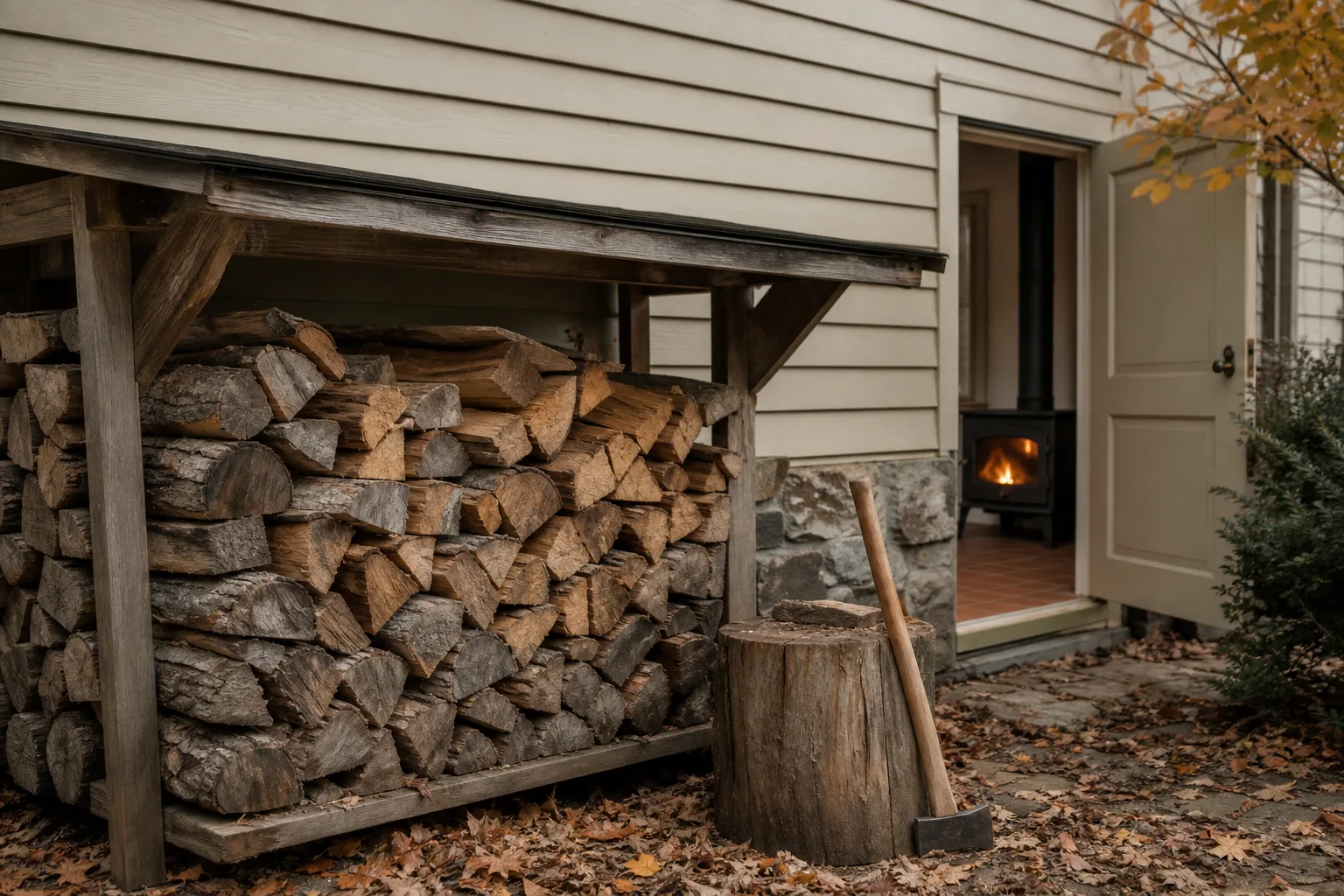
The Chimney Safety Institute of America frames it in cords. A wood burning fireplace or stove flue is generally due for sweeping somewhere in the range of every one to two cords of wood burned. Sources state it both as "after each cord" and as "roughly every cord and a half to two," so treat it as a range rather than a magic number.
A cord is a stacked 4 by 4 by 8 foot pile. If that measurement means nothing to you, a full pickup bed heaped high is very roughly a third of one.
| What you burn | Typical season | Inspection | Sweeping trigger |
|---|---|---|---|
| Open wood fireplace, occasional (a dozen fires or fewer) | Holidays and cold snaps | Every year | Often every 2 to 3 years, whenever creosote hits 1/8 inch |
| Open wood fireplace, regular | Most weekends, all winter | Every year | Usually annually, at about a cord burned |
| Wood stove or fireplace insert as real heat | Nightly, November to March | Every year | Once or twice a season, roughly per cord to cord and a half |
| Gas fireplace or gas logs | Any | Every year | Rarely swept for creosote. Cleared when an inspection finds blockage or debris |
| Pellet stove | Any | Every year | Venting commonly cleaned around every 2 tons of pellets |
Pro tip: count cords, not months. Take a photo of your wood pile in October and again in March. The gap between those two photos is your real answer, and it beats any rule of thumb on any website, including this one.
Open Wood-Burning Fireplaces
The classic masonry fireplace is the least efficient thing in your house and, oddly, one of the slower creosote producers when used lightly, because most of the heat and smoke goes straight up a wide flue.
Burn in it a dozen times a winter with dry wood and you may go two or three seasons between sweepings. Burn in it every Friday from Thanksgiving to March and you are on an annual sweep.
Wood Stoves and Fireplace Inserts
Different animal. A stove or insert is designed to hold heat in the room, which means the gases going up the flue are cooler, and cooler gases condense. That is the quiet trade-off of a high efficiency wood stove: more heat stays with you, less of it goes up the flue to keep the flue clean.
If a wood stove is how you heat the house, plan on the flue being checked mid season, not just before it. Two sweeps in a hard winter is normal, not excessive.
Gas Fireplaces and Gas Logs
Gas does not make meaningful creosote, so the sweeping conversation mostly goes away. The inspection conversation does not, and if you are still working out whether a gas fireplace needs a chimney at all, start there.
What goes wrong with gas venting is blockage (nests, leaves, a collapsed liner), corrosion from combustion moisture, and faults in the venting path. None of those announce themselves. All of them are found by looking.
Pellet Stoves
Pellets burn cleaner and hotter than cordwood, and produce far less creosote. What they produce instead is ash, a lot of it, including fine fly ash that packs into the vent pipe and the appliance itself.
The common guidance is cleaning the venting around every 2 tons of pellets burned, on top of annual service. If your stove is running through a ton a month in deep winter, do the arithmetic on that.
What If You Don't Know When It Was Last Cleaned?
Plenty of homeowners are in exactly this position, and almost nobody writes a section about it.
You bought the house. The fireplace was there. The previous owner said something vague and reassuring at the walkthrough, and there is no receipt, no sticker inside the damper, no record anywhere.
When that is your situation, the answer to how often should you clean your chimney collapses into a single word: now. Not because your flue is definitely filthy, but because you are guessing about the one part of your house you cannot see.
And do not try to settle it with a flashlight from the firebox. That shows you the damper and a slice of the smoke chamber, the part that tells you the least. The deposits that matter sit higher, where the gases cooled.
An inspection turns an unknown into a file. After that first one you have a baseline, and every question about frequency gets easier for the rest of the time you own the house.
Not sure where your chimney stands? Tell us what you burn and how often, and we'll connect you with an independent local chimney company that can inspect it and tell you where your flue stands this season. Call (513) 655-6702 or request service online.
Creosote Is the Real Clock
Every schedule on this page is a proxy for one measurement. Creosote, not the calendar, is what actually answers how often should you clean your chimney.
Creosote is what is left when wood smoke cools before it exits. Unburned particles, tar and moisture condense on the flue wall, and they build in layers, season after season, until something removes them.
The industry threshold is specific and easy to remember: a wood burning system needs cleaning when creosote accumulation reaches 1/8 inch at any point in the flue. That is about the thickness of two stacked quarters. Not much.
It builds fastest when fires burn cool and slow, when the wood is not properly dry, and when an oversized flue lets smoke cool on the way up.
Why Stage 3 Glaze Changes the Answer
Sweeps talk about creosote in three stages, and the difference between them is the difference between a routine appointment and a real problem.
Stage 1 is light, flaky soot. Dry, gray black, brushes off easily. This is what a well run fireplace burning properly seasoned firewood leaves behind.
Stage 2 is harder and tarry, flakier in chunks. It shows up with wet wood or restricted airflow, and it takes more aggressive sweeping.
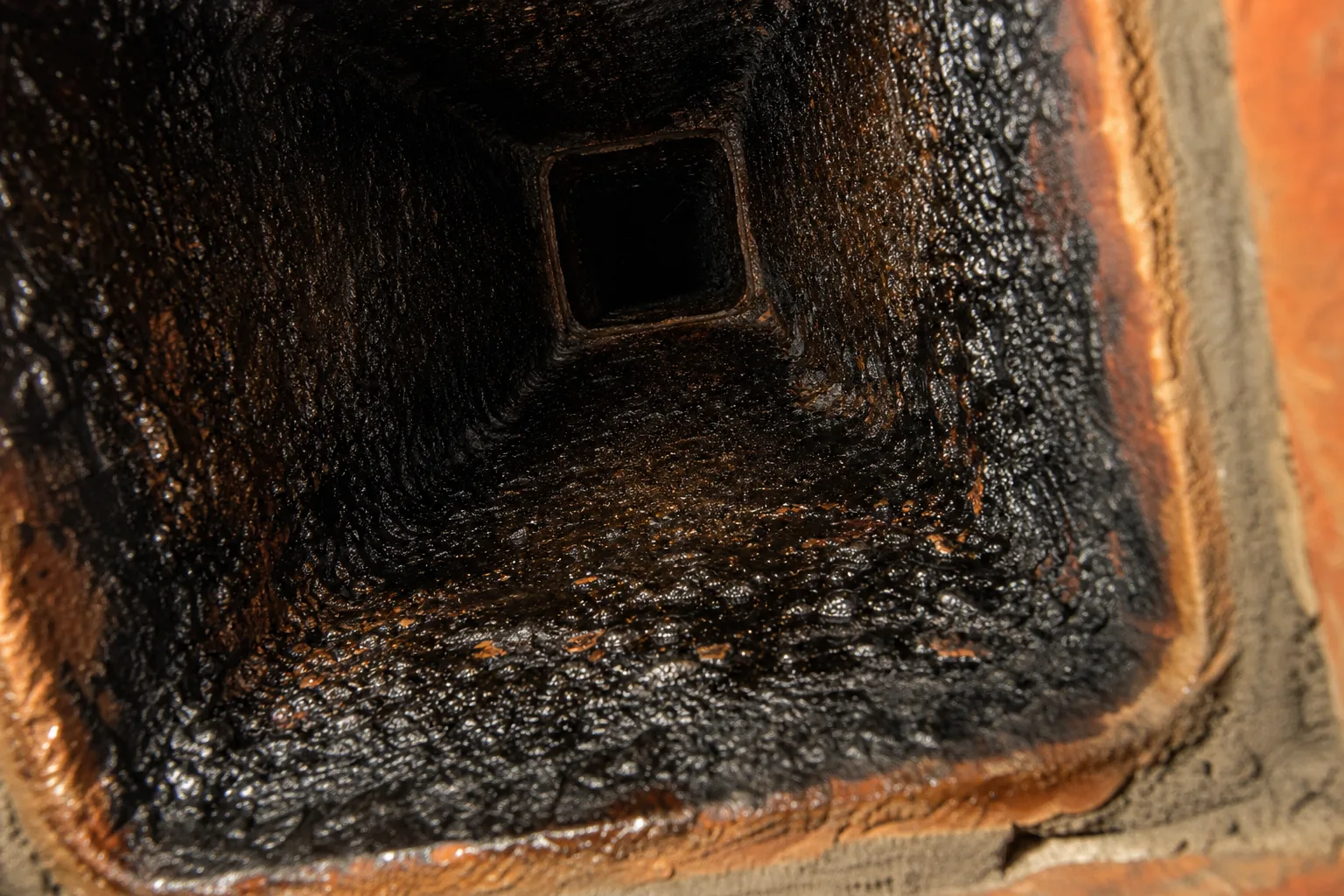
Stage 3 is glazed creosote. A hard, shiny, almost lacquered coating on the flue tile, sometimes bubbled looking. A brush will not touch it.
Safety note: glazed creosote is reported to ignite at temperatures as low as 451°F, which a normal fire in a normal fireplace can produce. If a pro tells you there is glaze in your flue, that is not an upsell, and the schedule stops being a schedule. It becomes a stop burning until this is dealt with.
Glaze is also a message about how you have been burning. Fix the wood and the airflow and you may never see it again.
The Signs Your Chimney Is Telling You
Between appointments, the system talks. Most people are not listening for it, and the signals below will answer how often should you clean your chimney more accurately than any rule of thumb.
Run through this list before the first fire of the season, and again around the new year:
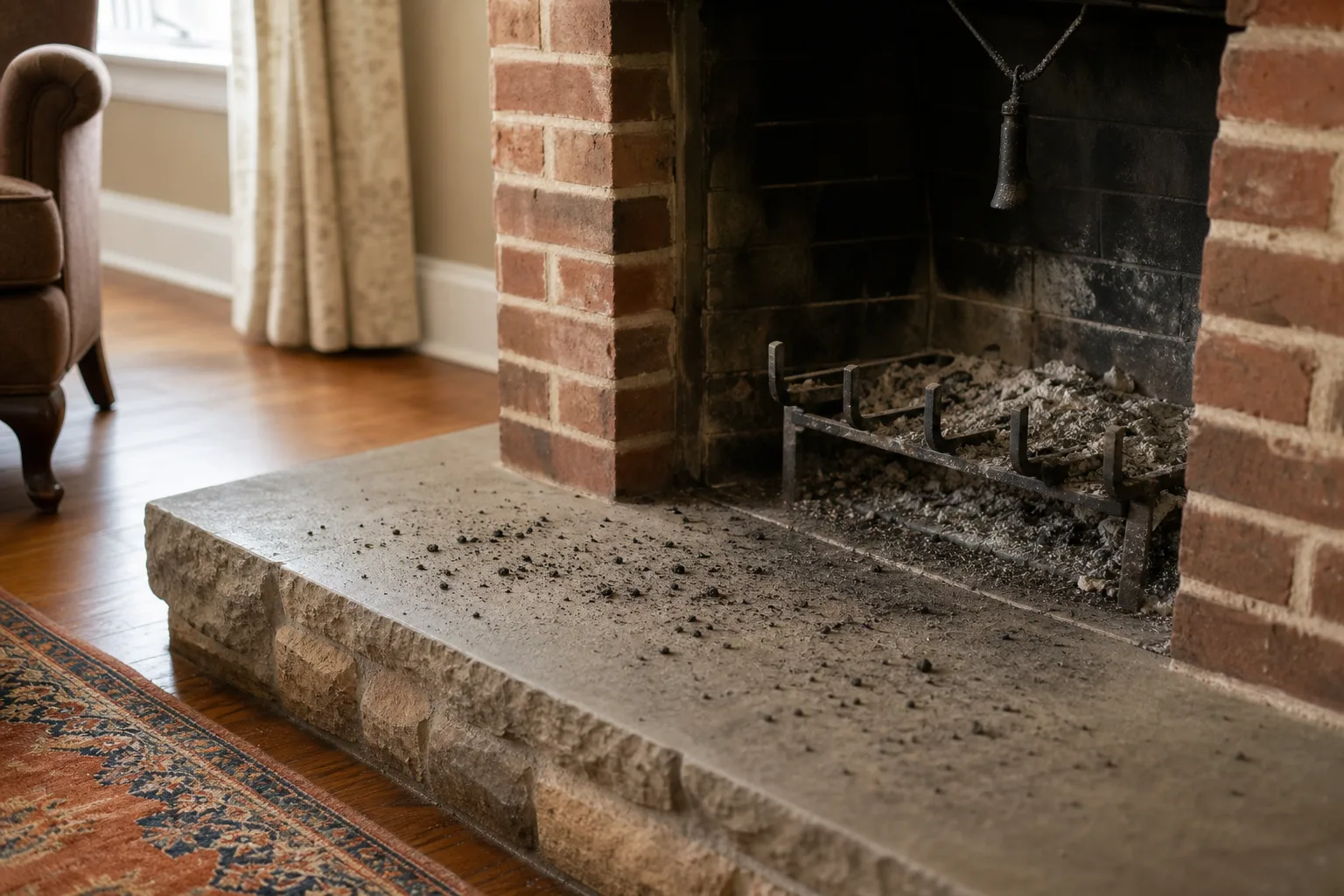
- A smoky, sour smell coming from the fireplace when it is not lit, worst on humid days. That is deposits absorbing moisture.
- Smoke rolling into the room on startup, or a fire that never quite draws.
- Black flakes on the hearth or the damper that were not there last week.
- Flue tile that looks dark and shiny rather than dull and dusty when you look up with a light.
- Fires that are hard to start with wood that used to burn fine.
- Scratching, chirping or rustling overhead. Animals get in when a chimney cap is missing or damaged, and a nest is a blockage.
- Soot dropping onto the smoke shelf in visible quantity.
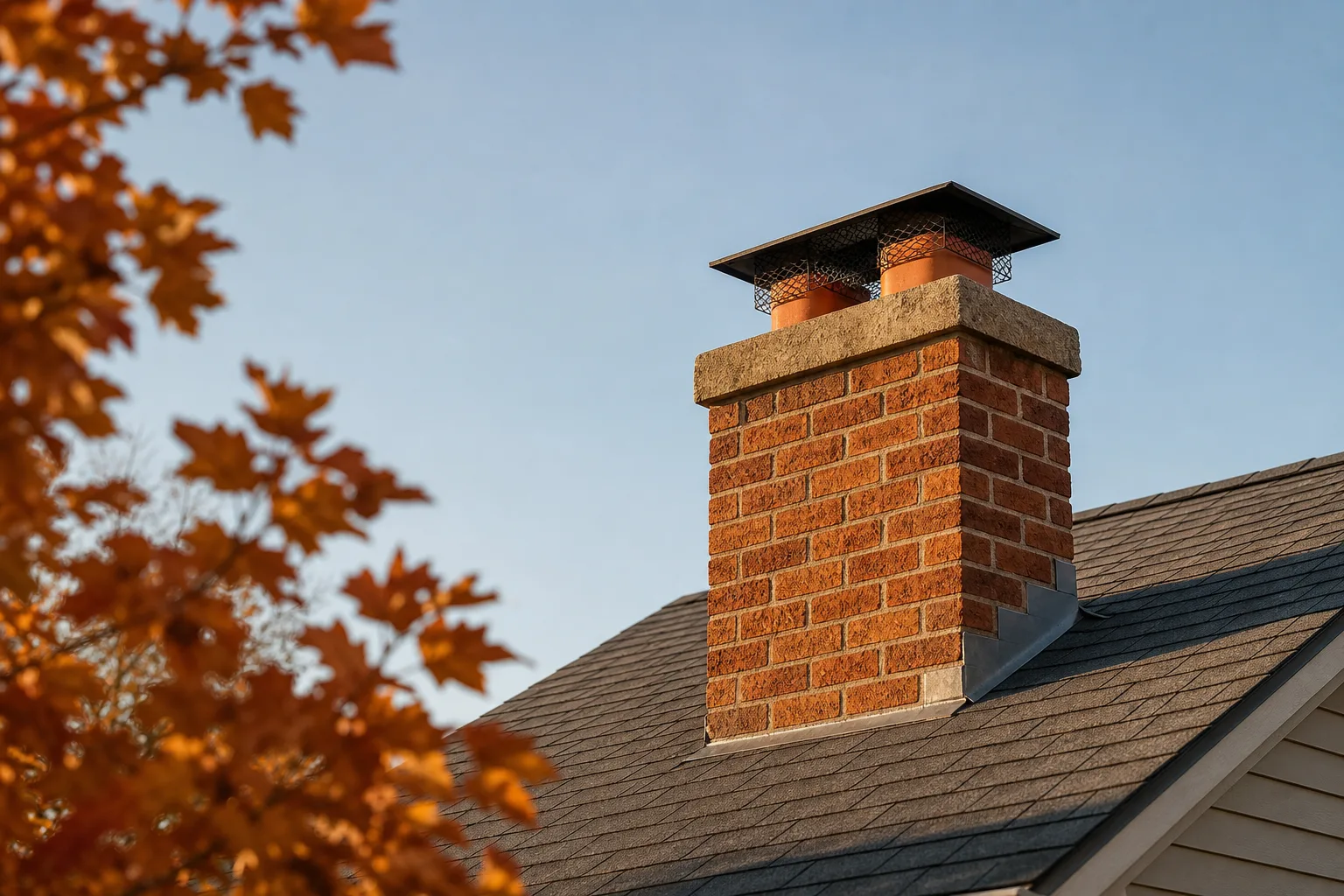
- A cap or crown you can see is cracked, rusted or gone from the ground.
From the field: the smell is easy to dismiss and easy to regret. It gets written off as "old house" or "just the fireplace," when it is often the flue telling you it is holding more than it should. If your fireplace smells in August, it is not the weather.
Any two of those together is a phone call, not a wait and see.
When You Genuinely Don't Need a Sweep Yet, and When You Can't Wait
Most pages about how often should you clean your chimney will never tell you this, so here it is.
If you burned six or eight fires last winter with dry, seasoned hardwood, in a fireplace that was swept and inspected within the last couple of years and drew cleanly every time, your flue is very probably fine. Book the inspection. Let the pro measure. There is a decent chance you walk away with nothing to buy.
That is not a licence to skip the appointment. It is a reason to stop dreading it.
The same logic runs the other way for the heavy user. Two cords through an insert and "we did it last September" is not a reason to wait for next September.
Pro tip: the cheapest chimney maintenance in existence is dry wood. Wood at 20 percent moisture or below burns hot, exits fast and leaves far less behind than wood that hissed at you all winter. Frequency problems are often fuel problems wearing a costume.
What a DIY Brush Kit Can and Cannot Tell You
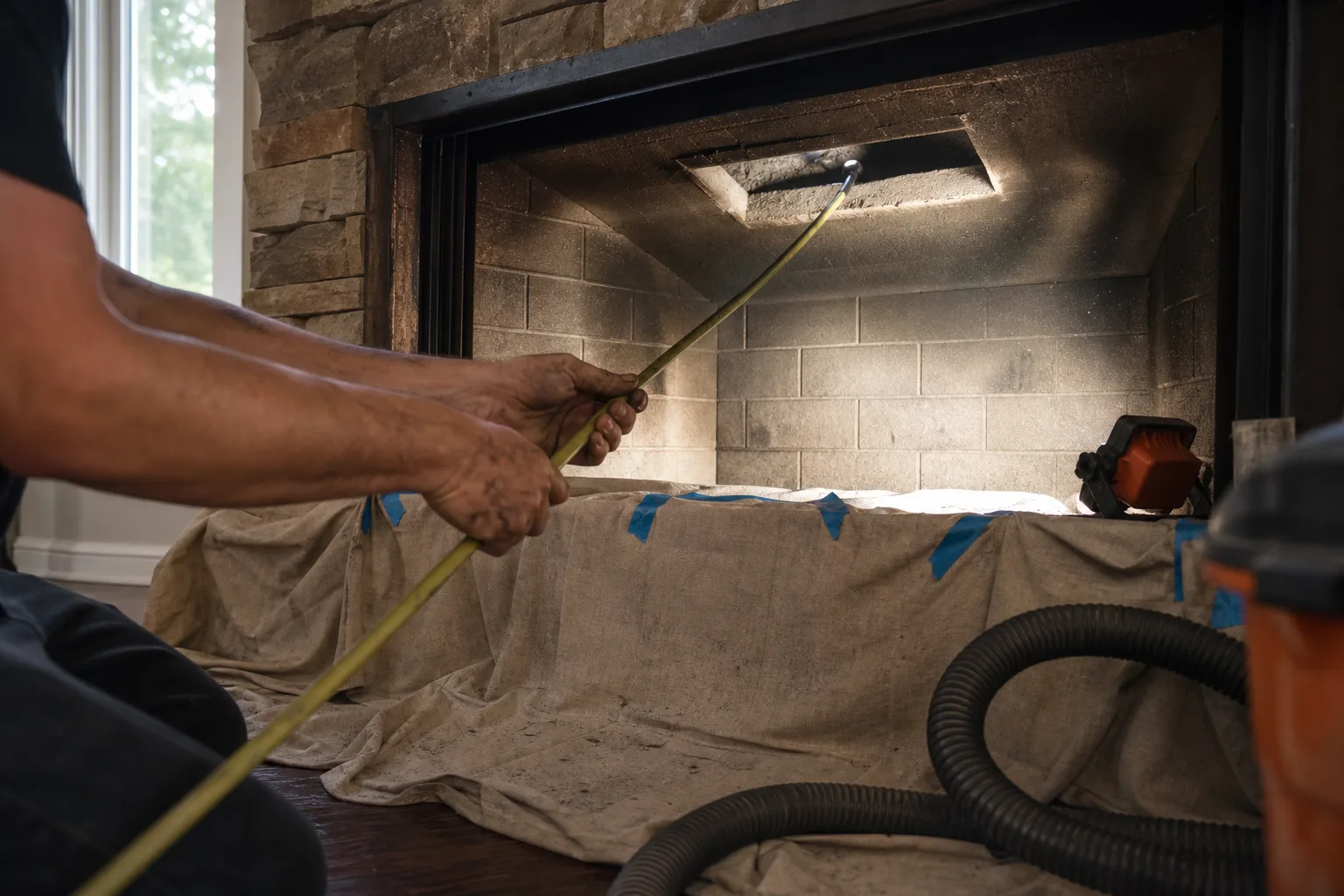
A poly brush on fiberglass rods, a shop vac and a Saturday will remove loose stage 1 soot from a straightforward straight flue. That is a real thing you can do, and plenty of homeowners do it.
Here is where it stops. A brush does not measure to 1/8 inch, does not see the smoke chamber properly, does not find a cracked flue tile or a gap in a liner, and cannot tell stage 2 from the beginning of glaze from the bottom of a 25 foot stack.
It also cannot inspect the parts you never see: the crown, the cap, the flashing where brick meets shingle, the mortar joints between tiles.
So sweep it yourself if you want to. Just do not let it substitute for the annual look. The brush is the less important purchase.
How Often Should You Clean Your Chimney After a Chimney Fire?
Immediately, and a sweep is not the whole answer. A chimney fire triggers a Level 2 inspection under NFPA 211, because the concern is no longer deposits. It is whether the flue itself survived intact.
The same non-negotiable applies in these cases, whatever the calendar says:
- The house is being sold or transferred
- The system changed (new appliance, different fuel, new liner)
- Something malfunctioned
- There was a chimney fire, even a small one you thought went out on its own
- A severe storm, an earthquake or a falling limb hit the structure
Chimney fires are quieter than people expect. A rumble like distant thunder, dense smoke, an unusual smell, and then nothing. Plenty of them are only discovered later, by someone with a camera.
How VIO Helps You Get a Straight Answer
VIO is a referral service. We do not sweep chimneys ourselves, and we are not a chimney company.
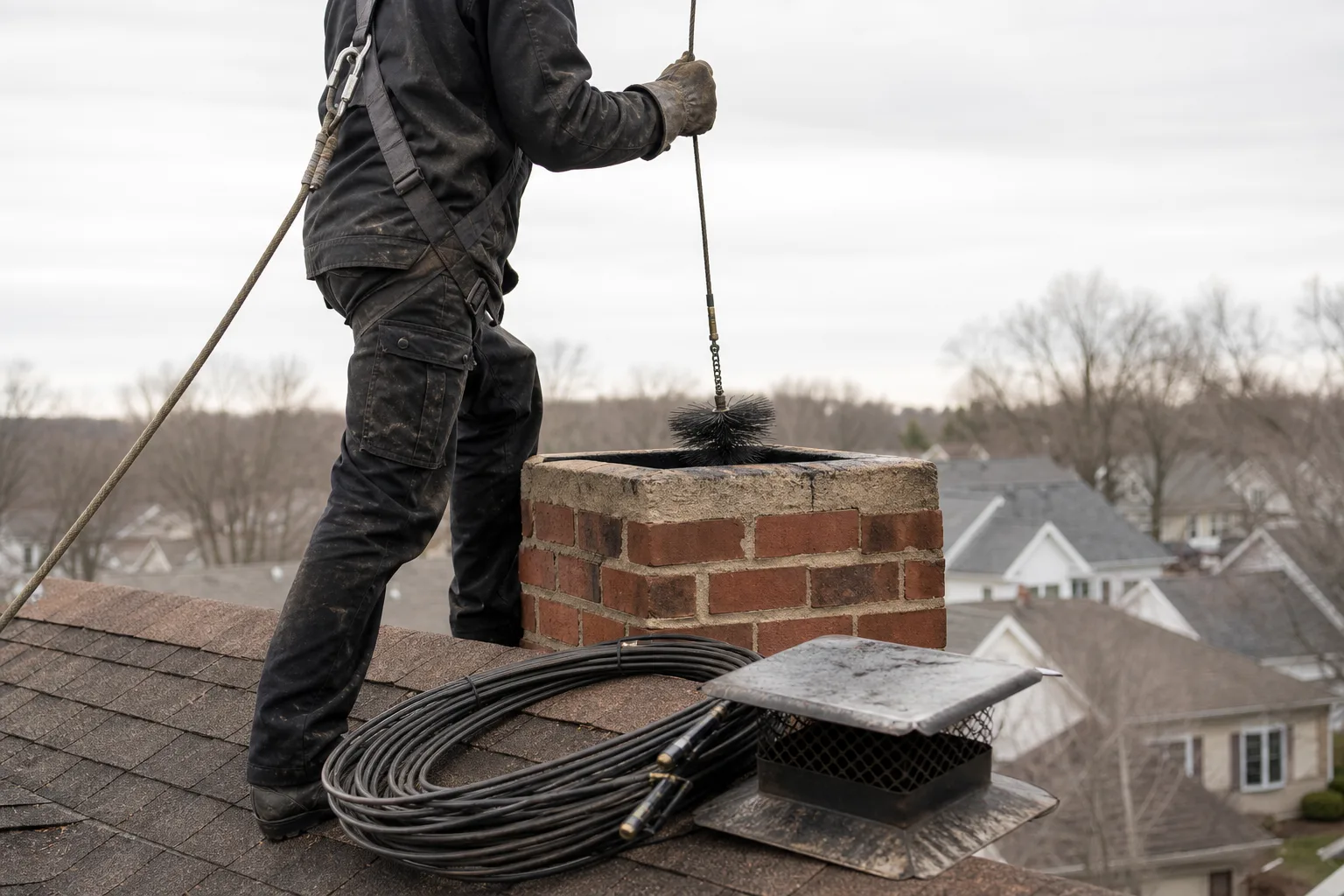
What we do is match you with an independent local chimney company that handles the inspection and any sweeping it calls for. You tell us what you burn and where you are, and we connect you with a company serving your area that does this chimney service week in and week out.
The company we match you with does the measuring. If your flue is not at 1/8 inch yet, you should hear exactly that, and you should ask for it plainly.
We ask every company in our network to put its estimate in writing before any work starts, and you should insist on exactly that. Written scope, written price, before anyone opens a tarp on your hearth. If a company will not do that, it is not the company for you.
After the introduction, the rest is between you and an independent local company that has to look you in the eye at the end of the visit.
Before the First Fire
The short version of how often should you clean your chimney: once a year for the inspection, always, and sweeping whenever a cord or two of wood and 1/8 inch of creosote say it is time.
The version that actually applies to your house depends on what you feed it, and now you know how to work that out for yourself.
If the last twelve months included wood you were not sure about, a fireplace that smelled in the summer, a house you moved into, or a season you honestly cannot reconstruct, the answer to how often should you clean your chimney is this year, before the weather turns.
Book it before the first fire Tell us where you are and what you burn, and we'll connect you with an independent chimney company serving your area. Call (513) 655-6702 or request service online.
Symptom checker
What is your chimney doing?
Tap the closest match for an honest first answer.