



On this pageWhat a Clay Flue Liner Actually Is7 sections+6
Quick answer
A clay flue liner is a stack of vitrified clay tiles inside a masonry chimney that carries combustion gases out and shields the surrounding brick from heat and corrosion. It fails through cracking, spalling, and eroded mortar joints between tiles. Because most of the stack is hidden inside the masonry, a Level 2 inspection with a camera scan of the full flue is what determines whether the fix is a repair or a full reline.
The sweep came down off the roof, handed you a tablet with a grainy photo on it, and said something about the clay flue liner being cracked. You nodded. You had no idea what he was talking about.
You did not go looking for this term. It arrived in a report.
Maybe it was a home inspection with a line item you had to read three times. Maybe it was a purchase contract with a chimney contingency and a clock running on it. Either way, you are now holding a verdict about an object you have never seen, delivered by a person who would also be happy to fix it.
Here is the uncomfortable part, and I am going to leave it open for a while: the sweep may be entirely right, and that still does not mean what you probably think it means.
So let's take the whole thing apart.
One disclosure up front, because it changes how you should read every other page you open today. We do not sell liners.
What a Clay Flue Liner Actually Is
Strip away the terminology and you are looking at a stack of hollow clay boxes.
The tile itself
A single section is a length of vitrified clay, fired hard, hollow through the middle. Sections are made round, square and rectangular, and they are commonly sold in twenty four inch lengths, though shorter sections exist.
The color runs from terracotta orange through buff and salmon to a darker fired brown, depending on the clay the manufacturer started with. The outside is matte and slightly rough. The inside bore is noticeably smoother, which is the point: a smooth channel moves gases better than a rough one.
Where it sits in your chimney
Inside the masonry. That is the part people miss.
The brick you see from the street is not the chimney's working surface. Inside that brick shell, sections of clay tile are stacked vertically, one on top of the next, with a thin band of refractory mortar at each joint. The stack runs from above the smoke chamber all the way up.
That stacked column is the actual flue. It carries the products of combustion out of the house, and it shields the surrounding masonry from heat and from the corrosive byproducts that come with burning anything.
The brick is the jacket. The clay flue liner is the pipe.
The only part you will ever see
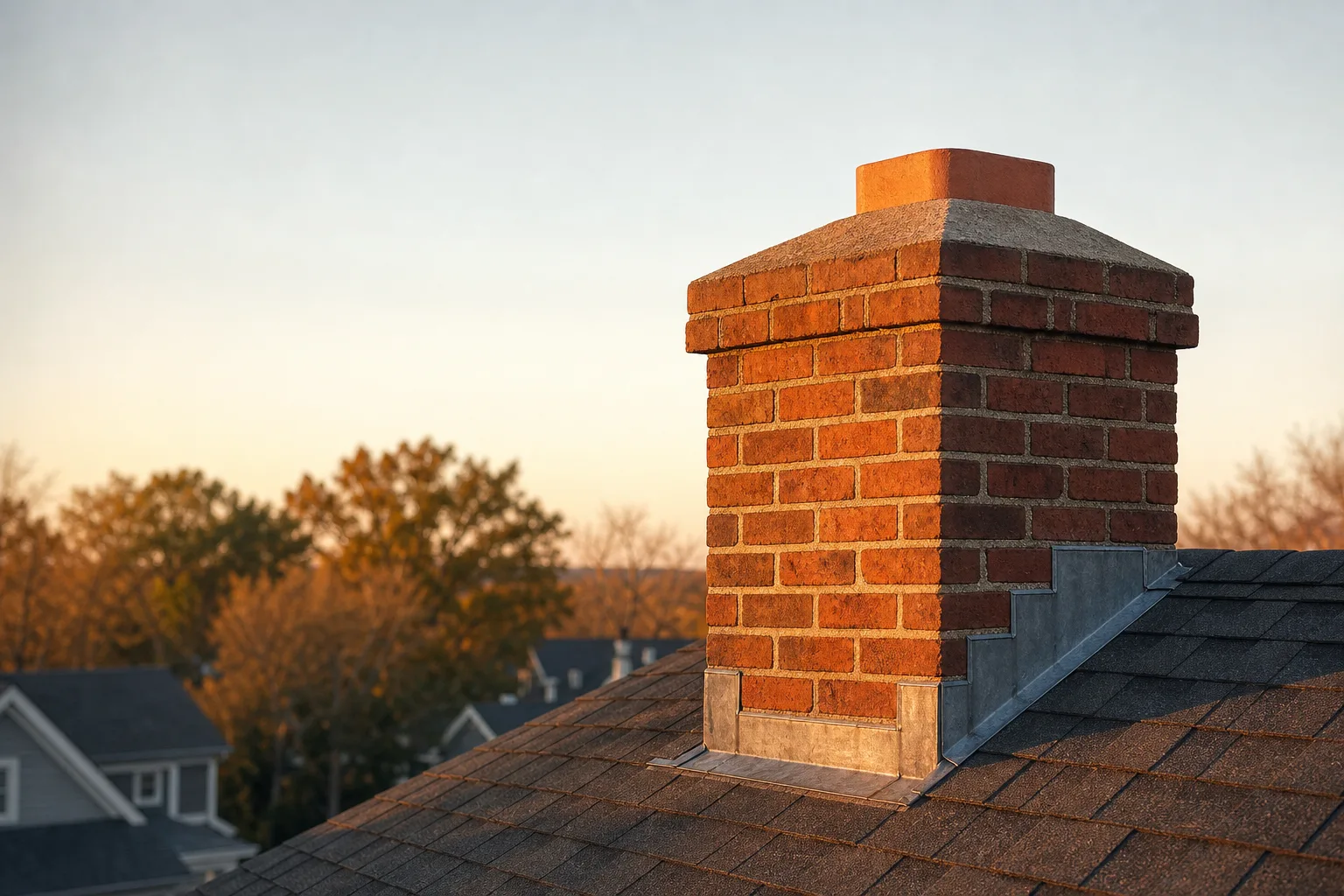
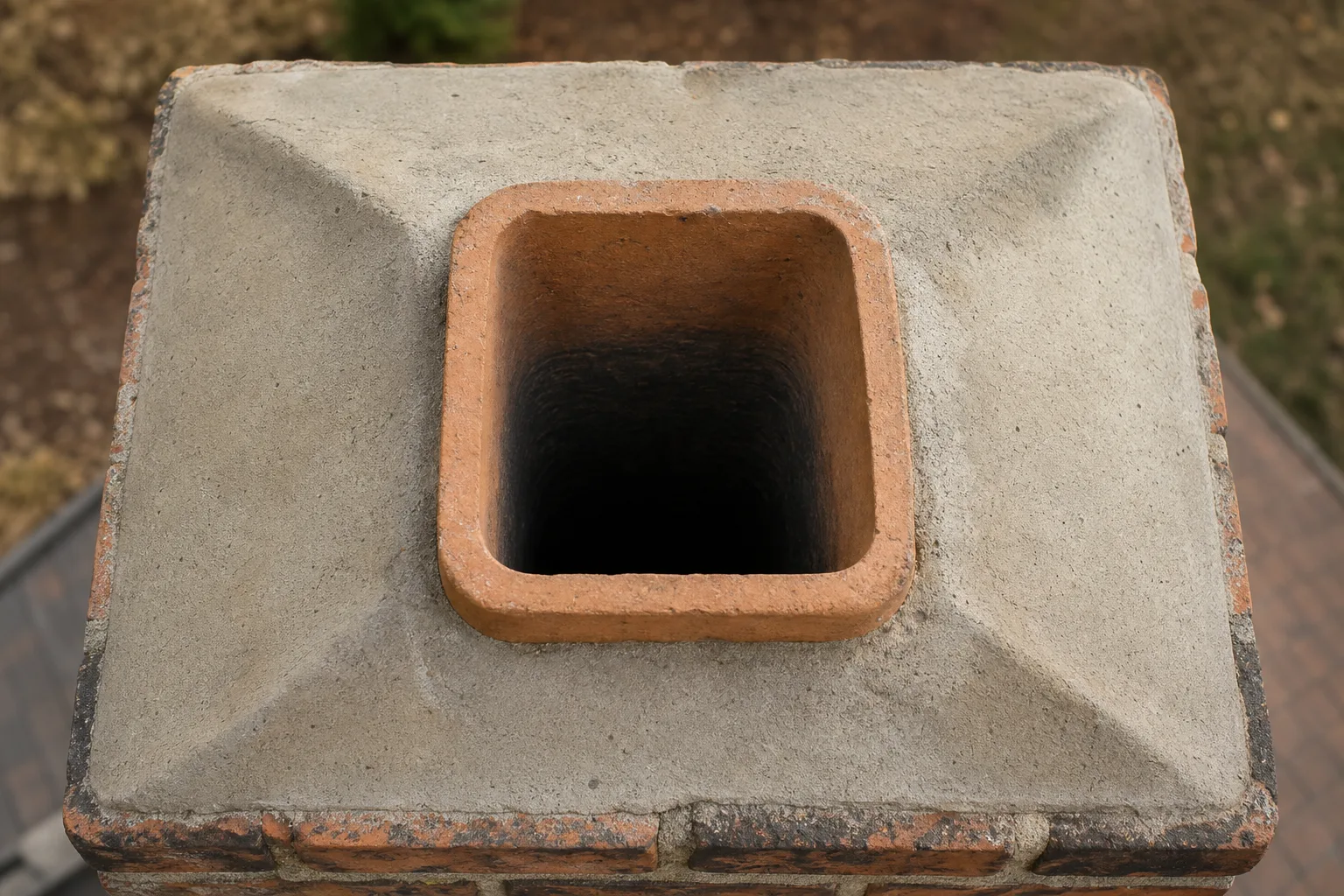
Go up a ladder to your roof, look at the top of the chimney, and you will see a sloped concrete or mortar surface covering the brickwork. That is the crown. Poking up through the middle of it is the top edge of a clay tile.
That few inches of tile is the entire clay flue liner you will ever lay eyes on. The rest of it, the part the argument is about, is inside the masonry where only a camera goes.
Which is exactly why this conversation feels so uneven. One person has seen the evidence. The other is being asked to take it on faith.
What the standards actually require
Clay flue liners are not an improvised product. There is a specification.
ASTM C315, the Standard Specification for Clay Flue Liners and Chimney Pots, sets the acceptance criteria before a tile is ever installed. It requires the liners to be made from fire clay, shale, surface clay, or a combination, formed and fired so the finished piece is strong and durable. Tiles are subjected to absorption, acid resistance, and freeze-thaw cycle testing.
NFPA 211, the Standard for Chimneys, Fireplaces, Vents, and Solid Fuel-Burning Appliances, is the document most local building codes are built on, and it points at ASTM C315 for clay tile.
Model mechanical code language calls for fireclay liners of not less than five eighths of an inch in thickness, or other approved materials able to resist temperatures up to 1800 degrees Fahrenheit. Read that as model language, not your rule: your jurisdiction adopts its own version, and that is what governs.
Good to know: Clay flue liners come in a wide size range. Round sections run from roughly three to thirty six inches in diameter, and square and rectangular sections from about four by eight inches up to twenty four by twenty four. The sizes that turn up again and again in American supply listings are 8x8, 8.5x8.5, 13x13 and 13x17. Yours is measured, not guessed.
How a Clay Flue Liner Fails
Fired clay is hard, chemically stable, and indifferent to heat within its range. It is also brittle, and it lives in a place that moves.
Cracks
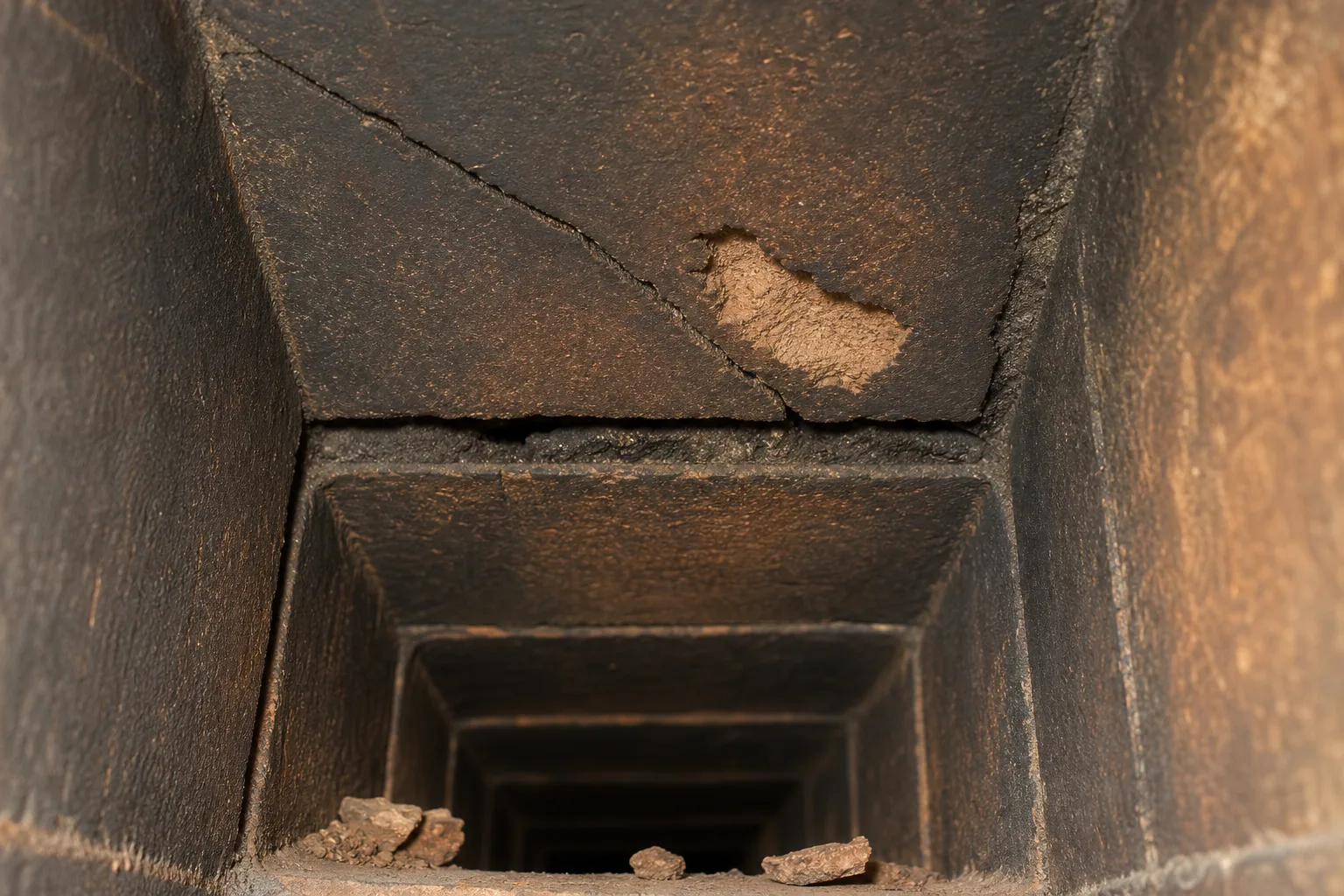
The most familiar failure. Thin dark lines running vertically or diagonally across the face of a tile, sometimes a single hairline, sometimes a spreading network.
Thermal shock is one mechanism. Clay expands when it heats. Heat one part of a tile fast while another part stays cold, and the material has to go somewhere. Structural movement in the chimney is another, since the stack is rigid and the house it is attached to is not.
A crack matters because it is a path. Whatever is supposed to be traveling up the inside of that tile now has somewhere else to go.
Spalling
Spalling is the surface coming off.
You get shallow pits and flaked patches where the fired skin has popped away, leaving a rougher, lighter area underneath. Fragments collect at the base of the flue, which is often how a sweep notices it before the camera confirms it.
Water is one mechanism. Moisture gets into the material, freezes, expands, and takes a layer with it on the way out. A failing crown overhead makes it worse, since the crown, along with a metal chimney cap over the opening, is what keeps water off the stack.
Open mortar joints
This one is quiet, and homeowners almost never hear about it.
Between every two stacked sections there is a thin band of refractory mortar. That mortar erodes. When it goes, you are left with a dark void line between tiles, a gap where the two pieces no longer seal against each other.
The tiles themselves can be in fine shape and the flue can still be breached, because a stack of perfect tiles with nothing between them is not a continuous channel. Gaps at the joints let combustion gases into the surrounding structure just as a cracked tile does.
What a chimney fire does
A chimney fire is a different category of event, and the damage looks different.
Damage documented after chimney fires includes larger fractures, tile sections displaced or rotated out of alignment, and sections missing outright. It can also present more subtly than that, which is part of why a chimney fire is not something to size up by eye from the hearth.
If a chimney fire is in your history, or the history of the house you are buying, that alone changes what happens next.
Myth vs. fact: You will read, page after page, that one of these is "the most common cause" of a cracked clay flue liner. Chimney fire usually gets the title. The mechanisms are all real. The ranking is not: no published data supports putting them in order, and the pages doing the ranking are generally selling the replacement.
So: a list of ways liners go wrong. None of it tells you whether yours is actually bad, which is the question the sweep may not have fully answered.
How to Tell If Your Clay Flue Liner Is Actually Bad
There is a real answer to this, and it is not a matter of opinion. It is a matter of what kind of look someone took.
What a Level 1 inspection sees, and what it misses
A Level 1 inspection is a visual check of the readily accessible parts of the chimney and the appliance. It is the basic annual look most chimneys should get, and it is genuinely useful. A sweep doing one will catch an obvious problem at the firebox or the crown, and buildup that needs to come out.
What it cannot do is see forty feet of tile stack hidden inside brick.
If someone told you your liner is cracked and all they did was look up from the hearth with a flashlight, they are making an inference. It may be a good inference. It is still not evidence.
What a Level 2 camera scan of a clay flue liner adds
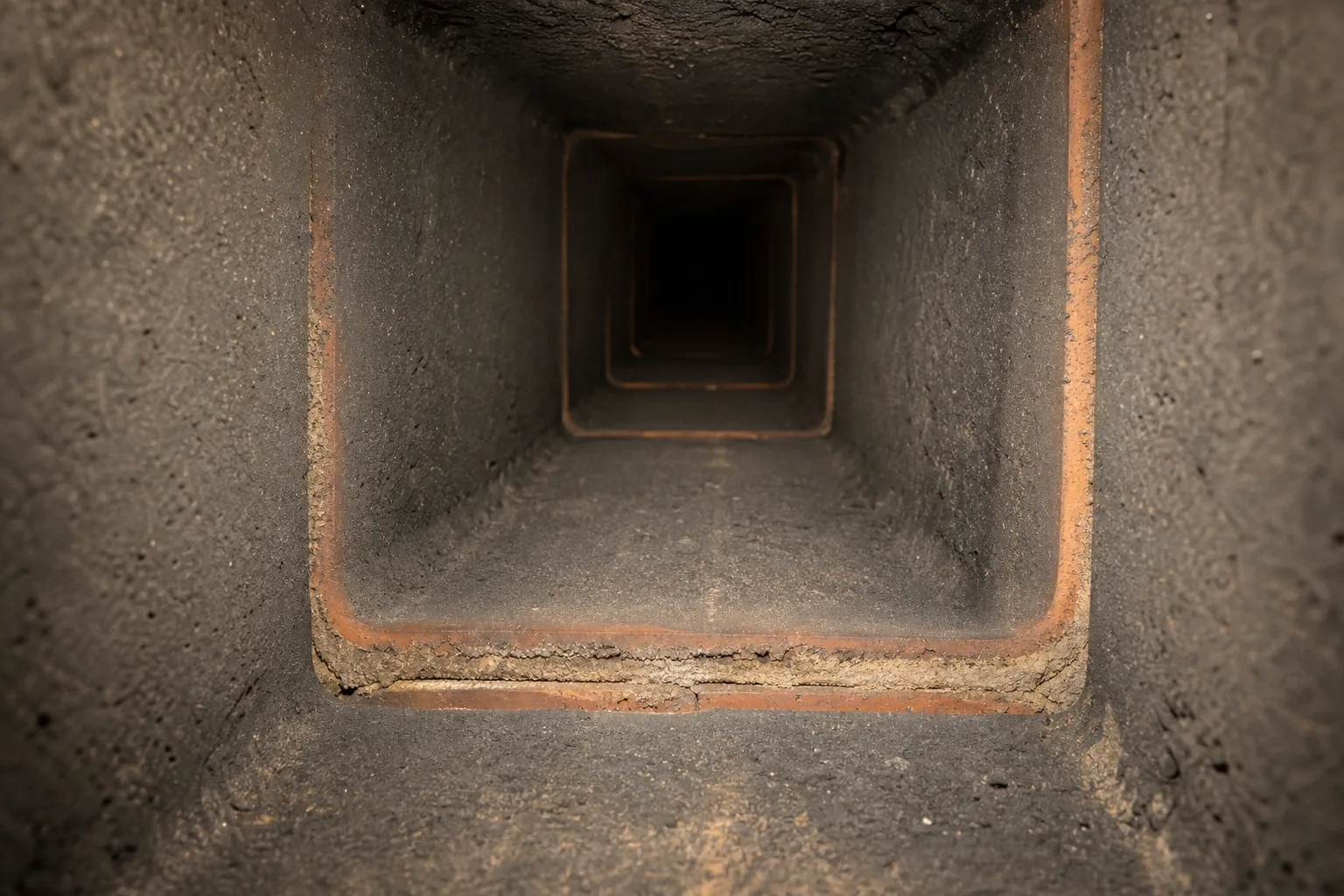
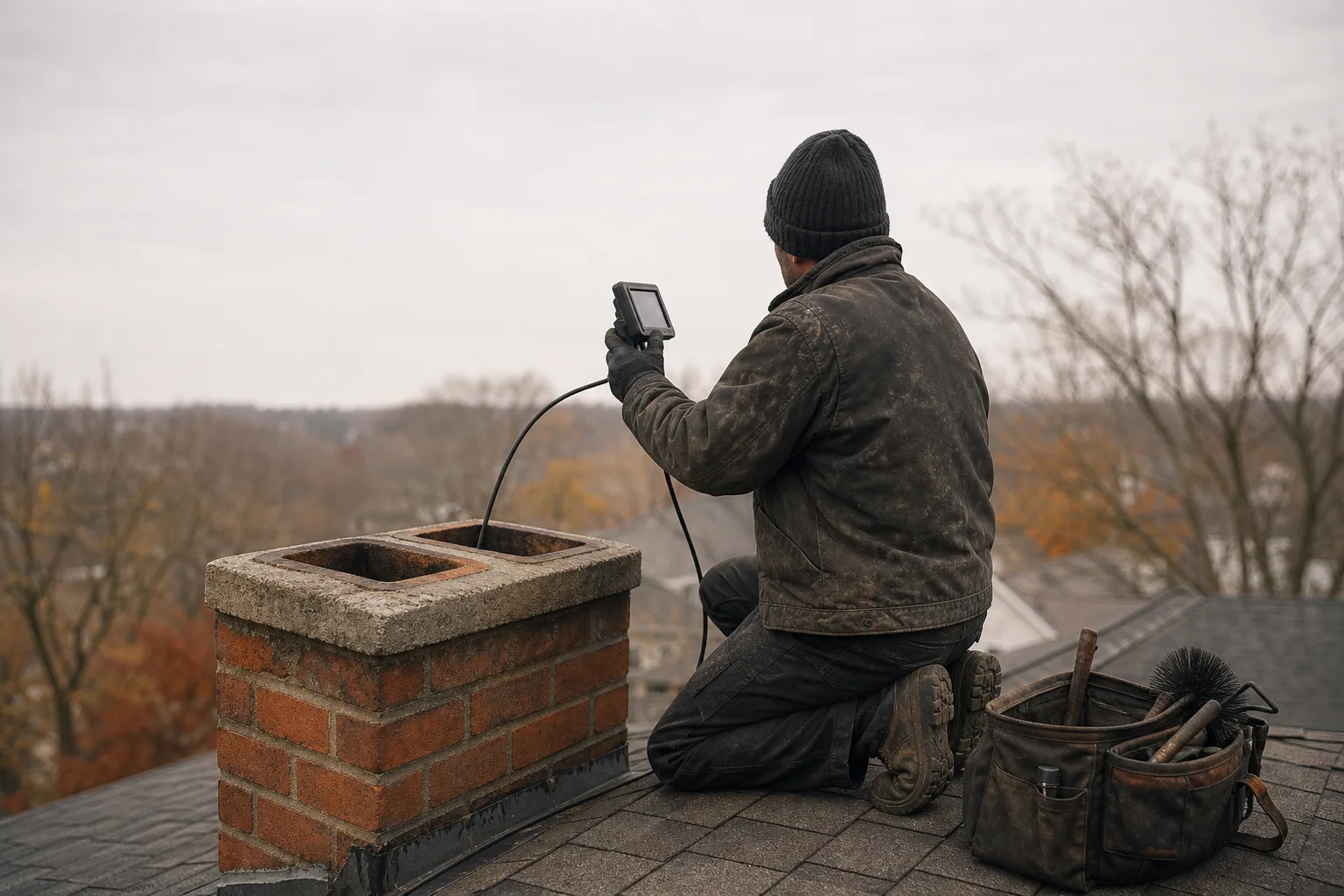
A Level 2 inspection includes a scan of the entire flue interior, which in current practice means a camera. The head is small, mounted on a stiff rod or a cable, fed down from the top of the chimney or up from the firebox, with the sweep watching a handheld monitor.
That scan is the thing that settles the argument. It shows which tiles, at what height, with what kind of damage, and whether the mortar joints are intact. It turns "your liner is shot" into a specific and checkable claim.
Anything less specific than that is not a diagnosis. It is a guess with a price attached.
When a Level 2 is required, not optional
NFPA 211 does not leave this to anyone's judgment. A Level 2 inspection is called for on the sale or transfer of the property, on any system change such as switching the fireplace from wood to gas, an appliance change, or a relining or resizing of the flue, on a malfunction, after a chimney fire, and after an external event like a severe storm or an earthquake.
Buying a house with a fireplace is on that list. So is the chimney fire in the paragraph above.
What you can and cannot check yourself
You can look at the top tile where it projects above the crown, if you can safely get eyes on the roof. You can look for cracking in the crown around its base. You can check the firebox and damper, and notice fragments of clay collecting where they should not be.
You cannot see the stack. Nobody can, without the camera.
Pro tip: Ask to be shown the camera footage. Just ask. Most homeowners never do, which is strange, because it is a recording of their own house made ten minutes earlier. A company that walks you through what it found on screen is behaving one way. A company that will not show you has told you something.
Safety note: If the report says chimney fire, or you are smelling smoke somewhere in the house that should not have smoke in it, stop using the appliance and keep it off until someone qualified has looked. This is the one part of this article with no conditional attached.
Not sure what you're looking at?
A written description and a phone photo only go so far. A camera scan of the full flue is what settles whether a clay flue liner is cracked through or just weathered. Ask for a Level 2 inspection with a camera scan, and ask to be shown the footage.
VIO matches you with an independent local chimney company that can take a look.
Call (513) 655-6702
Before You Assume the Worst About Your Clay Flue Liner
Now the part almost nobody writes down.
A single hairline on a top tile and a network of cracks running through the middle of the stack both get written down as "cracked," and that one word does the reader no favors. The scope of work behind those two findings is not the same, and only a qualified evaluation of your specific flue can say what any given crack means for it.
So you are entitled to ask which one you have. Specifically. Which tile, at what height, and what is the actual finding.
There is a reason that question does not get asked often enough, and it has to do with who publishes on this subject. Open ten pages about clay tile and most will be written by a company that sells stainless liners, cast-in-place systems, or the tile itself. That does not make them wrong. It does mean "your clay is probably fine" is a sentence nobody in that group has an incentive to write.
We have no such incentive, because we do not sell liners and we do not install them. So here it is: what your clay flue liner actually needs is settled by a proper inspection, not by a sales conversation.
From the field: The homeowners who come out of this happiest are the ones who asked what specifically was found and where, instead of accepting a verdict on the whole chimney. A specific finding can be discussed and second-guessed. A verdict cannot.
Repair or Reline: How the Decision Gets Made
Say the scan does show a real problem. There is more than one road out, and they are not interchangeable.
Fixes that keep the clay
If the tiles themselves are sound and the trouble is at the joints, the flue path may be restorable without replacing it. Deteriorated mortar joints can be repointed with high temperature mortar. Proprietary sealant and resurfacing systems, applied from inside the flue, are also used to close joints and seal damage.
A single damaged tile can sometimes be replaced outright, though that depends on the damage being confined to that tile and the tile being accessible, usually near the top of the stack.
Fixes that replace the flue path
When the damage runs through the stack, the approach changes from repairing the clay to building a new channel inside it.
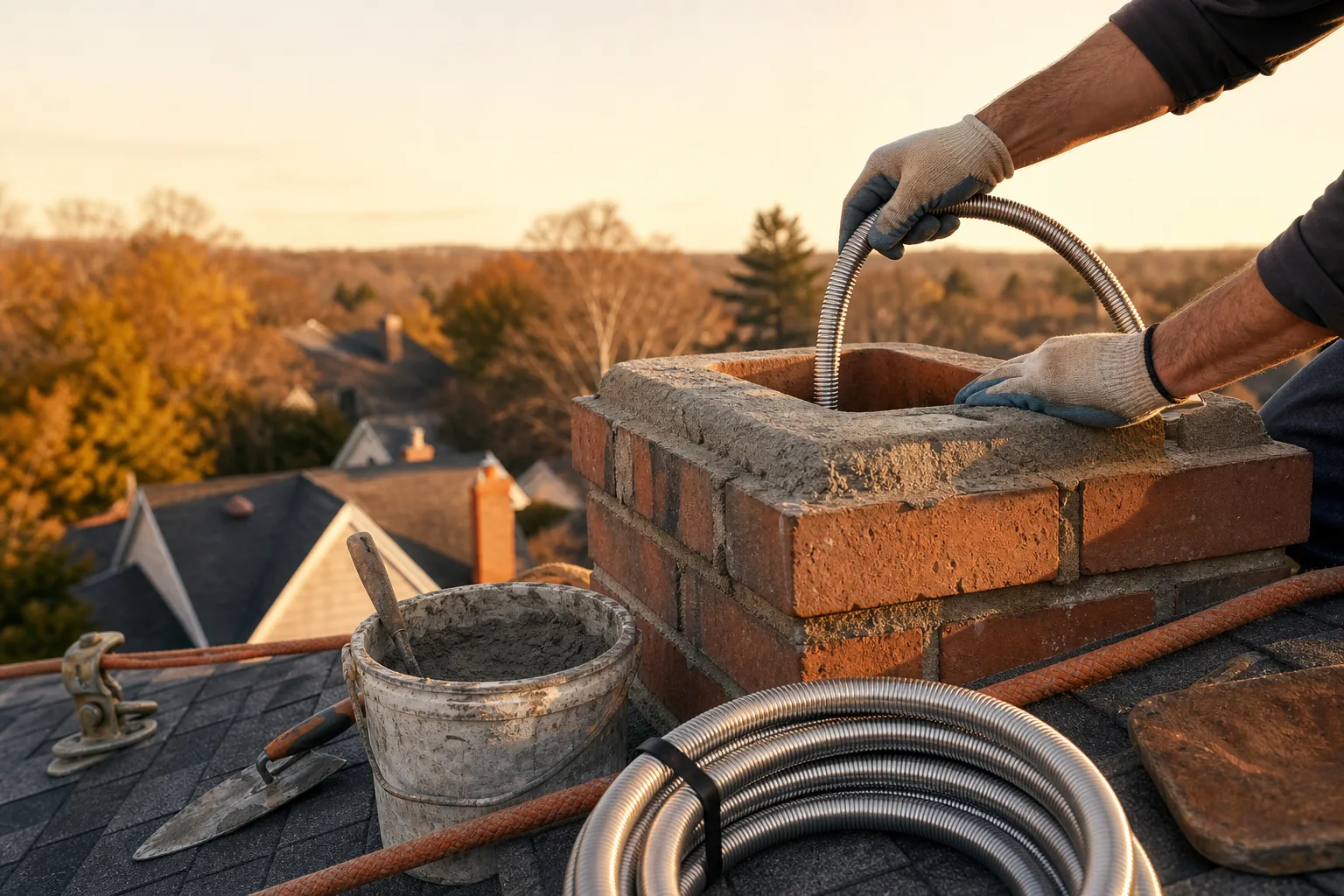
A cast-in-place liner is formed by setting a mold down the flue and pumping a cementitious mix around it, leaving a continuous cast channel when the mold comes out. A stainless steel liner is a manufactured pipe installed inside the existing masonry, sized to the appliance it serves.
Both of these leave the old clay in place as part of the chimney structure. Neither is a repair of the clay. That distinction matters when you are comparing two estimates that sound similar and are not.
| Approach | What it addresses | When it tends to be considered | What it does not fix |
|---|---|---|---|
| Repointing mortar joints | Eroded mortar between stacked tiles | Tiles sound, joints open | Cracked or spalled tile faces |
| Sealant or resurfacing system applied inside the flue | Open joints and surface damage, sealed from within | Damage present but the stack is otherwise intact | A structurally displaced or missing section |
| Replacing an individual tile | One damaged section | Damage confined and the tile is accessible, usually near the top | Damage further down the stack |
| Cast-in-place liner | The whole flue path, rebuilt as a continuous cast channel | Damage through multiple sections | The crown, the flashing, or the masonry shell |
| Stainless steel liner | The whole flue path, replaced with manufactured pipe | Damage through multiple sections, or an appliance change | The surrounding masonry condition |
Safety note: This is a combustion gas containment system, a dull way of saying it is the thing standing between exhaust and your living room. This article explains the options. It does not teach you to perform them, and no source worth trusting supports a do-it-yourself seal on a breached flue.
What Actually Drives the Cost
You want a number. I am not going to invent one, and anyone handing you a figure before seeing your chimney is not giving you a number either, just a guess in a confident voice.
What I can tell you is what moves it.
Height and access come first. A single story chimney you can reach off a ladder and a tall stack on a steep roof requiring staging are not the same job. How much of the flue is affected matters next, because sealing two joints and relining thirty feet are different quantities of work.
Then there is what else is going on up there. Crowns and the flashing where the stack meets the roof often come into it, since water getting into the masonry is one of the things that damages a liner in the first place. Fixing the liner and leaving the thing that ruined it is not a fix.
The approach itself moves the figure, and so does whether your chimney serves one flue or several.
Here is the useful move instead of a number: get the scope in writing, in detail, so two estimates are actually comparable. Two estimates can differ sharply simply because they describe different amounts of work.
How VIO Helps With a Clay Flue Liner Problem
Plainly, so there is no confusion about what we are.
VIO is a referral service. We match homeowners with independent local chimney companies. We do not sell clay flue liners, stainless liners, or anything else. We do not do the work. The company we match you with is an independent business, and the pro we send is theirs, not ours.
The useful thing we do for your situation is get a second set of eyes on a flue you have already been given a verdict about. You can tell us what the report said and go from there.
Before anyone quotes you, ask these:
- Was this a Level 1 inspection or a Level 2 with a camera scan?
- Can I see the footage?
- Which tiles specifically, at what height, and what is wrong with them?
- Are the mortar joints intact, or is the issue at the joints?
- Is the crown or the flashing involved?
- Which approaches did you consider, and why this one?
- Is the full scope in writing?
That last one is not a formality. We ask every company in the network to put its estimate in writing before any work starts, and you should insist on exactly that, with whoever you hire.
Now, back to the thing I left open at the top. The sweep may be entirely right that something is wrong with the clay flue liner. Where the gap opens is in what "wrong" means, because a hairline at the crown and a fractured stack get the same sentence in a report and lead to completely different afternoons. You are trying to find out which one you have.
Ask for the scan. Ask to see it. Then decide.
Get a straight answer on your flue liner
You now know which questions to ask. Go ask them. VIO connects you with independent local chimney companies, and we ask every company in the network to put its estimate in writing before any work starts. You should insist on exactly that.
Call (513) 655-6702
Symptom checker
What is your chimney doing?
Tap the closest match for an honest first answer.