



On this pageWhat Is the Bottom of a Fireplace Called? Four Parts, Four Names7 sections+6
- What Is the Bottom of a Fireplace Called? Four Parts, Four Names
- The Hearth Extension: The Part Out in the Room
- The Inner Hearth, Also Called the Firebox Floor
- That Small Metal Door in the Floor: Ash Dump, Ash Pit, Cleanout
- What Is the Bottom of a Fireplace Called on a Prefab Unit?
- Reading the Condition Before the First Fire
- How VIO Helps When the Bottom of Your Fireplace Needs Work
Quick answer
What is the bottom of a fireplace called? The hearth. In practice that one word covers three parts: the inner hearth, also called the firebox floor, inside the opening; the hearth extension, the noncombustible brick, stone or tile surface out in the room; and in many masonry fireplaces an ash dump door set flush in the firebox floor, which drops cold ash into a pit below.
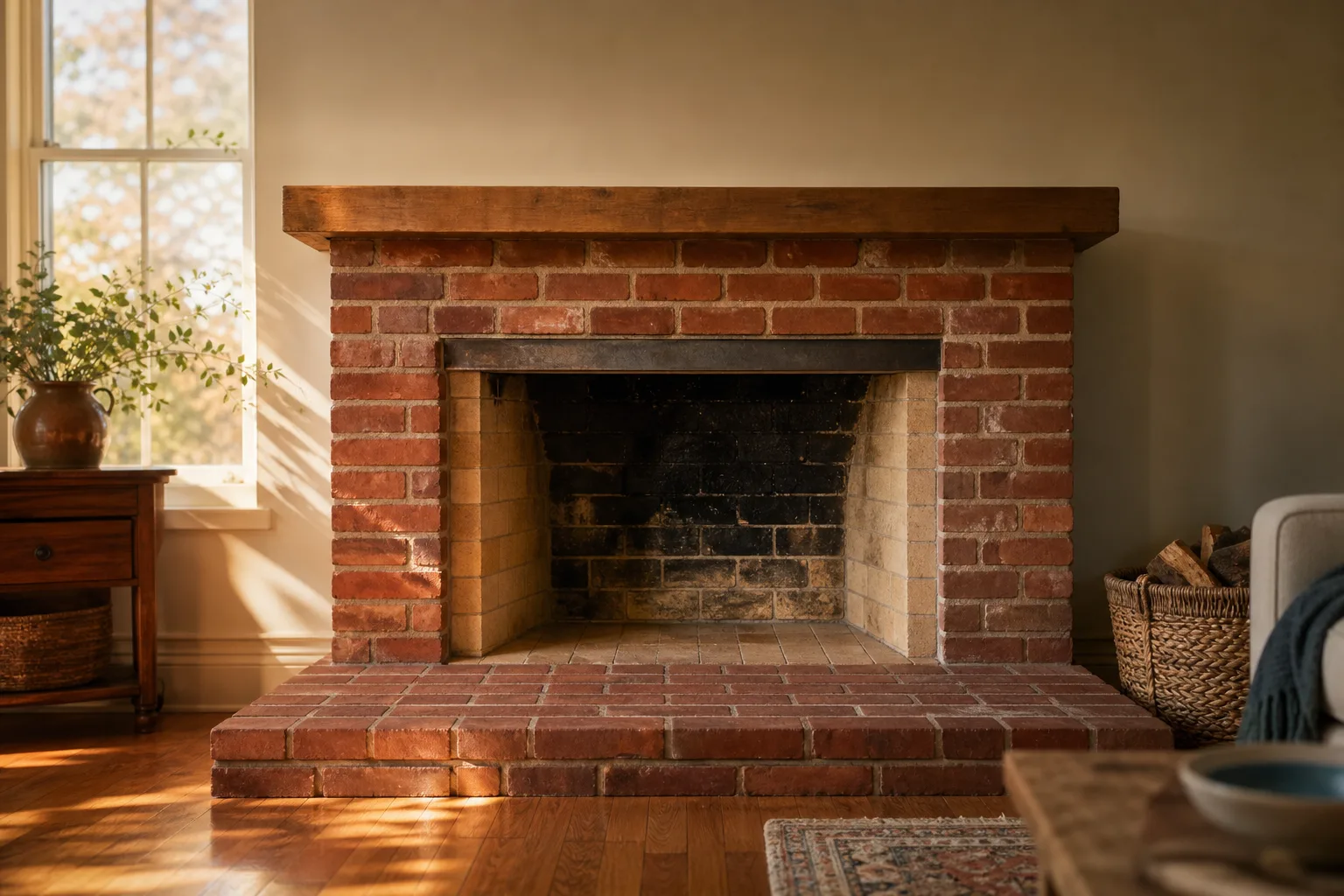
You are standing in your own living room, looking down into your own fireplace, and you have no word for what you are looking at. So you type the only thing you can: what is the bottom of a fireplace called. Reasonable question, annoying answer. The bottom of a fireplace is not one part. It is four, with four names.
The short version: the surface the fire burns on is the hearth. The piece of it inside the opening is the inner hearth, which most people in the trade just call the firebox floor. The piece that runs out into the room is the hearth extension. And if there is a small metal door set flush into the floor inside the opening, that is an ash dump.
One of those four is the reason most people are searching in the first place, and it is not the one you would guess.
Knowing which part you are looking at is not trivia. It decides whether what you see is normal for a thirty-year-old firebox or a reason to stop using it, and whether you describe the problem correctly when you pick up the phone.
What Is the Bottom of a Fireplace Called? Four Parts, Four Names
Say "hearth" to a mason and they will ask which one you mean. A real estate agent means the brick or stone step in front. A sweep in the middle of an inspection probably means the floor inside the firebox.
Everybody is right, which is exactly the problem.
Good to know: "Hearth" is both the specific name for the noncombustible surface a fire burns on and a loose shorthand for the whole bottom assembly. When precision matters, and it matters on an estimate, use "firebox floor" for the part inside the opening and "hearth extension" for the part out in the room.
Why What Is the Bottom of a Fireplace Called Is a Trick Question
Because the question describes a location, not a component. "The bottom" is where you are pointing, and several parts live at that spot, each doing a different job, in the same way that every layer you can see inside of a chimney has a separate one.
The hearth extension keeps an ember that rolls out of the fire off your floorboards. The firebox floor takes direct flame and repeated heating and cooling without failing. The ash dump gets ash out of the room without carrying a bucket through it. Three parts that share an elevation, not variations on one.
One more thing people point at is not part of the fireplace at all. The iron basket or two legged supports holding the logs up are a grate and andirons, and you can lift them out and throw them away. Nothing else here works that way.
What You Are Looking At, and What It Is Called
| What you are looking at | What it is called | Masonry, prefab, or both | Is it a problem? |
|---|---|---|---|
| Brick, stone, tile or concrete surface out in the room, flush or raised like a step | Hearth extension (sometimes "outer hearth") | Both | Light staining and minor edge wear are usually cosmetic. Material loss, cracking, looseness, or heat reaching nearby combustibles needs evaluation. |
| The floor inside the opening, under where the fire sits | Inner hearth, or firebox floor | Both | Depends entirely on what it is made of and what shape it is in. |
| Pale buff or salmon colored brick with thin light gray joints, laid flat | Firebrick in refractory mortar | Masonry | Open joints, cracked or missing units, and washed out mortar need attention. |
| One flat cream colored slab, sometimes molded with a fake brick pattern | Refractory floor panel | Prefab (factory built) | Cracking is judged against the manufacturer's instructions for that model, not a rule of thumb. |
| Small cast iron plate or hinged flap set flush in the floor, often rusty | Ash dump door | Masonry, and not all of them | Fine if it closes and seats. Worth asking about if it does not. |
| Iron basket or two legged supports holding the logs up | Grate and andirons | Both | Accessories. Not part of the structure. |
That table is the whole answer to what is the bottom of a fireplace called, compressed. The rest of this is what each part is made of, what it should look like, and what it means when it does not.
The Hearth Extension: The Part Out in the Room
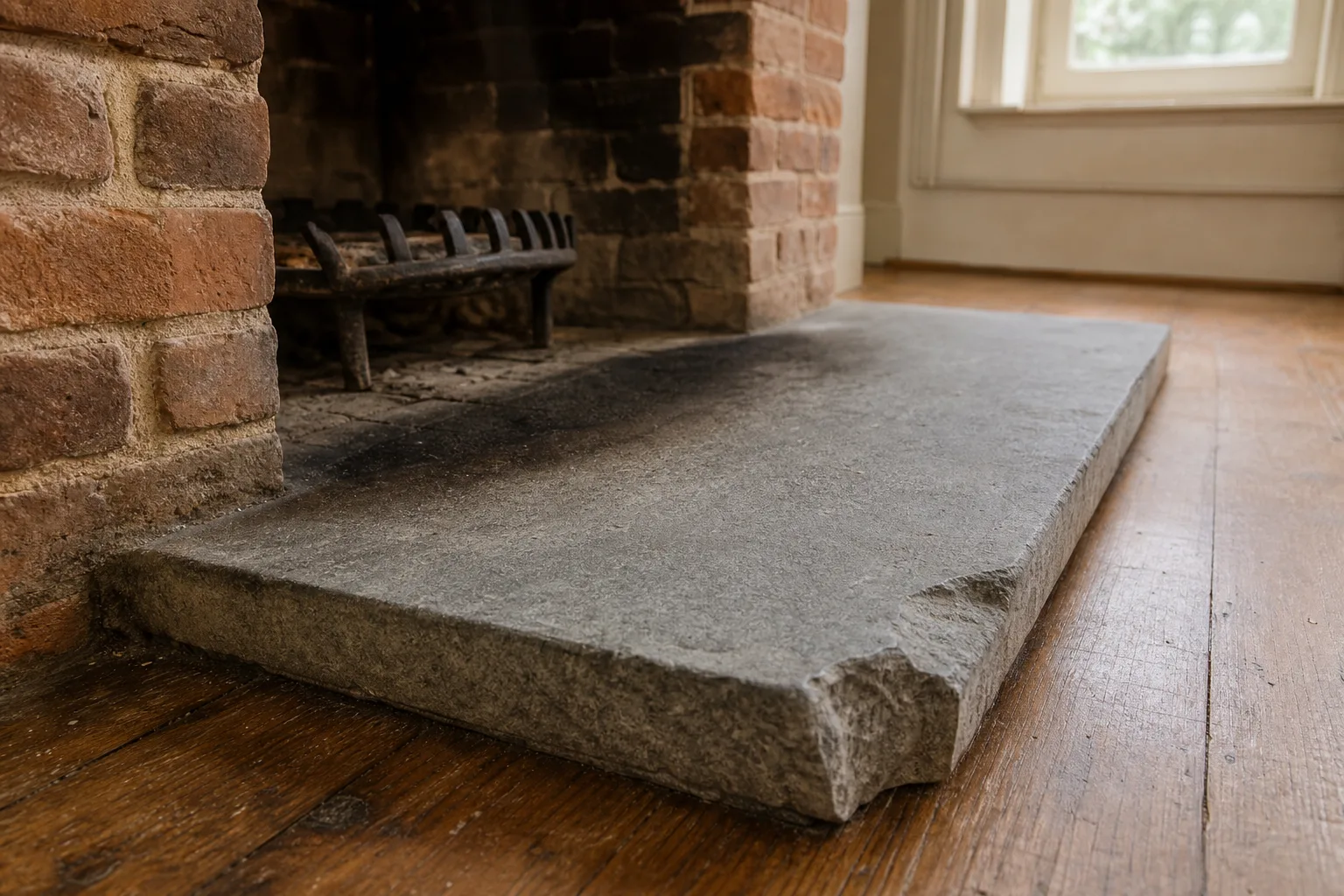
Most people who ask what is the bottom of a fireplace called are picturing this piece. The brick apron. The slate slab. The raised stone step your kids have hit their heads on.
Its job is unglamorous: it replaces the room's flooring where embers, sparks, and dropped logs land, with something that will not catch fire.
Which means it has a required size. Most people have never measured theirs.
How Big It Has to Be
The model fireplace code chapter sets minimums for masonry fireplaces based on how big the fireplace opening is.
If the opening is less than 6 square feet, the hearth extension has to reach at least 16 inches in front of the facing material and at least 8 inches past each side of the opening.
If the opening is 6 square feet or larger, those numbers go to 20 inches in front and 12 inches past each side.
Minimum thickness is 2 inches. And if the fireplace is raised up or overhangs the floor, the extension has to cover the area underneath it too.
Pro tip: Measure from the face of the facing material, not from the inside edge of the firebox. People lose three or four inches to that mistake and conclude they are compliant when they are not. Code editions and local amendments vary, so confirm the edition your jurisdiction actually enforces before you tear anything out, and if you have a factory built unit, the manufacturer's listing governs instead.
If you come up short, that is worth a conversation rather than a panic. A short extension in a house with a toddler and hardwood floors is a different problem than one in a house where nobody has lit a fire since 2011.
Materials You Will Actually See
Red brick. Bluestone or slate slab. Quarry tile. Poured concrete. Granite, if someone remodeled recently.
All of them are noncombustible, all of them stain, and all of them scorch. A dark arc fanning out from the opening is a record of use rather than damage by itself, though material breaking away or cracking is another matter.
What matters is whether it is sound and sitting still. An extension that rocks or sounds hollow in a spot has lost its support underneath, and that is a structural question, not a cleaning one.
The Inner Hearth, Also Called the Firebox Floor
Now step inside the opening. In the trade, the answer to what is the bottom of a fireplace called is usually this one, and it lives a much harder life than the pretty part out front.
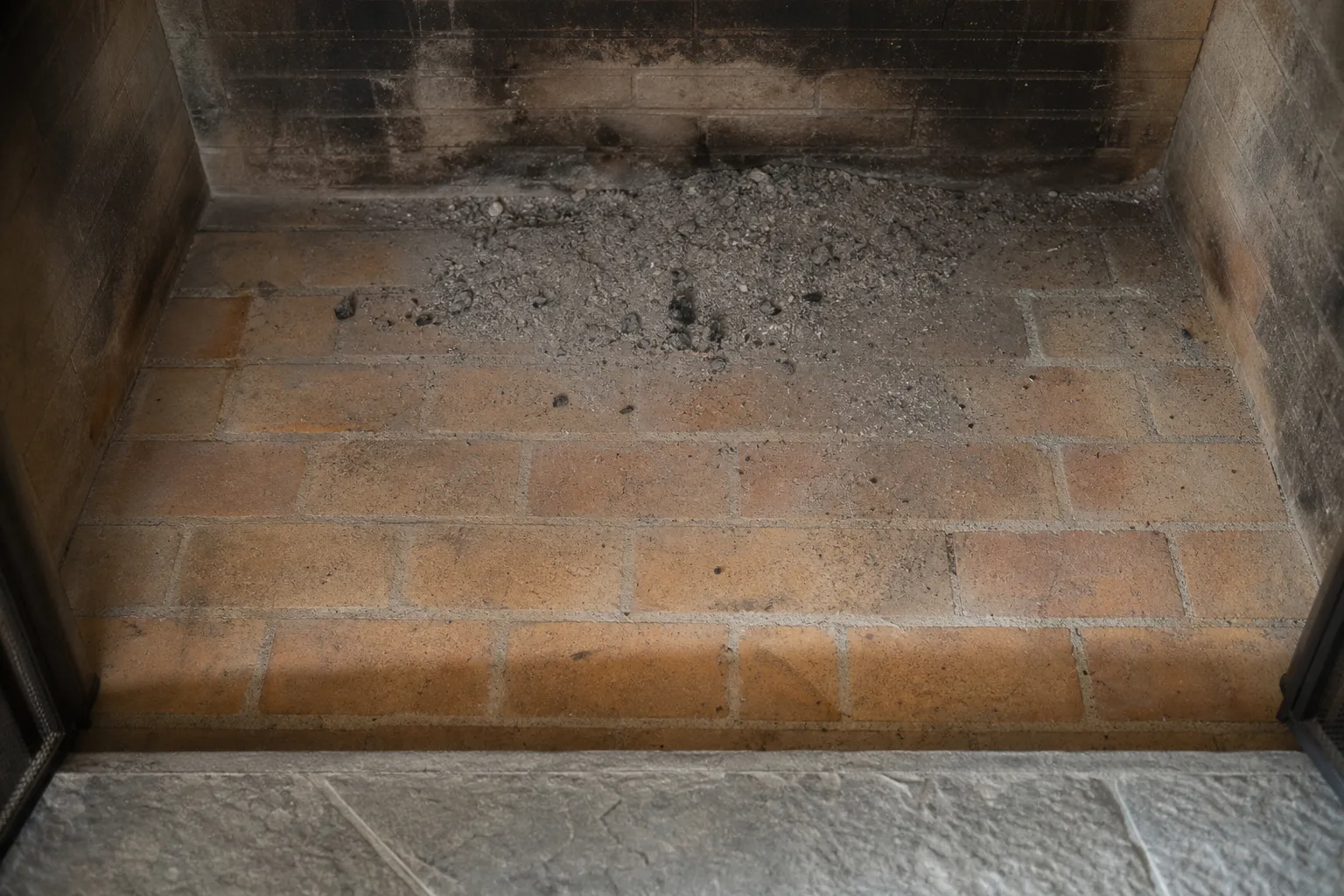
In a masonry fireplace, the firebox floor is usually firebrick: pale buff, yellowish tan, or dull salmon, noticeably lighter than the brick outside your house. It is laid flat, often in a running bond or herringbone, and the back of the box is soot black while the front edge stays cleaner.
Firebrick and Refractory Mortar Are Not House Brick and Mortar
This is the single most useful thing to understand about the bottom of a firebox.
Firebrick is refractory ceramic, made to sit in direct flame and tolerate repeated heating and cooling. It is set in refractory mortar, a thin, light gray, heat tolerant material, not the standard mortar holding up your foundation.
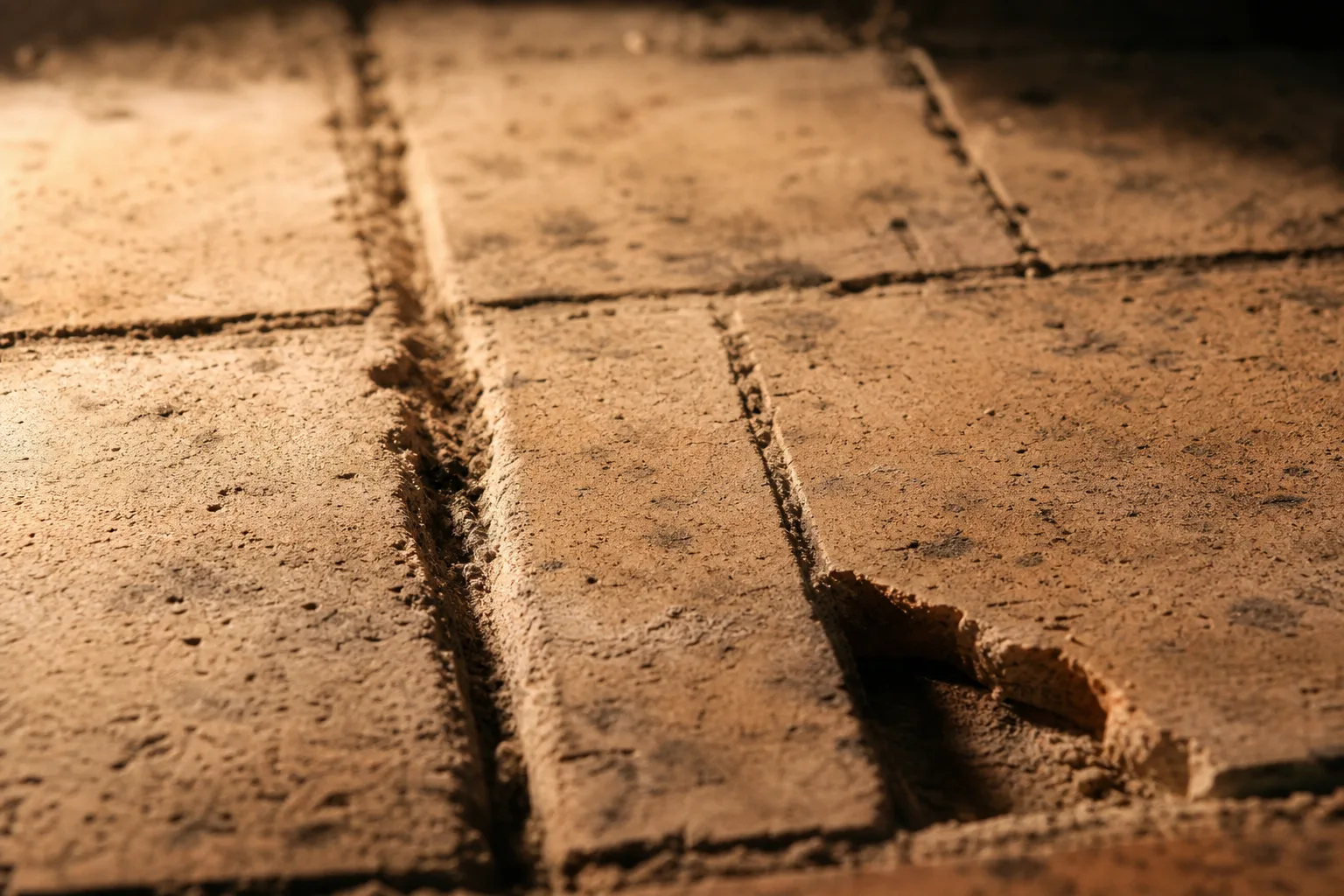
Standard mortar in a firebox does not last. Repairs made in it fail quickly, so the joints crumble and wash out and the bricks go loose.
From the field: A firebox floor repaired correctly looks different from one patched with whatever was in the bucket. The correct repair has thin, even, light colored joints sitting flush. The wrong one has fat gray joints already receding, with the bricks around them starting to move. It is a qualitative read, not a measurement, but once you have seen both you do not confuse them.
What Goes Wrong Down There
Joints wash out and open up. Bricks crack, corners break off, and pieces go missing, usually right where logs get dropped.
The floor develops a dip, which can mean the support beneath it has a problem rather than the brick.
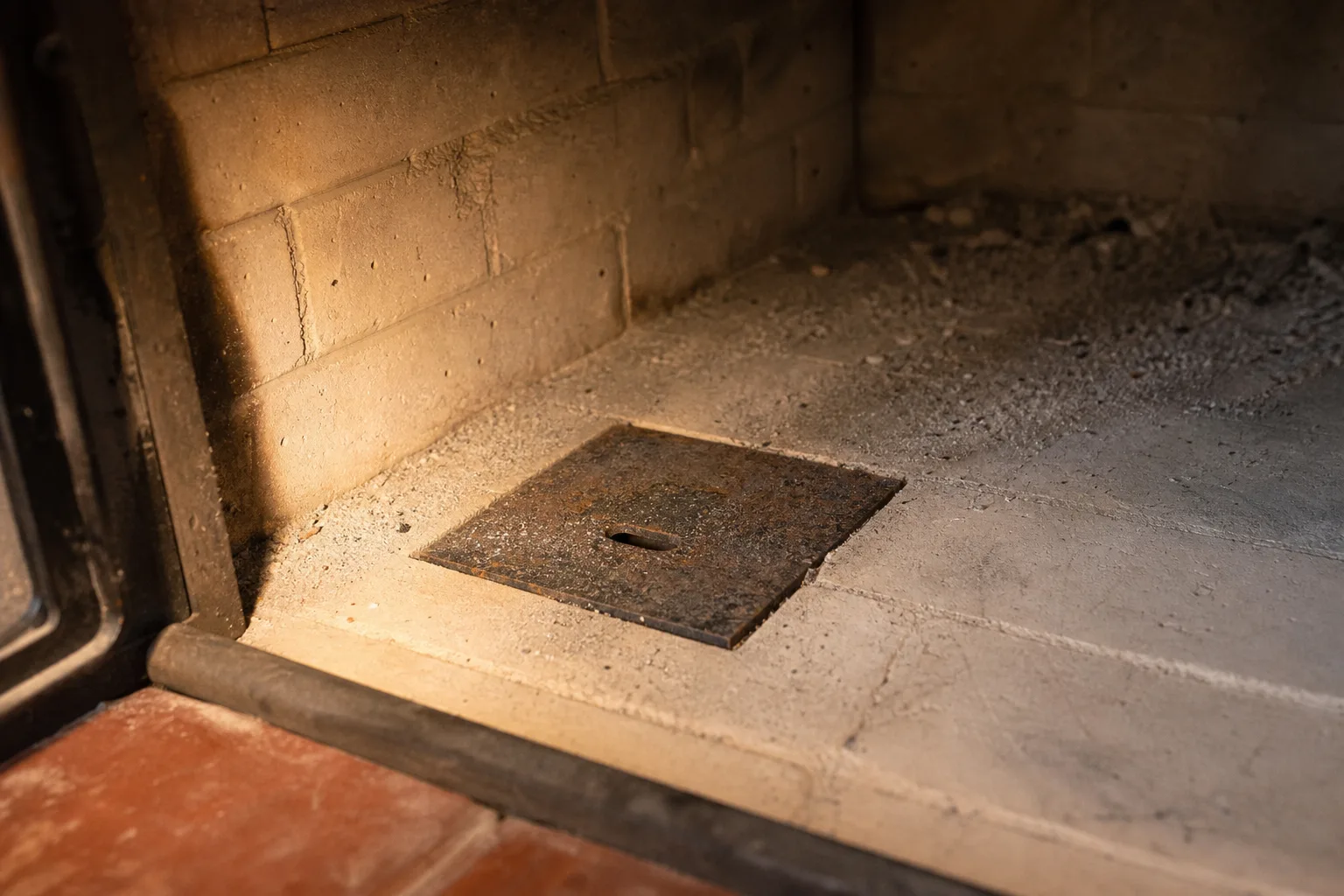
In older fireplaces the ash dump door rusts out or disappears, leaving an open hole into the pit below.
None of that is dramatic alone. Collectively it is how a firebox stops containing a fire the way it was built to, and it is why firebox repair is its own trade specialty rather than a bucket of mortar and an afternoon.
That Small Metal Door in the Floor: Ash Dump, Ash Pit, Cleanout
Here is the part I promised at the top, the one that sends most people looking for what is the bottom of a fireplace called.
A small cast iron plate sits flush in the firebox floor, roughly the size of a paperback, dark gray going to rust, sometimes with a finger slot or a hinged flap. It looks like a floor vent that wandered into the wrong room, and people assume it is a loose brick until they try to pick it up.
That is an ash dump door. A DIY forum thread currently outranks most chimney companies for the question, which tells you how rarely anyone bothers to explain it.
How the Three Parts Connect
Three parts, one system, routinely confused with each other.
The ash dump is the opening in the firebox floor with the cast iron door over it. You sweep cold ash across the floor and push it through.
The ash pit is the hollow chamber in the masonry directly below, where the ash collects. It is not a void you can see into from the room.
The cleanout door is how the pit gets emptied. A separate small cast iron door, usually eight to twelve inches square, set low in the masonry at the base of the chimney outside near the ground, or in a basement wall. It is often painted over, rusted shut, or buried behind a shrub, and plenty of owners have no idea theirs exists.
If you have an ash dump and have never found the cleanout, go look.
Also worth saying plainly: not every fireplace has an ash dump, so in plenty of houses the answer to what is the bottom of a fireplace called is only three parts. No prefab has one, and plenty of masonry fireplaces were built without one. Its absence is not a defect.
Should an Ash Dump Be Sealed?
Myth vs. fact: The claim that ash dumps are "against code now" and must be sealed gets repeated constantly. Honestly, sweeps disagree about it. Some seal them, treating the pit as an air leak and a path that could carry heat into a space nobody monitors. Others service them and consider a sound, well seated door fine. There is no single national prohibition, so treat it as a judgment call for whoever inspects your chimney, not a rule you are breaking.
What is not a judgment call is a door that no longer closes. A missing or rusted out ash dump door leaves an open shaft in the floor of a box you light fires in.
What Is the Bottom of a Fireplace Called on a Prefab Unit?
Same names, different materials, and the repair logic flips completely.
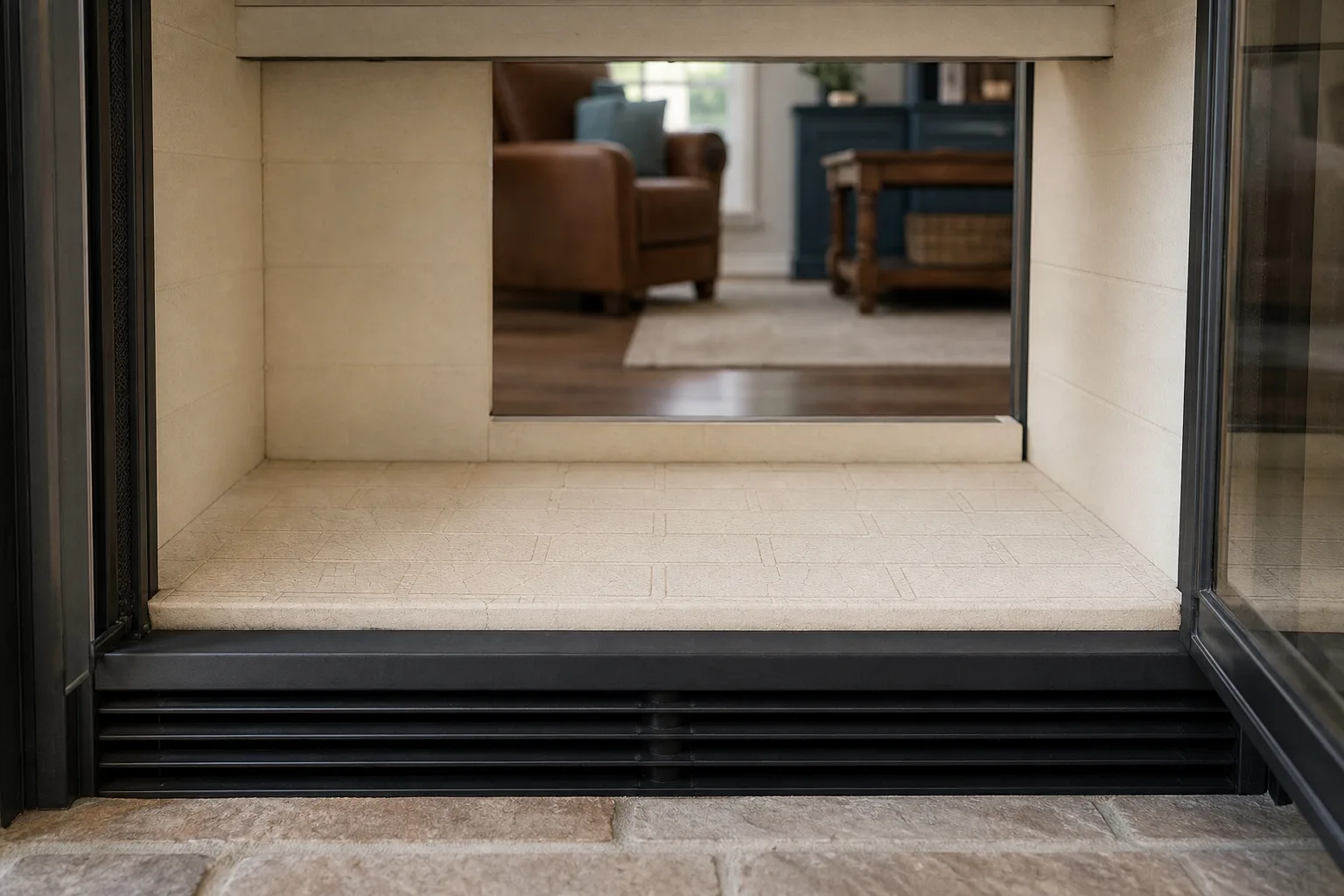
A factory built fireplace, what everyone calls a prefab, is a listed metal appliance rather than a masonry structure. Look for black painted louvers above and below the opening, a glass door assembly on many models, and no real brick throat above you.
Refractory Panels Instead of Firebrick
Inside a prefab, the answer to what is the bottom of a fireplace called is a refractory panel. Not individual firebricks: one flat slab, cream or off white, sometimes molded with a fake brick pattern pressed into the surface.
Panels crack, and the honest position is that there is no agreed measurement that separates a cosmetic line from a condition that matters. Trade sources do not line up on it.
So a prefab is the one case where you do not eyeball the threshold yourself. Any cracking, any loose piece, any gap showing the metal shell behind the panel gets judged against the manufacturer's instructions for that model, by someone reading the listing.
Why Patching a Panel Is the Wrong Move
Good to know: Refractory panels get replaced, not patched. A prefab is a listed appliance, tested and certified as a specific assembly of specific parts. Smearing furnace cement across a cracked floor panel changes that assembly without restoring what the panel was doing. The manufacturer specifies a replacement part for the model, and that is what belongs in there.
This trips people up, because in masonry work patching is often exactly right. In a prefab it is not, and the model number on the metal tag inside the opening matters more than any photograph you can take.
Reading the Condition Before the First Fire
It is the first cold weekend of the season, which is the honest reason most people ask what is the bottom of a fireplace called at all. Here is how to look at yours with a flashlight and five minutes, and what the answer means.
The five minute walk through:
- Shine the light across the firebox floor at a low angle, almost parallel to it. Raking light shows depressions and open joints that straight on light hides completely.
- Run a fingernail along the joints between firebricks. If it drops in, the mortar has washed out.
- Look for missing brick corners and loose units, especially in the drop zone at the front.
- Check whether the floor is flat. A dip is a support question, not a surface question.
- Find the ash dump door, if there is one, and confirm it sits flush and closes.
- Press down on the hearth extension at several points. It should not rock or sound hollow.
- Measure the extension in front of the facing material and past each side of the opening.
- In a prefab, note any cracking, loose pieces, or gaps in the panels, and find the model number tag. The manufacturer's instructions decide what those mean, not a rule of thumb.
Normal Wear
Light soot staining, including the dark arc out on the extension. Minor edge wear on a stone slab. A firebrick floor that is dark, uneven in color, and visibly used.
Deeper damage is a different category, even when it looks superficial: material breaking away, cracking, or any sign that heat is reaching the floor or framing next to the extension needs someone to evaluate it.
Soot on the floor is a cosmetic record of use, which is not the same thing as the stages creosote moves through in the flue above it.
A fireplace that has been used for thirty years and looks like it has been used for thirty years is doing fine. Knowing what is the bottom of a fireplace called does not obligate you to repair it.
Worth a Phone Call
Open or washed out joints. Missing, loose, or cracked firebrick. A dip in the floor. An ash dump door that does not seat, or a hole where one used to be. A hearth extension that rocks or falls short of the minimums. Cracked panels or any gap showing metal in a prefab.
Take those seriously rather than filing them under wear. Several of them, a cracked through firebox, an open shaft into the ash pit, an unstable extension, exposed metal behind a panel, can be reason to stop using the fireplace until someone has evaluated it in person. Do not light a fire to find out.
When an Inspection Is Not Optional
Safety note: NFPA 211 requires a Level 2 inspection at the sale or transfer of a property, on any change to the system (fuel, flue shape, material, or appliance), after a malfunction, after a chimney fire, and after an external event such as a building fire, an earthquake, or severe weather. A Level 2 is not a judgment call in those situations. It is the standard.
Buying a house with a fireplace is the trigger that catches people. A general home inspection is not a chimney safety inspection at that level, and was never meant to be.
Not sure if what you are looking at is wear or a problem?
Tell us what you see on the floor of your firebox and we will match you with a local chimney company that inspects it in person. Call (513) 655-6702, or request service and we will route the details.
How VIO Helps When the Bottom of Your Fireplace Needs Work
Be clear about what we are. VIO is a referral service. We do not sweep chimneys and we do not rebuild fireboxes. Independent local chimney companies do the work, and our job is to put the right one in front of you.
You now know what is the bottom of a fireplace called in all four of its senses, and you can describe what you are seeing accurately, which is most of the battle. What you cannot do from the living room floor is judge whether a washed out joint is a two hour repointing job or the first symptom of something behind the brick.
So tell us what you found. The open joint, the loose extension, the ash dump door that will not close, the prefab panel cracked through, the model number off the metal tag. We match you with an independent local company that works on exactly that, and it looks at the fireplace in person instead of guessing from a photograph. Ask about credentials before you book, including whether the sweep is a CSIA certified chimney sweep, because we do not verify certification for you.
On estimates, our position is simple. We ask every company in the network to put its estimate in writing before any work starts, and you should insist on exactly that. If anyone wants to start on your firebox or hearth off a verbal number, slow down.
And if what you need is an inspection rather than a repair, say so. Plenty of people who start out asking what is the bottom of a fireplace called need nothing more than a sweep and a set of eyes before the season starts.
So, what is the bottom of a fireplace called? The hearth, and that one word contains three more: the firebox floor inside the opening, the hearth extension out in the room, and the ash dump in between. The one in the worst shape is the one to describe when you call.
Get the bottom of your fireplace looked at before the first fire.
One call, one local company, no guessing from photographs. Call (513) 655-6702 or send us the details and we will route it to a company near you.
Symptom checker
What is your chimney doing?
Tap the closest match for an honest first answer.