


On this pageFirst, Which Of These Four Is You?7 sections+6
- First, Which Of These Four Is You?
- What A Chimney Safety Inspection Actually Covers
- The Three Levels, And Which One Your Situation Calls For
- What A Level 1 Inspection Cannot See
- How To Tell A Real Chimney Safety Inspection From A Sales Call
- Reading The Findings: Stop, Fix, Or Watch
- How VIO Helps With A Chimney Safety Inspection
Quick answer
A chimney safety inspection is a check of a chimney and the appliance it vents, defined by NFPA 211 at three levels. Level 1 covers readily accessible parts by eye, with no camera or roof access required. Level 2 adds a recorded video scan of the flue interior and is called for at a property sale, after a chimney fire, or when the fuel or appliance changes. Level 3 opens concealed structure when a hidden hazard is suspected.
Almost nobody searches for a chimney safety inspection out of curiosity. You are here because something put the word safety in your head, and a chimney safety inspection suddenly moved from "someday" to "this week."
Maybe a closing date has a chimney contingency attached to it. Maybe an alarm went off. Maybe a sweep said the words "chimney fire," handed you a quote, and drove away.
Here is the thing that sends most people down the wrong road, and it is worth knowing before you call anyone: an inspection can come back clean on a chimney with a cracked flue liner. Not because the inspector was lazy or dishonest. Because of how the levels are defined.
We will get to exactly how that happens, and it changes which appointment you should be booking.
First, Which Of These Four Is You?
Which chimney safety inspection you need depends almost entirely on why you are asking. Find yourself below.
You're Buying Or Selling The House
This is the most common reason people search this phrase, and it has the clearest answer.
NFPA 211, the standard that governs chimneys and solid fuel appliances in the United States, calls for a Level 2 inspection at a property sale or transfer. A basic visual pass is not what your situation asks for.
Whether that standard carries legal force where you live depends on what your state and municipality have adopted, and on what the parties to the deal require. The standard's own position is not ambiguous.
Something Already Scared You
A carbon monoxide alarm that sounded. Smoke smell in a bedroom. A dark stain spreading on the ceiling beside the chimney chase. A sound like gravel falling inside a wall.
Signs like these can point toward a malfunction of the system, or toward damage from an outside event, and both of those sit on the standard's Level 2 trigger list. Whether your particular symptom qualifies is a judgment the inspector has to make, so describe exactly what you saw, smelled, or heard when you call, and ask which level that points to.
If a CO alarm genuinely sounded, treat it as the emergency it is before you treat it as a research project. A detector that only chirps intermittently may be reporting on its own battery or age rather than on your chimney, so check the unit itself too.
It's The First Cold Night And Nobody Has Looked At It In Years
You want to light a fire. Nothing is obviously wrong. The system has not changed.
That is the textbook Level 1 case, and a Level 1 is a legitimate, useful appointment. Read the section on what it cannot see before you decide it is enough.
You've Already Been Quoted, And The Number Startled You
You are not really researching inspections. You are trying to find out whether you were just handled.
Fair question. The answer usually lives in two places: which level you actually received, and whether anyone can show you evidence for what they found. Both are below.
What A Chimney Safety Inspection Actually Covers
Strip away the marketing and a chimney safety inspection is a walk through a system, from the top of the stack down to the appliance it vents. If you have never had reason to think about how a chimney actually moves air and exhaust, that context makes the findings much easier to read later.
Outside, And On The Roof
At the top sits the cap, a metal hood fitted over the flue opening with mesh screening on its sides, keeping rain, leaves, and squirrels out.
Under it is the crown, the sloped concrete slab that seals the masonry against weather. This part fails quietly and constantly. A crack you could slide a dime into lets water into the brickwork for years before anyone notices.
The clay flue tile usually protrudes a few inches above the crown, terracotta orange, and it chips and cracks as it ages.
Then the brick and mortar joints, where spalling shows up as flaked-off brick faces exposing a paler, rougher interior. It concentrates in the top few courses, because that is where condensation collects.
White chalky streaking running down the brick is efflorescence: mineral salt carried out by water moving through masonry. Read it as a moisture report card rather than as dirt.
Last, the flashing, the sheet metal where the stack meets the shingles. Lifted edges and smears of black roof tar mean somebody already attempted a repair here.
Inside The House
The firebox is the chamber where fire happens, lined with firebrick, and the mortar joints between those bricks can crack or wash out.
Just above it, the damper, a cast-iron plate on a handle that pivots open and closed. If yours is stiff, rusted, or will not seat, that gets written down.
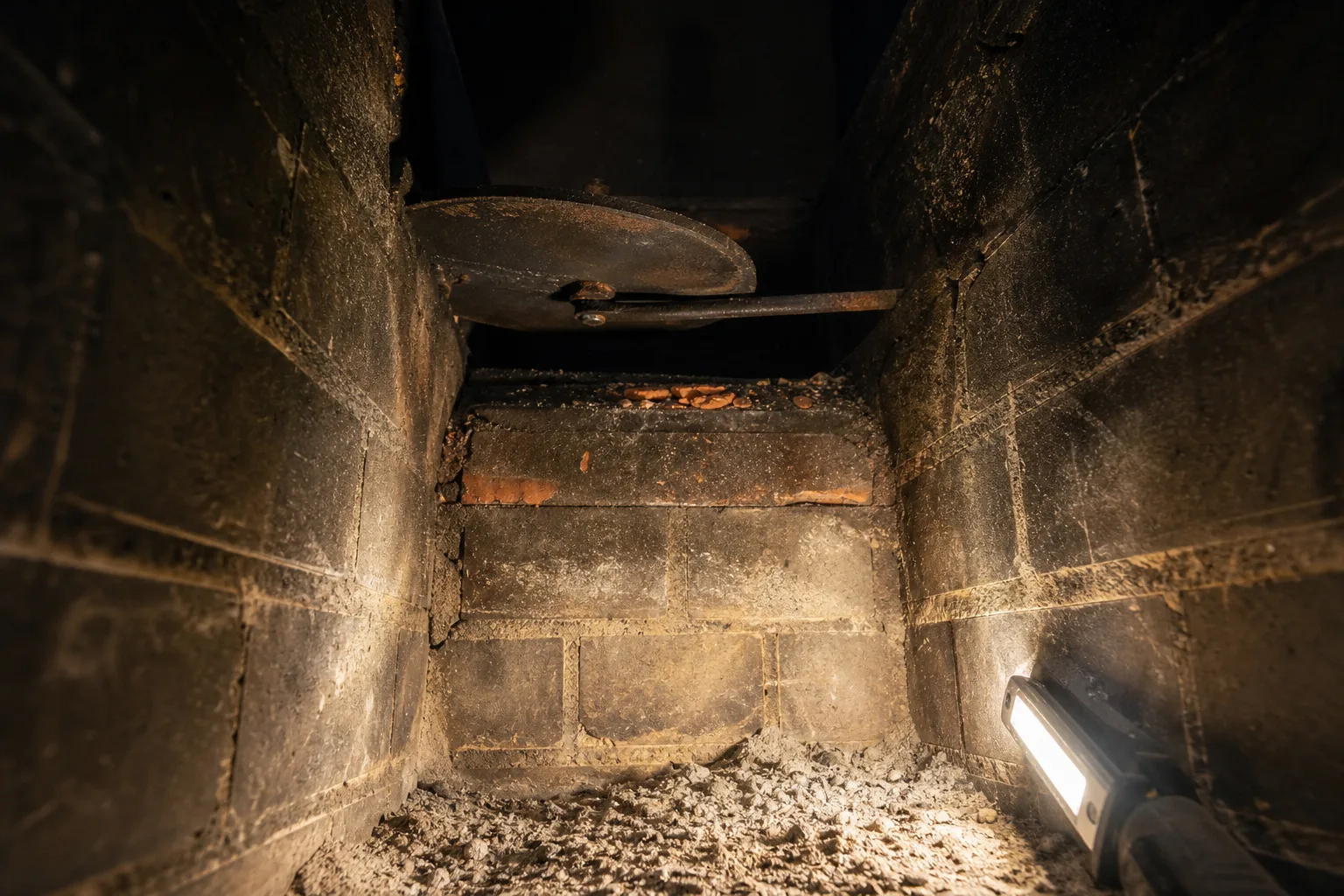
Behind and above the damper is the smoke shelf, a ledge where debris collects. What lands there is diagnostic. Flakes of terracotta tile on the smoke shelf mean the liner above is shaling, which is a polite word for coming apart.
Then the flue itself, the vertical shaft, and this is where the levels start to matter enormously.
What The Chimney Safety Inspection Is Really Hunting For
Four things, in plain terms.
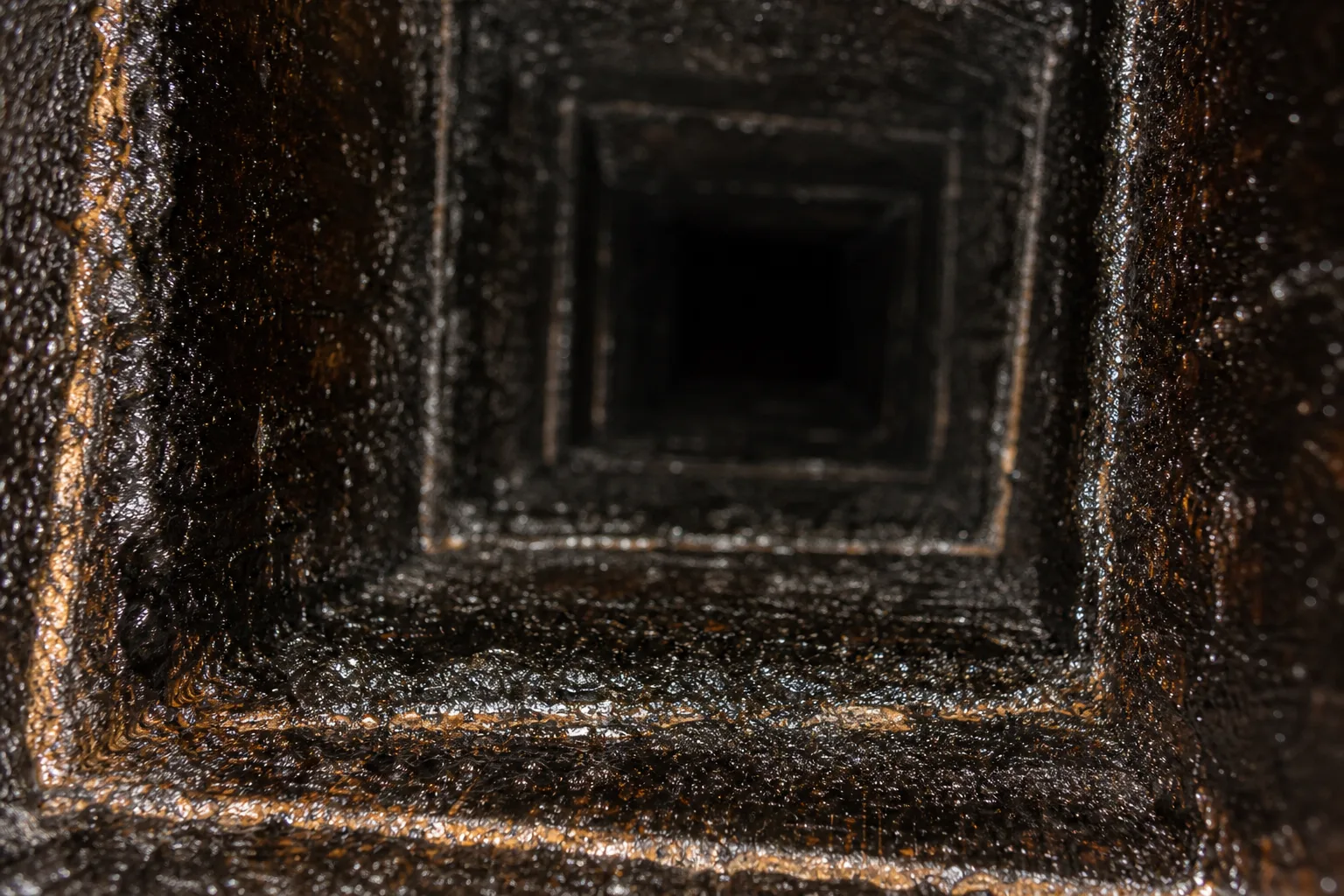
Creosote, the tar residue wood smoke leaves behind. Sweeps sort it into three stages. Stages 1 and 2 come off with normal sweeping. Stage 3 is called glazed creosote, it looks like poured tar that dried glossy, it is highly flammable, and it is genuinely difficult to remove.
Cracks and gaps in the liner, because the liner is a primary line of separation between combustion gases and the rest of the house. The masonry, the required clearances, and other parts of the system share that job, which is why an inspection looks at all of them rather than at the liner alone.
Blockages, from nests to collapsed tile to a cap that rusted shut.
Paths for carbon monoxide to reach your living room instead of the sky.
Safety note: Carbon monoxide has no smell and no color, and a chimney is one of the few systems in a house that can deliver it straight to you indoors. If you burn fuel through a chimney and do not have a working CO alarm on every level of the house, fix that today. It costs less than any inspection and it does not require an appointment.
The Three Levels, And Which One Your Situation Calls For
NFPA 211 defines three levels, and they are cumulative: each one includes everything in the levels below it.
Almost every argument, upsell, and honest misunderstanding in this trade happens at the seam between Level 1 and Level 2.
Level 1, The Annual Baseline
Performed when nothing about your system has changed and you plan to use it the way you always have.
The inspector examines readily accessible portions of the chimney, inside and out, plus accessible parts of the appliance and the connection between them. Firebox, damper, smoke shelf, flue opening, and whatever can be seen of the crown and cap.
Two things a Level 1 does not require: a camera, and getting on the roof.
Level 2, The One Triggered By Events
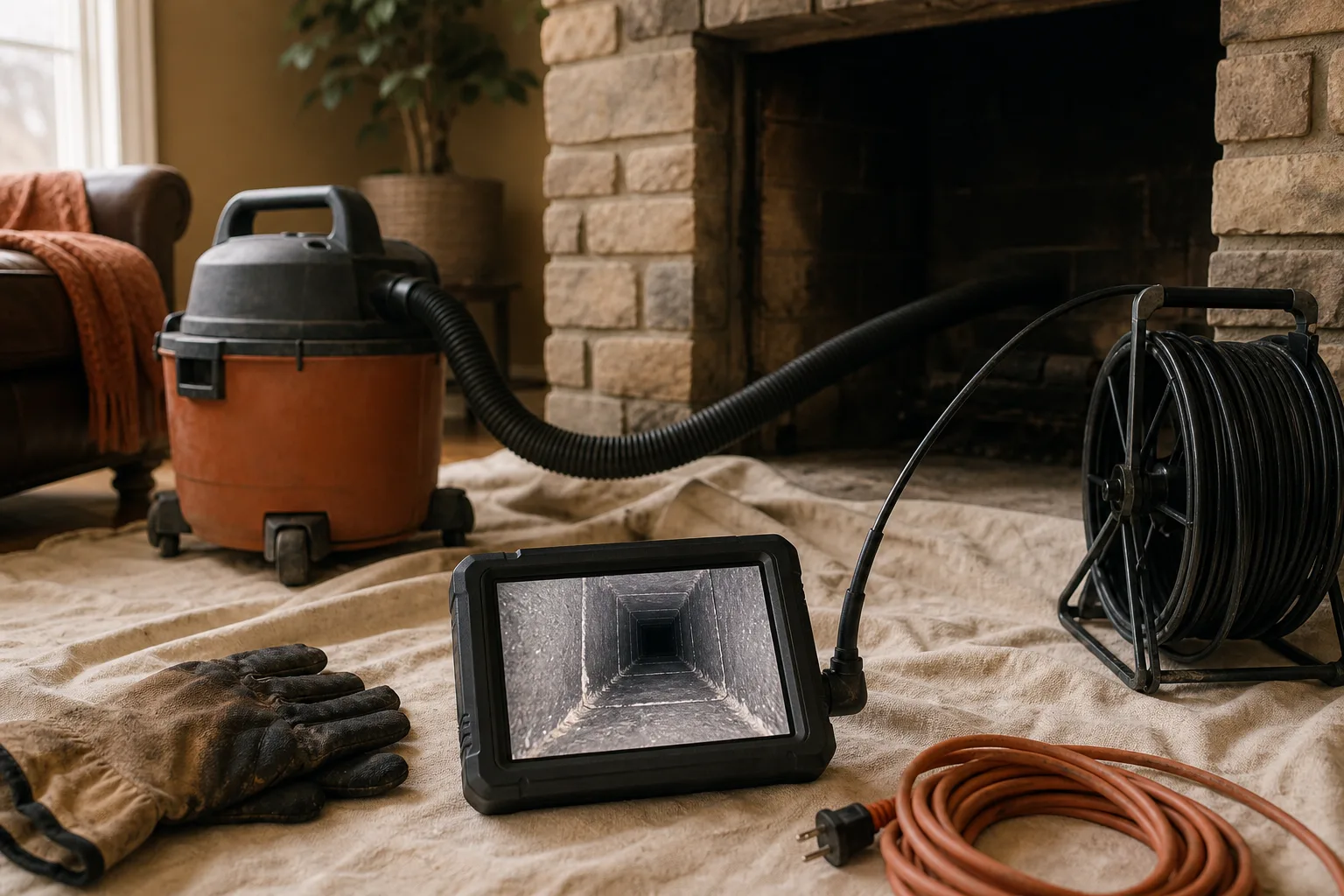
Everything in Level 1, plus a video camera scan that records the interior of the flue, plus inspection of accessible attics, crawl spaces, and basements where the chimney passes through.
The standard calls for a Level 2 on specific triggers: a property sale or transfer, a change of fuel type, a change or replacement of the appliance, any event where combustion happened inside the flue itself, an external event likely to have caused damage such as a storm or an impact, a malfunction of the system, and any time a Level 1 turns up something that needs a closer look.
That last trigger is the one everybody forgets. A Level 1 is allowed to end with "I need to see more."
Level 4 Does Not Exist, And Level 3 Is Rarer Than You Think
If somebody offers you a Level 4, you have learned something useful about that company.
Level 3 is real but uncommon. It happens when there is reason to suspect a concealed hazard the first two levels cannot evaluate, and it involves opening up structure, a chase wall or a section of masonry, limited to the specific area in question. It normally follows a Level 2 that found something it could not fully see.
| Level 1 | Level 2 | Level 3 | |
|---|---|---|---|
| When | Nothing changed, same use as always | Sale or transfer, fuel change, appliance change, chimney fire, storm or impact, malfunction, or a Level 1 that raised a concern | A concealed hazard is suspected that Levels 1 and 2 cannot evaluate |
| What's examined | Readily accessible chimney interior and exterior, accessible appliance and connection | All of Level 1, plus accessible attic, crawl space, basement | All of Levels 1 and 2, plus the concealed area in question |
| Camera in the flue | Not required | Required, and recorded | Required |
| Roof access | Not in scope | As needed for accessible portions | As needed |
| Opens up structure | No | No | Yes, limited to the area of concern |
| Typical trigger | The calendar | An event or a transaction | A finding from a Level 2 |
Not sure which level your situation calls for?
Read the table, found yourself in two rows at once, and now feel less certain than when you started? That happens a lot, and it is not a failure of reading comprehension. The triggers overlap.
Describe your situation to VIO once, in plain words, and we'll point you toward independent chimney companies in your area that handle chimney safety inspections and can tell you which level applies before anyone climbs a ladder. We don't do the inspection ourselves. We match you with the companies that do.
Call (513) 655-6702, or send the details through our request service page.
Myth vs. fact: Myth: the annual recommendation means your chimney needs cleaning every year. Fact: the yearly figure is about inspection, not sweeping. Looking and cleaning are two separate purchases. A flue that saw light use since the last sweeping may need nothing, and a homeowner who does not know the difference is easy to sell a cleaning to whether or not the flue called for one.
What A Level 1 Inspection Cannot See
Time to pay off the promise from the top of this page.
No Camera Required, No Roof Required
Read the Level 1 scope again: readily accessible portions. That phrase is doing a lot of work.
A camera scan of the flue interior is not part of Level 1. Neither is climbing onto the roof. Plenty of thorough companies do both anyway, and good ones often will, but the level as defined does not require it and the price you were quoted may not include it.
So picture a stack with sound-looking brick, a crown nobody can see well from the ground, and a hairline crack in a flue tile twenty feet up the shaft. A Level 1 chimney safety inspection, performed correctly and honestly by a certified professional, can miss it completely.
Nothing went wrong. The appointment simply was not designed to look there.
How A Clean Level 1 And A Cracked Flue Tile Live In The Same House
The liner is the part that matters most and the part that is hardest to see. A vertical tube, dark, often thirty feet tall, with the failures that count happening on its inside surface.
Glazed creosote is the clean example. It is shiny, highly flammable, and hard to remove, and it can form along stretches of flue wall that no flashlight pointed up the throat from the firebox is going to show you. A recorded camera pass covers the length of the flue. A visual pass from below covers what happens to be in view.
Cracked or shifted clay tile joints behave the same way. Sometimes the only ground-level clue is those terracotta flakes on the smoke shelf. Sometimes there is no clue at all.
Which brings us to the sentence worth carrying with you: "it passed a Level 1" and "your chimney is sound" are two different statements. The first describes a scope. The second is a conclusion, and a Level 1 does not have the reach to support it.
Pro tip: When you book, ask which level you are getting, and ask for the number in writing on the confirmation or the invoice. Not to be difficult. Because "inspection" by itself is not a specification, and if you later end up in a disagreement, an argument about what you were promised goes very differently when the level is written down.
None of this makes Level 1 worthless. For the person whose system has not changed and who wants eyes on it before the first fire, it is the right appointment.
The failure is not choosing Level 1. The failure is hearing "everything looked fine," filing it as a clean bill of health, and never noticing that your situation had a Level 2 trigger sitting in it the whole time.
Then the inspection ends and a second problem arrives, one almost nothing online prepares you for: making sense of what you were handed. We will get there.
How To Tell A Real Chimney Safety Inspection From A Sales Call
Most companies in this trade are honest. The trade also has a structural temptation baked into it: the person who tells you what is wrong is usually the person paid to fix it, and you cannot check the evidence yourself because it lives thirty feet up a dark tube.
You do not need technical knowledge to protect yourself here. You need to know what evidence should exist.
Ask To See The Footage
This is the single most useful thing on this page.
A Level 2 includes a camera scan that records the flue interior. The footage exists. You are allowed to ask to see it, and a company that did the work is usually glad to show you, because it turns their findings from debatable into obvious.
If you were quoted for a Level 2, paid a Level 2 price, and nobody can produce footage, that is worth asking about out loud before you approve the repair the footage was supposed to justify.
Inspection And Sweeping Are Two Separate Purchases
A sweeping cleans the flue. An inspection tells you the condition of the system. Companies often sell them together, which is convenient and frequently sensible, since sweeping first can make the inspection more accurate.
Bundling is fine. Substituting is not. "We cleaned it and everything looked good in there" is not an inspection, and it is certainly not the Level 2 your closing date needs.
What A Real Report Looks Like When It Lands
You should end up holding a document.
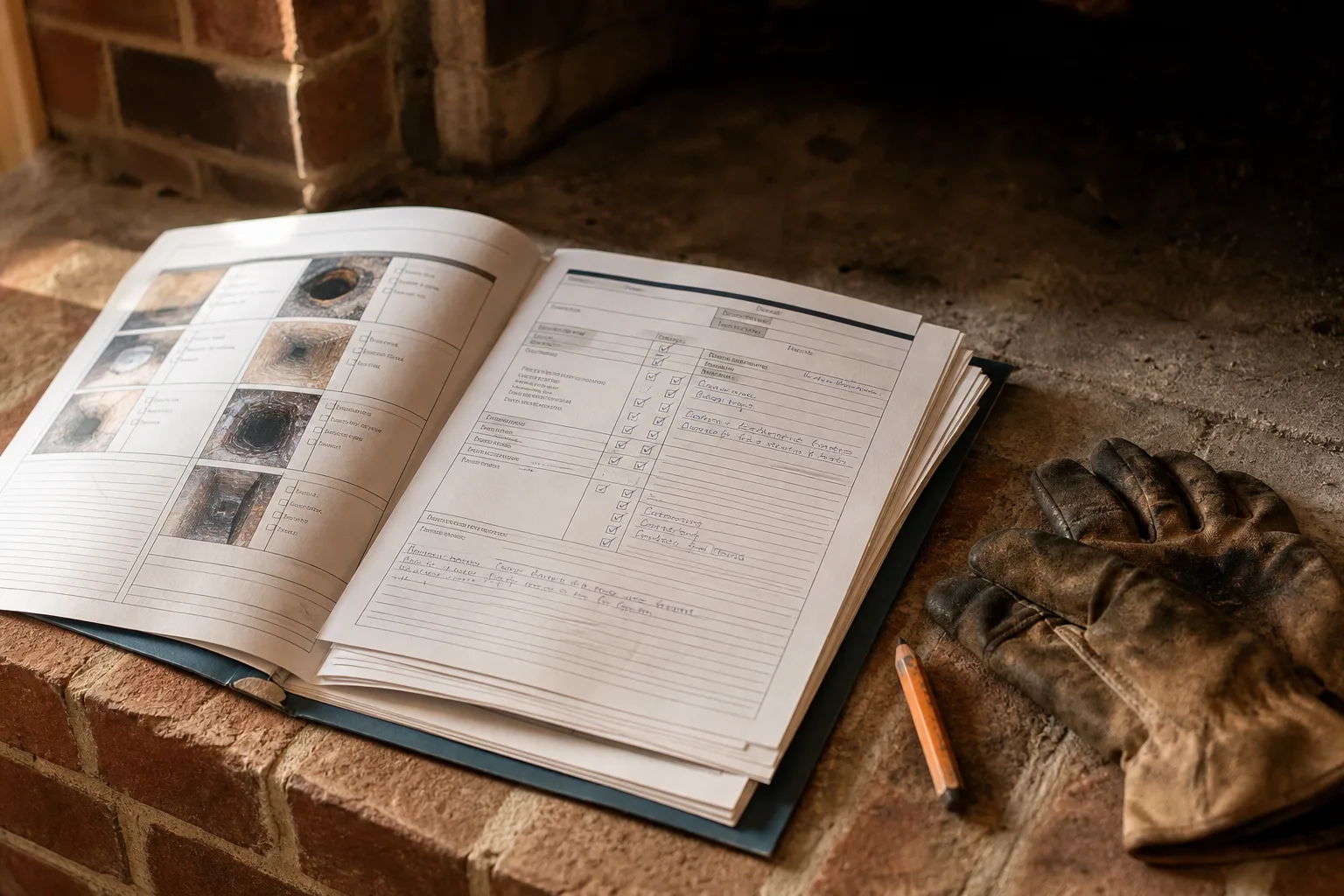
A real one names the level performed, lists findings by location rather than in general terms, includes photographs of the things it claims are wrong, and separates what is unsafe now from what should be addressed soon from what is merely worth watching.
A page that says "chimney needs repair, $X" is a quote wearing a report's clothes.
Good to know: You are allowed to get a second opinion on a chimney, the same way you would on a roof or a transmission. If a report identifies a serious defect and recommends significant work, hiring a different company to perform its own inspection is an ordinary thing to do, and a good contractor will not take offense.
Have these ready before you book the chimney safety inspection. Ask them on the phone, not on the roof.
- "Which level are you performing, 1, 2, or 3?" If the answer is a service name instead of a number, ask again.
- "Does that include a recorded camera scan of the flue interior?" For a Level 2 it has to.
- "Will you be getting on the roof?"
- "My situation is [selling the house / a CO alarm went off / I had a chimney fire / I'm converting to gas]. Does that change the level you'd recommend?" Say the trigger out loud. Fastest way to learn whether the person on the phone knows the standard.
- "Do I get a written report with photographs, and when?"
- "Are your sweeps CSIA certified?" The Chimney Safety Institute of America issues the Certified Chimney Sweep credential. It is a voluntary industry certification rather than a legal license, and licensing rules vary by state, so treat the answer as one signal among several.
- "Is sweeping included, separate, or recommended based on what you find?"
- "What does the inspection cost, and what would change that number?"
Reading The Findings: Stop, Fix, Or Watch
Here is the part no competitor bothered to write. The chimney safety inspection is finished, you are holding the report, and now what?
Sort every finding into one of three buckets. Your inspector should be doing this for you, and if the report does not make the distinction, ask them to say it plainly.
Stop Using It Until This Is Fixed
Anything that puts combustion gases or fire where they do not belong.
Evidence that a fire already happened inside the flue. Stage 3 glazed creosote in quantity. Cracks or open joints in the liner, or a flue with no liner at all, which is the finding that usually opens a conversation about relining the chimney. A blockage. Any finding the inspector connects to carbon monoxide entering the house.
If a report lands in this bucket, the fireplace or stove is out of service until the repair is done. Not "one more careful fire."
Fix It Before You Burn Again This Season
Damage that is not an immediate hazard but gets worse, usually because water is involved.
A cracked crown. Failed flashing. Spalling brick and washed-out mortar joints. A missing or damaged cap. A damper that will not seat. These are the findings where waiting a year costs real money, because water in masonry does not pause over the winter.
Watch It And Re-Check Next Year
Light efflorescence with no other symptom. Cosmetic wear. Early-stage anything the inspector explicitly calls minor.
Write it down, put it on the list for next year's chimney safety inspection, and go light your fire.
From the field: The smoke shelf is the most honest surface in the whole system. It collects whatever the flue is shedding, so a handful of terracotta flakes sitting back there tends to mean the liner above is coming apart, long before anything looks wrong from the driveway. It is also the first place a careless inspection skips, because reaching it means getting an arm and a light past the damper.
Safety note: A finding in the first bucket is not a negotiation. A homeowner with a 1920s brick stack who has been burning happily for a decade has a strong instinct to treat "stop using it" as an opinion. It is not. Liner failures and chimney fires are exactly the category where the warning arrives before the consequence, once.
How VIO Helps With A Chimney Safety Inspection
Plainly: VIO does not inspect chimneys. VIO is a referral network. Independent local chimney companies do the work, and we match you with them.
For this particular job, that arrangement is genuinely useful, because the hard part of buying a chimney safety inspection is not finding somebody who owns a ladder. The hard part is not being sold the wrong level.
So you describe the trigger once, in plain words, whether it is a closing date or an alarm or a stack nobody has examined since you moved in. You can do that on the phone or by telling us what is going on through our request service page. We point you toward companies in your area that handle this work and can tell you which level your situation calls for before anyone sets up on your roof.
One piece of advice about whoever you end up hiring: insist on having the estimate in writing before any work starts, and do not let anyone begin until you are holding it.
Before the first fire of the season
If you've read this far, you know more about chimney safety inspections than whoever is going to try to sell you one. Use it.
Tell VIO what happened, whether that's a closing date, an alarm that went off, or a fireplace nobody has looked at in years. We'll match you with independent local companies that do this work. Then insist on having the estimate in writing before any work starts, whoever you hire.
Call (513) 655-6702.
Symptom checker
What is your chimney doing?
Tap the closest match for an honest first answer.