


On this pageThe Fireplace Safety Tips That Actually Matter, Ranked by Risk7 sections+6
- The Fireplace Safety Tips That Actually Matter, Ranked by Risk
- The 10-Minute Check to Run Before Your First Fire
- Stop Right There: When Not to Light Another Fire
- Wood or Gas? The Fireplace Safety Tips Change With the Fuel
- What an Annual Chimney Inspection Actually Buys You
- Kids, Pets, and the Glass That Nobody Warns You About
- How VIO Helps You Put These Fireplace Safety Tips Into Practice
Quick answer
The fireplace safety tips that matter most are the ones ranked by risk. Keep working carbon monoxide alarms on every level of the house. Have the flue swept when creosote reaches one eighth of an inch. Keep three feet of clear space around the opening, cover it with a screen or glass doors, and store ashes in a lidded metal can outside on the ground. NFPA 211 calls for a chimney inspection every year.
The first properly cold Saturday of the season is when most people remember they own a fireplace. You open the damper, stack a couple of splits, and somewhere between the match and the first curl of smoke a thought arrives: is this thing actually safe? That is usually the moment people go looking for fireplace safety tips, and what they find is a wall of lists, sixteen items long, every item weighted the same.
That flatness is the problem. A dusty hearth and a flue packed with creosote are not the same kind of risk, and treating them as equals leaves you no way to decide what to do tonight.
So this guide ranks them. The four things that can actually hurt you, then a ten minute check you can run yourself, then the signs that mean you should not light another fire until someone with a camera has looked up your flue. One item below is the one people overlook most, and it can start a fire hours after the fireplace has gone cold.
The Fireplace Safety Tips That Actually Matter, Ranked by Risk
Most fireplace safety tips are housekeeping. These four are not. Each one has put homes on the evening news, and each one is preventable with something you can do this week.
Carbon monoxide, the one you cannot see
Carbon monoxide has no smell and no color, and a fireplace is a combustion appliance sitting in your living room. When the flue draws properly, the exhaust goes up and out. When it does not, because of a bird's nest, a collapsed liner, a closed damper, or a house pulled negative by a running range hood, some of that exhaust comes back into the room.
This is the risk that gets ignored because nothing looks wrong. The fire burns. The room is warm. Nobody knows anything is happening.
Safety note: Put a carbon monoxide alarm on every habitable level of the house and within 10 feet of every bedroom door. Do not mount one directly above or beside the fireplace or stove, since start up puffs will set off nuisance alarms and a nuisance alarm is an alarm people eventually disconnect. Follow the manufacturer's placement instructions and your local code. Test the alarms monthly and change batteries at least once a year.
Gas fireplace owners skip this most often, because a gas unit feels like an appliance rather than a fire. It is still combustion. It still vents. It still needs a working CO alarm in the house.
Creosote and the chimney fire it feeds
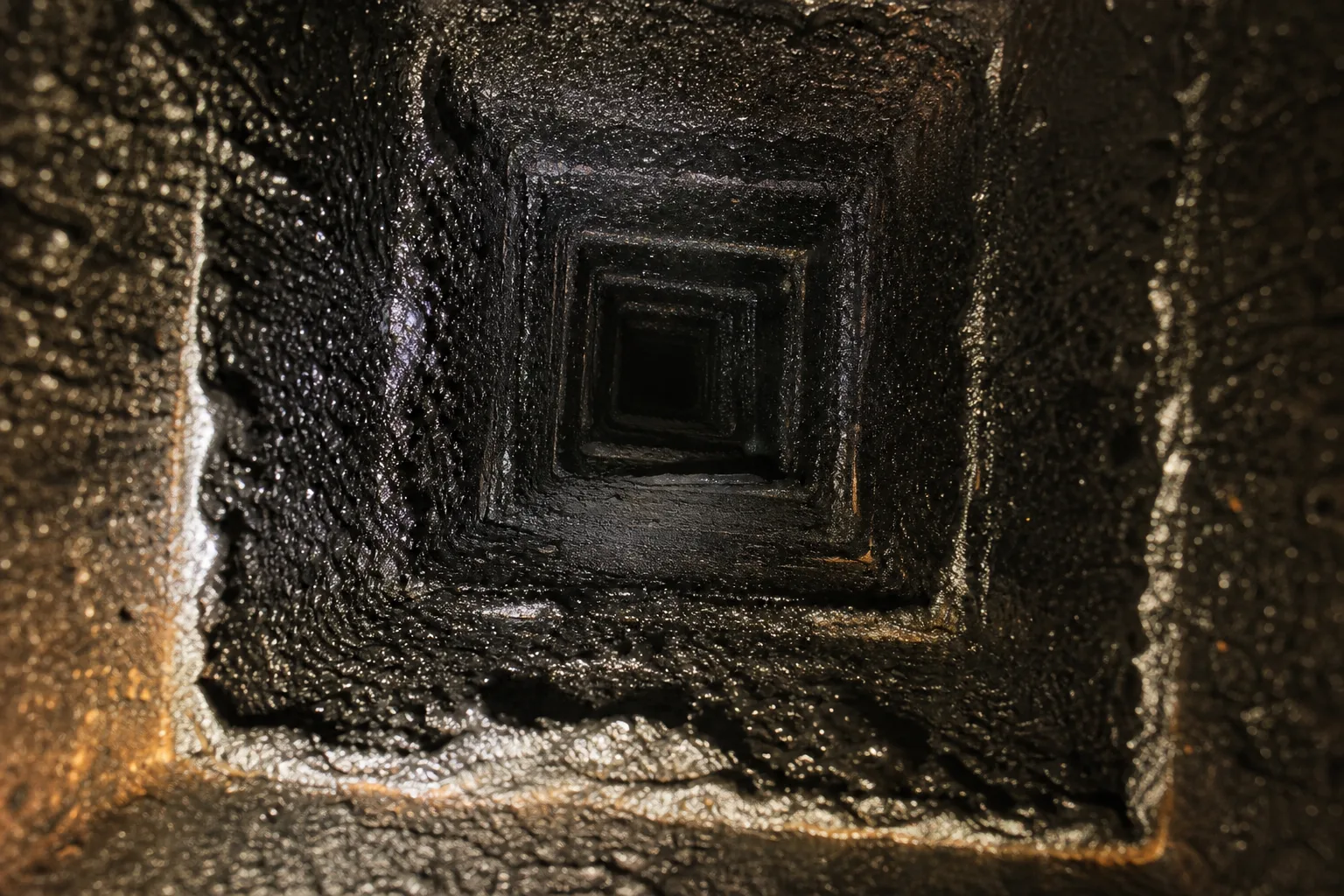
Creosote is what wood leaves behind when it does not burn completely. It rises with the smoke, cools on the flue wall, and deposits there as a brown or black film. Over a season it builds into flakes, then into a hard glossy black glaze that looks like poured licorice fused to the tile.
It is combustible. That is the entire point. You are building a layer of fuel inside the pipe that carries fire out of your house, and getting it out of there is what professional chimney cleaning services are actually for.
The National Fire Protection Association's analysis of home heating fires for 2006 through 2010 found that failure to clean, principally creosote from solid fuel equipment, was the leading contributing factor in home heating fires, at 26 percent of them. That same analysis estimated roughly 14,190 reported creosote fires a year, with about $35 million in direct property loss annually.
Two habits produce most of it: burning wood that is not dry, and running slow smoldering fires with the air choked down to make the wood last. Both drop the flue temperature, and cool smoke deposits more than hot smoke does.
Pro tip: The standard threshold in the trade is one eighth of an inch. When creosote reaches that depth anywhere in the flue, the flue needs cleaning, and if any of it has gone glazed and glassy, it needs attention sooner regardless of thickness.
Clearance, sparks, and rolling logs
Three feet. That is the number every fire service in the country agrees on, and it is the one people violate most casually.
Three feet of clear space between the fireplace opening and anything that can burn. The stack of magazines. The dog bed. The Christmas tree in December. The throw blanket somebody dropped on the hearth extension.
Then cover the opening. A sturdy metal screen or a set of glass doors is what stands between a popping knot of oak and your rug. Logs roll, too, and a screen catches one that a decorative tool set does not.
Ashes: the risk nobody ranks high enough
Here is the payoff to the loop at the top.
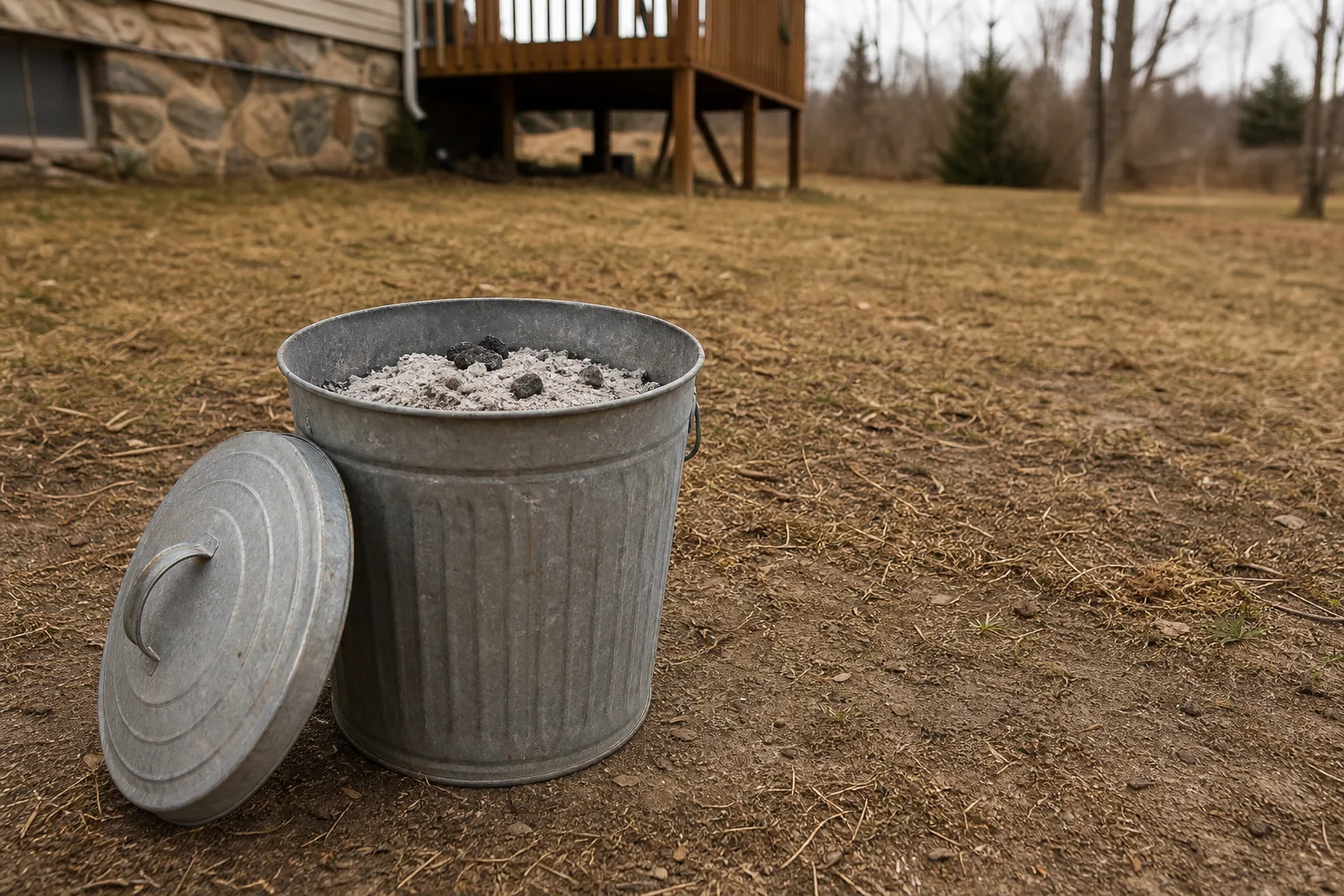
A bed of ashes that feels stone cold on the surface can hold live embers underneath for days. Not hours. Days. People scoop them out on Monday, put them in a paper grocery bag or a plastic bin or a cardboard box, set that on the back deck, and go to bed.
The deck is wood. The garage has a lawnmower in it. The bin was polypropylene.
This is how a fire starts long after the fireplace has gone cold, and it barely rates a bullet point on most fireplace safety tips pages.
Good to know: Shovel ashes into a metal container with a metal lid. Put the container outside, on the ground, well away from the house, the deck, the garage, the fence, and anything else combustible. Leave it there for several days before the ashes go anywhere near a trash can. No paper bags, no cardboard, no plastic, and never on a wood surface.
The 10-Minute Check to Run Before Your First Fire
You do not need a ladder or a certification for this. You need a flashlight and about ten minutes.
Be clear about what it can do. It surfaces reasons to stop. It cannot tell you the system is sound, because most of a chimney is not visible from your living room, which is why NFPA 211 calls for a Level 1 inspection every year no matter how the walk-through goes.
This is the part where fireplace safety tips stop being reading and start being a decision.
In the room
Start with the alarms. They are the cheapest thing to fix and the only ones that work while you sleep.
Press the test buttons on every smoke alarm and CO alarm in the house. Then look at the space in front of the fireplace with fresh eyes and clear the three foot zone properly, including whatever migrated there since spring.
Check that the screen or glass doors are intact, that the hinges work, and that nothing is warped enough to leave a gap at the bottom.
At the firebox and the damper
Get the flashlight and put your head near the opening.
Look at the firebox walls. Masonry fireboxes should have tight mortar joints and no missing chunks. Refractory panels crack in straight lines, and whether a given crack matters depends on its width, whether the pieces have shifted, and what the manufacturer says, so a cracked panel is something to have evaluated rather than something to judge yourself. Look for fresh black flakes on the firebox floor that were not there last time, because that is creosote falling out of the flue.
Now the damper. Work the handle through its full travel. It should move without a fight and it should stay where you put it.
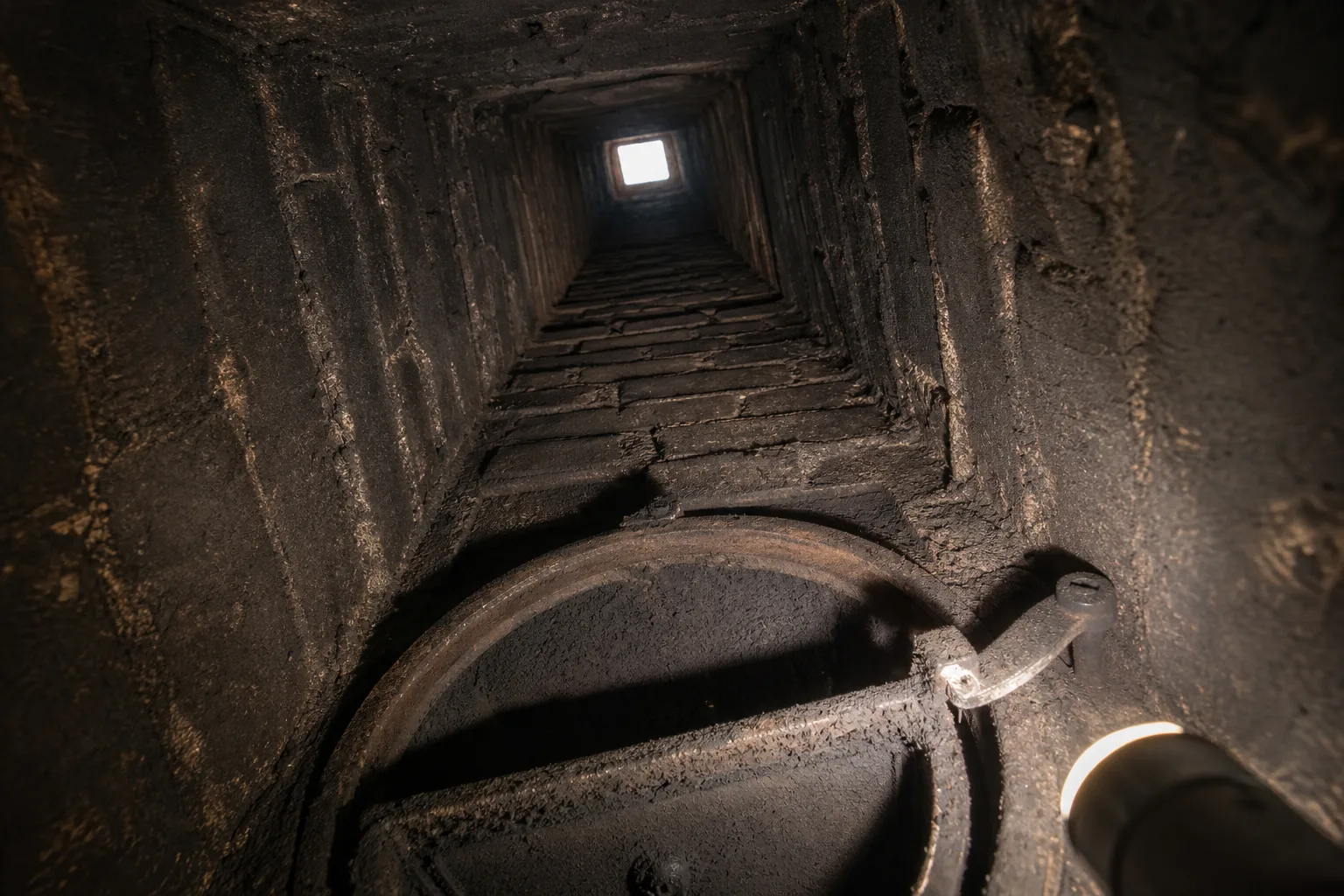
Pro tip: The thirty second damper check. Open the damper and shine the flashlight straight up the throat, looking for one thing: an opening that is clear, with no nest, no soot fall, nothing packed above the plate. Daylight at the top is a bonus, and its absence proves nothing, since offsets, liners and caps hide it in plenty of sound chimneys. Ignore air movement as a verdict either way, because a cold flue often runs a downdraft that says nothing about how it will draw with a fire in it. A handle that will not move, or anything blocking the throat, is where the check ends and the phone call starts.
While the flashlight is up there, look for a nest. Birds and squirrels build in chimneys all summer, and a nest is both a blockage and a pile of dry fuel sitting in the worst possible place.
From the ground outside
Walk out to the yard where you can see the top of the chimney. Binoculars help. A ladder is not necessary and not recommended.
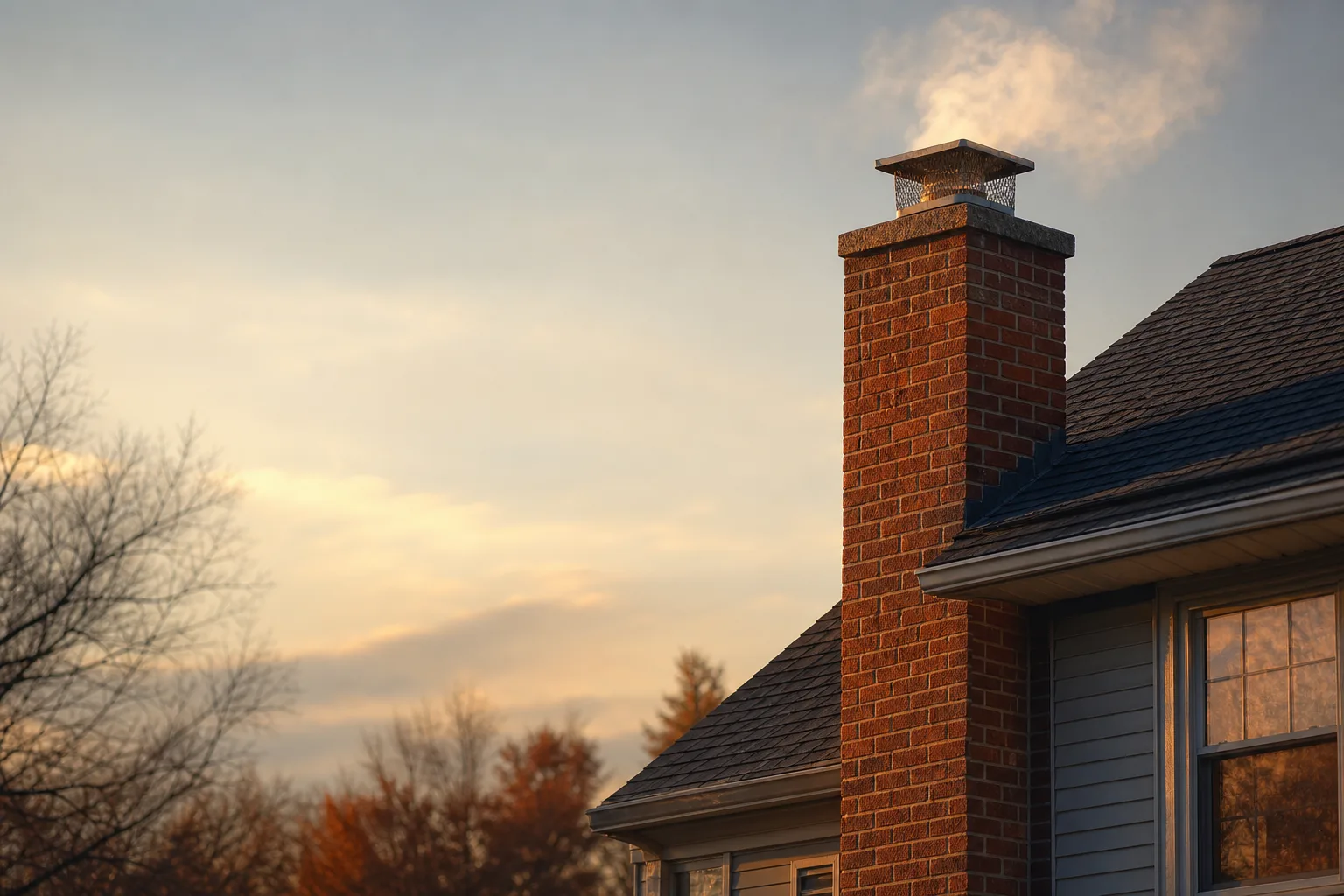
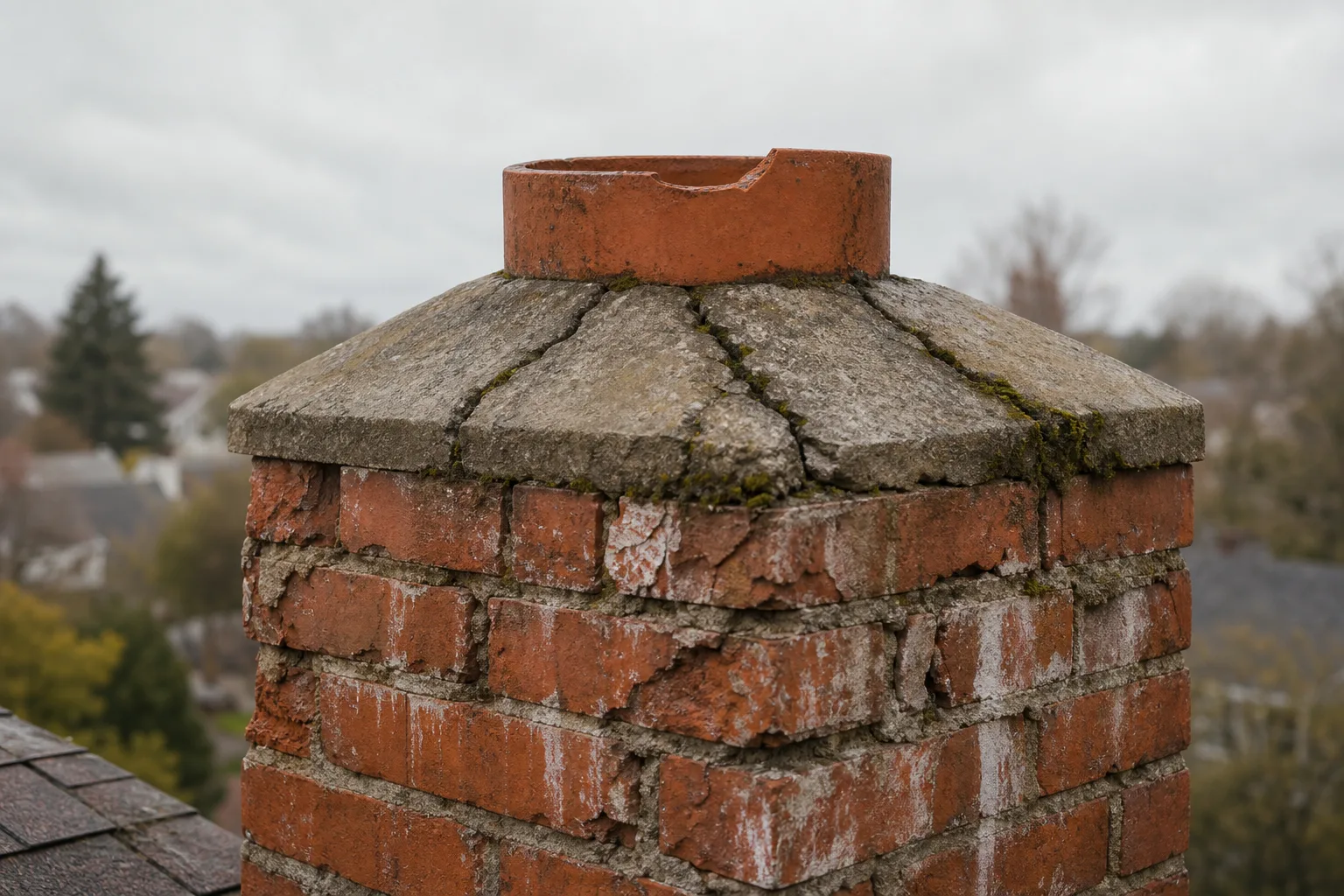
Look for a cap. A chimney cap with a spark arrestor screen is the metal lid with mesh sides that keeps rain, birds, and embers where they belong, and a surprising number of houses do not have one. Check the crown, the sloped concrete wash on top, for cracks. Check the brick for crumbling mortar joints, faces flaking off, and white chalky staining running down the stack, which means water is moving through masonry that should be shedding it.
Then look at where the chimney meets the roof, at the metal flashing sealing that joint. Rust, lifted edges, and a smear of roofing tar where flashing should be all say water has been getting in.
Here is the ten minute version, in order:
- Every smoke alarm and CO alarm tested this month
- Three feet of clear space in front of the fireplace, on all sides
- Screen or glass doors present, intact, and closing properly
- Firebox walls sound, no missing mortar, no cracked refractory panels
- No fresh black flakes on the firebox floor
- Damper moves through full travel and holds position
- Throat clear: no nest, no debris, no soot fall above the plate
- Chimney cap present and not rusted through
- Crown and masonry free of cracks, spalling, and white staining
- Flashing tight where the chimney meets the roof
- Only seasoned wood in the stack, nothing painted, treated, or plastic
- Metal ash can with a lid, standing outside on the ground
- Written record of the last inspection, with a date on it
Stop Right There: When Not to Light Another Fire
Everything above assumes the answer is yes. Sometimes it is no, and the most useful thing any list of fireplace safety tips can do is tell you where the line is.
Do not light another fire until a professional has inspected the system if any of this is true.
Smoke rolls back into the room instead of going up. Any smoke entering the room points to a drafting or venting problem worth having looked at, and smoke that keeps coming in once the fire is established is a stop sign.
You had a chimney fire, or think you might have. It can be dramatic, with a roar, dense smoke, and flames at the top. It can also be brief and quiet enough that nobody realizes it happened. Either way the flue can be damaged and unsafe afterward.
The damper will not open, or will not close, or the handle spins without doing anything.
You can see daylight through the side of the flue, or a flue tile that is cracked, shifted, or missing a piece.
There is a nest, a dead animal, or debris you can see and cannot reach.
Water is coming in. Ceiling stains near the chimney, a damp patch on the firebox wall, or the smell of wet ash after rain all mean the system is taking on water, and water destroys liners from the inside while turning a sound stack into brick chimney repair work.
A CO alarm sounded, at any point, for any duration. Get everyone out, call the fire department, and do not use the appliance until somebody has found the reason.
You bought the house and nobody has looked at the chimney since. There is a standard attached to that one, and it comes up shortly.
From the field: The tell that shows up before anything looks wrong is a smell. On a warm, humid day in the offseason, a fireplace with creosote in it will push a sharp, tarry, barbecue-gone-wrong odor into the room. People blame the trash, the dog, the neighbors. It is the flue telling you what is inside it.
Saw one of those signs in your own fireplace? Don't light another fire until someone has looked up the flue. Tell us what you noticed and we'll match you with a local chimney company that can inspect it. Call (513) 655-6702
Wood or Gas? The Fireplace Safety Tips Change With the Fuel
People search for fireplace safety tips and get handed advice written for somebody else's appliance. Much of what matters for a wood burning fireplace does not apply to a gas one, and gas has hazards of its own that wood does not.
Wood burning fireplaces and stoves
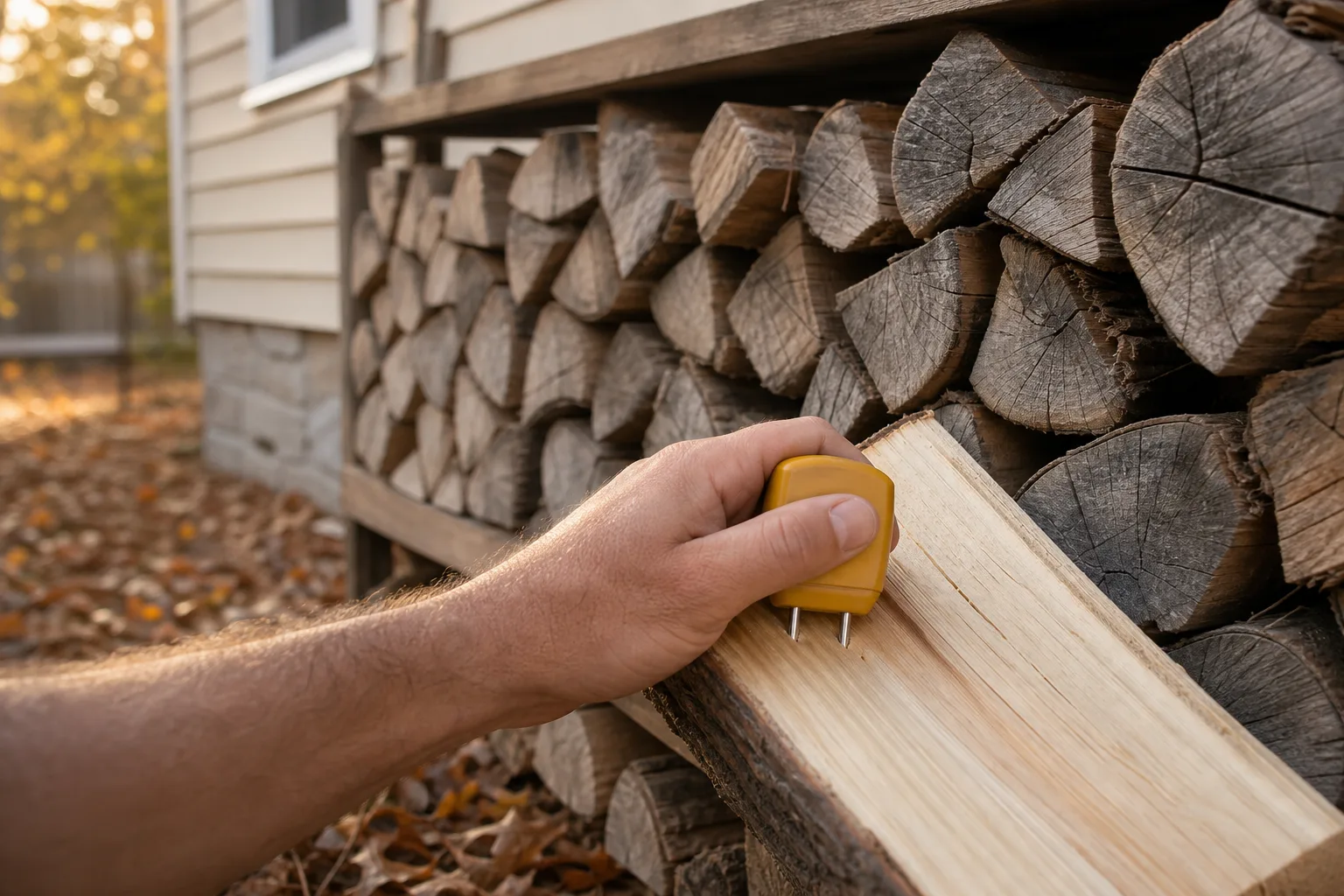
Fuel quality is the whole game. Burn properly seasoned firewood, meaning wood that has been split, stacked off the ground, covered on top and open on the sides, and left to dry for about a year, with moisture content under 20 percent. A moisture meter settles the argument in five seconds on a freshly split face.
Seasoned wood looks the part: gray, checked ends with cracks radiating from the center, light for its size, and it knocks with a hollow tone rather than a dull thud.
Green wood wastes much of its heat boiling off its own water, and sends cool wet smoke up a cold flue, which is exactly the condition creosote likes.
Build the fire small and hot rather than large and smoldering. And never burn trash, cardboard, gift wrap, painted or pressure treated lumber, plywood, driftwood, or the Christmas tree. They throw sparks, they deposit fast, and some release compounds nobody should breathe indoors.
Gas fireplaces and inserts
Gas takes creosote out of the conversation and puts two other things in.
The first is venting. A gas appliance still produces exhaust, and its vent still blocks, corrodes, and comes apart. A blocked or disconnected vent is a carbon monoxide problem with no visual warning at all.
The second is the glass, which gets far hotter than most owners realize. That one has its own section below.
Beyond that: know where the gas shutoff is and how to work it. If you smell gas, do not touch switches or the appliance, get everyone out, and call the gas utility from outside. A pilot that will not stay lit, a burner that soots black, or lazy yellow flames where they used to be blue all mean stop and have it looked at.
Myth vs. fact: "Gas fireplaces don't need to be inspected, there's nothing to sweep." The sweeping is not the point. The vent, the connections, the burner, the safety controls, and the gas supply all need eyes on them on a schedule, and gas appliances are a carbon monoxide source.
What an Annual Chimney Inspection Actually Buys You
"Have your chimney inspected annually" appears on every page about this topic, and almost none say what you are buying. It is not one product. NFPA 211, the standard CSIA certified sweeps base their services on, defines three levels.
Of all the fireplace safety tips here, this is the one that costs money, which is exactly why it is worth understanding.
| Level | What the sweep does | When it is required or recommended | What you learn |
|---|---|---|---|
| Level 1 | Visual check of readily accessible parts, verifying the structure is sound and the flue is clear of obstructions and deposits | The routine annual inspection, when use is unchanged | Whether it is safe to keep using as is |
| Level 2 | Level 1 plus a video scan of the flue interior and accessible attic, crawlspace, and basement runs | Sale or transfer, system change, malfunction, chimney fire, external event | The liner's internal condition, including cracks a flashlight cannot show |
| Level 3 | Opens concealed areas, which can mean removing portions of the chimney or structure | When Levels 1 or 2 find a hazard nobody can evaluate without getting behind something | Whether a hidden defect is real, and how far it goes |
Level 1: the annual baseline
This is what most homes get and need. Once a year, whether or not you burned much, because nests, water damage, and animal intrusion do not care how many fires you lit.
Level 2: required more often than people realize
This is the piece almost nobody publishes, and it is the one worth knowing.
Safety note: Under NFPA 211, a Level 2 inspection is required at the sale or transfer of a property, on any change to the system including a new appliance or a change of fuel, after a malfunction, after a chimney fire, and after an external event such as a building fire, storm, or earthquake. If you bought a house with a fireplace in the last year and that inspection never happened, that is the one to book.
The video scan is what makes it different. A liner can be cracked or separated at a joint in a way that looks perfectly fine from the firebox and perfectly fine from the roof, and shows up immediately on camera.
Level 3: when something is hiding
Nobody wants a Level 3, and no honest company recommends one casually, because it can mean opening a wall. It exists for the case where a Level 1 or 2 found something that cannot be evaluated any other way, usually after a chimney fire or serious water damage.
If a company opens with a Level 3 before anyone has run a camera up the flue, get a second opinion.
Kids, Pets, and the Glass That Nobody Warns You About
Most fireplace safety tips assume the reader is the only person in the room. Add a two year old and the whole calculation changes, because the hazard is no longer the fire. It is the surface.
The pre-2015 gas fireplace problem
The glass front of a gas fireplace can reach 500 degrees Fahrenheit, and has been measured higher. A child's hand on that glass is a serious burn in about a second, faster than any adult in the room can react.
The industry knew this, and the rule changed.
Good to know: Since January 1, 2015, newly manufactured glass fronted gas fireplaces, inserts and stoves that vent outside must ship with an installed protective barrier screen where the glass surface exceeds 172 degrees Fahrenheit, and that barrier has to be in place when the unit is installed. If your gas fireplace was built before 2015, it very likely has no barrier at all. Aftermarket barrier screens exist for exactly this reason.
The other half is timing. The glass stays hot long after the flames are off, through the stretch when the adults have relaxed and stopped watching.
Fireplace safety tips when there is a toddler in the house
Put a physical barrier between the child and the appliance. A hearth gate that stands off from the fireplace works better than anything that attaches to it, because it also keeps a falling toddler off the stone edge of the hearth.
Teach the three foot rule as a family rule rather than a fireplace rule, so it holds for the wood stove, the space heater, and the grill.
Move the fireplace tools. A cast iron poker within toddler reach is a hazard whether or not there is a fire.
Keep the same distance in mind for dogs and cats, who will lie against a warm stove until they are burned.
How VIO Helps You Put These Fireplace Safety Tips Into Practice
VIO CHIMNEY is a referral service. We do not sweep chimneys and we do not employ sweeps. What we do is connect homeowners with independent local chimney companies, which matters here for a specific reason: most people who read a page of fireplace safety tips end up knowing exactly what is wrong and having no idea who to call about it.
Tell us what you saw. Smoke coming back into the room, a damper that will not move, a missing cap, a house you bought last spring with a fireplace nobody has looked at. We match you with a company in your area that performs Level 1 and Level 2 inspections, and we tell you what to ask for so you are not guessing on the phone.
We ask every company in the network to put its estimate in writing before any work starts, and you should insist on exactly that. Ask which level of inspection is being performed, whether a camera is going up the flue, and for the findings in writing with photographs. A company that does chimney work properly will have no problem with any of it.
Then do the part that is yours. Run the ten minute check tonight, request service before the cold really lands, and put the ash can outside on the ground where it belongs.
Book the inspection before the first fire. One call and we point you to an independent chimney company near you that handles Level 1 and Level 2 inspections. Ask for the estimate in writing before any work starts. Call (513) 655-6702
Symptom checker
What is your chimney doing?
Tap the closest match for an honest first answer.