



On this pageWhat a stainless steel chimney liner is, and why yours came up8 sections+7
- What a stainless steel chimney liner is, and why yours came up
- 304, 316Ti, or 321: matching the alloy to your fuel
- Flexible or rigid, and who actually decides
- Insulation: the line item that gets cut to win the bid
- Sizing: the diameter comes from the appliance, not from the old flue
- What a Complete Stainless Steel Chimney Liner Installation Includes
- How to read your quote before you sign
- How VIO helps when your chimney needs a new liner
Quick answer
A stainless steel chimney liner is a metal flue that runs the full height of a chimney and carries combustion gases from the appliance to the outside. Three specifications decide the job: the alloy (304 for most wood and dry gas, 316Ti or 321 where flue gases are more corrosive or hotter), whether the liner is insulated, and the diameter, which comes from the appliance manufacturer's instructions rather than from the size of the old flue.
The inspection report is on the kitchen table, and somewhere in it is a sentence about the clay tiles being cracked, or shifted, or simply gone. Underneath that sentence is a number. Then you call a second company, their number is nothing like the first one, and now you are wondering whether you are being protected or being worked. If that is roughly where you are, a stainless steel chimney liner is the fix that was recommended to you, and this page is about what you are actually buying.
Here is the short version. Three specifications decide this job: the alloy, whether the liner is insulated, and the diameter. Not the brand. Not the salesperson. Not the total at the bottom of the page. Those three lines are chosen by your appliance and your chimney, and by the end of this you will know which of the three the cheap quote gets wrong most often.
What a stainless steel chimney liner is, and why yours came up
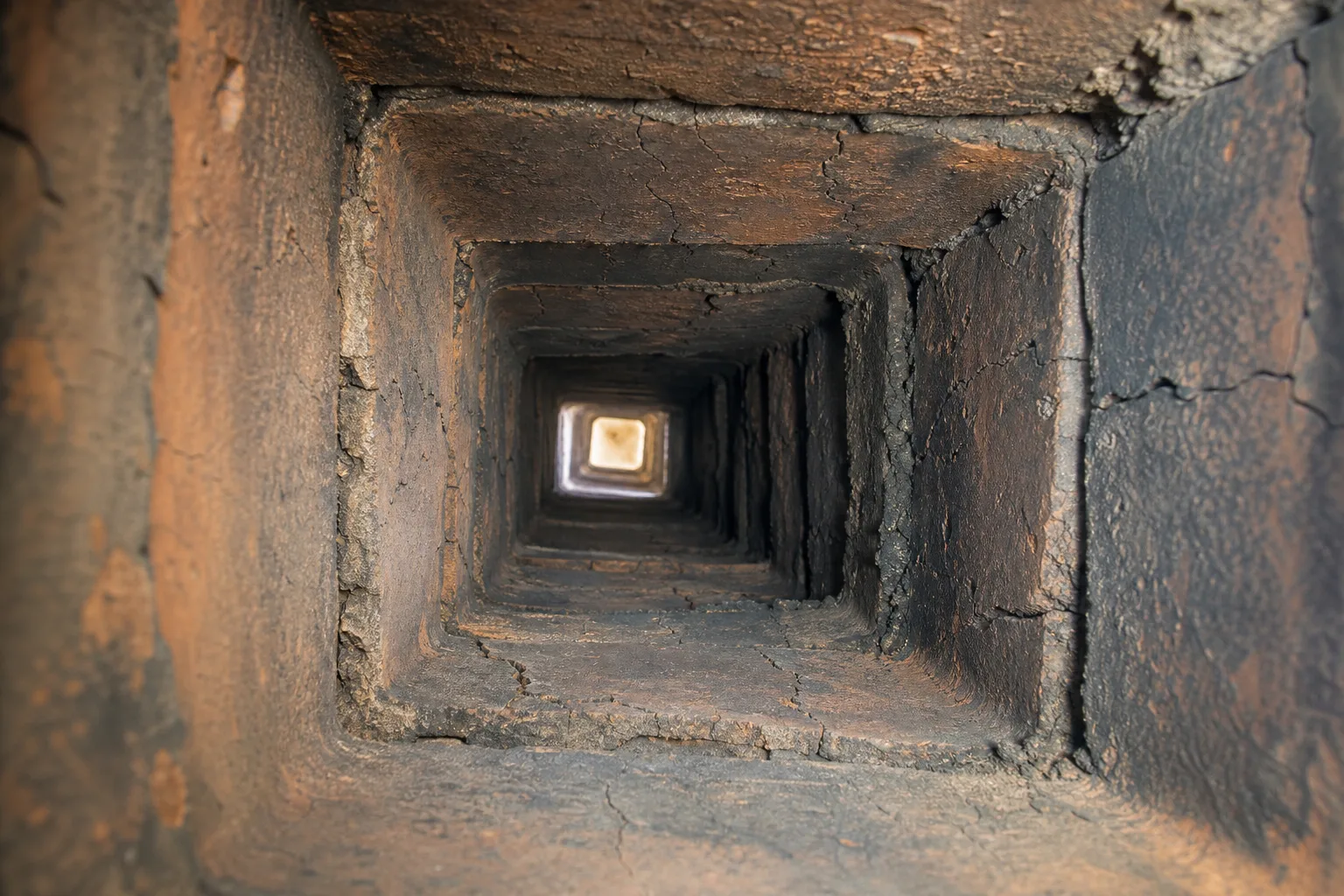
A liner is the flue inside the flue. It is a continuous stainless tube running from the appliance at the bottom to the top of the chimney, sealed at both ends, so everything the fire produces travels inside metal instead of touching brick and mortar on the way out. In an older masonry chimney the original liner was clay tile, laid in sections with mortar joints. Clay is good at its job right up until it is not, and when it fails it fails at the joints and the corners.
The three jobs a liner does
It contains the combustion gases, which is the safety half of the argument. A crack in a tile liner is a path for carbon monoxide and for heat to reach framing that sits closer to the chimney than most homeowners realize.
It protects the masonry from the inside, because flue gas from gas and oil appliances carries acidic moisture and that moisture is patient. It works on mortar joints from behind, which is how a chimney can look sound from the street while the inside of it comes apart.
And it sizes the flue to the appliance. This is the one people miss. A modern stove or insert is engineered to vent through a specific opening, and the cavernous flue that once served an open fireplace is usually far too big for it.
Good to know: A liner is specified for the appliance, not only to protect the brick. Two different jobs performed by one part, and a liner that does the first perfectly can still be wrong for the second if nobody checked the appliance instructions.
Why your chimney got flagged
Five situations put most homeowners on this page. Cracked, spalled, or displaced clay tile found during an inspection. A chimney never lined at all, common in older housing stock and legal when it was built. Damage after a chimney fire, which can crack tile the whole height of the stack in one night. A change of appliance or fuel, where the new equipment needs a flue it was designed for. And an oversized flue, where a wood insert has been dropped into a fireplace opening and vented into a chimney built for something several times its output.
That last one is the least obvious and it generates the most complaints afterward. Too much flue area means the exhaust slows and cools on the way up. Cool exhaust condenses. Condensate on the inside of a wood flue is creosote, and creosote is fuel sitting in the one place you least want fuel.
NFPA 211 is the national standard for chimneys, fireplaces, vents, and solid fuel-burning appliances. It is a standard rather than a code in its own right, and it carries regulatory force only where the local jurisdiction has adopted it, so what your building department enforces is the thing to confirm. It calls for a Level 2 inspection at specific moments: when a property is sold or transferred, when the system is changed (a different fuel, a different appliance, or a change to the shape or material of the flue), after a malfunction or a chimney fire, and after an external event likely to have caused damage. A Level 2 includes a video scan of the flue interior. If relining has been recommended without one of those triggers and without anyone showing you the inside of your own chimney, that is a fair thing to ask about.
304, 316Ti, or 321: matching the alloy to your fuel
Quotes name an alloy, usually in small type, and homeowners skip past it. Do not. That number is the difference between a liner that shrugs off what your fire produces and one that gets eaten from the inside.
| Alloy | Typically specified for | Why | Watch out for |
|---|---|---|---|
| 304 | Wood-burning appliances and many dry, well-drafting gas installations | Handles the high temperatures of a solid fuel fire well, at less cost than the stabilized grades | Less resistant to the acidic condensate gas and oil produce, so it is the wrong choice where the flue runs wet |
| 316Ti | Atmospheric gas and oil appliances, and many wood applications; the general-purpose upgrade | The molybdenum in 316 is the main reason it resists acidic condensate better than 304 does. The titanium addition mainly reduces sensitization and intergranular corrosion at welds and elevated temperatures | Nothing about the alloy rescues a liner that is the wrong diameter or run without insulation |
| 321 | Solid fuel where sustained high heat is expected | Stabilized for high-temperature service and resistance to sensitization | High-temperature capability is not the same thing as resistance to corrosive condensate. For coal or any unusual fuel, compatibility has to come from the appliance instructions and the liner's own listing |
Myth vs. fact: "Stainless is stainless." Not here. The grades differ mainly in how they handle acidic condensate and sustained heat, which is exactly why a serious quote names one instead of writing "stainless."
Wood and other solid fuel
Wood fires run hot and produce creosote rather than the wet acidic exhaust gas appliances make. 304 is commonly specified for wood, and 316Ti is a common upgrade where the chimney is cold, exterior, or prone to condensation. The real risk in a wood system is usually not the alloy. It is deposits, which means the alloy conversation should never crowd out the sweeping conversation.
Gas and oil
Here the alloy earns its keep. Gas and oil appliances send cooler, wetter exhaust up the flue than a wood fire does, and that condensate is acidic. Oil adds sulfur to it. For atmospheric gas and oil appliances vented into a masonry chimney, a corrosion-resistant grade such as 316Ti is the usual specification.
High-efficiency condensing appliances are a different situation, and it is worth being clear about it. They commonly require a dedicated listed venting system named by the appliance manufacturer, frequently a positive-pressure system, and frequently not a masonry chimney at all. Swapping in a conventional stainless liner because the alloy sounds right is not the same as venting the appliance the way its manufacturer specified. If a liner has been quoted for a condensing appliance, ask to see the venting section of the appliance manual before anything is ordered.
Pellet, coal, and the high-heat cases
Pellet appliances often use their own listed venting rather than a general-purpose liner, so the appliance instructions govern. Coal produces an aggressive exhaust and typically calls for a stabilized grade. The manufacturer's instructions and the liner's listing are the authority, not the contractor's habit.
The alloy determines what the metal can survive. It says nothing about whether the metal can reach the top of your chimney in one undamaged piece.
Flexible or rigid, and who actually decides
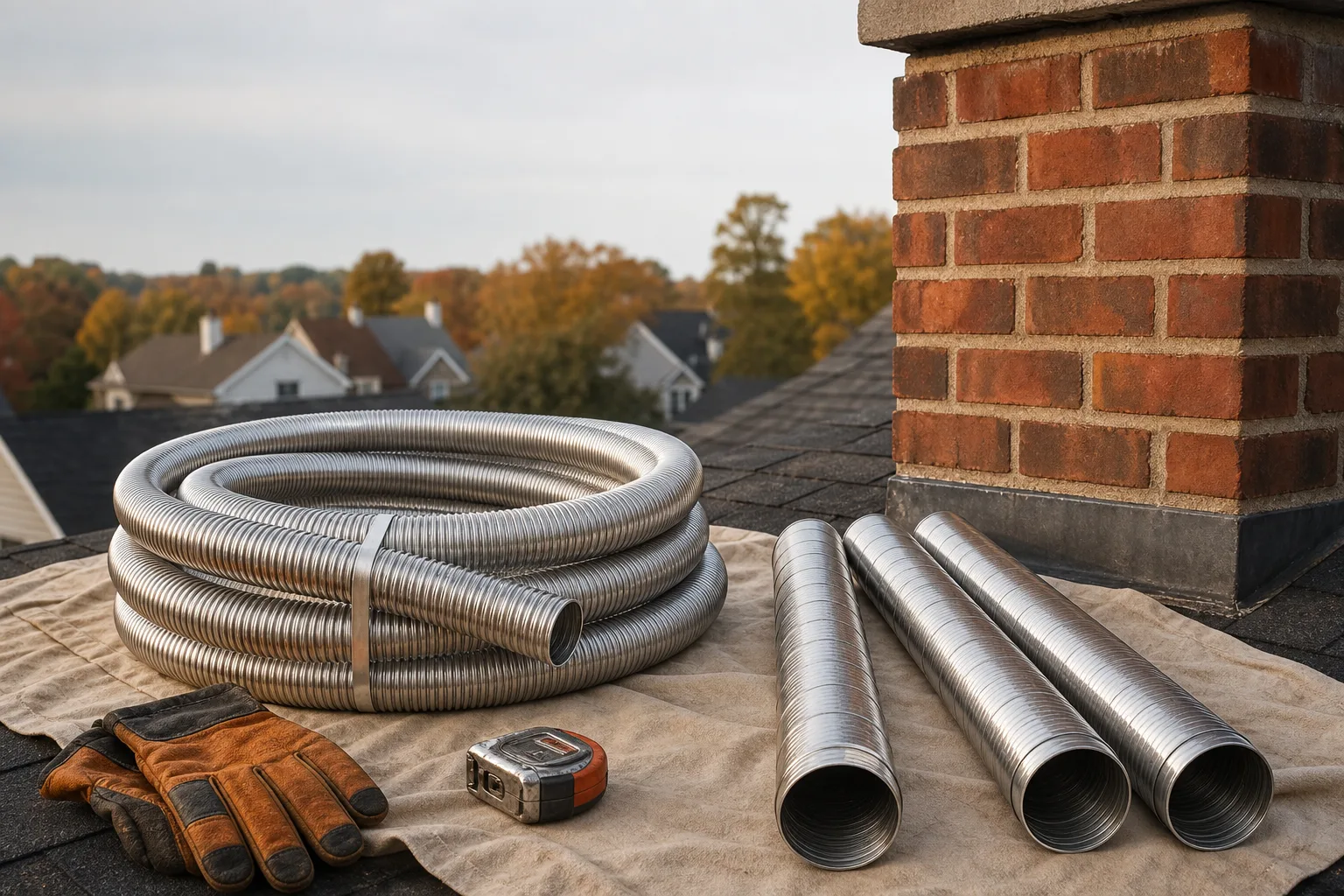
Rigid liner comes in straight sections that join together. Flexible liner is corrugated, ships in a coil, and bends. Both are stainless, both can be listed to the same standard, and the choice between them is made by the shape of the chimney rather than by preference.
When flexible is the right call
Most masonry chimneys are not straight. They lean around framing, they offset at a floor, they change size where an old fireplace was closed off. Flexible liner goes through that geometry, which is why most retrofit jobs use it. The corrugations that let it bend also create more friction than a smooth wall, one of the inputs a good installer accounts for when sizing.
When rigid wins
A straight, unobstructed flue with room to spare is the case for rigid. The smooth interior flows better and collects less, and the assembled tube resists getting deformed. If your chimney is a clean vertical shot from smoke chamber to crown, ask about it.
The offset problem nobody photographs
Here is the part that never appears in a brochure. Getting a liner past a tight offset is the hard part of the day. A liner forced through a bend can be crushed or badly ovalized, and an ovalized liner has less effective cross-sectional area than the round one you paid for. The draft calculation the size was based on quietly stops being true.
You cannot see any of this from the driveway. Ask two questions before work starts: how do you plan to get past the offset, and will I see video of the finished liner?
From the field: On chimneys with a real offset, the method for getting the liner through the bend is worth asking about directly. A liner squeezed through instead of guided through can lose effective area, and nothing about that shows up in a photograph of the finished cap.
Right alloy, right form, and it can still underperform. That brings us to the line item that gets cut.
Insulation: the line item that gets cut to win the bid
Two quotes land in your inbox. One is noticeably lower. Very often the difference is insulation, and it is not listed as a subtraction anywhere. It is simply absent.
Insulation does one plain thing: it keeps flue gases hot on the way up. A bare stainless tube hanging in a cold masonry chimney, especially one built up an outside wall, bleeds heat into all that cold brick, and the exhaust arrives at the top cooler than it should.
Blanket wrap or pour-down mix
Blanket wrap is a ceramic fiber sleeve fitted around the liner before it goes down, held with foil tape and mesh. Known, even thickness, the method most listings are tested with, and it adds diameter, which is why the chimney gets measured before anyone orders parts.
Pour-down insulation is a lightweight mix poured into the space between the liner and the masonry after the liner is in. It fills irregular voids a wrap cannot follow. Messier, needs the liner held centered while it cures, and it is not reversible.
Neither is the correct answer in the abstract. The liner's listing tells you which insulation systems it was tested with, and the installation follows that listing rather than a preference.
Who decides whether insulation can be left out
Not the bidder, and not the homeowner. Whether a liner can go in bare is decided by the liner's listing and by the clearances to combustibles required for the chimney it is going into. If compliant clearances cannot be verified, the answer may be insulation, or removal of the old tile, or another installation method the liner is listed for. A tight annular space is a reason to solve the problem a different way. It is never a reason to call the problem solved.
Where the listing and the clearances are satisfied, the remaining question is performance, and there the cold exterior chimney is the case that matters. Cooler flue gas condenses and deposits faster. My honest opinion, stated once: leaving a wood-burning liner bare in a cold exterior chimney is a decision the homeowner should get to make on purpose, after somebody explains the tradeoff, not one made for them by a line quietly missing from a bid. If your quote does not mention insulation at all, ask what that omission is based on.
Safety note: An uninsulated liner in a cold exterior chimney runs cooler flue gas, and cooler flue gas condenses and deposits faster. Insulation can also be part of how a liner achieves its listed clearance to combustibles, particularly in chimneys with cracked or missing tile. Follow the liner's listing and the appliance manufacturer's instructions rather than any rule of thumb, including this paragraph.
Holding a quote you are not sure about? Have four things handy: what you burn, which appliance the liner is for, whether the chimney runs up an outside wall, and what the last inspection said. One call, and VIO matches you with an independent local chimney company that can look at the same chimney and tell you what it would specify. We ask every company in the network to put its estimate in writing before any work starts, and you should insist on exactly that. Call (513) 655-6702.
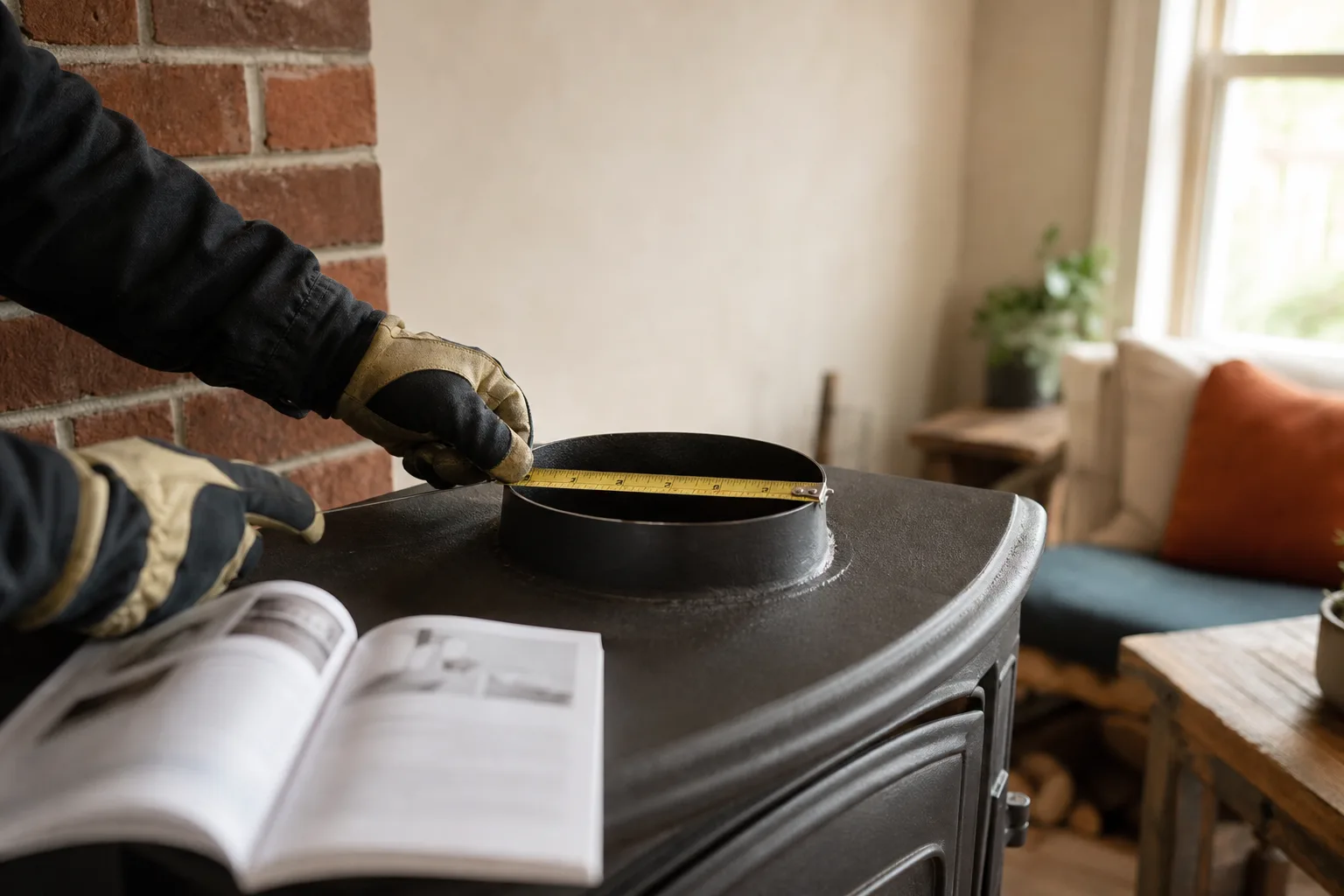
Sizing: the diameter comes from the appliance, not from the old flue
If you remember one technical thing from this page, make it this one. The diameter of your new liner is determined by what it is venting. Not by the size of the clay flue it replaces, and not by what happens to be on the truck.
Why oversized is a problem, not a bonus
There is an instinct that a bigger flue must vent better, the way a wider pipe drains faster. Combustion venting does not work like plumbing. A flue works because hot gas is buoyant, and buoyancy depends on the gas staying hot. Put a modest volume of exhaust into an oversized passage and it slows, cools against the walls, and loses the push that was moving it. Sluggish draft, smoke rolling into the room on a cold start, faster deposit buildup.
Undersized fails more immediately: the appliance cannot vent what it makes. Neither error is the safe side to land on, which is why the number gets calculated rather than estimated.
Where the required size is actually written down
The appliance data plate and the installation manual. That is it. The manufacturer states the flue collar size and the venting requirements, and the liner follows from that, adjusted for chimney height and liner type. Any competent contractor asks what appliance you have before quoting a diameter.
Pro tip: Photograph the appliance data plate and the venting page of the installation manual before you call anyone. Two pictures on your phone, and every conversation afterward gets more specific and harder to hand-wave.
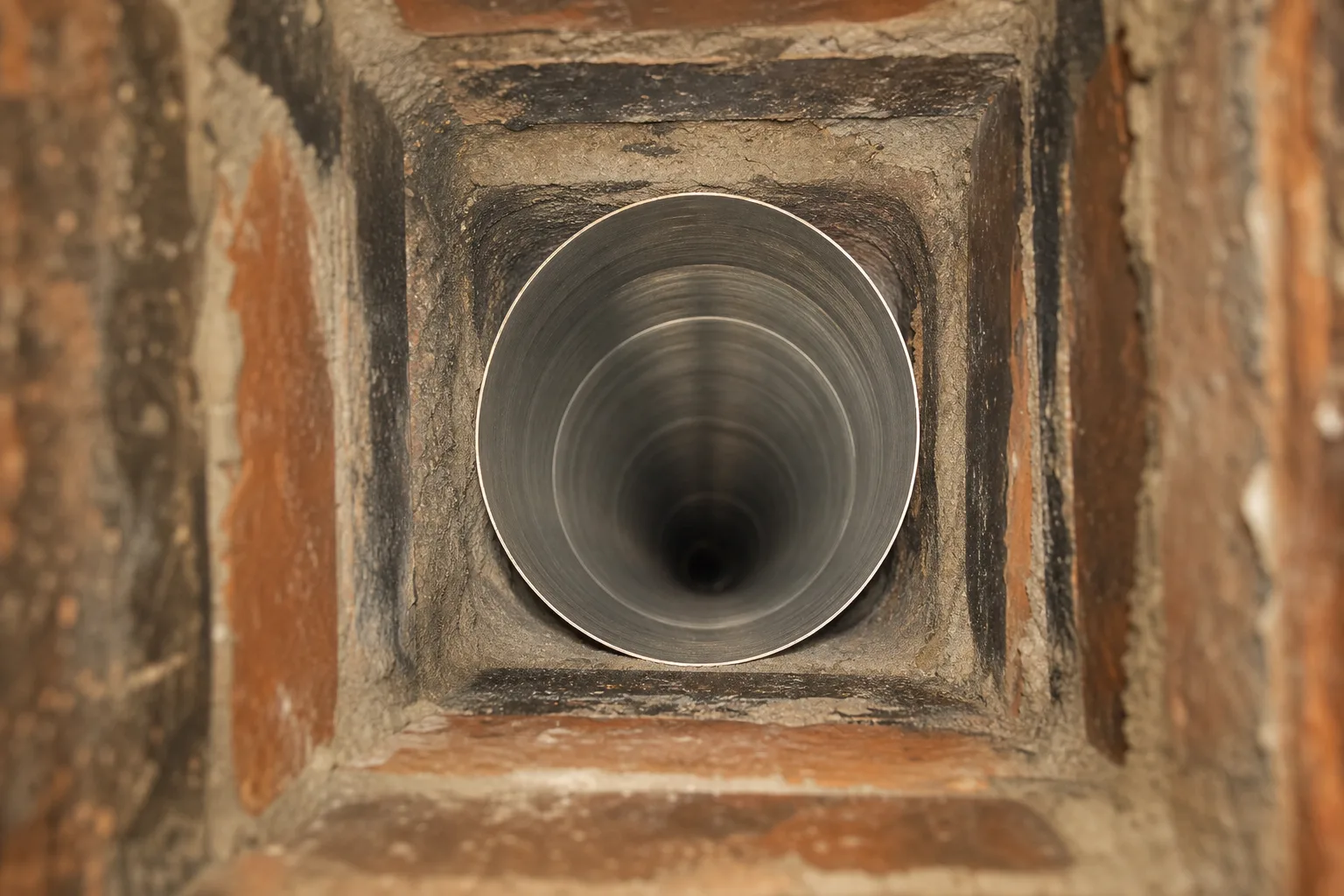
What a Complete Stainless Steel Chimney Liner Installation Includes
A liner is a system, not a tube. That is the most useful reframing for anyone comparing bids: two quotes usually differ by parts rather than by greed, because one list has more items on it.
Before anything goes down the chimney
An internal inspection, ideally with a camera. A sweep, because a liner should not be installed over heavy deposits. Measurement of the flue at its tightest point, which decides both the liner size and whether wrap insulation will fit. And a decision about the old clay tile: sometimes it stays, sometimes tiles get broken out to make room, and that is real labor that belongs on the estimate rather than appearing later as a surprise.
The drop
The liner is lowered from the top, usually with insulation already fitted, and guided past any offsets. On a straightforward chimney this is uneventful. On a difficult one it is the whole job. It should end up continuous from the appliance connection to the top, with no joints improvised on site that the listing does not cover.
The two ends
At the crown, a top plate supports the liner and seals the masonry so rain does not run down the annular space, a storm collar sheds water at the penetration, and a rain cap keeps snow and animals out. At the bottom the liner connects to the appliance per its instructions, with the right connector or tee, and where an insert or stove sits in a fireplace opening a block-off plate closes the space above it so heated room air does not disappear up the chase. Ordinary parts, inexpensive relative to the job, and exactly what goes missing from a stripped-down quote.
From the field: The block-off plate is the part most likely to be missing from a thin quote, and one of the few omissions a homeowner actually notices afterward, in the form of a room that never quite holds its warmth.
Is this a DIY job?
Sometimes, and usually it is a poor trade. What the kit does not contain is the video inspection, the measurement at the tightest point, the judgment about clearing an offset without deforming the liner, and the roof work. Many warranties are also conditioned on professional installation per the listing.
How to read your quote before you sign
I promised you would learn which of the three specs the cheap quote gets wrong most often. It is insulation, and it is not close. Alloy appears because the supplier prints it on the invoice, and diameter appears because the installer had to order something. Insulation is the one that can silently not exist.
The spec lines to check
- The alloy is named (304, 316Ti, 321) and matches the fuel you actually burn
- The liner is listed to UL 1777, and the listing is named on the estimate
- Insulation is specified, including the method, or its absence is explained to you in writing
- The diameter is stated, and stated as coming from the appliance instructions
- Top plate, storm collar, and rain cap are included as line items
- The appliance connector or tee is included
- A block-off plate is included where an insert or stove sits in a fireplace opening
- Removal or breakout of existing clay tile is addressed, either way
- A pre-installation inspection of the flue is included, not assumed
- Permit and final inspection are addressed if your jurisdiction requires them
- The warranty's conditions are written down, not described verbally
- The whole estimate is in writing before any work starts
The questions to ask before you sign
How did you arrive at that diameter, and which appliance document did it come from? Is this chimney interior or exterior, and what does that mean for insulation here? How will you get past the offset? Will I get video of the finished liner? Who pulls the permit? And the one that sorts people quickly: what is on this estimate that a cheaper bid would leave off?
What "lifetime warranty" actually depends on
Nearly every stainless liner is advertised with a lifetime warranty, and homeowners hear the word and stop listening. The conditions are the part that matters. Coverage is typically tied to installation in accordance with the product's listing, use with the fuel and appliance type the liner was listed for, annual inspection and cleaning, and no unapproved modifications. It often follows the original owner and the original installation rather than the address.
None of that is a trick. It is a normal set of conditions on a normal product. It does mean the warranty is only as good as the paperwork behind it.
Pro tip: Ask for the liner's listing and the warranty's conditions in the same document as the estimate. A company that installs to the listing has that paperwork ready and hands it over without a pause.

How VIO helps when your chimney needs a new liner
VIO is a referral network. You describe the chimney, the appliance, and what the last inspection said, and VIO matches you with an independent local chimney company that does this work in your area. Those companies are independent businesses. VIO does not employ or dispatch the professional who arrives at your house, and being straight about that is part of how this works.
Your difficulty here is not a shortage of contractors. It is that you have one number, or two that do not match, and no way to tell whether they describe the same job. A second read from a company that did not write the first estimate is the fastest way to find out whether the alloy, the insulation, and the diameter on your quote fit your house or fit somebody's inventory.
We ask every company in the network to put its estimate in writing before any work starts, and you should insist on exactly that, from whoever you hire. Take the checklist above into that conversation. If a professional from an independent local chimney company you connect with prices your chimney differently than the first bid, the checklist tells you where the difference lives.
Ready to get a second read on it? Tell VIO what you have, and we will match you with an independent local chimney company that installs liners in your area. You will be talking to the business that would do the work, not to a call center reading a script, and you can put the checklist above to use on the spot. Call (513) 655-6702.
Symptom checker
What is your chimney doing?
Tap the closest match for an honest first answer.