



On this pageChimney Pipe vs. Stove Pipe: The Two Halves of One System8 sections+7
- Chimney Pipe vs. Stove Pipe: The Two Halves of One System
- The Five Kinds, and Which One Is Yours
- Read Your Own Setup in Five Minutes
- Diameter, Height, and the Rules That Decide Them
- Clearance to Combustibles: The Number That Changes Everything
- When Chimney Pipe Is Failing (and How You Know)
- Installing It: What a Homeowner Can Do, and Where to Stop
- How VIO Helps
Quick answer
Chimney pipe is the listed, insulated pipe that carries exhaust from a stove or fireplace through your building and out above the roof. The black connector inside the room, usually called stove pipe, is a separate product and cannot pass through walls or ceilings. Your appliance collar sets the diameter, and clearance to combustibles decides whether you need single wall, double wall, or Class A.
Picture a homeowner in a basement with a phone flashlight, staring up at a length of chimney pipe, trying to work out whether the black section near the stove and the shiny section going into the ceiling are the same thing. They are not. That confusion is the reason most people end up here, and it is the reason the shopping pages are so unhelpful: they are built to sell you a part, not to tell you which part your house already has.
So here is the promise. By the end of this you will be able to walk over to your own setup and name what you are looking at, know what diameter you need, know what it has to clear, and read the label on the side of the pipe. Plus the two things the retail pages cannot give you: an honest read on when your pipe is failing, and the rule about mixing brands that nobody selling parts will volunteer.
Chimney Pipe vs. Stove Pipe: The Two Halves of One System
Almost every venting system for a solid fuel appliance is made of two different products that most people call by the same name. Getting this apart in your head fixes about half the confusion in one move.
The connector, from the appliance to the wall or ceiling
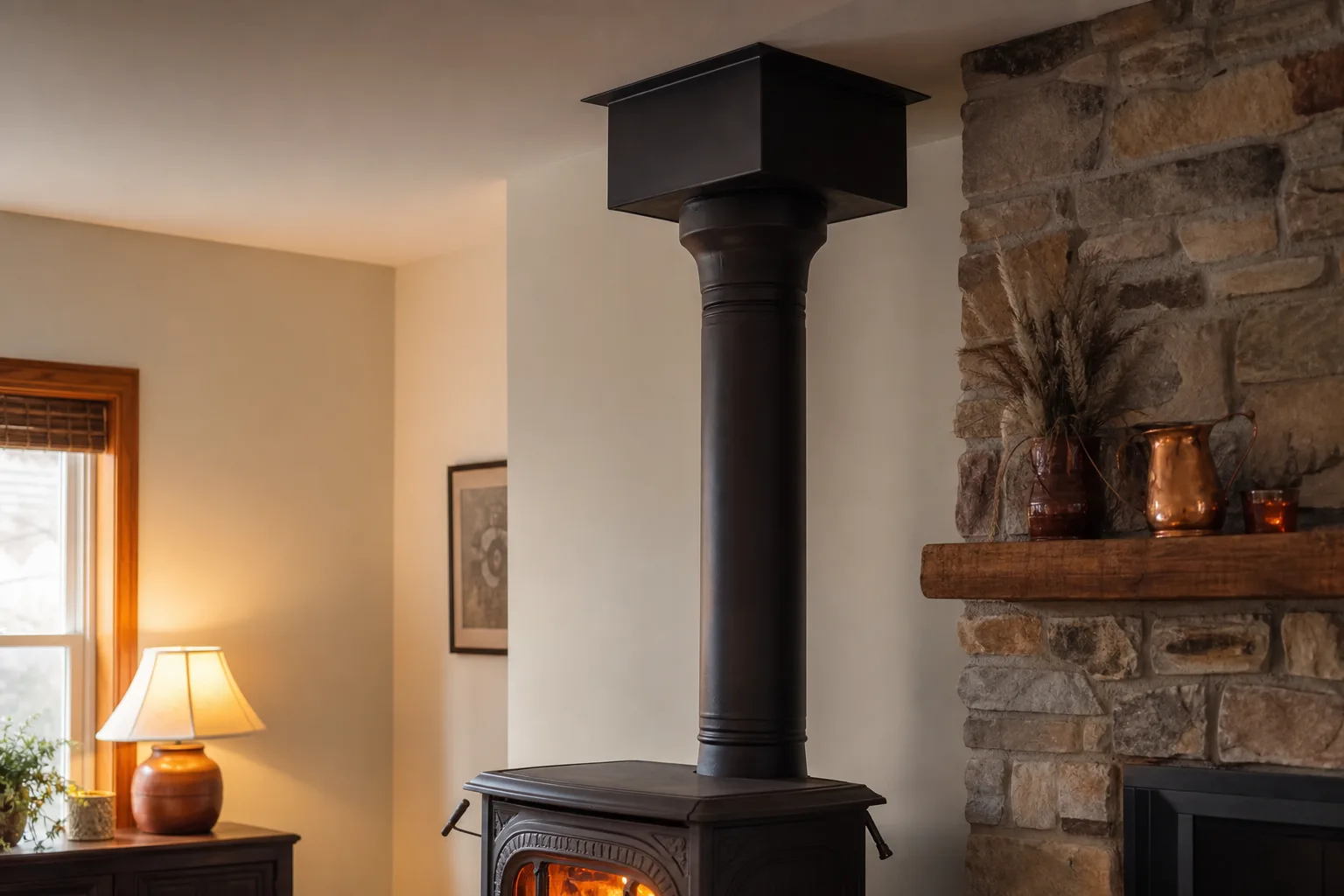
The pipe that leaves the top or back of your stove and travels through the room is a connector. Most people call it stove pipe. It lives inside the heated space, it is meant to be seen, and it is usually black painted steel because it is furniture as much as it is plumbing.
A connector is not chimney. It may never pass through a floor, a ceiling, an attic, or any other concealed space. A wall pass-through is the single exception, and only with an approved pass-through system built the way NFPA 211 prescribes. Otherwise the connector stops at the boundary and listed chimney takes over.
The chimney, from there to the sky
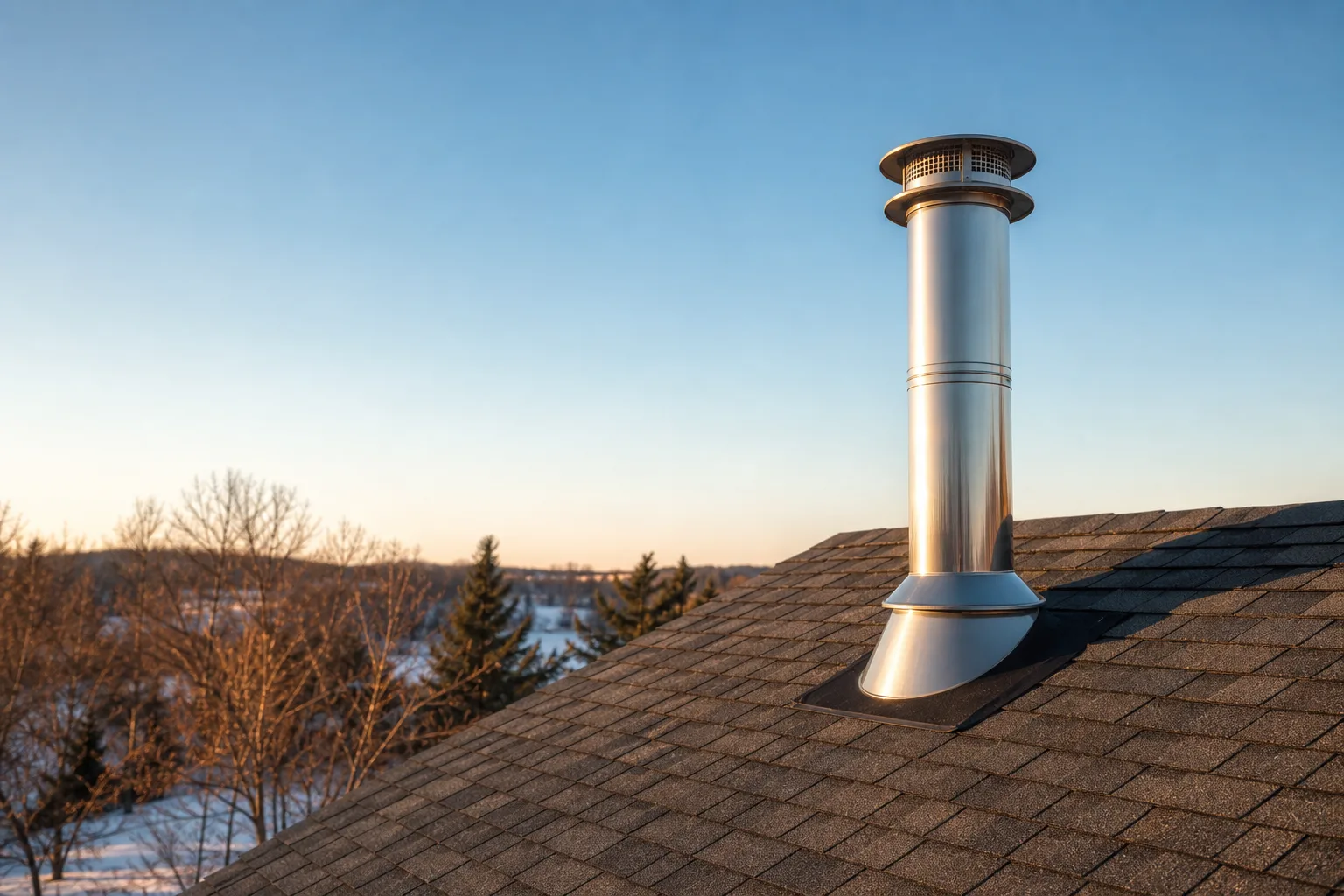
The moment the exhaust needs to leave the room, the product changes. Factory-built chimney, what everyone calls Class A pipe, is an insulated assembly with a stainless liner inside a stainless or galvanized outer wall. It is listed to a high-temperature chimney standard (UL 103 HT is the one printed on it) and tested against the kind of temperature spike a chimney fire produces. That listing is why it may run through a ceiling, an attic, and a roof with only a couple of inches of air around it.
Where the liner fits, and why it is a third thing
A liner is neither of those. It is a flexible or rigid stainless tube that goes down inside an existing masonry chimney, usually because the clay tiles are cracked, or the flue is oversized for a new appliance, or an insert needs a properly sized path to the top. Liners carry their own listing (UL 1777 is the relining one). If your house has a brick stack and you are shopping for pipe, there is a good chance what you need is chimney liner installation rather than a factory chimney.
Good to know: the "flue" is not the pipe. The flue is the passage the smoke travels through, the empty space in the middle. A single chimney can contain two flues. Pros use the words separately, and it is worth copying them, because "my flue is cracked" and "my pipe is rusted" send a technician to two different aisles.
The Five Kinds, and Which One Is Yours
Once you know there are two halves, the product categories stop looking arbitrary.
Class A insulated chimney pipe
Double or triple wall, insulation packed between the layers, stainless inner liner. This is what goes through your building, and it is the most expensive part per foot by a wide margin. Sections lock together with a twist or a band, and the run needs its own support and termination hardware.
Single wall stove pipe
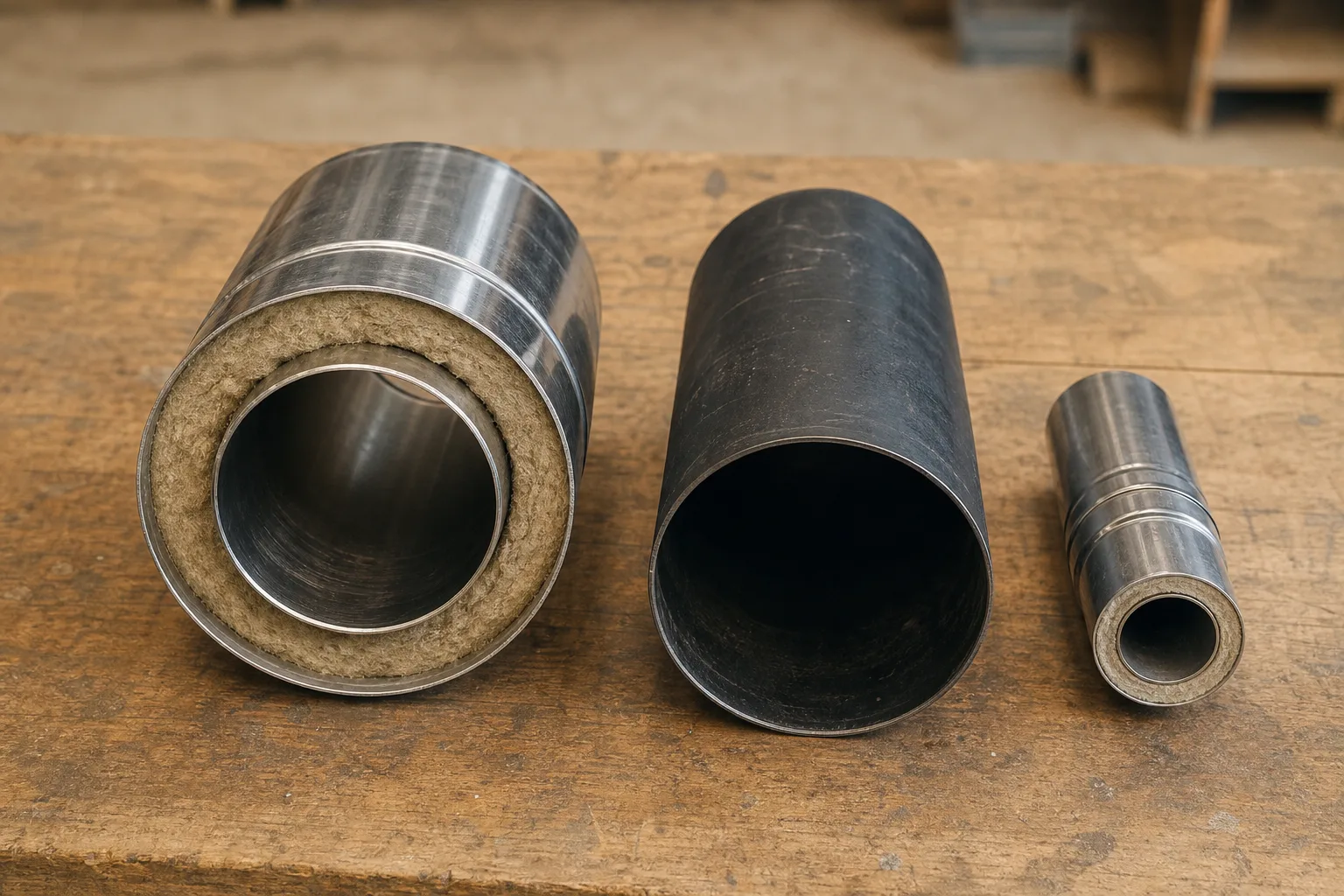
One layer of black steel, typically 24 gauge or heavier for a residential appliance. Cheap, easy to cut, radiates a lot of heat into the room (which some people want), and demands the most clearance of anything in the catalog. You can see the seam, and there is nothing behind it.
Double wall stove pipe
Still a connector, still stays in the room, but built as a pipe inside a pipe with an air gap. It keeps flue gases hotter, which improves draft and slows creosote formation, and its listing allows the PIPE to run closer to combustibles than single-wall can. One careful distinction: that reduced clearance belongs to the connector, not the stove. The appliance's own wall clearance comes from its own listing and does not shrink because the pipe changed. Look into the end of a section: two distinct walls with a visible gap. If you are weighing this choice for a specific appliance, the trade-offs are laid out further in our guide to wood stove pipe.
Pellet vent
Smaller diameter, usually three or four inches, sealed at every joint because a pellet stove uses a fan and the system runs under slight positive pressure. It is not interchangeable with wood pipe in either direction, and on a pellet stove installation the appliance manual governs.
B-vent and direct vent
Both are gas products and neither belongs anywhere near a wood fire. B-vent serves natural draft gas appliances with a draft hood and vents vertically. Direct vent is a sealed coaxial system that pulls combustion air in through the outer pipe and pushes exhaust out through the inner one, which is why those units can go on an exterior wall with no chimney at all. Putting wood smoke through either is a fire, not a shortcut.
| Type | Where it runs | Fuels | Clearance behavior | How you recognize it |
|---|---|---|---|---|
| Class A chimney pipe | Through ceilings, attics, roofs, and outdoors | Wood, coal, oil, most solid fuels | Very small air space, set by its own listing | Thick wall, stainless or galvanized outside, locking joints, printed listing label |
| Single wall stove pipe | Inside the room only | Wood, coal | The largest clearance requirement in the system | Thin black steel, visible seam, nothing behind it |
| Double wall stove pipe | Inside the room only | Wood, coal | Substantially less than single wall, per its listing | Two walls with an air gap when you look into the end |
| Pellet vent | Room and through the structure, per its listing | Pellets, corn | Small, sealed system | Three or four inch diameter, gasketed joints |
| B-vent / direct vent | Per the gas appliance's instructions | Gas only | Per listing, never for wood | Thin galvanized (B-vent) or concentric two-in-one pipe (direct vent) |
Myth vs. fact: the myth is that double wall is simply the better version of single wall, so buy it if you can afford it. The fact is that they do different jobs. Double wall buys you reduced clearance and a hotter, cleaner flue. Single wall dumps more heat into the room, which in a small cabin with plenty of space around the stove is a feature, not a defect. Choose on your clearances and your draft, not on price tier.
Read Your Own Setup in Five Minutes
This is the part I promised. Go stand at the appliance with your phone. You are looking for four things.
Read the collar. The round outlet on the top or back of the stove has a diameter, stamped on it or listed in the manual. That number is your connector size. Not a suggestion.
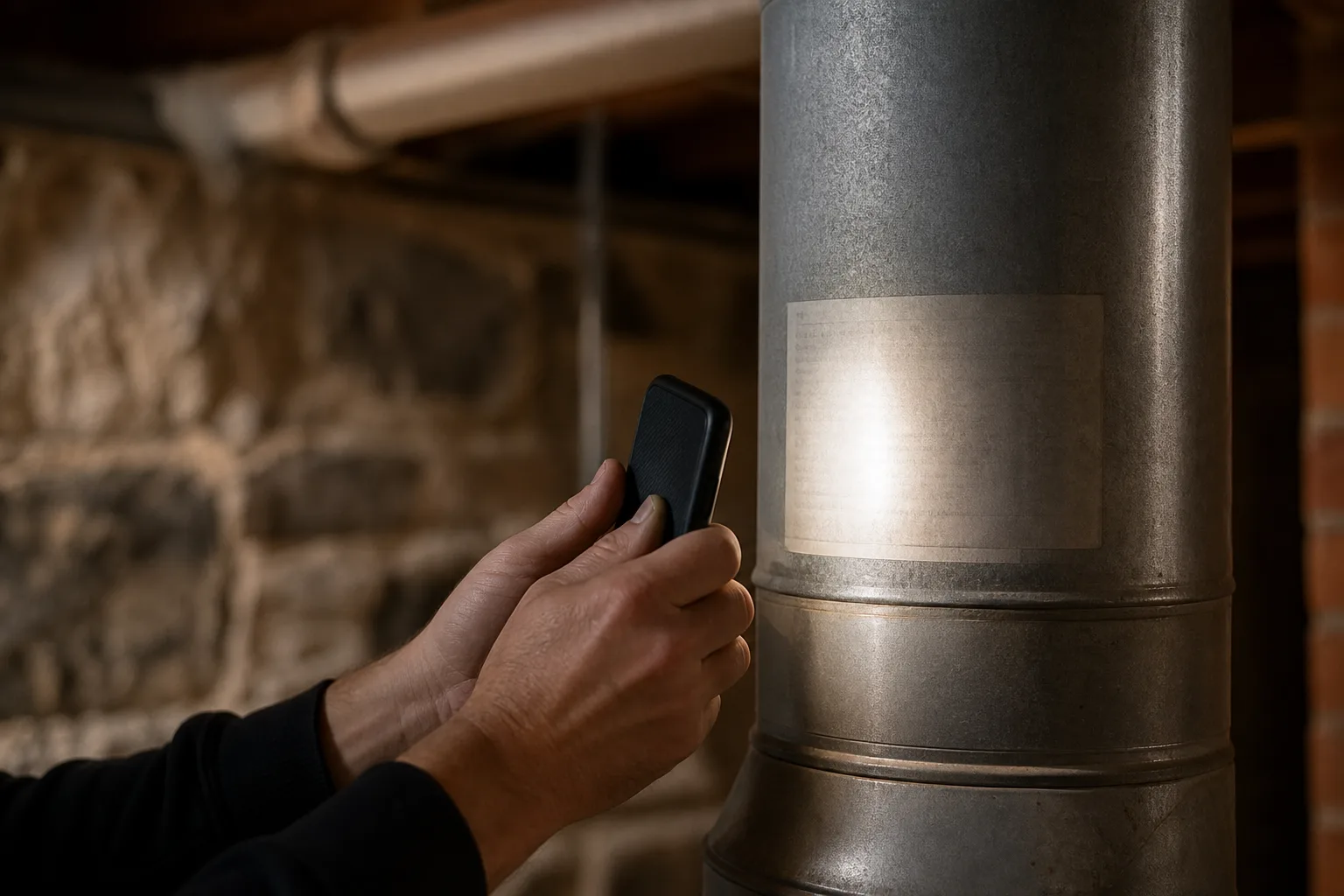
Find the label. Every listed pipe section carries printed text on the outer wall or on a foil label: manufacturer, model or series, listing standard, and required clearance in inches. That one label answers most of the questions people come to the internet with. On Class A it sits near one end of the section, on double wall connector often on the crimped end.
Look at the penetration. Where the pipe leaves the room, is there a metal box framed into the ceiling, or a round thimble in the wall? That assembly is part of the listed system, and it tells you what the original installer intended.
Follow the whole run, stove to cap. Count the elbows, note anything horizontal, and find the point where black steel becomes something else. That transition is your connector-to-chimney boundary.
Write this down before you shop or call anyone:
- Appliance make, model, and fuel
- Collar diameter, in inches
- Total run from the stove top to the top of the cap, roughly, in feet
- Whether the run goes up through the ceiling or out through a wall
- Manufacturer and series printed on any existing pipe
- The clearance number printed on that label
- Number of elbows and any horizontal sections
- Whether the chimney is factory-built pipe or masonry
- Photos: the collar, the label, the ceiling or wall penetration, the roof exit
Pro tip: photograph the label before you touch anything. Labels get scratched off during a teardown, and once it is gone you have lost the only proof of what system you own.
That list is also exactly what a chimney company will ask you for, so having it ready turns a vague phone call into a real conversation.
Diameter, Height, and the Rules That Decide Them
Three numbers decide most of a venting layout, and only one of them is really up to you.
The appliance collar sets the diameter
Whatever the stove's outlet measures is the size of the connector, and almost always the size of the chimney above it. Six inches covers a large share of wood stoves, eight shows up on bigger and older units, three and four inch pellet vent for pellet appliances. Sizing follows the appliance instructions and the venting system listing, not what was cheaper or fit the hole better.
Going larger is the subtler mistake. An oversized flue lets exhaust cool on the way up, cooling gases drop their moisture and creosote as they go, and draft turns lazy. That is a classic cause of a stove that smokes back into the room on a mild day, and it is why a fireplace insert installation in a big old firebox almost always needs a properly sized liner instead of the original masonry flue.
Total height and the draft it has to produce
A chimney works because hot gas is lighter than cold air and wants to rise, and the taller the column, the harder it pulls. Appliance manuals specify a minimum total system height for exactly this reason. A short run, especially one that exits through a wall and climbs only a story, is the setup most likely to under-draft. Every elbow and every horizontal section costs you more. The standard also caps connector length, so a long wander across a room to reach a convenient wall is not a design, it is a violation waiting for an inspector.
The 3-2-10 rule at the roof
The termination has its own geometry. The chimney has to extend at least three feet above the highest point where it passes through the roof, and at least two feet higher than anything within ten feet of it measured horizontally. The ridge, a dormer, a neighboring gable, any part of the building inside that radius. Get this wrong and you get downdraft on windy days, which people almost always misdiagnose as a dirty chimney.
Safety note: do not depart from the flue size the appliance instructions and the venting listing call for, and do not combine two appliances into one flue, unless the instructions, the listing, and your local authority having jurisdiction all permit it. Both can put combustion products where you breathe them, and both are what a Level 2 inspection is designed to catch.
Clearance to Combustibles: The Number That Changes Everything
If you read one section here, read this one. It decides which pipe you buy, and it is the number most often wrong in the field.
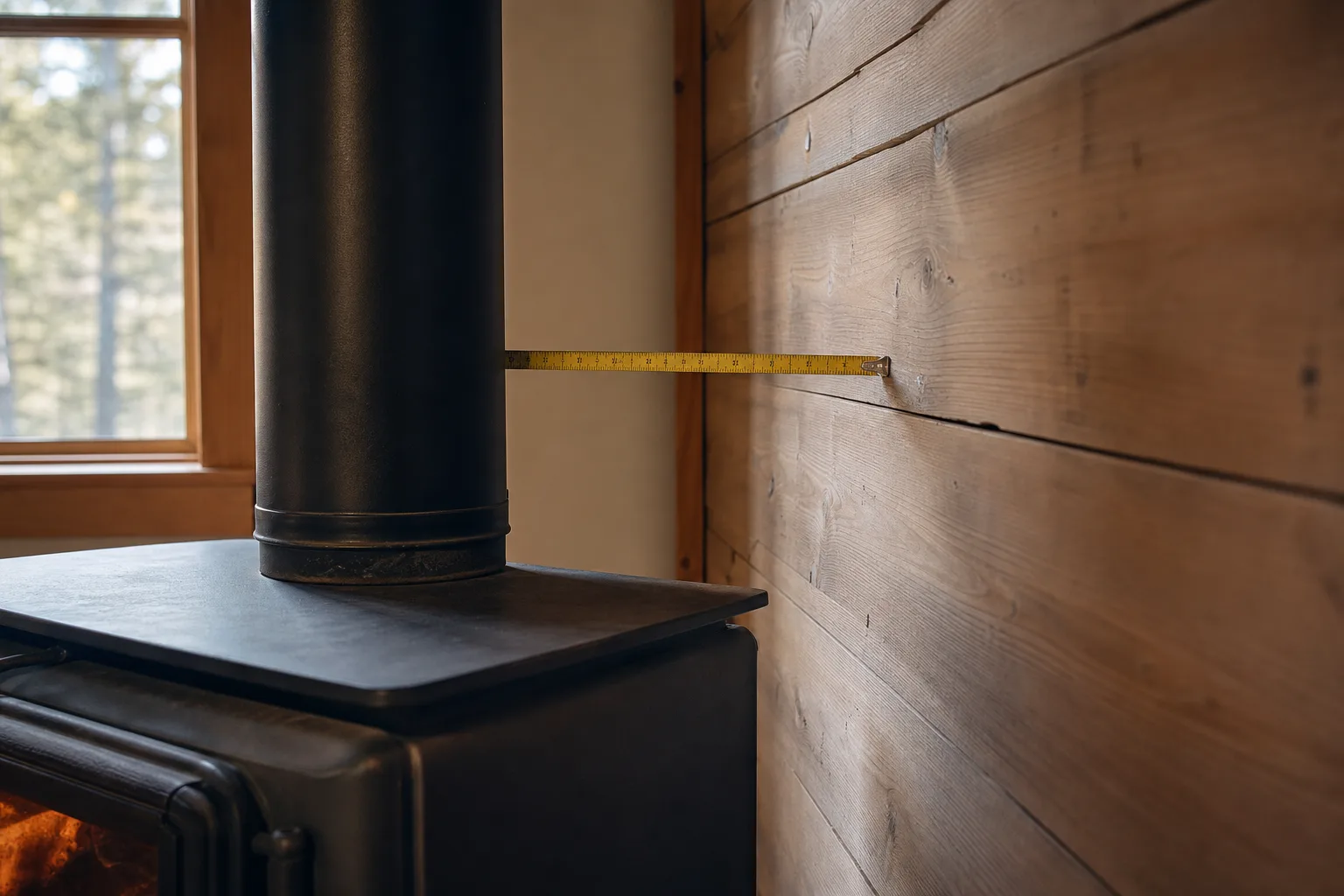
Clearance to combustibles is the minimum distance between the outside of the pipe and anything that can burn. Wood framing, drywall over wood framing, a mantel, a shelf, a coat on a hook. Measured from the pipe surface to the material, and not negotiable by eye.
Why single wall needs so much room
A single layer of steel with a fire on the other side of it radiates hard. The long-standing figure in NFPA 211 for a single wall connector on a residential solid fuel appliance is eighteen inches to combustible material. Eighteen inches is a lot of wall. Go measure from your stove pipe to the nearest stud bay and see how you do.
What double wall and Class A buy you
A listed double wall connector puts an air gap between the flue gases and the outer surface, and its listing typically allows something in the range of six inches instead. That difference is the whole reason double wall exists, and it is why a stove in a normal living room usually ends up on double wall whether the owner planned it or not.
Class A chimney pipe is a different animal again. Because the assembly is insulated and tested as a chimney, its listing commonly permits around two inches of air space to framing, which is what makes it possible to run a chimney through a floor and an attic at all.
In every case, start with the number printed on the pipe's own label. The standard sets a default, the product listing and its instructions set the permission for that particular product, and applicable code and your local authority having jurisdiction can require more than either one. Build to whichever is most restrictive.
Shields, and why they are not a free pass
You can reduce clearance with shielding, and people do it constantly, mostly wrong. A sheet of metal screwed flat to the wall behind a stove pipe accomplishes very little, because the heat conducts straight through and cooks the wall. A shield works only when it is spaced off the surface with noncombustible spacers, open top and bottom so air moves behind it, and built to the arrangement the standard describes. If the air cannot circulate, you have added a hot plate.
From the field: the clearance problems that turn up on inspection are rarely dramatic at first glance. It is usually a pipe that was fine when the stove was installed, and then someone built a bookshelf, or paneled the wall, or hung a curtain, and the clearance quietly disappeared around it. The pipe did not move. The house did.
Measured and came up short? Clearance problems are not a wait-and-see item. Tell us what you have and we will match you with a screened independent chimney company near you. They inspect what is actually there. We ask every company in the network to put its estimate in writing before any work starts, and you should insist on exactly that; the paper protects both sides. Call (513) 655-6702, or request service online and describe your setup.
When Chimney Pipe Is Failing (and How You Know)
Pipe does not last forever, and the way it fails is usually quiet.
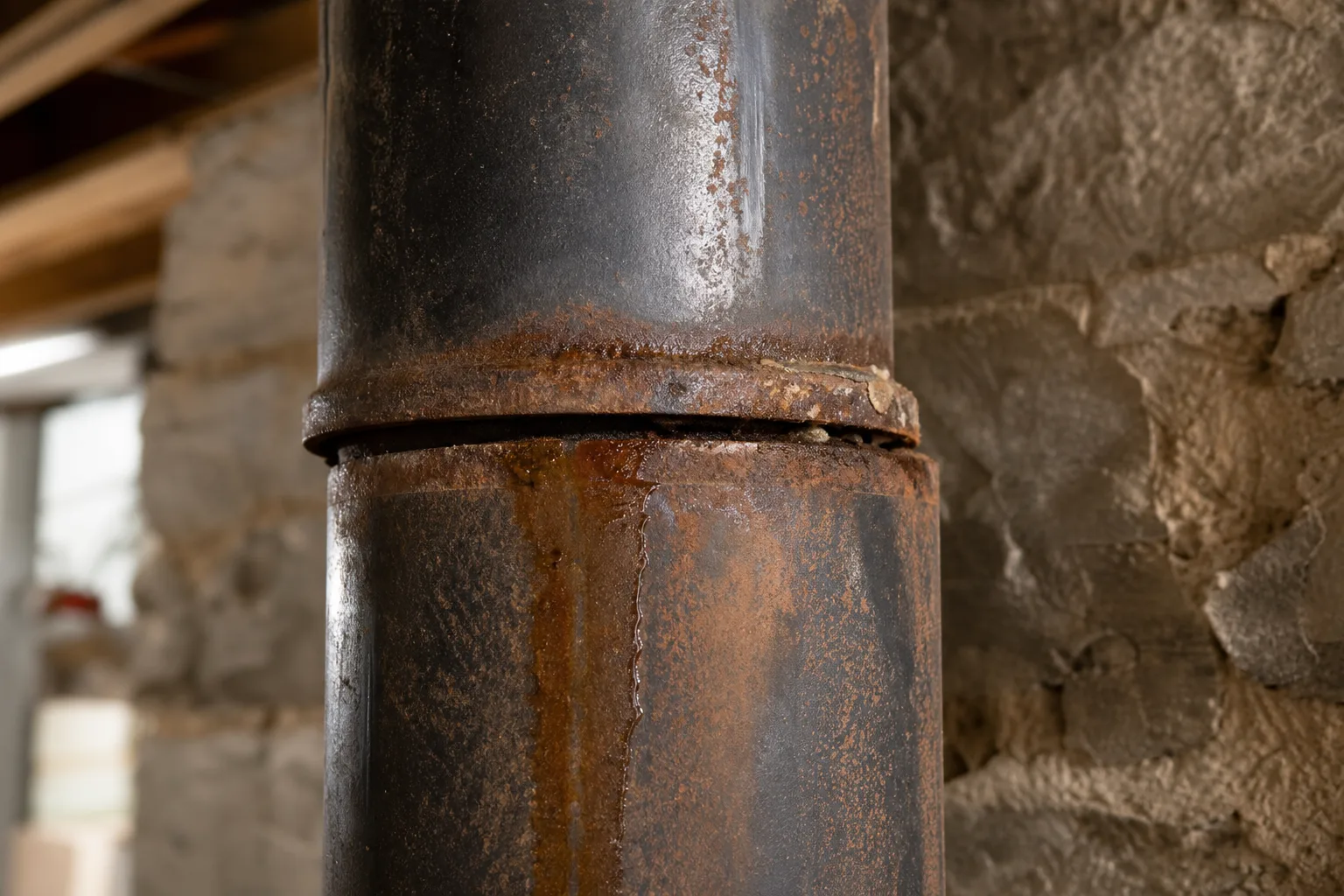
Rust, especially at the joints. Stainless resists corrosion, it does not ignore it. Acidic condensate collects at the low points of a run, and a rust bloom or a brown weep line at a seam means moisture is sitting where it should not.
A joint that has worked loose. Sections separate from thermal cycling, from someone bumping the run, from screws that were never installed. A gap in a connector is an open door for exhaust into the room.
Smoke or a smoky odor in the house, especially on a still day or when the furnace or a bathroom fan runs. That is a pressure and integrity problem, and it does not fix itself.
Sagging, or a run supported by hope. Connector sections need proper support, and Class A needs its support box and any required wall bands. A bowed horizontal section is carrying weight it was never designed to carry.
A damaged or missing cap and storm collar. Water coming down the inside of a chimney destroys it from the middle out. A missing chimney cap replacement is cheap to fix and expensive to ignore, and so is failed flashing where the pipe meets the roof.
Glazed creosote in the connector. Shiny, hard, tar-like. Not something to scrape at with a brush and hope. It is a fuel load sitting inside your venting, and it wants a professional evaluation, not a creosote log and optimism.
Safety note: NFPA 211 calls for a Level 2 inspection at specific moments, and they are worth memorizing because they are the moments people skip. At the sale or transfer of a property. Whenever the system changes, which includes a new appliance, a change of fuel, or a change to the shape or material of the flue. After a malfunction. After a chimney fire. And after an external event that could have damaged the chimney, like a serious storm or an earthquake. Installing new pipe is a system change. That is not an upsell, that is the standard.
From the field: on older installations, the part that fails first is almost never the expensive Class A section up in the attic. It is the connector down in the room, the cheap black steel that lives in the most acidic, most temperature-swung part of the whole system, and the part everyone assumes is fine because they look at it every day.
Installing It: What a Homeowner Can Do, and Where to Stop
I am not going to pretend nobody should touch this. Plenty of people assemble their own venting correctly. But the job splits cleanly into two halves, and the split is worth respecting.
The part that really is straightforward
Assembling connector sections is honest, learnable work, as long as you assemble the product you actually bought. On plain single wall pipe the crimped male end points down, toward the stove, so condensate and creosote drain back into the appliance instead of onto the floor, and joints get fastened with sheet metal screws. Listed double wall and proprietary connector systems have their own joint orientation and fastening method, and those instructions override every rule of thumb you have read, this one included. Keep the run short, keep it vertical, keep the elbows to a minimum. If you are setting up a new appliance, do this while reading the manual, not after, because the specifics of a wood stove installation vary more between models than people expect.
The ceiling and roof penetration
This is the other half, and it is a different job: a framed opening cut in a ceiling, a support box set to the manufacturer's dimensions, an insulation shield, a hole in the roof deck, flashing woven into the shingles correctly, a storm collar, a cap. Anything less than perfect gives you a fire risk or a leak, and the leak version can go unnoticed for a season. Roof work with a hole in it is where a lot of capable homeowners rightly hand the job over, and new venting shares that visit with a chimney inspection near me search anyway, because the system change already triggered one.
The system rule nobody selling you parts will mention
Not one of the shopping pages will tell you this: chimney pipe is listed and tested as a complete system, not as a pile of compatible parts. A manufacturer submits an assembly, their sections, their joints, their support box, their flashing, and the listing applies to that assembly. Mix a cheaper section from another brand into the middle of the run and the listing no longer describes what is in your house. Insurance adjusters know this. Inspectors know this. Retailers, whose interest is a full cart, let it slide.
Two brands can look identical, lock the same way, and still be different products. Buy the system, from one manufacturer, with the support hardware at the same time.
Pro tip: order the boring parts with the pipe, not later. Support box, insulation shield, flashing sized to your roof pitch, storm collar, cap. These are what hold up an install for a week, and they are exactly what people forget while they are busy counting feet of pipe.
How VIO Helps
Being plain about this: VIO is not a chimney company and we do not install pipe. What we do is match you with screened independent local chimney professionals, the kind who will climb into the attic and read the label on the section you cannot reach.
That matters here because the answer depends on things no product page can see. What is already in the wall. Whether the existing system is one listed assembly or three brands stacked together by a previous owner. Whether your masonry stack needs a liner instead of a new chimney.
Every match starts the same way: a screened independent chimney company looks at your setup. We ask every company in the network to put its estimate in writing before any work starts, and asking for it that way is the single best habit a homeowner has. If it turns out to be masonry rather than metal, they will say so, and fireplace chimney repair is a different conversation with a different scope.
Ready for the next step? Whether you need a full Class A run through the roof or one connector section replaced, the path is the same: a screened independent local company looks at what you actually have. Tell us your appliance and what your pipe looks like now, and we will match you with a screened independent local pro. Ask for the estimate in writing before anything else happens. Call (513) 655-6702.
Symptom checker
What is your chimney doing?
Tap the closest match for an honest first answer.