



On this pageWhat a Cast Iron Fireplace Insert Actually Is8 sections+7
- What a Cast Iron Fireplace Insert Actually Is
- Modern Appliance or Victorian Antique? Two Different Objects
- Cast Iron vs Steel: What the Material Actually Changes
- What Your Chimney Needs Before a Cast Iron Fireplace Insert Goes In
- Wood, Gas, or Pellet
- How to Choose a Cast Iron Fireplace Insert
- Living With a Cast Iron Insert
- How VIO Helps With a Cast Iron Fireplace Insert
Quick answer
A cast iron fireplace insert is a closed, EPA certified firebox that fits inside an existing masonry fireplace and turns it into a real heat source. Cast iron heats slowly and keeps radiating after the fire dies down. Under IRC 2024 and NFPA 211, a wood burning insert also requires a full length stainless steel liner running from the unit's flue collar to the top of the chimney.
Two very different people type cast iron fireplace insert into a search bar.
One of them has a brick fireplace in the living room that looks wonderful and heats almost nothing. Somebody told them an insert would fix that.
The other one saw an ornate Victorian casting on a salvage site, fell for the fretwork, and wants to know whether it can go in their house.
Both are reasonable people. They need completely different answers, and the first page of results hands them a jumble of manufacturer catalogs and antique listings without ever sorting out which is which.
So let us sort it out. And then let me tell you the thing that will save you the most trouble on this project: you are probably shopping in the wrong order.
Almost everybody starts by picking the appliance. The appliance is the easy half. The half that decides whether the thing works, whether it passes inspection, and whether you spend a happy winter in front of it is the chimney you put it in.
What a Cast Iron Fireplace Insert Actually Is
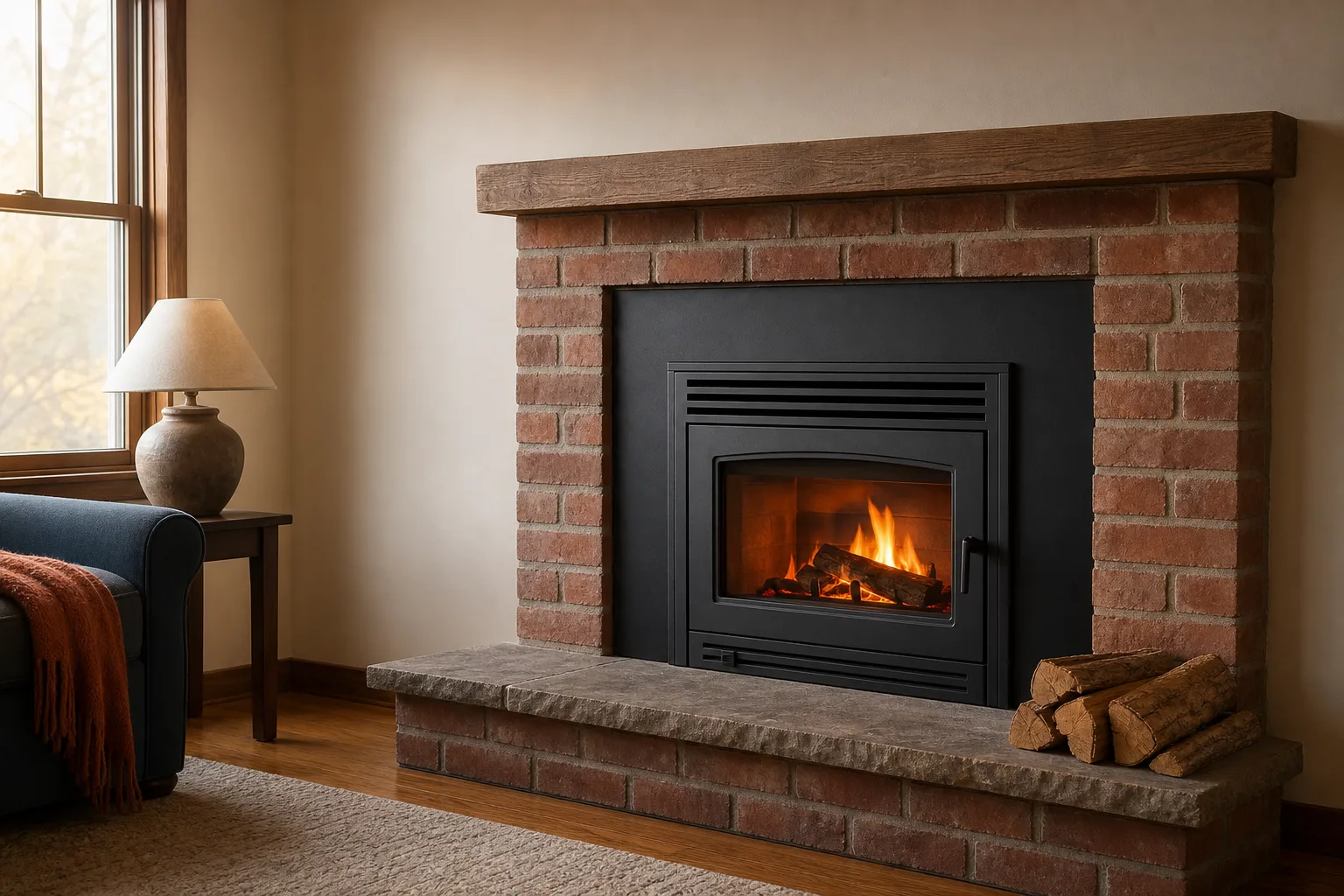
An insert is a closed firebox built to slide into the opening of a fireplace you already own. The EPA describes certified inserts as wood heaters without legs or pedestals, which is a dry way of saying it is a stove, shaped to live inside masonry.
Cast iron means the body is cast rather than welded up from steel plate. Cast iron is iron carrying more than roughly two percent carbon. It is heavy, it takes heat well, and it holds a casting pattern the way rolled steel never will.
The parts you can see
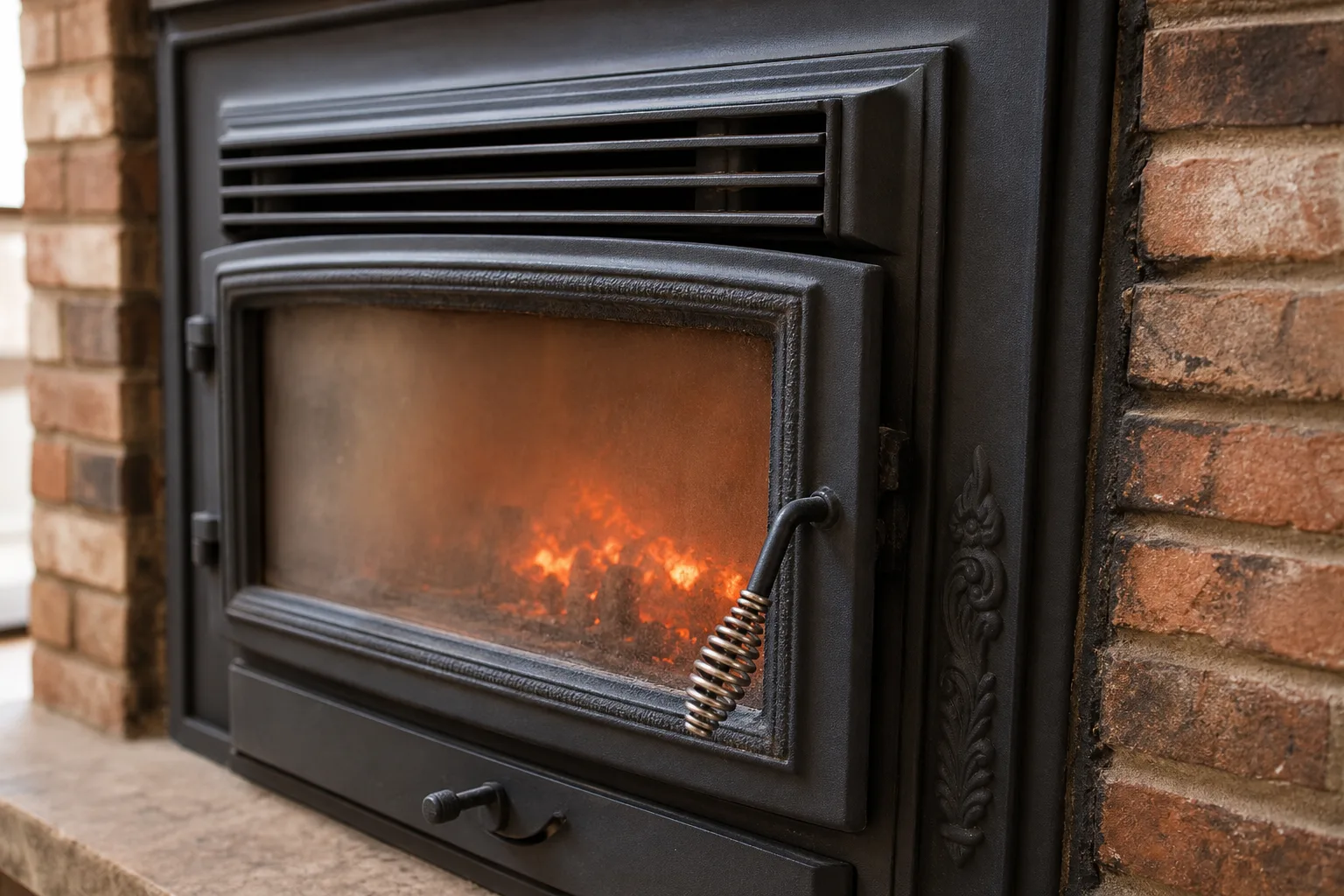
Stand in front of an installed unit and you are looking at a large insulated glass door set in a heavy cast frame, usually matte black, sometimes porcelain enamel in a color.
Above the door, a row of louvers. On either side, cast columns or trim. Down low, an air control lever, and on the door a coil handle. Handles run hot in use, so follow the manual and use the glove or handle tool the maker specifies.
Then there is the flat panel framing all of it. That is the surround, and it covers the gap between the appliance body and the original fireplace opening. It is the piece that makes the install read as intentional instead of a stove shoved into a hole.
Inside, firebrick or refractory lining the walls in tan and cream, and the fire behind glass instead of open to the room.
The part you never see
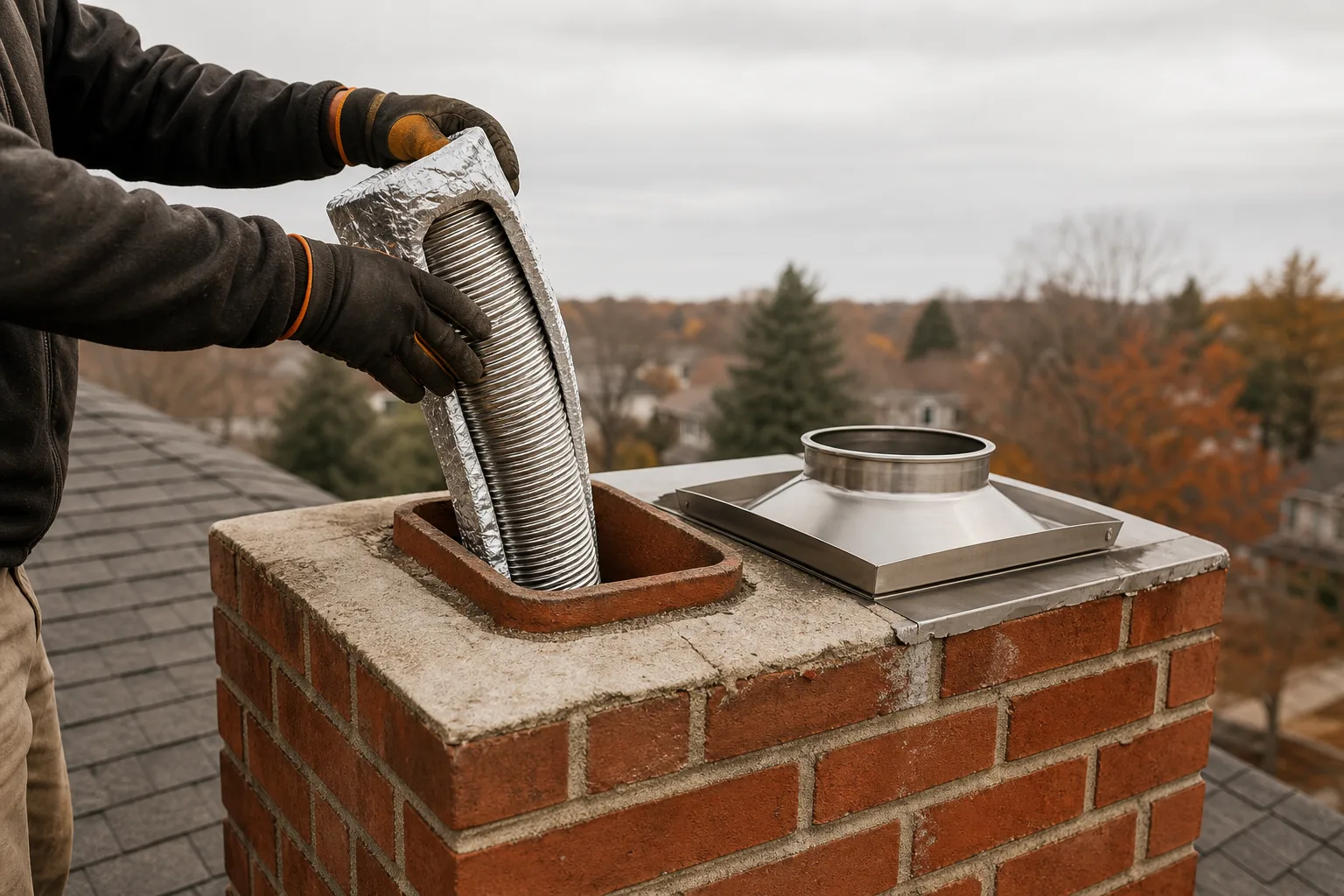
Running up your chimney, out of sight, is a flexible stainless steel liner. It starts at the insert's flue collar and it does not stop until the top of the chimney.
At the crown it terminates in a stainless top plate, a storm collar, and a cap. Wrapped around it, in most installations, a foil faced insulation blanket.
Nobody photographs that part. It is the part that matters most.
Modern Appliance or Victorian Antique? Two Different Objects
Here is where the search results go sideways. A significant share of what ranks for this phrase is architectural salvage sold by antique dealers, while the rest is heating equipment sold by manufacturers, and the two share nothing but a name.
What a modern cast iron fireplace insert is
A certified appliance. It has a sealed firebox, controlled combustion air, a glass door, a listed flue collar, and a manufacturer's installation manual that a chimney company will follow to the letter.
It is designed, tested, and labeled to heat a room.
What an antique cast iron insert is
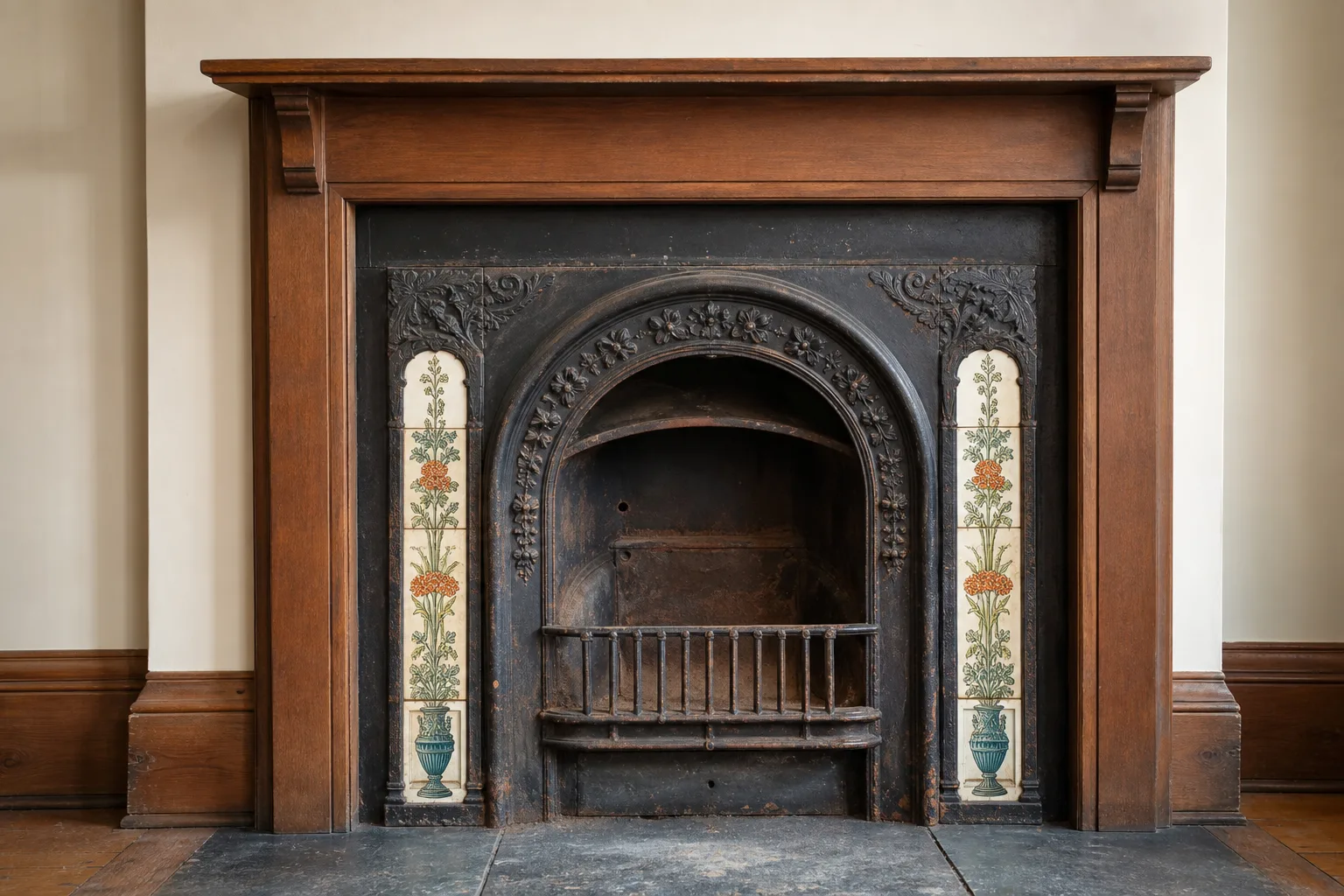
A beautiful piece of nineteenth century metalwork. Cast iron fireplace surrounds and inserts became popular in the mid 1800s on coal burning fireplaces and stayed fashionable into the 1930s.
You know one on sight. Arched opening, decorative bars across the front, floral or geometric relief, often a small hood, frequently rusted or layered in old paint. It sits in a period opening with tiled slips down each side.
What it is not is a modern heating appliance. It carries no EPA certification, because it predates the concept by a century.
Myth vs. fact: an antique cast iron insert is a decorative element from the coal era, not a certified heater. Whether a particular piece can legally be burned in depends on the piece and on local code, and that is not a question anybody can answer from a listing photo. Have it looked at in person before anyone puts a fire in it.
If the antique look is what you are after, say so out loud when you talk to a chimney company. There are modern cast units with serious ornamental casting, and there are ways to keep a period surround in the room while a certified appliance does the actual work behind it.
Cast Iron vs Steel: What the Material Actually Changes
This is the argument every forum thread turns into, and most of them get it half right.
What cast iron does well
Cast iron is slow. It takes its time coming up to temperature, and then it holds that heat and keeps radiating after the fire has burned down to coals and gone quiet.
That is thermal mass doing its job. On a cold evening it means the room stays warm past the last log.
It also carries detail. If the ornate look is part of why you want this, cast iron is the material that gives it to you.
What steel does well
Steel is lighter, generally cheaper, and quicker to heat. You feel warmth sooner after you light it.
Lighter also means easier to move and easier to set, which matters more than people expect on an install day involving a narrow doorway and a firebox with an awkward approach.
The honest answer
There is no winner here. I am not going to invent one.
| Cast iron | Steel | |
|---|---|---|
| Time to feel heat | Slower | Faster |
| Heat after the fire dies | Holds and keeps radiating | Cools off sooner |
| Weight | Heavy | Lighter |
| Price position | Generally higher | Generally lower |
| Ornamental casting | Its natural strength | Plainer look |
| Combustion efficiency | Not determined by the metal | Not determined by the metal |
That last row is the one to read twice.
Good to know: cast iron's real advantage is heat retention, not heat output and not efficiency. How cleanly and completely a unit burns comes from its combustion system and its EPA certification, not from what the walls are made of. Anyone telling you cast iron is more efficient than steel is mixing up two different things.
Pick cast iron if you burn long evening fires and want the room warm afterward. Pick steel if you want heat quickly, in shorter sessions, and would rather put the difference toward the install. Both are defensible. Neither is a mistake.
What Your Chimney Needs Before a Cast Iron Fireplace Insert Goes In
Now the part the catalogs bury.
The stainless liner is not optional
Under IRC 2024 and NFPA 211, putting a wood burning insert into an existing masonry fireplace requires a full length stainless steel liner running from the insert's flue collar all the way to the top of the chimney.
Not partway. The whole height.
The clay tile flue you already have cannot do this job on its own. Its cross section is far too large for the appliance, the shape is wrong, and it was never designed for the condensing flue gas temperatures a modern high efficiency insert produces.
The liner gets sized to the unit's flue collar, commonly six inch round or six by eight oval. A sweep access point has to be provided at the top of the liner at the crown. And most liner manufacturers require insulation around the liner to satisfy NFPA 211, the IRC, and their own UL 1777 listing.
Safety note: the liner is not an upsell and it is not a regional quirk. It is the code requirement that makes the installation legal and the appliance safe. If a quote for an insert install does not include a properly sized, properly terminated liner, that quote is not for a complete job.
Sizing the insert to your firebox
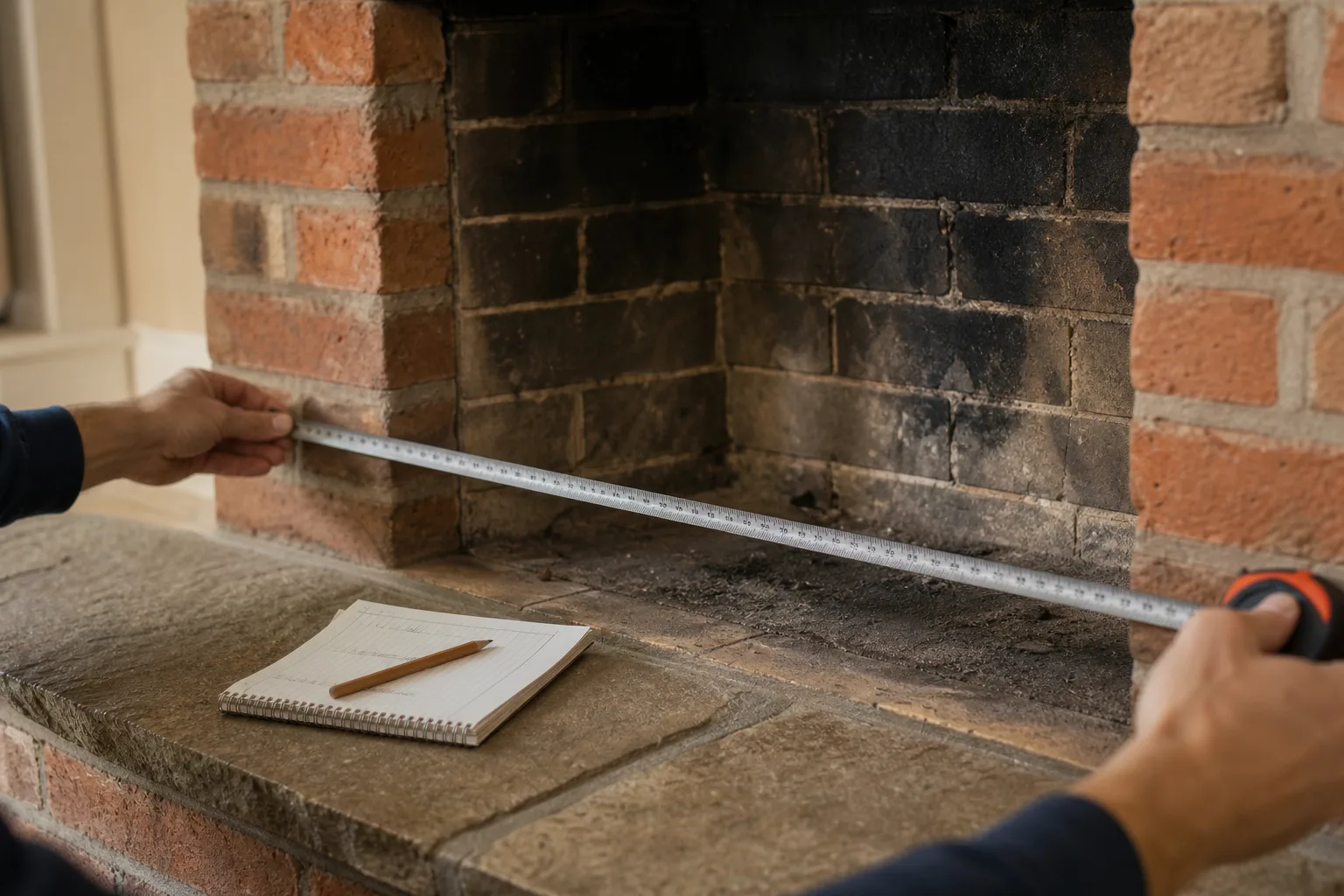
Width, height, and depth of the fireplace opening, all three. Depth is the one that surprises people, because a shallow firebox rules out units that would otherwise fit the front.
The surround panel has to cover your opening too, and openings vary more than catalog dimensions suggest.
None of this can be answered from a photo of your fireplace. Somebody has to put a tape measure on it.
The condition of what is behind it
Adding an insert is a system change, and under NFPA 211 a system change is one of the events that requires a Level 2 inspection. The others are sale or transfer of the property, a malfunction, a chimney fire, and external events like a storm or an earthquake.
Here is the uncomfortable part, and it is the best argument for doing this in the right order.
Once the insert is in, it hides the firebox. Cracked mortar joints, a failing smoke chamber, a damaged flue, whatever was wrong back there is now sealed behind a heavy cast iron appliance and a liner. Getting to it later means pulling the whole installation back out.
From the field: an insert project can go sideways when the appliance arrives before anybody has looked up the flue. The inspection is not a hurdle in front of the fun part. It is the thing that tells you which appliances are even on your list.
Hearth, clearances, and the local question
Every insert carries a manufacturer's clearance requirements to combustible material, and a hearth extension requirement in front of the opening. Both are in the manual, and both are enforceable.
Permits and inspection rules are local. Some jurisdictions want a permit and a final inspection for an insert install, some do not, and the only reliable answer is the one your local building department gives you. Confirm it with that department before the install gets scheduled.
Before you shop for the insert, find out what your chimney can take.
A cast iron fireplace insert needs a stainless liner sized to its flue collar and a sound chimney to put it in. VIO connects you with independent chimney companies near you who can inspect and measure before you spend a dollar on an appliance.
Call (513) 655-6702
Wood, Gas, or Pellet
A cast iron fireplace insert is available in all three fuels, and the material conversation is the same for each. The fuel changes what your life looks like on a Tuesday night in January.
Wood
The classic reason people want cast iron in the first place. Real flame, real crackle, real hauling and stacking and ash.
New residential wood heaters sold today have to meet the EPA's 2020 standard: 2.0 grams per hour tested with crib wood, or 2.5 grams per hour tested with cord wood. The EPA keeps a public database of certified units, and a wood burning cast iron fireplace insert worth buying will be in it.
Open fireplaces, for what it is worth, are not covered by that rule at all. The EPA left them out because they are not effective heaters. That sentence is the whole argument for an insert.
Gas
No wood to season, no ash to carry out, heat on a switch. A gas unit still needs correct venting sized to the appliance, so the chimney conversation does not go away, it just changes shape.
Pellet
Steady, controllable, and it runs on electricity, which means it stops when the power does. You will be filling a hopper instead of splitting logs.
Whichever fuel you land on, the flue question comes first. Sorry. It really does.
How to Choose a Cast Iron Fireplace Insert
Work this list top to bottom and you will not waste a showroom visit.
- Get the inspection and the measurements first. Firebox width, height, and depth, plus the flue size and condition. This is step one, not step five.
- Confirm the unit is EPA certified and listed in the EPA's database, if you are burning wood.
- Match the flue collar to a liner you can actually run. Six inch round and six by eight oval are common. Your chimney's interior dimensions decide what fits.
- Check that the surround covers your opening. Measure the fireplace face, not just the hole.
- Read the clearance and hearth extension requirements in the manual before you fall in love with a model.
- Ask exactly what the install includes: liner, insulation, top plate, cap, and removal of the old damper assembly if needed.
- Ask who pulls the permit, if your jurisdiction requires one.
Pro tip: photograph your fireplace with a tape measure held across the opening, and take the depth measurement from the face of the masonry straight back to the rear wall of the firebox. Walk into the showroom with those numbers and the conversation gets short and useful very fast.
The best cast iron fireplace insert for you is the one that fits the opening you have, vents through the liner your chimney can take, and burns the fuel you are actually willing to handle. In that order.
Living With a Cast Iron Insert
A cast iron fireplace insert asks very little of you, and the little it asks is not optional.
The door gasket
The rope gasket around the door, usually high density fiberglass or ceramic fiber, is what makes the firebox airtight. When it flattens out and stops sealing, uncontrolled air gets in, combustion goes sloppy, and creosote builds faster in the liner.
Replacing it is one of the cheapest jobs there is, using sealant rated well above 1000 degrees.
Pro tip: close the door on a dollar bill and pull. If it slides out with no drag, the gasket is done. Try it at several points around the door, because gaskets flatten unevenly.
Cracks and panels
If your unit has refractory panels inside, hairline cracks are normal. They come from the material expanding and contracting through every heating cycle.
Cracks wider than about a quarter inch are a different matter, because they let too much heat reach the metal behind them, and those should be repaired rather than watched.
The annual sweep
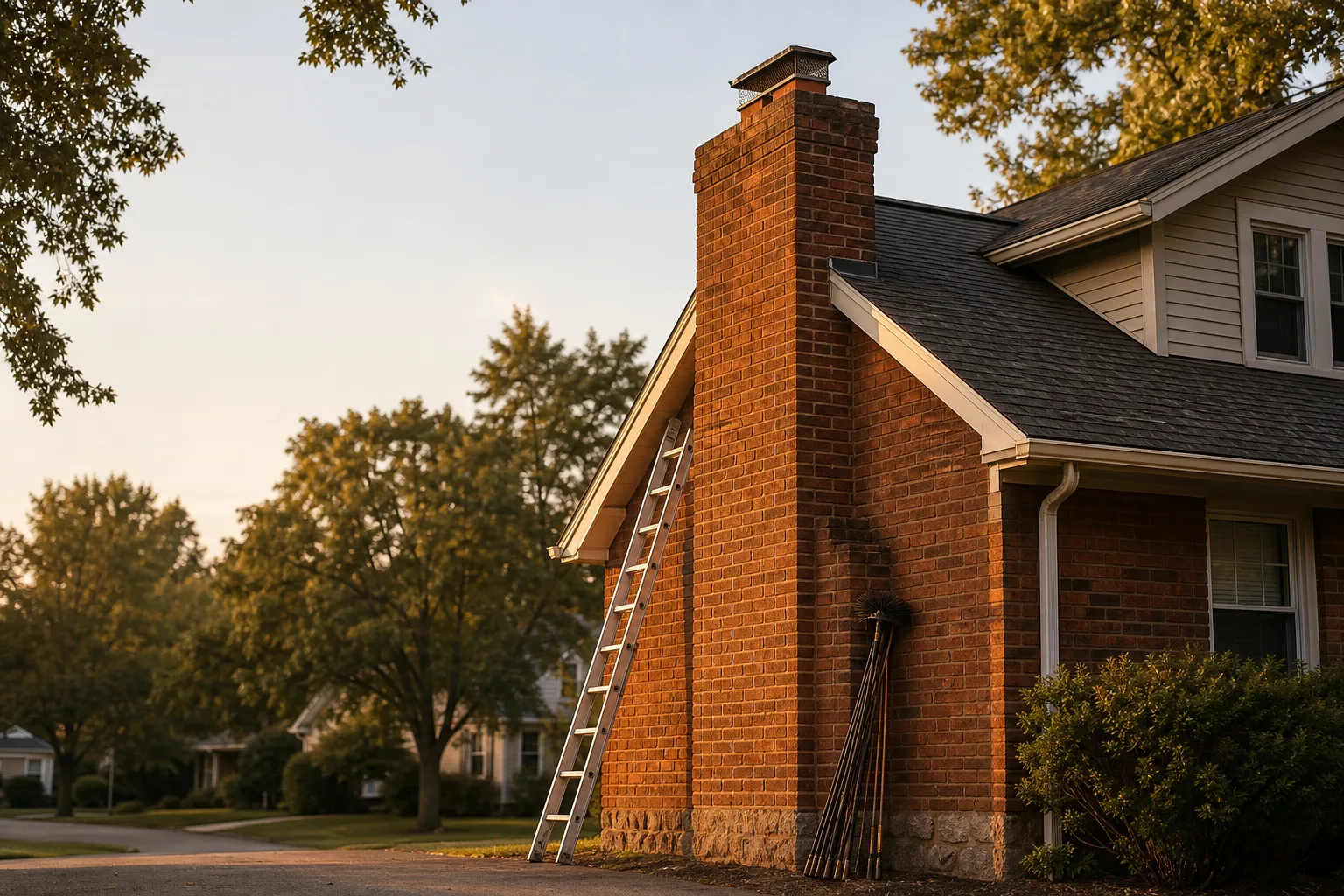
The liner needs sweeping like any other flue, and that is what the access point at the crown is for.
Burn dry, seasoned wood and the sweep has less to do.
How VIO Helps With a Cast Iron Fireplace Insert
Plainly, so there is no confusion about what we are: VIO is a referral service. We do not install anything and we do not sell appliances. We connect homeowners with independent chimney companies working in their area.
For this exact situation that is genuinely useful, because the first thing you need is not a salesperson. It is somebody with a flashlight and a tape measure telling you what your fireplace and flue can accept.
The company we match you with can run a Level 2 inspection, measure the firebox and the flue, and give you the short list of what will actually fit. Then you go shopping with real numbers instead of a hope.
We ask every company in the network to put its estimate in writing before any work starts, and you should insist on exactly that. Ask what the number includes, ask what happens if the flue turns out to need repair first, and get both answers on paper.
Late summer and early fall are the sensible time to start, because a cast iron fireplace insert project runs through an inspection, then a liner sized and ordered, then a scheduled install. That sequence goes easier in September than in December.
Planning a cast iron fireplace insert this year?
Tell us where you are and what you have. We will match you with a local chimney company that can look at your fireplace and flue, so you can go shopping knowing exactly what fits.
Call (513) 655-6702
Symptom checker
What is your chimney doing?
Tap the closest match for an honest first answer.