



On this pageWhat Cleaning a Chimney Actually Removes8 sections+7
Quick answer
Learning how to clean a chimney comes down to sweeping soot and creosote from the full length of the flue with a brush matched to your flue's size, shape and material. Let the chimney go completely cold, clear the firebox, seal the fireplace opening with plastic, and open the damper first. Check the deposit first: dry, dusty creosote brushes out easily, but shiny glazed creosote cannot be brushed off and needs a professional.
Most guides on how to clean a chimney hand you a brush in the first paragraph. That is the wrong place to start, and it is why a lot of people spend a Saturday scrubbing a flue and accomplish almost nothing. There is one thing you need to check before the brush comes out of the box, and if you get it wrong, no amount of effort will help you.
We will get to it. First, what this job actually is.
What Cleaning a Chimney Actually Removes
A chimney sweep is not housekeeping. You are removing fuel from the inside of a pipe that routinely carries gases hot enough to ignite it.
Soot, Creosote, and Why the Difference Decides Everything
Soot is the black powder. Mostly carbon, it brushes off — but do not read "powder" as harmless. Soot is combustible, it stains and smells, and in quantity it narrows the flue and adds to the fuel a chimney fire feeds on.
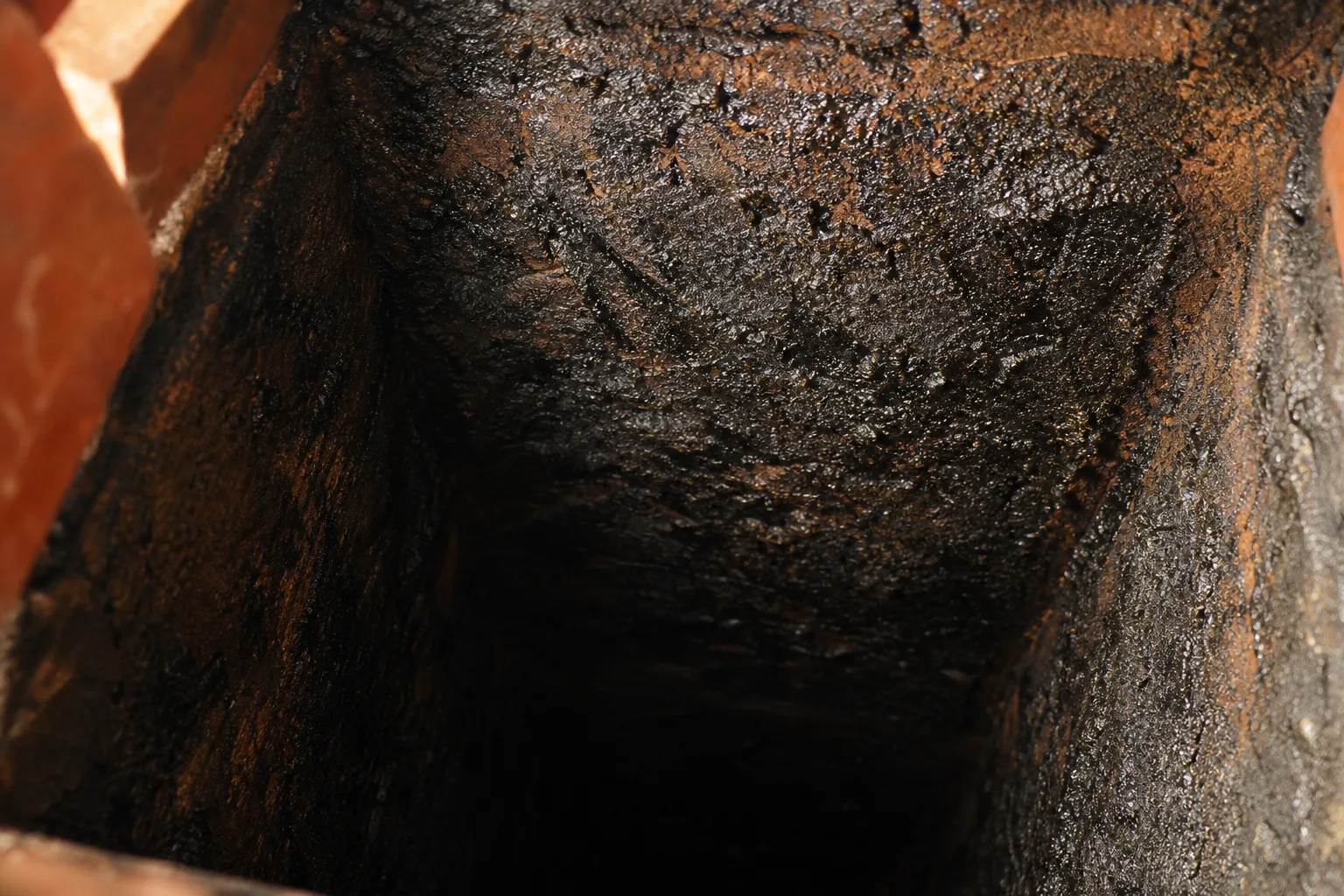
Creosote is the problem. It condenses out of wood smoke as the gases cool on the way up, and depending on how your fires burn it shows up as anything from a light dusty film to a hard black glaze fused to the tile. Creosote burns. That is not a figure of speech, it is the classic chimney-fire mechanism: a flue lined with accumulated creosote, a hot enough fire underneath it, and the deposit ignites inside the chimney.
So when you sweep, the flue is the primary target. The firebox matters too — ash buildup, combustible debris, and cracked or crumbling firebrick all affect safe operation, so look it over while you are there. But the flue is where chimney fires start, and it is the part a quick glance never shows you.
What a Sweep Does Not Fix
Sweeping removes deposits. It does nothing else. It does not close a cracked flue tile, re-seal a liner joint that has pulled apart, repair a spalling smoke chamber, replace a missing cap, or fix flashing that lets water in at the roofline. A chimney can come out of a sweep spotless and still be unsafe to use, because the thing that makes it unsafe was never a deposit.
Good to know: Clean and safe are two different words. Most homeowners use them interchangeably for a chimney, and that assumption is why problems go unnoticed for years. Getting it swept and getting it checked are separate jobs, and only one is something you can do with a brush.
Before You Touch a Brush: Identify Your Chimney
Now the first of the two things to check: what kind of chimney do you own?
This sounds like a technicality. It is not. The three common systems tolerate completely different brushes, and the wrong one ranges from ineffective to destructive. Almost nobody writing a general guide on how to clean a chimney mentions it, which I suspect is because a generic guide would rather sell one brush to every reader.
Clay Tile Masonry Flues
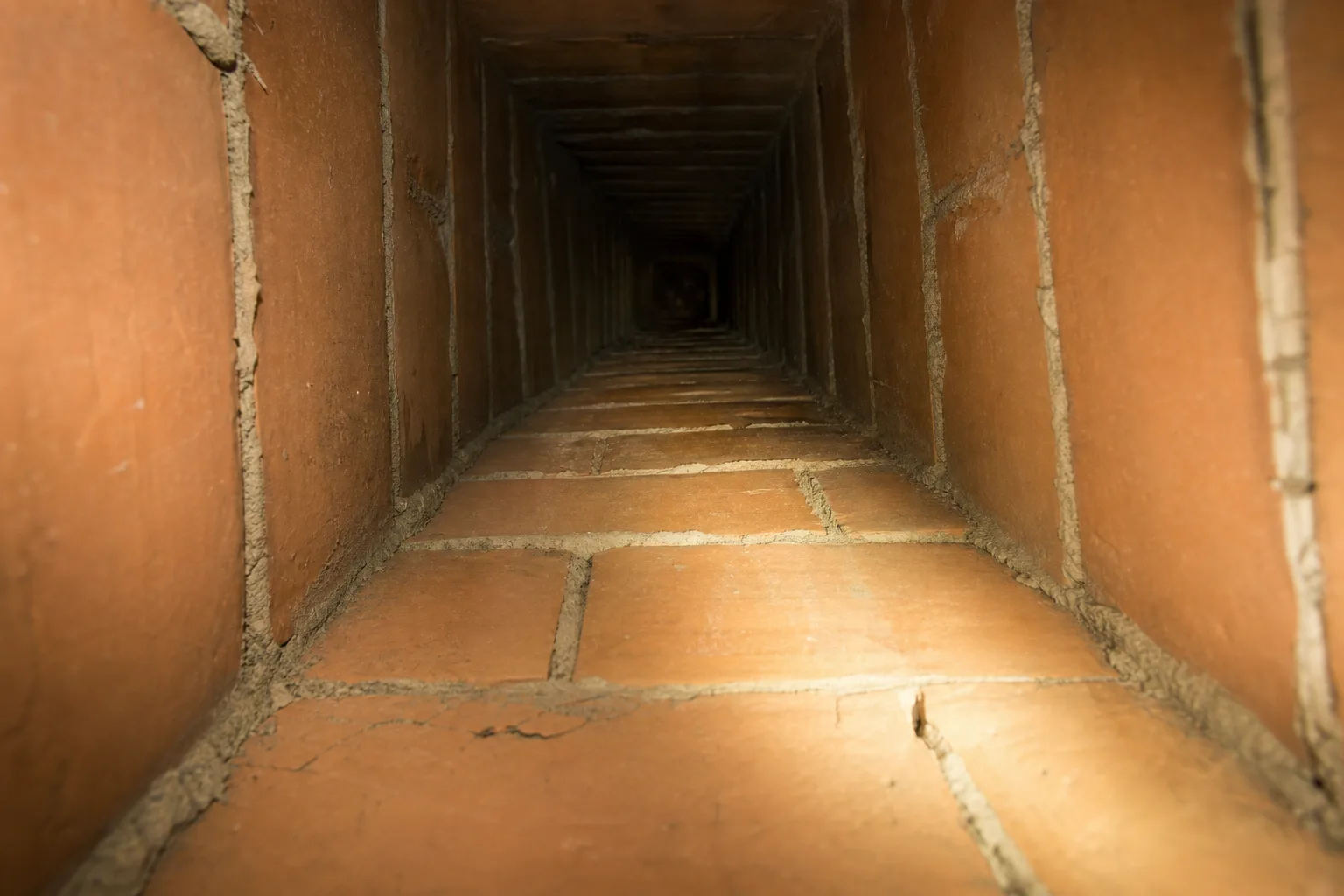
The traditional setup. Brick or stone on the outside, and inside it a stack of square or rectangular clay tiles running the height of the flue. Look up from the firebox with a flashlight and you will see terracotta-colored tile with mortar joints every couple of feet.
Clay is hard, and it is the one system that tolerates a steel wire brush. It is also brittle. Tiles crack, joints erode, and a chimney fire can crack a whole run at once.
Stainless Steel Liners
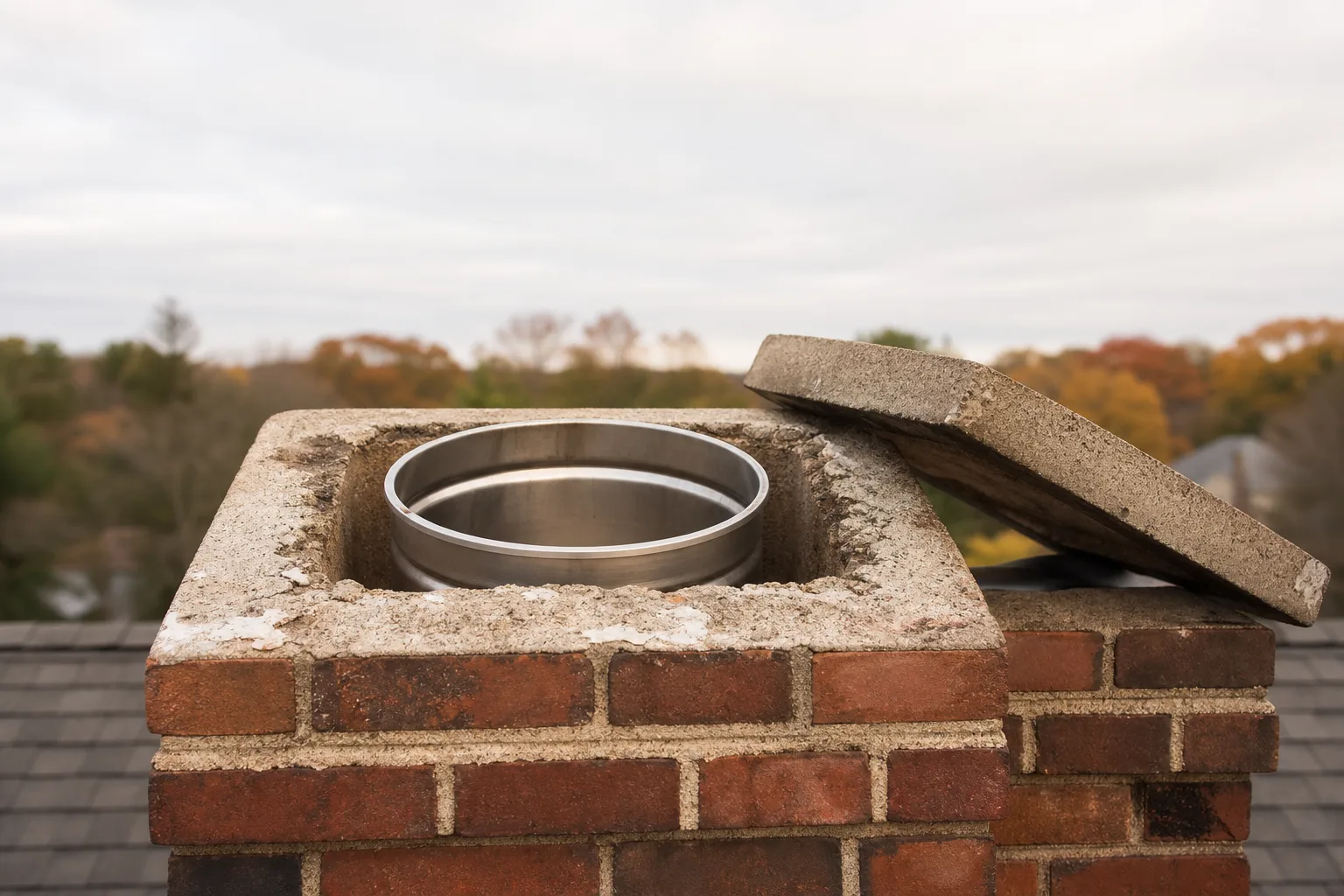
Common in older masonry chimneys that were relined, and standard on most modern wood stove installations. From the top you will see a round metal pipe, smooth-walled or corrugated, inside the masonry shell.
Stainless wants poly or plastic bristles. A steel wire brush will score the liner, and on a corrugated liner it can catch and tear the ridges outright. On most products it also voids the warranty. If you still have the relining paperwork, the manufacturer almost certainly specified the brush.
Factory-Built Metal Chimneys
Also called prefab or Class A, these go with a metal-boxed fireplace rather than a masonry one. The giveaway is a chase, often a wood-framed box with siding, topped by a metal cap and a round pipe, with no brick anywhere.
Treat these carefully. They are engineered assemblies of stainless sections with insulation between the walls, and they are not built for aggressive scrubbing. A wire brush can damage the inner liner, and that damage is not something you can assess from a ladder.
Matching the Brush to the System
| Chimney type | How to recognize it | Safe brush | Never use |
|---|---|---|---|
| Clay tile masonry | Terracotta tile with mortar joints inside a brick or stone stack | Steel wire brush, sized to the tile | Anything undersized, which just polishes a channel through the middle |
| Stainless steel liner | Round metal pipe, smooth or corrugated, inside a masonry chimney | Poly or plastic bristle brush | Steel wire, which scores the liner and voids most warranties |
| Factory-built metal | Framed chase with siding, metal cap, no masonry | Poly brush, per the manufacturer's spec | Steel wire, and improvised tools of any kind |
Size matters as much as material. Square brush for a square tile, round for a round liner, and it should feel snug going in. A brush that slides down easily is not touching the walls, and an undersized brush leaves a flue that looks swept from the bottom while the corners stay loaded.
The Three Degrees of Creosote (This Is the One That Matters)
Here is the thing I promised at the top, and it is the single most useful fact on this page.
Creosote is not one substance with one solution. It occurs in three recognized degrees, and which one you have determines whether a brush will do anything at all. Most guides repeat the same eighth-inch measurement and stop there. That rule is not wrong, it is badly incomplete, and following it alone gives some people a dangerous false result.
Go look at your flue with a flashlight before you buy anything. You are looking at texture, not just thickness.
Stage 1, Dry and Dusty
Fine, black, powdery, almost velvety. It comes off on a finger like charcoal dust and it falls when you tap the tile.
This is what hot, well-drafted fires burning dry wood produce. It is the good outcome. A brush handles it easily, and this is the stage where a careful homeowner sweep is genuinely worth doing.
Stage 2, Hard and Flaky
Black, crunchy, shiny in patches, coming off in brittle flakes rather than powder. It has structure to it, and it does not wipe away.
This is a smoldering-fire signature: wood that was too wet, a stove damped down low overnight, or a flue running cold. A brush and real effort will take out much of it — but whatever stays on the tile is still combustible deposit, not an acceptable finish. If brushing leaves material behind, that is your cue to have a professional evaluate the flue rather than call it clean. Stage 2 also says something about how you have been burning, not just about the chimney.
Stage 3, Glazed
Shiny. Hard. Tar-like, sometimes running in drips down the tile, sometimes a solid black lacquer fused to the surface. It looks almost wet even when it is bone dry.
You cannot brush this off. I want to be precise, because this is where people go wrong. It is not that it takes more effort or a better brush or a longer afternoon. Glazed creosote is fused to the flue wall and mechanical brushing does not remove it. Professionals use chemical treatments that break down the glaze first, or rotary powered systems, and even then it can take more than one visit.
It is also the most flammable form. This is the deposit behind the chimney fires people describe as sounding like a freight train.
Why the Eighth-Inch Rule Is Not the Whole Test
The rule you will read everywhere is that an eighth of an inch of buildup means it is time to sweep. Fine as far as it goes. It measures thickness and says nothing about type, and type is what decides your afternoon.
Myth vs. fact: The myth is that a thin layer is always a small problem. The fact is that a thin layer of glazed creosote is a more serious condition than a thicker layer of dry soot, and no brush you can buy will remove it. Judge what you are looking at by texture first, thickness second.
If you scrub for an hour and very little comes down, do not conclude the chimney was already clean. On a Stage 3 flue, that is exactly what a failed sweep feels like.
Not sure which stage you're looking at?
If the deposit is shiny, hard and tar-like, a brush is not going to move it, and that is not a reflection on your effort. Tell us what you're seeing and we'll match you with a local chimney company that can look at it properly. Call (513) 655-6702 or request service online.
Tools and Setup for the Job
If you have a masonry flue with Stage 1 deposits and a roof you can work on safely, you are a good candidate for doing this yourself. Here is what it takes.
What You Need
- A chimney brush matched to your flue's size, shape and material, per the table above
- Screw-together fiberglass or poly rods, enough to reach the full flue length, plus one spare
- A shop vacuum with a fine dust or HEPA filter. A household vacuum blows soot straight through the bag and into the room
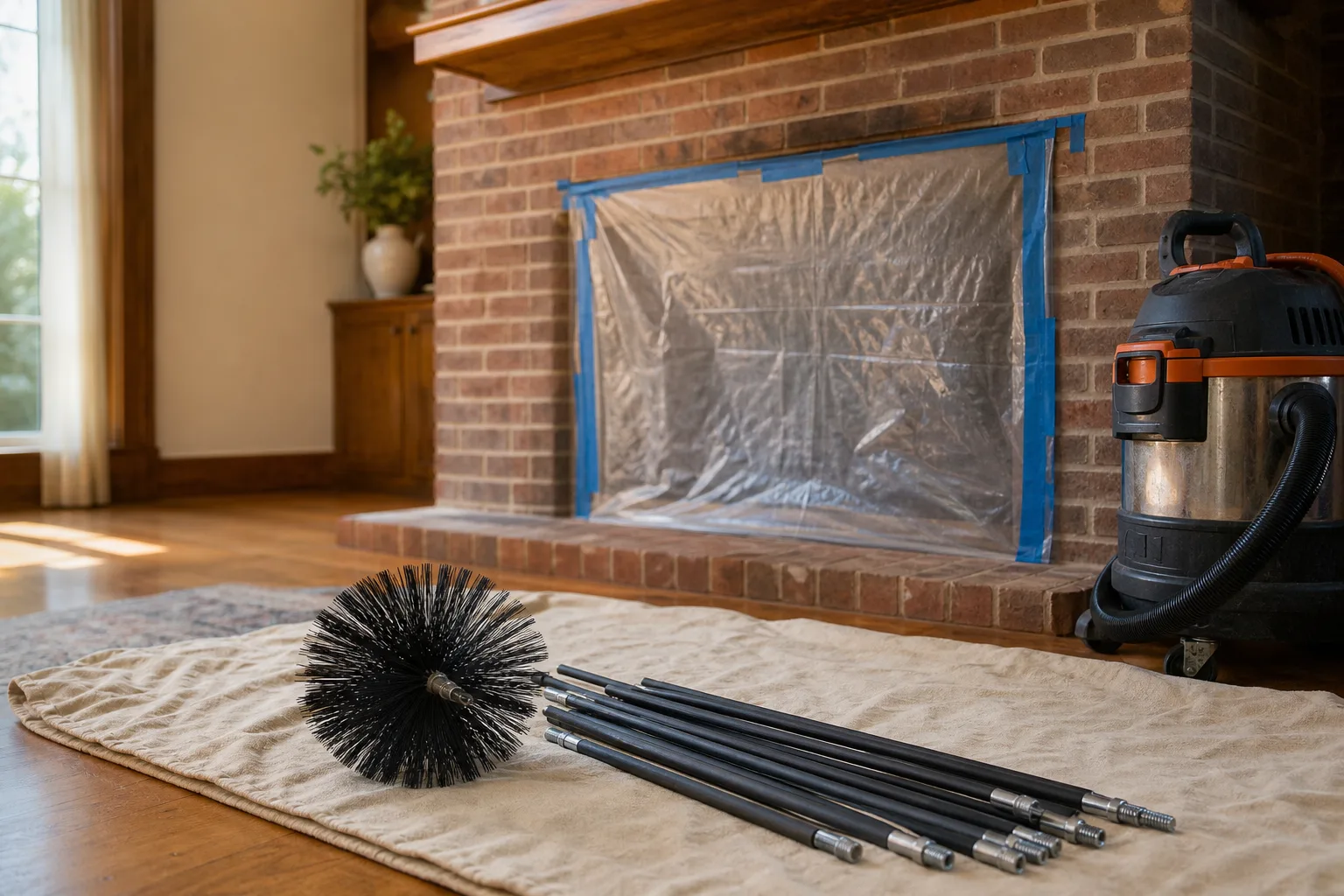
- Plastic sheeting and tape to seal the fireplace opening, and a tarp for the floor
- A stiff hand brush and a dustpan for the firebox and smoke shelf
- A flashlight, and a small mirror to see up past the damper
- An N95 or better respirator, sealed goggles, and gloves
- Old clothes you do not care about at all
Sealing the Opening, and the Dust Nobody Warns You About
Everyone underestimates the dust. Every single time.
Soot is not like sawdust. It hangs in the air for hours, it is greasy, and it settles into upholstery and carpet in a way that does not vacuum out cleanly. An opening sealed loosely, or sealed with tape that lets go halfway through, is the most common way this project turns into a far worse day than the chimney work itself ever was.
So seal it properly. Plastic across the whole opening, taped on all four sides, pressed firm. Turn off the HVAC so it does not pull airborne soot through the house.
Safety note: Only sweep a cold chimney, and verify it rather than trust the clock: no warmth anywhere on the firebox or flue walls, no live embers, ash fully cold through. Masonry holds heat far longer than it feels like it should, so elapsed time alone is not proof. And if this chimney has ever had a chimney fire, do not sweep it until it has been inspected. A fire can crack tiles and open a path to the house framing, and running a brush down it tells you nothing about that.
How to Clean a Chimney, Step by Step
This is the part everyone came for, and it is shorter than you expect. The judgment was the hard part. The labor is straightforward.
Top-Down, the Standard Method
Sweeping from the roof is how professionals do it, because gravity is on your side and the debris ends up where you want it.
- Confirm the chimney is cold. Clear the firebox of ash and unburnt wood.
- Open the damper fully. A closed damper means you are brushing debris onto the back of it and into the room later.
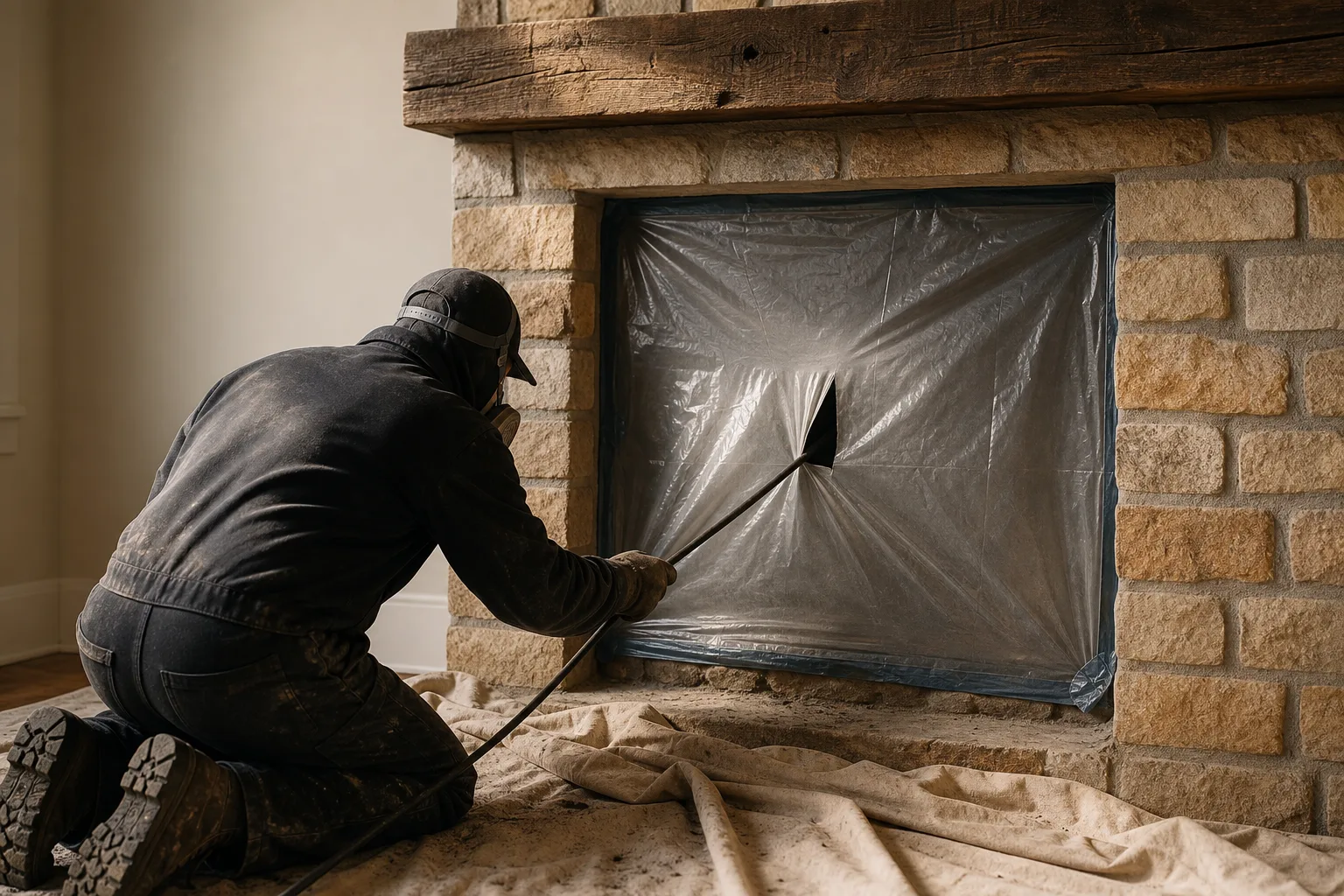
- Seal the fireplace opening with plastic and tape, all four sides.
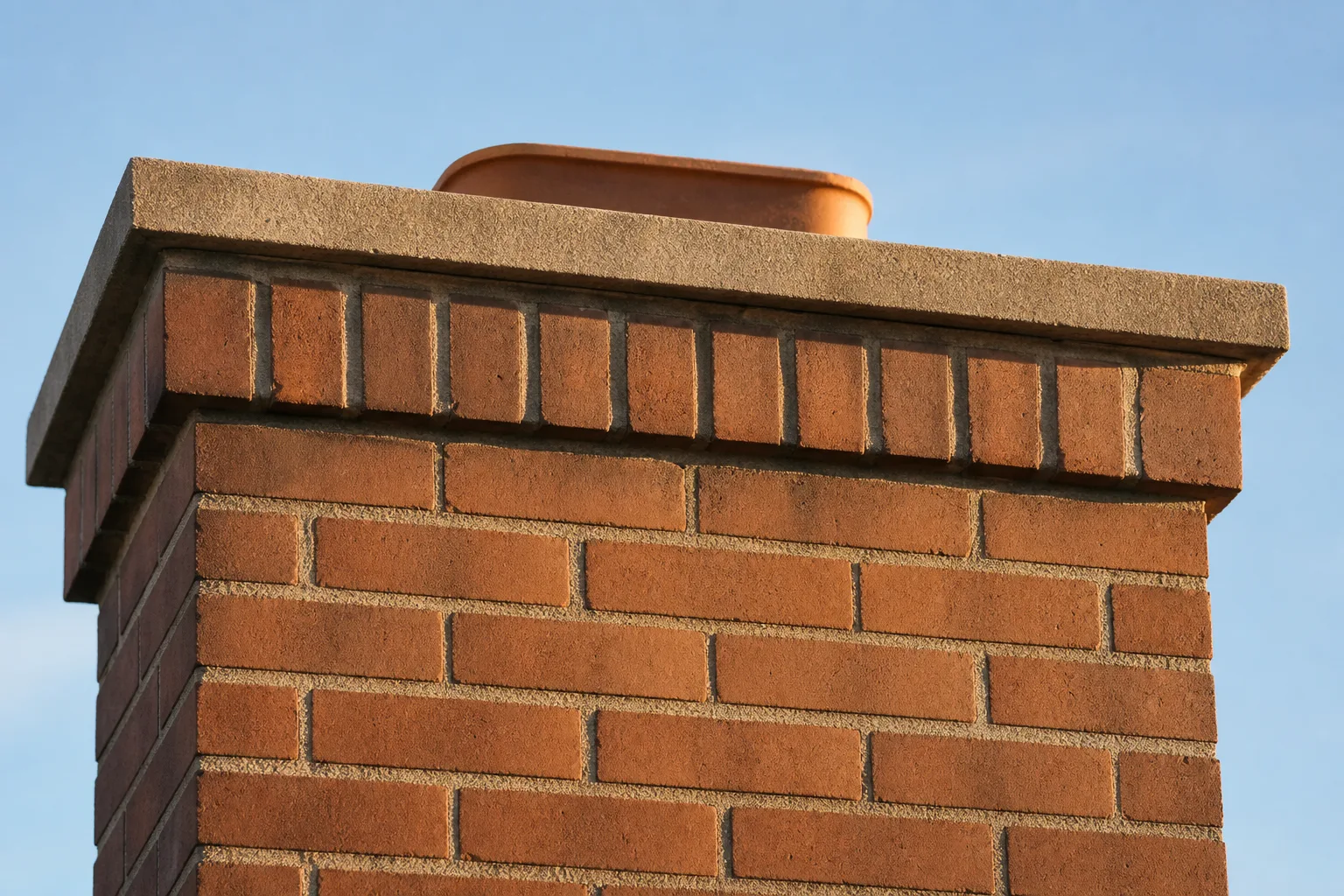
- Get on the roof safely, with a way to carry the brush and rods that leaves your hands free. Remove the chimney cap.
- Shine a light down the flue. Look for nests, leaves, or obvious blockage, and note the deposit texture if you have not already.
- Attach the brush to one rod and lower it in.
- Work the brush up and down in short strokes, a foot or two of travel, before advancing further down. Add rods as you go.
- Continue to the bottom of the flue, then draw the brush back up the same way, working as you go.
- Replace the cap, get off the roof, and leave the dust to settle for twenty minutes.
Pro tip: Overlapping passes are what actually clean a flue. A single trip down and back polishes a stripe and leaves the rest. Work a section, advance a little, work it again with overlap. Also: screw every rod joint tight and turn the rods clockwise only. A brush that unthreads at the bottom of a thirty-foot flue is a bad afternoon and sometimes a service call.
Bottom-Up, When the Roof Is Not an Option
You can sweep from the firebox instead, pushing the brush up the flue. It is messier, it is harder on your arms, and you are working directly beneath everything you dislodge. But it keeps you off the roof, and for a lot of people that trade is correct.
Seal the opening with a slit for the rods, work through it, and wear the respirator and goggles without exception. Everything you loosen is coming down at you.
Finishing the Firebox and Smoke Shelf
Once the dust settles, open the seal carefully, rolling the plastic inward so the soot on its face goes with it.
Then get above the damper. There is a ledge back there called the smoke shelf, and it collects everything that falls: soot, creosote, twigs, the occasional nest. It is awkward to reach and it is the step people skip. Use the hand brush and a mirror, work the debris forward, and vacuum it out. Then the damper plate, the firebox walls, and the grate.
When to Stop and Call Someone
I have given you the whole method, deliberately, because a guide that withholds it is not a guide. Now the honest part.
Stop and hand this to a professional if any of these are true:
- The creosote is glazed. Stage 3 will not come out with a brush. Continuing is not persistence, it is a way to convince yourself the flue is clean when it is not.
- You have a factory-built metal chimney. The manufacturer's requirements make this a specialist job, and the damage you can do is invisible from where you are standing.
- The roof is not safe for you. Steep pitch, wet or icy surface, a tall stack, or any hesitation at all. The chimney work is easy. The roof is the actual gate, and this is where people get hurt.
- You found a blockage you cannot identify or reach. Nests in particular, which can be layered deep and are sometimes still occupied.
- You see cracked tile, gaps at the joints, or loose material coming down. That is a structural finding, not a cleaning one.
- The draft has changed. Smoke pushing into the room, a fire that will not catch, a persistent smell. Those are symptoms, and sweeping is not a diagnosis.
The Parts You Cannot See From Either End
From the firebox you can see up past the damper a little. From the roof you can see down a little. The middle of the flue, the smoke chamber, the liner joints, the point where the chimney passes through the framing, those are the parts that actually fail, and neither viewpoint reaches them.
Professionals use camera systems to look at exactly that stretch. That is most of what you are paying for, and it is why a sweep and an inspection are not the same purchase.
From the field: The pattern that comes up again and again is a homeowner who has kept the firebox immaculate for years and assumes the flue above it reflects that care. The firebox is the part you can see and reach, so it gets the attention, while the part that matters is the one nobody has looked at. A tidy hearth tells you about the housekeeping, not about the chimney.
When an Inspection Is Required, Not Optional
Most people do not know this, and it is not a matter of preference. Under NFPA 211, the national standard for chimneys and venting, a Level 2 inspection is required in specific circumstances:
- At sale or transfer of the property. If you are buying or selling a house with a chimney, this applies to you.
- When a system change is made. A new stove or insert, a change of fuel, a new liner, a different appliance size.
- After a malfunction. Something in the system did not work the way it should.
- After a chimney fire. Always, before the system is used again.
- After an external event that could have damaged the chimney. A severe storm, an earthquake, a lightning strike, a tree hitting the roof.
A Level 2 goes beyond the visual check of a Level 1. It covers accessible portions of the chimney inside and out, the attic and crawlspace where it passes through, and video scanning of the internal flue surfaces. Sweeping the flue yourself, however well, does not satisfy any of these.
If you are selling in the spring, this is worth knowing in the fall.
How VIO Helps
VIO is a referral network, not a chimney company. We do not have crews of our own. We connect homeowners with independent local chimney companies, and the company we match you with does the work.
If you found glazed creosote, you need someone with chemical treatments or a rotary system, which is a specific capability and not something every general handyman has. Tell us what you saw and we will match you accordingly. If you own a factory-built system, you need someone working to the manufacturer's specification for your unit. If you are at one of the NFPA 211 triggers, particularly a sale or a past chimney fire, you need a Level 2 inspection with a camera, which is a different service than a sweep and should be booked as one.
On money: we ask every company in the network to put its estimate in writing before any work starts, and you should insist on exactly that. Ask what the price covers, whether an inspection is included or separate, and what happens if they find something once the camera is in there. Any good company will welcome those questions.
Keeping the Flue Cleaner Between Sweeps
How much creosote you produce is mostly decided by how you burn, and you control that more than you control the chimney.
Burn seasoned wood, split and stacked under cover with the sides open, ideally for a year or more. Wet wood is the largest creosote source there is, because the fire spends its energy boiling water instead of burning hot, and cool smoke deposits more.
Burn hot and bright rather than slow and smoldering. Damping a stove down to stretch a load overnight feels efficient and it is the classic way to build Stage 2 and Stage 3 deposits.
And do not treat the shortcut products as a substitute. A creosote log can loosen some deposits and change their texture, and it has its place, but it does not sweep a chimney and it does not tell you what is in there.
Go look at your flue this week. Flashlight, five minutes. Whatever you find, you will know which of the two jobs you are actually facing.
Get a set of trained eyes on it
Sweep it yourself if the deposits are dry and dusty and the roof is safe. When it's glazed, when the system is factory-built, or when you're at one of the NFPA 211 triggers, that's a job for someone who does it daily. We'll connect you with an independent chimney company near you. Call (513) 655-6702.
Symptom checker
What is your chimney doing?
Tap the closest match for an honest first answer.