



On this pageWhat a chimney balloon actually does8 sections+7
- What a chimney balloon actually does
- Your draft is a symptom: what is actually causing it
- Sealing the bottom of a chimney that leaks at the top
- When a chimney balloon is the wrong thing to buy
- Chimney balloon vs. the alternatives
- Sizing and fitting one properly
- Did it work, and will it still be working in January?
- How VIO CHIMNEY helps with this
Quick answer
A chimney balloon is an inflatable seal you push into the flue above the damper to block the column of cold air an unused fireplace lets into a room. It works well on a sound, unused chimney. Never fit one in a flue that serves a gas log set, water heater, furnace, or any appliance with a pilot light, and always remove it before lighting a fire.
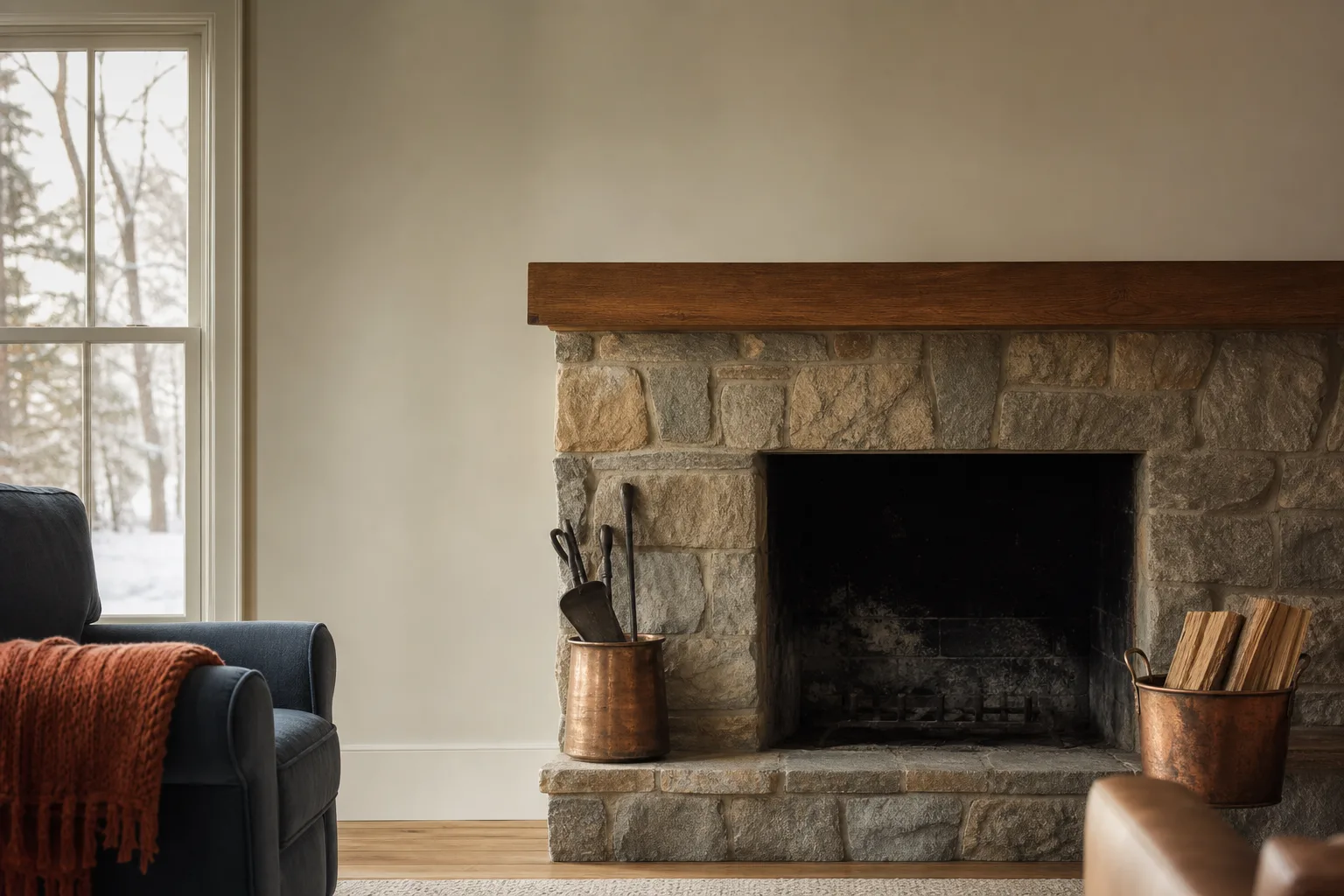
There is a particular kind of cold that only happens in a room with a fireplace nobody uses. It runs along the floor, comes out of the dark opening in the wall, and finds your ankles while the thermostat on the far wall insists everything is fine. If you went looking for a fix, somebody almost certainly told you to buy a chimney balloon.
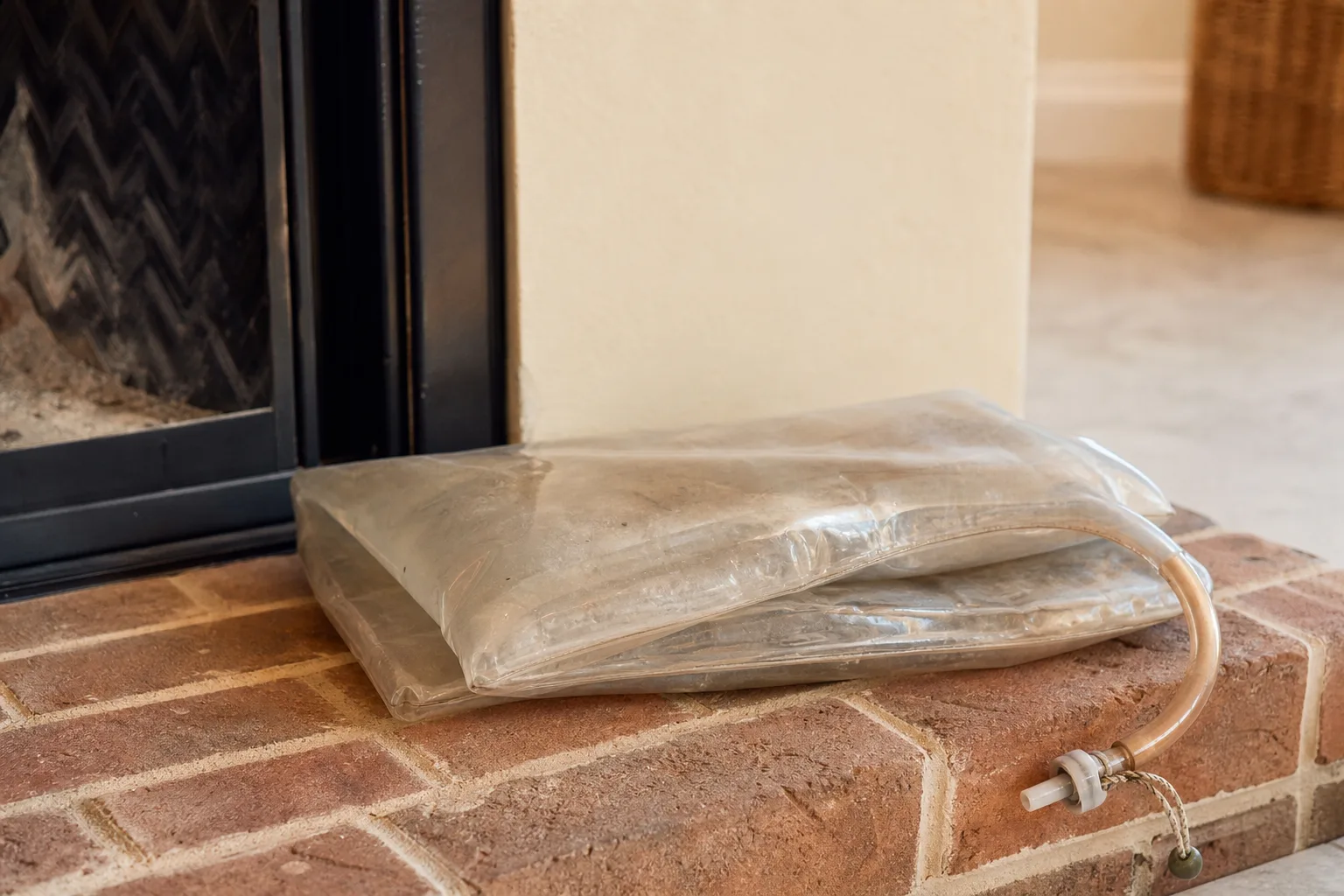
That is the standard advice in comment threads, and it is not bad advice. A chimney balloon is the common generic name for an inflatable flue seal, a bladder you push up into the flue and inflate until it presses against all four sides, blocking the column of air that runs from your living room to the sky. Several makers produce them and everything here applies to the whole category rather than to any one of them. Simple, no tools, and for a lot of houses exactly right.
For some houses it is the wrong purchase no matter how well it fits, and there is one situation where size and brand and installation do not matter at all. I will get to it. But what decides which group you are in comes first. A draft is not a problem. A draft is a symptom.
What a chimney balloon actually does
The draft is your house pulling, not the chimney pushing
Warm air in your house rises and leaks out near the ceiling, through the attic hatch, the recessed lights, the gaps around the top plates. Something has to replace it, and your house takes the replacement from wherever it is easiest. An open chimney is the easiest hole in most houses by a wide margin, a straight tall shaft to the outdoors, often the single largest opening in the whole building envelope. So the cold air at your firebox is not the chimney blowing on you. It is your house inhaling, and the chimney is the most convenient nostril.
Good to know: The effect gets stronger the colder it is outside and the taller the house is. A two-story house with a full-height chimney on a ten degree night is a chimney at its most enthusiastic, which is also why the draft seems to vanish in October and come roaring back in January.
What the seal touches, and what it leaves alone
Inflate a seal in the throat and you have stopped air moving through it. That is all you have done. You have not made the chimney weathertight, not stopped water entering from the top, not fixed a damper that no longer closes, not addressed a chimney liner that has seen better decades.
For a sound chimney that is genuinely just open, that is a complete solution. For a chimney with something actually wrong above the damper, it is a stopper in the bottom of a bottle with a hole in the side, and in one case it makes the problem worse.
Your draft is a symptom: what is actually causing it
Three things send cold air into a living room through a fireplace, and a fourth possibility is that nothing is wrong at all. You can usually narrow it down from the floor with a flashlight, and knowing which one you have is worth more than any product recommendation in this article.
The damper that no longer closes
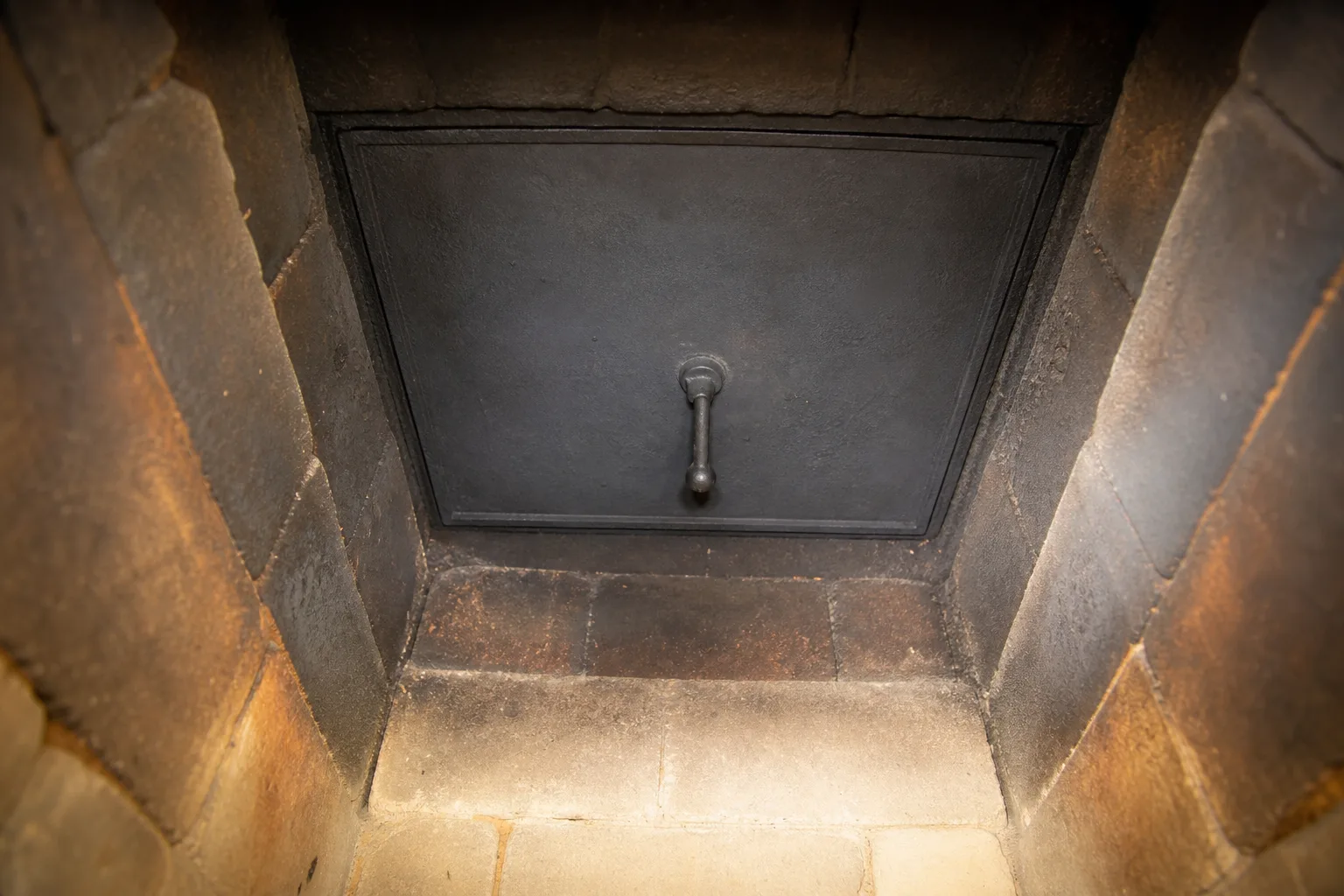
Most masonry fireplaces built for wood have a throat damper, a hinged metal plate just above the firebox. Some were built without one, and some use a different arrangement, so start by reaching up and feeling for a handle. If you find one, work it, then look.
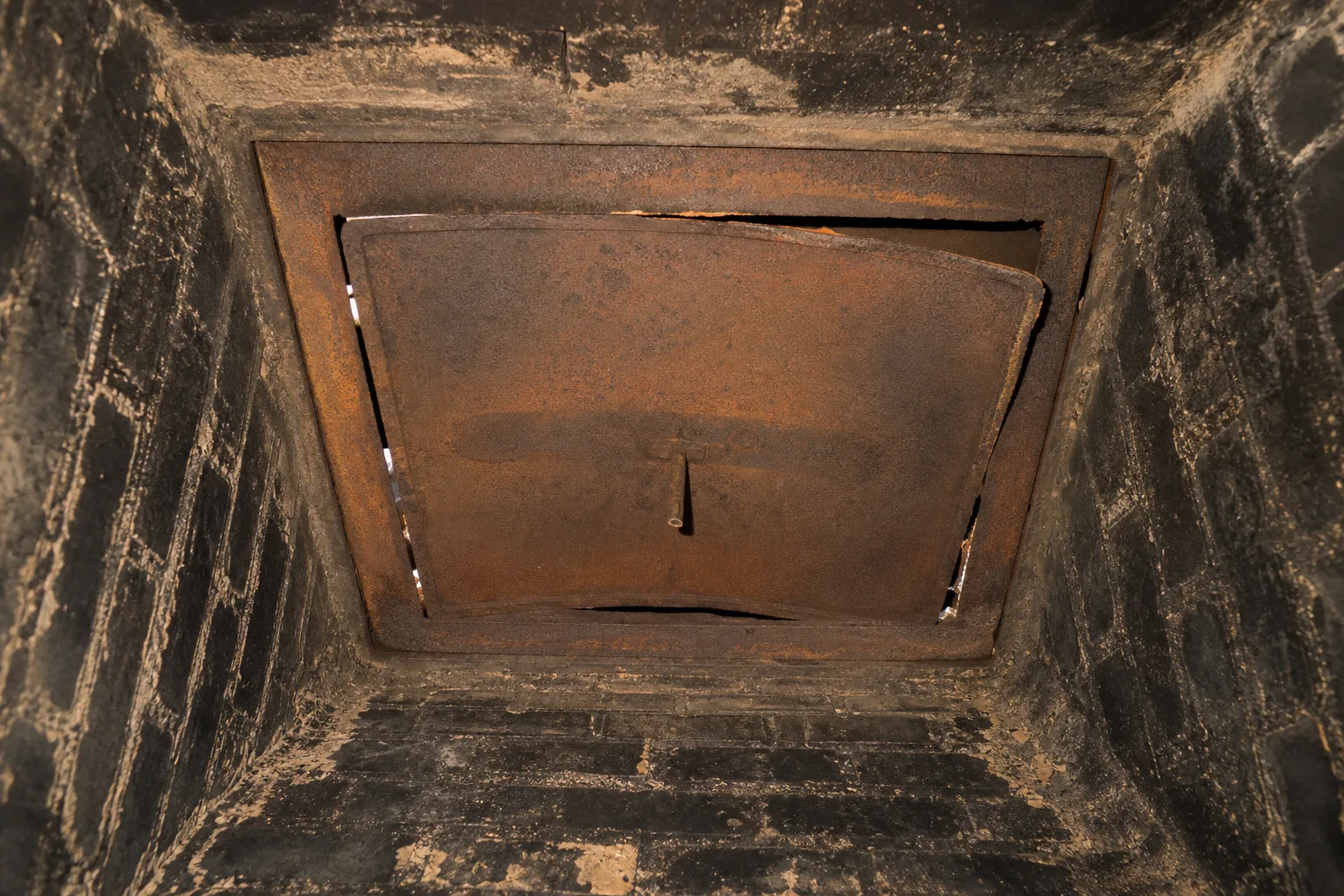
A damper that swings freely and lands flat is doing its job. One that grinds, sticks halfway, or lands crooked on a bed of rust and old mortar crumbs is not. This is the most common cause of a cold fireplace, and it is not subtle once you look. If the plate cannot sit flat, the chimney is open all winter whichever way the handle points.
Myth vs. fact: The myth is that a closed damper seals a chimney. The fact is that a throat damper is a plain metal plate resting on a metal frame, with no gasket and nothing to compress. Even a new one is a rough closure, and rust and warping widen the gap from there. A good damper cuts airflow down a great deal. It was never designed to stop it.
A missing, damaged, or wrong-sized cap
Look at the top of your chimney, ideally with binoculars from the ground rather than from a ladder. There should be a cap over the flue opening, a metal lid on legs with mesh sides. Nothing up there means the flue is open to the sky. Rain goes straight in, so do birds and squirrels, and wind blows across the opening, which feels quite different in the room below than a steady leak does. A cap that is bent, rusted through, or hanging off one leg counts as missing.
A cracked crown and open mortar joints
The crown is the sloped concrete slab on top of the chimney that sheds water away from the masonry. It is not the cap, and it is the component homeowners most often do not know exists.
Crowns crack. They are thin, exposed to everything the weather has, and often poured as an afterthought by whoever finished the brickwork. A cracked crown lets water into the masonry from above, and so do open mortar joints down the stack, which show up as dark streaks and brick edges wearing away. Neither causes a draft on its own. Both are here for a reason that becomes clear shortly.
The fireplace that is simply open
Sometimes the cap is on, the crown is sound, the damper only does what dampers do, and you never light the thing. Your diagnosis is finished. A seal is a good answer, and the rest of this article is about doing it properly.
Not sure what is actually above your damper?
A draft is a symptom, and the causes sit where you cannot see them from the living room floor. VIO CHIMNEY connects homeowners with independent local chimney companies who can tell you whether you have a seal-it-and-forget-it fireplace or a repair. Find out what you have before you plug it.
Call (513) 655-6702 or request service.
Sealing the bottom of a chimney that leaks at the top
This part does not appear on the product pages, and it is why the last section spent time on crowns and caps.
Why a sealed flue stops drying out
An open chimney gets wet sometimes. Rain past a missing cap, water soaking into a cracked crown, humid indoor air rising into a cold flue and condensing on the walls of it. All of that is normal, and an open chimney handles it the way it always has, by moving air. That constant column is a ventilation system nobody designed on purpose, and it dries the flue out between wettings.
Now put a seal at the bottom. The airflow stops. The water still arrives, because you plugged the fireplace, you did not fix the crown. What you have built is a tall closed damp shaft with no way to dry.
Masonry that stays wet through freezing weather spalls: water gets into the brick and the mortar, freezes, expands, and pushes the face apart. A flue that cannot dry accelerates something already underway. The smell arrives first and is what most people notice, damp soot and old creosote in a sealed space producing an odor that pushes back into the room on humid days.
From the field: The chimneys that surprise people are rarely the ones that look bad from the street. They are the ones where the brickwork is fine at eye level and all the trouble is at the top, where nobody looks. A stack can be perfectly presentable from the sidewalk and be missing its cap entirely.
What to check above before you plug below
Three questions. Is there a cap on the flue. Is the crown sound. Is water getting in.
The third is easiest to check from inside and the most telling. Look at the firebox floor and the smoke chamber walls after heavy rain. Damp patches, water stains, a smell of wet ash, or a white powdery bloom on the brick all say water is arriving, and sealing the bottom is then the wrong move to make first. Deal with the top, then seal. If all three come back clean, plug it with a clear conscience.
When a chimney balloon is the wrong thing to buy
Here is the situation I promised at the start. It has nothing to do with size or fit, and it is not a matter of degree.
Anything that vents into that flue changes the answer
If any fuel-burning appliance vents into the flue you are about to block, do not block it. Not with an inflatable seal, not with a wool plug, not with a rolled-up towel, not temporarily.
That includes a gas log set, a gas water heater, an older furnace or boiler vented into the chimney, a gas insert, and anything with a standing pilot light. A pilot flame is small, and it still produces combustion gases that have to go somewhere. Blocked, they come back into the house.
Safety note: Carbon monoxide has no color and no smell, and the early symptoms are easy to mistake for a winter bug. Working CO alarms on every level of the home are worth having whatever you do with your fireplace, and worth having before you change anything about how your chimney vents.
One chimney does not mean one flue
A single brick stack very often contains two or three separate flues running side by side inside it, one for the fireplace and one for the furnace or water heater. Look at the top. Two or three clay tiles poking up out of the crown means separate flues, so the fireplace flue may genuinely be sealable while the one right beside it must stay clear forever. That also means being certain which one you are looking up into from the firebox, and it is not always obvious from below. If you cannot say with confidence what vents into the flue above your fireplace, that question gets settled by a chimney inspection, not by guessing.
The remove-before-you-light problem
A seal in the throat sits above your line of sight, invisible from the sofa. And the entire point of buying one is a fireplace you were not planning to use, so months can pass without you thinking about it. Then somebody visits at Christmas and wants a fire.
Products in this category address that with a tag or a brightly colored tab that hangs down into the firebox. Use it, and leave it in the open rather than tucked out of sight. I will not tell you a seal cannot be forgotten, because anything installed by a person can be forgotten by a person. The tab is the whole defense, and it only works if you can see it. Remove the seal before any fire, every time, and do not count on the seal itself to protect you. A fire lit underneath one can obstruct the flue and push smoke back into the room.
The pre-installation safety check. Work through all six before anything goes up the flue.
- Nothing vents into this flue. No gas logs, no water heater, no furnace, no boiler, no insert, no pilot light of any kind.
- I know how many flues this chimney contains, and which one sits above this firebox.
- There are working carbon monoxide alarms on every level of the house.
- The flue is not visibly full of debris, nesting material, or heavy creosote deposits.
- Water is not getting in from above, and the cap and crown are accounted for.
- The seal has a visible tag or cord that will hang into the firebox and stay there.
One note on timing while we are here. NFPA 211 calls for a Level 2 inspection when the chimney system is changed, when the property changes hands, and after an event likely to have caused damage to the chimney, such as a chimney fire. Fitting a removable draft seal is not a system change in that sense. Swapping out the appliance the chimney serves is.
Chimney balloon vs. the alternatives
There are five real options for a fireplace that leaks air. They are not interchangeable, and the difference that matters most is not the one the product listings lead with.
| Option | Where it seals | Also blocks rain and animals | Honest trade-off |
|---|---|---|---|
| Inflatable chimney balloon | Throat or lower flue, fitted from the room | No | Has to come out for every fire, and can go slack over a season |
| Wool damper plug | Same position, fitted from the room | No | Breathable by design, so it passes some moisture and seals air less completely |
| Rigid foam plug | Throat or the firebox opening | No | Easiest to cut badly, easiest to leave without a visible tag |
| Throat damper repair | The throat, permanently, with a mechanism | No | Reduces airflow rather than stopping it, and usually needs a mason |
| Top-sealing damper | The top of the flue, on a gasket | Yes | The biggest job of the five, and worked from the top of the chimney |
Removable seals, and why the wool ones behave differently
Both are no-tools, renter-friendly blocks you fit from the room. The inflatable version seals air more completely, because it presses against irregular masonry on all four sides. The wool version breathes, an advantage in the damp-flue situation above and a drawback if draft-stopping is all you want.
Repairing the damper, and sealing at the top
If your diagnosis came back "the damper does not close," repairing it addresses the defect rather than the symptom. It will still leak, because that is what throat dampers do, but it works with the fireplace instead of against it and there is nothing to remember to remove.
A top-sealing damper is the other end of that thought: a gasketed lid at the top of the flue, worked by a cable running down to the firebox. It is the only option here that answers draft, rain, and animals at once, because it seals where the weather actually is, and the only one that keeps the flue dry instead of sealing damp inside it.
And the honest version, which the product pages will not give you: if your fireplace is unused, structurally sound, and vents nothing, a chimney balloon is a perfectly good answer. Buy one, fit it, hang the tab where you can see it, and you are finished. You do not need us for that, and I would rather say so than talk you into an inspection you have no reason to book.
Sizing and fitting one properly
Measure the flue, not the fireplace opening
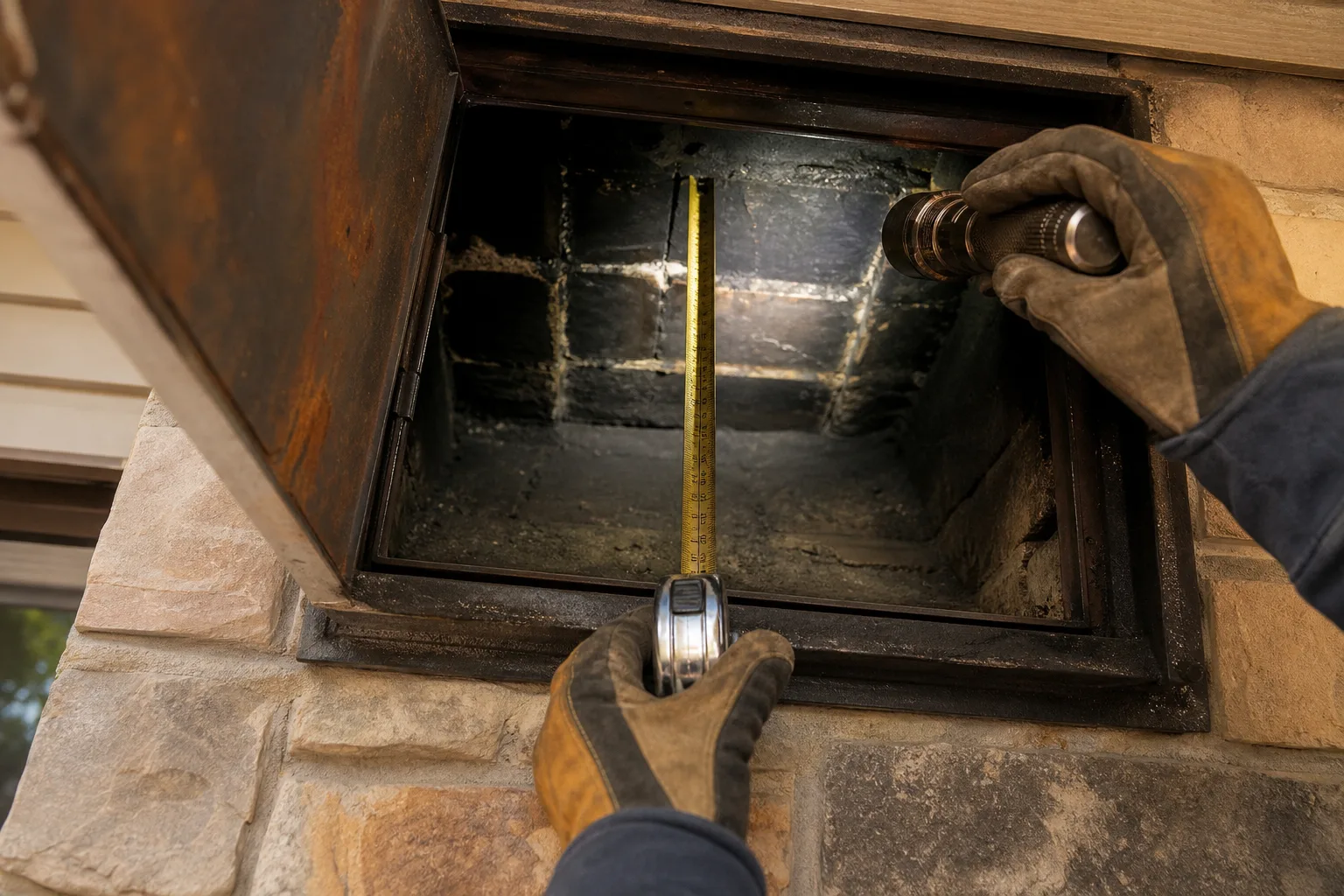
The mistake happens before anyone picks up a tape measure. People measure the fireplace opening, the big rectangle in the wall, and order to that. The seal does not go there. It goes up in the throat or the lower flue, where the passage narrows sharply.
Reach past the damper with a flashlight and a tape, and measure width and depth where the seal will actually sit. Round to the nearest listed size, and go up rather than down. These are meant to be compressed into place.
Pro tip: Measure at the point of installation, not at the widest point you can reach. Throats taper, and a size chosen at the wide end will not hold where you want it to hold.
Getting it into position, and confirming it
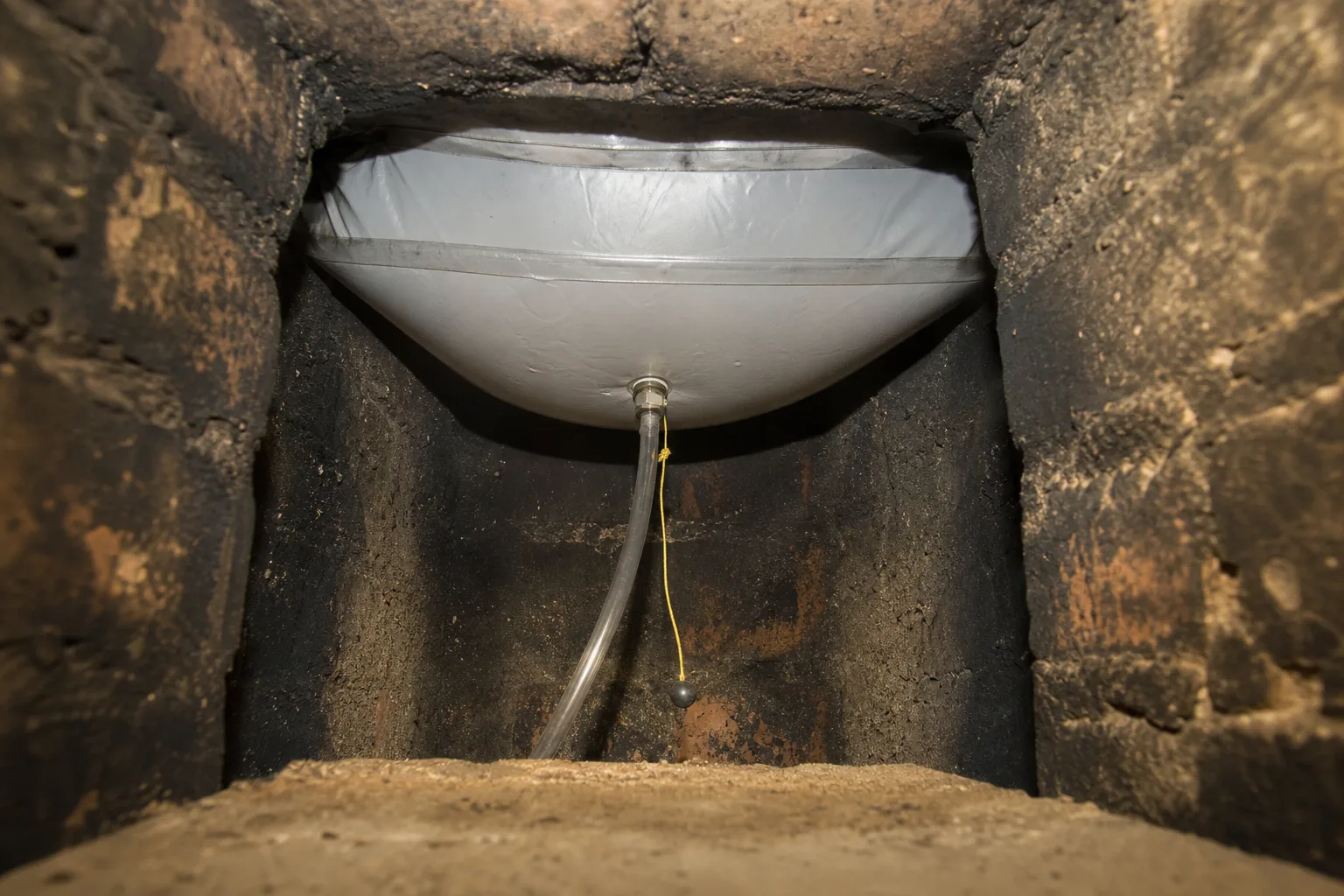
Fold it, push it up past the open damper, then inflate until it presses firmly on all four sides. It should take effort to seat and should not slide when you tug gently. Follow the instructions that came with your seal on where the damper should sit, because that varies by product and it is not a detail to improvise. Whatever the instructions say, the tag has to hang into the firebox in plain sight and nothing may pinch the seal or block its removal. Then run the check below before calling the job done.
Did it work, and will it still be working in January?
Two tests you can run in five minutes
The first is your hand: an open palm held just inside the firebox opening, low down. Moving air is obvious once there is nothing left to mask it.
The second is better. Light a stick of incense, hold it at the firebox opening, and watch the smoke. Smoke drifting steadily into the room means air is still moving through. Smoke rising straight up means it is not. Do this on a cold, windy day when the stack effect is strongest, or you will get a false pass.
If the draft is still there after a good seal, the flue is probably not the whole story. Air can get past the seal itself, and a firebox has other ways in: an ash dump, an outside air inlet, gaps around the surround. Check those, then widen the search to the attic hatch, the rim joist, and the dryer vent flap.
How these seals fail over time
They go slack. Temperature swings, slow leaks at the valve, and the flue's own irregular walls all work against a seal that was tight in November. Debris and creosote flakes drop onto them from above, and animals investigate anything new.
From the field: The seals that quietly stop working are never the dramatic failures. They are the ones that went a little soft and never got checked, because nobody had a reason to look up.
Check yours once mid-winter. Push up on it, confirm it is still firm, and top up the air if it has softened.
How VIO CHIMNEY helps with this
VIO CHIMNEY is a referral service. We do not sweep chimneys, repair crowns, or sell draft seals. We connect homeowners with independent local chimney companies, and the professional who shows up works for that company, not for us.
For this question, the useful thing we can do is get you an answer about what sits above your damper. Whether the cap is on. Whether the crown is cracked. Whether anything vents into that flue. Whether the damper closes or only pretends to. Those four answers decide whether a chimney balloon is a smart purchase or a bandage, and none of them can be settled from the living room floor.
We ask every company in the network to put its estimate in writing before any work starts, and you should insist on exactly that.
Get the chimney looked at before you seal it
If the triage in this article left you with a question you cannot answer from the floor, that is the right reason to have someone look. We match you with an independent local chimney company, and we ask every company in the network to put its estimate in writing before any work starts. Insist on exactly that.
Call (513) 655-6702 or request service.
Symptom checker
What is your chimney doing?
Tap the closest match for an honest first answer.