



On this pageWhat a chimney damper does, and where yours is hiding8 sections+7
- What a chimney damper does, and where yours is hiding
- The two kinds, and how to tell which one you have by feel
- How to check your chimney damper in about two minutes
- When it is not the chimney damper
- Repair it, or abandon it and seal the top?
- Chimney damper safety, said properly
- Keeping a chimney damper working
- How VIO helps with your chimney damper
Quick answer
A chimney damper is a metal plate that seals your chimney flue when no fire is burning. Throat dampers sit in cast iron just above the firebox and are worked by a handle or knob; top-sealing dampers sit on the chimney crown and are worked by a chain inside the firebox. Keep it open while burning and until the firebox is fully cold, and closed the rest of the time.
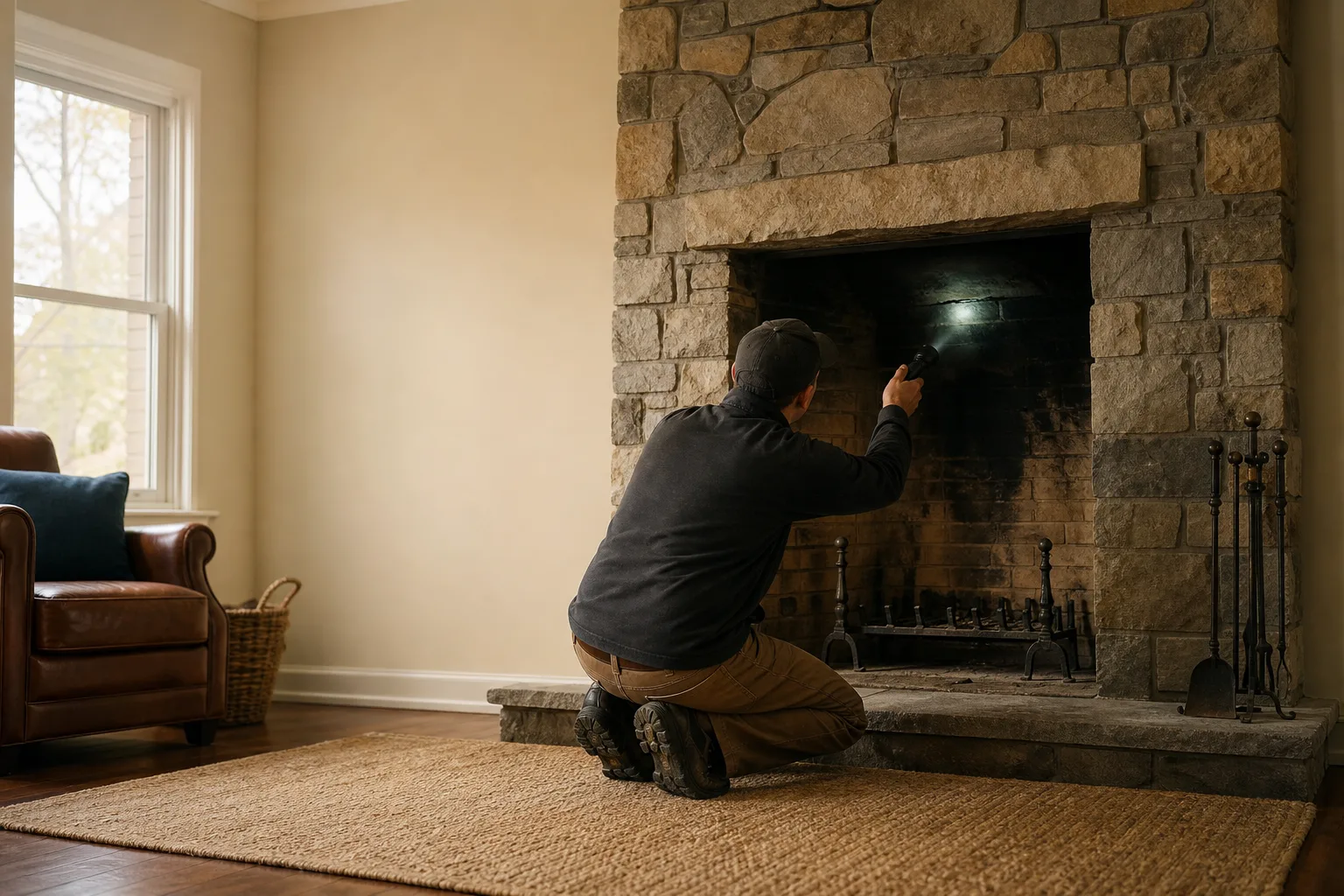
You are crouched in front of your own fireplace with a flashlight, reaching up into a space you have lived beside for years and never once looked at. Your fingers find metal. A lever, maybe. A small knob on a rod. Something that does not want to move. That is your chimney damper.
It is a metal plate that seals the flue when you are not burning a fire. It sits either just above the firebox, in the narrow throat where the masonry funnels inward, or at the top of the chimney, resting on the crown like a lid. Open, it lets smoke out. Closed, it stops the heated air in your house from pouring up the chimney.
Here is the part that will save some of you a phone call. Your damper may turn out to be working perfectly well. A fireplace smokes, or the living room is cold, and the damper becomes the first suspect because it is the only moving part anyone knows about. Sometimes it is innocent. We will get to how you tell.
First, let us find yours.
What a chimney damper does, and where yours is hiding
A chimney is a hole in the top of a heated house. That is the whole problem in one sentence. Warm air rises, finds the flue, and leaves, and in the winter your furnace pays to replace it.
The damper is the lid on that hole. Burning a fire, you need it open, because combustion gases will find your living room if they cannot find the flue. Cold and idle, you want it shut, or the chimney works twenty-four hours a day whether or not there is anything in the firebox.
That is the entire job. Open while anything is burning or still glowing, closed once the firebox has gone genuinely cold. There are exceptions, and the ones that matter most are further down.
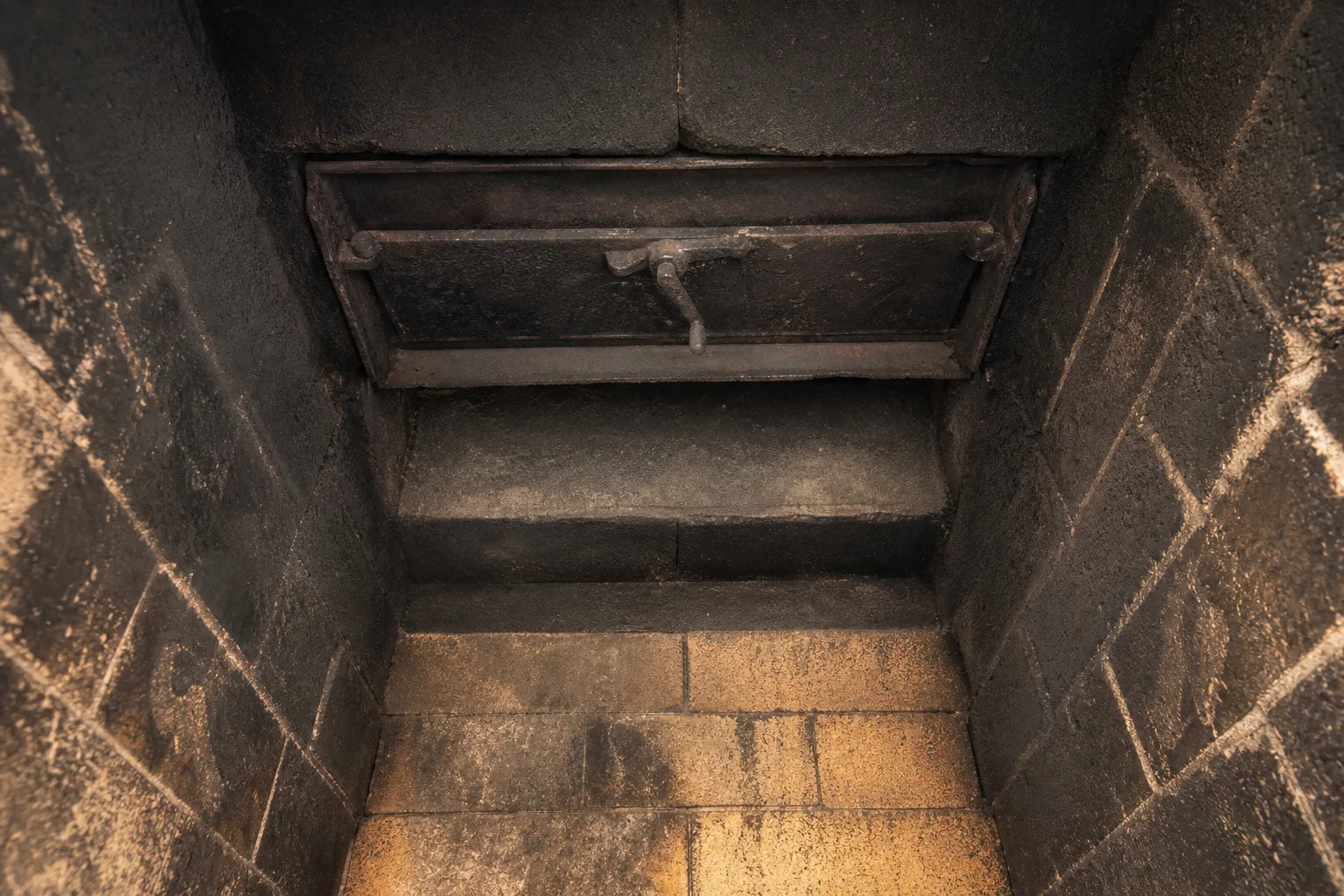
So why has nobody ever seen this thing? The smoke shelf. Directly behind and above the damper, the masonry steps back into a flat ledge that catches downdrafts and falling debris. It also blocks your view completely.
Good to know: The smoke shelf is why a flashlight check has a hard ceiling. You can learn whether your damper moves. You cannot learn whether the flue above it is clear, whether the liner is intact, or whether a cap is missing. Those need a camera or a person on the roof.
The two kinds, and how to tell which one you have by feel
You do not need to identify your damper visually. You can do it by touch, in about fifteen seconds, and the answer tells you where the part lives and what fixing it will involve.
Reach up into the firebox, above the opening, toward the back.
Throat dampers, the cast-iron plate above the firebox
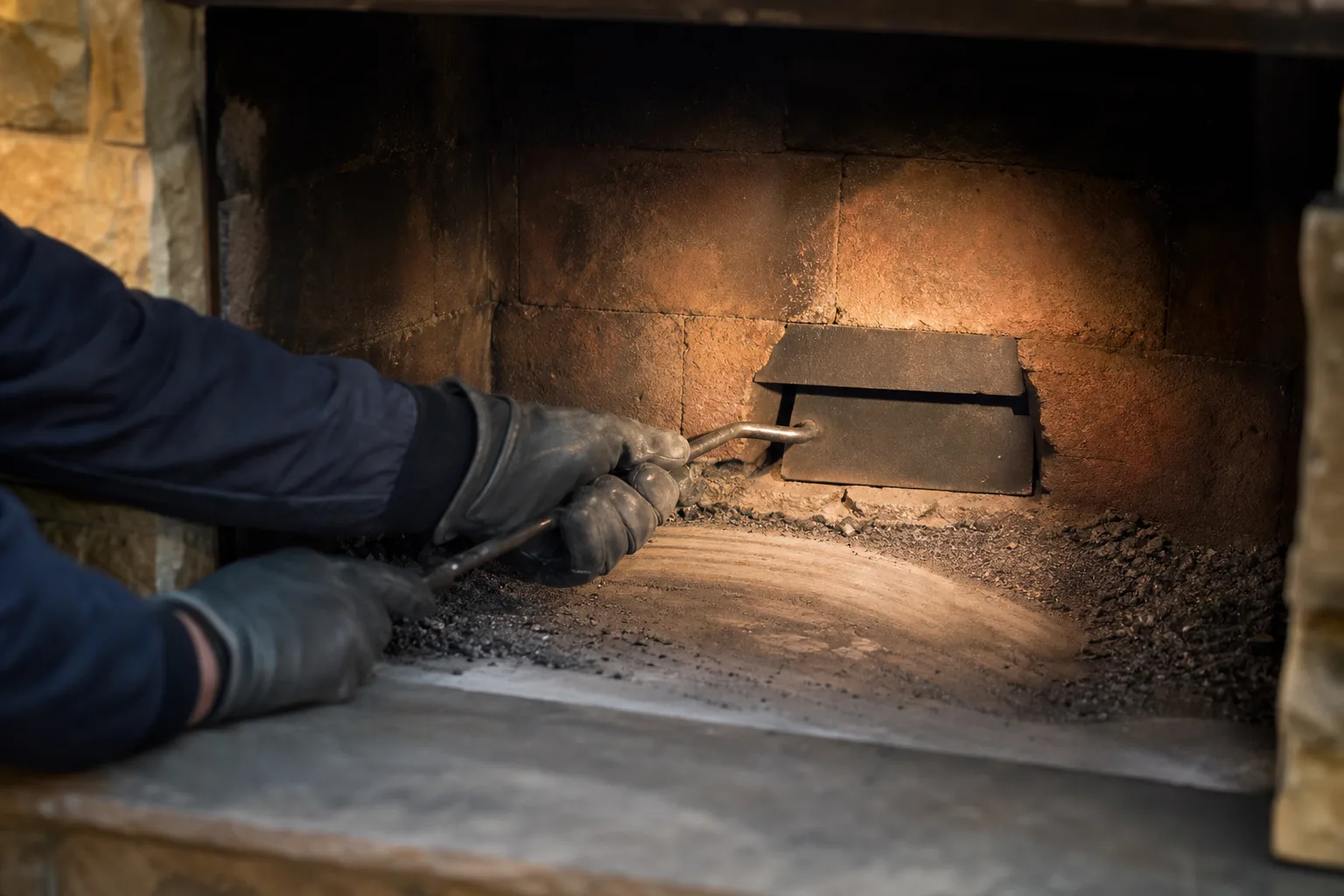
The old standard, and the type built into masonry fireplaces through much of the twentieth century. A hinged cast-iron plate sits in a cast-iron frame set into the throat, six to twelve inches above the top of the firebox opening, and swings back to lie against the smoke shelf.
Your hand will find one of three things.
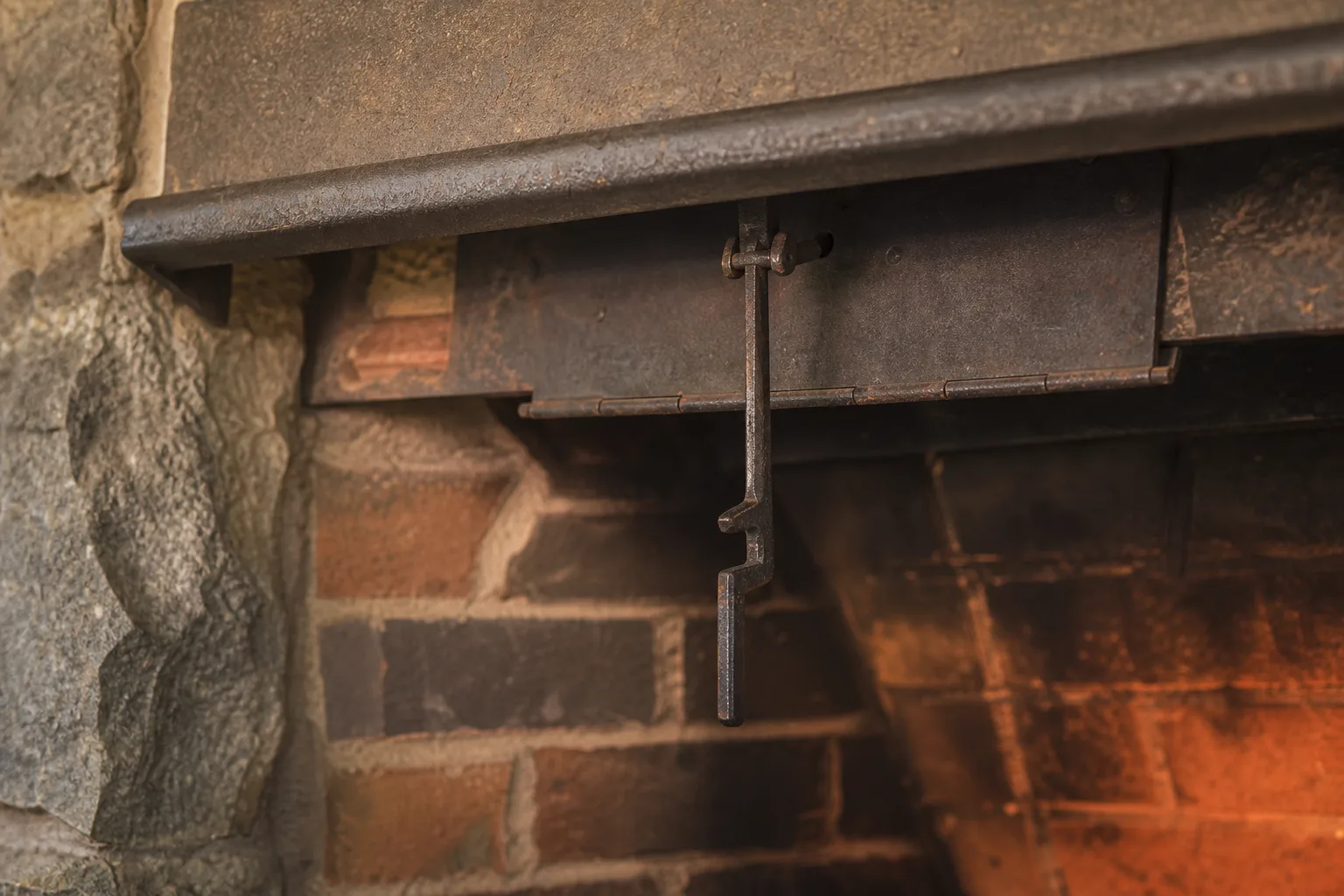
A stiff handle sticking down, sometimes called a poker handle, that you push or pull to swing the plate. It usually has notches so it stays where you leave it.
A small knob on a threaded rod that you turn like a wing nut. These are rotary dampers, and they move the plate gradually rather than in one throw. They are easy to mistake for broken, because turning the knob does not produce the satisfying clunk people expect.
A ratcheting lever on a toothed track, which you lift and slide.
Whichever you have, the tell is that the mechanism is right there, within arm's reach of the firebox opening. If you can touch the part that moves the plate, you have a throat damper.
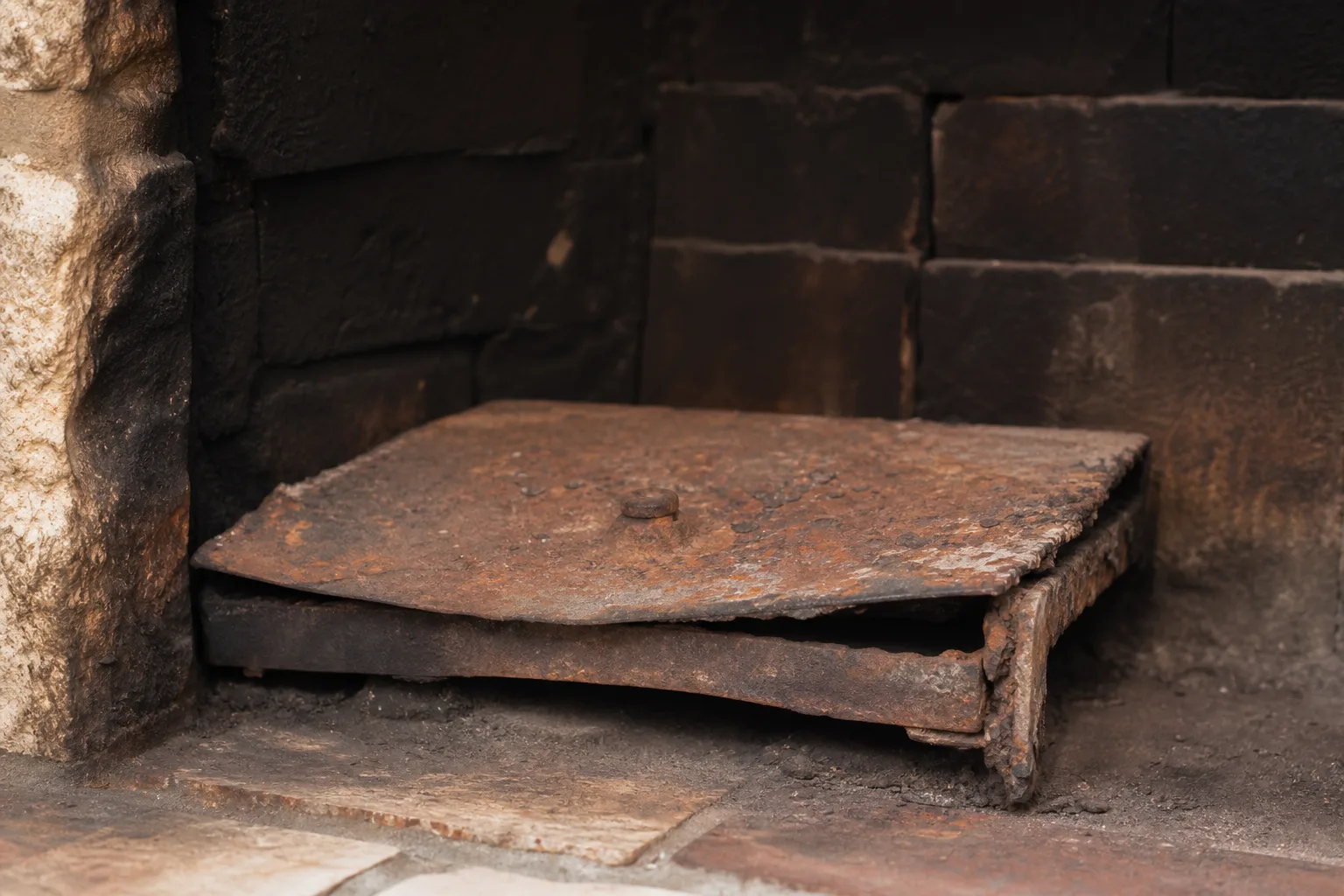
Cast iron in a chimney lives a hard life, heated to hundreds of degrees and cooled again in the presence of water and the acidic residue wood smoke leaves behind. The plate warps, the frame corrodes, the hinge pins seize. A throat damper that has stopped closing tightly did not fail suddenly. It has been getting worse for years.
Top-sealing dampers, the gasketed lid at the crown
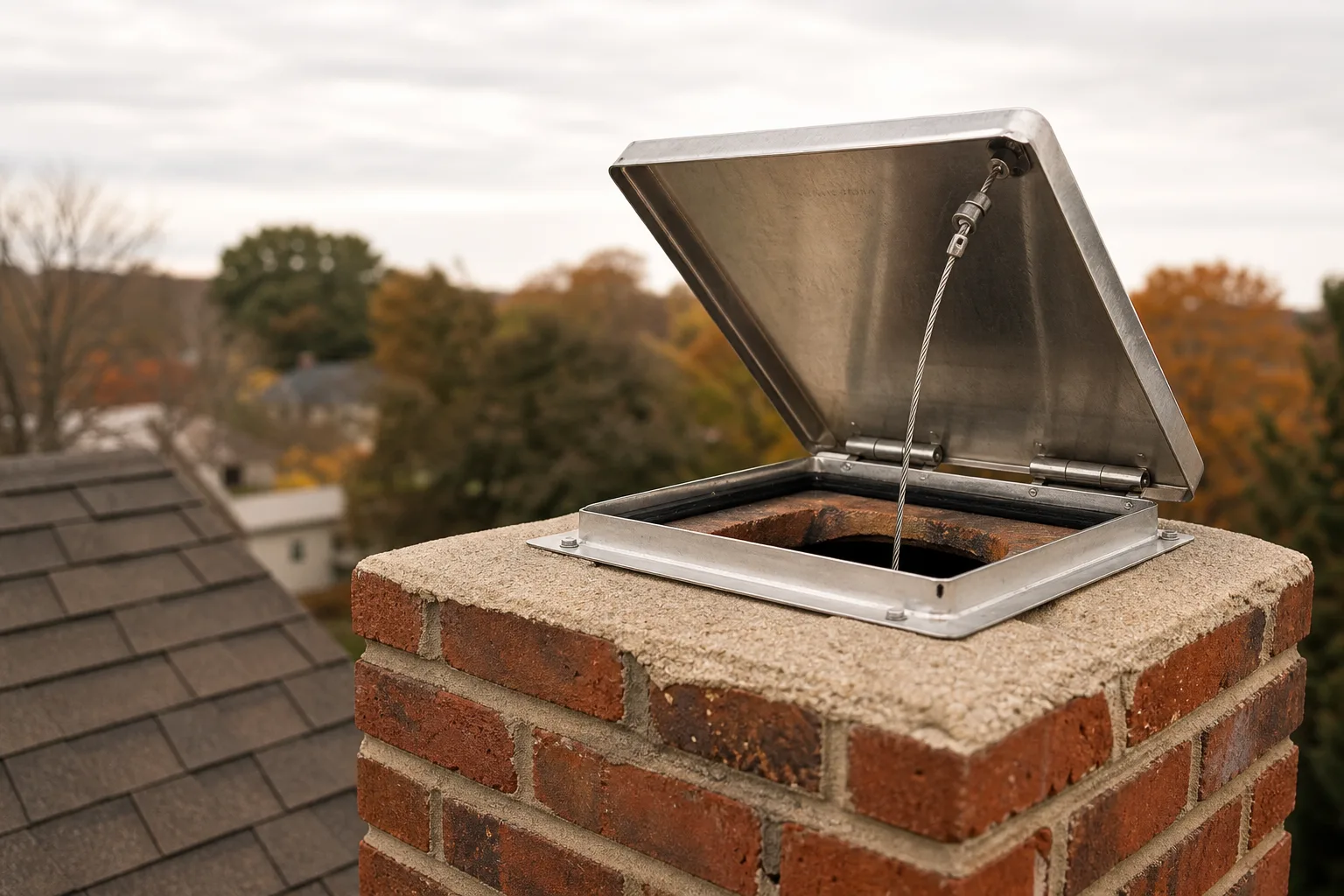
The other kind lives at the top of the chimney: a hinged lid with a rubber or silicone gasket around its rim, mounted on the crown, spring-loaded, and operated by a stainless steel cable running down the full length of the flue to a bracket inside your firebox.
If you reach up and find a chain coming down the side wall of the firebox to a small hook, that is what you have. Your damper is on the roof.
Pro tip: The chain is the giveaway. If there is a chain, stop hunting for a plate above the firebox, because there probably is not one. Which position on the bracket means open varies by model, so check the label at the bracket or the manufacturer's instructions rather than guessing, and confirm by looking up the flue before you light anything.
Top-sealing dampers seal better than cast iron ever has, because a gasket compressing against a machined lip is simply a better closure than iron resting on iron. They also sit where the rain and the squirrels are, which means they double as a chimney cap. That combination matters later.
Things that get called dampers but are not
If you have a fireplace insert or a wood stove, the lever or dial that controls how hard the fire burns is an air control, not a damper. It regulates air going into the firebox and does not seal the flue. Many inserts are installed with the original throat damper removed or clamped open so the liner can pass through, which is intentional.
A stove pipe damper is a round plate inside the single-wall pipe of a wood stove, turned by a handle on the outside. It slows the draft to hold heat longer, and by design it never closes the pipe fully.
And some fireplaces have no damper at all. Ventless gas units have no flue to seal, and sealed direct-vent units vent through their own dedicated pipe rather than up a chimney you would ever damper. If you have looked hard and found nothing, that may be the answer.
How to check your chimney damper in about two minutes
Do this cold. Not after a fire, not with warm ash in the firebox, and not while anything is burning.
- Open a window in the room first, then take gloves and a flashlight. Everything in a firebox is sooty and some of it is sharp.
- Reach up and find the mechanism. Handle, knob, chain, or nothing. That alone tells you which type you have.
- Look up through the throat. Open, you see past the plate into a dark rectangular passage. Closed, you see the flat underside of the plate blocking the way.
- Move it through its full travel, gently. Open, closed, open. Note whether it runs freely, binds partway, or refuses.
- With the damper closed, hold your hand under the throat. On a cold day, a strong steady flow of cold air spilling past means the seal is gone. Rough test, but a telling one.
- Look at the plate and frame. Flaking rust and scale, a plate that does not lie flat in its seat, a frame with pieces missing. These decide repair from replacement.
- Check for debris. Twigs, leaves, or nesting material on the plate or the smoke shelf mean something has been getting in from above, and that is a separate problem.
If the damper moves freely and seats reasonably flat, it is doing its job, and whatever brought you here is probably something else.
If it will not move, stop before you force it. A seized cast-iron plate can be freed, but the wrong kind of pressure on corroded iron breaks the frame instead of the rust, and a broken frame turns a small repair into a masonry job.
Either way, you have now reached the ceiling of what a flashlight can tell you.
When it is not the chimney damper
This section will be useful to more of you than any other. A fireplace that smokes, a room that stays cold, a draft nobody can place. All three get blamed on the damper, and the damper is not always responsible.
Myth vs. fact: Myth: smoke coming into the room means the damper is stuck closed. Fact: a wide-open damper accomplishes nothing if the flue above it is blocked, if the chimney is too cold to establish draft, or if the house is pulling harder on that opening than the chimney can pull back. Confirm the damper is open, then look above it.
The house is fighting your fire
Modern houses are tight. Run a kitchen exhaust fan, a bathroom fan, a clothes dryer, and a furnace drawing combustion air from inside, and the house goes slightly negative. Air has to come from somewhere, and a chimney is the largest unsealed opening in the building. So it comes down the flue, and it brings the smoke with it.
The tell: smoking improves when you crack a window in the same room, and worsens when appliances run. If that is your fireplace, the damper is a bystander.
Something is living up there
A chimney is exactly what a bird, a squirrel, or a raccoon is looking for. A dry vertical shaft with ledges, sheltered from weather and predators. A nest above the smoke shelf can obstruct the flue almost completely, and the homeowner working a damper that moves perfectly well has no way to see it. Chirping, scratching, or a new smell when it rains all point up rather than down. Getting an animal out of a chimney is its own job, and not one to do by lighting a fire under it.
The flue itself, not the flap
Above the damper sits the flue, and inside it sits the chimney liner. Cracked clay tiles, gaps at the joints, a rusted-through metal liner, or an oversized flue that never warms enough to draw all produce symptoms that feel exactly like a damper problem from where you are standing. Heavy creosote glazing narrows the passage the same way, and that is a fire hazard on top of a draft problem. A missing or crushed cap lets rain fall onto the damper and smoke shelf, which is often what corroded the damper in the first place. There, the damper is a symptom, and replacing it without fixing the cap restarts the clock.
Not sure what you are looking at up there?
A flashlight gets you to the throat and no further. Someone who does this every day can get above the smoke shelf and look at what you cannot reach: whether the damper is repairable, whether the frame is spent, or whether the problem was never the damper at all. VIO matches you with a screened independent chimney company near you, and you can ask for the estimate in writing before you agree to any work.
Call (513) 655-6702
Or request service and describe what you found.
Repair it, or abandon it and seal the top?
Now the decision, and it comes with a surprise.
When a throat damper is genuinely finished, the common recommendation is not to replace it in the throat. It is to leave the old one where it is, open or removed, and put a top-sealing damper on the crown instead.
That sounds like the expensive answer. But cutting a corroded cast-iron frame out of surrounding brick, working from inside a firebox, is difficult work that puts the surrounding masonry at risk. Mounting a lid on top of the chimney is straightforward by comparison, seals better, and does a second job at the same time.
When freeing or rebuilding the throat damper makes sense
If the frame is sound and the trouble is a seized hinge, stiff rust, or a lost handle, this is a repair, not a replacement. Cleaning and freeing a stuck plate, or fitting a new plate into an intact frame, is reasonable work for someone who knows the mechanism. It also makes sense when the fireplace is used rarely, there is no cap or animal problem to solve, and you would rather not spend above the minimum.
When a top-sealing damper is the better call
When the cast-iron frame is corroded through, when the plate is warped past seating, when you need a cap anyway because rain or animals are getting in, or when the fireplace runs all winter and a real gasketed seal is worth having, the top-sealing route wins on more than one count at once.
It also stops the cycle. A throat damper corroded by rain will corrode again if the reason rain reaches it goes unaddressed, and a lid on the crown addresses it by existing.
The catch is honest. It is roof work, the cable runs the length of the flue and can be fouled by heavy creosote buildup, and someone has to get up there to service it. If your chimney is tall or awkward to reach, that is a real factor.
From the field: A throat damper that has seized on a chimney already scheduled for a new liner is rarely worth the effort of freeing. The liner work reopens the same space, the new system usually wants the throat clear anyway, and a seal at the top serves the finished chimney better than a rehabilitated plate in the middle of it.
What the decision actually hinges on
| What you are weighing | Points toward repairing the throat damper | Points toward a top-sealing damper |
|---|---|---|
| Condition of the cast-iron frame | Frame is intact and the seat is still flat | Frame is corroded through, cracked, or missing sections |
| Rain or animals also getting in | Cap is sound, no water or wildlife issues | You need a cap anyway, and this is both parts in one |
| How often you burn | Occasional fires, seal quality matters less | Used all season, and a real seal is worth having |
| Liner work already planned | No flue work in the picture | The flue is being relined, so the space is open regardless |
| How tight the closure must be | Iron on iron is acceptable for your situation | You want a genuine seal against air loss |
| Roof access | Steep, tall, or awkward access makes roof work harder | Roof is safely and reasonably accessible |
| Where the problem started | Damper wore out from ordinary age and use | Damper corroded because water comes in from above |
Read the table as a tally, not a formula. Three or four rows pulling the same direction is your answer.
Chimney damper safety, said properly
Some of this you have heard. One piece of it you almost certainly have not, and it is the one that matters most.
Safety note: If you have vented gas logs, your damper may be clamped, bolted, or wired permanently open on purpose, and that is not a defect. A damper stop is installed precisely so nobody can close the flue on a gas appliance venting combustion products into it. If you reach up, find a damper that refuses to close, and discover a clamp holding it, leave the clamp exactly where it is. Removing it to "fix" the damper is the most dangerous mistake anyone makes on this topic.
The rule everybody knows is not to close the damper while a fire is burning. True, and easy to follow, because a room full of smoke gives immediate feedback.
The version that actually catches people is quieter.
Safety note: A bed of coals at eleven at night, with no flame left and only a dull glow under the ash, is still burning. Incomplete combustion produces carbon monoxide, which has no smell and gives no warning, and closing the damper on those coals traps it in a house where people are asleep. Leave the damper open until the firebox is genuinely cold, which usually means the next morning. Working carbon monoxide alarms on every sleeping level are not optional in a house with any fuel-burning appliance.
Two more worth stating.
Do not force a seized damper with a pry bar or a hammer. Corroded cast iron does not yield gradually. It cracks, usually at the frame, which is the part embedded in masonry and the part that is expensive to replace.
And when a damper stops working, it is worth asking what else is going on above it. Under NFPA 211, a Level 2 inspection is called for at the sale or transfer of a property, when the system is changed (a new appliance, a different fuel, a new liner), after a chimney fire, and after an operating malfunction or an external event such as a storm, an earthquake, or lightning where damage to the chimney is possible. A seized handle on its own does not automatically put you in that category. A seized handle alongside a smoking fireplace, water where water should not be, or a storm that worked on the stack is a different matter, and that is the moment the rest of the system finally gets looked at properly.
Keeping a chimney damper working
Dampers do not need much. They need to be used, and they need to stay dry.
Work the mechanism through its full travel a few times at the start and end of the heating season, even if you are not burning. A damper that sits in one position for years is the one that seizes. Keep the seat clean, too, because ash and grit on the frame stop the plate from seating flat.
For a top-sealing damper the maintenance moves to the roof. The gasket is a wearing part, the cable can stretch or fray, and a lid that will not seat is usually a gasket or debris problem rather than a mechanism problem.
And keep the water out. Rain reaching cast iron is what corrodes it, season after season. A sound chimney cap, an intact crown, and good flashing do more for the life of a damper than anything you can do from inside the firebox.
When a chimney sweep comes through, the damper is often part of the visit, though what a given company covers varies with the type of visit. Worth asking before they arrive: will they operate the damper, look at the seat and frame, and clear the smoke shelf? That is a common way a failing damper gets caught, well before it becomes a smoke-in-the-room emergency.
How VIO helps with your chimney damper
Straight about what we are: VIO is not the company that shows up at your house. We are the people who find that company for you.
When you call, we match you with a screened independent chimney company working in your area, and our expectation of that company is a written estimate before any work begins. The company we match you with can do what you cannot do from a firebox floor: see above the smoke shelf, judge whether the cast-iron frame is sound or spent, find where water is getting in, and look at the flue and liner the damper is supposed to seal.
That is why we push for a look rather than a part. A damper is cheap to talk about and easy to sell. Whether the damper is your actual problem is the question worth answering first, and the company we match you with is expected to answer it honestly, including when the honest answer is that the damper is fine and your money belongs somewhere else.
Get the damper looked at by someone who can see the whole flue
Tell us what happened when you reached up and pulled the handle. We match you with an independent local company that has been screened, they inspect the damper and the flue it seals, and you can have the estimate in writing before you commit to anything. If the damper turns out to be fine, that is a perfectly good outcome and you will hear it straight.
Call (513) 655-6702
Symptom checker
What is your chimney doing?
Tap the closest match for an honest first answer.