



On this pageWhat a Chimney Flue Liner Actually Is8 sections+7
- What a Chimney Flue Liner Actually Is
- The Three Kinds of Chimney Flue Liner, Compared
- How to Tell Your Flue Liner Has Failed
- What the Inspection Proves, and How to Read the Evidence
- Why an Insert or a New Appliance Needs Its Own Liner
- When a New Liner Is Not Your Problem
- Judging the Quote and the Installer Before You Sign
- How VIO Helps With a Chimney Flue Liner Decision
Quick answer
A chimney flue liner is the inner surface of a chimney, the passage that carries smoke and combustion gases out of the house. It keeps heat off framing, protects masonry from acidic moisture, and sizes the flue to the appliance. Liners are clay tile, cast-in-place, or metal. Cracked tiles, open mortar joints, and clay flakes in the firebox point to failure, which a camera scan confirms.
The finding usually shows up as one line on an inspection report. "Flue liner cracked, recommend reline." No photograph, no explanation, and a number underneath it bigger than anything you expected to spend on a chimney. Nobody explains what a chimney flue liner is before quoting you for one. Then the person who wrote it drives away and you are alone with a decision about a part of your house you have never seen.
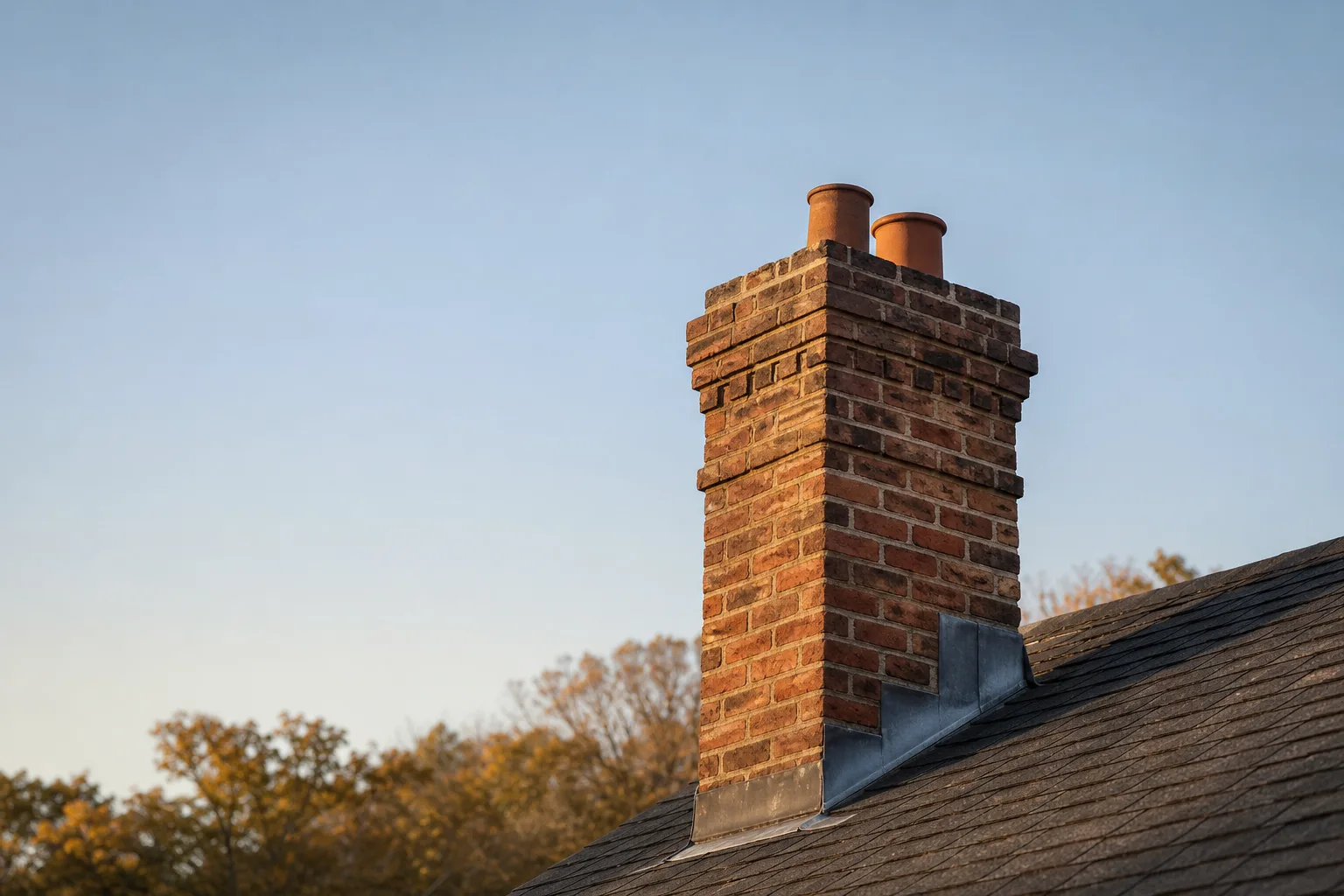
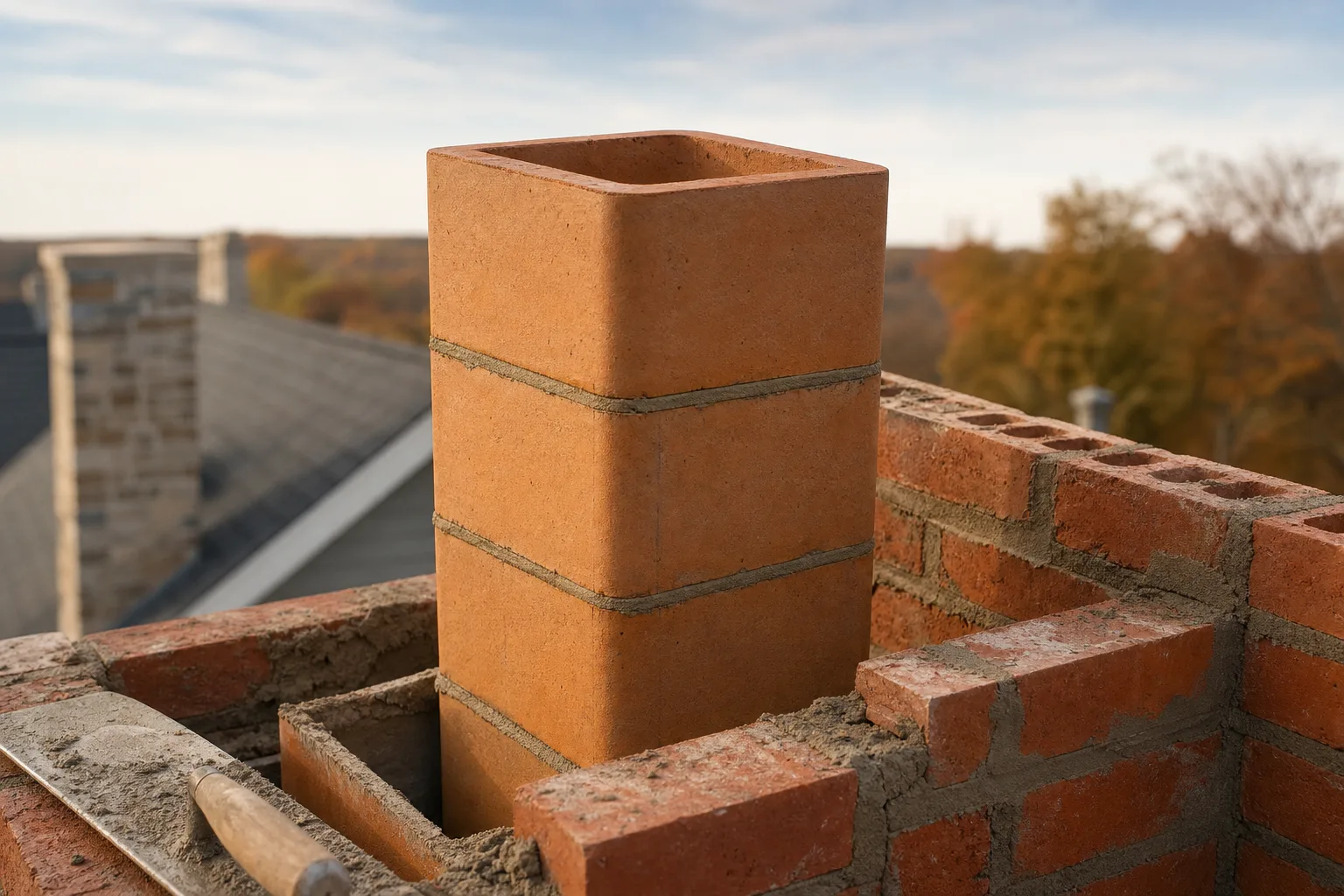
A chimney flue liner is the inner surface of the chimney, the passage that smoke and combustion gases travel through on their way out of the building. It is not the brick you see from the yard. It sits inside that brick, and in most masonry chimneys built during the last century it is a column of stacked clay tiles.
What a Chimney Flue Liner Actually Is
Picture the chimney as two things nested inside each other. The outside is structure: brick, block, or stone, holding itself up and keeping weather out. The inside is a channel that has to survive what the structure cannot. Fire produces heat, moisture, and acids, and the liner takes that abuse so the rest of the chimney does not have to.
Codes have required lined chimneys for a long time, so this mostly comes up on older houses and on chimneys where the original liner has worn out.
The three jobs a liner does
It keeps heat away from the house. A chimney passes floors, framing, and an attic, past wood that has been drying beside it for decades. The liner, with the masonry around it, stands between a flue fire and that framing.
It protects the masonry from what comes off the fire. Combustion gases carry moisture and acidic compounds. Let those touch mortar and brick directly, year after year, and joints open and water starts moving through the structure. Bad liners and crumbling masonry tend to arrive together.
It gives the appliance the right size passage. Too small and the appliance cannot exhaust. Too large and the gases cool, slow down, and condense on the walls. That second one surprises people, and it gets its own section below.
Chimney, flue, liner: the words people mix up
The chimney is the whole structure. The flue is the passage inside it that carries exhaust, and one chimney can hold more than one. The liner forms the wall of that passage, so when a report says "the flue is cracked," it means the liner is cracked.
Good to know: the chimney you see from the driveway tells you almost nothing about the liner. A stack with clean brick can have a flue that has been shedding tile for years, and a chimney that looks rough outside can be sound inside.
The Three Kinds of Chimney Flue Liner, Compared
Three material families are in use, plus one special case. One is the right answer for most relining jobs, and getting the choice backwards is expensive.
| Liner type | Typically used for | What it needs from the chimney | Strengths | Limits |
|---|---|---|---|---|
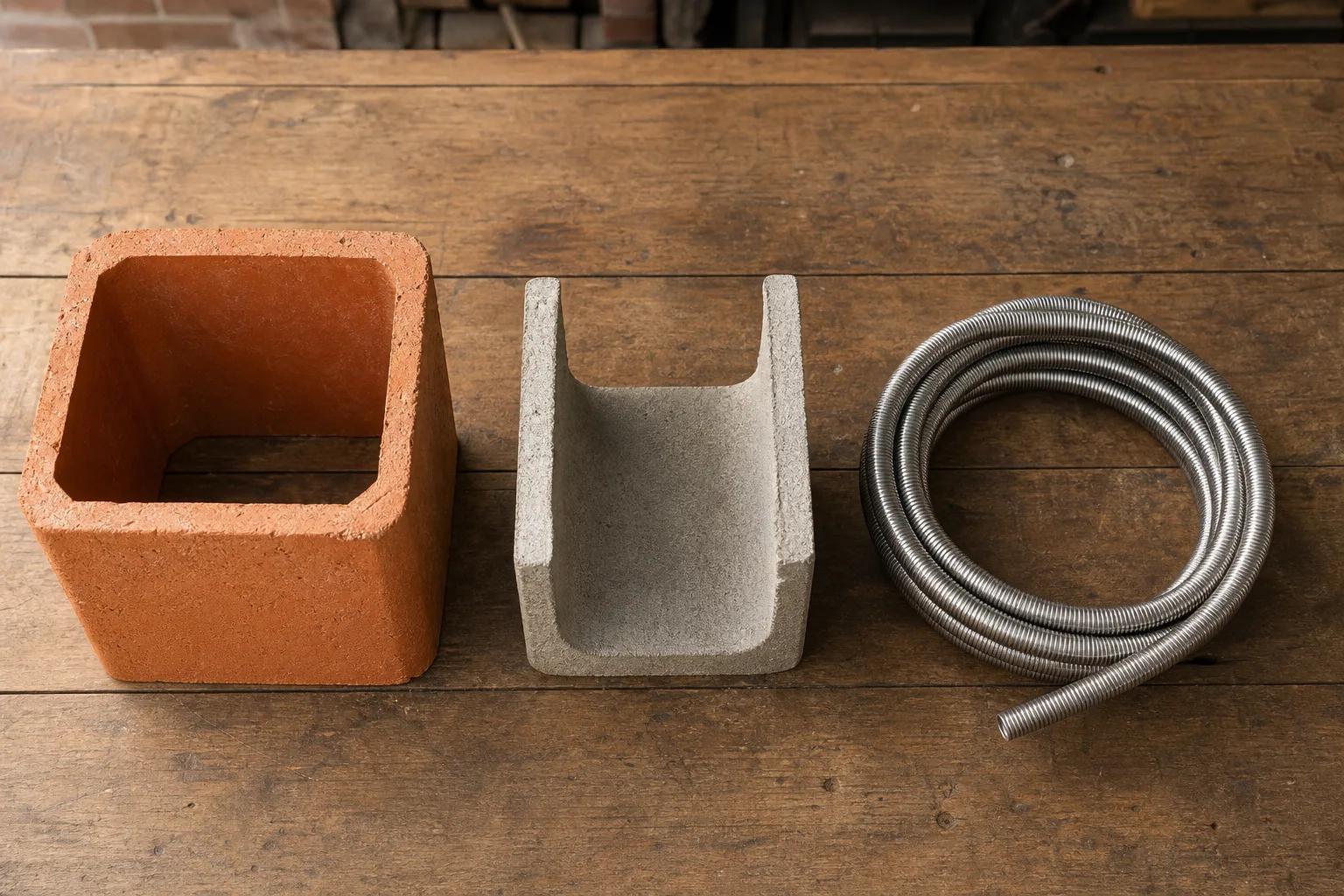
| Clay tile | The original liner in most masonry chimneys | A straight or gently offset flue, sound masonry around it | Long-lasting, cheap as a material, takes high heat | Cracks under thermal shock and settling; replacing it in a finished chimney means opening the structure |
| Cast-in-place | Flues that are irregular, damaged, or oddly shaped | Structure sound enough to work from within | Fills voids, bonds to the flue, smooth continuous surface | Specialized; not reversible; the chimney's condition decides candidacy |
| Stainless steel | Most relining work and nearly all appliance connections | Room for the liner plus insulation, and a path it can follow | Listed for wood, oil, and gas; sized to the appliance; insulatable | Alloy grade must match the fuel; needs correct sizing; no help for failing structure |
| Aluminum | Certain gas appliances only, where both listings allow it | A gas application matching the listing, nothing else | Light and cheap inside its narrow lane | Not for wood or oil; the listings decide, not a rule of thumb |
Clay tile flue liners
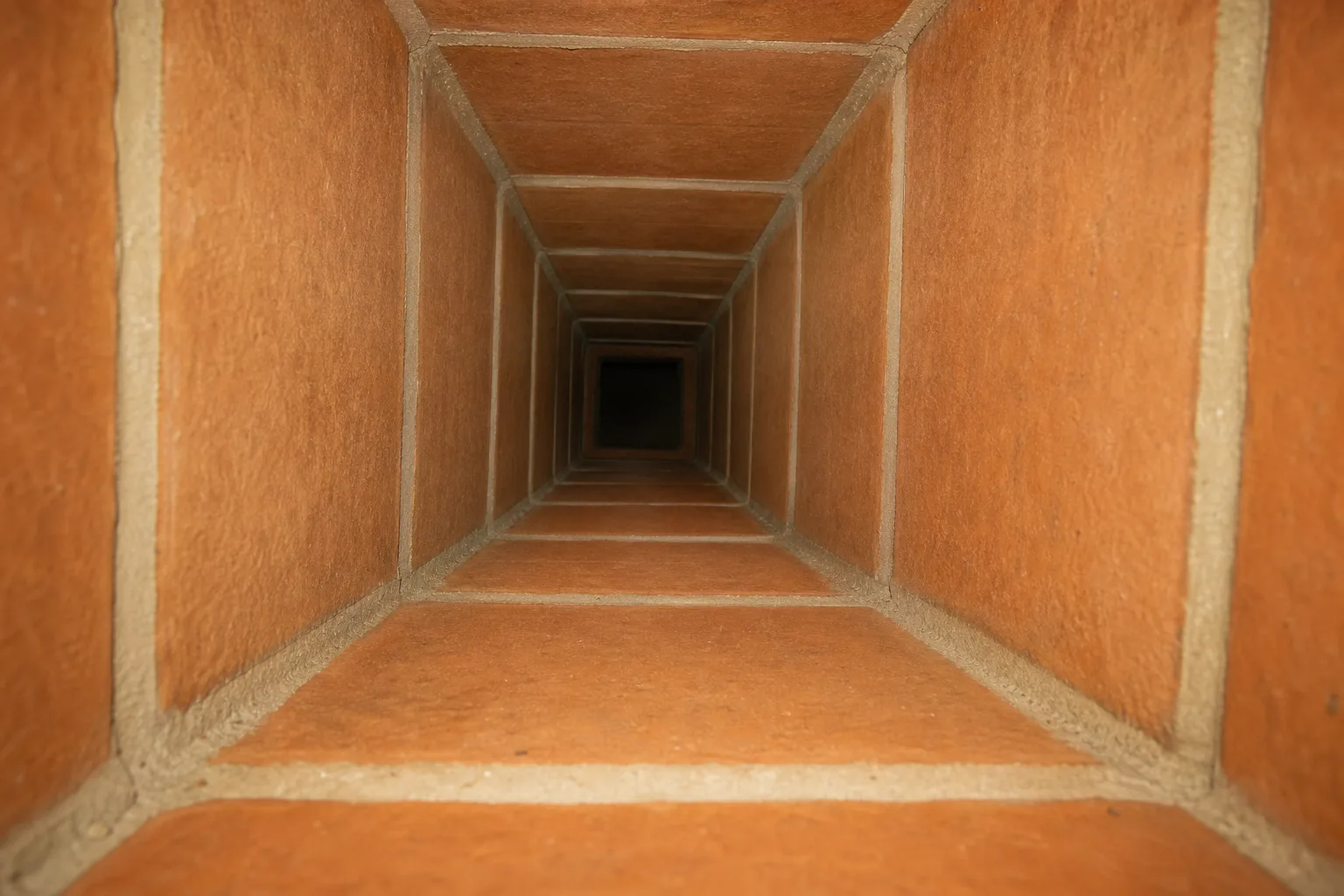
If your house went up between roughly the 1920s and the 1980s with a masonry chimney, this is almost certainly what is in there: tiles about two feet tall, stacked with thin mortar joints, running from the smoke chamber to the top.
Clay handles heat well and lasts when it is dry and undisturbed. What it does not handle is sudden temperature change or movement. A chimney fire heats tiles fast enough to crack them, and water freezing in an open joint pries it wider. Getting at the tiles in a finished chimney is invasive, which is why repairing the flue by relining it usually beats rebuilding the tile column.
Metal liners: stainless and aluminum
Stainless is what most relining jobs use. The systems are listed and tested, they come rigid for straight runs and flexible for offsets, and they can be sized to the appliance and insulated. A liner installed as part of a listed relining system is a defined and inspectable thing, which is what you want when you cannot see the work. It is worth knowing what a chimney liner installation involves before you compare proposals.
Alloy grade matters. Different grades are listed for different fuels, and a liner meant for a gas appliance is not automatically right for a wood-burning one. Ask which grade is proposed and which fuels it is listed for. Aluminum lives in a narrower lane, used for certain gas appliances where both the appliance's instructions and the liner's listing permit it. It is not a wood or oil solution.
Myth vs. fact: the myth is that stainless is always the answer. The fact is that it is right most of the time and the exceptions are real. Offsets a liner cannot follow, an interior with voids to fill, and a chimney whose masonry is the actual problem all point elsewhere. The retailer selling liner kits has one answer available. An inspector at your chimney has several.
How to Tell Your Flue Liner Has Failed
Liner failure is quiet. No leak on the ceiling, no noise, no smell on most days. It shows up in small signals scattered across the house and the roof, and in one place you cannot see without a camera.
What you can see yourself
Do this before you talk to anyone about a quote. Take a bright flashlight to the fireplace when it is cold and has been cold for a day, open the damper all the way, get your head into the opening if you can do it safely, and point the light straight up.
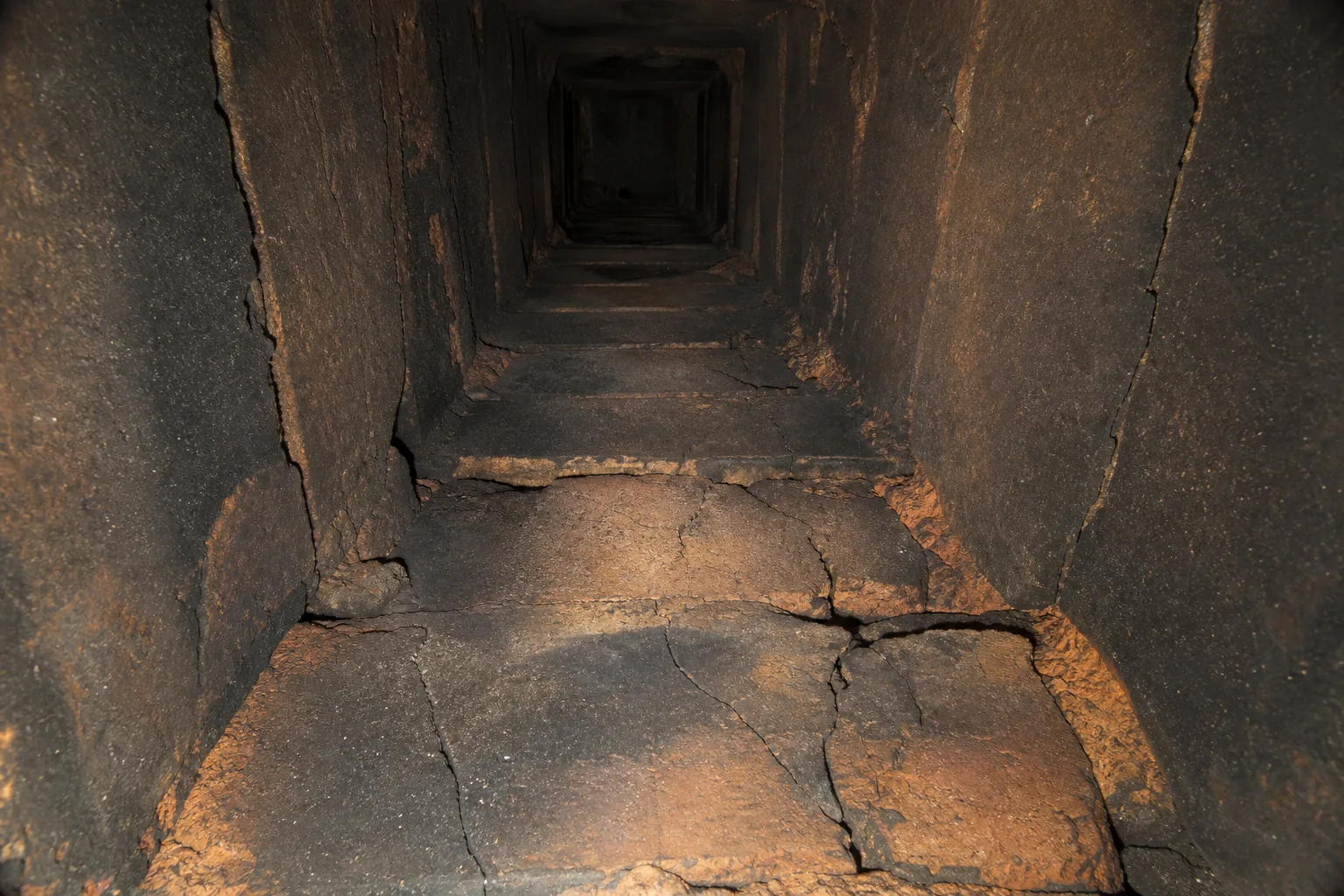
A sound clay flue reads as a regular column: even tile faces, thin mortar lines, no gaps. A failing one shows the opposite. Cracks running through a face. Joints where the mortar is gone and you can see a dark gap behind it. Faces that look shelled or flaked. Anything out of line, as though a tile has shifted relative to the one under it.
Then look down. Sweep the smoke shelf and the floor of the firebox and see what comes off. Fine black soot is normal. Sandy orange grit and thin curved flakes of hard clay-colored material are pieces of tile, and tile does not shed for a benign reason. You are only seeing the bottom few feet, but that is where the evidence collects.
What shows up outside and on the roof
White chalky staining on exterior brick, called efflorescence, means water has been moving through the masonry. Soft or receding mortar joints say the same. Rust on the damper, in a fireplace that is not otherwise wet, means moisture is arriving from above. At the top, a cracked crown or a missing cap lets water straight in. Inside, watch for a smoky odor between fires in humid weather and smoke pushing back into a room from a fireplace that used to draw cleanly.
What only a camera can find
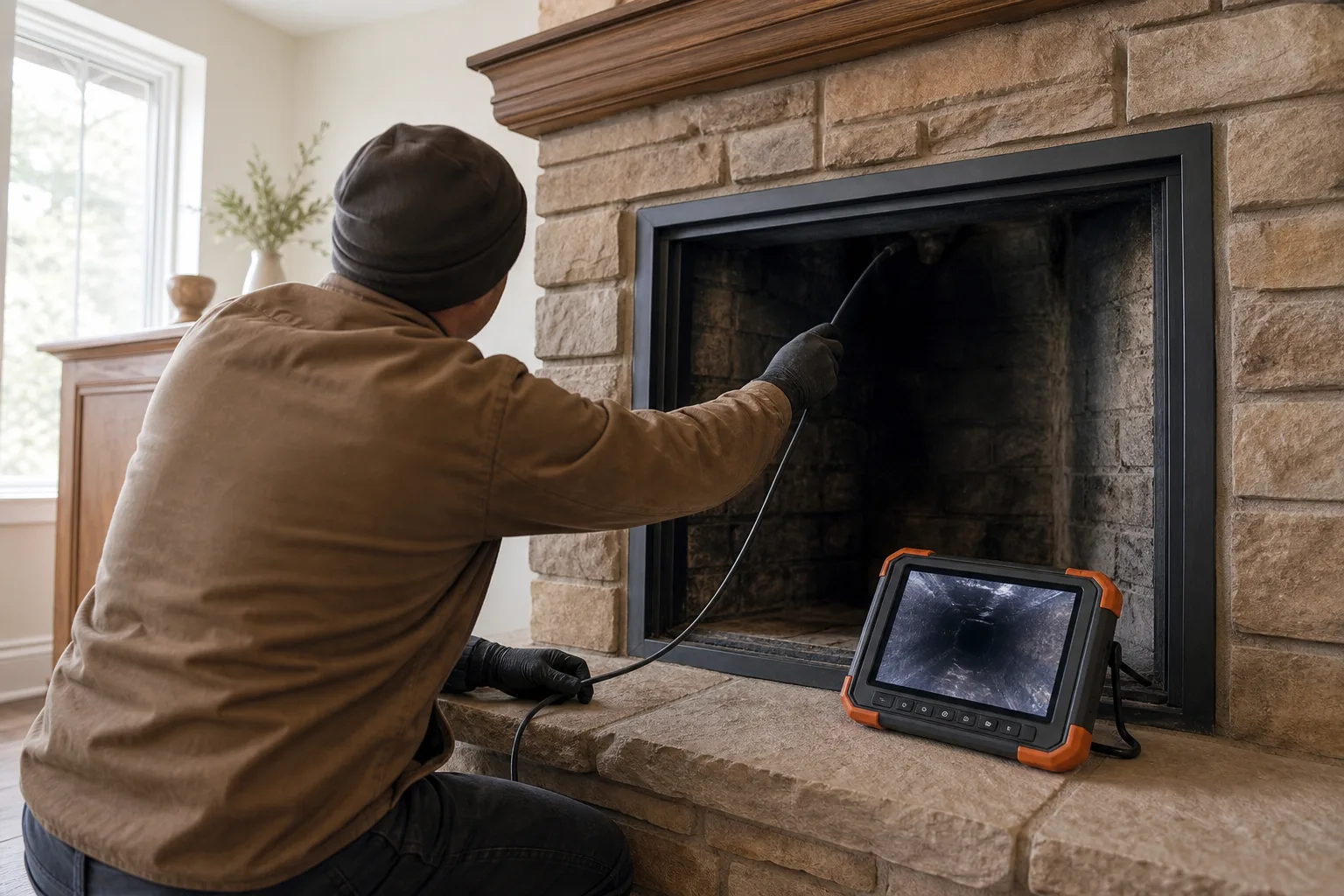
Everything above is circumstantial. The middle of the flue, the smoke chamber, and the run behind a second-floor wall are not visible from the firebox or the roof, and a camera scan is the only way anyone sees the whole passage.
Safety note: if you have reason to think the liner has failed, treat that as a reason to stop using the appliance until it is inspected. Cracks and open joints can let heat and combustion gases reach places they were never meant to reach, and you cannot judge that from the room.
What the Inspection Proves, and How to Read the Evidence
An inspection is not a formality before a quote. It is the evidence you are buying the work on, and you are entitled to see it.
Inspection levels, in plain language
The industry works in levels, following NFPA 211. A Level 1 covers the readily accessible parts of the chimney and the appliance connection, and it is what a routine annual chimney inspection involves when nothing has changed and nothing seems wrong.
A Level 2 adds accessible areas such as attics and crawl spaces and includes a video scan of the flue interior. It is called for in specified situations rather than as a matter of taste: when the system changes in the ways the standard names, such as a change of fuel, a change in the shape or material of the flue, or adding or replacing an appliance of a different type or input rating; upon sale or transfer of the property; after a malfunction or a chimney fire; and after an event external to the chimney that is likely to have caused damage.
If someone proposes to reline your chimney, a Level 2 with a video scan is the assessment that supports that recommendation. A look from the firebox is not.
What to ask to see
Ask for the video, and for stills of the specific defects being cited with a note of roughly how far up the flue each was found. Ask the person to point at the screen and tell you what you are looking at, because a crack in a tile face is legible to a homeowner once someone frames it.
Ask for the finding in writing, describing the condition and not only the remedy. "Liner failed, needs reline" is a conclusion, and you want the thing the conclusion came from.
Pro tip: ask for a copy of the scan, not just a viewing on someone's screen in your living room. It costs nobody anything, it lets you compare one company's account against another's, and a company comfortable with you having it is telling you something useful.
Not sure the liner you were quoted is the liner you need?
Bring the finding to a second set of eyes. Tell us what you were told and what you saw, and we will connect you with an independent local chimney company that can scan the flue and put its scope in writing. We ask every company in the network to put its estimate in writing before any work starts, and you should insist on exactly that, from us or from anyone else.
Call (513) 655-6702 or request an inspection through VIO.
Why an Insert or a New Appliance Needs Its Own Liner
Here is the part that catches people off guard. You buy a wood insert, a gas insert, or a pellet stove, and the installer says the chimney needs a liner. Your reaction is reasonable: the chimney already has a flue, so why does it need another passage inside the passage? Because the old flue was sized for an open fireplace, and the new appliance is not one.
An open fireplace throws a large volume of hot gas up a large flue, and it works because the volume and the heat keep the column moving. A modern insert or stove burns less fuel for the same heat in the room and exhausts a smaller volume of gas at a lower temperature. Put that small, cool stream into a flue built for the old fireplace and it behaves badly. The gases slow in the oversized space and cool as they climb, and cool exhaust condenses on the walls. What condenses out of wood smoke is moisture and the deposits that harden into creosote buildup. Draft turns weak and unpredictable, which the owner experiences as smoke in the room, hard starts, and a stove that never runs the way the showroom one did. Bigger flue, worse performance.
A liner sized to the appliance fixes the geometry, and insulation keeps the flue warm enough that the gases stay above the temperature where they condense. Sizing is not a rule of thumb. The appliance manufacturer's instructions specify what the appliance requires, and the installer works from those and from the listed liner system's requirements.
From the field: the chimneys that give people the most grief are rarely the ones that look worst. They are the cold ones. A flue on an exterior wall, oversized for the appliance hanging off it, collects deposits and drafts poorly in a way the homeowner reads as "my stove is temperamental" rather than as a chimney problem.
When a New Liner Is Not Your Problem
This section will not make chimney contractors happy, and it is the most useful thing on this page.
A failing liner produces symptoms that overlap almost exactly with water getting into the chimney from above. Staining, odor, rust, spalling brick, deteriorating mortar, all of it. If water is the driver and nobody stops the water, a new liner goes into a wet chimney and the conditions that wrecked the first one keep running.
The crown is the sloped surface at the top that sheds water away from the flue opening. When it cracks, water runs down into the masonry around the liner.
The cap covers the flue opening. When it is missing or in need of replacement, rain and snow go straight down the flue. Water standing in a flue does damage with every freeze and thaw.
The flashing seals where the chimney meets the roof. When flashing fails and needs repair, water enters at the roofline and shows up inside as staining that looks like a chimney problem because it is next to the chimney.
There is another case. If the chimney has moved, leaned, separated from the house, or shows structural cracking, the liner question sits underneath a masonry restoration question, and the masonry question comes first. A liner goes inside a structure. It does not stabilize one.
None of this means the reline you were quoted is wrong. It means a sound proposal usually addresses the water path and the flue together, in a sensible order, and one that mentions only the liner deserves a question before you sign.
Good to know: when the report arrives, look for what it says about the crown, the cap, and the flashing. A report that covers the flue in detail and says nothing about how water is kept out is an incomplete picture.
Judging the Quote and the Installer Before You Sign
You do not need to become an expert on liner systems this afternoon. You need a short list of questions whose answers reveal how the work is being planned. Bring it to every company you talk to. And the sentence worth saying on the phone is "can you send me the scope in writing, including what is not included?"
- What is being installed, specifically? Material, alloy grade for stainless, rigid or flexible, and why that choice here.
- What is it listed for? It should be listed for chimney relining and for your fuel and appliance. Ask for the make and model, not just "stainless."
- What size, and where does that number come from? The answer should cite the appliance manufacturer's requirements.
- Is it being insulated, and why or why not? Insulation affects clearances, draft, and buildup. Either answer can be right, but there should be a reason.
- Who pulls the permit, and is an inspection part of the job? This says whether the company works inside the local process or around it.
- What happens to the existing liner? Removed, left in place, or broken out.
- Does the scope include anything besides the liner? Crown, cap, flashing, masonry. If the report named them and the quote ignores them, ask why.
- What is the warranty, and does it transfer? System and workmanship warranties are separate, and if you might sell the house, whether coverage follows matters.
- What is not included? Ask what could turn up mid-job, and how that gets handled.
- What am I handed at the end? A written record of what went in, the system documentation, and ideally a scan of the finished flue.
How VIO Helps With a Chimney Flue Liner Decision
VIO is a referral network. We are not a chimney contractor and we do not install liners. We connect homeowners with independent local chimney companies, and the work itself is done by those companies, not by us.
A chimney flue liner is a large purchase made on evidence the buyer cannot see, so the most valuable thing you can get is an independent look: someone who was not part of the first conversation, who scans the flue, shows you what is in it, and writes down what they propose to do. Tell us what you were told and what you have observed, and we will match you with a company in your area that can make that assessment.
On estimates, our position is plain. We ask every company in the network to put its estimate in writing before any work starts, and you should insist on exactly that, from a company we match you with or from anyone else you call.
If you take one thing from this page, make it the flashlight. Go open the damper, point a light up the flue, and look at what is there. Then decide who you want to have the next conversation with.
Get the flue looked at by someone independent.
You do not have to become a chimney expert to make a good decision here. You need someone to put a camera up the flue, show you what is there, and write down what they propose to do about it. Tell us the situation and we will match you with an independent local chimney company in your area.
Call (513) 655-6702 or request service through VIO.
Symptom checker
What is your chimney doing?
Tap the closest match for an honest first answer.