



On this pageWhy chimney inspection and repair belong in the same conversation7 sections+6
- Why chimney inspection and repair belong in the same conversation
- The three levels of inspection, and what each one actually covers
- How to read the inspection report
- From finding to repair: what each problem leads to
- Urgent, soon, or watch it
- Telling an honest finding from a sales pitch
- How VIO helps with chimney inspection and repair
Quick answer
Chimney inspection and repair is a two-step sequence: an inspection identifies the condition, and the repair follows from that written finding. NFPA 211 defines three inspection levels. Level 1 is the annual visual check, Level 2 adds a video scan of the flue interior and is required on sale or transfer of a property, and Level 3 investigates concealed hazards. Ask which level was performed.
Something happened before you typed that search.
Maybe a sale is pending and the words "Level 2 inspection" turned up in an email from someone you have never met. Maybe a sweep spent twenty minutes on your roof, came down, and told you the liner is cracked. Maybe you were clearing gutters in September and found orange crumbs of brick sitting in the trough at the base of the stack.
People look up chimney inspection and repair as one phrase because they already know the two halves are a single sequence. Something gets found. Then something has to be fixed, and paid for.
The part nobody helps with is the middle. Was the finding real? Was it urgent? Did the person who told you actually look, or did they glance?
There is one question that separates an honest finding from a sales pitch, and it takes about nine words to ask. I will get to it. First you need the vocabulary that makes the question land, because asked cold it sounds like suspicion, and asked in context it sounds like a homeowner who knows how the standard works.
By the end of this you should be able to read an inspection report, match each finding to the repair that follows from it, and sort the list into what cannot wait and what can.
Why chimney inspection and repair belong in the same conversation
An inspection is diagnosis. A repair is treatment. Read a page that covers only one of them and you are holding half a decision.
That is the shape of what gets published about chimney inspection and repair. Service pages list inspections in one column and repairs in another, and the line between them, the line where a specific observed condition becomes a specific recommended fix, goes undrawn.
Which is a shame, because that line is the whole homeowner problem.
The five things that send people looking
- A property sale or transfer, where the chimney becomes part of closing.
- A sweep or a home inspector who reported something and left.
- A visible symptom: a stain on the ceiling beside the fireplace, crumbs of brick on the shingles, a smell that shows up when it rains.
- A change to the system, like a new insert or a switch of fuel.
- The calendar. It is early heating season and the fireplace has been cold since March.
Those arrive with different amounts of fear attached, and they end in the same place. Someone has to look, and then someone has to fix what was found.
Good to know: a sweep and an inspection are not the same service. Cleaning removes deposits from the flue. The inspection is the assessment of condition. The two are commonly sold together and just as commonly confused, so when you ask a company for chimney inspection and repair, confirm which of the three inspection levels is in the quote.
The three levels of inspection, and what each one actually covers
The levels are not marketing tiers invented by chimney companies. They come from NFPA 211, the national standard for chimneys, fireplaces, vents and solid fuel burning appliances, and certified sweeps are tested on all three.
Knowing which one you are buying is the difference between an informed purchase and a shrug.
Level 1, the annual baseline
Level 1 is the standard annual inspection for a chimney and venting system that is in continued service, with no changes to the system and no known hazards.
It is a visual check of the readily accessible portions. The inspector looks at the parts of the chimney and the appliance connection that can be seen and reached.
Two things Level 1 does not include, and this catches people out: a video camera is not required, and rooftop access is not within its scope.
So "we inspected it" can be entirely true and still mean nobody has seen the inside of your flue or stood next to your crown.
Level 2, the one the standard requires
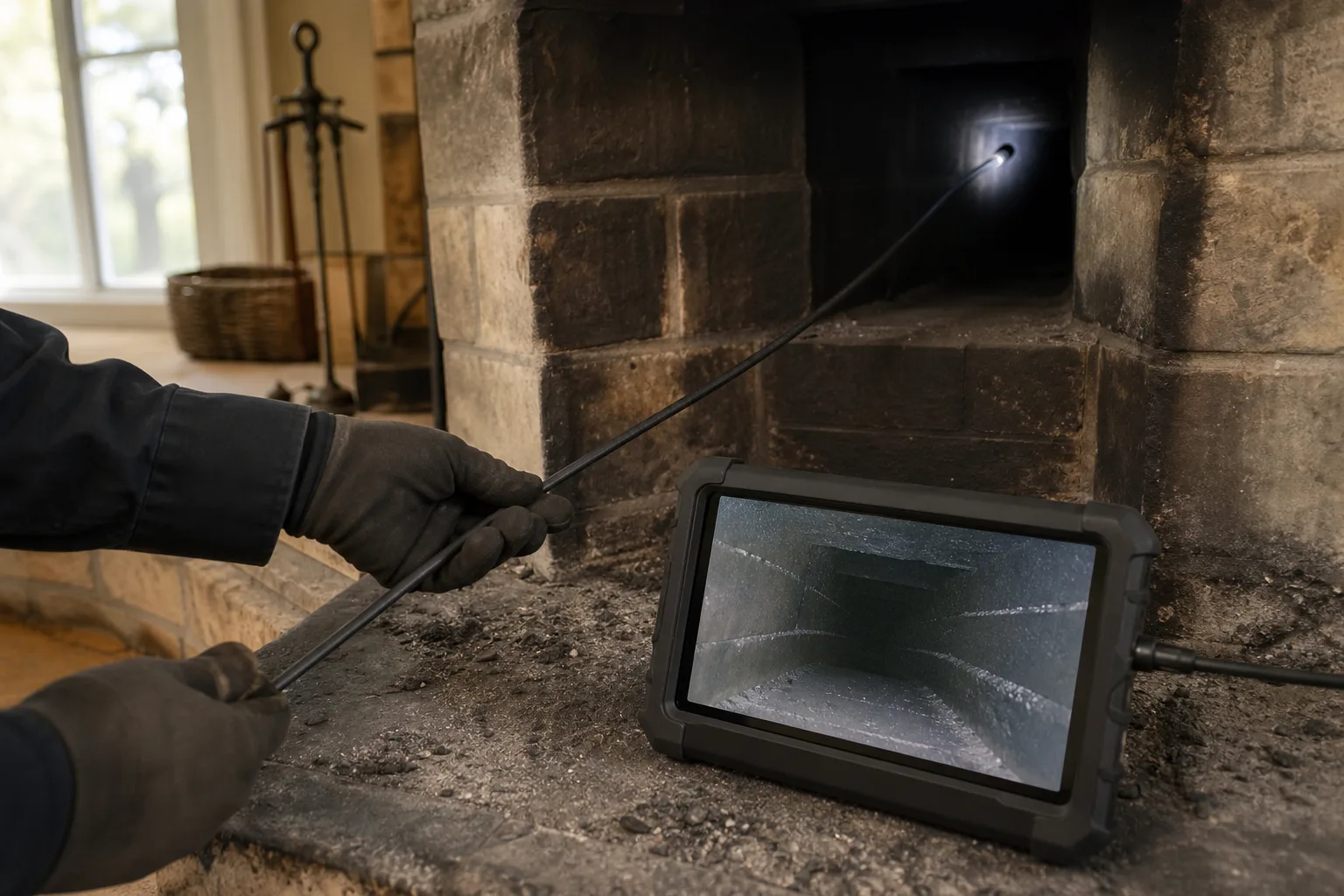
Level 2 includes everything in a Level 1, plus the accessible portions of the chimney exterior and interior, including attics, crawl spaces and basements. It addresses proper clearances from combustibles in accessible locations. And it includes a visual inspection by video scanning, or other means, to examine the internal surfaces and joints of all flue liners incorporated within the chimney.
No demolition. Nothing gets opened up.
NFPA 211 calls for a Level 2 inspection in specific situations:
- on the sale or transfer of the property,
- when the system changes, meaning an appliance added or removed, a change of fuel, or a change to the shape or material of the flue,
- after an operating malfunction,
- after a chimney fire,
- after a potentially damaging external event such as a building fire, a chimney fire, a seismic event or a weather event.
Read that last one as written. The standard is not asking whether the house seems fine. It is asking whether an external event occurred that was potentially damaging, which is a much lower bar and a deliberate one.
Level 3, when something is hidden
Level 3 is the highest level the standard describes, and it exists for one reason. There is cause to suspect a concealed hazard that a Level 1 or a Level 2 cannot evaluate.
It addresses the construction and the condition of concealed portions of the chimney structure and the flue, and it can require removal or destruction of permanently attached portions of the chimney or of the building structure.
Nobody should offer you a Level 3 casually. It is what a serious unanswered question escalates into.
| Level | When it applies | What gets examined | Camera scan | Demolition |
|---|---|---|---|---|
| Level 1 | Annual check, system unchanged, no known hazards | Readily accessible portions of the chimney and the appliance connection | Not required | No |
| Level 2 | Sale or transfer, system change, operating malfunction, chimney fire, potentially damaging external event | Everything in Level 1, plus accessible exterior and interior including attics, crawl spaces and basements, plus clearances to combustibles in accessible locations | Yes, internal surfaces and joints of all flue liners | No |
| Level 3 | Reason to suspect a concealed hazard | Concealed portions of the chimney structure and the flue | As needed | Yes, removal of permanently attached portions may be required |
Myth vs. fact: Myth, an inspection always means a camera went down the flue. Fact, the camera scan belongs to Level 2. A Level 1 can be performed correctly and documented honestly without anyone seeing the inside of the liner. If a finding about the flue interior shows up on a report, ask which level was performed.
How to read the inspection report
A verbal summary delivered at the bottom of a ladder is not a report. Ask for the document.
A written report worth acting on contains:
- The inspection level performed, stated as Level 1, 2 or 3.
- The date and the inspector's certification.
- A photograph of every finding, not a stock diagram.
- The location of each finding, named by part: crown, cap, flue liner, mortar joints, flashing, firebox, damper, smoke chamber.
- The condition described in plain words rather than a verdict like "failed".
- Whether the flue interior was scanned, and what the scan showed.
- A recommended scope tied to each finding, not to the chimney in general.
- What was not examined, and why.
The last line is the one most people skip and the one that tells you the most. An inspector who writes "roof not accessed, ice on north slope" is being straight with you. A report with no limitations section was either a remarkable day or a document written to look complete.
Pro tip: ask for the report and the photographs before anyone talks scope with you, including the company that did the inspection. Reading findings and negotiating work in the same conversation is how people end up agreeing to a job they cannot describe an hour later.
There is a second reason to insist on photographs. They travel. A written finding with an image attached can go to another chimney company for a second opinion without anyone driving back out to your house, and a company confident in its findings knows that and hands them over without friction.
From finding to repair: what each problem leads to
Here is the mapping the service pages leave out. A finding is an observed condition. A repair is what that condition calls for. The anxiety around chimney inspection and repair comes from those two being presented separately, a list of problems on one side and a menu of services on the other, with nothing drawn between them.
Water at the top: the crown and the cap
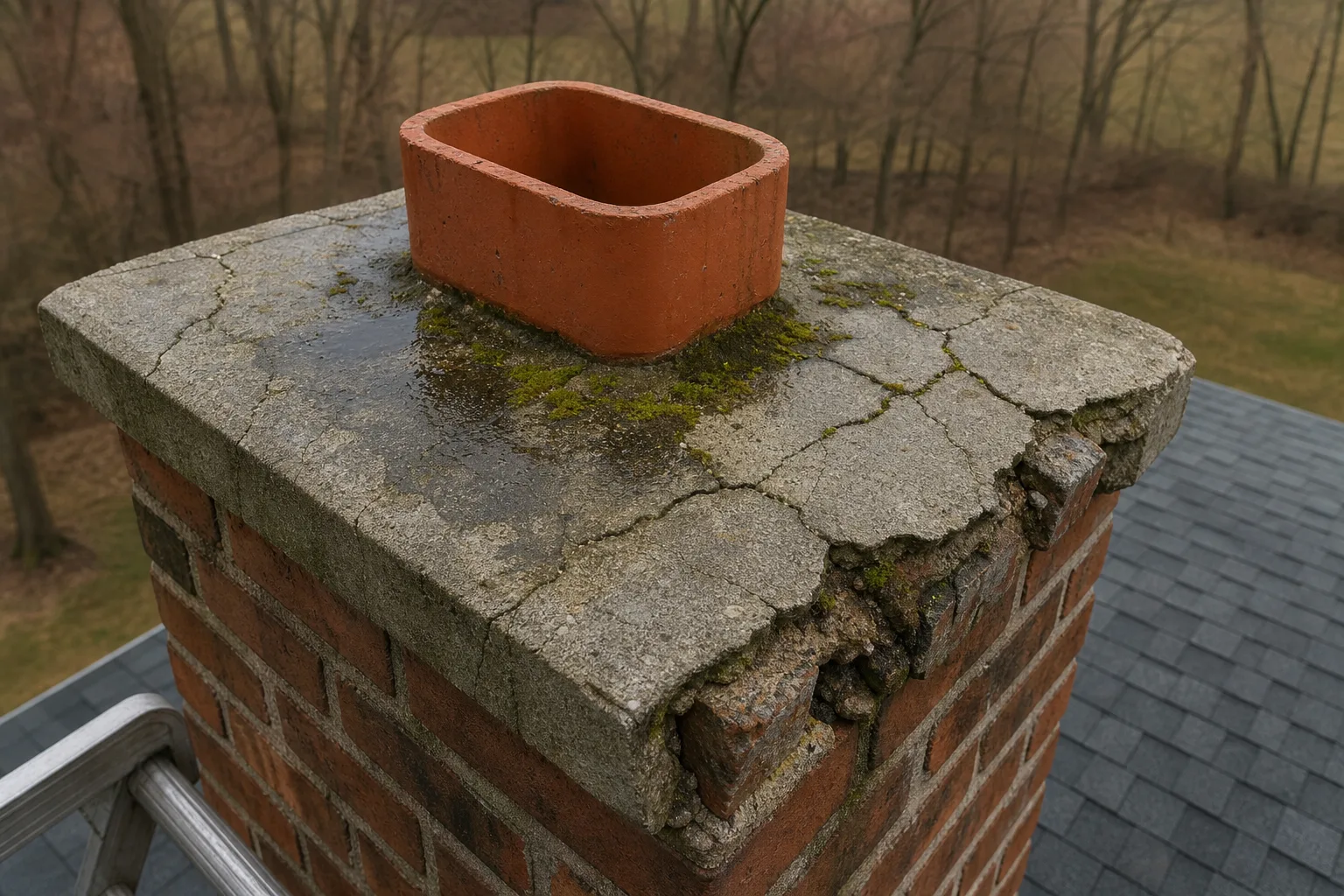
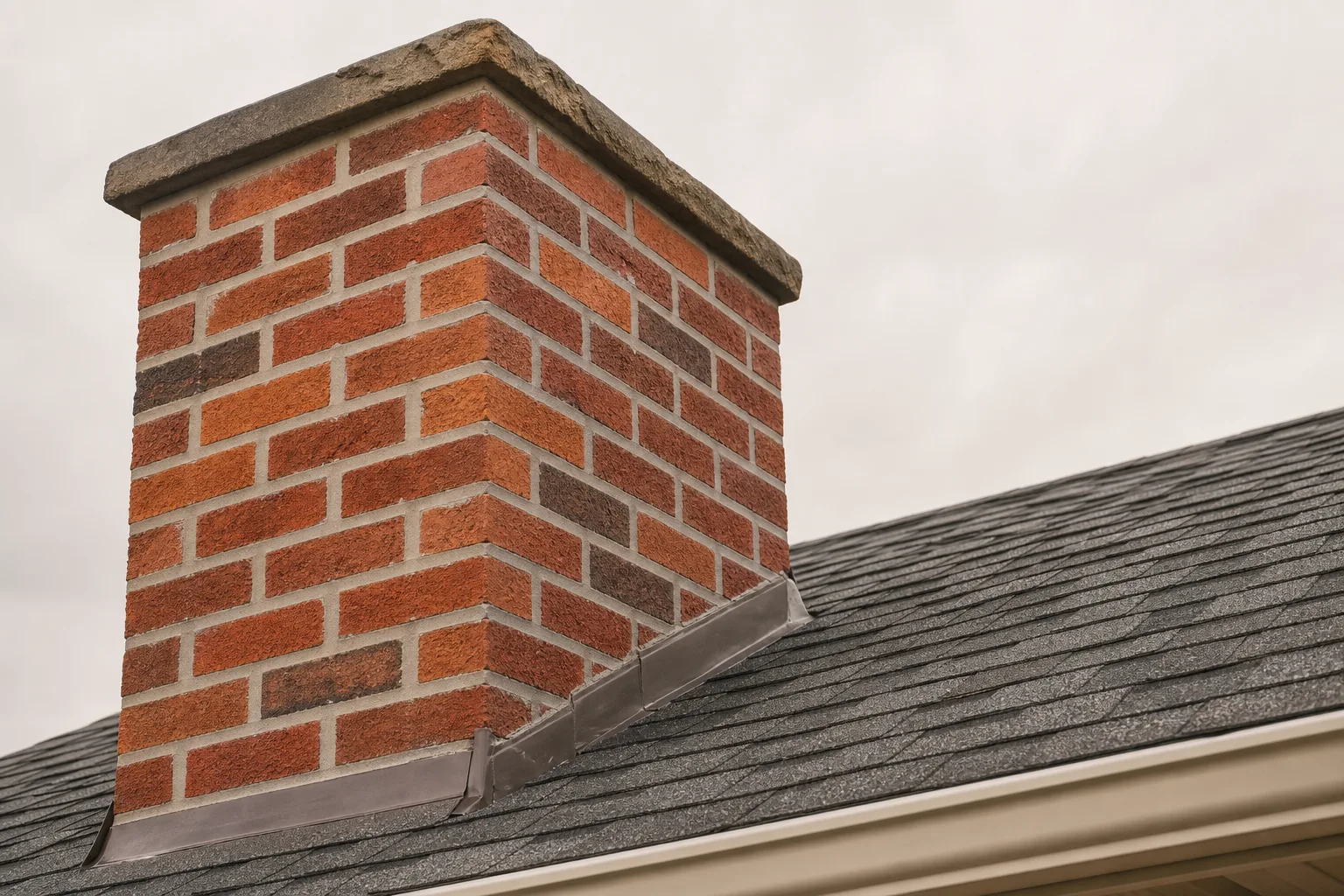
The crown is the concrete or stone slab on the very top of a masonry chimney, and its job is to throw water away from the brick and mortar underneath. When it cracks, water stops being thrown and starts being delivered.
On a report this reads as crown cracking, crown deterioration, or spalling at the crown edge. The repair follows the severity: small cracks get sealed, and a crown that has lost its edges or its slope gets rebuilt.
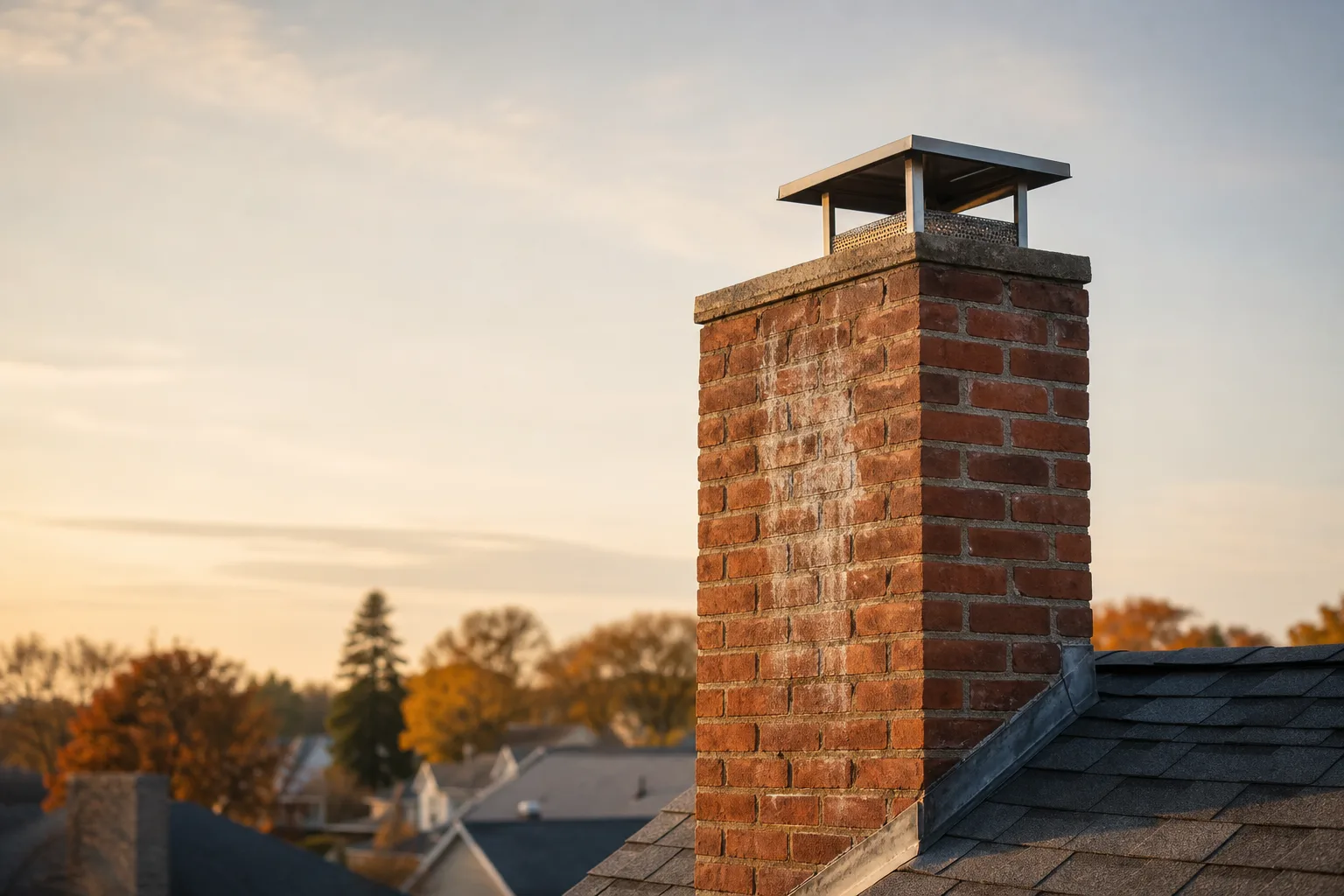
The chimney cap is the metal lid above the flue opening, stainless or painted steel, standing on four legs with mesh on the sides. It keeps rain, animals and debris out. A missing or crushed cap is a small finding with outsized consequences, because an open flue takes weather straight down the inside of the chimney.
One distinction tells you a great deal about who you hired. A crown and a chase cover are different parts on different kinds of chimney. The crown belongs to masonry. A chase cover is the sloped metal top of a prefabricated chimney chase. If a quote for your brick stack names a chase cover, the person writing it was not looking at your chimney.
Mortar joints and spalled brick
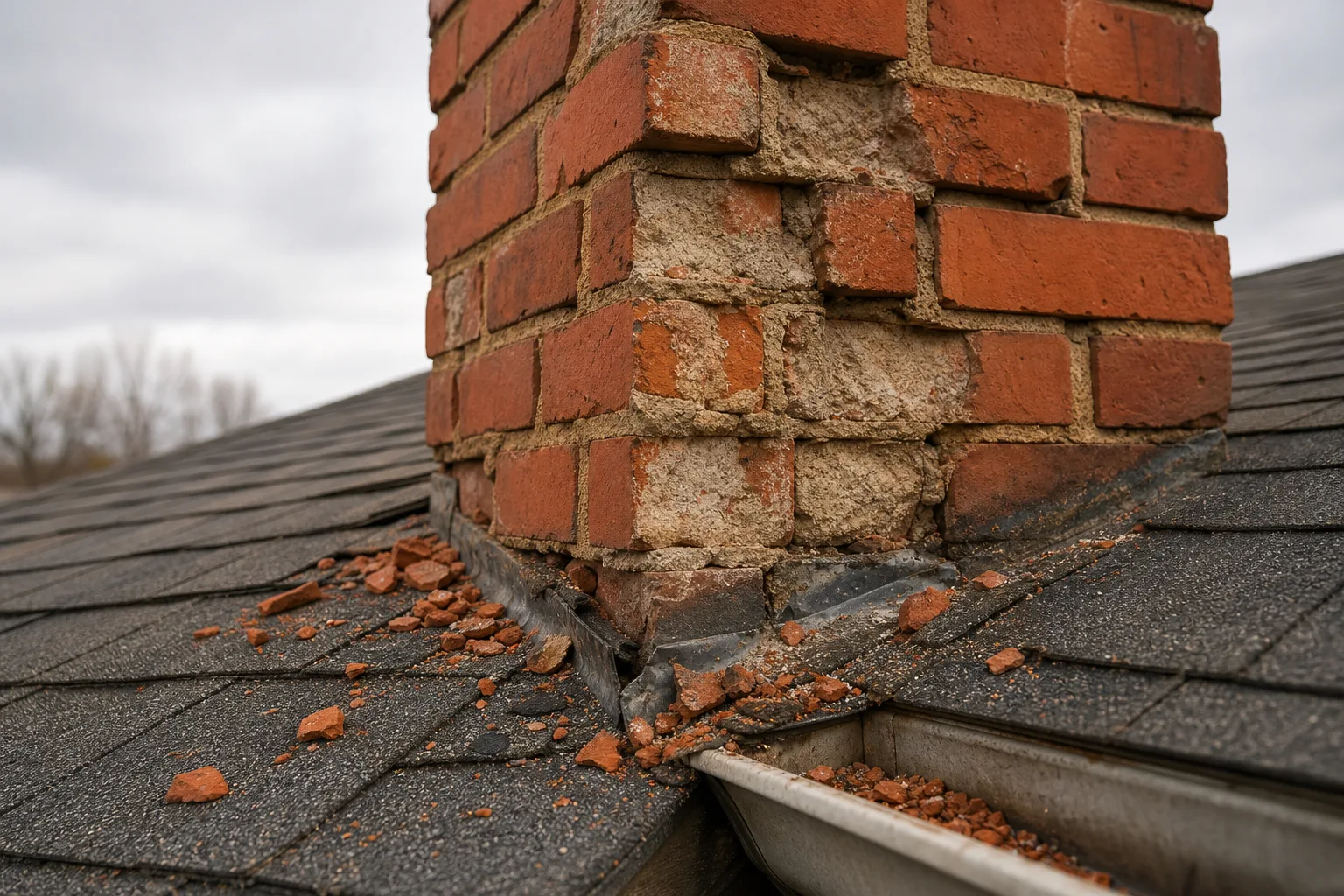
Spalling is what happens when water soaks into brick and then freezes. The water expands, and the face of the brick flakes, chips or pops off. The tell is on the ground: orange fragments on the shingles and in the gutter at the base of the stack.
Failed mortar joints look sandy and recessed, sometimes raked back to dark voids you can put a finger into.
The repair is chimney mortar repair, called tuckpointing or repointing. The deteriorated mortar is cut out and fresh mortar is placed. Individual spalled bricks get replaced where the damage is local, and a stack that has lost brick across a broad area gets rebuilt from a sound course upward.
The flue liner
The flue liner is the sealed pathway inside the chimney that keeps combustion products moving up and out instead of into the masonry or into the house.
Older chimneys tend to have clay tile liners, terracotta orange and square in section, and they crack with age and with heat. A stainless steel liner is the common modern answer when relining is called for, because it gives one continuous sealed path with no joints to fail.
Of everything that turns up in chimney inspection and repair, a liner finding deserves the most attention, and it is also the one you are least able to verify with your own eyes. Which is exactly why the camera scan and the photograph matter more here than anywhere else on the report.
Flashing where the chimney meets the roof
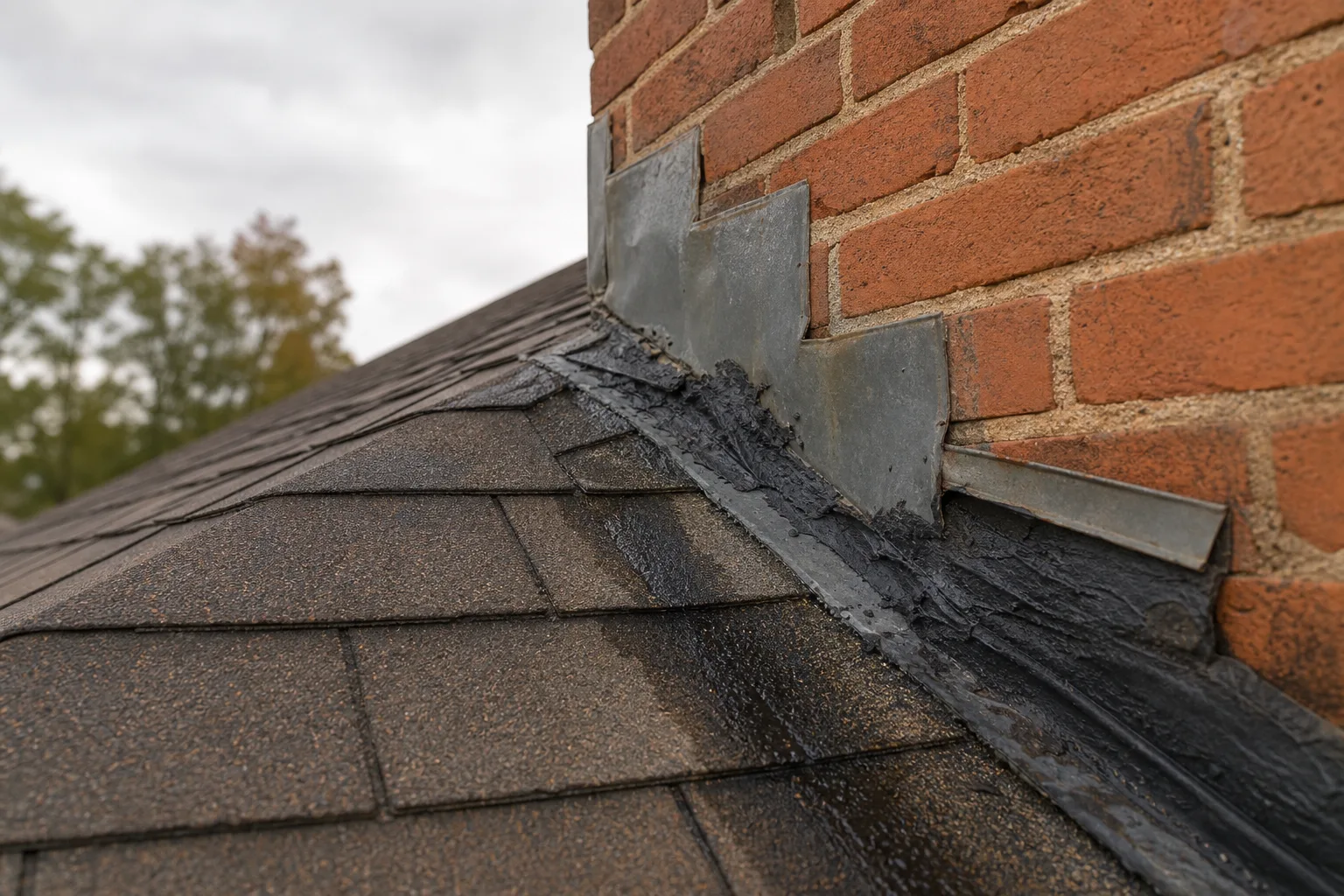
Flashing is the metal that seals the joint between the chimney and the roof. Step flashing is the series of overlapping pieces that climb the sides of the stack in a staircase. Counterflashing covers the base flashing and sets into a mortar joint above it, so water is guided away rather than led in. Copper and stainless steel both do this job well.
Failed flashing shows up as lifted edges, and very often as black roofing tar smeared over somebody's previous attempt.
The repair is new step flashing with counterflashing sealed into the masonry. On a wide chimney a cricket, a small peaked structure built into the roof behind the stack, splits water around it instead of letting it pond against the brick.
From the field: chimney repair and water management overlap far more than the two category names suggest. The order of investigation that holds up is top down: crown, then cap, then flashing at the roofline, then the masonry face, and only then the interior. An interior stain is a late symptom, not a starting point.
Not sure whether your finding is urgent? Describe what the report said, or what you are seeing, and we will match you with an independent chimney company near you that handles chimney inspection and repair. One conversation instead of nine. Call (513) 655-6702, or request service online.
Urgent, soon, or watch it
Not every line on a chimney inspection and repair report is an emergency, and treating them all as one is how people either overspend or freeze up entirely.
Stop burning and resolve now. Anything that can put combustion products where they do not belong: a breached or cracked flue liner, a blocked flue, evidence of a chimney fire, a damper or appliance malfunctioning on a system in use. A breach matters because the liner is what stands between hot gases and any combustible assembly built against that chimney.
Handle this season. A cracked crown, a missing or damaged cap, failed flashing, open mortar joints. All of them are water getting in, and water inside masonry compounds with every freeze. Where any single finding belongs on this list is a judgment for the inspector who saw the whole system, including whatever concealed damage sits behind it.
Watch and document. Light efflorescence, minor surface staining, a hairline in the crown that has not moved. Photograph it, date the photograph, and compare at next year's inspection. A crack that is the same size in twelve months is a different finding from one that has grown.
Safety note: if a report says the flue is breached or blocked, stop burning until it is resolved, and check that carbon monoxide alarms are working on every level of the house. A compromised flue paired with an appliance in use is the exact combination the inspection levels exist to catch.
The middle group is where arguments with contractors happen, because "now" and "next spring" are both defensible answers there. Ask which one it is, and ask why.
Telling an honest finding from a sales pitch
Here is the question I promised.
"Can you show me the photograph of that finding, and which inspection level did you perform?"
It works because it is not an accusation. Someone who looked has the photograph on a phone and the level on the paperwork. The conversation tends to improve from there, because you have signaled that you know a Level 1 and a Level 2 are different animals.
What an honest chimney inspection and repair quote looks like
It names the finding, shows the finding, and proposes a scope for that specific finding. Three findings, three photographs, three scopes.
The tells that something is off:
- A quote with no photograph attached to any finding.
- A part named that does not belong to your chimney. A chase cover quoted on a masonry stack is the classic version.
- A jump straight to replacement with the finding never described. "You need a new liner" is a conclusion. "The camera shows a vertical crack through the third tile up, here is the frame" is a finding.
- Pressure applied to the inspection rather than to the repair. The inspection is the neutral half of chimney inspection and repair. It should feel neutral.
Second opinions are ordinary in chimney inspection and repair, and nobody honest resents one. When the finding is real, the photograph makes the second opinion fast.
How VIO helps with chimney inspection and repair
VIO is a referral network, not a chimney company. Nobody here climbs your roof. What we do is take the description of your situation once, in plain language, and route it to an independent local company that handles chimney inspection and repair in your area.
That is worth something precisely in the situation this article is about. You have a finding, or a suspicion, or a closing date, and the alternative is working down a list of near identical local pages, repeating the same story to each one.
When you request service, tell us the age and style of the house, what the fireplace burns, and what the report or your own eyes turned up. Whoever comes out from that independent company arrives knowing what they are coming to look at, which beats a cold call for everyone involved.
On estimates, our rule is plain: we ask every company in the network to put its estimate in writing before any work starts, and you should insist on exactly that.
Bring the report and the photographs to that conversation. You will be the rare homeowner who can point at a specific tile and ask a specific question.
Get your chimney inspection and repair handled with one call Tell us about the house, the fireplace, and what turned up. We route it to a local company that does this work, and you walk into the conversation knowing what to ask. Call (513) 655-6702, or request service online.
Symptom checker
What is your chimney doing?
Tap the closest match for an honest first answer.