



On this pageWhat a Chimney Flue Liner Installation Actually Is, and Why Yours Was Recommended8 sections+7
- What a Chimney Flue Liner Installation Actually Is, and Why Yours Was Recommended
- What Happens During the Installation, Top to Bottom
- The Four Kinds of Liner, and What Separates Them
- Sizing, and Why It Gets Settled Before Anyone Picks a Liner
- Insulation, Clearance, and the Listing That Ties Them Together
- The One Document That Outranks This Page
- What to Ask Before You Approve a Chimney Flue Liner Installation
- How VIO Helps With a Chimney Flue Liner Installation
Quick answer
A chimney flue liner installation places a lining system inside an existing chimney so combustion gases travel up the liner rather than the masonry. The chimney is inspected and checked for obstructions, a correctly sized liner is fed down the flue, connected to the appliance with an approved connector, and finished with a top plate and cap. The system's own listing and instructions govern the installation.
A chimney flue liner installation is the kind of job that arrives as somebody else's sentence. A sweep runs a camera up the flue and comes back down with a finding. A home inspector writes a line into a report ahead of a sale. A stove dealer looks at the chimney and says the appliance you picked cannot vent into it the way it stands.
Then comes the recommendation, and a number, and a decision you were not planning to make.
If that is where you are, you are not looking for a set of instructions. You are trying to work out whether the recommendation is real, what is physically about to happen inside your chimney, and what you should be asking before you sign anything.
So here is the promise this page is built on. There is one document that governs the work about to be done on your chimney, and it outranks anything you will read today, including this page. It is not the brochure either.
We will get there. First, the work itself.
What a Chimney Flue Liner Installation Actually Is, and Why Yours Was Recommended
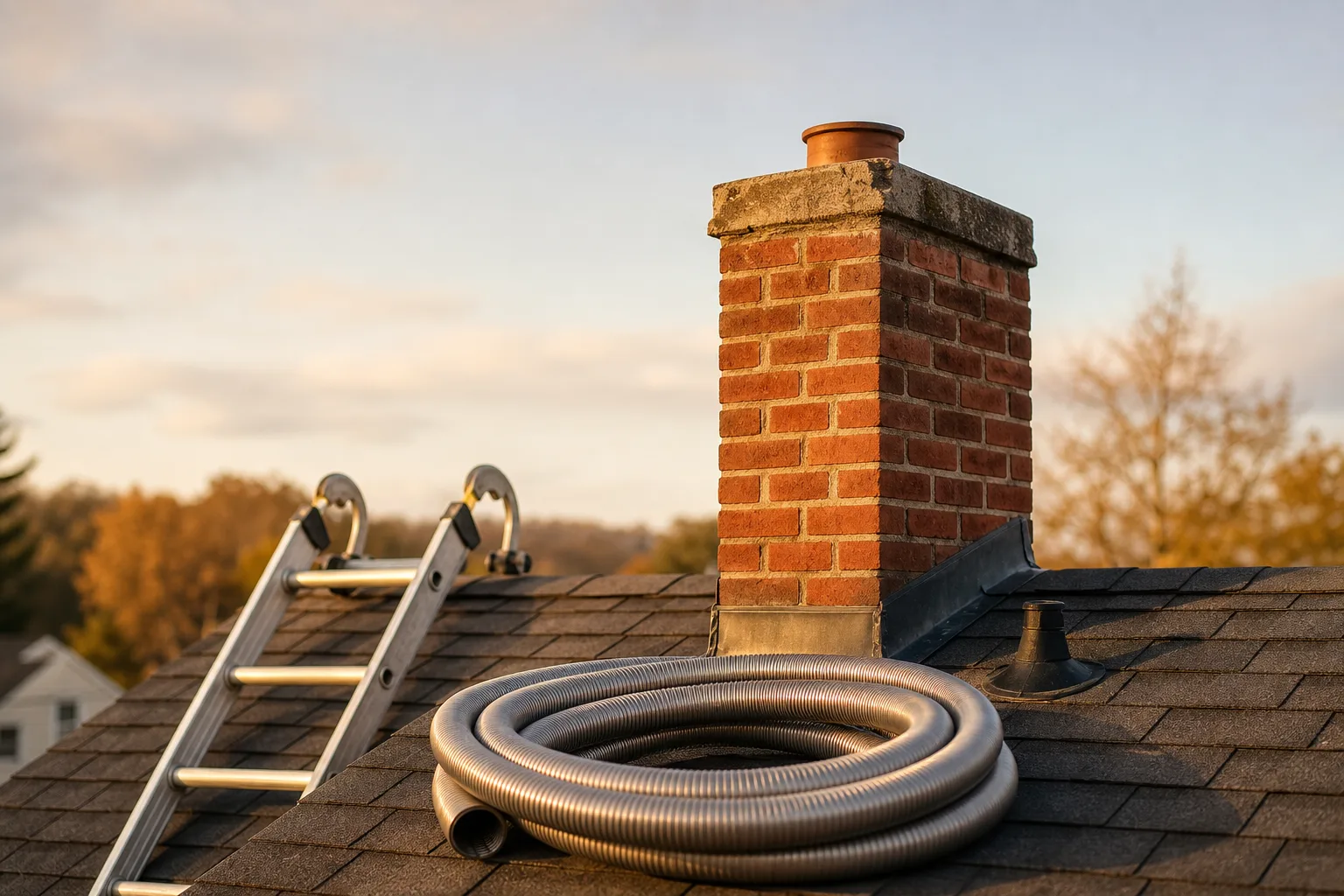
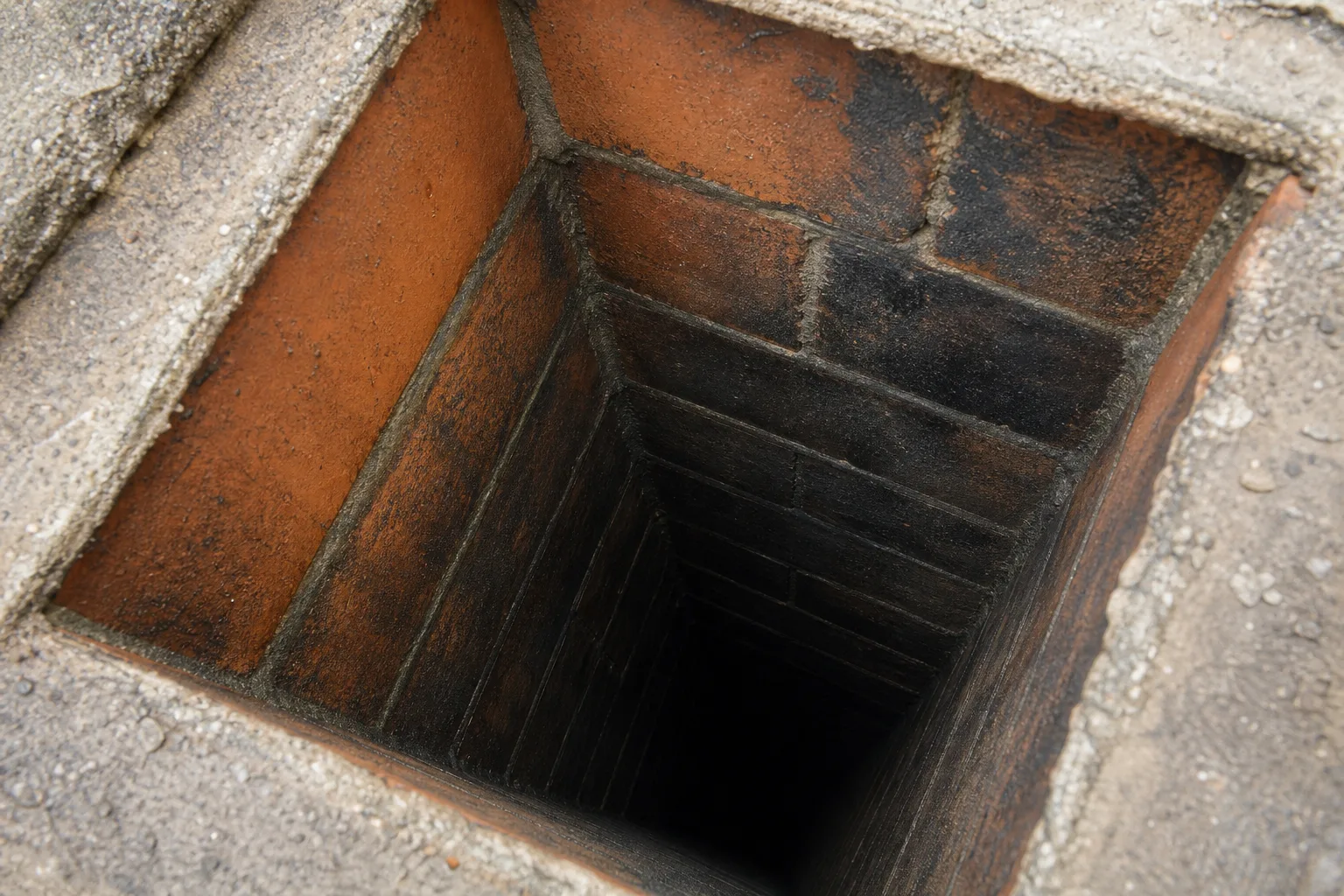
Strip away the sales language and the job is simple to describe. A lining system is placed inside the existing chimney so that the combustion gases from your appliance travel up through the liner rather than through the masonry itself.
The liner stands between the fire and the chimney structure. That is its job, stated plainly.
The Finding That Starts the Conversation
A recommendation on its own is not information. "You need a liner" is a conclusion, and what you want is the thing underneath it.
Ask which tile. Ask at what height. Ask what the actual finding was, in the language the person used when they were looking at their own screen. A finding with specifics attached is something you can take to a second opinion and have a real conversation about. A finding without them is a sentence you are being asked to trust.
This is not a suggestion that anybody is misleading you. A sweep who pulls a camera out of your flue and tells you the lining has failed may be entirely right. The point is that the specificity is available, it is yours to ask for, and it changes the quality of the conversations that follow.
From the field: Before you discuss liners, discuss the finding. Which flue, which tile, at what height, and what was seen there. Ask for it in writing, and ask whether footage exists. That request is yours to make, and it is worth making before a product enters the conversation.
What the Code Says a Chimney Must Be Lined With, Before a Chimney Flue Liner Installation Is on the Table
Model code language on masonry chimneys is consistent, and it gives three approved paths. A masonry chimney is to be lined with an approved clay flue lining, with a chimney lining system listed and labeled in accordance with UL 1777, or with other approved material.
That is the frame the whole conversation sits inside. Your chimney is not being relined because relining is a product somebody sells. It is being relined because a lining is what the standard expects a masonry chimney to have, and something about yours has been found not to meet that.
UL 1777 is worth knowing by name, because it is the standard titled Chimney Liners, and it is what "listed" means when an installer uses the word. It covers metallic and nonmetallic liners intended for field installation into new or existing masonry chimneys, for the natural draft venting of Category I gas-fired appliances, Type L vented oil-fired appliances, and solid-fuel-fired residential-type appliances, where the maximum continuous flue gas outlet temperature does not exceed 1000°F.
Testing under that standard includes a simulated chimney fire condition, at temperatures reported up to 2100°F. That is the number worth carrying out of this section. A listed liner system is not a tube. It is an assembly that was put through a fire.
What Happens During the Installation, Top to Bottom
Here is the physical sequence of a chimney flue liner installation, which is what the quote is describing, and it is worth seeing laid out before you approve it.
One caution before the walkthrough, and it matters more than it sounds like it does. Arrangements differ between systems. What follows describes a common arrangement for a stainless liner, and the instructions that ship with the specific system being installed on your chimney are what describe that installation.
Before Anything Goes Down the Flue
The existing chimney gets looked at, top to bottom, inside and out. The installer is checking the condition of the structure and checking the flue for blockages and obstructions.
This is not a formality. A liner has to pass down the full height of the flue, and what is in the way decides a great deal about the job.
Feeding the Liner
A correctly sized liner goes down the flue. Sources describe both top-down and bottom-up feeding as arrangements in use, and the job is described as taking more than one person.
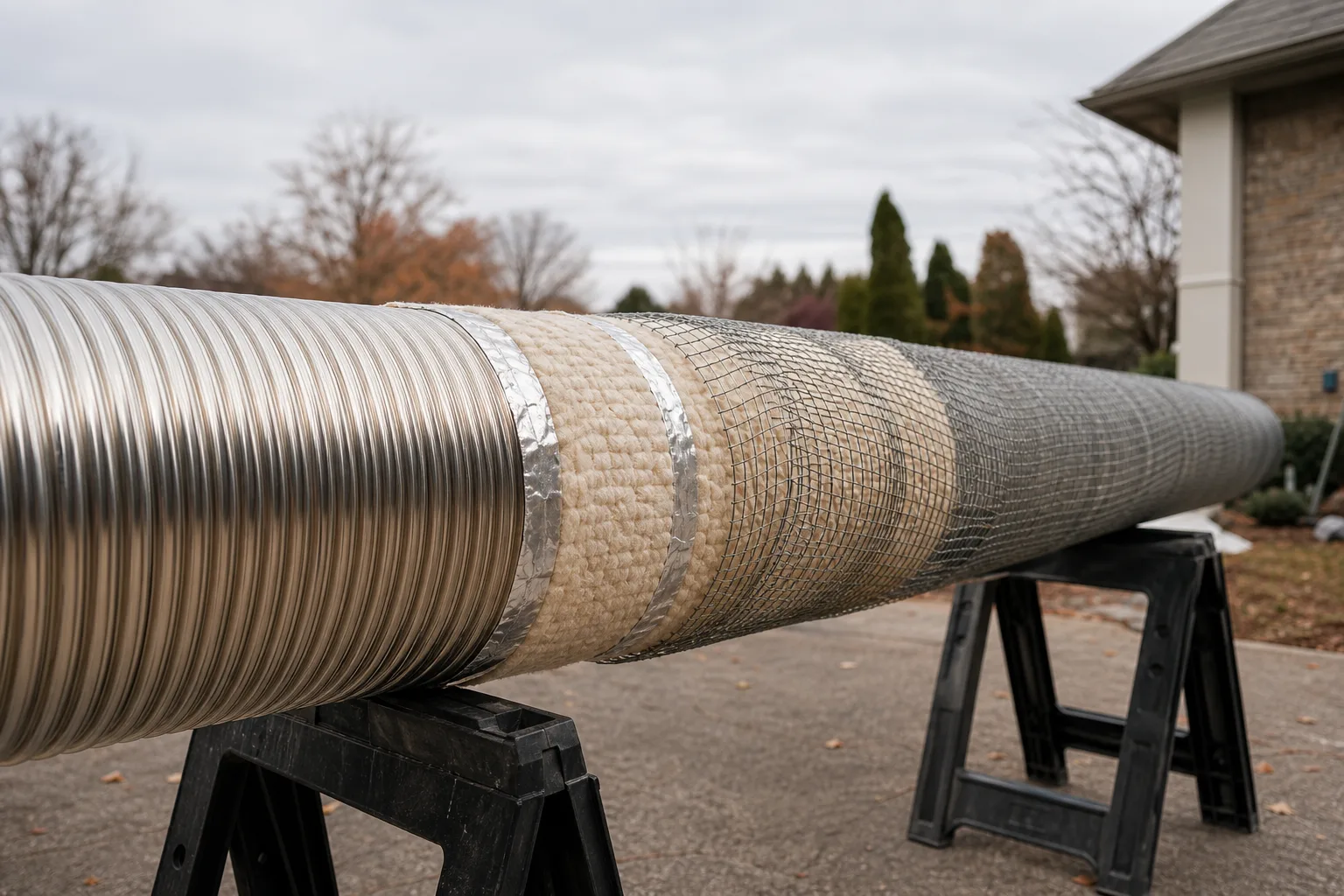
A flexible liner arrives coiled and is fed off the coil. Because it is corrugated, it can follow offsets in a flue that a straight section could not. A rigid liner goes in as sections.
I am deliberately not telling you how long any of this takes. Chimneys differ, flues bend, obstructions exist, and a duration is not something this page can honestly hand you. It is a question for the company doing the work, answered about your chimney.
The Connection at the Bottom
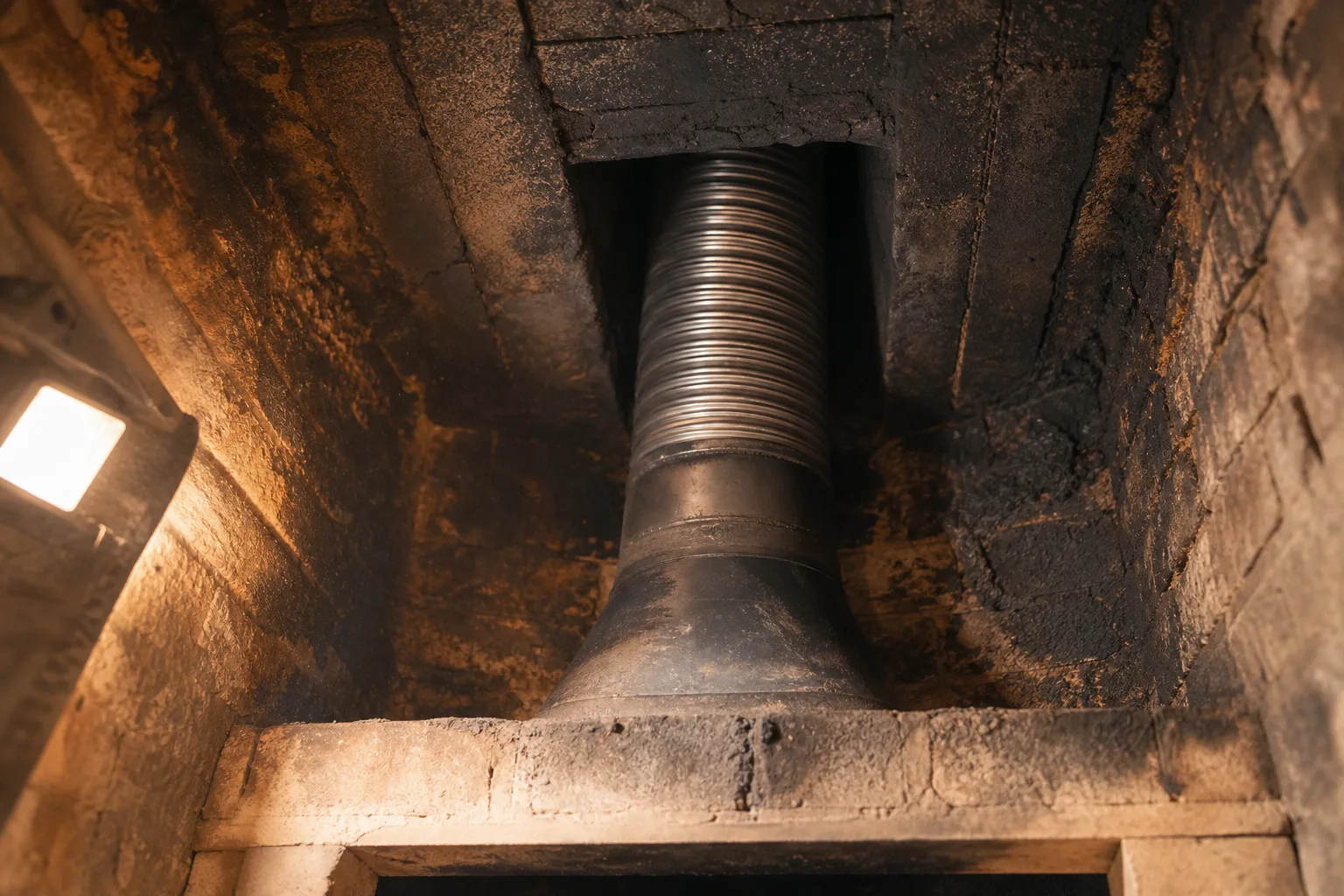
The liner is connected at the bottom to the appliance or the fireplace with an approved connector.
Where that connection lands depends on what you are venting into. At a fireplace, the bottom of the flue is the damper throat with the smoke chamber above the firebox. At a stove, the connector pipe runs to a tee.
The Top Plate and the Cap
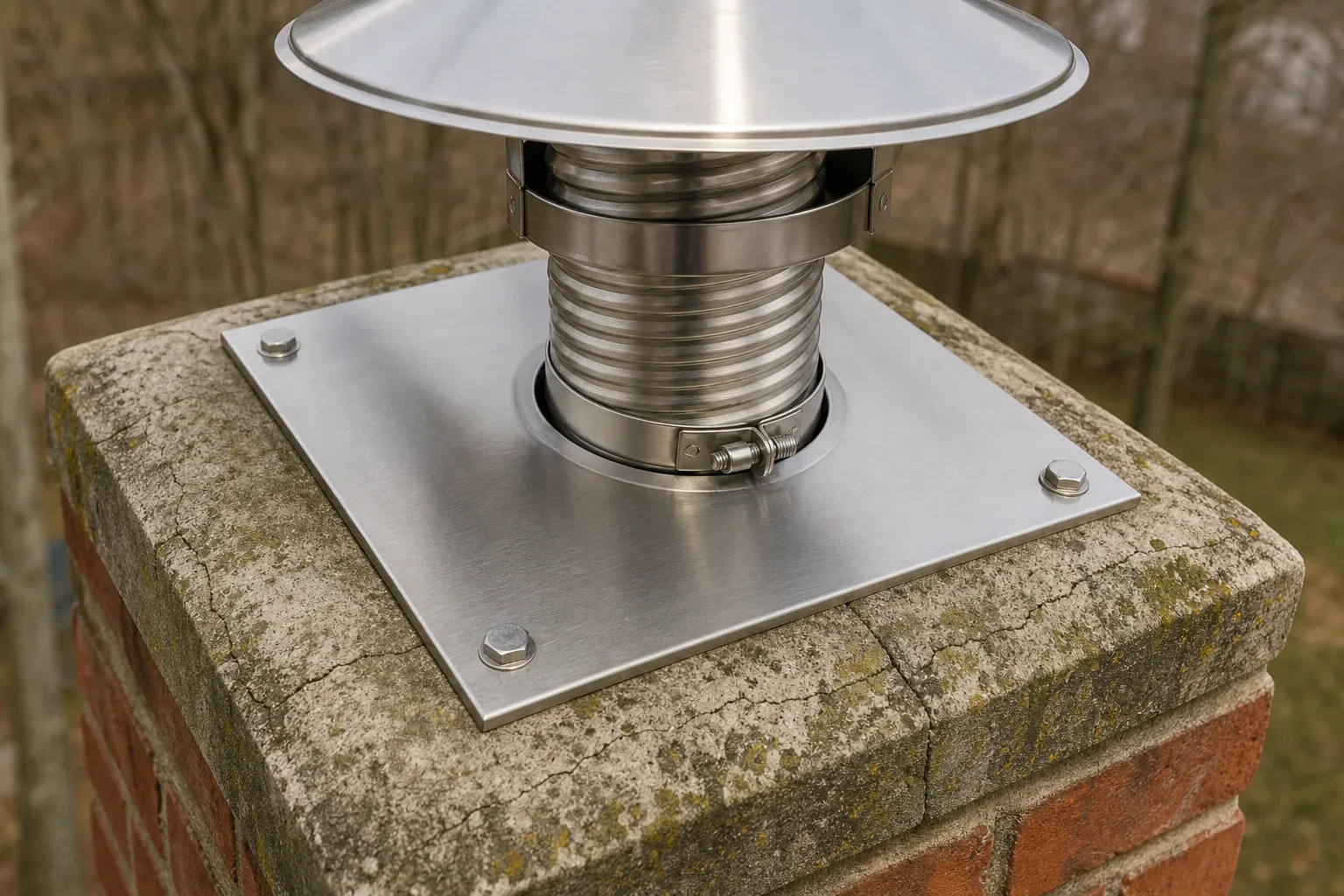
At the top, a flat plate seats on the chimney crown with the liner passing through it, and it is clamped there. A metal chimney cap goes above it.
Worth keeping the geography straight, because it comes up in estimates and gets muddled: the crown and the cap sit at the very top of the chimney. The flashing sits lower down, where the chimney passes through the roof plane. They are different places on the structure and different line items.
Not sure the liner is the right call?
Tell us what you have, what you burn, and what you were told. We can connect you with an independent local chimney company that can look at the flue and document its size and condition. That is the information a liner decision starts from.
Request service, or call (513) 655-6702.
The Four Kinds of Liner, and What Separates Them
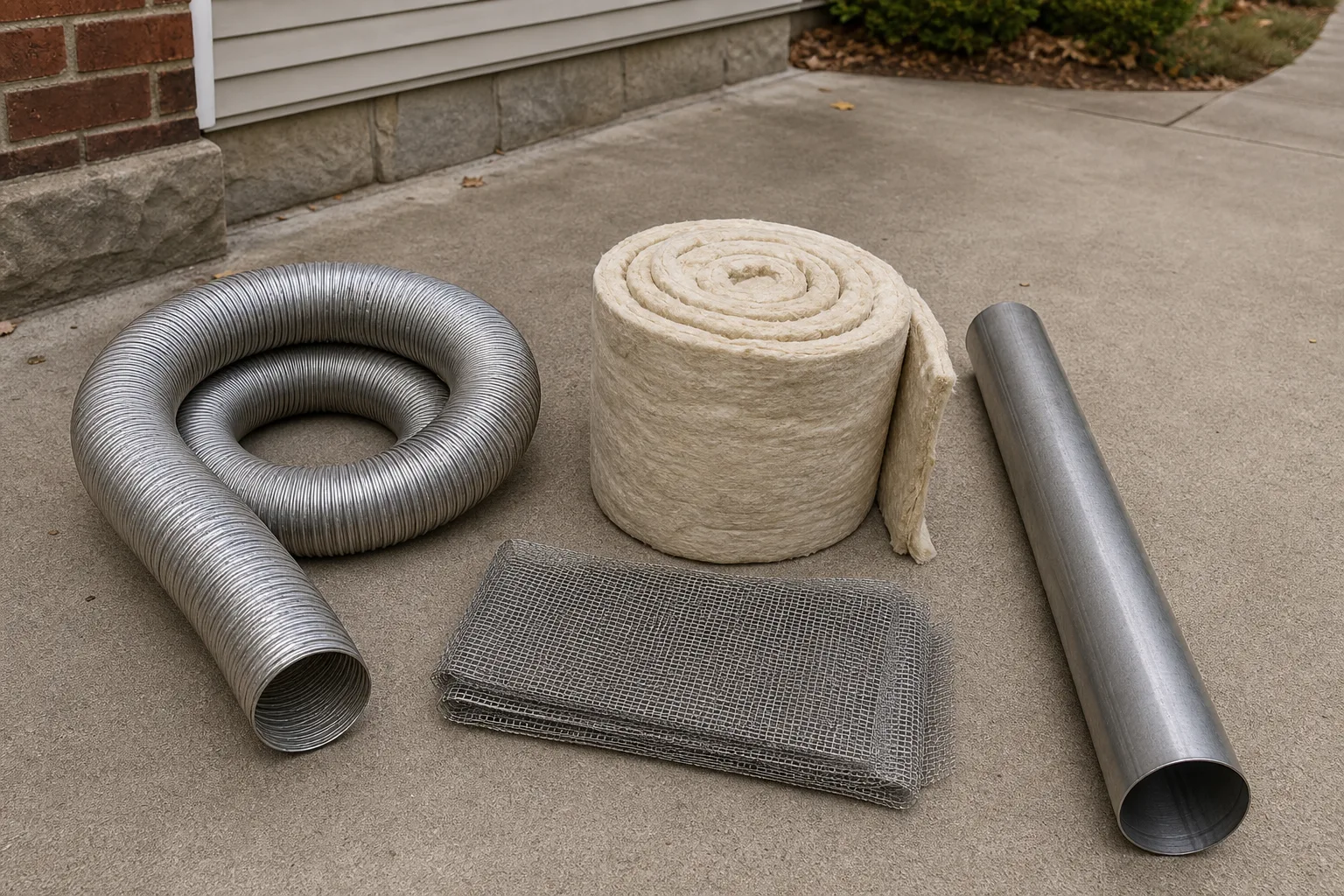
Four form factors come up in a chimney flue liner installation conversation, and the differences between them are real rather than cosmetic.
Flexible Stainless
Corrugated stainless steel, supplied coiled. The corrugation is the whole point: it bends, so it can follow a flue that is not straight.
Rigid Stainless
Straight stainless sections with a smooth interior. Suited to a flue that runs straight, because it has no ability to negotiate an offset.
Cast-in-Place
A cementitious mixture pumped into the chimney around a former or an inflatable bladder, producing a smooth seamless flue. It is a different kind of job from dropping a tube, with different equipment on site.
Clay Tile
The traditional masonry lining, installed in sections. It is the material behind the phrase "approved clay flue lining" in the code language above, and it is the lining already sitting in older masonry chimneys.
| Liner type | What it is | Where it can suit | What to confirm |
|---|---|---|---|
| Flexible stainless | Corrugated stainless tube, supplied coiled | Flues with offsets, where a straight section cannot pass | What the system is listed for, and what its instructions require |
| Rigid stainless | Straight stainless sections, smooth interior | Flues that run straight | That the flue is genuinely straight, and the system's listing |
| Cast-in-place | Cementitious mixture pumped around a former to produce a seamless flue | Situations where a poured flue is wanted; suitability depends on the chimney | What the system is listed for, and what the installation involves on site |
| Clay tile | Terra cotta sections, the traditional masonry lining | New masonry work, and repairs carried out in kind | That it is an approved clay flue lining and that the governing code provisions are followed |
On the metal itself: the alloys cited for liners are the 304 and 316 series, appearing in trade sources as 304L, 316L and 316Ti. The 316 series is cited for oil-fired appliances on the grounds of resistance to the corrosiveness of oil soot and condensation. Aluminum liners are cited for gas-only applications.
Good to know: The alloy question belongs to the fuel you burn, not to a preference. What settles it is what the system is listed for, which is stated on the system's own listing and in its instructions. Ask which alloy is being quoted and what appliance it is listed to serve.
Sizing, and Why It Gets Settled Before Anyone Picks a Liner
Here is the part of a chimney flue liner installation that runs against the instinct the subject invites.
A liner is not a liner. The size is a code question, and it has two ends.
The Floor and the Ceiling
For a solid-fuel-burning appliance, the cross-sectional area of the flue is to be not less than the cross-sectional area of the appliance flue collar or flue outlet, and not greater than three times that area where the chimney exits through the roof.
Read that twice. The provision sets a minimum and a maximum both, and the ceiling is the end that is easy to read straight past.
The code states the multiplier. It does not explain it, and neither will I.
Why a Bigger Liner Is Not Automatically a Better One
The instinct on hearing "your flue needs to handle the appliance" is that more room is safer room. The rule does not read that way. It sets a floor and a ceiling, and a liner that lands outside either end is outside what the provision allows.
That is the whole of what I will say about it, because what happens in a specific oversized or undersized flue is a question about that flue, not a general outcome this page can predict.
Pro tip: The flue collar or flue outlet dimension of your appliance is a specific measurement, and it is the number the sizing conversation starts from. Ask for it by name, and ask what liner area it puts you in. An installer working from your appliance's collar is working the way the provision reads.
Insulation, Clearance, and the Listing That Ties Them Together
Insulation comes up in a chimney flue liner installation quote as a line item, and it reads like an upsell to a reader who does not know what it is doing there. It is worth understanding, because it is not a comfort feature.
What the Insulation Is Actually Doing
An insulated liner keeps flue gas warmer on the way up. Cooler flue gas condenses more readily.
That is the mechanism, and I am going to leave it there rather than attaching a promise to it, because promises about what insulation prevents are exactly the kind of claim this subject is full of.
Where the Clearance Rating Comes From
This piece is a listing question rather than a physics question.
A liner system's zero-clearance rating under its UL 1777 listing can be conditioned on an insulation layer around the liner, with 1 inch commonly cited as the thickness. Whether that condition applies to the system being installed on your chimney is stated in that system's own listing.
So insulation is sometimes not an add-on at all. It can be a condition of the rating the installer is relying on. That reframes the line item entirely, and it is a fair thing to ask about directly.
Separately, and this does not fold into the liner question: combustible framing has to keep the clearance NFPA 211 requires, or the clearance the listed product's own listing and instructions require. A liner does not make combustible framing contact acceptable. Those are two different duties and they get settled separately.
Myth vs. fact: The claim is that insulating a liner prevents creosote. The fact is narrower and more useful. An insulated liner keeps flue gas warmer on the way up, and cooler flue gas condenses more readily. That is a mechanism, not a guarantee, and anyone selling insulation as creosote prevention is describing an outcome the mechanism does not promise.
The One Document That Outranks This Page
Time to pay off the promise from the top.
A relining system is installed in accordance with its own listing and the manufacturer's instructions. That document is the controlling one for your chimney flue liner installation. It sits above general guidance, trade convention, and this article.
This is not a disclaimer. It is a practically useful thing to know, and it changes what you do with everything else here. Where a sentence in this article and a sentence in that system's instructions disagree, the instructions win, and it is not close.
It also gives you a question with real teeth: which listed system are you installing, and what is it listed for? That question has a document behind it.
Safety note: The listed system's instructions govern the installation. Where this page and those instructions differ, follow the instructions. If an installer cannot tell you which listed system is going into your chimney, that is worth resolving before the work is scheduled rather than after.
On inspections, NFPA 211 defines three levels, and each has its own trigger. Level 1 is the defined baseline scope. Level 2 triggers include sale or transfer of the property, a change to the system, which covers a change of fuel, a change of appliance, or a change to the shape or material of the flue, along with a malfunction or operating problem, a chimney fire, and an external event likely to have caused damage. Level 3 applies where a concealed hazard is suspected that Level 1 or Level 2 cannot evaluate.
A change to the shape or material of the flue sits on that Level 2 list as the standard writes it. Whether any of those triggers applies to your chimney is worth raising when you book, rather than deciding from this page.
Permits are their own question, and requirements vary by jurisdiction. Your building department is the authority on that, and confirming it before the work gets scheduled is the move.
What to Ask Before You Approve a Chimney Flue Liner Installation
Every section above has been quietly assembling one of these. Here they are together.
- What exactly did you find? Which flue, which tile, at what height, and does footage exist. Ask for the finding in writing.
- What is the appliance's flue collar or flue outlet dimension, and what liner area does that put us in? This is the sizing conversation, and it starts from a measurement rather than a product.
- Which listed system are you installing, and what is it listed for? Fuel, appliance type, and the listing itself.
- Is insulation part of this installation, and is it a condition of the system's rating? A different question from whether insulation is a good idea.
- Who is pulling the permit, and has the building department been checked? Requirements vary by jurisdiction, so this is a real question rather than a formality.
- What does your inspection cover, and will the findings come in writing? Say when you book if there is something specific you want looked at.
On the money side of a chimney flue liner installation, the move is yours. Insist on a written estimate before any work starts, and do not let work begin without one in your hands.
Pro tip: Findings in writing, scope in writing, estimate in writing. Three separate documents, and each one is something you ask for rather than something that shows up on its own. A reader holding all three is having a different conversation from a reader holding a verbal recommendation.
How VIO Helps With a Chimney Flue Liner Installation
Here is what we are, said plainly, because it matters for how you use us.
VIO is a referral service. We do not perform chimney flue liner installation work ourselves. What we do is connect you with independent local chimney companies, and those companies set their own crews and their own pricing.
For your exact situation, which is a recommendation in hand and a decision you are not ready to make, that is genuinely the useful shape. You do not need somebody to sell you a liner. You need a second set of eyes on the flue, and a documented look at its size and condition, because that is the information a liner decision actually starts from.
Tell us the appliance, the fuel, and what the chimney is doing, and we can connect you with a company that can inspect it.
A few things stay yours, and we would rather say so than imply otherwise. The company we match you with is an independent local business, and its license, its insurance and its certifications are yours to ask for and yours to verify. The estimate is yours to insist on, in writing, before any work starts. And the questions in the section above are yours to ask.
The stretch ahead of the heating season is a sensible time to have a chimney looked at and to gather quotes, whether or not a chimney flue liner installation turns out to be what yours needs.
Get eyes on the flue before you commit to anything
Tell us the appliance, the fuel, and what the chimney is doing, and we can connect you with an independent local chimney company that can inspect it and put its findings in writing. Ask what its inspection covers when you book.
Request service, or call (513) 655-6702.
Symptom checker
What is your chimney doing?
Tap the closest match for an honest first answer.