



On this pageWhat Chimney Maintenance Actually Covers8 sections+7
- What Chimney Maintenance Actually Covers
- The Annual Inspection Is the Whole Foundation
- Who Does What: Your Half and the Professional's Half
- Your Chimney Maintenance Calendar
- Water Is the One Quietly Wrecking Masonry Chimneys
- The Chimneys Everyone Assumes Are Exempt
- Creosote, Sweeping, and What Actually Gets Removed
- How VIO Helps With Chimney Maintenance
Quick answer
Chimney maintenance covers three separate jobs: inspection, sweeping, and upkeep of components such as the cap, crown, flashing and liner. The yearly obligation is inspection, not cleaning. NFPA 211 calls for annual inspection of chimney systems, including ones used rarely, and sweeping happens when that inspection shows the flue calls for it. Component repairs follow the same way, from what the inspection finds.
Chimney maintenance is one of those phrases that sounds self-explanatory until you try to say what it means. Something about a sweep. Something about creosote. A sense that it is supposed to happen once a year, and a vaguer sense that it may not have happened in a while.
The confusion is not the homeowner's fault. It comes from the phrase itself, which bundles three genuinely different jobs under one name and then leaves you to guess which one you need.
Separating those three is the most useful thing anyone can do for you on this subject, so that is where this starts. After that comes the part most guides skip entirely: the line between the work you handle and the work that needs a qualified professional. That line sits further along than it first appears, and knowing where it falls changes what you book and what you ask for.
By the end you will have a chimney maintenance schedule, a division of labor, and a short list of things to watch for from the ground.
What Chimney Maintenance Actually Covers
Chimney maintenance is three jobs living under one name. They are easy to confuse, and confusing them is how someone ends up booking the second job when the first is the one they needed.
Inspection, the job of looking
Inspection is diagnostic. Someone qualified examines the system and reports what condition it is in.
Nothing gets removed and nothing gets repaired. The output is information, and that information is what every other decision downstream depends on. Whether you need sweeping, whether the liner is sound, whether the crown has opened up, whether anything should be repaired before you light a fire.
This is the annual job. Hold onto that, because it inverts the usual assumption.
Myth vs. fact: The annual obligation under NFPA 211 is inspection, not cleaning. Sweeping is one of the things an inspection can tell you to do, and it follows from the inspection rather than from the calendar.
Sweeping, the job of removing
Sweeping removes deposits from the flue. It is mechanical, it is physical, and it is the image everyone has in their head when they picture chimney work.
It is also conditional. Whether your flue needs sweeping this year depends on what is actually in it, which is something an inspection establishes and a calendar cannot.
You will read "clean your chimney once a year" on a lot of websites. Treat that as a rough habit rather than a rule. Inspect annually, and sweep when the inspection says the flue calls for it.
Component upkeep, the job of the parts
Here is the one that rarely makes it onto a checklist.
A chimney is an assembly of parts, and each part has a job and a failure mode. The cap keeps rain and animals out of the flue. The crown sheds water off the top of the stack. The flashing seals the joint where the chimney passes through the roof. The mortar joints hold the masonry together. The liner carries combustion products up and out. The damper opens and closes the throat.
None of those are consumables you replace on a schedule. They are things that degrade, and the only way you find out where they are in that process is that someone looks.
The Annual Inspection Is the Whole Foundation
NFPA 211 is the standard covering chimneys, fireplaces, vents and solid fuel burning appliances, and it defines three levels of inspection. The levels nest: a Level 2 includes everything in a Level 1, and a Level 3 includes everything in both.
Worth knowing before you call anyone, because every chimney maintenance decision starts here, and "I need an inspection" is not actually a complete request.
The standard calls for annual inspection of chimney systems, including ones that get used rarely. Frequency of use is not the qualifier.
Level 1, the annual check
This is the routine one, and for a system that has not changed, it is the one that applies.
Level 1 applies to a system in continued service, where nothing about it has changed and no hazards are known, and where you intend to keep using it the way you used it last year. The examination covers the readily accessible portions of the chimney and the appliance connection.
That "no changes, no known hazards" condition is doing real work in that sentence. If either half is untrue for your system, say so when you book, because a different level may apply.
Level 2, and exactly when it is required
Level 2 is not an upsell. The standard requires it in specific circumstances:
- When the property is being sold or otherwise transferred.
- When something about the system changes, including a change of fuel, a change of appliance, or a change to the shape or material of the flue.
- After an event likely to have caused damage to the system, such as a chimney fire or an operating malfunction.
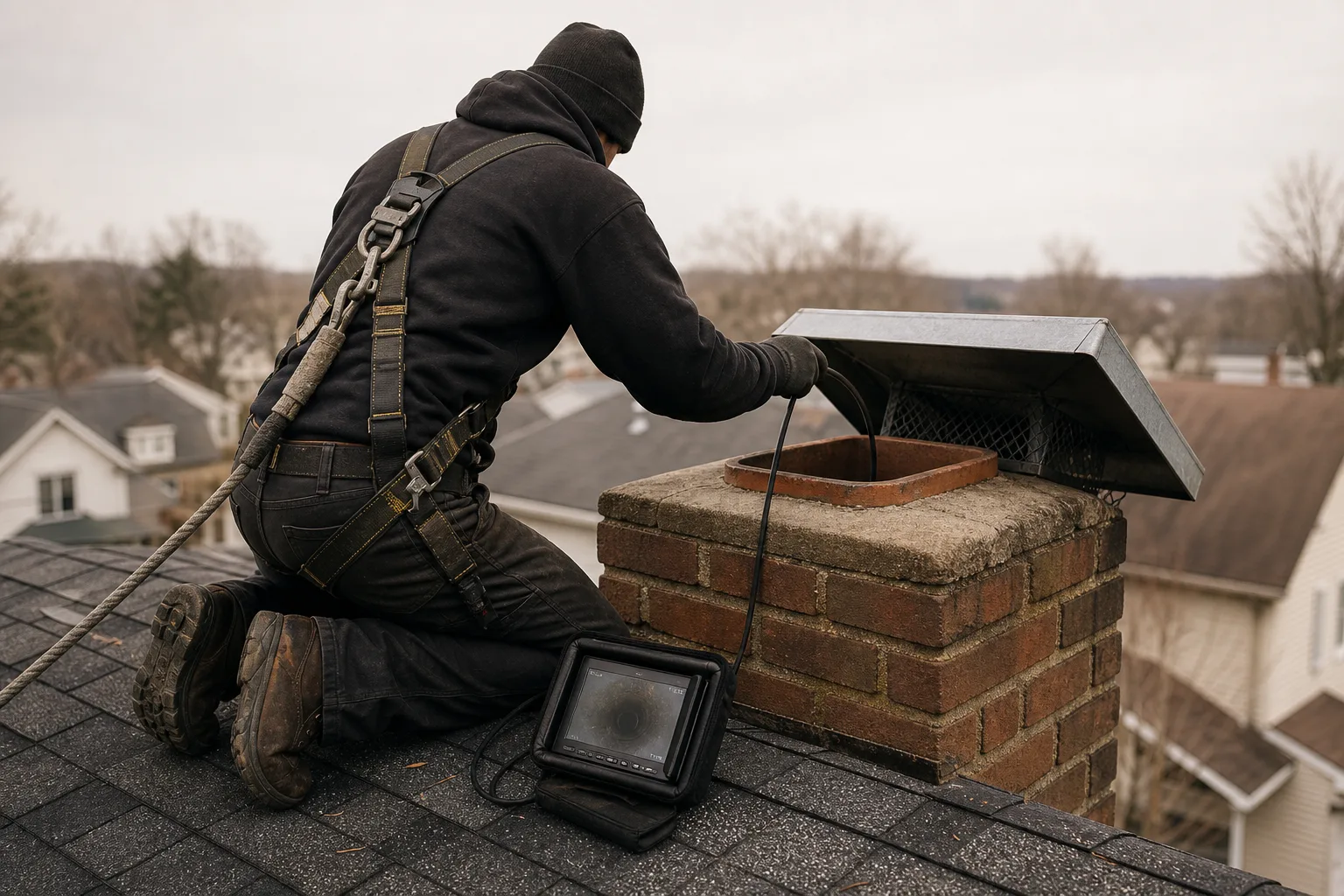
A Level 2 adds video scanning of the flue interior, along with accessible attics, crawl spaces and basements. That camera is the point of it. A flue can look fine from the firebox and from the top while something in the middle is not fine at all.
Good to know: When you book, say which situation you are in rather than just asking for "an inspection". Buying the house, had a chimney fire, switching to a wood insert, or nothing has changed and it is the yearly look. The company will know which level applies, and you will not end up with the wrong one.
Level 3, the concealed-hazard case
Level 3 exists for when there is reason to suspect a hazard that cannot be evaluated any other way. It can involve removing parts of the structure or the building finish to reach the area in question.
The trigger is the suspected concealed hazard itself, and specifically one that a Level 1 or a Level 2 cannot evaluate.
Who Does What: Your Half and the Professional's Half
Here is the table this article promised.
| You | A qualified professional |
|---|---|
| Look at the stack from the ground a few times a year | Assess the flue interior along its full length |
| Keep the hearth area clear and the ash managed | Determine creosote class and what removal it calls for |
| Burn dry, seasoned wood and keep fires reasonable | Judge liner condition and whether it is sound |
| Test smoke and carbon monoxide alarms monthly | Crown, cap and flashing repair |
| Watch for water stains on the ceiling or wall near the chimney | Damper repair or replacement |
| Notice smells, staining, or a fire that draws poorly | Anything on the roof |
| Book the annual inspection ahead of the season | Anything that requires opening the system |
The line falls where it does for two plain reasons.
The first is that you cannot see the inside of a flue. From the firebox you can see a few feet. From the top you can see a few feet. The stretch in between is the part you cannot assess at all, and reaching it takes a camera and someone who knows what they are reading.
The second is that roof work is roof work. A chimney crown sits at the highest point of the building, and servicing it means height, weather and the roof surface.
One case does not belong on either side of that table. If your masonry flue has no liner in it, that is not a chimney maintenance item. NFPA 211 treats a suitable liner as standard, and an unlined flue goes for professional evaluation before anything else gets decided about it.
Not sure when anyone last looked at your chimney?
The annual inspection is where every chimney maintenance decision comes from. It is also the easiest thing on the list to put off for another year.
VIO is a referral service. We match you with an independent local chimney company that handles the work.
Call (513) 655-6702, or request service online and we will take it from there.
Your Chimney Maintenance Calendar
A checklist is a pile. What chimney maintenance actually needs is a rhythm, so here is the year laid out by how often each thing happens.
Every time you light a fire
Two minutes of habit.
Open the damper before you light anything, and confirm it is open rather than assuming. Burn dry, seasoned wood. Keep the hearth area clear of anything that should not catch.
When the fire is out, leave the damper open until the embers are genuinely cold.
Once a month through the burning season
Test your smoke and carbon monoxide alarms. This one runs monthly all year, not only through the burning season, and the manufacturer's instructions govern batteries and replacement intervals.
Manage the ash. A shallow bed is fine and useful, a deep accumulation is not, and ash can hold heat long after a fire looks out.
Take one walk outside and look up at the stack. You are not inspecting anything, you are just noticing whether it looks different from last month.
Once a year, ahead of the heating season
This is the inspection, and late summer into early fall is the honest window for it.
The reason is not urgency, it is sequencing. If the inspection turns up something that needs repair, you want that discovered while the weather still cooperates and while you are not trying to heat the house.
Pro tip: Finding out your chimney needs work during the first genuinely cold week of the year is the hard way to find out. Arrange the look while a fire is still optional.
After the burning season ends
Spring has a real job, and it is the easiest one to skip.
Whatever the season deposited in the flue is sitting in there for the next several months. And winter's freeze and thaw cycles have just finished working on the masonry, which means damage to the crown and the mortar joints is at its most visible right now.
A spring look and a fall look are not redundant. They catch different things.
Water Is the One Quietly Wrecking Masonry Chimneys
Fire gets all of the attention. For a masonry chimney, the relentless one is water.
Masonry absorbs it. When absorbed water freezes it expands, and when it thaws it retreats, and that cycle repeats every time the temperature crosses freezing. Over enough winters it pushes mortar out of the joints and pops the faces off brick.
The defense against this is a stack of parts working top down, and each one has a distinct job.
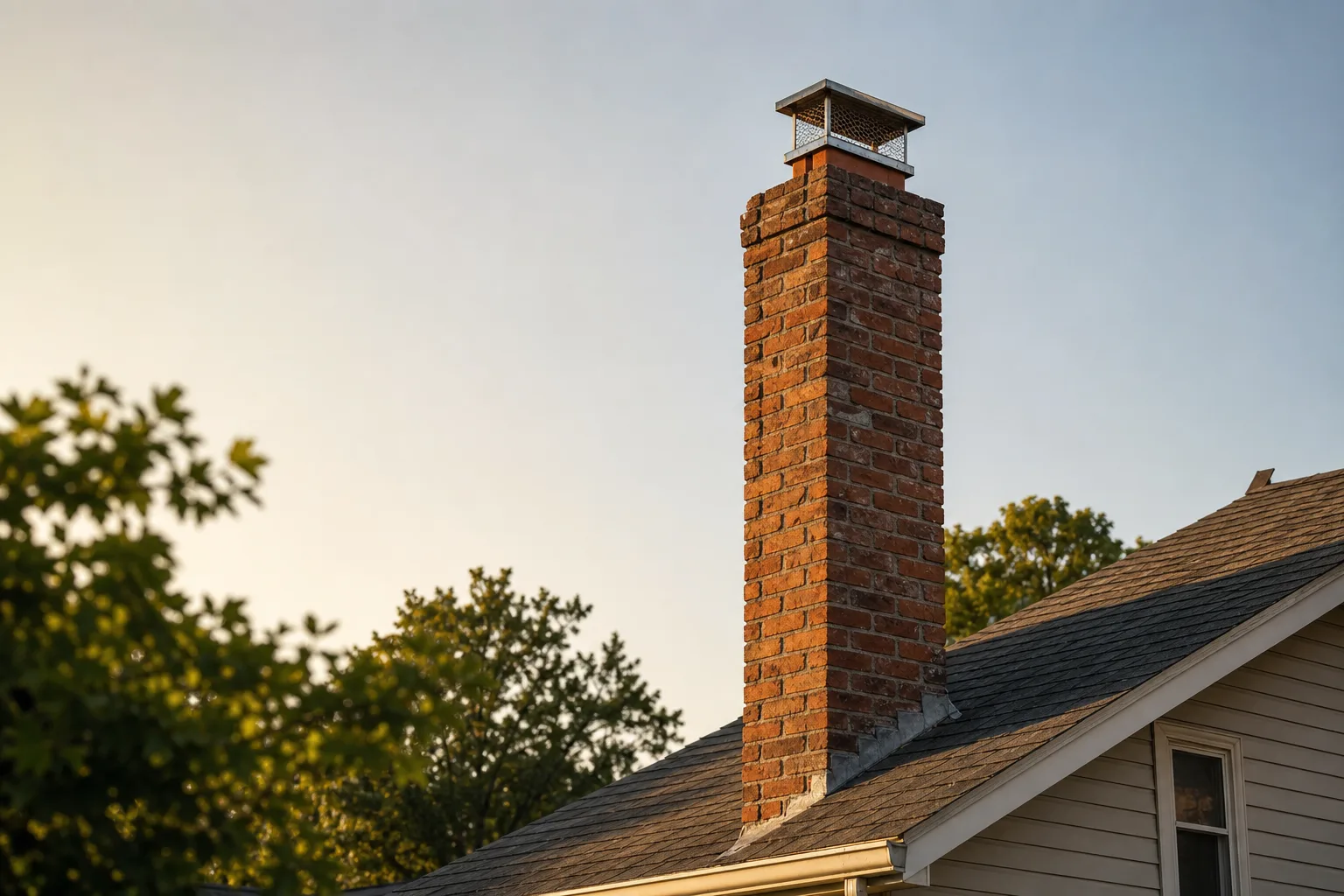
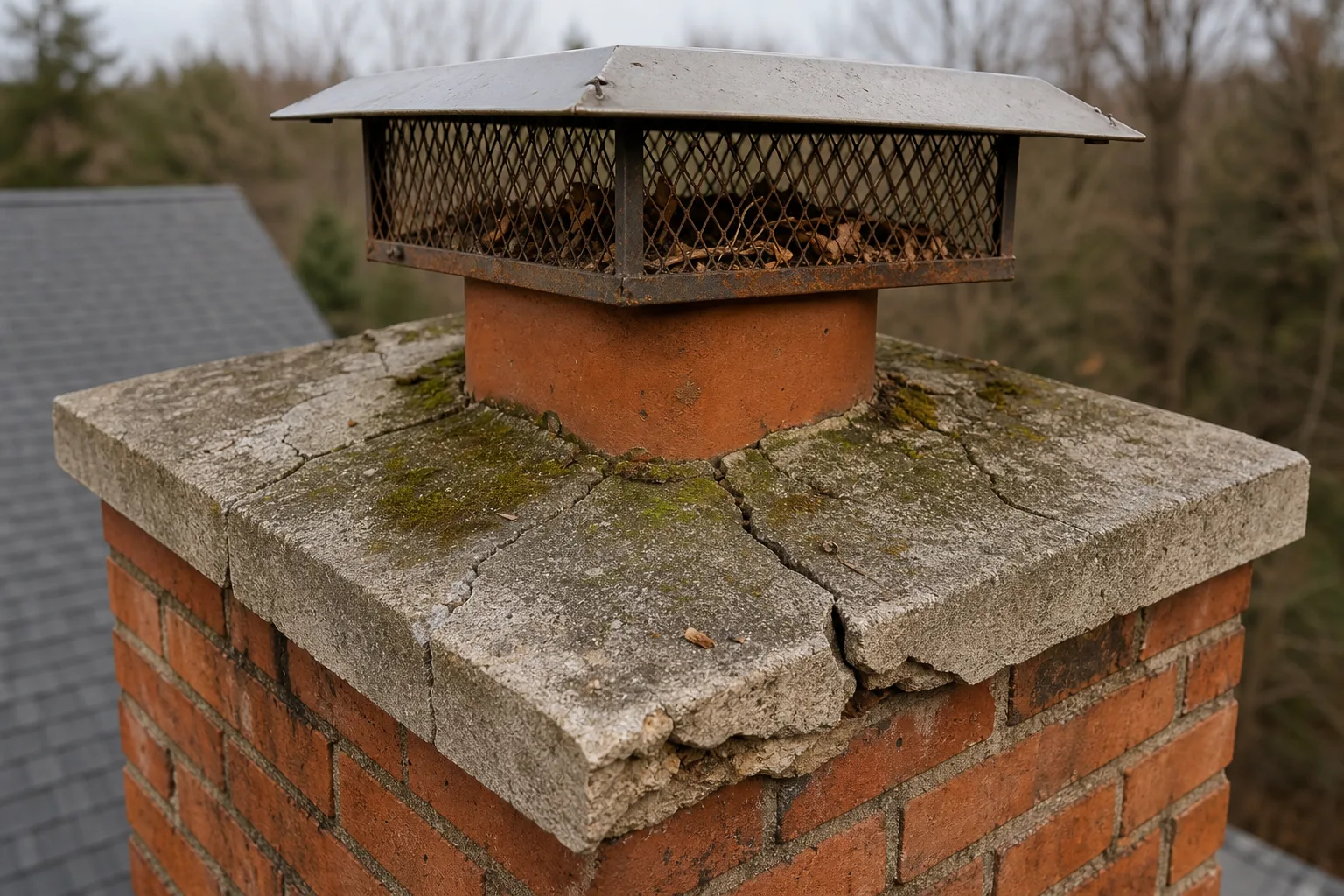
The cap is the metal lid standing above the flue on legs, usually with mesh sides. It keeps rain from falling straight down the flue and keeps animals out of it. When one rusts through or goes missing, replacing the cap comes before anything below it.
The crown is the slab across the top of the stack around the flue tile. It should slope away from the flue and overhang the brick face so water runs off rather than sitting.
The flashing seals the joint where the chimney passes through the roof plane, which is one of the more demanding waterproofing details on any house, and repairing failed flashing is its own specific job.
The mortar joints are the last line, and when they recede below the face of the brick, water has somewhere to sit. Cutting them out and refilling them is the work known as tuckpointing.
Here is what to look for from the ground, no ladder required. Mortar joints that have receded below the brick faces. Brick faces that have flaked or popped off. Dark staining on the stack, particularly on the weather side. Shingle staining directly below the roofline joint. A visibly chipped or cracked crown edge, if you can see the top from anywhere on your property.
Inside, watch for water stains on the ceiling or the wall next to the chimney, and for a damp smell near the firebox after heavy rain.
From the field: Water damage is the quiet kind. It works from the top down, in the months when the fireplace is not on anyone's mind, which is exactly why the stack is worth a look in the seasons when you are not thinking about fires.
Waterproofing treatments exist and can be worth considering, but this is a decision to make with a professional rather than at a hardware store. Masonry sealers are not interchangeable, and the wrong product on a chimney can trap moisture instead of shedding it.
The Chimneys Everyone Assumes Are Exempt
Two situations make it easy to read an article like this one and conclude, reasonably, that none of it applies to you. Both deserve a correction.
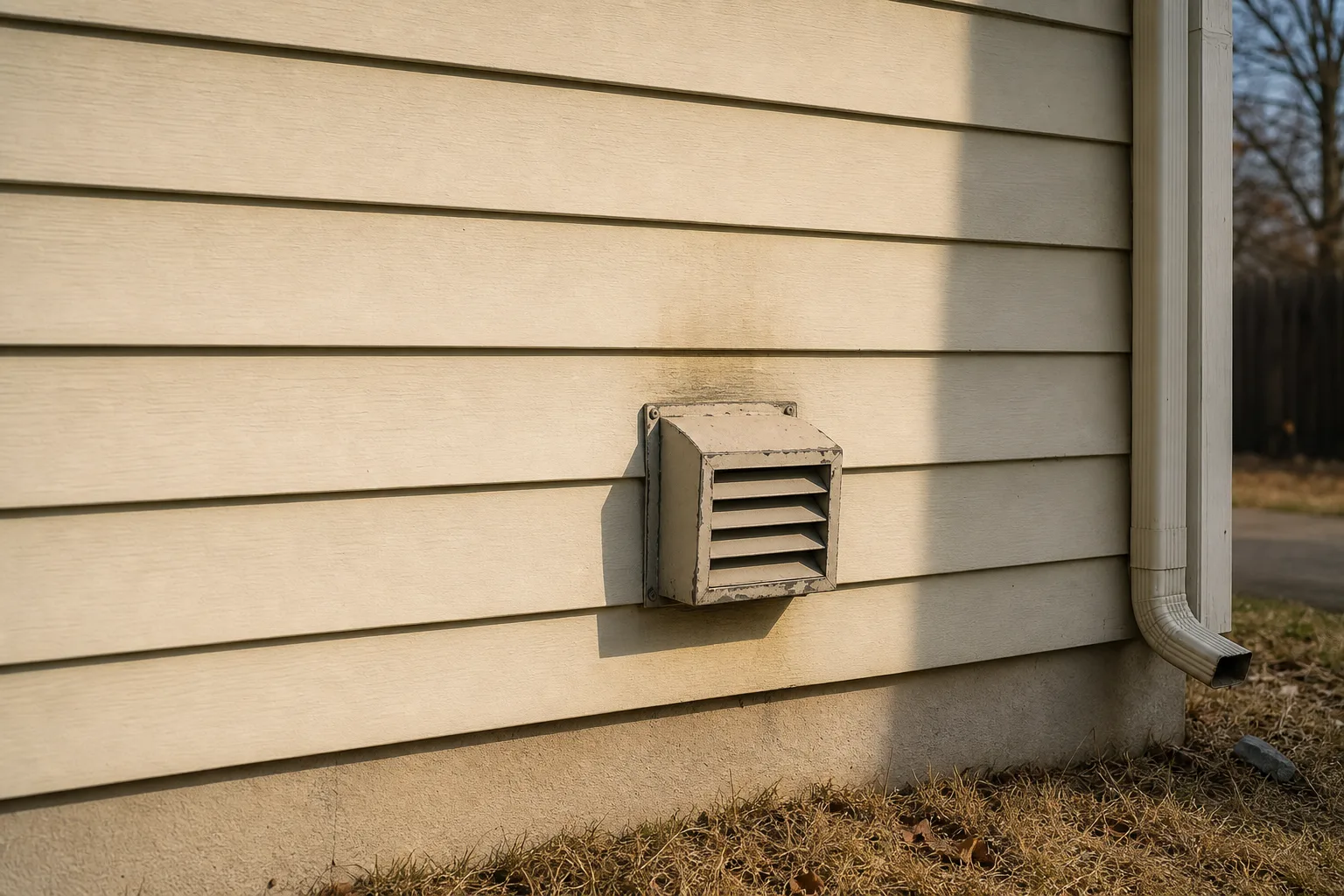
Gas fireplaces still have a vent
No wood, no creosote, no soot to point at. It is easy to conclude chimney maintenance is somebody else's problem.
But a gas appliance still produces combustion products, and something still has to carry them out of the building. That vent or flue gets an annual look for cracks, blockages, corrosion, condensation and the condition of its fittings and joint connections.
Safety note: The vent's job is moving combustion products, including carbon monoxide, out of your house. It does that job invisibly and silently, which is exactly why it needs someone to check on it rather than someone to notice a problem with it.
Service on the gas appliance itself belongs with a licensed gas service provider. That is a different qualification from chimney work, and it is worth asking who is doing which part.
Chimney Maintenance for a Fireplace You Never Use
An unused chimney feels like a solved problem. It is closer to the opposite.
Birds, squirrels and raccoons nest in chimneys. Nesting material blocks the flue, and it is exactly the sort of thing you discover the first time you decide to light a fire after all.
Water does not check whether you burn anything. Neither does freeze and thaw. A dormant chimney sits in the same weather as a working one, with the same crown, the same flashing and the same mortar joints.
Chimney maintenance applies here too. It is a shorter conversation, but it is not a skipped one.
Creosote, Sweeping, and What Actually Gets Removed
Creosote is the reason sweeping is part of chimney maintenance at all. It is the deposit that burning wood leaves on the inside of a flue, and it is combustible.
It gets classified in three degrees, and the distinction matters because it determines what removing it involves.
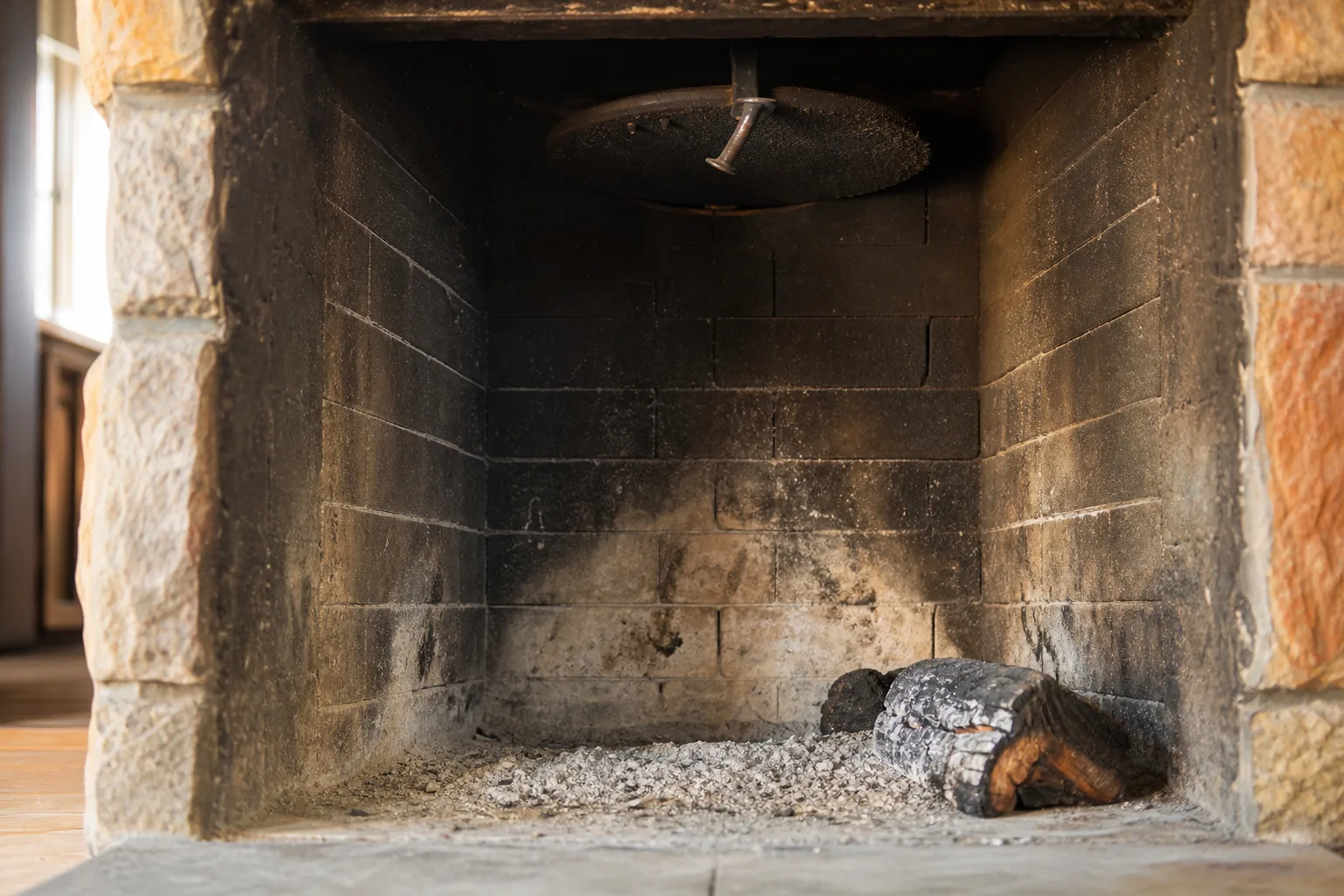
First degree is a loose, flaky, powdery deposit. Second degree is harder, with a shiny, crunchy, tar-like texture. Third degree is glazed: shiny, hardened, and extremely difficult to remove.
Which degree is in your flue is the inspecting professional's determination, made by looking at it. It is not something to diagnose from the firebox, from the glass, or from how the fire behaved last winter. What you can see from inside the room does not tell you what is happening twenty feet up.
Safety note: The three degrees describe what removal involves, not which deposits are fine to leave alone. Whether your flue needs sweeping this year is the inspection's call, not something to settle from the hearth.
If sweeping is called for, here is what a visit from a chimney sweep physically looks like, because knowing that makes it much easier to tell good work from careless work.
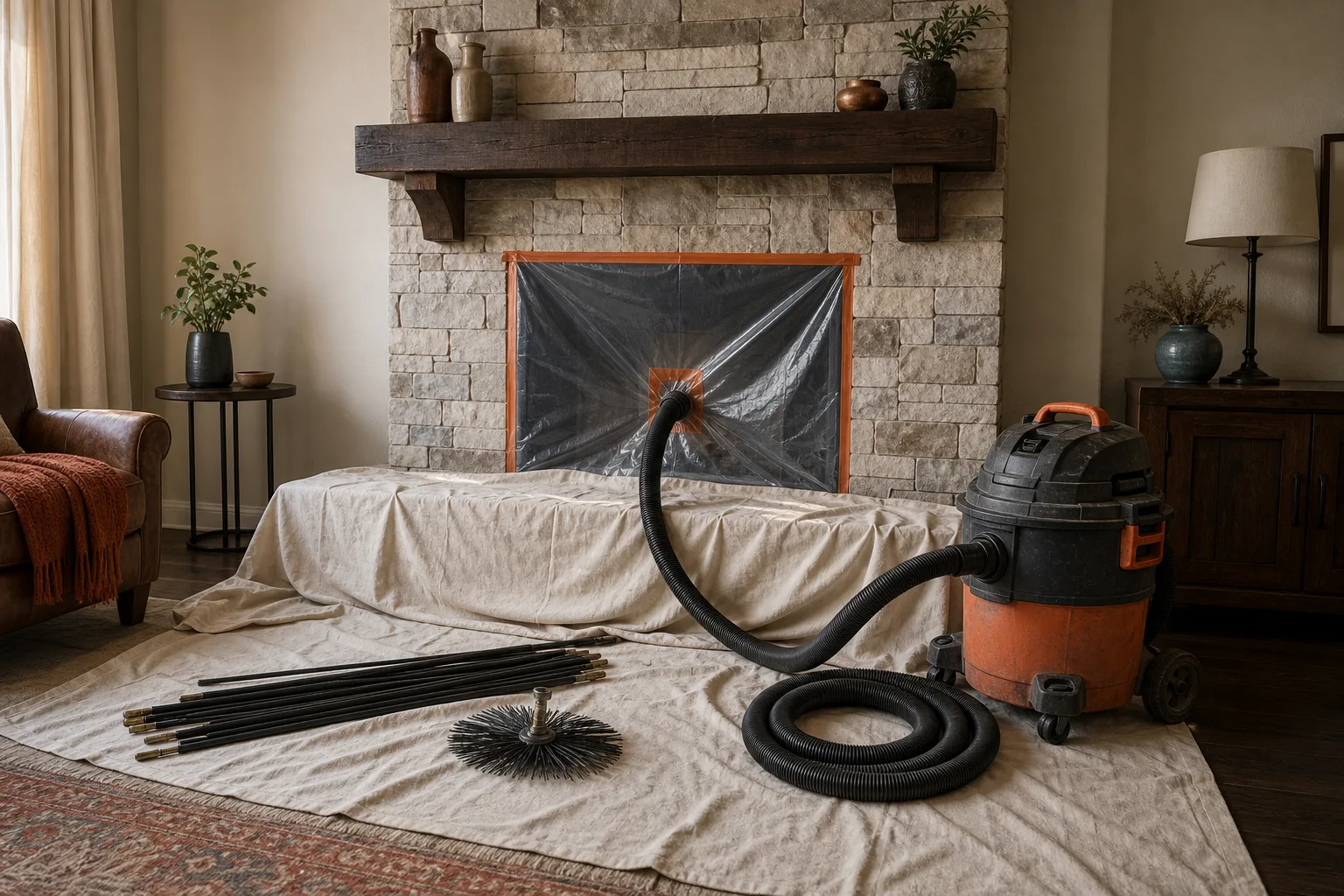
Drop cloths go over the hearth and the floor. Poly sheeting gets taped across the fireplace opening with a port for a vacuum hose, so the dust has somewhere to go other than your living room. The brush head goes up the flue on nested rods, or down it from the roof. The vacuum runs the whole time.
A clean job leaves the room the way it was found. Reasonable to expect, and reasonable to ask about beforehand.
How VIO Helps With Chimney Maintenance
By this point you know what chimney maintenance consists of and roughly what your chimney is likely to need. The missing piece is somebody qualified standing in front of your specific chimney.
That is the part VIO handles. We are a referral service, not a chimney company. We match you with an independent local chimney company that does the actual work.
What we ask of the companies in the network, and what you should hold them to:
- We ask every company in the network to put its estimate in writing before any work starts, and you should insist on exactly that, from anyone you hire.
- Ask the company for its license and insurance details, and check them yourself. This is your call to make, not something to take on trust.
- Ask which inspection level you are getting and why, so the scope is agreed before anyone arrives.
Tell us what you have, whether that is a wood-burning fireplace, an insert, a stove, a gas appliance or a chimney nobody has touched in years, and we will match you with a company that works on it.
Book the look, then decide the rest.
You now know what chimney maintenance involves. What you do not know yet is which parts your chimney actually needs, and no article can tell you that. An inspection can.
Arranging it ahead of the heating season beats arranging it during the first cold week of the year.
When you talk to the company, ask for its license and insurance details, and insist on the estimate in writing before any work begins.
Call (513) 655-6702, or request service online and we will match you with an independent local chimney company near you.
Symptom checker
What is your chimney doing?
Tap the closest match for an honest first answer.