



On this pageWhat to do right now if you hear birds in your chimney7 sections+6
- What to do right now if you hear birds in your chimney
- Why searching "bird removal from chimney near me" doesn't always mean same-day removal
- What you're actually hearing: a field guide to chimney noise
- What a proper bird removal visit actually includes
- Keeping birds out of the chimney for good
- Timing: when to call, and what the season changes
- How to choose who you call
Quick answer
Leave the damper closed, don't light a fire, and never try to smoke birds out. Call a chimney professional who can identify the species first: chimney swifts and other native birds are protected under the federal Migratory Bird Treaty Act, so an active nest must stay until the young fledge. Non-native starlings and house sparrows fall outside that federal protection, though state and local rules still apply. Removal should always include cleaning the flue and capping it afterward.
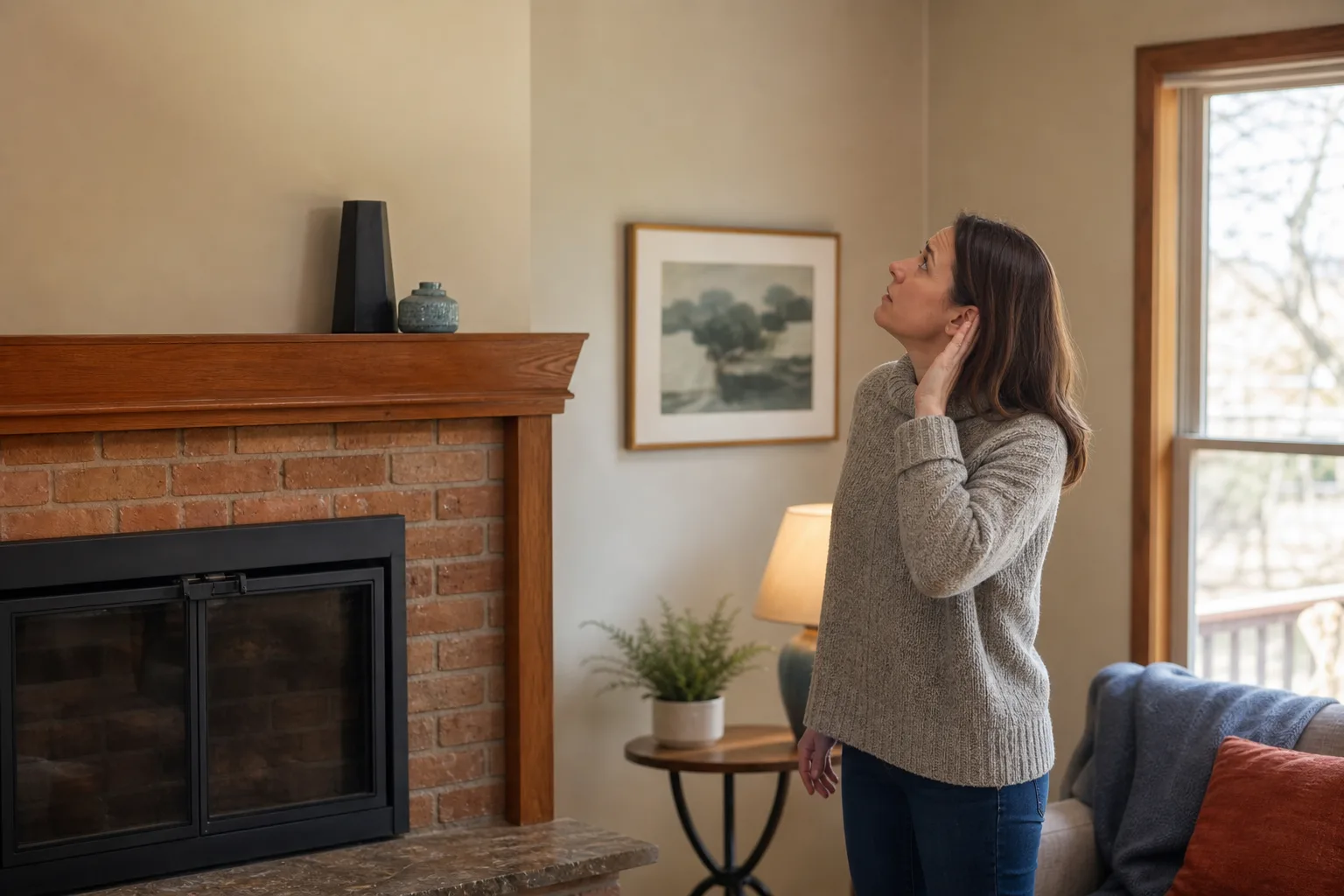
That sound coming down your flue is not a mystery. It's a message, and it tells you exactly what you're allowed to do about it in the next hour. Most people who search bird removal from chimney near me are standing in their living room at seven in the morning, coffee going cold, listening to something rustle above the damper and wondering whether they should open it. Don't open it. Here's what's actually happening up there, who can legally take it out, and what you can do today.
What to do right now if you hear birds in your chimney
Start with the short version, because you probably didn't come here to read for ten minutes.
Leave the damper closed. Do not light a fire. Do not spray anything up the flue, do not drop anything down it, and do not try to smoke the birds out. That last one is the single worst piece of advice circulating on home forums, and it can be both a federal offense and the start of a chimney fire in the same afternoon. Then call someone who handles birds and chimneys together, not one or the other.
The reason for that last part matters. A general wildlife trapper can catch a bird. A chimney company can clean a flue. What you need is the person who can identify the species from the sound, tell you honestly whether the law lets them touch it this week, remove the nesting debris that's now sitting on your smoke shelf, and then close the opening so you never repeat this. Those are four different jobs and they belong in one visit.
If the bird is already in your firebox (flapping behind the glass doors, or loose in the room), close the interior doors to the rest of the house, open one exterior door or window wide, draw the curtains on every other window so the brightest light in the room is the exit, and leave. Birds fly toward light. Give them one light to fly toward and most of them solve the problem themselves within a few minutes.
Safety note: A blocked flue is not just a nuisance. Nesting material packed into a chimney can push combustion gases back into the house, and carbon monoxide has no smell. If you have a gas appliance venting through that chimney (a furnace, a water heater, a gas fireplace), treat a suspected blockage as urgent and stop using the appliance until it's been looked at.
Why searching "bird removal from chimney near me" doesn't always mean same-day removal
This is the part nobody wants to hear, and it's the reason I'd rather you read it here than find out from an argument on your driveway.
Chimney swifts are protected under the federal Migratory Bird Treaty Act. So are almost all native North American birds. Under that law, an active nest, one with eggs or chicks in it, cannot legally be removed, destroyed, or relocated without a permit, and "it's noisy" is not a permit. A reputable company will tell you no. A company that shrugs and says they'll take care of it is telling you something about how they operate that you should probably listen to.
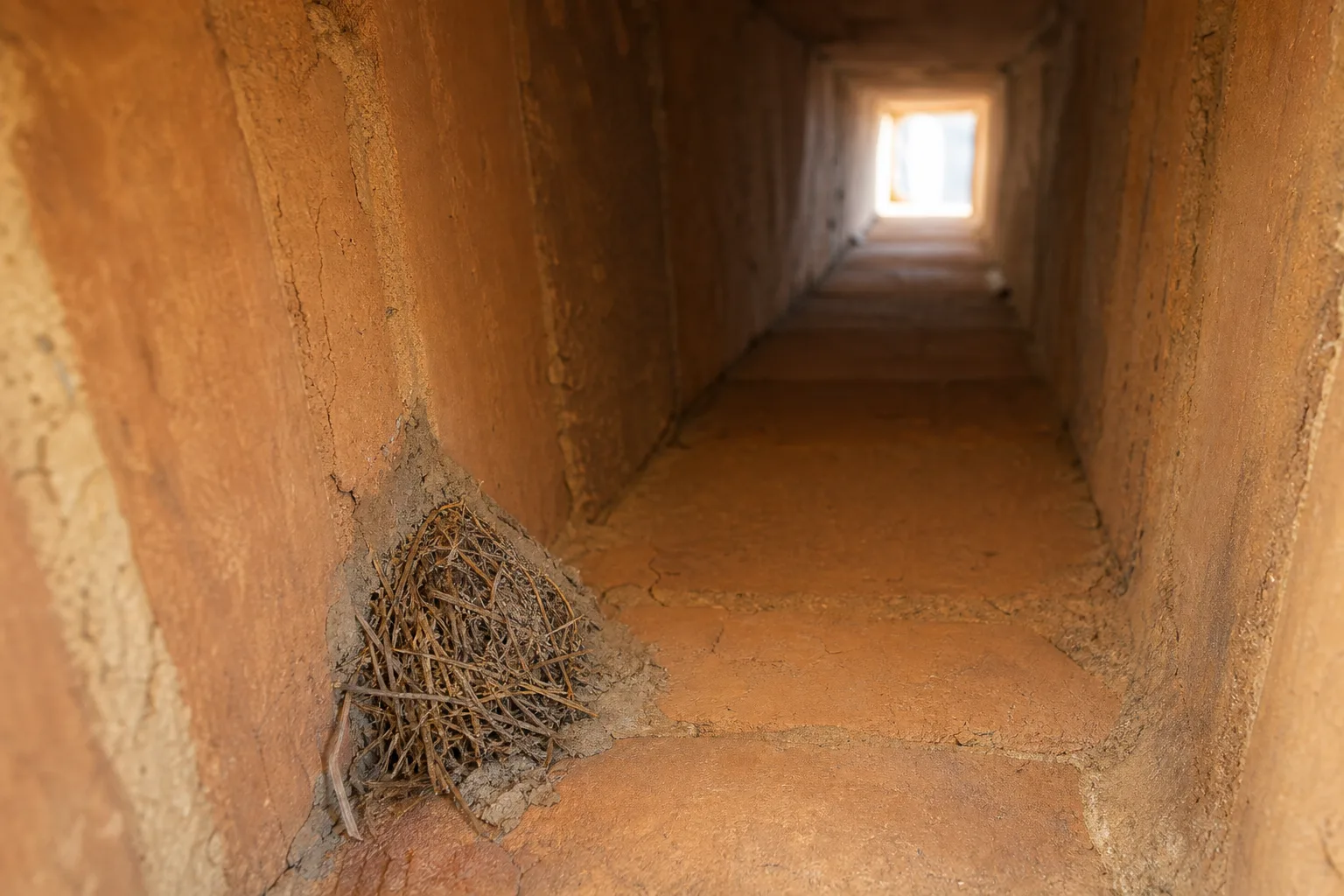
Chimney swifts are also, genuinely, remarkable birds. They cannot perch: their feet are built to cling to vertical surfaces, which is why they nest in hollow trees and, since we cut most of those down, in masonry chimneys. They cement a half-cup of twigs to the flue wall with their own saliva, they eat enormous quantities of flying insects, and they'll be gone on their own, migrating south, before you'd want your first fire of the season.
So the honest answer to a nesting swift in August is usually: wait. Not forever — weeks, until the young fledge and the family leaves. Then remove the nest, clean the flue properly, and cap it so next spring's pair picks a different chimney.
Now, the exceptions. European starlings and house sparrows are non-native and aren't covered by the Migratory Bird Treaty Act, so the federal nest protection doesn't apply to them, and starlings in particular build bulky, filthy nests that pack a flue solid. That isn't a blank check, though: state and local wildlife, animal-control, and humane-treatment rules still govern who may remove them and by what method. A bird that has dropped past the nest into the smoke chamber is different again: helping it find its way back out isn't destroying a nest, though a protected bird that's injured or can't leave on its own belongs with a permitted wildlife rehabilitator rather than with you. And a chimney with no active nest at all, just last year's debris, is a cleaning job with no legal question attached.
Myth vs. fact: Myth: "a nest is a nest, and it's my house, so I can clear it." Fact: federal protection under the Migratory Bird Treaty Act follows the species, not the property line. The nest of a protected bird on your chimney is still protected. What you own is the chimney; what the law protects is the family living in it, and only until the young leave.
What you're actually hearing: a field guide to chimney noise
Half of doing this job well is identifying the tenant before anyone climbs a ladder. You can get surprisingly far from the couch just by listening carefully at different times of day.
| What you hear | Most likely cause | Protected? | What happens next |
|---|---|---|---|
| Rolling, mechanical chittering; loudest at dawn and dusk | Chimney swifts, adults | Yes (federal) | Wait for fledging, then clean and cap |
| Rising, insistent begging that starts and stops; several weeks of it | Chimney swift chicks | Yes (federal) | Wait; removal after the family leaves |
| Harsh chattering, constant daytime scuffling, strong odor | European starlings | Not federally | Removal and cleaning; state and local rules still apply |
| Chirping plus persistent scratching low in the chimney | House sparrows | Not federally | Removal and cleaning; state and local rules still apply |
| One bird, frantic flapping, sound at damper level | Trapped bird, any species | Depends on species | Same-day help getting it out |
| Heavy thumping, claws on metal, sounds big | Raccoon or squirrel, not a bird | Varies by state | Different specialist; do not open the damper |
That last row is worth reading twice. A raccoon in a chimney is a genuinely different situation: a female with kits will defend a smoke chamber, and opening the damper to peek is how you end up with one in your kitchen. Sound is your best clue: birds are light and fast, raccoons sound like a person moving furniture.
From the field: The tell I trust most isn't the sound at all, it's the timing. Swifts are wired to the light. The chatter builds at dawn, goes quiet through the middle of the day while the adults are out hunting insects, and comes back at dusk. Starlings don't respect that schedule; they'll bang around at noon. When a homeowner tells me the noise runs all day, I'm already fairly sure I'm not dealing with a protected bird before I've seen the flue.
What a proper bird removal visit actually includes
Here's the sequence a good technician follows, so you know whether you got the real thing.
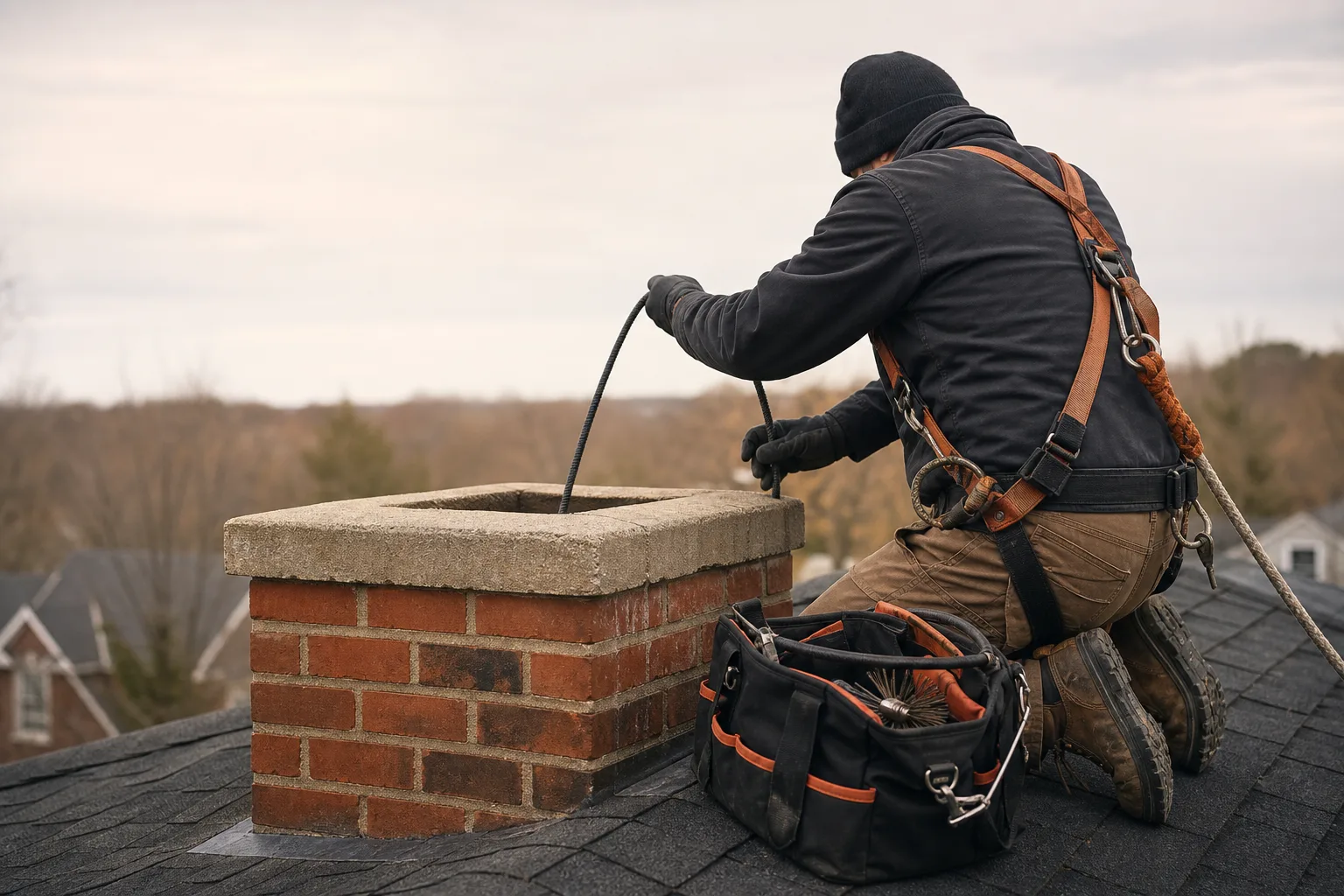
Identification first, from the top. The flue gets looked at from the roof, and increasingly with a camera, because you cannot make a legal call about a nest you haven't seen. This is also when the tech finds out whether the nest is the only problem. A chimney that's been open long enough for birds to move in has usually been open long enough for water to get in too, and water does far more damage than birds ever will.
The removal or the honest deferral. If it's a legal removal, the nest and debris come out and the trapped bird gets retrieved and released. If it isn't, you get a date to come back and a straight explanation of why. I'd rather lose the job today than do something that puts a customer's name on a federal violation.
The cleanup nobody talks about. This is the step separating a wildlife call from a chimney call. Nesting material leaves behind droppings, feathers, and mites. Bird mites will come looking for a new host once the birds are gone, and that host is your living room. Accumulated droppings in an enclosed space also carry a real, documented health risk, which is why this is a job for someone with the right vacuum and the right protective equipment rather than a shop vac and good intentions. Everything comes out, and the flue gets swept; see our chimney cleaning guide for what that process looks like in detail.
The inspection. Any chimney that's had a blockage should get looked at properly afterward, not just glanced at. Nesting debris burns, and a partially blocked flue lets creosote build faster than it otherwise would. The tech should be checking whether the liner is intact, whether the crown has cracked, and whether the reason a bird got in is a structural problem rather than a missing cap.
Closing the opening. More on this below, because it's the only part of the visit that determines whether you're calling again next April.
Good to know: NFPA 211, the standard American chimney professionals work to, calls for a Level 2 inspection in specific situations: when a property is sold or transferred, when you change the system (a new appliance, a new liner, a fuel change), when there's been a malfunction or an operating problem, after a chimney fire, and after an external event like a storm, an impact, or an earthquake. Finding a nest doesn't by itself prove your system malfunctioned, but if smoke or fumes have backed up into the room, if the storm that opened your chimney could have damaged it, or if you're selling the house, you're squarely in Level 2 territory. Ask which level you're getting, and why.
Not sure what's up there?
That's exactly the moment to call, not after you've guessed. One visit tells you what species you have, whether it can legally come out now, and what the birds have already left behind in your flue. Stop wondering and let someone look.
Call VIO Chimney: (513) 655-6702, or request service online and we'll come identify it.
Keeping birds out of the chimney for good
Everything above is the emergency. This is the part that means there isn't a next one.
A chimney is, from a bird's point of view, an ideal hollow tree: vertical, sheltered, warm, and with a rough interior surface that's easy to grip. You are not going to convince birds it isn't. What you can do is close the door.
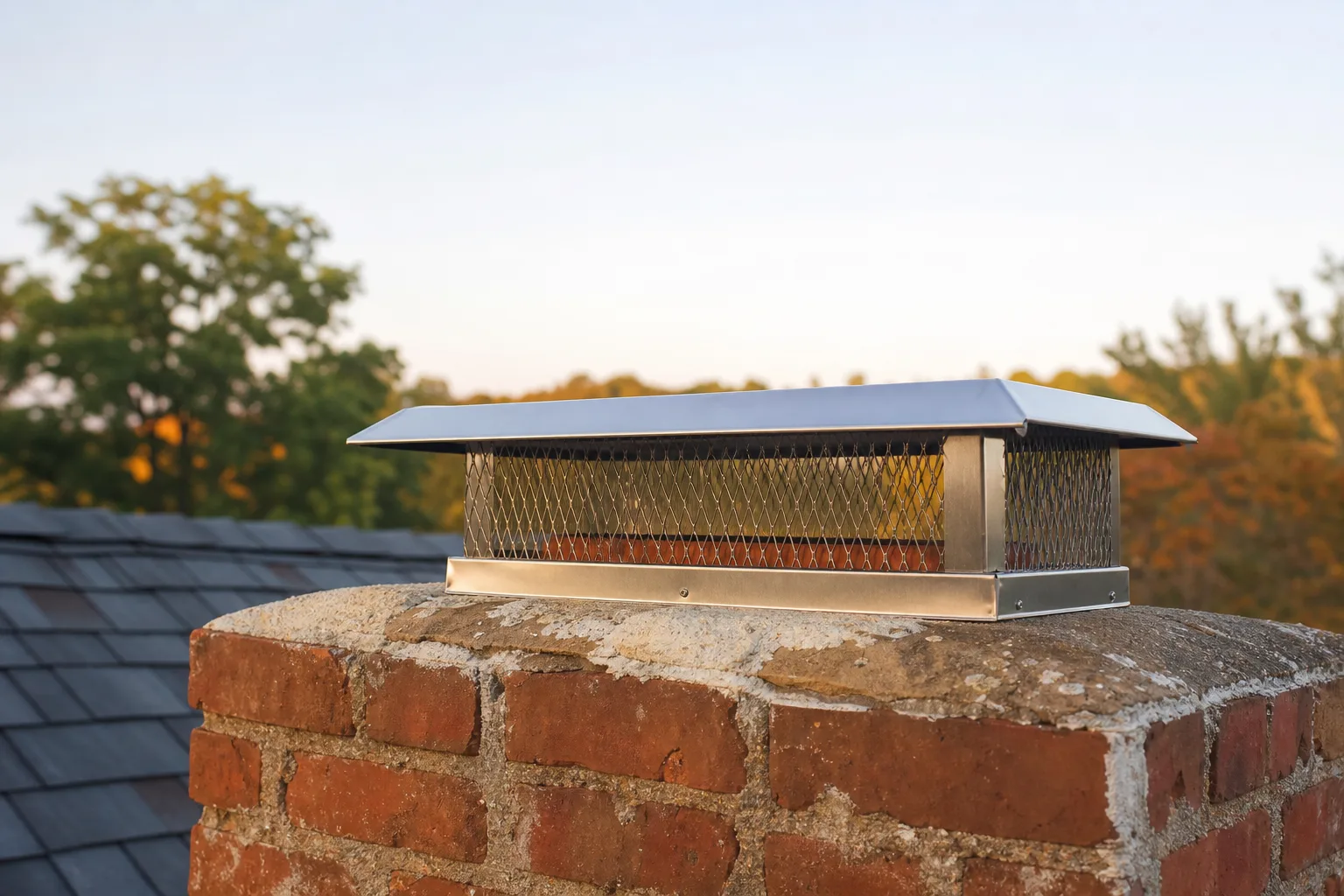
The fix is a properly fitted cap with stainless mesh sides. Not a piece of hardware cloth wired over the top. I've pulled plenty of those off, rusted through or blown loose, and a half-failed screen is worse than nothing because it can trap a bird that gets past it. A real chimney cap sits on the flue tile or the crown, sheds water, keeps out rain and debris, and its mesh is sized to stop birds and animals while still letting the flue breathe. If yours is missing, damaged, or was never sized for the flue in the first place, chimney cap replacement is the single highest-value thing you can do to this chimney.
Two things people get wrong here. First: a cap on a multi-flue chimney needs to cover every flue, and I regularly find one capped and one wide open on the same crown. Second: birds don't only come in at the top. A cracked crown, a gap where the flashing has pulled away from the roofline, or a deteriorated masonry joint gives a sparrow all the room it needs. If the mortar on your stack is crumbling, capping the top just moves the entrance. That's a masonry work conversation, and often a chimney repointing one.
Pro tip: If you have a metal liner, capping matters more than usual, and not only for your sake. Chimney swifts can't grip smooth metal the way they grip clay tile and brick. A swift that drops into an uncapped metal flue often can't climb back out. Capping a lined chimney prevents a bird problem and a rescue at the same time.
The keep-them-out checklist
Work through this once, in daylight, from the ground with binoculars, or have it done as part of a scheduled visit. You're looking for openings, not perfection.
- Every flue on the chimney has a cap, and each cap is actually attached
- Cap mesh is intact: no rust holes, no bent-open corners, no missing panels
- The crown is free of wide cracks and isn't crumbling at the edges
- Flashing sits tight against the masonry with no lifted or gapping sections
- Mortar joints on the visible stack are solid, not sandy or hollow
- The damper closes fully and seals, your last line of defense if something gets in
- No twigs or nesting material visible at the top of the flue
- Any unused flue from a removed appliance is properly sealed, not just forgotten
- Your carbon monoxide detectors work, on every floor with a vented appliance
Timing: when to call, and what the season changes
Season drives almost everything about how this goes, so it's worth knowing where you are in the calendar.
Spring is when the pairs arrive and start building. Catching it in the first days, before there are eggs, is the cheapest and simplest version of this problem, because an unfinished nest with nothing in it is just debris. If you hear the first chatter in April or May, that's the call to make immediately rather than the one to put off.
Summer is the hard season. Eggs, then chicks, then several loud weeks of begging that will test any household's patience. If it's a protected species, this is the waiting period, and there's no legal shortcut through it. What you can do in summer is get the inspection done, get the plan set, and get on the books for the moment they leave.
Fall is the ideal window and it's also when everyone else remembers their chimney exists. The birds are gone, the nest is empty and legally removable, and you haven't lit a fire yet. Getting the removal, the sweep, and the cap done in one autumn visit is the clean version of this whole story. Book a chimney inspection before the first cold snap and you get the removal and the safety check in the same trip.
Winter is mostly rescue season. Birds looking for warmth, birds falling in, and homeowners discovering an old blockage the hard way when the room fills with smoke. If a chimney has been unused for a while, don't assume the first fire will go well.
From the field: The calls I find hardest aren't the noisy ones. They're the quiet ones: someone lights a fire in November and the smoke comes back at them, and there's a summer's worth of nesting material sitting on the smoke shelf they never knew about. The homeowners who hear the birds are the lucky ones. Noise is a warning; silence in a chimney that's been open all year isn't reassurance.
How to choose who you call
Searching locally gets you three kinds of results, and they are not interchangeable.
Pest and wildlife companies are set up to catch and relocate animals. Many are good at it. But a wildlife trapper generally isn't sweeping your flue afterward, isn't assessing your liner, and isn't the person to tell you whether the chimney is safe to burn in. You may solve the bird and keep the fire hazard.
Roofers and handymen will happily screw a screen over the top of your chimney. Sometimes that's fine. Often it's the rusted, ill-fitting thing I described earlier, installed without anyone looking down the flue to see what's already in there.
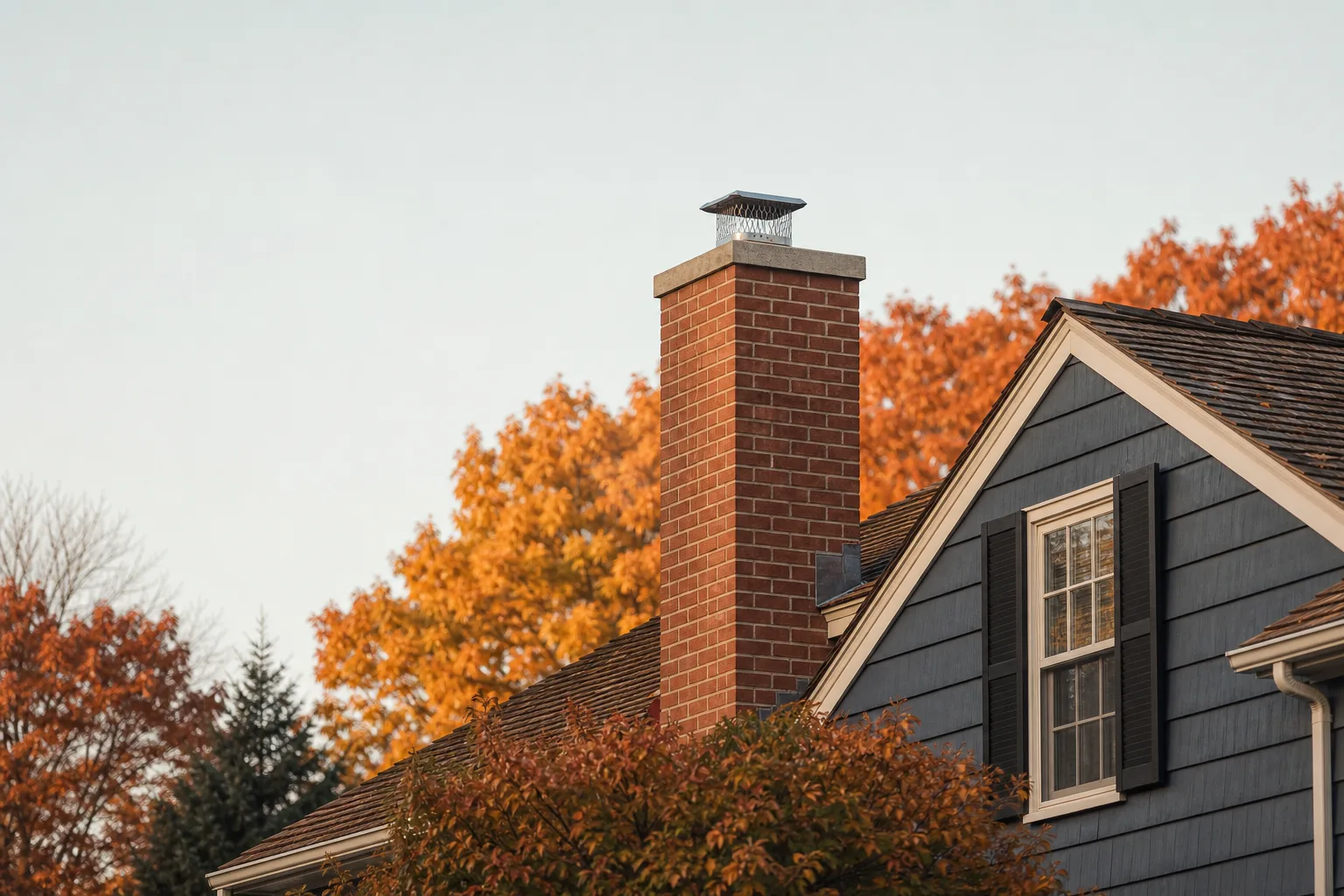
Chimney professionals, the ones worth calling, do the identification, the removal where it's legal, the cleaning, the inspection, and the cap in one coordinated visit, and they know the Migratory Bird Treaty Act well enough to tell you no. Look for CSIA certification, ask directly whether they'll be inspecting the flue interior and not just the top, and ask what they do with the nesting debris. The answer to that last question tells you a lot.
Two questions worth asking on the phone, before anyone is dispatched:
"Will you identify the species before removing anything?" If the answer is vague, keep dialing.
"Does the visit include cleaning the flue and checking the liner, or only the bird?" A nest sitting against a cracked liner is two problems, and finding the second one is the entire reason to have a chimney sweep up there rather than an animal trapper. If there's real damage behind the blockage, fireplace chimney repair is a separate conversation, but at least you'll be having it before you strike a match.
The birds, for what it's worth, aren't the villains of this story. They found an opening that shouldn't have been there. Close it properly and this becomes a thing that happened once.
Ready to find out what's in your chimney?
We identify what's up there, remove it when the law allows, clean out everything the birds left behind, and cap the flue so next spring's pair goes somewhere else. One visit, start to finish.
Call VIO Chimney: (513) 655-6702, or request service and we'll get you on the schedule.
Symptom checker
What is your chimney doing?
Tap the closest match for an honest first answer.