



On this pageWhat a spark arrestor actually is, and where yours is hiding8 sections+7
- What a spark arrestor actually is, and where yours is hiding
- What a chimney spark arrestor has to meet to count
- Does yours pass? What you can look at, and what you cannot
- The tradeoff a product page has little reason to raise
- How a chimney spark arrestor fails
- Are you actually required to have one?
- How VIO helps with this exact situation
- Before the first fire
Quick answer
A chimney spark arrestor is the metal mesh screen at the top of a chimney that keeps burning fragments from leaving the flue. On a chimney with a screened cap, that screen is the arrestor rather than a separate part. Code sets the mesh openings between 3/8 and 1/2 inch, asks for net free area at least four times the flue outlet, and requires the cap or screen to come off so the flue can be cleaned.
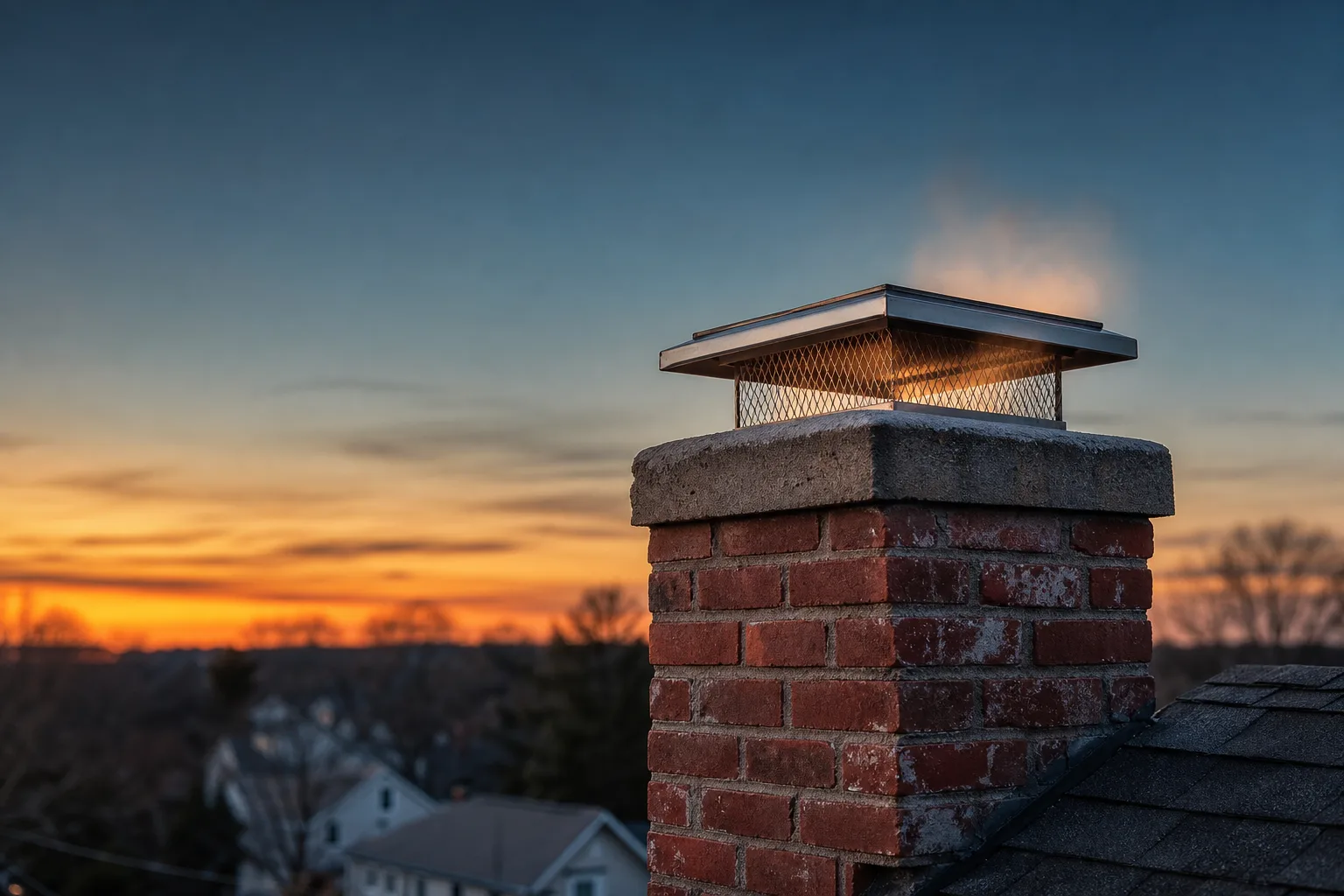
On the first cold night of the year, somebody stands in the yard and watches orange specks lift off the top of the chimney and drift toward the roofline. That is the moment people go looking for the phrase chimney spark arrestor. A chimney spark arrestor is the metal mesh screen at the top of the flue, and its job is to hold burning fragments back until they cool.
The search gets frustrating fast, because product listings answer a question you have not reached yet. There is a good chance you already have one. On a chimney with a screened cap there is no separate gadget to buy, and the screen is up there right now, out of reach, either doing its job or quietly failing at it.
So this is not a shopping guide. It is a way to reach a verdict on your own chimney, from the ground, without a ladder.
One thing before we start. There is a clause in the code that gets quoted less than the others, and it decides whether the screen on your roof is usable at all. We will get to it.
What a spark arrestor actually is, and where yours is hiding
Strip away the product listings and the idea is plain. Combustion sends hot gas up the flue, and it can carry small burning fragments with it. A wire screen across the outlet lets the gas through and holds the fragments back until they cool.
No moving parts, no electricity, no controls.
Arrestor and arrester both turn up in codes and on packaging, and spark guard shows up on some product pages. The term names a category of hardware rather than any one maker.
On a capped chimney, look at the cap
This is where the confusion starts. People go up a ladder expecting a dedicated device and come back down puzzled.
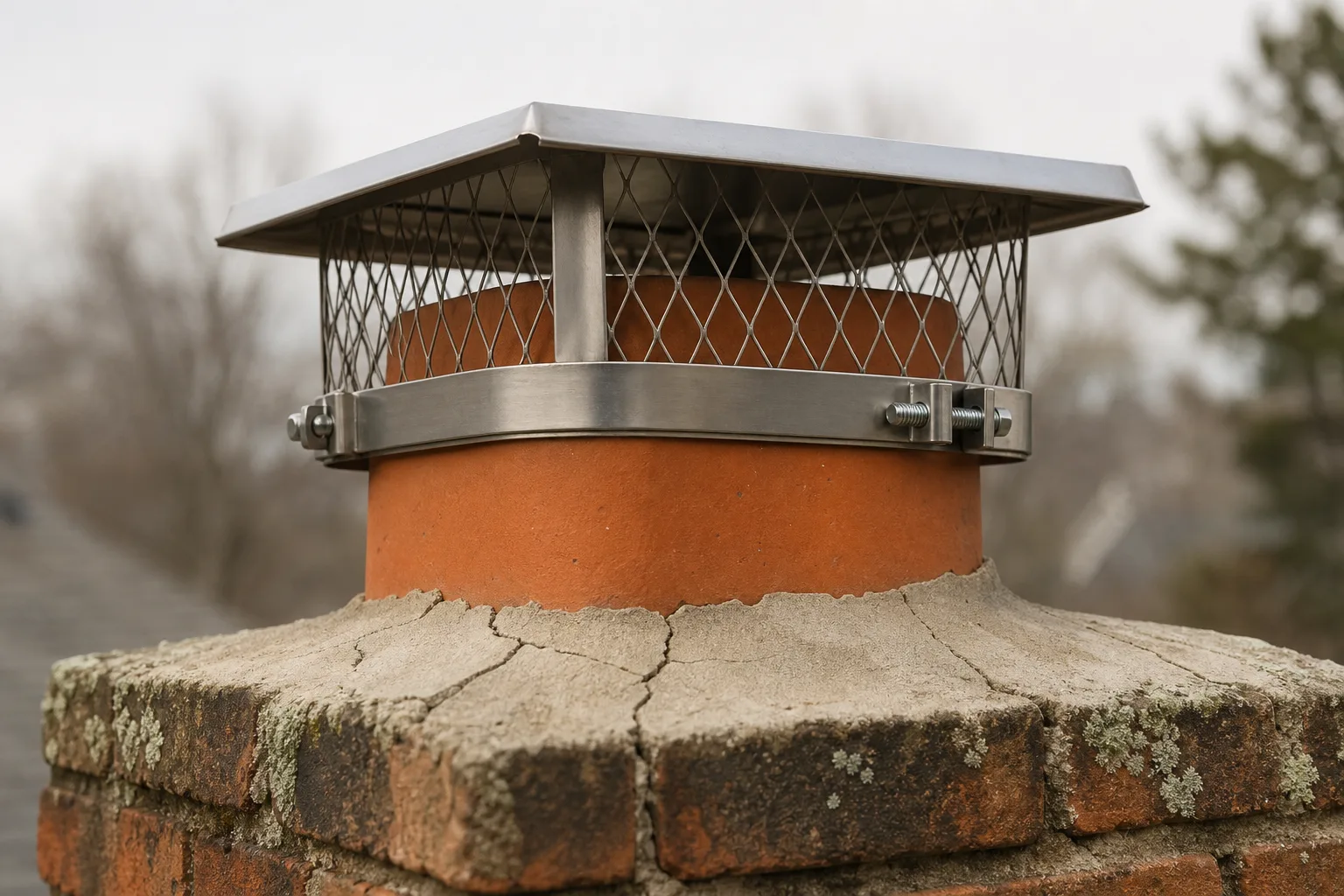
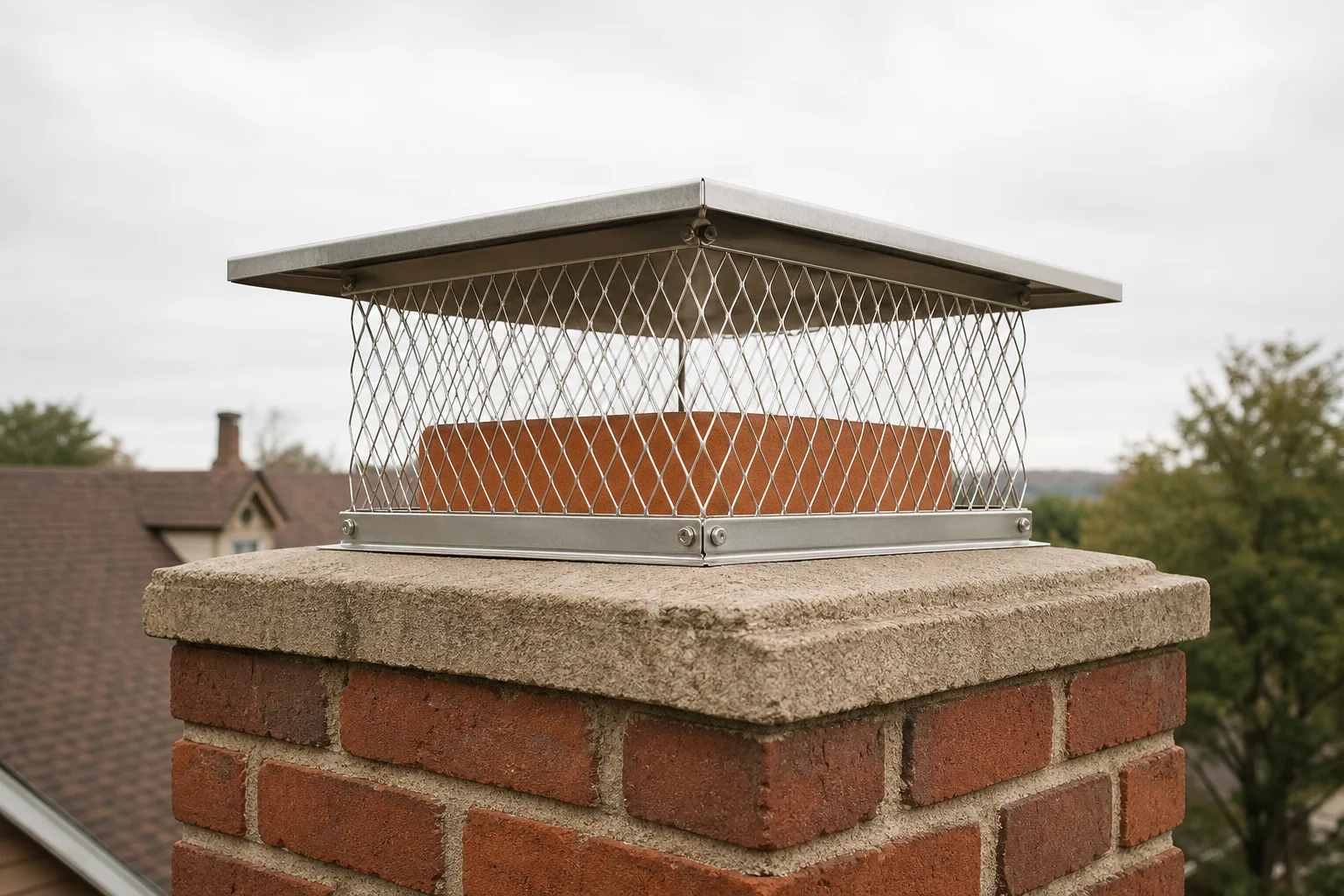
On a masonry chimney with a screened cap, the arrestor is the mesh in the sides of the chimney cap. The cap is the small metal roof over your clay flue tile, held up on legs or a band, with screen filling the space between the lid and the tile.
Separate arrestor arrangements exist too. What is actually installed on a given chimney, and the manufacturer's instructions for it, are what govern there.
The lid handles rain. The screen handles embers. One piece of hardware, two jobs.
Factory built chimneys can use a round cap with a band of mesh under the lid. Arrangements differ between products, and the manufacturer's instructions govern for a given chimney.
Good to know: if you have a screened chimney cap, you already have a chimney spark arrestor. The question is not whether one is up there. It is whether the one up there meets the spec and is still open enough to breathe through.
What it is for, and what it is not for
A spark arrestor is described in the codes as a device that prevents the emission of flammable debris from a combustion source. In plain terms, it is meant to keep burning fragments from leaving the top of the chimney. In a dry region on a windy night, an ember that lands in cured grass does not need much help.
Now the other half. It is not a substitute for a clean flue, and it is not protection against a chimney fire, which gets its own callout further down.
One more wrinkle that a product page has little reason to raise. The screen sits at the coldest point in the whole system, which makes it a place where deposits can settle. Hold that thought.
What a chimney spark arrestor has to meet to count
Here the search finally gets useful, because the requirements are numbers rather than opinions. The International Residential Code sets them out in section R1003.9.2, and the same three eighths to one half inch mesh range is cited to NFPA 211.
Four requirements. In plain language:
| What the code asks for | The actual number | What you can do with it |
|---|---|---|
| Mesh opening size | No opening passes a sphere larger than 1/2 inch, and none blocks a sphere smaller than 3/8 inch | Not measurable from the ground. Ask the inspecting company to confirm it |
| Net free area | At least four times the net free area of the flue outlet it serves | A short, squashed looking cap is worth asking about |
| Material | Heat and corrosion resistance equal to 12 gage wire, 19 gage galvanized steel, or 24 gage stainless steel | Rust staining below the cap is visible from the driveway |
| Cleanability | Located with access for cleaning, and the screen or cap must be removable so the flue can be swept | Ask whether the cap on your chimney comes off |
The 3/8 to 1/2 inch window
Both ends of that window are there for a reason, and the reasons are opposites.
The half inch ceiling is the safety end. An opening larger than that can pass a live ember, which defeats the point of the screen.
The three eighths floor is the airflow end. Screen finer than that works against the draft your fire depends on, and gives soot more places to catch.
Pro tip: finer mesh is not safer mesh. Insect screen over a wood burning flue is not extra protection. It sits outside the spec at the bottom end, and it gives the deposits a finer net to load up.
Net free area, four times the flue outlet
Net free area is the open space left in the screen once you subtract the wire itself. The code asks for that open area to be at least four times the net free area of the flue outlet underneath.
The code states the multiplier. It does not explain it, and neither will I. What it tends to mean on a real chimney is that a cap wants to look tall and open rather than pressed flat against the tile.
It is not a licence to let deposits sit on the screen, either. A loaded screen still has to be cleaned.
Metal and gauge
Heat and corrosion resistance equal to 12 gage wire, 19 gage galvanized steel, or 24 gage stainless steel. Stainless is the mainstream choice, because it resists rust and handles freeze and thaw cycles.
The clause that gets quoted least
Here is the one I promised you at the top.
The code does not stop at requiring the arrestor to exist with the right size holes in it. It also requires the arrestor to be located with access for cleaning, and requires that the screen or the chimney cap be removable so the flue underneath can be swept.
Note the wording carefully: the screen or the cap. One of the two has to come off. A cap that is caulked down solid, or fastened into the crown with hardware that has since seized, puts the question squarely on the screen instead. Can that be taken out so the flue can be swept?
If the answer is no on both counts, the requirement is not being met, and a flue that cannot be properly swept is a second problem sitting on top of the first.
Does yours pass? What you can look at, and what you cannot
No ladder needed. A clear afternoon, binoculars if you own a pair, and a flashlight.
Treat what follows as what to have looked at rather than as a diagnosis. Ground level observation narrows the chimney spark arrestor question. It does not close it.
From the driveway
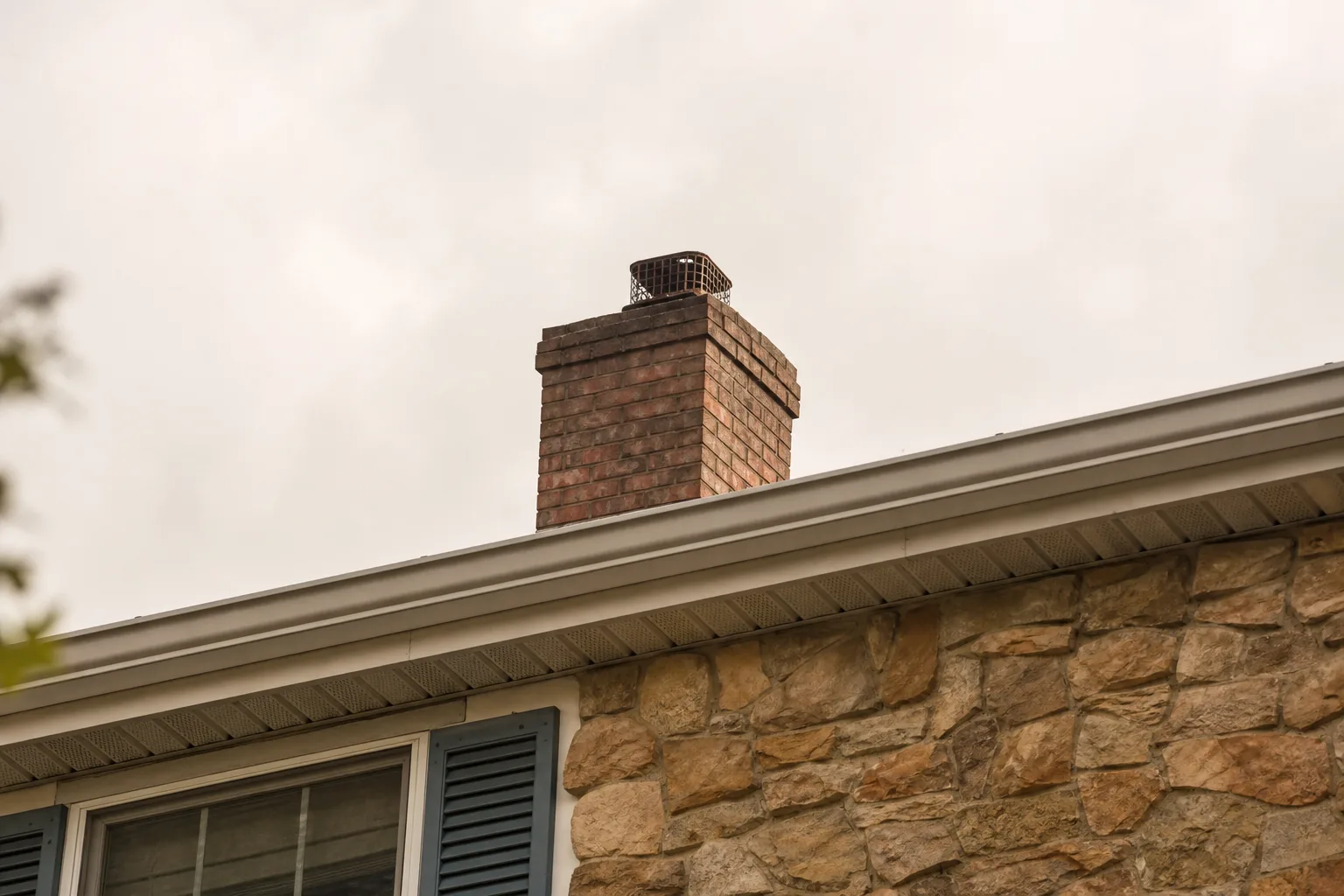
Walk out to where the whole top of the chimney reads against the sky, then work down this list.
- Is there a cap at all? An open clay tile with nothing on it means there is no spark arrestor up there.
- Is it sitting square? A cap tilted off level can point to a missing fastener or a failed band.
- Can you see light through the mesh? Against a bright sky, open screen reads as gray haze. Screen that reads solid is worth having looked at.
- Is there orange staining on the brick below it? Rust streaking down from a cap can mean corrosion is under way.
- Is the lid flat and intact? Dents, curled edges and torn screen on one side can follow storm or branch damage.
- Is nesting material poking out? Twigs and dry grass at the base of the cap can be the visible edge of a nest.
Six answers, and you know a good deal more than you did this morning.
From inside the firebox
Open the damper all the way, get on your back with a flashlight, and look straight up.
On a straight masonry flue you can sometimes see daylight at the top. Even, speckled light suggests the screen is passing air. A dim smudge on a bright day is a reason to have somebody look at the top of the stack.
What a chimney spark arrestor problem can feel like indoors
Sometimes the first sign has nothing to do with looking at anything.
The fireplace that drafted fine last winter pushes a curl of smoke into the room when you open the doors. Kindling takes three tries. A faint campfire smell hangs in the room the morning after a burn.
Those symptoms have more than one possible cause. A loaded chimney spark arrestor screen is one item on the list to have checked, and it is not something to conclude from the couch.
What you cannot settle from the ground
Here is the honest limit of everything above.
From the ground you can tell whether a cap exists, whether it sits square, whether it is staining the brick, and whether your fire is behaving differently than it used to.
What you cannot do is establish compliance. Not one of the four code requirements can be verified from the driveway. Mesh opening size, net free area, the material and gauge, and whether the screen or the cap will come off for cleaning all live within arm's reach of the chimney top and nowhere else.
What the driveway gives you is the decision about whether to get somebody up there.
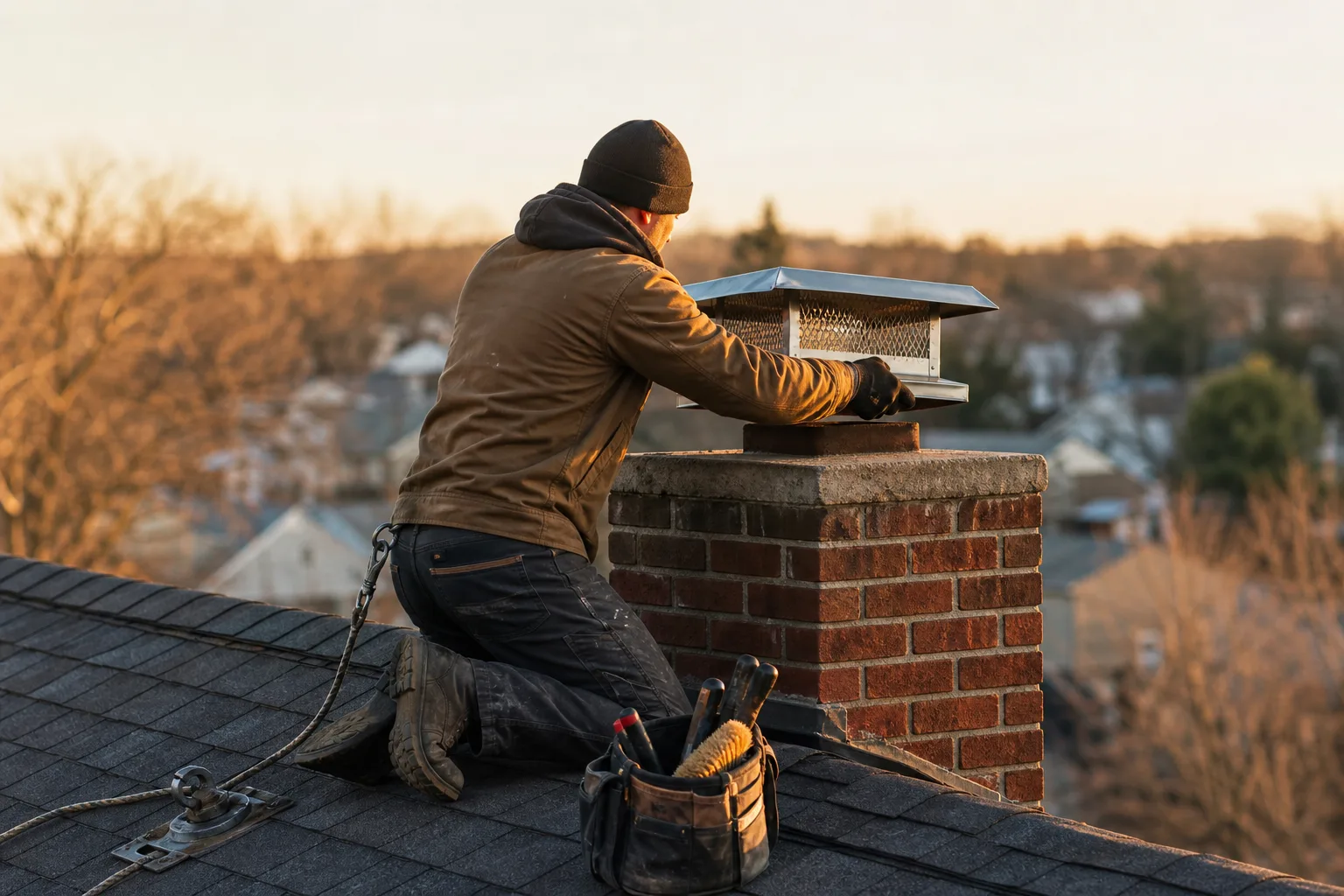
Safety note: do not go up for this yourself. The top of the stack sits at the high point of a sloped roof, shingles hold dew well into the morning, and a seized cap takes real force to break loose. Ask the company you book what its inspection covers, since rooftop access is not within Level 1 scope, and say when you book that you want the top of the stack looked at.
You can start this from the ground. Settling it needs a roof.
Tell us what you saw from the driveway and we will match you with a local chimney company that can look at the cap and the screen.
Call (513) 655-6702
The tradeoff a product page has little reason to raise
Why the screen is where deposits land
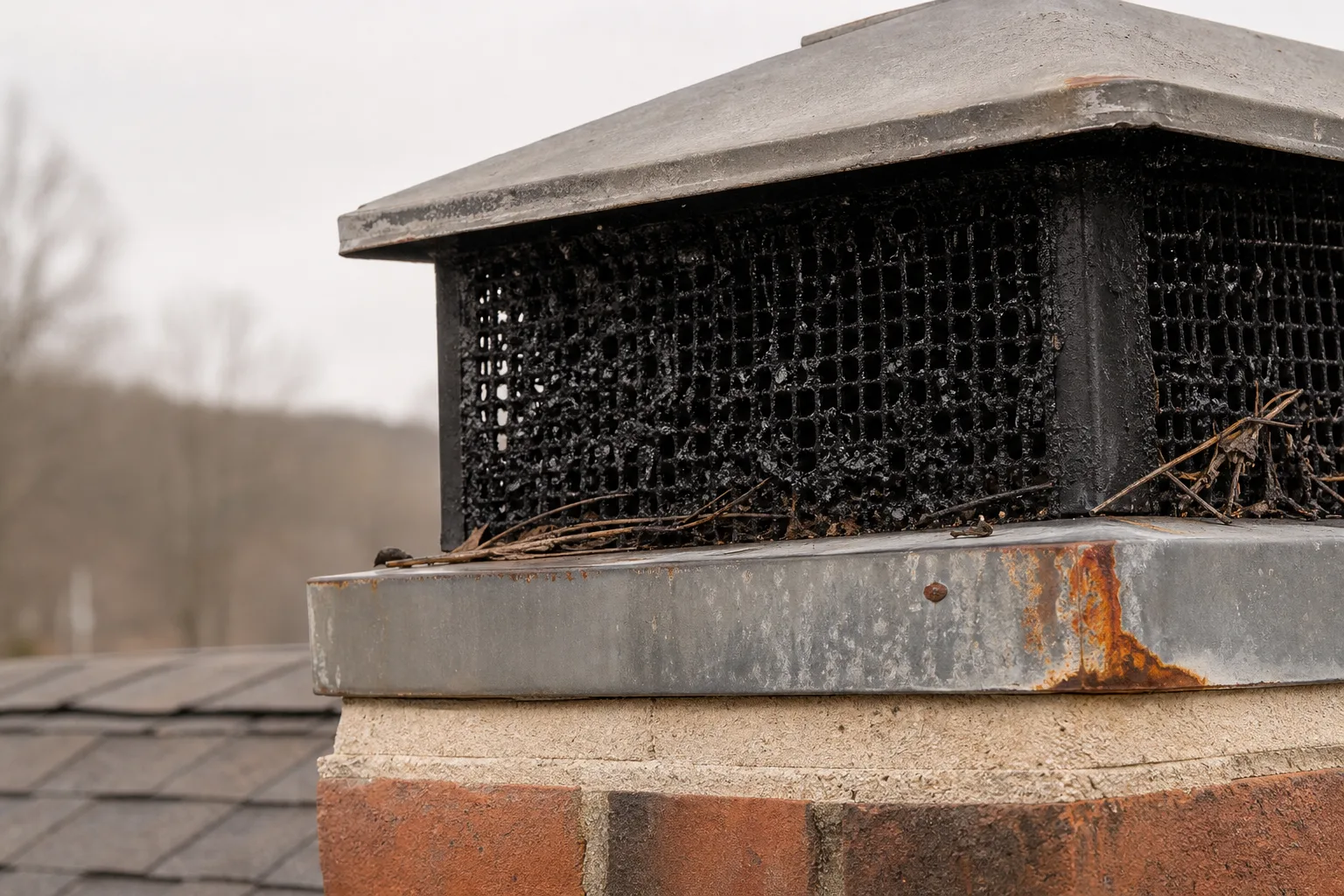
Everything the fire sends up the flue cools on the way out. The screen is the last metal that gas touches and the coldest part of the system, so it is a place where soot and creosote can settle and stay. Wood that has not had a full season to dry gives the fire more of what turns into creosote, which gives the screen more to catch.
What a loaded screen can do to the fire
Airflow through a partly blocked screen drops. The draft that pulls smoke up the flue weakens with it, and smoke that cannot go up can come into the room instead.
At the far end of it, a screen can glaze over with a tarry film until light barely passes through. That is a chimney wearing a lid.
None of this is an argument for taking the screen off. It is an argument for looking at it.
Keeping it open
The screen gets inspected and cleaned along with the rest of your chimney maintenance, and that is the whole answer. It is also why the code's removability clause carries as much weight as the mesh dimensions do.
From the field: a screen that has stopped passing air and a flue that needs sweeping present the same way inside the house, as a fireplace that has turned smoky. Before concluding anything about either, get the top of the stack and the flue looked at together.
How a chimney spark arrestor fails
Screens fail in a handful of recognizable ways.
The wrong mesh
Screen finer than three eighths of an inch sits outside the spec at the bottom end. Screen with openings over half an inch sits outside it at the top. Both turn up on hardware sold as a chimney cap.
Rust
Galvanized and plated steel can corrode once the coating is breached, whether by a scratch at installation or by an impact later. The orange streak running down the brick under a cap is the visible part of that, and it is worth raising alongside any other chimney repair services you are already lining up. Stainless holds up better against rust and freeze thaw cycles, which is why it is the mainstream choice.
Seized or sealed shut
This one hides well. A cap fixed down with caulk, or with fasteners that have rusted into the crown, leaves the removability question resting entirely on whether the screen itself can still be taken out. If neither will come off, the flue cannot be properly swept. And it can look perfect from the driveway. That is the point.
Weather, wildlife and impact
Wind can lift a poorly secured cap. Branches can dent a lid or tear screen. Birds and small animals can build in the sheltered space under the lid, and that material sits directly against the mesh.
Myth vs. fact: a chimney spark arrestor does not protect you from a chimney fire. It is meant to keep embers from leaving the top of the chimney. A chimney fire is creosote burning inside the flue, and the screen has no role in that. The two are easy to conflate, and they are not the same subject.
Are you actually required to have one?
The national spec and the local mandate
The model residential code writes its spark arrestor section conditionally. Where an arrestor is installed on a masonry chimney, here is what it has to meet. The specification is national. Whether one is mandatory is settled by the jurisdiction adopting the code, and by wildland urban interface rules where those apply.
California says it plainly in the other direction. Under the California Residential Code as amended by the State Fire Marshal, chimneys attached to an appliance or fireplace burning solid fuel are required to have an approved spark arrester.
For the answer at your own address, ask your building department rather than a product listing.
The code section that gets cited wrong
California Public Resources Code section 4442 is sometimes cited as the law requiring a chimney spark arrestor. It is not.
Section 4442 governs internal combustion engines operated on forest covered, brush covered or grass covered land. Chainsaws, generators, off road vehicles. It has nothing to say about the top of your chimney, which is governed by the residential code and the State Fire Marshal amendment described above. If a page cites 4442 at you about a chimney, that page did not check its own citation.
When it comes up at a sale
NFPA 211 sets out when a Level 2 inspection is required, and each trigger stands on its own terms. Upon sale or transfer of the property. Upon a change to the system, such as a change in fuel, in the appliance, or in the shape or material of the flue. After a malfunction or an operating problem. After a chimney fire. After an external event likely to have caused damage.
A Level 2 documents the size and condition of the system. What sits on top of the chimney is part of what gets looked at.
Good to know: the move on a missing or worn chimney spark arrestor is to book an inspection and schedule the work, not to panic about it. If you have reason to think something else is wrong with the chimney, say so when you book, and hold off on using the fireplace until somebody has looked at it.
How VIO helps with this exact situation
VIO CHIMNEY is a referral service. We match homeowners with independent local chimney companies, and the work is done by the company we match you with. We do not climb roofs and we do not employ sweeps.
What to have ready when you request service:
- what kind of chimney you have (a brick stack, a metal pipe through the roof, or a sided chase)
- what you saw from the ground, using the driveway list above
- whether the fireplace has been smoking into the room
- when the chimney was last inspected or swept, if you know
Then say plainly what you want looked at: whether the cap and screen meet the mesh and net free area requirements, and whether the screen or the cap comes off for cleaning. That last question is an easy one to leave out, and it decides whether your flue can be maintained at all.
The company we match you with is an independent local business, and its license, its insurance and its certifications are yours to ask for and yours to verify.
On estimates, the move is yours: insist on a written estimate before any work starts, and do not let work begin without one in your hands.
Before the first fire
Go stand in the driveway and look up.
You now know what a chimney spark arrestor is, that on a chimney with a screened cap it is that screen, and that the code asks four things of it. Openings between three eighths and one half of an inch. Net free area at least four times the flue outlet. Metal that stands up to heat and corrosion. And a screen or a cap that comes off so the flue can be cleaned.
None of those four gets settled from your driveway. What the driveway settles is whether to make the call, and the stretch before the heating season is a sensible time to sort out the chimney spark arrestor question rather than in the middle of the months you want a fire going.
And if what you saw up there was an open clay tile with nothing on it at all, that is worth a phone call this week.
Not sure what is on top of your chimney? Find out before the first fire.
Tell us what you are seeing and we will match you with an independent chimney company in your area. Insist on a written estimate before any work starts.
Call (513) 655-6702
Symptom checker
What is your chimney doing?
Tap the closest match for an honest first answer.