



On this pageDo Pellet Stoves Need a Chimney? The Short Answer7 sections+6
- Do Pellet Stoves Need a Chimney? The Short Answer
- Why a Pellet Stove Vents Differently Than a Wood Stove
- The Three Venting Paths for a Pellet Stove
- Do Pellet Stoves Need a Chimney If Your House Already Has One?
- The Venting Envelope Nobody Tells You About
- How VIO Helps With Pellet Stove Venting Questions
- So, Do Pellet Stoves Need a Chimney? The Bottom Line
Quick answer
Do pellet stoves need a chimney? No. A pellet stove needs a listed venting system rather than a masonry or Class A chimney, because a combustion blower pushes its exhaust out under pressure. That vent can run horizontally through an exterior wall, vertically through the roof, or up the inside of an existing masonry chimney as a liner. NFPA 211, UL 641 listed pipe, and the appliance manual govern the install.
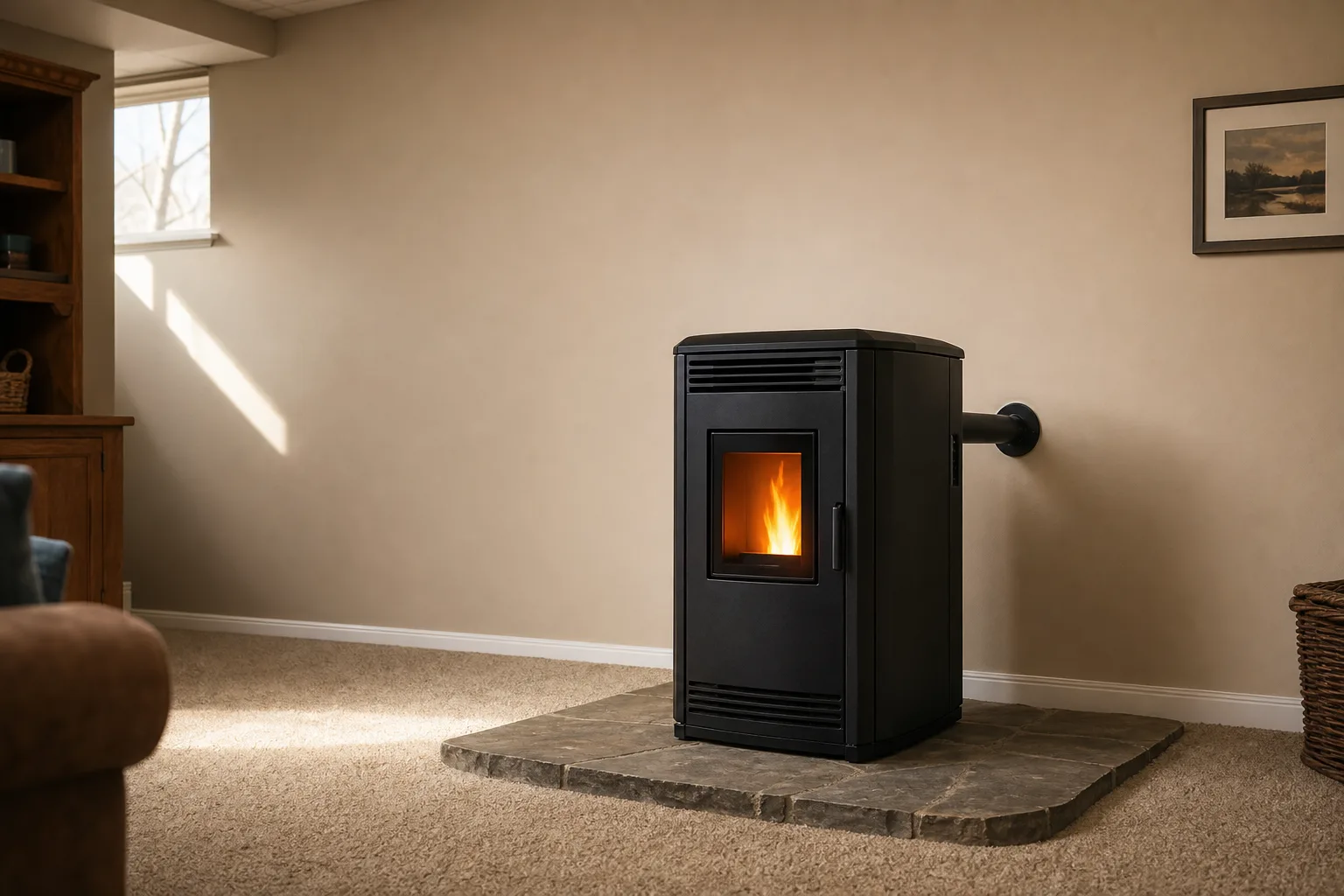
Picture the room this question usually comes from. A finished basement, or an addition built off the back of the house in the 1990s, or a family room on a slab. There is no masonry stack anywhere in that part of the structure, and there never was one. Somebody wants heat in there that does not come out of a duct.
So they start looking at pellet stoves, and about four minutes in they hit the wall: do pellet stoves need a chimney, and if the answer is yes, is this whole idea dead before it starts?
No. It is not dead. A pellet stove does not need a conventional chimney.
What it does need is a listed venting system, and that is where the useful part of this conversation actually begins. Chimney and vent are two different objects with two different rulebooks, and which one your house needs is what decides whether this install stays at one wall or reaches the roof.
Do Pellet Stoves Need a Chimney? The Short Answer
No traditional chimney. No masonry stack, no Class A insulated chimney running up through two floors, none of that.
A pellet stove is vented, and the vent is a small-diameter, listed pipe that can leave through an exterior wall, go up through the roof, or run up the inside of a masonry chimney you already own.
The reason comes down to how the appliance moves its own exhaust.
A wood stove depends on draft, on a tall column that makes hot gas rise. A pellet stove does not wait for physics to be polite: a combustion blower pushes the exhaust out under pressure, so what it needs is a correctly sized, correctly terminated pipe, not a column of masonry.
That single difference is why the answer to do pellet stoves need a chimney is no, and why the follow-up questions matter more than the first one.
Chimney vs. Vent: Two Different Objects
A chimney is a structure. It is masonry or it is a listed factory-built system, it is built to carry the heat and the byproducts of a solid fuel fire, and it is sized and supported as part of the building.
A vent is a pipe assembly listed for one specific class of appliance. Pellet venting systems are listed to UL 641, which is the standard the manufacturers test to. If the pipe does not carry that listing, it is not pellet vent.
Good to know: When a retailer's site says a pellet stove "does not need a chimney," they are being accurate and unhelpful at the same time. It still needs a listed vent, installed to real siting rules. The word that changed is the noun, not the requirement.
Why a Pellet Stove Vents Differently Than a Wood Stove
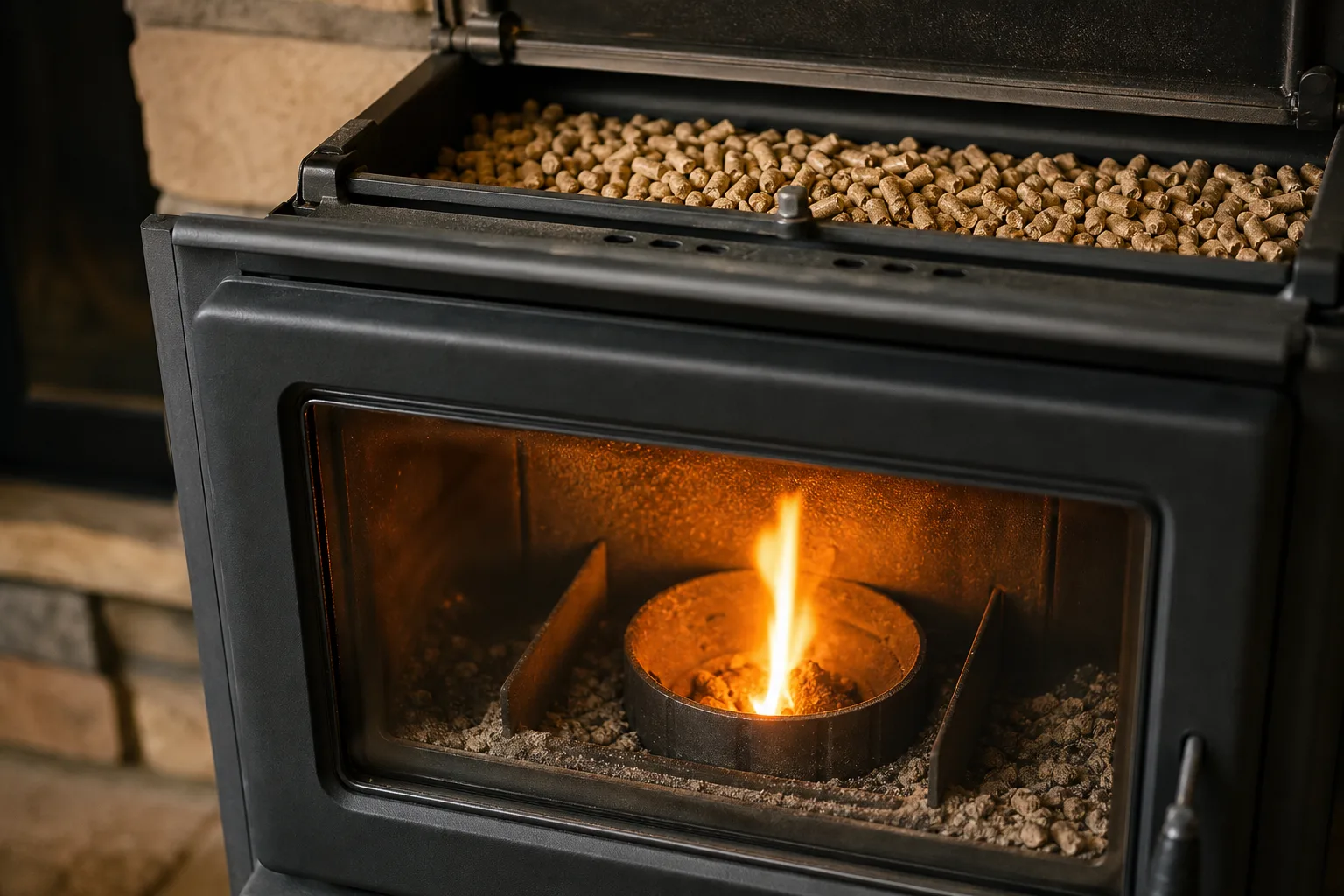
Open the door of a wood stove and you see a big, lazy, rolling fire on a bed of coals. Open the glass on a pellet stove and you see something almost industrial: a small, tight, bright flame in a steel burn pot, fed a few pellets at a time by an auger.
That flame is small on purpose. An auger meters fuel in, and the appliance uses powered airflow instead of natural draft: a combustion blower moves air through the burn pot and pushes the flue gas out, while the exact arrangement of fans varies from design to design. The appliance is closer to a small furnace than to a fireplace.
Ask do pellet stoves need a chimney and you are really asking whether that fan-driven exhaust needs a masonry column. It does not. Because the volume is low, the pipe is small: typically 3 or 4 inch, double-wall, twist-locking together in sections.
Stand a length of it next to the 6 or 8 inch Class A pipe that a high efficiency wood stove needs and the difference is obvious at a glance. One is a structure you plan the house around. The other is a pipe you route.
Do Pellet Stoves Need a Chimney to Draft Properly?
This is the version of the question people ask second, and it is the better question.
No, because the stove is not relying on natural draft to run. The blower does that work.
But "no chimney needed" is not the same as "no height needed." Most appliance manuals still ask for some vertical rise in the vent, and the amount varies by model, which is why you will find three different answers on three different forums. The number that applies to you is in the manual for the stove you are buying, not in a general article.
From the field: The room a homeowner wants the stove in is almost always the room without a chimney. That is the whole reason the question gets asked. And the wall they have already pictured the stove against is not always the wall the vent wants, because of what is outside it: a deck, a walkway, a window, a dryer vent.
The Three Venting Paths for a Pellet Stove
Ask do pellet stoves need a chimney about one specific house and the real answer is one of three venting routes. Figuring out which is yours is most of the decision.
Through the Wall (Horizontal)
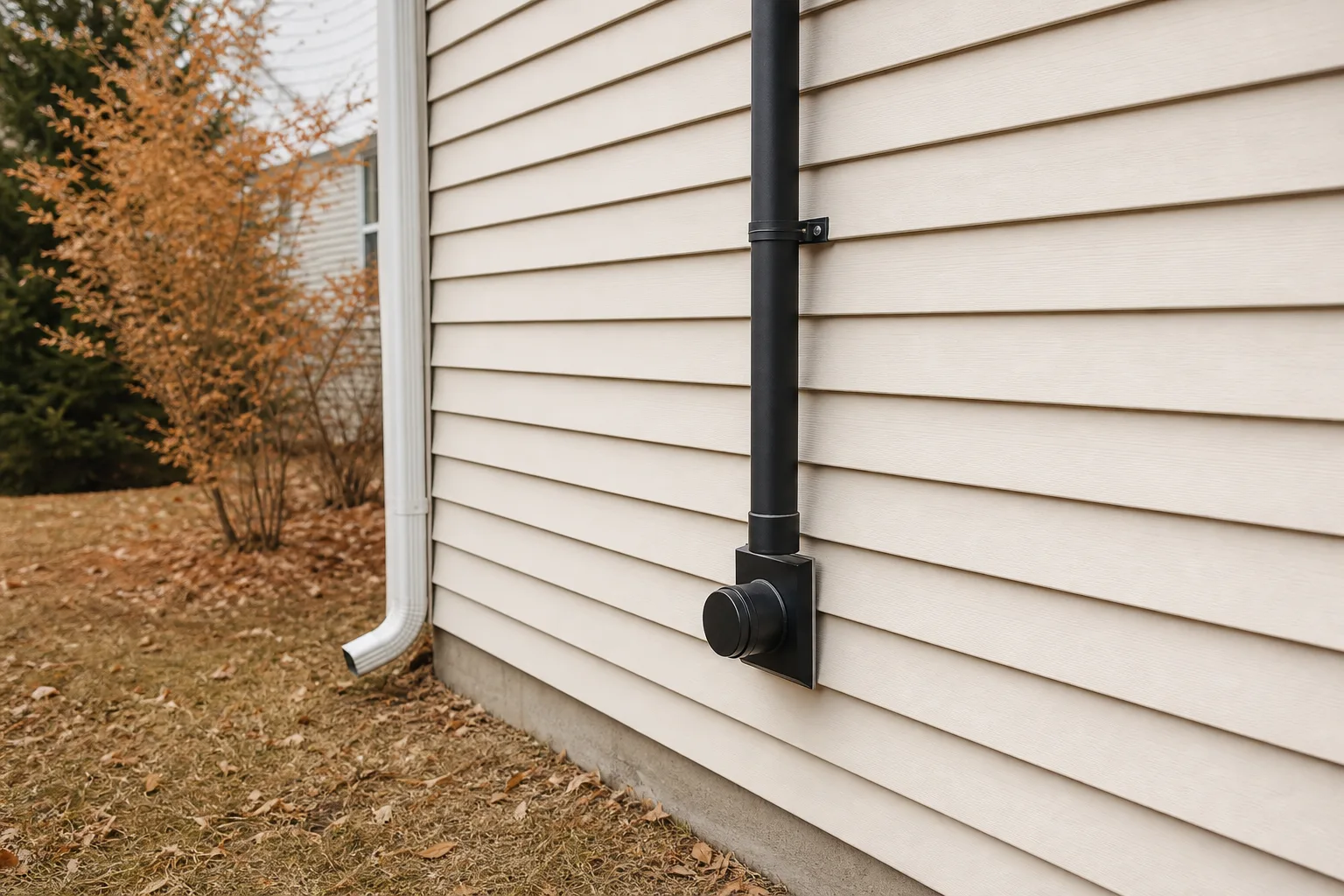
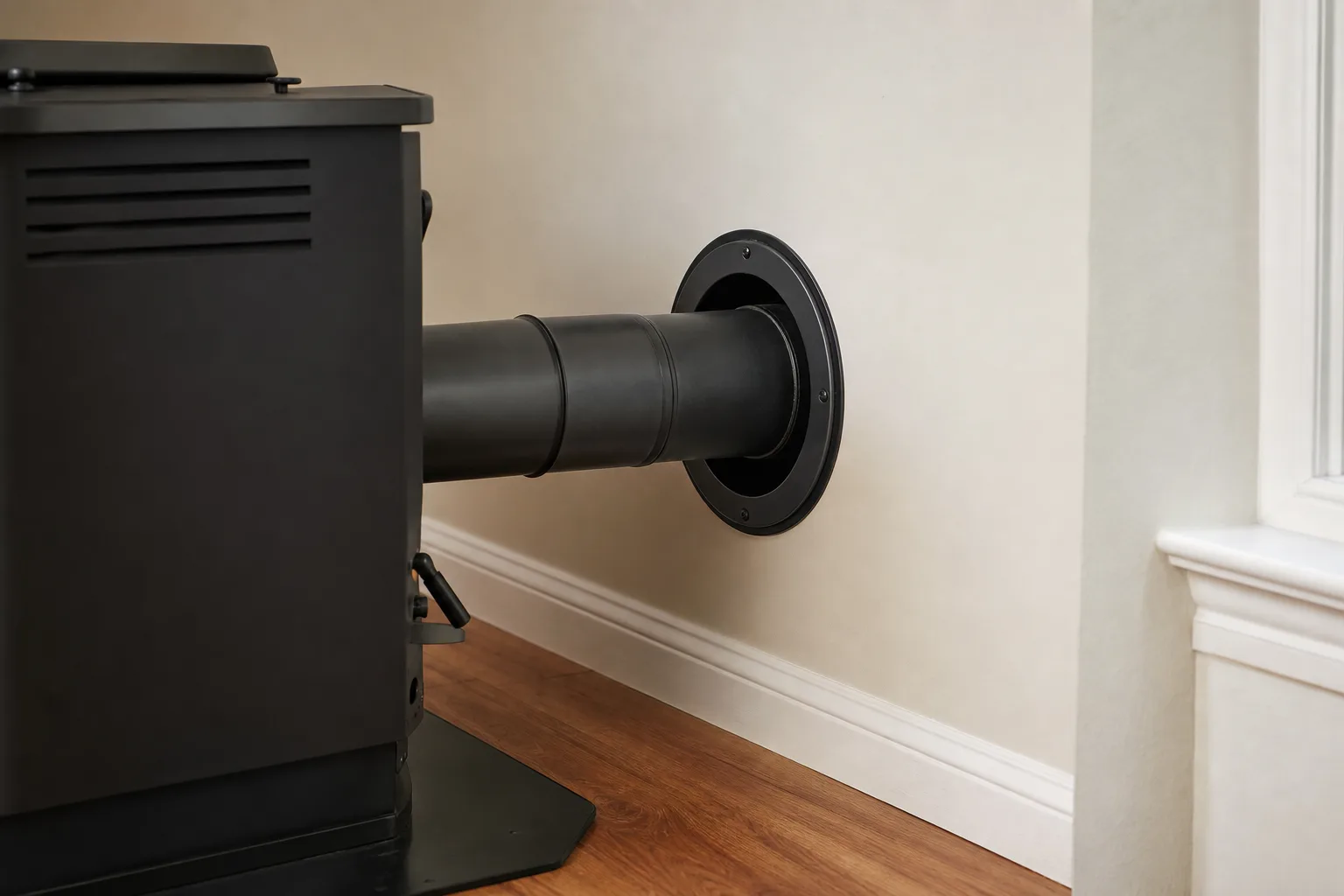
The vent leaves the back or side of the stove, turns, and passes through the exterior wall in a listed thimble. Outside, the pipe extends at least 12 inches past the wall, and it ends either in a listed horizontal termination cap or in a 90 degree elbow with a length of vertical pipe above it.
A horizontal cap gets installed with 6 inches of clearance to the outside wall. That is not decoration. It is what keeps the exhaust off your siding.
This is the shortest path and the one most people picture when they hear a pellet stove can go anywhere.
Straight Up Through the Roof (Vertical)
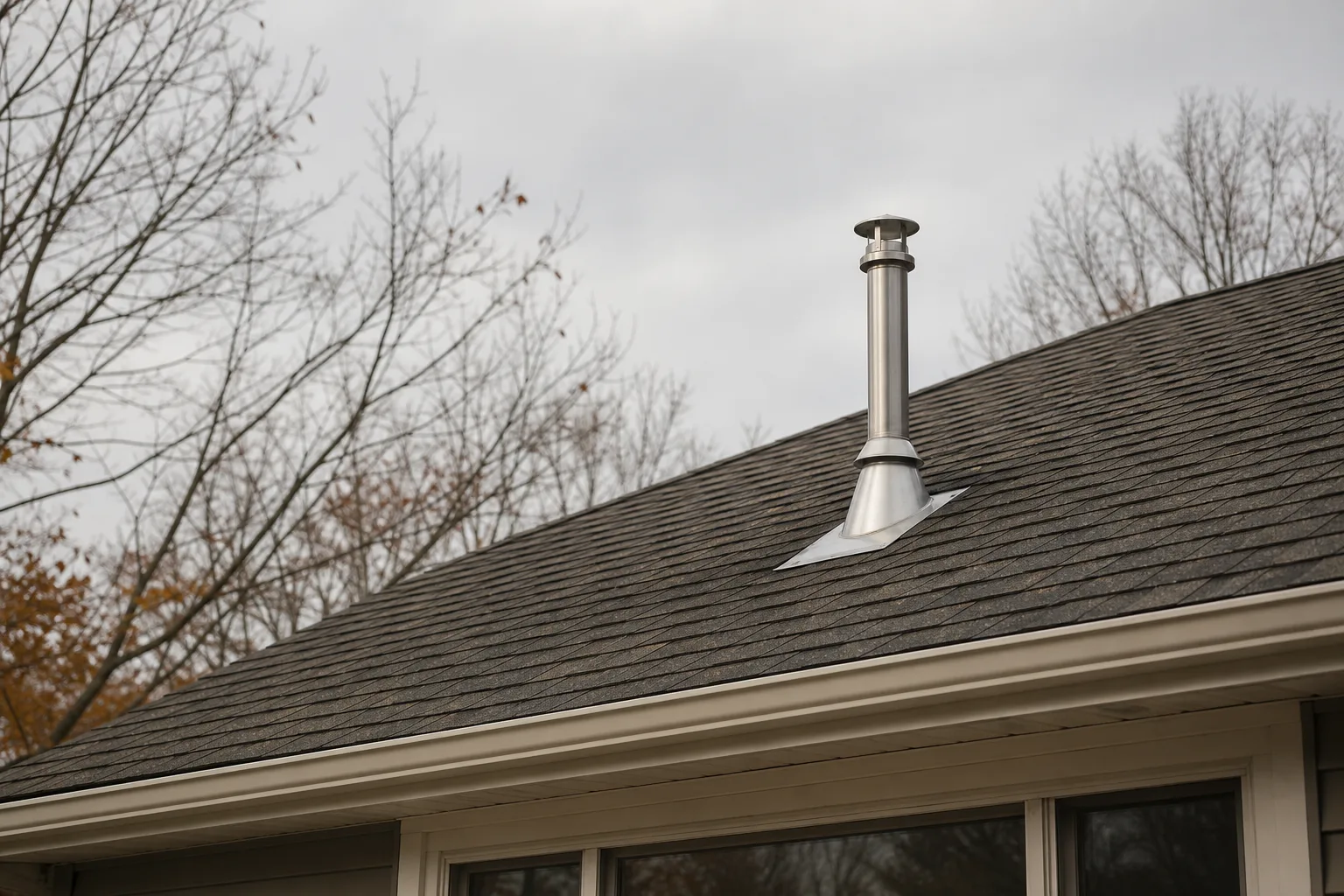
The vent goes up instead of out: through the ceiling, through the attic, out the roof with a flashing and a storm collar, ending in a rain cap. Listed instructions commonly call for a minimum of 12 inches above the roof.
More pipe, more penetrations, more work above your head. In exchange you get the strongest natural rise, which is worth something on a windy site or in a layout where an exterior wall is not close.
The roof penetration also has to keep water out of the house, which is why the same care that goes into flashing around chimney penetrations applies here.
Up an Existing Masonry Chimney
You have a chimney. It is right there. Surely that is the easy answer.
It can be a good answer. It is not the simple one people expect, and it gets its own section below.
| Venting path | What it looks like on the house | Best when | What to watch |
|---|---|---|---|
| Horizontal through the wall | A small round cap on siding or brick | The stove sits on an exterior wall, ground outside clear | Clearances from windows, doors, intakes, walkways |
| Horizontal with an outside rise | Same cap, then pipe climbing the exterior wall | You want natural rise without touching the roof | Support and strapping, and how it looks from the street |
| Straight up through the roof | A slim pipe through the shingles, flashing and rain cap | Interior wall placement, or a windy site | Flashing detail, attic framing, labor overhead |
| Up an existing masonry chimney | Nothing new outside, a top plate at the crown | You own a sound stack in the right room | The chimney is a chase. The liner is the vent |
| Insert into an existing firebox | The fireplace opening filled by the appliance | You want the hearth look and the stack is usable | Condition of the stack, and the liner run all the way up |
Two of these routes stay at one wall. The rest involve the roof or the stack. What decides which one you get is not the code book and not the installer's preference. It is a set of numbers most buyers never look at until somebody points them out.
Do Pellet Stoves Need a Chimney If Your House Already Has One?
Here is the part the retailer blogs skip.
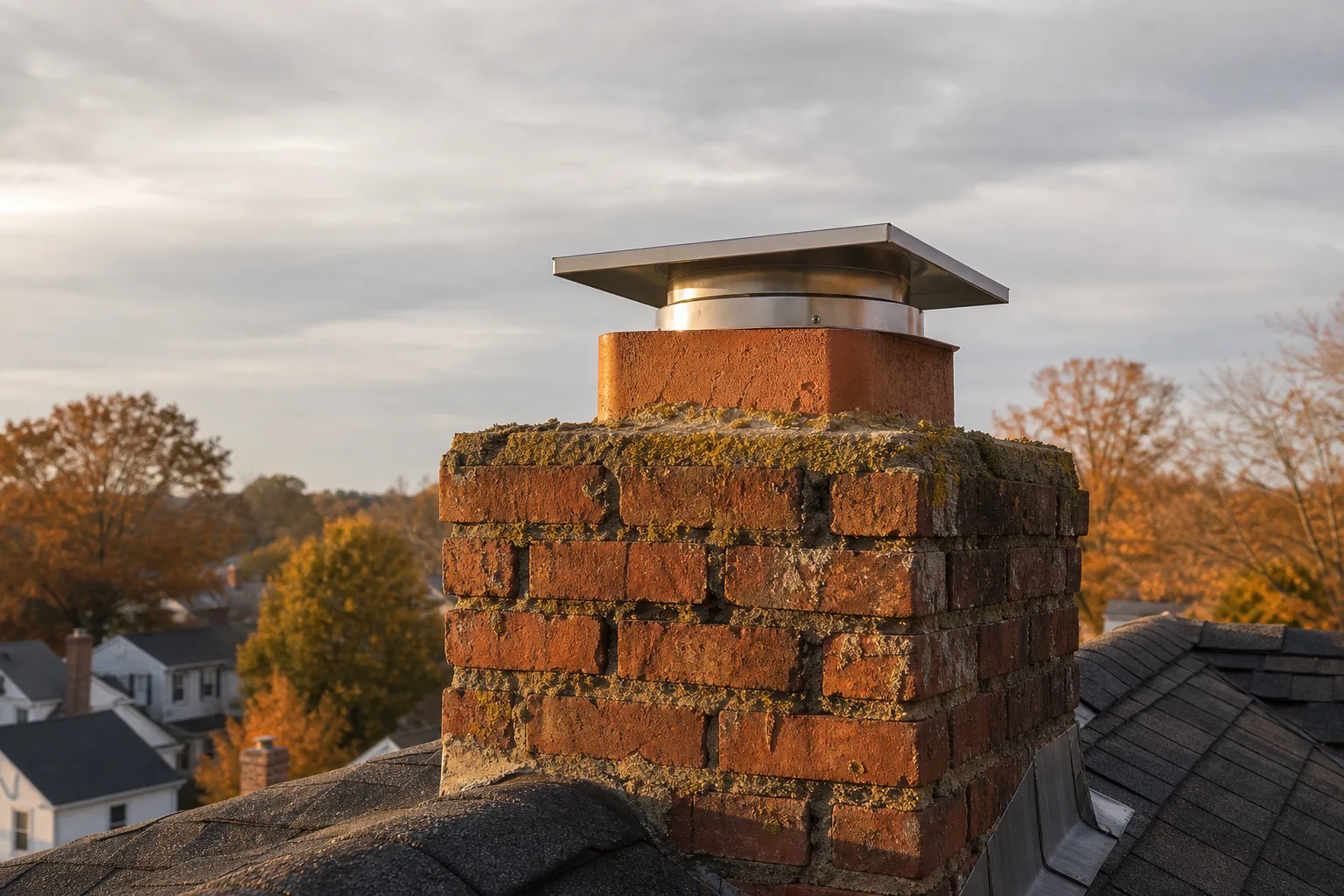
If you have a masonry chimney and you want to vent a pellet appliance through it, that chimney has to be lined. NFPA 211, the standard that governs chimneys, fireplaces, vents and solid fuel burning appliances in the United States, sets out what counts as acceptable lining for a pellet fuel appliance in sections 7.1.10 and 7.2.2: clay flue lining or fireclay brick, listed chimney lining systems, factory built chimneys or chimney units listed for installation inside a masonry chimney, and pellet vents listed for installation inside a masonry chimney.
Read that list again and notice what it means in practice.
The pellet vent runs up the inside of your old stack. The masonry becomes a chase, a protective shaft that the real vent travels through. The brick and the clay tile are not doing the venting.
Myth vs. fact: "I already have a chimney, so I am fine." The chimney is an asset, not a shortcut. An old flue built for a fireplace is wide and cold compared to what a pellet appliance puts into it, and it becomes the housing for a properly sized liner rather than the vent itself.
This is also the standard path for a pellet insert, the version that slides into an existing fireplace opening and vents up through the stack with a liner. People choose it for the look, and because the structure is already there.
One more thing belongs here, because homeowners hit it at the wrong moment. Under NFPA 211, a Level 2 inspection is required when a property is sold or transferred, when the system changes, when there has been a malfunction, after a chimney fire, and after external events that could have damaged the chimney. Putting a pellet appliance into a chimney that served a wood fireplace is a system change.
Which is why the answer to do pellet stoves need a chimney leads straight into a harder question: is that chimney sound? A stack that has sat unused for years is not automatically a clean one, and its condition stays unknown until somebody looks inside, the same way it does for any flue that has gone a long stretch without service. That is the ground our guide to how often to clean chimney covers.
Not sure your chimney can carry a pellet vent?
That decision comes down to what your actual stack looks like on the inside, and no article can see it. VIO connects you with independent local chimney and hearth companies who will come out and look at it. Call (513) 655-6702.
The Venting Envelope Nobody Tells You About
Every page that answers do pellet stoves need a chimney tells you the stove can vent out a wall. Almost none of them tell you the thing that actually shapes your install.
The manufacturer's installation instructions are enforceable. Not advisory. A listed appliance has to be installed the way its manual says, including which brand and listing of vent system is permitted, and inspectors treat that document as part of the requirement.
Every manual defines a venting envelope: maximum horizontal run, minimum and maximum vertical rise, maximum number of offsets. Exceed it and the install is wrong even if it drafts fine on the day.
That envelope, more often than the code book, decides where your stove can sit.
Clearances Come Off the Product Label
Listed pellet vent commonly carries a 1 inch clearance to combustibles, and listings at that figure cover appliances burning wood pellets, corn, other biofuels or oil in both the US and Canada.
Other listings in the solid fuel world run wider, in the 1 to 3 inch range depending on the product. So the honest instruction is not a number. It is: read the label on the pipe you bought and the manual for the stove you bought.
Safety note: Whatever the required clearance turns out to be, it is an air space. Never pack it with insulation, never stuff it with anything else, and never assume a general figure from an article, including this one, overrides the label on the product in your hands.
If you are comparing pipe systems, the same logic that governs double wall chimney pipe selection applies here: the listing is the spec, not the material description.
Where the Vent Is Allowed to End
Termination siting is the rule that most often moves a stove to a different wall.
Listed pellet vent instructions call for the cap to stay at least 3 feet horizontally from air intakes, fresh air returns, and operable windows that sit within 10 feet of it. There are further rules about doors, walkways, decks and grade, and they live in the installation instructions.
Go outside and look at the wall you had in mind. A bedroom window, a fresh air intake, a basement egress well, the path to the trash cans. Any of those can send the vent elsewhere.
Safety note: Exhaust from a pellet appliance contains carbon monoxide. That is the entire reason the distances from windows and intakes exist. Wherever the vent ends up, working CO alarms on every level of the house are not optional.
The Power Question
A pellet stove runs on electricity. The auger that feeds fuel and the blowers that manage combustion and exhaust all need power, so an outlet within reach of the stove is part of the installation, not an afterthought.
Which raises the question nobody asks in the showroom: what happens in an outage?
The honest answer is that it depends on the appliance and on the vent. The exhaust blower is what moves flue gas out of the building, so behavior when it stops varies by model and is influenced by how much vertical rise the vent has. This is precisely why battery backup units are sold for these stoves. Ask the dealer about your specific model rather than trusting a general claim in either direction.
Before You Choose a Wall: the Checklist
Run this before you buy anything.
- Download the installation manual for the exact stove model you are considering, and find the venting section.
- Write down its maximum horizontal run, minimum and maximum vertical rise, and maximum number of elbows.
- Confirm which vent brand and listing that manual permits.
- Go outside and measure from your intended termination point to the nearest window, door, air intake and walkway.
- Look up: is there a deck, a soffit, a second story window above that spot?
- Check whether there is a masonry chimney in the right room, and whether anyone has looked inside it recently.
- Locate the nearest outlet, and decide whether you want battery backup.
- Call your local building department and ask what they require for a pellet appliance, because that answer is genuinely local.
Pro tip: Do this list before you fall in love with a stove, not after. The venting envelope in the manual is the cheapest constraint to discover early and the most annoying one to discover after the appliance is sitting in your garage.
How VIO Helps With Pellet Stove Venting Questions
Everything above gets you to an informed question. What it cannot give you is the answer for your house, because do pellet stoves need a chimney turns, in the end, on things nobody can see from here: what is inside that masonry stack, what is behind that wall, what is outside it.
VIO is a referral service. We do not do the work. We match homeowners with independent local chimney and hearth companies, and those companies handle the inspection, the liner, the vent run and the install.
One thing you should insist on for yourself, whoever you end up hiring: get the estimate in writing before any work starts, before anyone touches your roof or your wall.
Tell us what room the stove is going in, whether there is a chimney in that part of the house, and what you are hoping for. If what you need first is an inspection of an existing stack rather than a new install, say so, and we will match you with a company for that instead.
You can request service online or by phone.
So, Do Pellet Stoves Need a Chimney? The Bottom Line
Take the question back to that basement, that addition, that room with nothing on the roof above it.
Do pellet stoves need a chimney to work in that room? No. A listed vent, sized and sited correctly, does the job that a masonry stack does for a wood fire, and it does it with a fraction of the structure.
Do pellet stoves need a chimney to be involved at all? Sometimes, yes, and that is the part worth getting right. If the room already has a stack, that stack can carry your vent, but as a chase around a liner rather than as the flue itself.
The three paths are the whole map. Out the wall, up through the roof, or up the inside of an existing chimney. Your room, your manual and what is outside your wall decide which one is yours.
And if you came here from the gas side of the question, the answer over there is different in interesting ways, which is worth a read in do gas fireplaces need a chimney.
One move from here: get the manual, then get someone to look at the wall and the stack. In that order.
Find out what your house will take, before you pick the stove.
Tell us the room and what is on the roof, and VIO matches you with a local company that handles pellet venting and chimney work in your area. Call (513) 655-6702, or request service online and we will take it from there.
Symptom checker
What is your chimney doing?
Tap the closest match for an honest first answer.