



On this pageDo Gas Fireplaces Need a Chimney? The Short Answer, and the Part That Matters7 sections+6
- Do Gas Fireplaces Need a Chimney? The Short Answer, and the Part That Matters
- The Three Ways a Gas Fireplace Gets Its Air
- How to Tell Which One You Have in Under a Minute
- Converting an Existing Chimney: the Liner Nobody Mentions
- Do Gas Fireplaces Need a Chimney Inspection Too?
- Where Vent-Free Is Restricted, and Why Your Local Code Decides
- How VIO Helps When You Are Deciding About a Gas Fireplace
Quick answer
Do gas fireplaces need a chimney? Usually not. Direct vent models exhaust through a coaxial pipe out a sidewall or the roof, B-vent models need a vertical flue, and vent-free models need no vent at all. A masonry chimney is one venting option, not a requirement. Vent-free units are banned or restricted in some states, so local code decides what can be installed.
No, not necessarily. Ask do gas fireplaces need a chimney and the honest answer is that a masonry chimney is one venting option among several, not a requirement of the fuel. Plenty of gas fireplaces are designed to vent straight out through an exterior wall rather than up through a roof, which means a room with no stack above it is not automatically out of the running.
That is the half of the answer everyone gives you.
Here is the half that decides whether this is a straightforward install or a project with a contractor's schedule attached: a gas fireplace still has to send its exhaust somewhere. Not up a brick stack, necessarily, but somewhere. And which "somewhere" your house can accommodate depends on your walls, your existing flue if you have one, and a local code official you have never met.
When people ask do gas fireplaces need a chimney, they are almost never asking about gas fireplaces in the abstract. They are asking about one room, one wall, and one budget.
So the useful version of this article is not the yes/no. It is figuring out which of three situations you are in, because the three cost very different amounts of work.
You are probably one of these three. You want a fireplace in a room with nothing above it. You have an old brick chimney you would like to convert to gas. Or you already own a gas fireplace and want to know what maintenance it actually needs. Each one gets a section below.
Do Gas Fireplaces Need a Chimney? The Short Answer, and the Part That Matters
A chimney and a vent are not the same thing, and almost every argument people have about this topic comes from mixing them up.
What a chimney actually does that a vent also does
A masonry chimney has one job: move combustion byproducts from the appliance to the outdoors, above the roof, without letting heat reach anything flammable on the way. That is it. The bricks are not magic. They are a structure built to carry hot gas safely.
A metal vent pipe does the same job with less mass and better math behind it. When manufacturers stopped designing hearth appliances around masonry and started designing them around engineered venting, the chimney became one option among several rather than the requirement.
Wood is different, and that difference is the whole story. Wood burns dirty, throws sparks, and leaves creosote, which is why solid fuel still wants a chimney or a listed class a chimney pipe system built for those temperatures. Gas burns clean by comparison. Cleaner exhaust means smaller, cooler, more flexible venting.
Why "no chimney" never means "no venting"
This is where people get into trouble. They read that a gas fireplace does not need a chimney, picture a unit that just sits in the wall doing nothing but making heat, and start planning around a fantasy.
Every gas fireplace except one specific category sends its combustion products outside through a dedicated pipe. That pipe has rules: how long it can run, how many bends it can take, how far its outdoor end has to sit from a window, a door, a soffit, a gas meter, or the ground.
Good to know: A chimney is a vent. A vent is not necessarily a chimney. When a manufacturer says "no chimney required," they mean "no masonry stack required," not "no exhaust path required."
The Three Ways a Gas Fireplace Gets Its Air
Every residential gas hearth appliance falls into one of three venting families. Picture them as three different houses.
The reason do gas fireplaces need a chimney has no clean one-word answer is that these three families solve the exhaust problem in three completely different ways, and only one of them has anything to do with a stack of bricks.
Direct vent, the sealed system
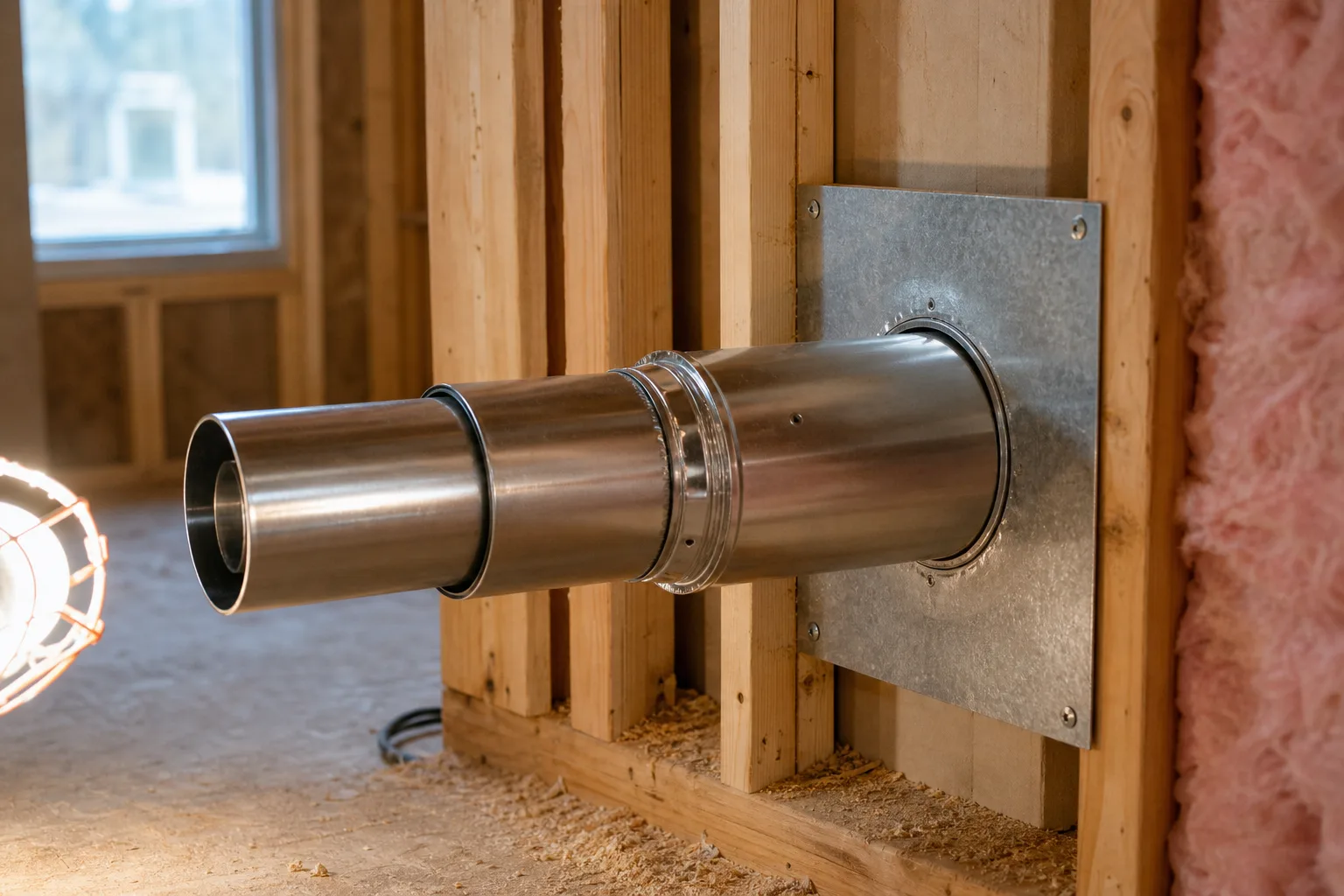
This is the one that made the chimney optional. A direct vent fireplace uses a coaxial pipe, one tube inside another. The inner tube carries exhaust out. The outer tube pulls combustion air in from outdoors.
The firebox is sealed from your living room behind a fixed pane of glass. The fire never touches the air you breathe. It has its own little atmosphere, piped in from outside and piped back out.
That sealed loop is why a direct vent unit can terminate horizontally, straight through an exterior wall, instead of climbing to the roof. It is also why the glass on these does not open, and why people who want to poke at the fire find them disappointing.
It is also part of why a custom fireplace has more placement options than an old masonry firebox allowed. Where a given model can actually go is still fixed by its own instructions: vent run length, elbow count, and the clearances its manufacturer requires between the termination and windows, doors, soffits, meters and grade.
B-vent, the old-fashioned one that still needs to go up
B-vent, sometimes called natural vent, works the way a chimney works: hot gas is buoyant, so it rises. A single-wall path carries exhaust up through a double-wall galvanized pipe or through a liner in an existing chimney.
The catch is where the combustion air comes from. It comes from the room. Your heated indoor air feeds the fire and then goes up the pipe, taking some of your furnace's work with it.
B-vent has to run vertically. There is no sidewall shortcut, because the physics doing the work is buoyancy, and buoyancy only goes one direction.
Vent-free, the one with no pipe at all
Vent-free, or ventless, units burn without any exhaust path. The combustion products go into the room. That is not a criticism, it is the design.
These are built to a standard called ANSI Z21.11.2, which governs unvented gas-fired room heaters. The standard requires an oxygen depletion sensor, a small pilot assembly that shuts off the gas supply if oxygen in the room drops. Typical ODS devices are set to trigger around 18 percent oxygen, against roughly 20 to 21 percent in ordinary room air.
The same standard sets a minimum room volume of 50 cubic feet per 1,000 BTU of appliance input, and caps input at 40,000 BTU per hour in general living space, 10,000 in a bedroom, and 6,000 in a bathroom. The National Fuel Gas Code generally prohibits unvented room heaters in bedrooms and bathrooms outright.
Safety note: You will read on plenty of websites that vent-free units "produce no dangerous byproducts." Do not accept that framing. Everything a vent-free appliance makes, including a meaningful amount of water vapour, goes into the room you are sitting in. ASHRAE publishes a position document on unvented combustion devices and indoor air quality specifically because this is contested ground, not settled ground.
How to Tell Which One You Have in Under a Minute
Every article on this topic explains the three categories and then leaves you standing in your own living room with no idea which one is yours. Let us fix that.
You cannot answer do gas fireplaces need a chimney for your own house until you know what is already in it. Two minutes of looking will tell you.
Look at the front of the firebox
Walk over to it. Is there a fixed pane of glass across the front, sealed all the way around, that you cannot open without tools? That is almost certainly direct vent.
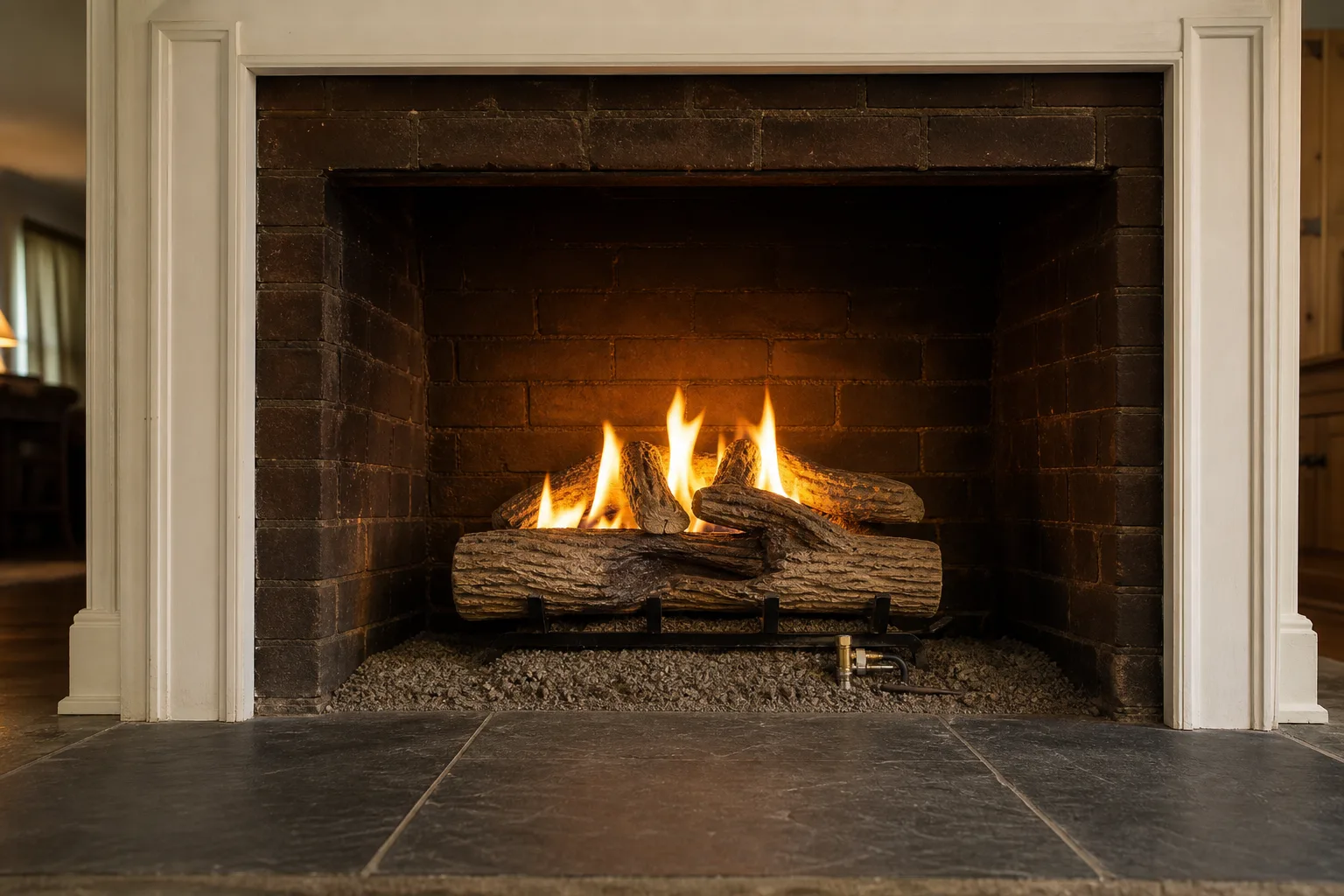
Is the firebox open, with ceramic logs sitting on a burner and no glass at all? Look for a small brass-and-steel fitting near the front of the burner, roughly thumb-sized, with a thermocouple on it. That is an ODS pilot, and it means vent-free.
Glass doors you can swing open, or a screen, over an appliance connected to a flue that goes up? That points toward B-vent or a gas log set in a real fireplace.
Look at the outside of your house
This one takes ninety seconds and it is the single most useful thing you can do before calling anyone.
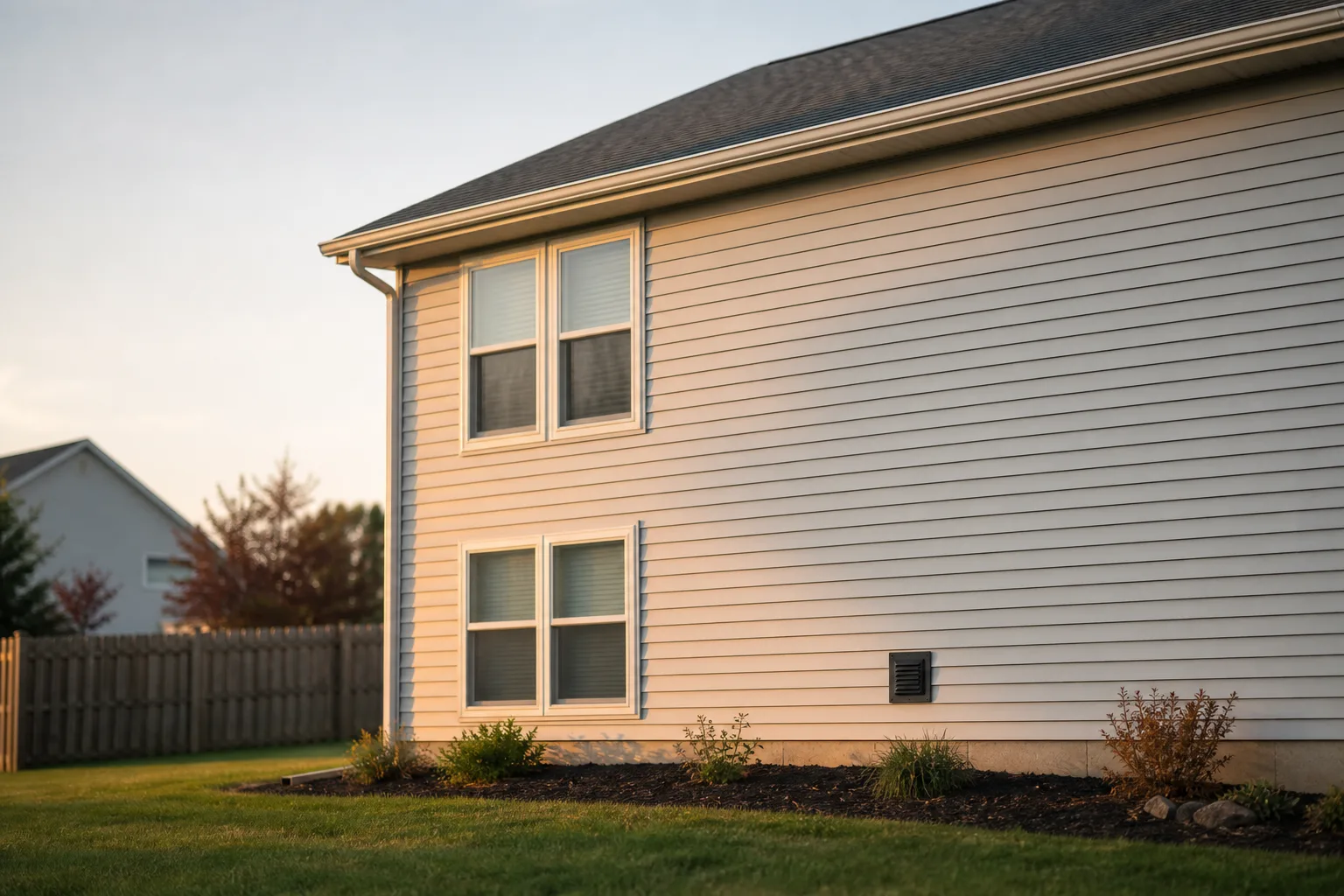
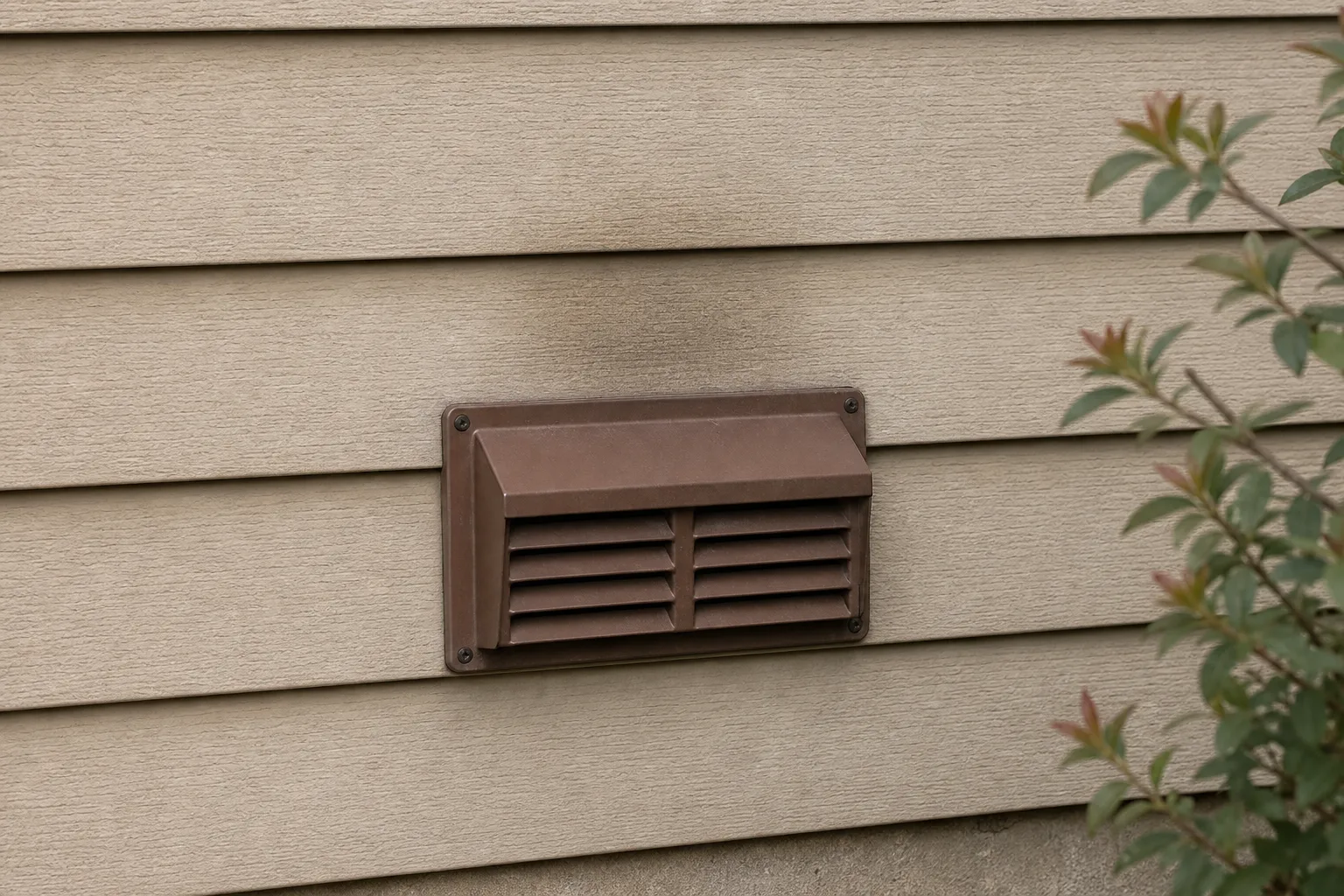
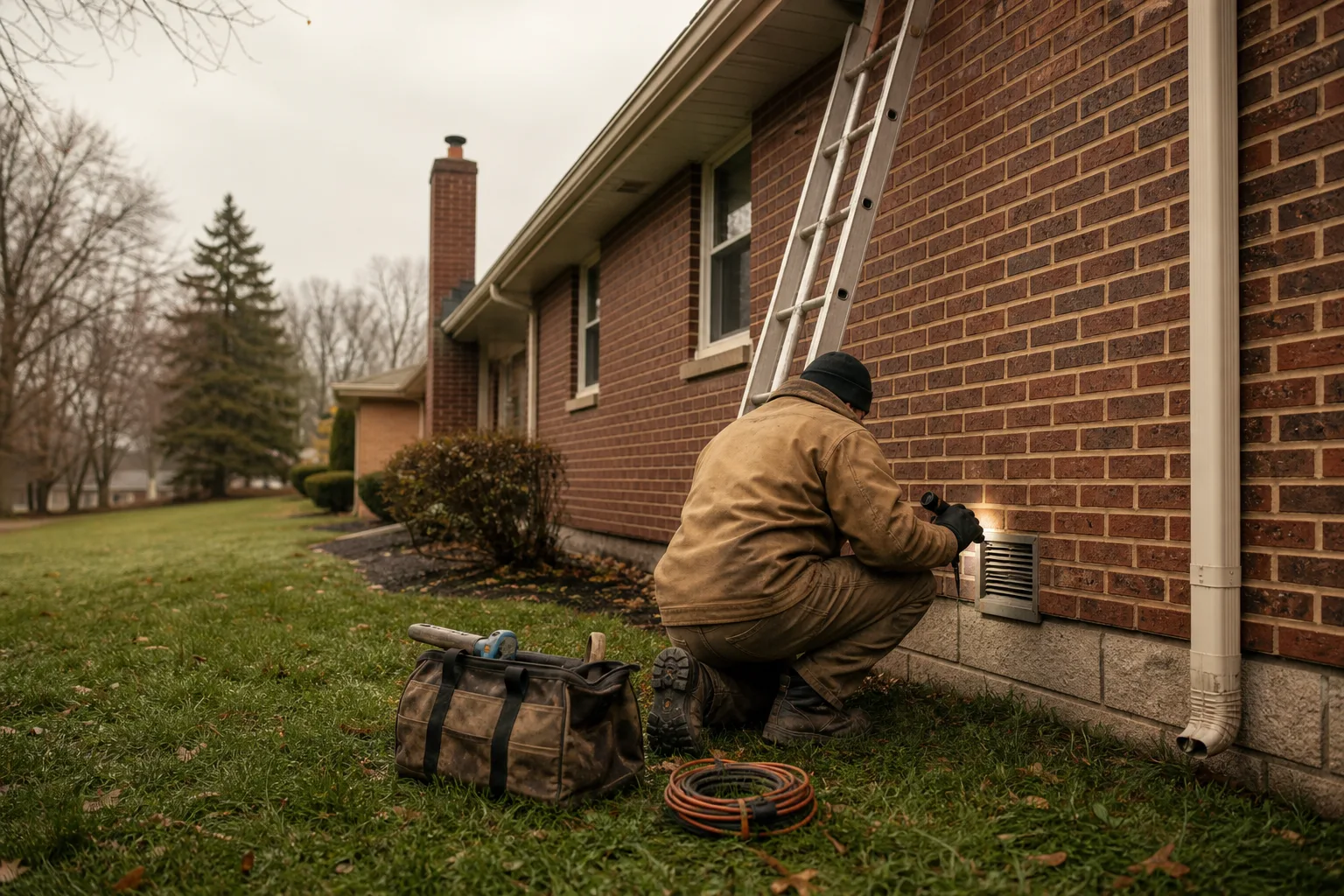
Go outside and stand where your fireplace sits on the other side of the wall. Look for a metal cap, somewhere between the size of a dinner plate and a sheet of paper, flat against the siding or brick, usually black or bronze, with horizontal louvres across its face.
Found it? Direct vent, terminating through the sidewall. If the siding above it carries a darkened patch or any sooting, do not decide for yourself what that means. Discoloration around a termination is a reason to have someone evaluate the vent, not a detail to shrug off.
No cap on the wall? Look up. A brick or stone stack means you have a chimney in play, and the question becomes what is inside it. A round galvanized pipe coming through the roof with a conical rain cap means B-vent.
| Direct vent | B-vent (natural vent) | Vent-free | |
|---|---|---|---|
| At the firebox | Fixed sealed glass | Open or openable front, flue above | Open front, ODS pilot at burner |
| Where exhaust goes | Sidewall or roof, coaxial pipe | Straight up only | Nowhere, stays in the room |
| Needs a chimney? | No | Needs a vertical flue or chimney | No |
| Uses room air? | No, sealed from the room | Yes | Yes |
| Restrictions | Manufacturer clearance tables | Vertical run required | Banned or restricted in some states |
From the field: Homeowners regularly misread a sealed direct-vent front as "just decorative glass" and assume they are looking at an open fire behind a screen. It is an easy mistake, and it sends people shopping for the wrong replacement.
Not sure which system your house can take?
You have narrowed it to a category. The next question is about your actual flue, your actual exterior wall, and your local code, and that one takes eyes on the house. Tell us what you have and we will match you with a local company that inspects gas venting. Call (513) 655-6702 or request service.
Converting an Existing Chimney: the Liner Nobody Mentions
Here is the section that competing pages skip, and it is the one that matters most if you own an old brick chimney and want to stop hauling wood.
Yes, you can convert. A gas insert or a gas log set can go into an existing masonry fireplace, and the chimney stays exactly where it is. Nobody is tearing down your stack.
The chimney is not the question, though. The flue is.
For this homeowner, do gas fireplaces need a chimney is the wrong shape of question entirely. You have a chimney. What you need to know is whether the passage inside it will carry a gas appliance's exhaust, and the honest answer is that it usually will not do so as-is.
What a co-linear liner kit actually is
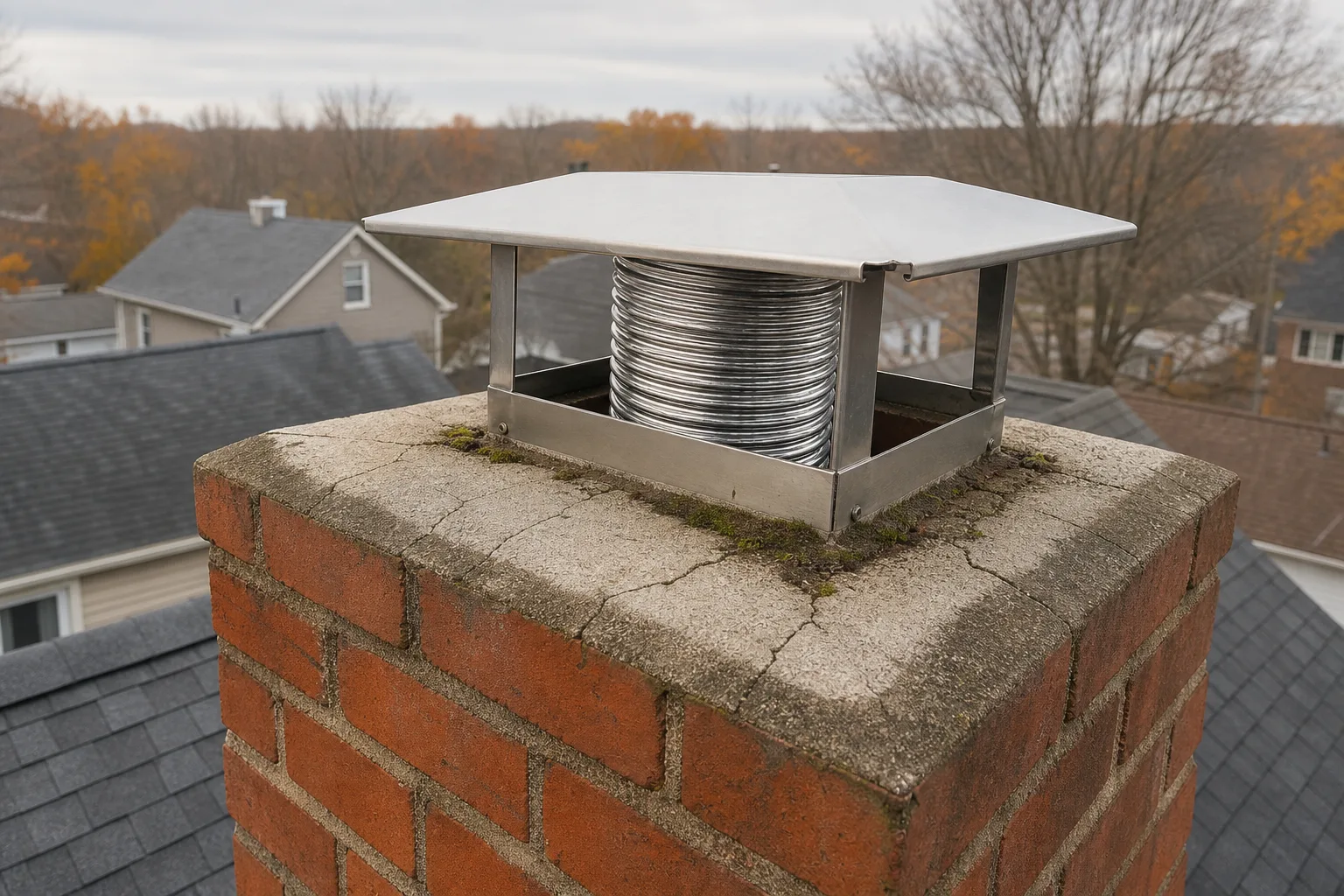
When a direct-vent gas insert goes into an old wood-burning firebox, it needs its two air paths, intake and exhaust, and the old flue is one big open shaft. So installers run two flexible stainless liners down the inside of the masonry, one for each path, terminating at a special cap on top.
The flex liner looks like a heavier-gauge dryer duct, silver and corrugated. Two of them side by side inside a flue built for one wood fire is a tighter fit than people expect, and flue size is often the thing that decides whether a particular insert works in a particular chimney.
Why the old flue is usually the wrong size
A flue sized for an open wood fire is sized for enormous volumes of hot dirty gas. A gas appliance produces far less exhaust, at lower temperature, and an oversized flue lets it cool and slow down instead of drawing properly.
Insulation around the liner is commonly required in cold climates, when the chimney runs up an exterior wall, or when clearance to combustible framing cannot be met by the masonry alone. That is a real line item, not an upsell, and it is worth knowing before anyone quotes you.
If the masonry itself has problems, they surface now rather than later. Crown cracks, spalled brick, and failed flashing around chimney joints all get dealt with as part of the conversion, because you are about to run a sealed system through that structure.
Sometimes that means the order of operations changes. Brick chimney repair work occasionally has to happen before the liner goes in at all, which is frustrating to hear and much less frustrating than finding out afterward.
Pro tip: Before you agree to anything, ask what liner diameter the appliance manual specifies and whether the existing flue accommodates it. A company that answers that question immediately, from the manual, is a company that has read the manual.
The Level 2 inspection that comes with the change
NFPA 211, the national standard for chimneys and vents, requires a Level 2 inspection whenever the system changes. Installing a gas insert in a wood-burning fireplace is a system change. It is also required at sale or transfer of a property, on malfunction, after a chimney fire, and after an external event such as an earthquake or severe weather.
A Level 2 goes further than a visual once-over. It includes accessible portions of the chimney exterior and interior, and video scanning of the flue.
Nobody enjoys hearing that a project comes with a required inspection. But this is the one that catches the cracked flue tile before you seal a new appliance underneath it.
Myth vs. fact: "My chimney already works fine, so it will work fine for gas." The chimney works fine for the appliance it was built for. Changing the fuel changes the exhaust temperature, the volume, the moisture content, and the correct flue size. Different appliance, different math.
Do Gas Fireplaces Need a Chimney Inspection Too?
If you already own one, this is your question. Do gas fireplaces need a chimney sweep in the way a wood fireplace does? Not in the way, no. But they absolutely get inspected.
NFPA 211 calls for annual inspection of every chimney and venting system, regardless of how often it gets used. A direct-vent pipe is a venting system. So is a B-vent run, and so is a flue with a gas liner in it.
People who ask do gas fireplaces need a chimney inspection are usually hoping the answer is no, because gas feels self-cleaning in a way wood does not. The gas part is cleaner. The parts that fail are different, not absent.
What gets checked on a sealed direct-vent unit
The termination cap outside, for clearance to windows, doors, soffits, decks, gas meters, and grade, and for obstruction by shrubs, nests, or drifted snow.
The coaxial pipe joints and the firestop plates where the run passes through framing. The glass gasket, which is what keeps the sealed system sealed and which degrades with heat cycles. The burner, the pilot, the ignition, and the gas pressure.
What gets checked on a converted masonry chimney
Everything above, plus the masonry itself, plus the liner. The crown, the cap, the flashing, the flue interior by camera. Whether the liner insulation is intact. Whether the connection at the appliance is sound.
Here is what to have ready before that visit:
- The appliance make and model, off the rating plate inside or behind the lower louvre
- Whether the unit is original to the house or was added later, and roughly when
- Whether your fireplace was ever wood-burning
- Any smell of gas, sooting on the glass, or a flame that has changed color or shape
- Whether the pilot stays lit through a season
- Where your gas shutoff is
- Roof access, and whether the chimney is on an exterior wall
Good to know: Vertical chimney termination follows the 3-2-10 rule: at least 3 feet above the roof penetration, and 2 feet above anything within 10 feet. Horizontal sidewall direct-vent caps do not follow that rule at all. They follow the appliance manufacturer's clearance table, which is specific to that model, and that table is the authority.
Regular chimney service on a gas system is quieter work than a wood sweep. There is no creosote to scrape. What there is, is a sealed system that has to stay sealed and a set of clearances that have to stay clear.
Where Vent-Free Is Restricted, and Why Your Local Code Decides
This is the second thing nobody tells you, and it catches people after they have already bought.
Vent-free gas fireplaces are not universally legal. California maintains a complete statewide ban on vent-free gas appliances. Massachusetts banned them and has since removed that ban. Minnesota and Colorado restrict them, and parts of New York have restrictions of their own.
Those lists move. Treat what you just read as a reason to check, not as current law in your town, because the authority having jurisdiction where you live is the only source that counts.
Which is the uncomfortable part of the whole subject. Do gas fireplaces need a chimney is a national question with a local answer, and the local answer is the one that gets your install approved or rejected.
Do gas fireplaces need a chimney to satisfy code?
No, and that is worth stating plainly, because the code question and the chimney question are separate. Gas appliances are vented per NFPA 54, the National Fuel Gas Code, along with NFPA 58. Neither one says "masonry chimney." They say the venting has to be listed for the appliance and installed per the manufacturer's instructions.
What local jurisdictions do is add layers on top. A city can require permits and inspection for a hearth appliance install, restrict a category outright, or adopt a different edition of the model code than the state next door.
Safety note: The box on the shelf at the big-box store is not a permit. A product being sold in your area does not mean that product is approved for installation in your area, in your room size, on your fuel. Ask the code official before you buy, not after.
How VIO Helps When You Are Deciding About a Gas Fireplace
VIO is a referral network, not a chimney company. We do not send our own crews, because we do not have crews. What we do is match homeowners with independent local companies that do this work.
For this exact question, do gas fireplaces need a chimney in your particular house, that means somebody who can look at three things: the wall where you want the unit, the flue you already have if you have one, and what your local code allows.
We ask every company in the network to put its estimate in writing before any work starts, and you should insist on exactly that. Written, itemized, before a tool comes out of the truck. If a company will not do that, that tells you something.
If you are looking at a conversion, the independent local company we refer you to should be able to tell you the liner size the appliance manual calls for, whether your flue takes it, and whether insulation is needed for your chimney's construction and climate. Those are answerable questions, and vague answers to them are a signal.
For a new install with no chimney at all, the company we match you with is looking at vent run length, elbow count, and where the termination lands relative to your windows, doors, and grade. That is what determines whether the fireplace can go on the wall you want it on. Cost questions belong in that same conversation; our guide to fireplace installation cost covers what shapes the number.
Three situations, one next step.
No chimney and you want a fireplace: someone checks whether that wall can take a vent. An old brick stack you want to convert: someone sizes the liner. A gas fireplace you already own: someone inspects the venting. VIO matches you with an independent local company for any of the three. Call (513) 655-6702 or request service.
So, one more time, do gas fireplaces need a chimney? No. Most of them need a vent, one category needs nothing at all but has restrictions attached, and if you already own a chimney you have an asset that can be converted rather than a liability that has to go.
The question that decides your project was never really do gas fireplaces need a chimney. It was which of the three systems your house can actually take, and that is a question about your house, not about gas fireplaces in general.
Nobody answers it from a laptop. Somebody answers it standing in your living room and then standing outside looking at your wall.
Go look at your siding for a louvered cap. Then make the call.
Symptom checker
What is your chimney doing?
Tap the closest match for an honest first answer.