



On this pageWhat fireplace chimney repair Covers and When You Need It7 sections+6
- What fireplace chimney repair Covers and When You Need It
- Warning Signs That Your Fireplace Chimney Needs Attention
- Common Causes of Chimney and Fireplace Damage
- How a Chimney Professional Assesses the Problem
- Repair Methods for Different Types of Damage
- What Affects the Scope and Cost of Chimney Repairs
- Protecting the Chimney After Repairs
Quick answer
Fireplace chimney repair fixes defects in masonry, crowns, caps, flashing, flue liners, dampers, smoke chambers, and fireboxes that affect safe venting or water resistance. Arrange an inspection when you notice leaks, smoke entering the room, rust, loose masonry, fallen liner pieces, or visible cracking, and stop use if fire or carbon monoxide is suspected.
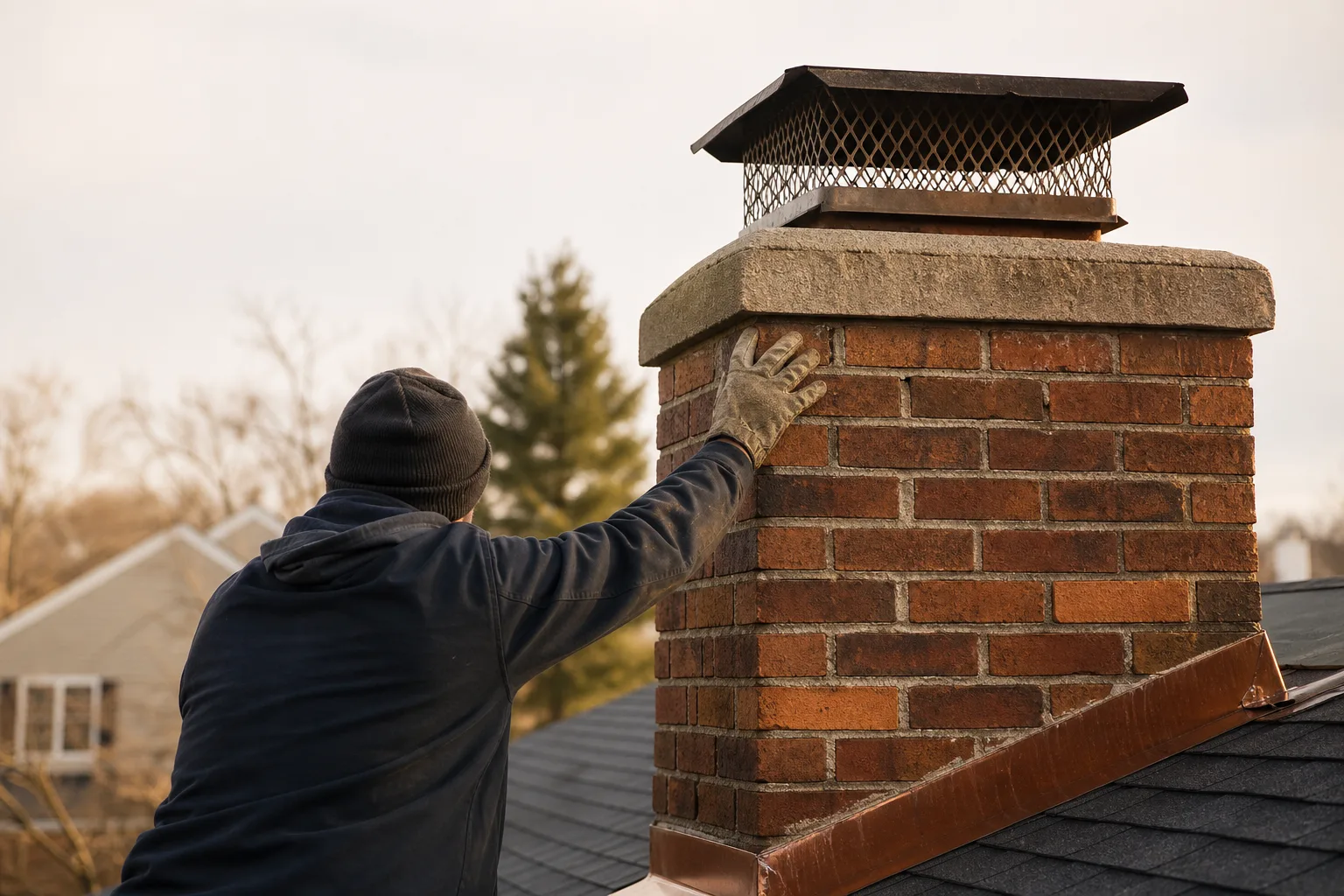
What fireplace chimney repair Covers and When You Need It
Professional fireplace chimney repair covers damaged masonry, flue liners, crowns, flashing, caps, dampers, smoke chambers, and firebox components that affect safe venting or water resistance. You need it when leaks, loose materials, smoke movement, rust, or visible deterioration suggest that the chimney can no longer contain heat, exhaust, and moisture as designed.
A chimney works as a connected system. The crown sheds rain, flashing seals the roof intersection, the cap blocks direct entry, and the liner contains heat and combustion gases. Damage to one part often travels, such as water entering through a crown crack and showing up later as rust around the damper.
You need fireplace chimney repair when defects affect operation, safety, or the building around the chimney. White staining alone may seem cosmetic, but it can point to moisture moving through masonry. A smoky room may come from a blockage, a damaged flue, an unsuitable flue size, or pressure conditions inside the house, so a surface patch is not a dependable diagnosis.
| Type of service | What it addresses | Typical purpose |
|---|---|---|
| Chimney cleaning | Soot, creosote, and accessible debris | Restores a cleaner venting path and allows better inspection |
| Targeted repair | A defined defect, such as failed mortar, flashing, or a damaged cap | Corrects a limited problem while sound parts remain in place |
| Partial rebuild | A deteriorated upper section or other contained masonry area | Replaces masonry that can no longer be repaired reliably |
| Full reconstruction | Widespread instability, severe deterioration, or unsuitable construction | Rebuilds the affected chimney structure from a suitable starting point |
Cleaning and repair serve different purposes. Removing deposits does not close a cracked liner joint, replace a loose brick, or stop water at failed flashing. Likewise, fresh mortar placed over an active leak may hide the stain for a while without correcting the opening where water enters.
Myth vs. fact: The myth is that any visible chimney crack can be sealed from the outside. The reality is that cracks can result from moisture, heat, movement, or internal damage, and the cause determines which repair will hold.
Loose masonry, recurring water stains, smoke entering the room, or pieces of flue tile in the firebox call for a professional inspection. A technician can separate a local defect from a larger pattern and determine whether the fireplace should remain out of use until repairs are completed.
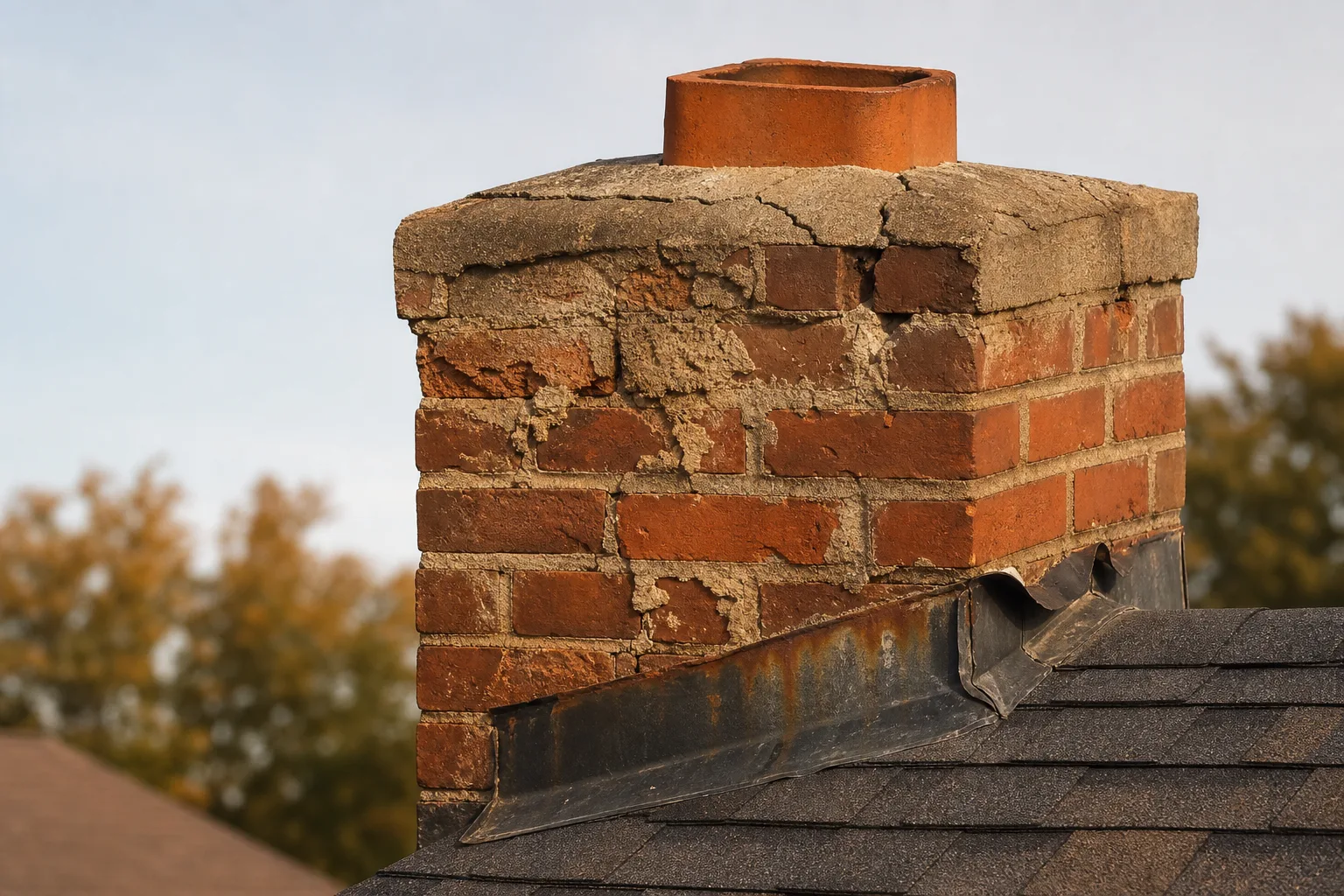
Warning Signs That Your Fireplace Chimney Needs Attention
Your chimney needs attention when smoke, water, odors, rust, fallen fragments, or visible masonry changes appear. Some signs develop slowly, while others point to an immediate risk. Stop using the fireplace if a carbon monoxide alarm sounds, masonry is falling, the chimney appears to move, or you suspect a chimney fire.
Indoor clues are often easier to spot first. Smoke spilling from the fireplace may indicate restricted flow, a closed or damaged damper, flue defects, or pressure problems in the home. Persistent smoky or musty odors can come from creosote, wet masonry, animal nesting material, or debris trapped above the smoke chamber.
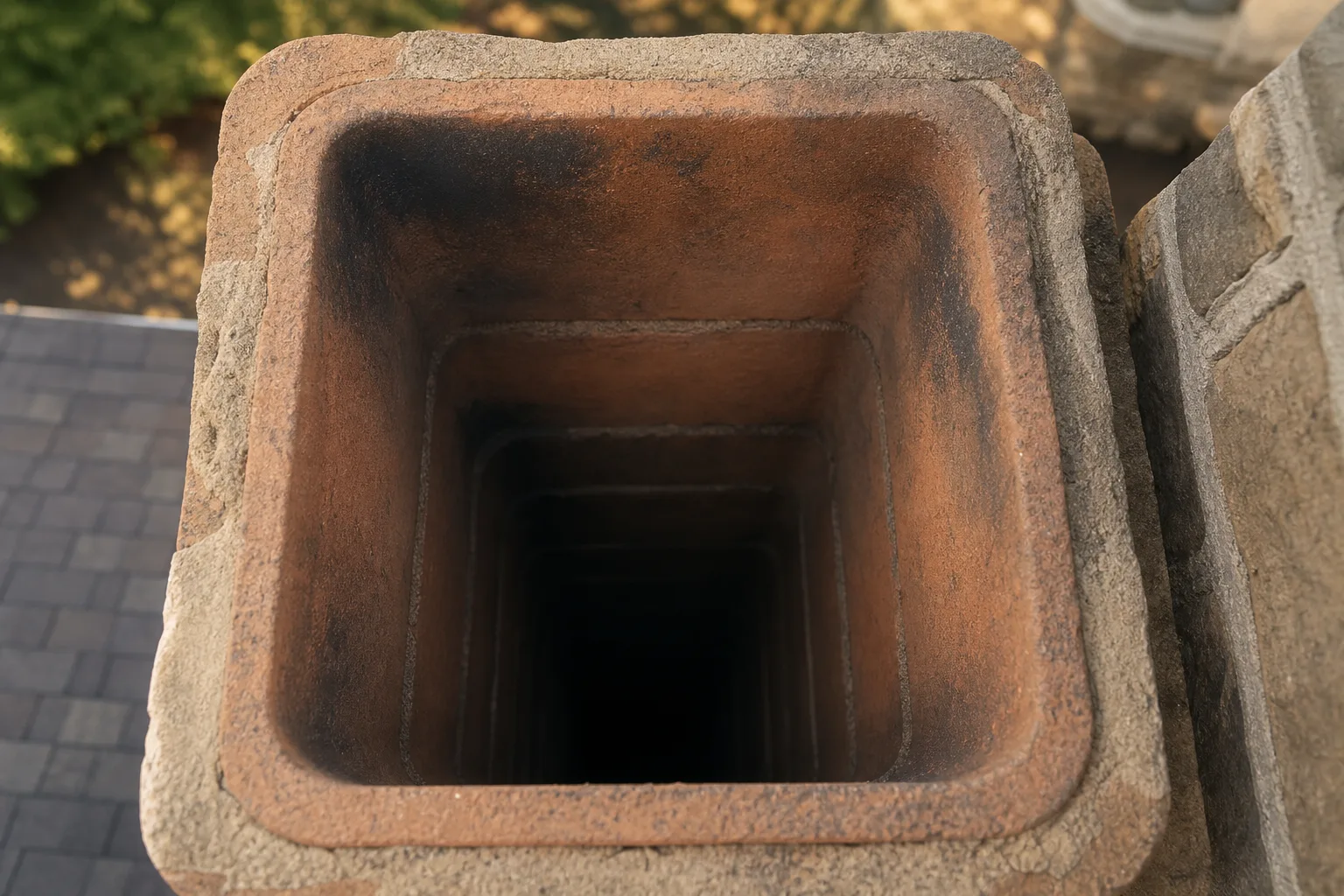
Water stains near the fireplace, damp firebox walls, and rust on the damper or fireplace components all suggest moisture entry. Small pieces of orange or tan tile in the firebox may have broken from a clay liner, while gritty mortar or brick fragments can indicate deterioration higher in the chimney.
The following outside check can be done from the ground. Do not climb onto a steep, wet, icy, or unfamiliar roof to get a closer look.
- Check the crown. Look for obvious cracks, missing sections, or low areas where water may collect.
- Check the cap. Confirm that it appears present, upright, and securely attached.
- Check the brick faces. Watch for flaking, crumbling, bulging, or missing pieces.
- Check the mortar joints. Look for open seams, deep erosion, or plants growing from joints.
- Check the flashing. Scan the roof intersection for lifted metal, gaps, sealant failure, or staining.
- Check the chimney line. Step back and see whether the stack appears straight or has a leaning section.
From the field: Technicians often find that the stain inside the house is several feet away from the actual opening. Water can enter beside the chimney, follow framing or masonry, and emerge near the fireplace or ceiling.
| Sign | Possible source | Recommended response |
|---|---|---|
| Smoke entering the room | Blockage, draft problem, flue damage, or damper fault | Stop the fire, ventilate safely, and arrange an inspection |
| Damp firebox or rust | Crown, cap, flashing, or masonry leak | Locate the entry point before applying a patch |
| Fallen tile pieces | Damaged clay flue liner | Avoid fireplace use until the flue is inspected |
| Spalling bricks | Saturated masonry, freezing, or incompatible past repairs | Have the affected area and moisture source assessed |
| Leaning or loose masonry | Structural movement or advanced deterioration | Keep people away from the area and seek prompt service |
A loud roaring sound, intense heat, dense smoke, or flames from the chimney can indicate a chimney fire. Leave the home, call emergency services, and do not use the fireplace again until the entire venting system has been inspected. A carbon monoxide alarm also requires immediate action according to the alarm instructions and emergency guidance.
Not every defect is visible from the room or yard. Cracks between liner tiles, missing mortar joints, offsets, blockages, and heat damage may sit deep inside the flue, where a camera inspection is needed to document them.
Safety note: Do not test a questionable chimney by lighting another fire. Heat and exhaust can escape through damaged areas long before smoke becomes obvious in the room.
Need help sorting out a warning sign? Request an inspection or call (513) 655-6702 for a clear assessment before using the fireplace again.
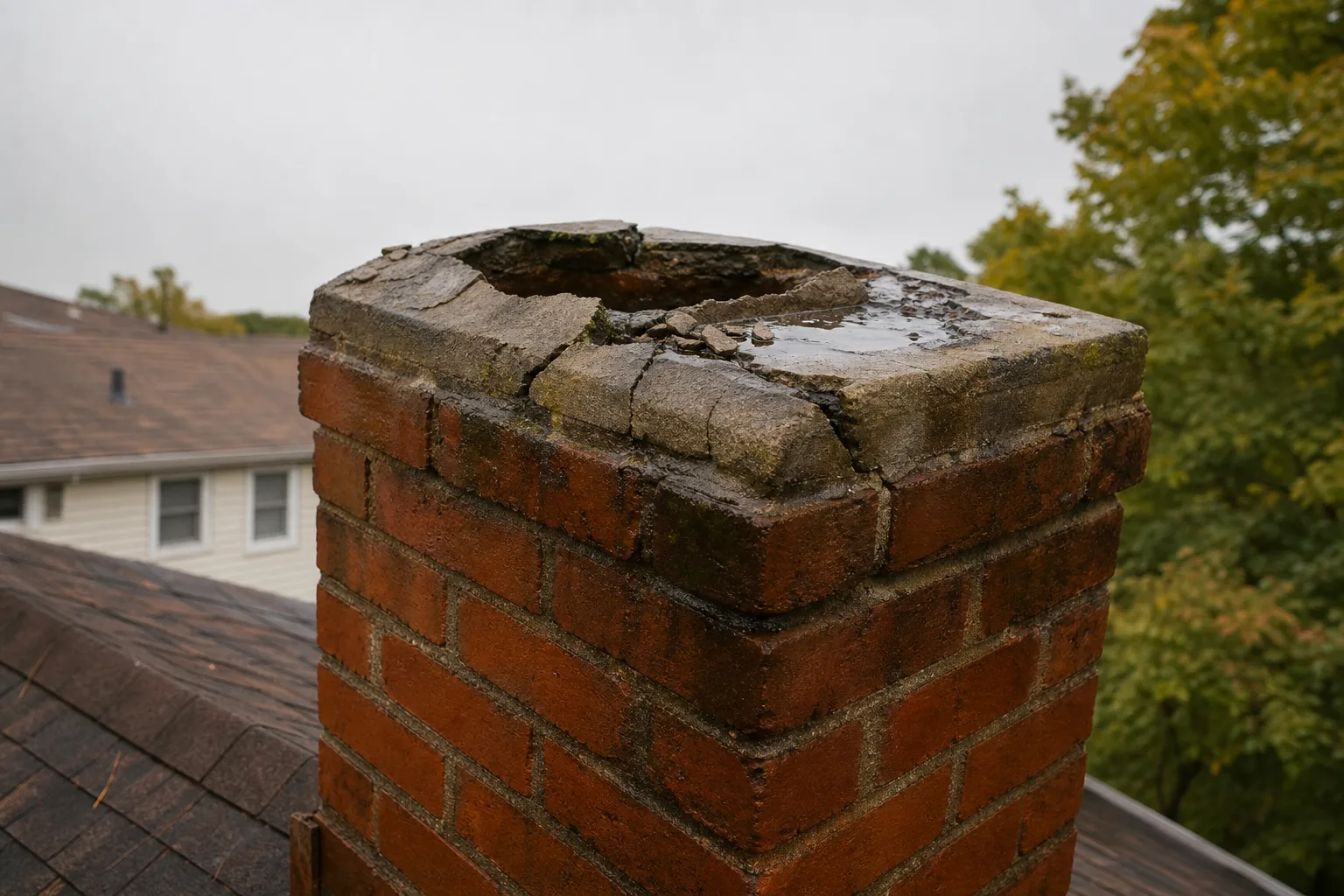
Common Causes of Chimney and Fireplace Damage
Water causes much of the deterioration seen in chimney masonry. Rain and melting snow enter small openings, soak porous brick and mortar, and move deeper into the stack. When saturated materials freeze and thaw, their faces can crack, loosen, or flake away.
Poor drainage makes the exposure worse. A crown that is flat, cracked, or improperly shaped can hold water near flue openings instead of directing it away. Roof runoff that repeatedly strikes the chimney also keeps masonry wet and can overwhelm weak flashing joints.
Missing or damaged caps allow rain, snow, leaves, and animals to enter the flue directly. Failed flashing creates a path at the roofline, while open mortar joints let wind driven rain pass through the chimney walls. Interior stains may appear long after the outside opening begins.
Pro tip: Sealant smeared across a flashing gap rarely provides a lasting repair when the metal is loose, poorly lapped, or separated from the masonry. The roof and chimney details must direct water outward, not merely cover the visible seam.
Heat and combustion also wear chimney components. Clay liners expand as a fire heats them and contract as they cool, and sudden or uneven temperature changes can contribute to cracking. Acidic combustion byproducts mixed with moisture can attack mortar, metal, and some liner surfaces over time.
A chimney fire exposes the flue to temperatures beyond normal operation. Even if the event was brief and no exterior damage is apparent, liner tiles may crack, mortar joints may open, and nearby materials may have been affected. The chimney should be inspected before another fire is lit.
Settling and structural movement can create stair step cracks in mortar, separate the chimney from the building, or shift sections of the flue. A leaning stack is not a cosmetic issue, especially when cracks continue through several courses or widen over time.
Previous repairs can also cause damage when the materials do not match the original construction. Mortar that is harder and less permeable than older brick may force moisture through the brick faces, leading to spalling. Surface coatings that trap water can leave masonry looking dry outside while deterioration continues underneath.
Neglected maintenance gives small defects time to spread. A missing cap can lead to a wet liner and rusted damper, while one open crown crack can grow through repeated weather cycles. Early attention usually gives the technician more sound material to preserve and makes the source easier to trace.
Good to know: Efflorescence, the white powder sometimes seen on brick, is a moisture clue rather than the moisture source. Cleaning it away improves appearance, but the deposit can return until water entry and drying conditions are addressed.
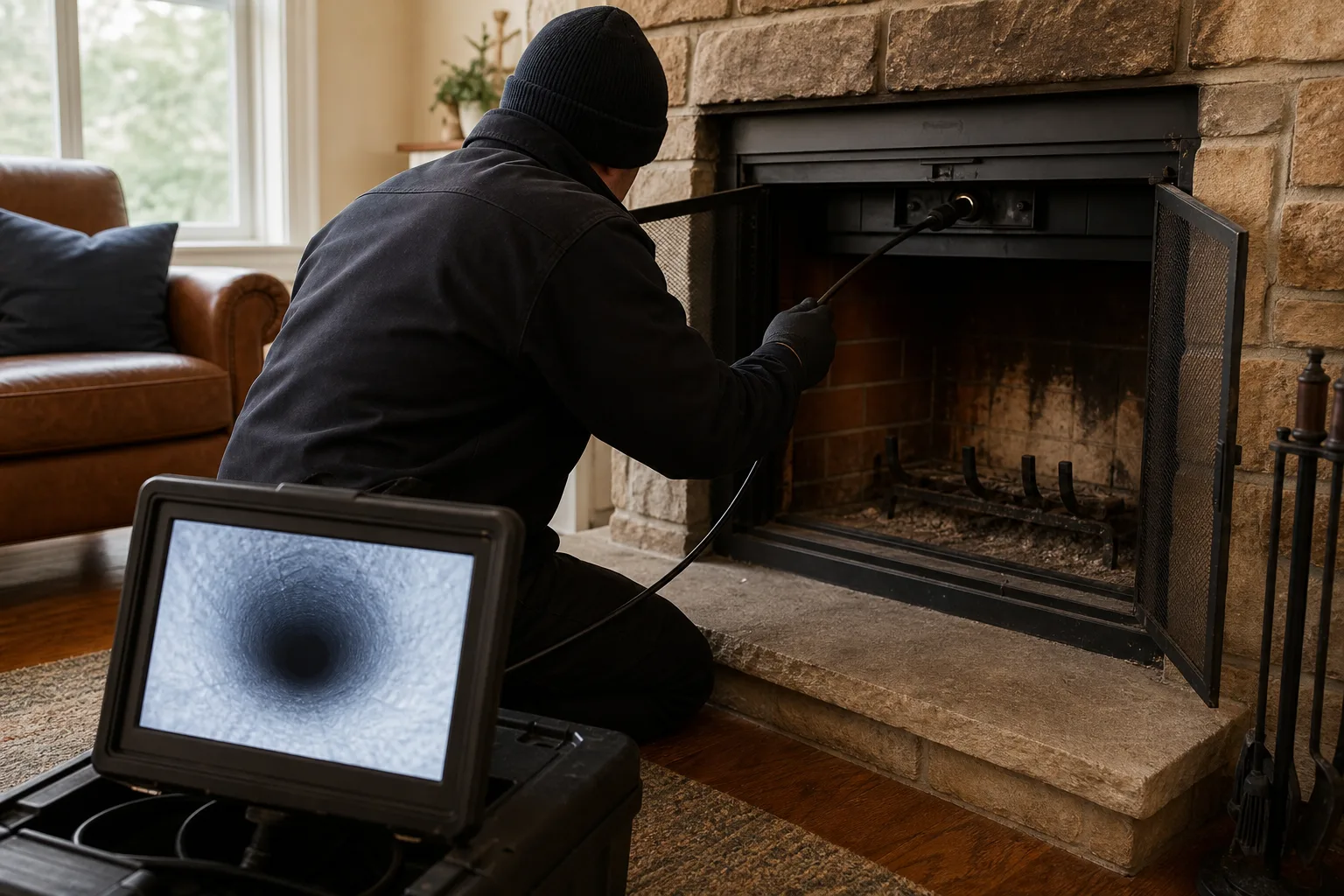
How a Chimney Professional Assesses the Problem
A chimney professional assesses the problem by reviewing the fireplace, venting path, accessible building areas, and exterior structure before recommending repairs. The goal is to connect the visible symptom with its source, document hidden defects when needed, and determine whether sealing, repointing, component replacement, relining, or rebuilding is appropriate.
The inspection commonly begins at the hearth. The technician looks at the firebox walls and floor, mortar joints, refractory panels when present, damper operation, smoke chamber, and accessible portions of the flue. Soot patterns, rust, staining, fallen debris, and unusual gaps can reveal where to investigate next.
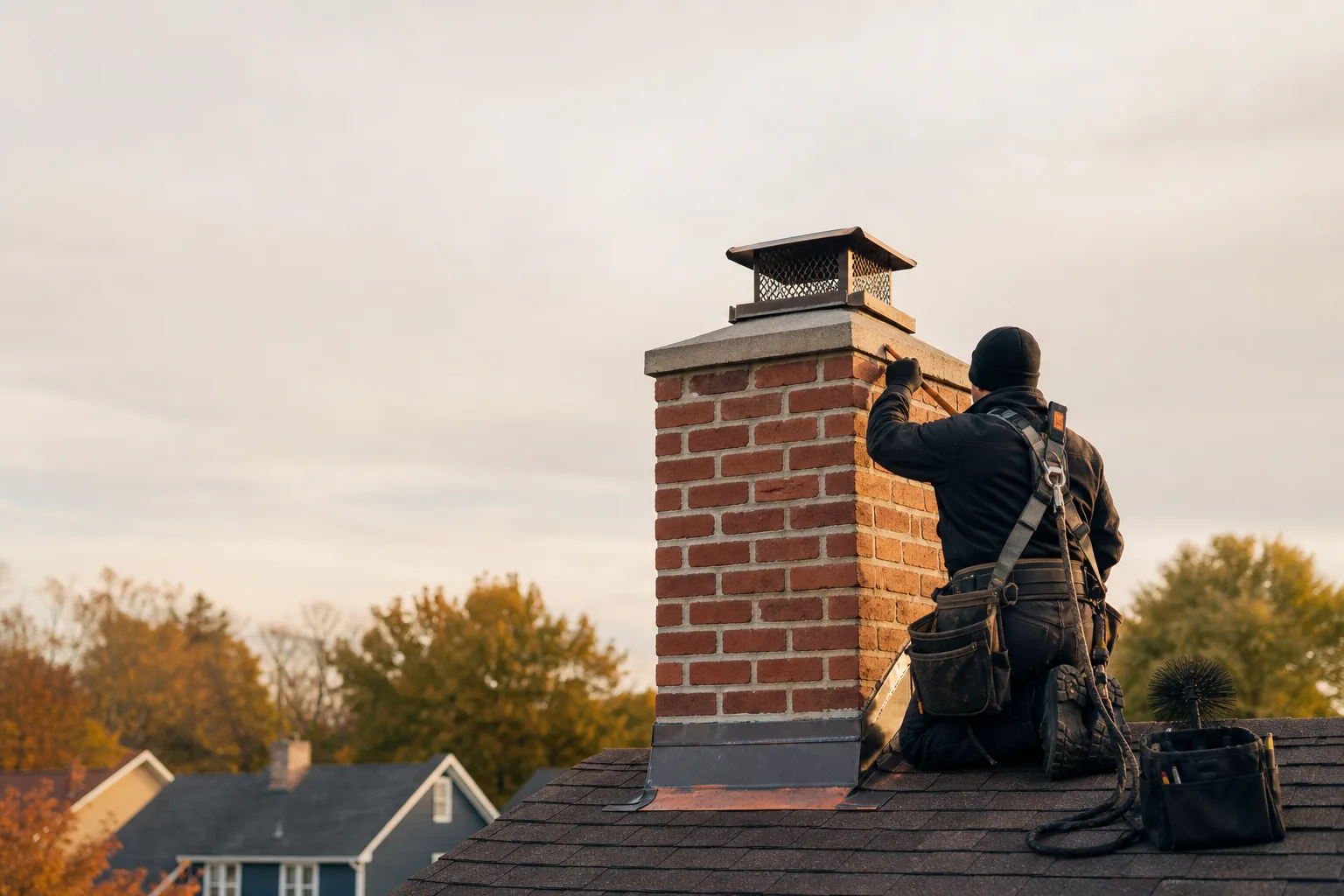
The exterior review covers the chimney cap, crown or wash, masonry, mortar joints, flashing, roof intersection, and visible alignment of the stack. Roof access depends on pitch, height, weather, surface condition, and the ability to work safely. Binoculars, photographs, or other viewing methods may be used when direct access is unsafe.
Accessible attic areas can provide valuable evidence. A technician may find damp sheathing, water tracks, stained framing, gaps around the chimney, or signs that heat and smoke have escaped. This part of the review also helps distinguish a roof leak from water passing through masonry or flashing.
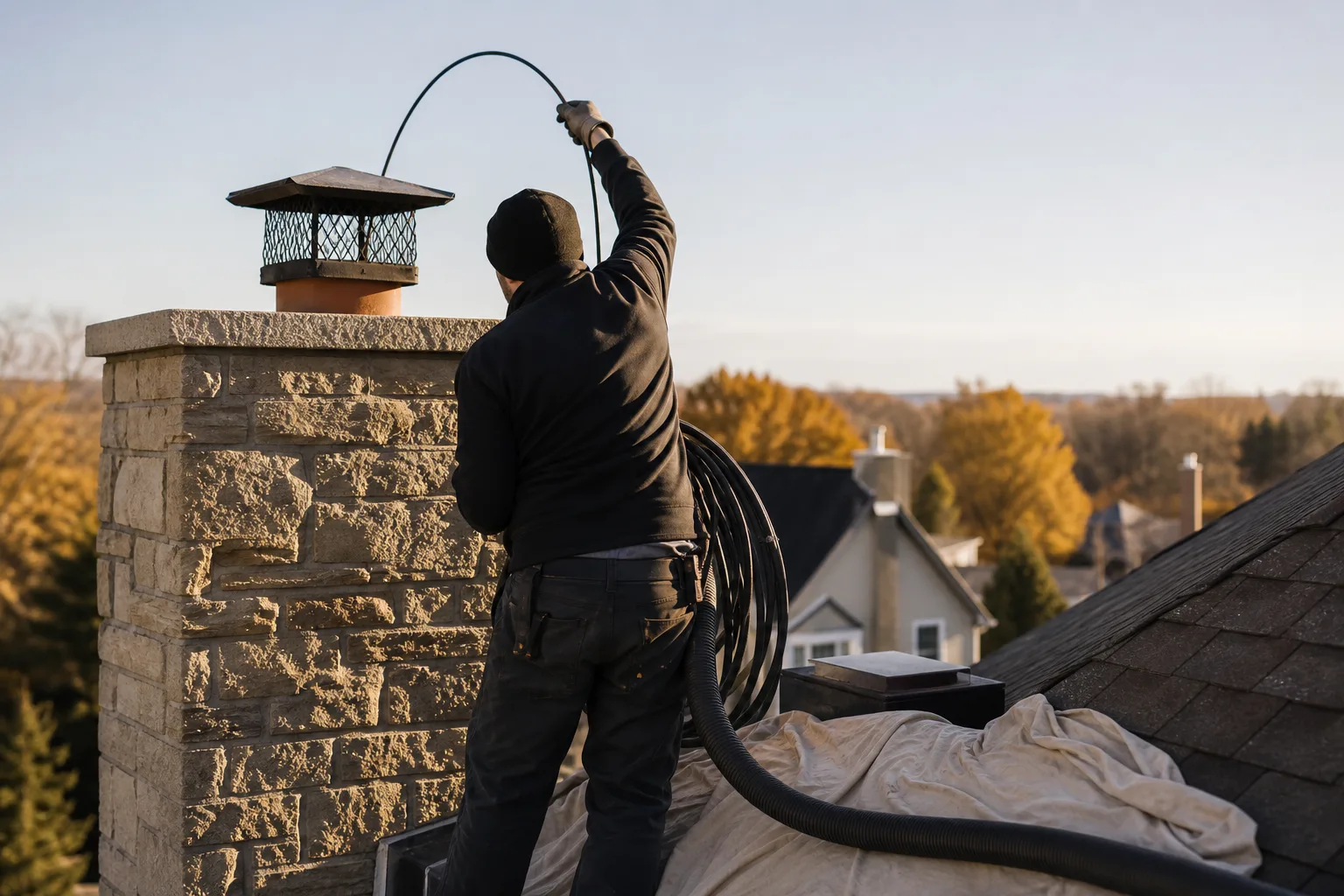
A video scan is useful when the flue interior cannot be evaluated adequately from its openings. A camera can reveal cracked clay tiles, missing liner sections, open joints, offsets, blockages, heavy deposits, and surfaces affected by a chimney fire. Images also provide a record that can be compared with the proposed repair.
NFPA 211 inspection principles recognize different levels of examination based on the circumstances and the access required. A routine review may be suitable for an unchanged system with no known problems, while suspected damage, a property transfer, a chimney fire, or a change in appliance can call for a more detailed inspection. The technician should explain what was examined and which areas remained inaccessible.
From the field: A dark line on a camera image is not automatically a crack. Experienced interpretation considers the liner shape, tile joints, soot, lighting, and the same area from more than one angle before assigning a repair.
Findings should lead to a repair plan tied to the construction and the cause of damage. Open exterior mortar joints may call for repointing, a failed cap may need replacement, and a damaged liner may require a listed repair system or relining approach suited to the fireplace and fuel. Unstable or deeply deteriorated masonry may need partial or full rebuilding rather than repeated surface patches.
A useful written assessment identifies observed defects, supporting photos or video when available, recommended work, and repair priorities. It should also explain whether the fireplace can be used, what conditions could change the scope, and how the proposed work addresses the source rather than only the stain, crack, or loose piece you can see.
Ready for a clear repair plan? Book chimney service or call (513) 655-6702 to arrange an inspection and discuss the findings.
Repair Methods for Different Types of Damage
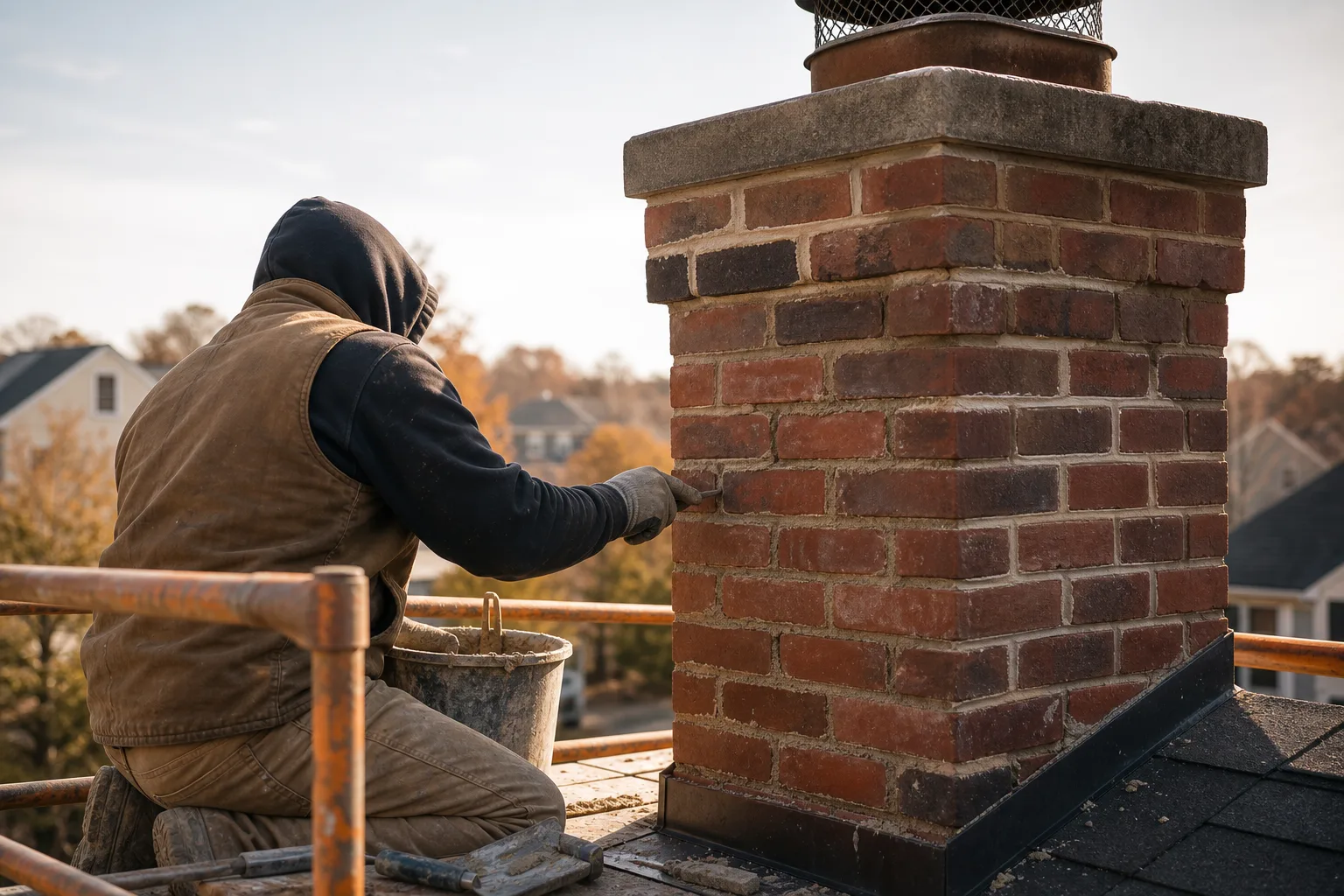
The right fireplace chimney repair starts with matching the method to the damaged material and the reason it failed. Mortar erosion, water entry, liner cracks, and structural movement each call for a different response, and covering them with surface cement rarely lasts.
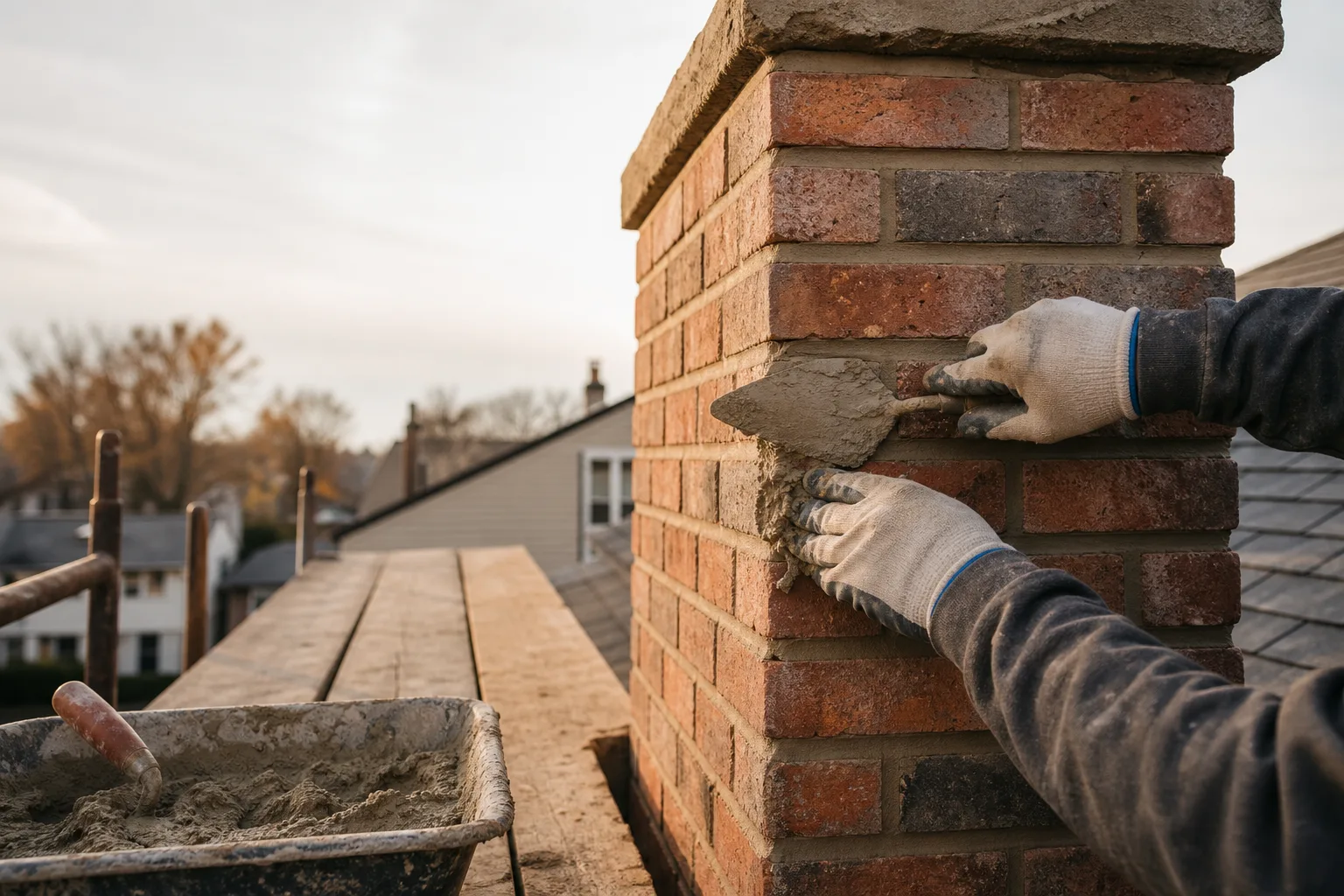
For shallow mortar deterioration, tuckpointing or repointing removes weak material and installs new mortar within the joints. The replacement mortar must be compatible with the existing brick, since an overly hard mix can trap moisture and cause the softer brick faces to break apart. Loose, cracked, or spalled bricks should be replaced rather than hidden behind a skim coat.
| Damage found | Common repair approach | Key limitation |
|---|---|---|
| Weathered mortar joints | Repointing with compatible mortar | Does not correct moving or unstable masonry |
| Isolated damaged bricks | Remove and replace affected units | Nearby moisture sources still need correction |
| Cracked or washed-out crown | Repair or rebuild the crown | A coating cannot save loose underlying concrete |
| Failed flashing | Remove affected roofing materials and rebuild the flashing detail | Roofing cement is usually a temporary patch |
| Damaged flue liner | Repair an approved area or install a suitable liner | The solution must match the appliance and fuel |
Crown repairs range from sealing small, stable cracks to rebuilding a loose or badly pitched crown. A sound crown should shed water beyond the chimney walls, while a properly sized cap keeps rain, animals, leaves, and windblown debris out of the flue. Failed flashing may need to be opened and rebuilt so water is directed over the roofing surface rather than into the chimney chase or attic.
From the field: Dark staining on one side of a chimney often points to a water path above it. Repointing the stained joints without correcting the crown, cap, or flashing leaves the source untouched.
Breathable masonry water protection can reduce rain absorption after open joints and damaged units have been repaired. Film-forming paint and generic sealers may trap moisture inside the masonry, especially when water is already entering through the top or flashing.
Inside the chimney, repair choices depend on the flue material and the extent of damage. Localized defects may qualify for an approved repair system, while widespread cracks, missing tile sections, open joints, or an improperly sized flue may call for relining. The liner must be suitable for the connected fuel, appliance, flue dimensions, and expected operating temperatures.
Smoke chamber repairs may include sealing gaps and creating a smoother passage between the firebox and flue. Damper work can involve freeing a stuck assembly, replacing damaged parts, or installing a suitable alternative. Cracked firebox mortar and damaged refractory panels also need materials rated for direct heat exposure, not ordinary wall mortar.
Safety note: A chimney with loose liner pieces, evidence of a chimney fire, or masonry falling into the firebox should not be used until it has been inspected and cleared for operation.
Partial rebuilding is often the sound choice when the upper courses are loose but the lower chimney remains stable. Full rebuilding may be safer when deterioration is widespread, the chimney has shifted, or repeated patches no longer have solid material to bond to. Construction type matters throughout the work, since masonry chimneys, factory-built systems, wood-burning fireplaces, and gas appliances do not share one repair recipe.
Need a clear repair plan? Request a written inspection and service recommendation or call (513) 655-6702 before approving another surface patch.
What Affects the Scope and Cost of Chimney Repairs
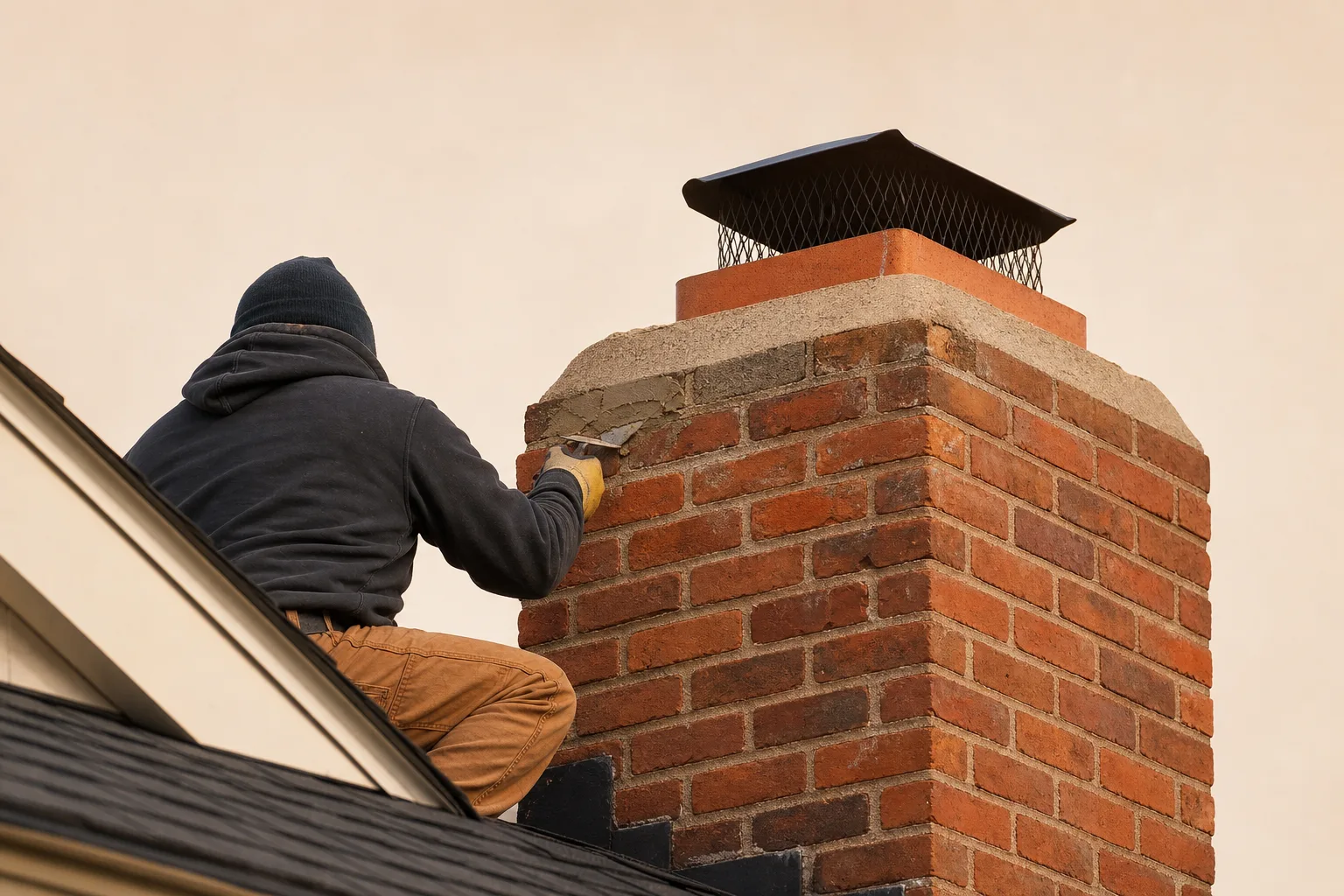
The scope and cost of fireplace chimney repair depend on chimney height, roof access, damage location, construction materials, and how far deterioration has spread. A few reachable mortar joints require a different setup than liner work inside a tall chimney or rebuilding above a steep, fragile roof.
Access affects both labor and safety planning. Roof pitch, chimney placement, nearby power lines, landscaping, and the condition of the roofing can determine whether ladders are enough or whether staging and added protection are needed. Damage hidden below the roofline or inside an attic may also require controlled removal of finishes before the full repair area is known.
Material type changes the work as well. Historic brick and softer mortar require compatible repair materials, while modern masonry units may call for another mix and technique. Flue tile, metal liners, refractory components, crowns, flashing, and chimney caps each have their own installation requirements.
Hidden conditions are a common reason an initial plan changes after a detailed inspection. A small ceiling stain can trace back to failed flashing, a cracked crown, saturated masonry, or more than one opening. Likewise, a visible tile chip in the firebox may be the first sign of damage higher in the flue that only a camera scan can show.
Good to know: A dependable estimate separates confirmed damage from conditions that cannot be verified until limited removal begins. It should also explain how additional findings will be documented and approved.
Minor mortar work generally has a narrower scope because it treats accessible joints while the surrounding masonry remains stable. Component replacement involves removing and fitting a cap, damper, flashing section, or other failed part. Relining and rebuilding are broader projects because they affect the venting path or structural masonry and may require more access, setup, and verification before the fireplace returns to use.
A written proposal should identify the observed defects, recommended materials, repair limits, and steps intended to stop the source of damage. Ask which items must be completed before using the fireplace, which are preventive, and which can reasonably wait. Photos from the roof and flue scan make those priorities easier to understand.
Ready to sort urgent work from optional work? Book a chimney assessment or call (513) 655-6702 for written findings and a repair plan you can review.
Protecting the Chimney After Repairs
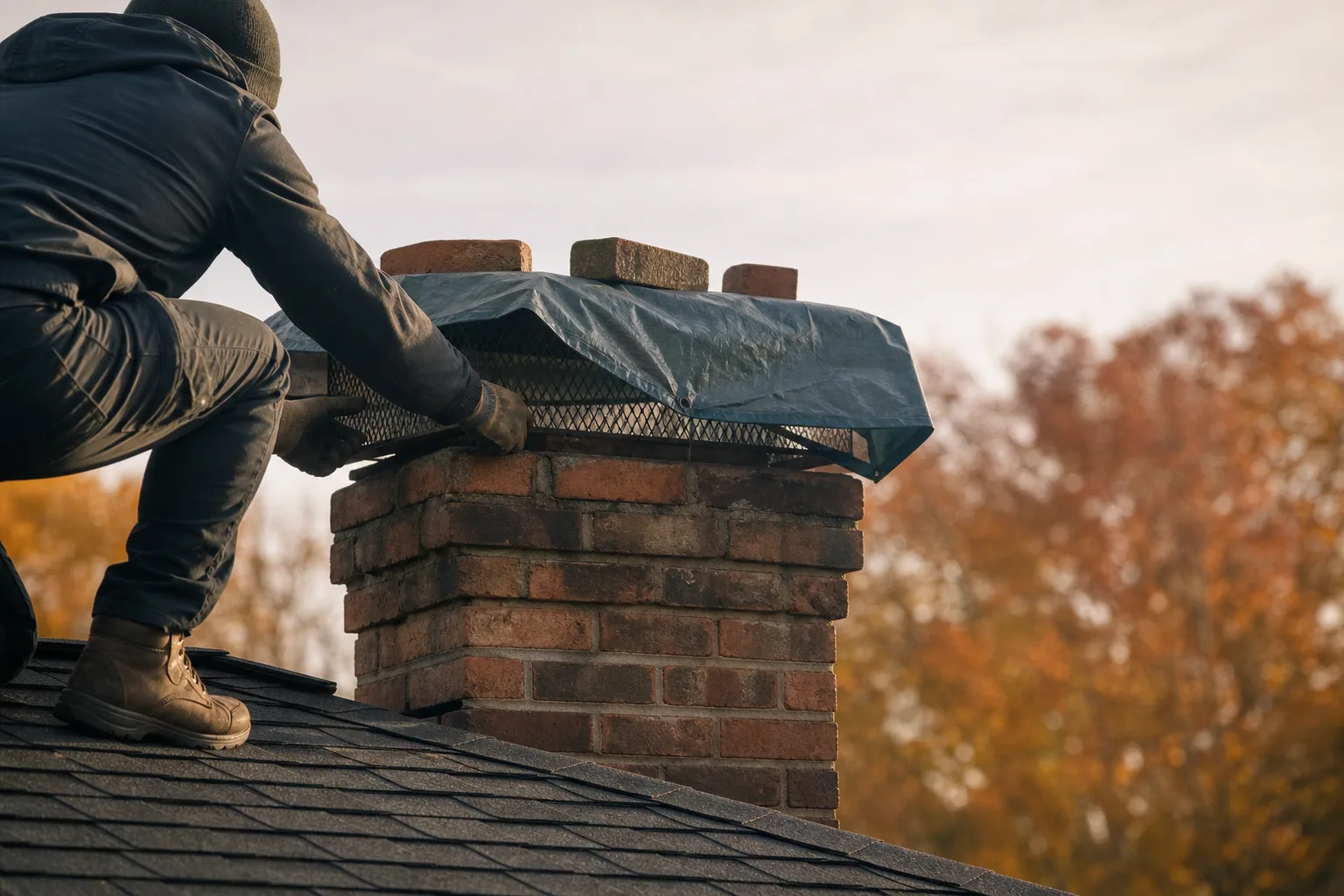
Good repairs last longer when water is kept away from the chimney and the venting system is operated as intended. A fitted cap, intact crown, properly woven flashing, and suitable masonry water protection work together, but none can compensate for a major open joint or unstable brickwork.
You can spot many developing problems from the ground after rain or during a seasonal walk around the house. Use binoculars rather than climbing onto the roof, and look from more than one side if the chimney is partly hidden.
- Check the crown. Look for visible cracks, missing edges, standing water, or plants growing from the top.
- Check the cap. Confirm that it appears secure, straight, and free of storm damage.
- Check the masonry. Watch for pale deposits, dark wet areas, open joints, loose bricks, and flaking faces.
- Check the flashing. Look for lifted edges, gaps, heavy patches of roofing cement, or staining below the roofline.
- Check indoors. Notice damp odors, rust, water marks, fallen debris, or a change in how smoke leaves the fireplace.
Pro tip: Photograph the chimney from the same safe location each season. Side-by-side images can reveal a widening crack, growing stain, or shifting cap that is easy to miss from memory.
Inspection and cleaning schedules should reflect fireplace use, fuel, chimney condition, and professional guidance. NFPA 211 calls for chimneys, fireplaces, and vents to be inspected at least annually, with cleaning, maintenance, or repairs performed when needed. Frequent use, rapid creosote buildup, animal activity, or a known moisture problem may justify more attention.
Burn dry, properly seasoned firewood, and avoid painted, treated, or manufactured scrap that is not intended for a fireplace. Build moderate fires within the fireplace's design instead of loading the firebox for prolonged, excessive heat. Keep ashes from piling against grates or dampers, and follow the fireplace manufacturer's operating instructions when they are available.
Draft changes deserve attention because they can point to blockage, pressure problems, liner damage, or changing weather exposure at the chimney top. Stop using the fireplace if smoke spills persistently into the room, a carbon monoxide alarm sounds, debris falls from the flue, or you suspect a chimney fire. Water stains and damp odors also deserve a prompt response, since repeated wetting can damage repaired areas and nearby framing.
Myth vs. fact: The myth is that waterproofing makes masonry maintenance-free. The reality is that breathable water protection reduces absorption, but caps, crowns, flashing, mortar joints, and drainage details still need periodic inspection.
Keep the repair documentation, flue images, material information, and any operating instructions with your home records. These details give the next technician a useful baseline and help distinguish an old, stable mark from new damage.
If you see visible masonry damage, water entry, rust, fallen liner pieces, or a change in fireplace venting, request an inspection or call (513) 655-6702. A technician can identify the source, explain what should happen before the next fire, and provide a written path forward.
Symptom checker
What is your chimney doing?
Tap the closest match for an honest first answer.