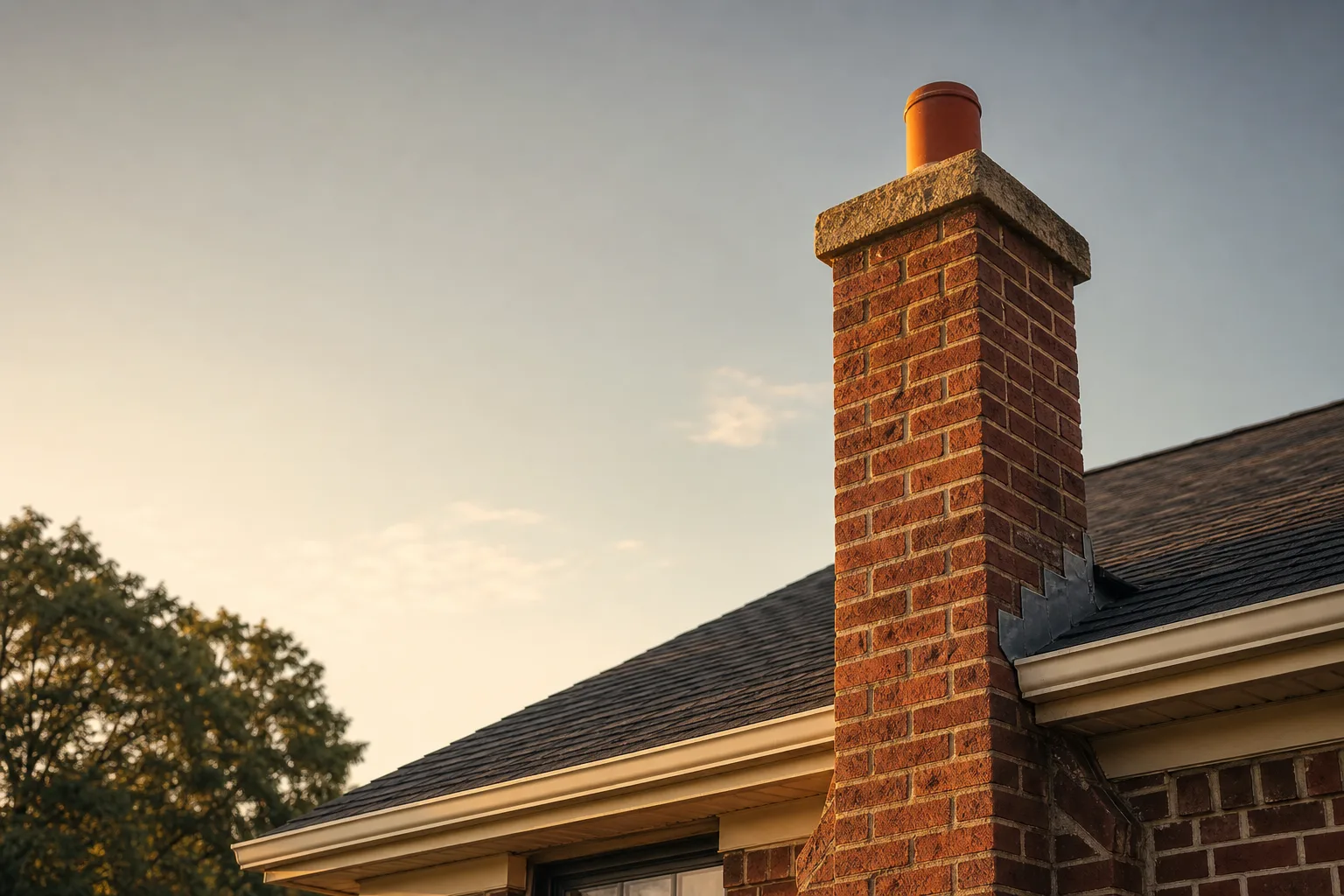




On this pageWhy Fireplace Installation Cost Ranges Are So Wide8 sections+7
- Why Fireplace Installation Cost Ranges Are So Wide
- Fireplace Installation Cost by Type
- The Chimney Is What Actually Drives Your Fireplace Installation Cost
- Installing Into an Existing Fireplace vs. Building One From Scratch
- What Should Be on the Estimate
- The Costs Homeowners Forget to Budget
- How VIO Helps You Pin Down Your Fireplace Installation Cost
- Start With the Chimney, Then Pick the Fireplace
Quick answer
Fireplace installation cost depends less on the fireplace itself than on the venting behind it. Electric units sit at the low end, gas and wood inserts in the middle, and built masonry fireplaces at the top. Within any of those, the price turns on whether a sound flue already exists, whether it needs a stainless liner, and how far the vent has to run through the house.
Search for fireplace installation cost and every page hands you the same thing: a range so wide it covers a unit you plug into the wall and a hand-laid stone chimney in the same breath. Nobody explains it, which leaves you exactly where you started.
So let me close that gap.
There are really only two projects hiding inside this search. One is putting something into a fireplace that already exists in your house. The other is building a fireplace where there is currently a wall. Those are different jobs with different bills, and averaging them together is how you end up with a range that helps nobody.
By the end of this you should be able to place yourself in one band instead of the whole spread, understand the one variable that moves your number more than the appliance does, and know what should be written on the estimate when somebody finally hands you one.
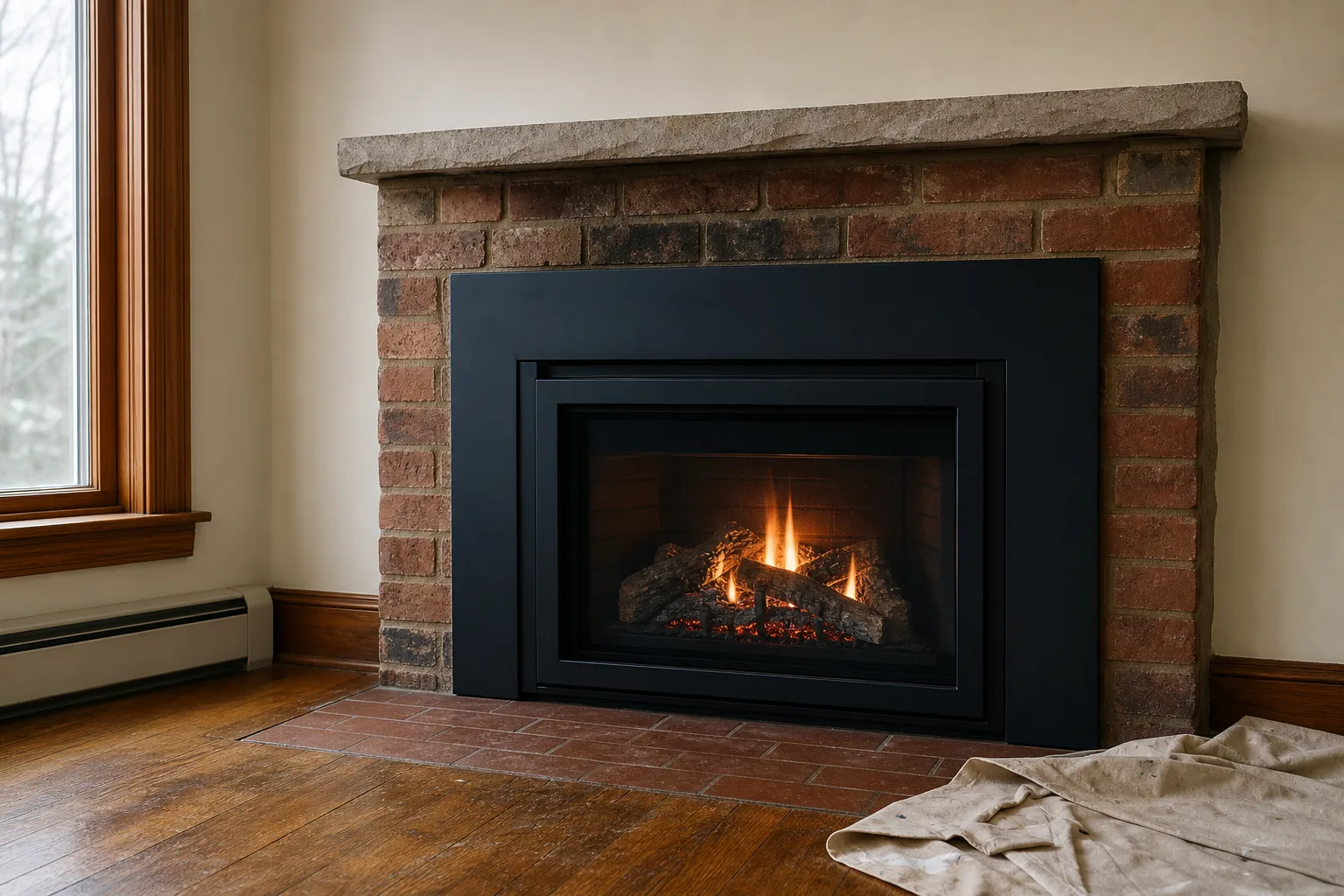
Why Fireplace Installation Cost Ranges Are So Wide
The spread is real. It is not sloppy reporting.
At the bottom of it sits an electric unit that arrives in a box and needs an outlet. At the top sits a mason building a stone chimney course by course, on a footing, with scaffolding against the house for a week. Calling both of those "installing a fireplace" is technically accurate and practically useless.
The national averages that get published land somewhere in between, and they disagree with each other, sometimes sharply.
Good to know: When cost guides disagree, it is usually because they are averaging different mixes of jobs, not because one of them is wrong. A site whose sample leans toward electric installs will publish a lower average than one weighted toward masonry work. Treat every published average as a starting point, not a verdict.
Three questions collapse fireplace installation cost from an unusable range into something you can plan against.
What kind of fireplace are you actually putting in. What venting already exists in your house. And how much finish work do you want around the opening when it is done.
The first question sets your band. The second decides where in the band you land. The third is the one people leave out, and it is the one most likely to move the final invoice past what they expected.
Fireplace Installation Cost by Type
Rather than repeat numbers that will be stale by the time you call anyone, here is how these five jobs actually stack up against each other.
| Type | Where it lands | Pushes it up | Pulls it down |
|---|---|---|---|
| Electric | Lowest of the group, often by a lot | Built-in or hardwired units, a new dedicated circuit, custom framing and surround | A freestanding unit plugged into an existing outlet |
| Gas insert | Lower middle | Relining an existing flue, an insulated liner, a tall chimney, poor masonry | A sound flue, a straightforward drop, a short run |
| Gas fireplace | Middle, with the widest spread of the group | Long venting runs, a new gas line, converting an existing wood firebox | A short direct vent run, gas already at the wall |
| Wood-burning insert | Middle, when a sound flue already exists | Chimney repair before the install, hearth extension work | An existing sound flue that needs only cleaning and inspection |
| Built masonry | Highest, by a wide margin | Stone, custom size, an exterior stack, difficult access | Interior placement, standard brick, single story |
Labor is a serious share of the total in every row, and it climbs steadily as the work moves from plugging something in toward building something.
Electric fireplaces
The cheapest way to get flame-shaped light into a room, and the only category where a homeowner might genuinely handle it alone.
Might. A freestanding unit that plugs into an existing outlet is a furniture purchase. A built-in linear unit set into framing, wired to its own circuit, finished with tile above, is a small renovation with an electrician on it.
Myth vs. fact: The myth is that electric means no professional work. The fact is that plenty of built-in and hardwired electric fireplaces draw enough current to need a dedicated circuit, which means a licensed electrician and possibly panel work. The unit is cheap. The install is not always.
Gas fireplaces and gas inserts
The category with the widest internal spread, and the one where the published ranges are least helpful.
An insert slides into a firebox you already have. A full gas fireplace can go almost anywhere, including a wall that has never had a fireplace, because direct vent units do not need a chimney at all.
That flexibility is why the range is so wide. The unit itself is a modest slice of the fireplace installation cost. The venting is where the money moves.
Wood-burning fireplaces and inserts
If you already have a masonry fireplace and a flue in decent shape, a wood-burning insert is one of the better-value projects on this list.
If you do not, wood gets expensive fast, because wood means a real chimney, and a real chimney means masonry or a fully framed chase.
Built masonry fireplaces
The top of the market, and the one where published ranges are least useful of all. A mason quoting a stone fireplace with an exterior stack is quoting a construction project. Footing, block, brick or stone laid course by course, flue tile, crown, flashing, and weeks of access to your house.
Honest guides stop pretending to bracket this one, because custom work has no ceiling.
The Chimney Is What Actually Drives Your Fireplace Installation Cost
Here is the part the cost guides tend to skip.
Every fireplace installation cost guide prices the appliance. The appliance is the predictable part. You can look it up, you can compare models, you can walk into a showroom and see the sticker.
The chimney is the variable. The same insert, bought on the same day, is a modest job in one house and a large one next door.
What Moves Fireplace Installation Cost the Most
Venting. Not the unit, not the mantel, not the brand.
As of 2026 the trade has shifted heavily toward direct vent: a sealed glass front, combustion air pulled in from outside, exhaust pushed out through the same coaxial pipe, one pipe inside the other. It is efficient and it is safe, and it also means the question is no longer "do you have a chimney" but "what path can this vent take through your house."
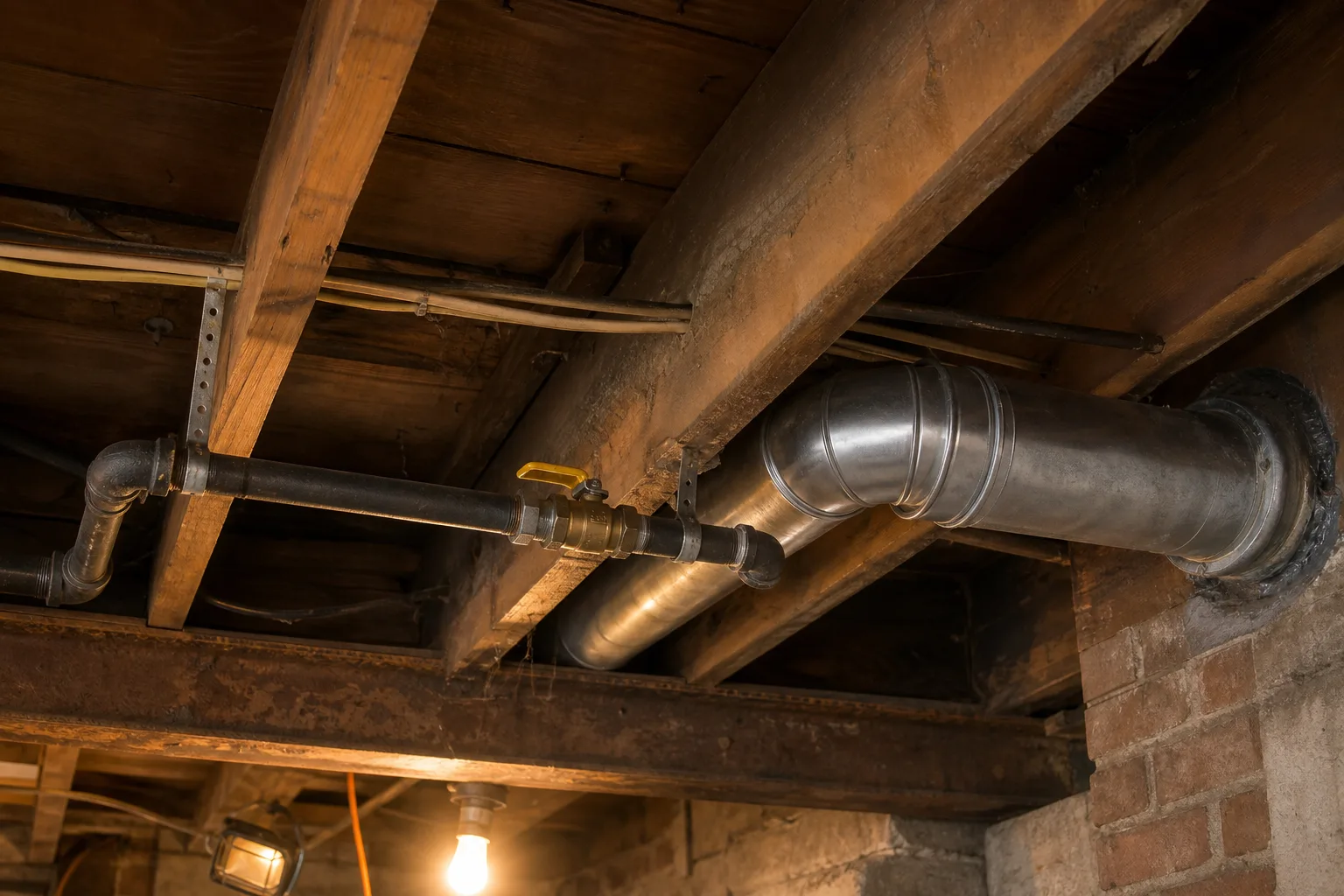
That path is what a company is pricing when they walk your basement and squint at your roofline.
When there is a sound masonry flue to line
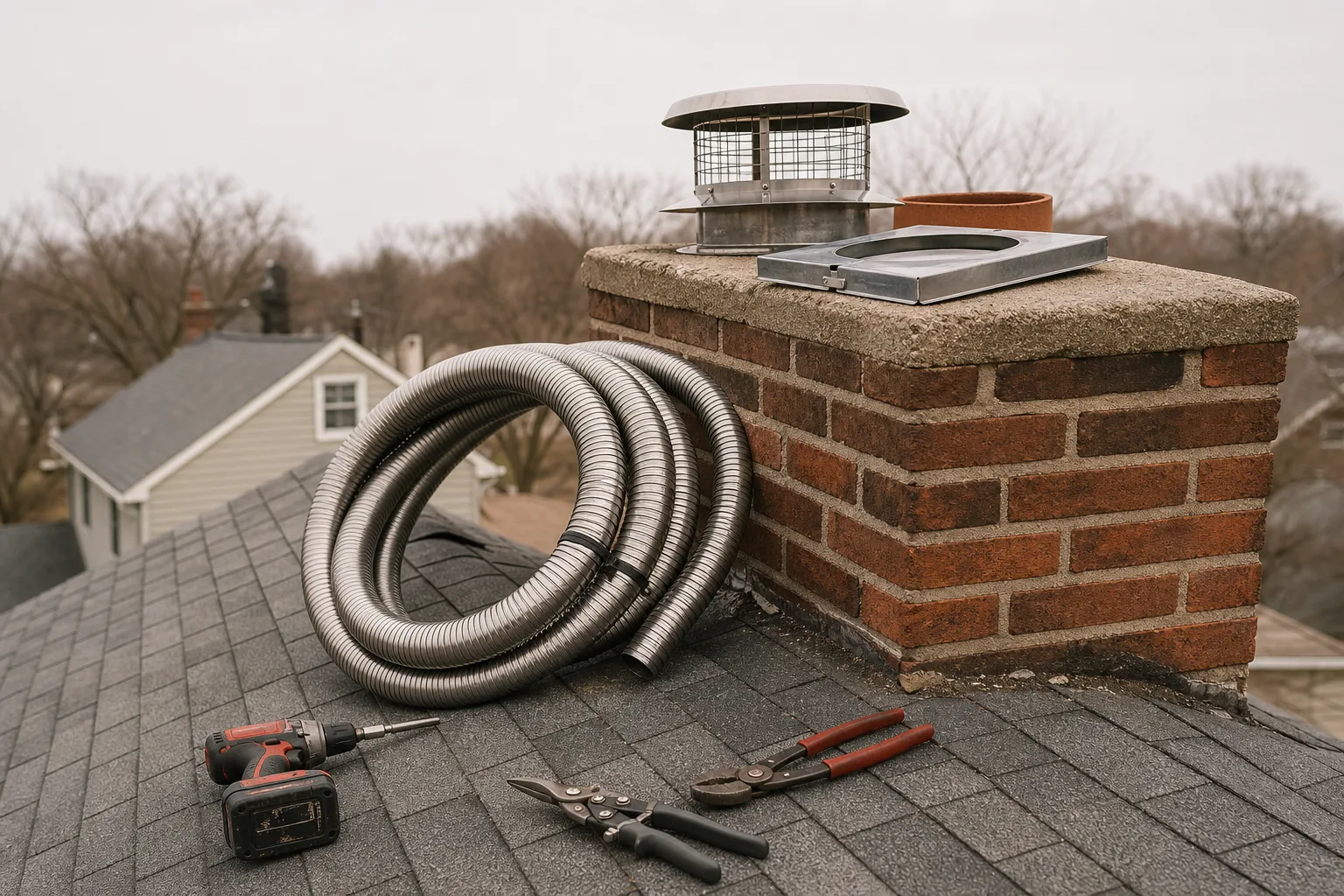
Best case. An installer drops a stainless steel chimney liner down from the roof, not up from the room, connects it to the appliance, seals a top plate at the crown, and you are close to the low end of your band.
Liner pricing is where the published sources genuinely disagree with each other, and the ranges they give barely overlap. Both are reporting honestly, because the number depends on flue height, diameter, whether the liner gets insulated, how bad the access is, and what the masonry looks like when someone actually points a camera up there.
Anyone who gives you a liner price over the phone is guessing.
From the field: The pattern worth knowing is the order people do this in. A homeowner falls for a unit at a showroom, commits to it emotionally, and only then finds out what it takes to vent it in their particular house. The conversation that follows is never a fun one. Looking at the chimney first is not caution, it is just the right sequence.
When there is a prefab chase, or no chimney at all
A factory-built, or prefab, fireplace vents through round metal pipe inside a framed chase, usually finished outside as a sided box with a metal chase cover and a rain cap. If that pipe is intact and the firebox is sound, you are in reasonable shape. If the refractory panels inside have cracked into a spiderweb, that firebox may be at the end of its life, and now you are pricing a replacement system rather than an insert.
No chimney at all is not a dead end. It is the case direct vent was built for. A short run out through a sidewall terminating at a metal cap on the siding is often simpler than relining a tall masonry flue in rough condition.
Which is the sentence that surprises people: sometimes having a chimney costs more than not having one.
Which of these numbers is yours?
A range on a web page cannot see your flue. A person standing in front of it can, and that is the only thing that turns a range into a number.
Tell us about the house and the fireplace and we will match you with a local company that installs this kind of work and will look at the venting before quoting you.
Call (513) 655-6702, or send the details through our request service form if you would rather not phone a stranger yet.
Installing Into an Existing Fireplace vs. Building One From Scratch
This is the fork the fireplace installation cost guides average away, and it is the biggest single split in the whole topic.
You already have a fireplace
There is a firebox in the living room, it has not been lit in years, and the goal is to make it work again or make it work better.
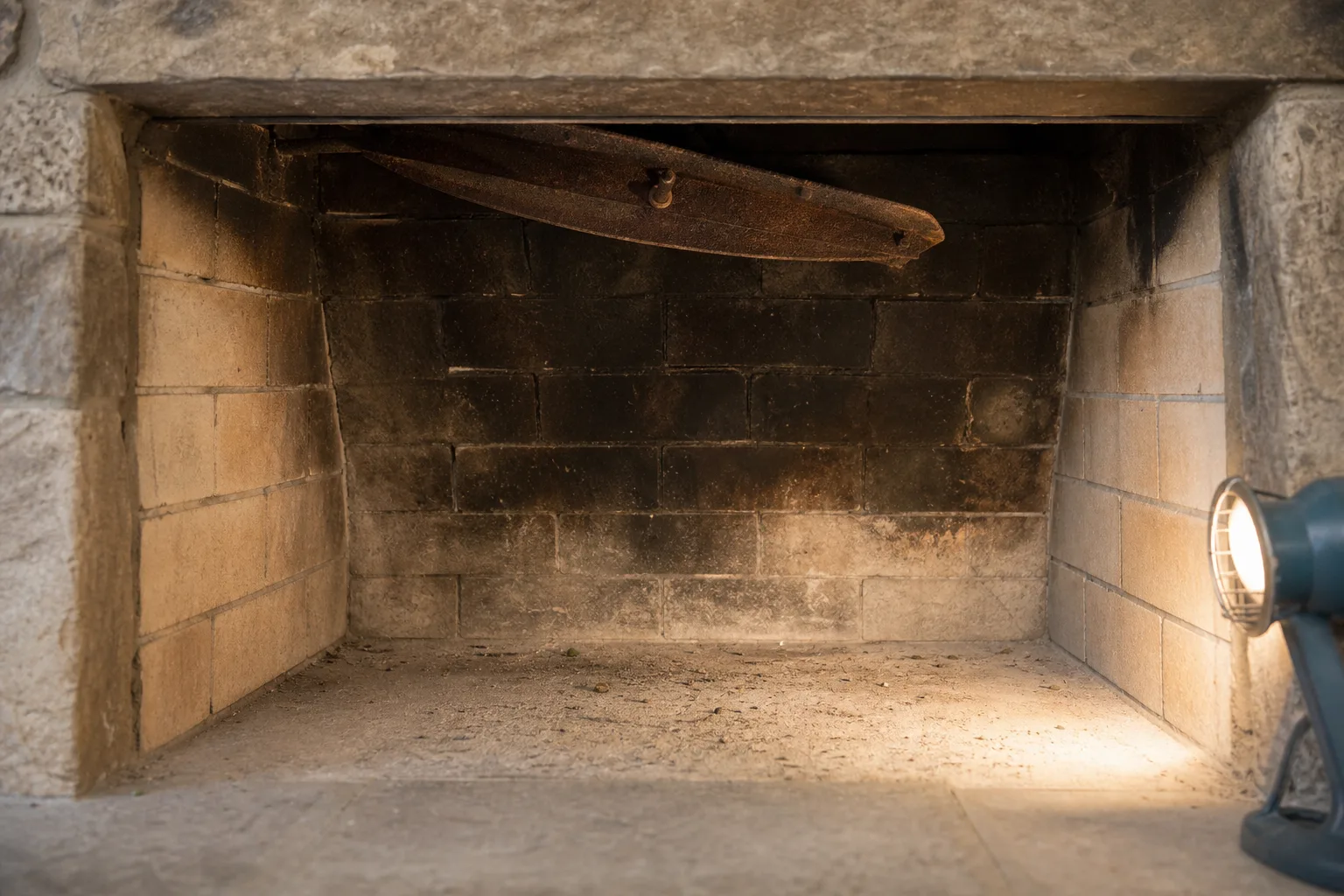
Take a homeowner with a 1920s brick stack, firebrick darkened at the back, a rusted damper that may need replacing, a clay tile poking out of a cracked crown. Their project is an insert plus a liner plus whatever the crown and flashing need. It sits in the middle of every row on the table above, and the masonry condition decides whether it sits low or high in that band.
The good news is that the expensive structure already exists. You are renovating, not building.
You are starting with a blank wall
Different math entirely. Now you are paying for the fireplace and for the path its exhaust takes out of the house, and possibly for framing, floor structure, and a gas line run across the basement.
Direct vent changes this picture more than anything else has in twenty years. A sealed unit venting out a sidewall does not need a stack at all, which is why a fireplace on an exterior wall in a house that never had one can come in well under a full masonry build.
If you want real wood fire on a blank wall, though, you are back to building a chimney, and that is the top of the range.
Safety note: NFPA 211, the standard for chimneys, fireplaces, vents and solid fuel-burning appliances, calls for a Level 2 inspection when changes to the system are anticipated. Installing a new insert or appliance is a change to the system. A Level 2 includes the accessible portions of the chimney plus a video scan of the flue interior, which is how hidden cracks and blockages get found before something is connected to them. NFPA 211 is a standard, not law by itself, so check what your jurisdiction has adopted. The video scan is worth doing either way.
What Should Be on the Estimate
Nobody writes this part, so here it is.
When somebody hands you a piece of paper, the difference between a fair fireplace installation cost and a bad surprise is usually how specific that paper is. A one-line quote that says "install fireplace" with a total next to it is not an estimate. It is a number with nothing behind it.
Look for these:
- The appliance, named. Manufacturer, model, fuel type, size. Not "gas insert."
- The venting method, named. Direct vent or natural vent, coaxial or co-linear, and the approximate run length.
- Liner material and diameter, and whether it is insulated.
- Gas line work, if any. New run, extension, or connection to existing.
- Electrical work, if any. Dedicated circuit, junction box, blower wiring.
- Demolition and disposal. Old damper, old firebox, old panels, and who hauls it away.
- Permit handling. Whether a permit is required for this scope, and who pulls it.
- Inspection. What level, before or after, and whether it is included.
- Finish and trim. Surround plate, hearth extension, mantel, patching and paint.
- Cleanup and protection of the room.
- Exclusions, written down. What the price does not cover is as informative as what it does.
Pro tip: Get the venting method written on the estimate in words, not just a line item called "venting." That single detail is the one most likely to change after work starts, and once it is on paper you and the company are looking at the same job.
Four questions worth saying out loud when someone is standing in your living room.
What did you see when you looked up the flue. What would push this price up once you open it up. Is the permit in this number or on top of it. And what part of this quote are you least sure about.
That last one is the best question in the list. An honest estimator will answer it directly, and how they answer tells you most of what you need to know.
The Costs Homeowners Forget to Budget
Two categories are worth pricing before you commit, because both are easy to leave out.
Permits and inspection
Permit requirements vary by jurisdiction and by scope, and they carry their own fee. Gas line work, venting changes and anything structural are the scopes most likely to need one. Your local building department is the only authority on your address.
Converting a wood-burning fireplace to gas usually means both a new gas line and work on the flue itself, so it carries permit cost plus inspection on top of the appliance and the venting.
One more thing on this. Ventless gas units come up constantly in cost comparisons because they are cheaper to install. Their legal status varies by state and municipality, and the safety debate around them is live and unsettled. This article is not going to resolve it for you. Ask your building department what is allowed where you live before you price one.
The finish work
The part that is easiest to leave out of the budget.
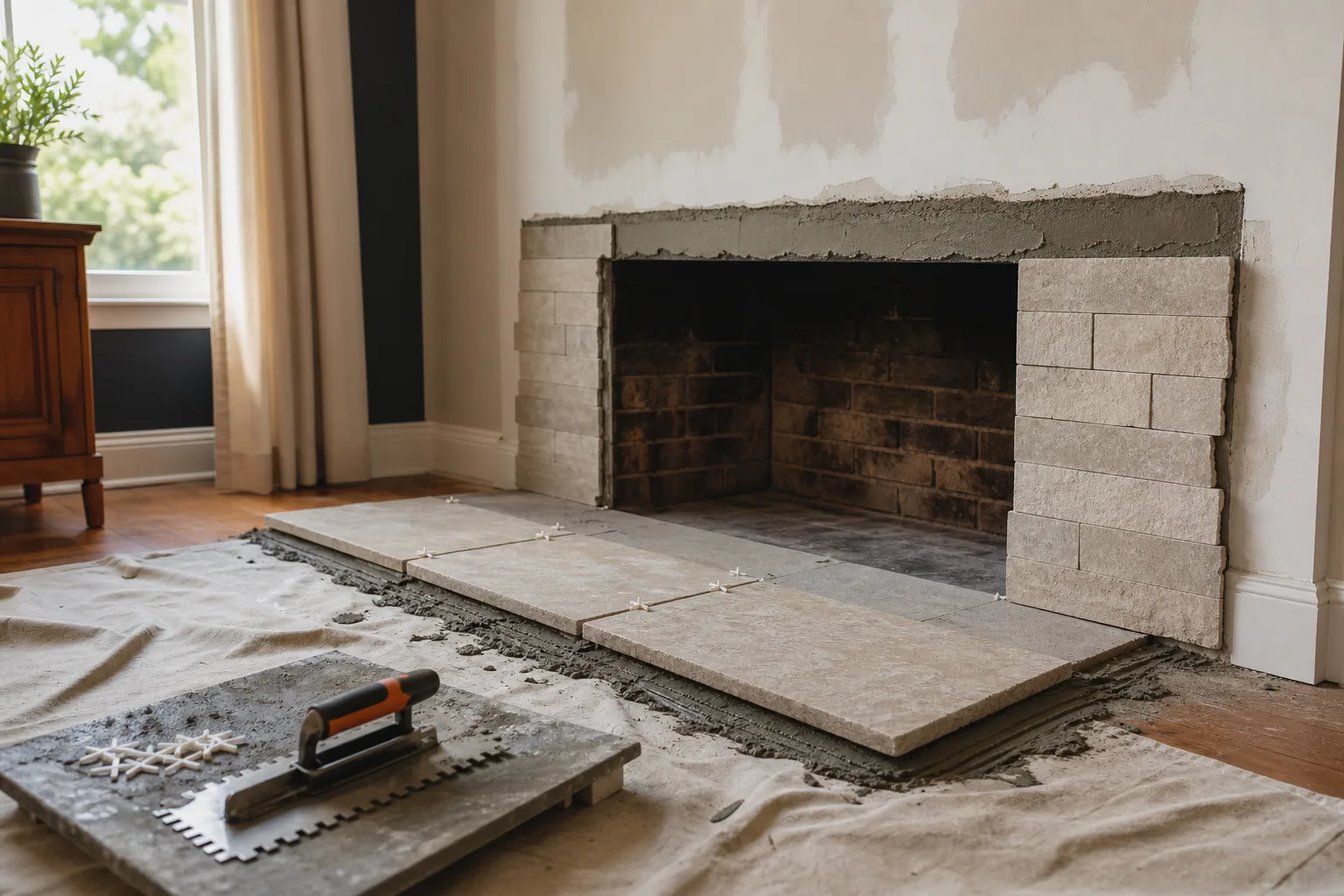
A new insert leaves a gap where the old opening was. That gets covered by a surround plate, or it gets tiled, or it gets a new hearth extension in stone. Then the wall above may need patching. Then the mantel does not sit right anymore.
Good to know: Finish work slips out of a fireplace installation cost budget because it is the part homeowners picture as already done. The unit and the venting are the trade's problem. The surround, the hearth and the paint are yours, and they are worth pricing before you commit.
How VIO Helps You Pin Down Your Fireplace Installation Cost
Plainly: VIO is a referral network. We do not install fireplaces. Independent local companies do the work, and our job is to put you in front of the right one.
For this exact situation, that means taking the details of your house and your fireplace, what is there now, what you want, whether there is an existing flue, and matching you with a local company that installs this kind of work and can assess the venting before quoting.
That last part matters more than the match itself. One reason fireplace installation cost estimates swing so widely between companies is that some of them have looked at the flue and some of them have not.
We ask every company in the network to put its estimate in writing before any work starts, and you should insist on exactly that. If a company will not itemize, that is information about the company.
We will not tell you what your job will cost. Nobody can, from here. What we can do is get someone in front of your firebox who can quote it after actually seeing it.
Call (513) 655-6702.
Start With the Chimney, Then Pick the Fireplace
You should now be able to place yourself somewhere in that range instead of staring at all of it.
Electric at the bottom, gas and wood inserts in the middle, built masonry at the top. Then venting decides where inside your band you land, and finish work decides whether you come in over it.
The order is what people get wrong. They pick the fireplace, fall in love, and then discover what it takes to vent it. Reversing that, chimney first and appliance second, is the cheapest decision available in this whole process.
Get your fireplace installation cost from someone who has looked at your chimney.
An assessment is a conversation about what your house can take, not a commitment to install anything. Find out what your flue is, what it can carry, and what the honest range is for your address before you shop for a unit.
Call (513) 655-6702 to be matched with an independent local company that does this work in your area.
Symptom checker
What is your chimney doing?
Tap the closest match for an honest first answer.