



On this pageWhat a Fireplace Remodel Cost Actually Covers7 sections+6
- What a Fireplace Remodel Cost Actually Covers
- The Line Between Cosmetic and Structural, and Why It Decides Your Budget
- Fireplace Remodel Cost by Material
- When the Remodel Touches the Appliance or the Flue
- The Repairs That Show Up After Demolition
- How to Budget a Fireplace Remodel Without Guessing
- How VIO Helps With Your Fireplace Remodel Cost
Quick answer
Fireplace remodel cost depends almost entirely on scope. Refacing with tile, stone veneer or paint is the least expensive option because it touches only the face. Adding an insert, converting from wood to gas, or rebuilding the firebox costs far more, because it involves the appliance, the venting and code compliance. The deciding question is whether the work stops at the surface or reaches the firebox and flue.
Look up fireplace remodel cost and you will find national cost sites reporting a typical project that sounds like a weekend of tile work, and remodeling contractors describing typical projects roughly ten times larger.
Neither one is lying to you.
They are describing two completely different projects that happen to share a name, and the gap between them is the reason you cannot get a straight answer about your own fireplace. A tile reface and a full masonry rebuild both get filed under "fireplace remodel," and every averaging engine on the internet blends them into a figure that fits nobody.
So let's do this properly. What actually sits inside each scope, what makes one scope cost many times another, and the part almost nobody covers: there is one decision that moves your budget more than tile, stone, mantel and labor put together.
I will name it, but not yet. It only makes sense after you see how the scopes break apart.
What a Fireplace Remodel Cost Actually Covers
Start here, because this is where the confusion comes from.
"Fireplace remodel" is not a project. It is a shopping cart, and published figures differ wildly because different sites fill that cart differently. Once you know which items are in yours, the fireplace remodel cost stops being a mystery and starts being arithmetic.
Here is the honest breakdown of the scopes people mean when they use the phrase.
| Project type | Relative cost | Who this is for |
|---|---|---|
| Reface only | Lowest | The fireplace works, you hate how it looks |
| Reface plus new mantel and hearth | Low to moderate | You want the whole wall to change proportions |
| Add or replace an insert | Moderate to high | You want it to actually heat the room |
| Wood-to-gas conversion | High | You are done hauling logs |
| Full rebuild of firebox or structure | Highest | The structure itself has problems |
The spread between the top and bottom rows is not a few percent. It is a different order of project, which is exactly why a single average is useless here.
One thing this page is not about: putting a fireplace where none exists today. That is a different project with its own fireplace installation cost math, and mixing the two is another reason the published averages look so strange.
Refacing only
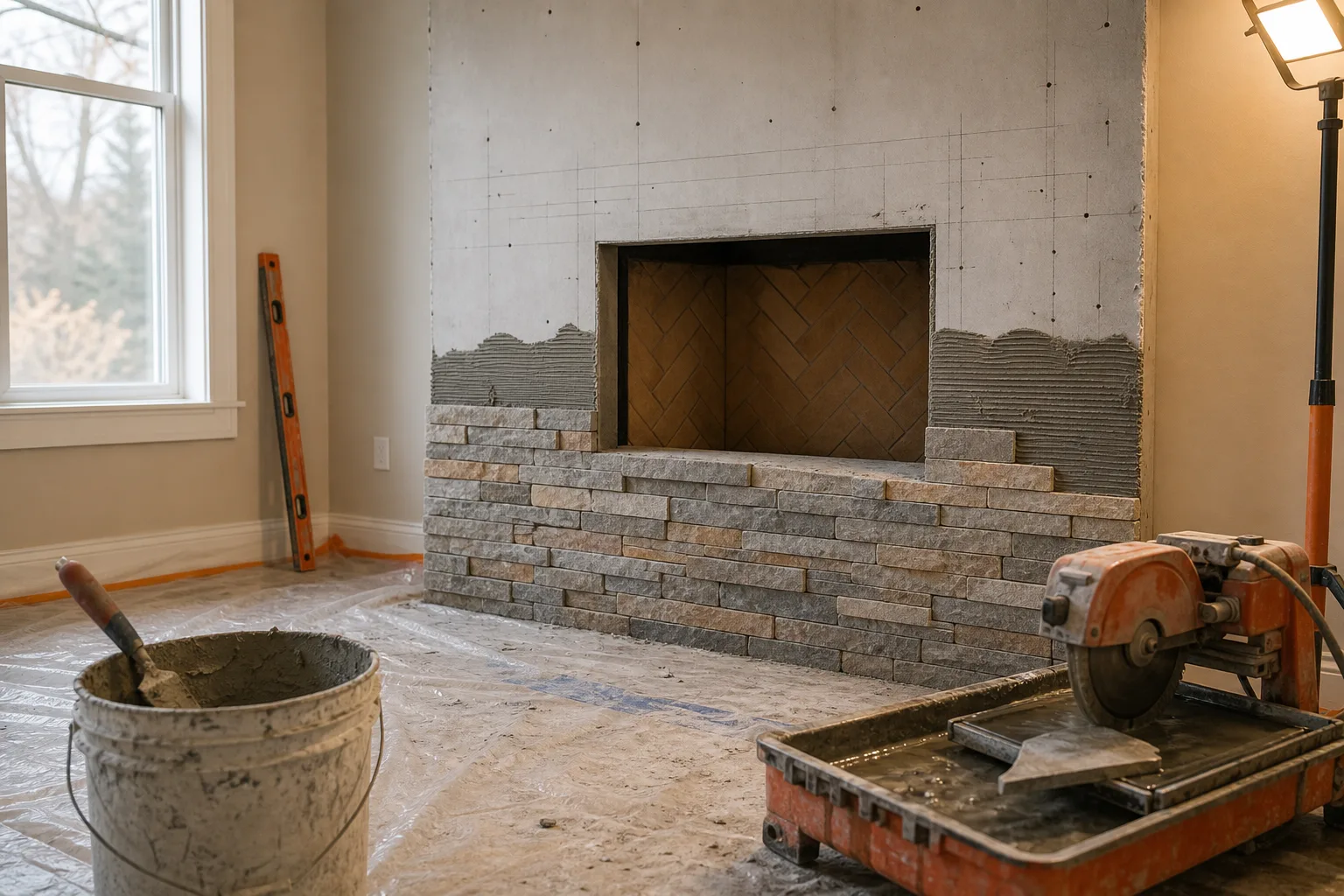
You are changing the face and nothing behind it. New tile, stone veneer, or paint over the existing brick surround. The firebox, damper and flue stay exactly as they are.
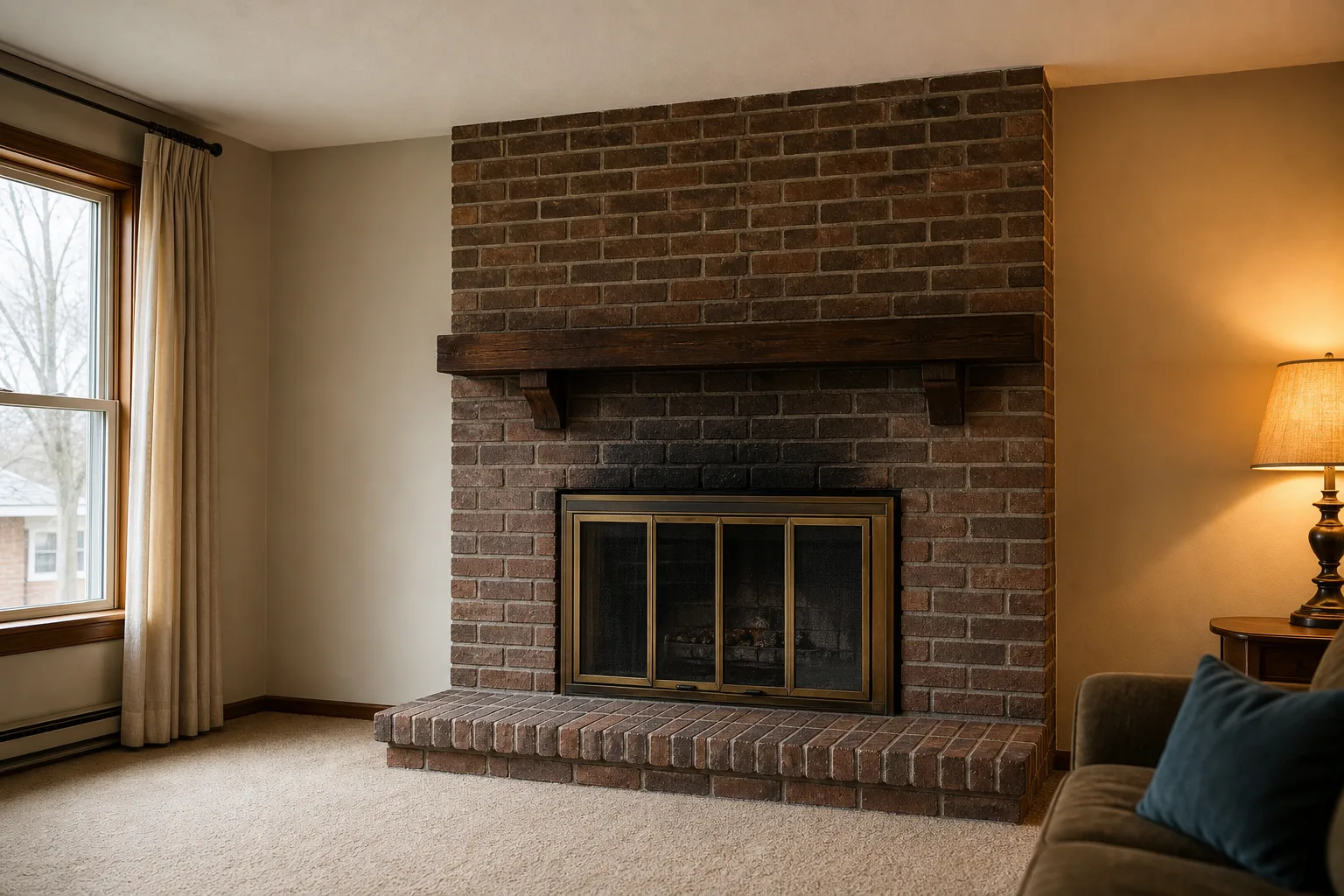
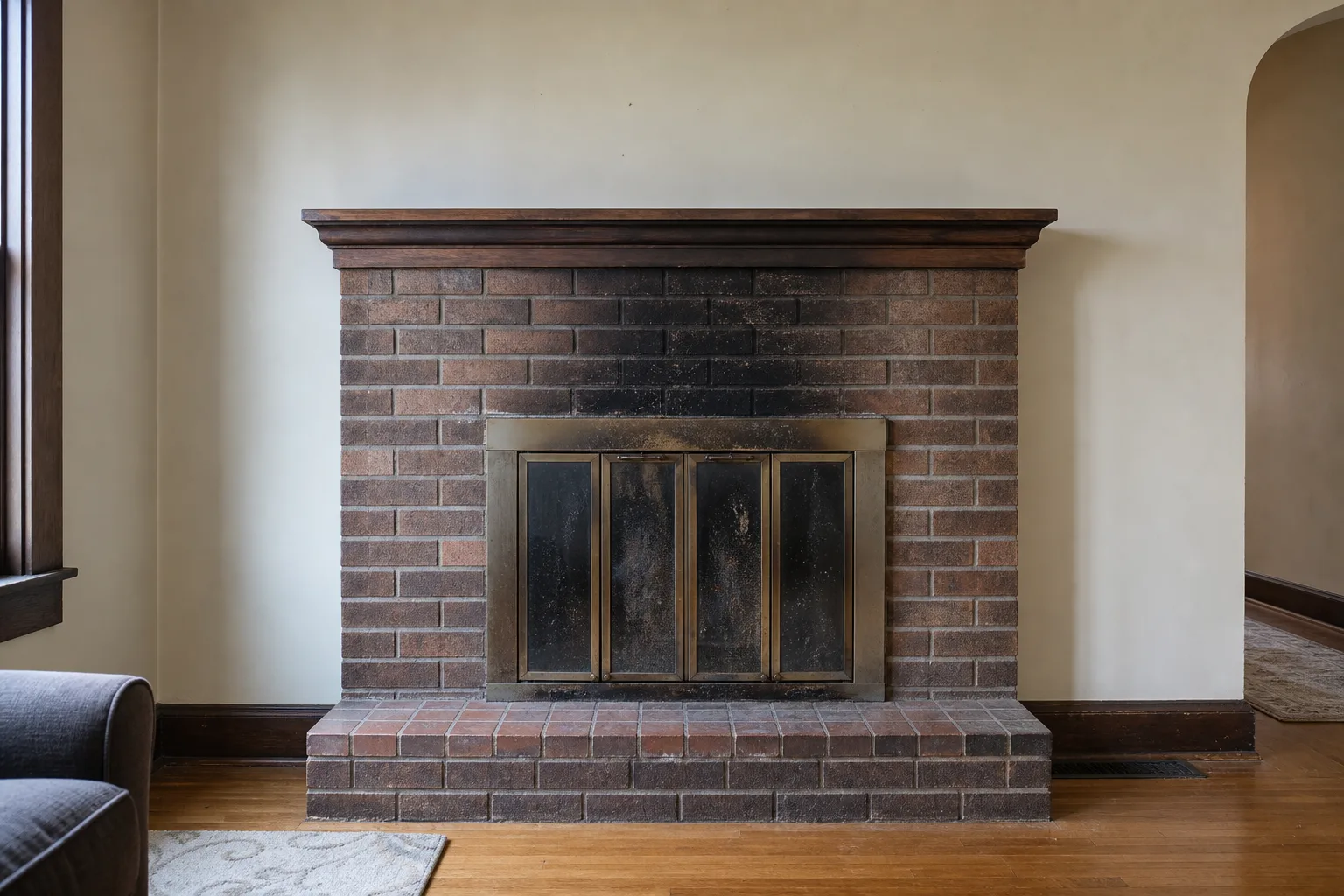
This is the least expensive real remodel, and for a lot of 1980s brick walls it is also the most transformative dollar you will ever spend on a room.
Refacing plus a new mantel and hearth
Now you are changing the wall's proportions, not just its color. Taking out a raised brick hearth and going flush with the floor is the single change that makes an old fireplace read as modern.
It is also not a purely decorative change. A hearth extension is a code element sized to the fireplace opening, so altering it has to be checked against the requirements rather than assumed.
And it means demolition, which means the wall gets opened, which means whatever is behind it is about to become your business.
Adding or replacing an insert
An insert is an appliance. You are no longer decorating, you are installing equipment inside a masonry opening and venting it.
Costs here vary by fuel and by unit. A gas insert, a wood insert and an electric unit are three different purchases with three different installation requirements, and lumping them together is how people end up shocked by a quote.
This is also the scope where the rules change. Hold that thought.
Full rebuild
The firebox, the smoke chamber, or the structure itself needs to be rebuilt rather than dressed up. Nobody chooses this. It gets chosen for you, usually by something a chimney pro finds.
Pro tip: Get someone to look inside the firebox and up the flue before you pick a material. Choosing stone first and inspecting second is how a modest project doubles after the tile is already ordered.
The table tells you how the scopes rank. It does not tell you which row is yours, and that is the only question you actually came here with.
The Line Between Cosmetic and Structural, and Why It Decides Your Budget
Here is the decision I promised.
Everything about your fireplace remodel cost hinges on one thing: whether the work stops at the face of the fireplace or reaches past it into the appliance and the venting.
That line is invisible from your couch. It is also worth more than any material choice you will make.
What counts as cosmetic
Tile, stone veneer, paint, limewash, a new mantel shelf, a new surround trim. Work that lands on the outside of the fireplace and touches nothing that carries fire or smoke, and nothing that code has sized for a reason.
Cosmetic work is a finish-carpentry and masonry-veneer job. It is priced by square footage and by labor hours, and it is reasonably predictable.
What counts as structural
The firebox. The refractory panels. The damper. The smoke chamber above the damper. The flue liner. The hearth extension, which is why the raised-hearth question above belongs on this side of the page rather than the decorating side. Anything that contains combustion, moves smoke out of the house, or is dimensioned by code.
Cross that line and you are no longer buying a look. You are buying compliance, and compliance is priced by what the code requires, not by what you had in mind.
What a reface does not fix
This is the part nobody on the first page of Google will tell you, so here it is.
A reface changes the wall around the fireplace. It does not touch anything inside it.
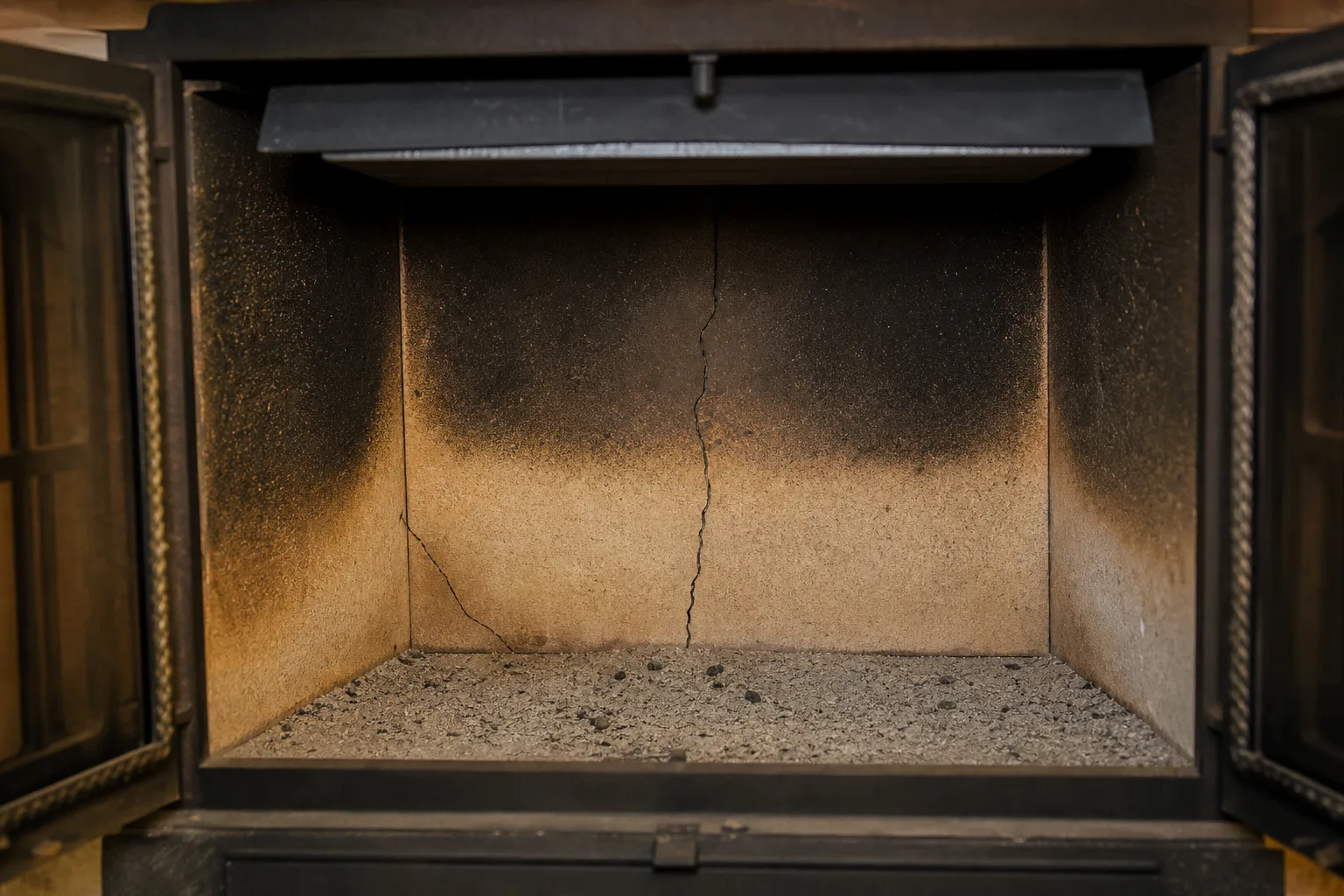
The refractory panels lining a prefabricated firebox are the flat tan castings on the back and side walls. A crack wider than a hairline is a failure point, and new stone on the surround leaves that crack exactly where it was.
Same for a smoke chamber losing its mortar, a seized damper, or a clay flue tile with a gap in it. None of them are reached by a decorating job.
The trap is not that the reface conceals the defect. It is that the finished result looks new, so nobody thinks to look further, and a fireplace that photographs beautifully gets treated as a fireplace that was dealt with.
There is a practical cost to that too. Once the surround is finished in stone, getting at the firebox or the damper later can mean cutting into work you just paid for.
From the field: The fireplaces that worry a chimney professional are rarely the ugly ones. They are the beautiful ones, refaced by a general remodeler who never opened the damper.
So the sequence matters more than the material. Look inside first. Choose the stone second. If you take one thing from this page, take that.
Not sure which side of the line your fireplace is on?
One look inside the firebox and up the flue tells you whether you are planning a weekend reface or a job that has to address the appliance and venting first. VIO matches you with an independent local chimney company that can tell you which one you have.
Call (513) 655-6702
Fireplace Remodel Cost by Material
Assume for a moment your fireplace checks out and you are doing pure cosmetic work. Now material choice is the whole conversation, and the spread is enormous.
Ranked from least to most expensive, installed:
- Tile is the budget pick, and a large-format porcelain can look far more expensive than it is
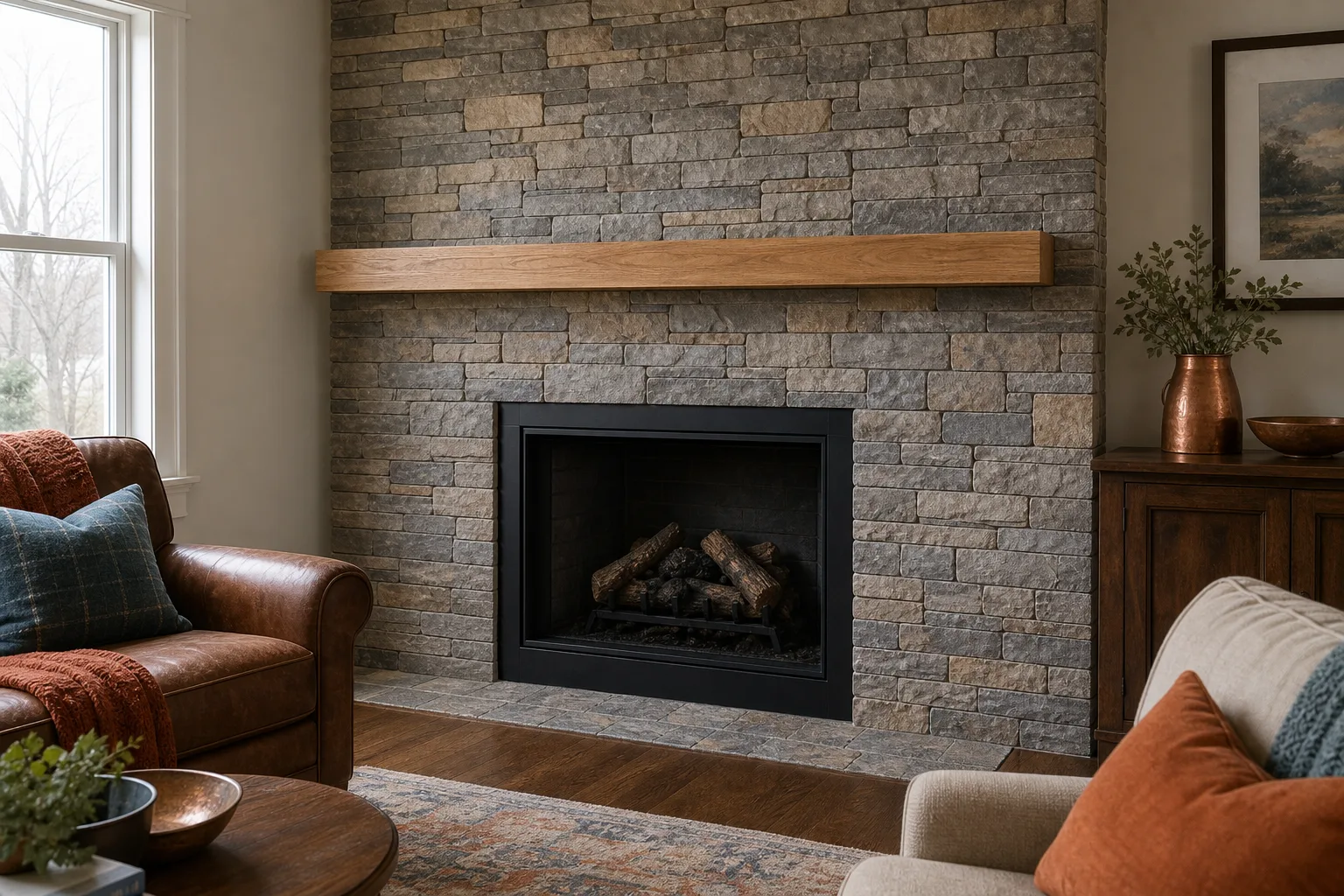
- Stacked stone veneer sits a step above tile and is the most common mid-range choice
- Brick refacing runs above veneer, because brick is slower to set
- Natural stone slab is several times the veneer number
- Hand-stacked exotic stone is the top of the market, and the labor time is as significant as the material
Mantel replacement on its own swings just as widely, depending entirely on whether you want a shelf or a statement.
Then multiply by area. A chest-height surround is a modest piece of wall. A floor-to-ceiling stone wall in a room with nine-foot ceilings can be three times that, and every one of those square feet is priced. This is a large part of why "average fireplace remodel cost" is such a useless phrase.
Myth vs. fact: Myth: a fireplace remodel returns a reliable percentage at resale. Fact: there is no credible, current, fireplace-specific return figure worth budgeting against. Anyone quoting you a precise resale return is selling, not measuring. Remodel because you want the room, not because a number promised you something.
The cheapest fireplace remodel cost that still looks intentional
If your budget is genuinely tight, the lowest fireplace remodel cost that produces a real change is not tile. It is a pair of moves that cost a fraction of a stone veneer job.
Paint or limewash the existing brick. Brown brick going white or soft gray is the largest visual change per dollar available in this entire category.
Swap the dulled brass bifold doors for a simple black surround. Brass trim is the detail that dates a living room fastest.
You can ask about the raised hearth too, but treat that one as a question for a professional rather than a weekend decision, for the code reason above.
Two changes and a question, and the wall stops announcing the year the house was built.
Where the money goes on a stone reface
Not where people expect. The stone is often the smaller half of the invoice.
Labor is the other half. Contractors bill by the hour or as a share of the project total, and hand-set stone is slow work. Slow is expensive.
Then there is prep: demolition of the old surround, framing or backer board, a mortar bed, and wet-saw cutting for every edge and corner. Corners and returns eat hours.
Which is why two quotes for "the same" stone reface can differ enormously. They are usually not the same job.
When the Remodel Touches the Appliance or the Flue
Cross the line into structural and your fireplace remodel cost reorganizes itself around code rather than taste.
New line items appear that have nothing to do with how the fireplace looks:
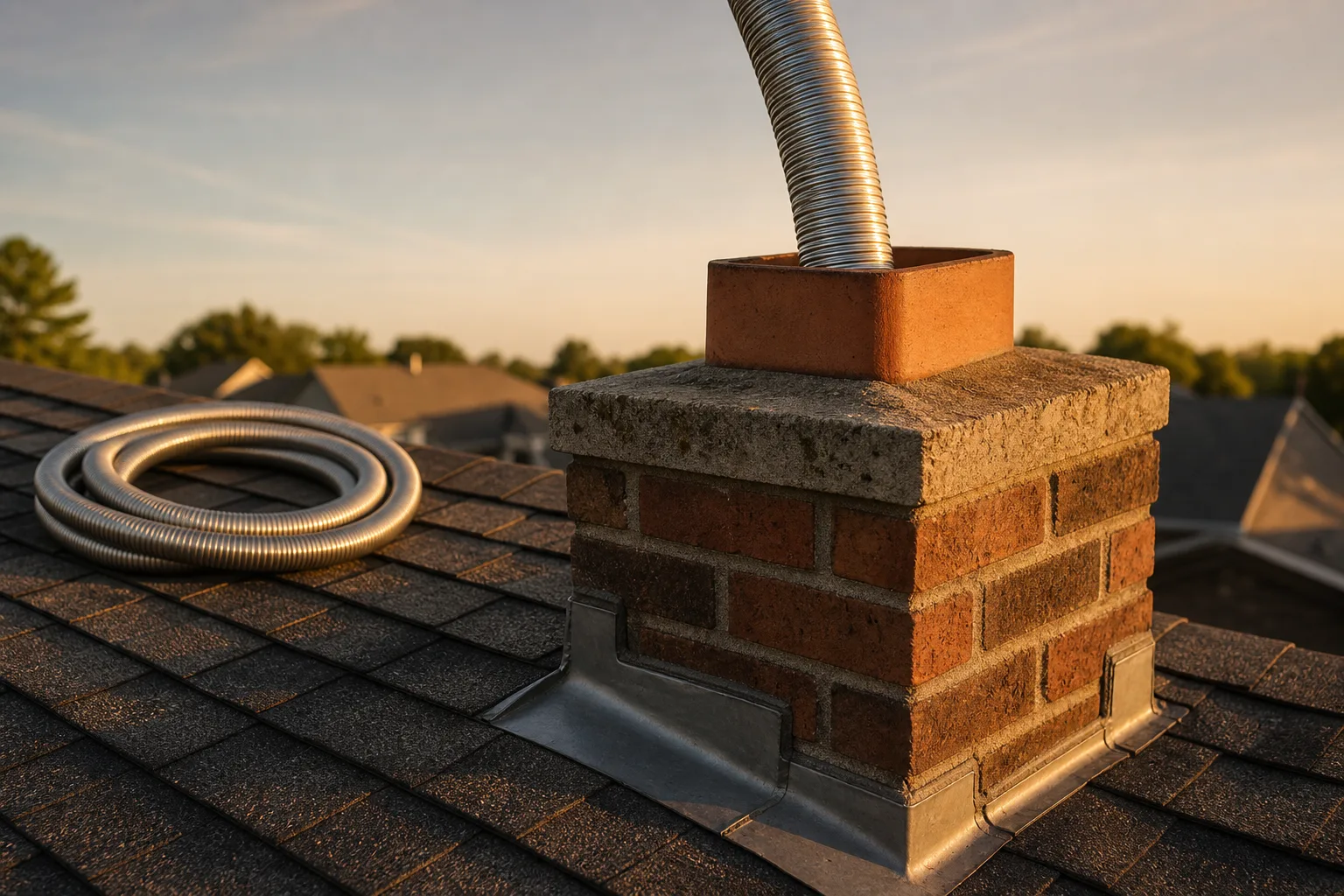
- A stainless steel liner sized and rated for the appliance
- A gas line run to the fireplace, priced by distance from the supply
- A flue inspection and cleaning before any of the work begins
- Permits for the gas and venting work
Any one of those can be a significant share of the project, and none of them appear on a decorating estimate.
Why most gas inserts need a liner
A masonry chimney was built to vent an open wood fire. That means a big flue, sized for a big volume of hot gas.
Put a sealed gas appliance into that same chimney and you have a small volume of cooler exhaust rattling around an oversized cavity. It cools, it slows, and moisture condenses on the flue walls.
So most listed gas inserts call for a properly sized stainless liner running from the appliance to the top of the chimney. Not every single one, in every situation, but most. The appliance's listed instructions and the flue's actual condition decide it, which is another reason someone has to look before anyone quotes.
If you are weighing a sealed direct-vent unit instead of an insert, the answer to whether gas fireplaces need a chimney changes the venting picture, and the budget with it.
The NFPA 211 requirement nobody quotes
Read every cost page ranking for this topic and you will find inserts described, liners occasionally mentioned, and this omitted entirely.
NFPA 211 is the standard covering chimneys, fireplaces, vents and solid fuel-burning appliances, and it defines three inspection levels. A Level 2 inspection is required at sale or transfer of the property, upon any change to the system, after a malfunction, after a chimney fire, and after an external event such as severe weather.
Installing an insert is a change to the system. Converting from wood to gas is a change to the system. Changing the flue's size, shape or material is a change to the system.
Which means the remodel you are pricing very likely triggers a Level 2, and a Level 2 includes video scanning of the flue interior along with examination of accessible areas like attics, crawl spaces and basements.
Safety note: If your fireplace remodel installs an insert, changes fuel, or alters the flue, NFPA 211 calls for a Level 2 inspection. It is not an upsell. It is the standard the trade is held to, and a quote that leaves it out is quoting an incomplete job.
Permits and inspections
Gas and venting work is permitted, inspected work in most municipalities. Fees vary widely by jurisdiction, which is one more reason a national average tells you so little.
Whether purely cosmetic refacing needs a permit depends on your local rules and on what the work touches. Ask your contractor to tell you which permits your specific scope requires, and be suspicious of anyone who waves the question off.
Good to know: Manufacturer warranties on inserts and liners generally expect professional installation to listed instructions. A cash-deal install that skips the permit can also quietly void the warranty on the most expensive component in the project.
The Repairs That Show Up After Demolition
This is the part you are actually afraid of, and you are right to be. The surprise line item is real, and it almost always appears in the first hour after the old surround comes off.
Deterioration inside the firebox often has a twin outside on the stack, where brick chimney repair is its own separate line item that a fireplace quote will not include.
Here is what commonly turns up once the wall is open:
- Refractory panels cracked or spalled, replaced individually or as a set
- Firebox mortar joints crumbled or missing, repointed or rebuilt
- A damper seized, warped or rusted through
- A smoke chamber that has lost its parging
- A flue liner with a cracked or displaced tile
None of these are catastrophic on their own. What wrecks a fireplace remodel cost estimate is discovering two or three of them after you have already committed to a stone package.
Which is entirely avoidable, because all of them are visible to an inspection done beforehand.
Have these looked at before you sign anything:
- Refractory panels, checked for cracks wider than a hairline
- Firebox mortar joints, checked for gaps and crumbling
- Damper, opened and closed by hand
- Smoke chamber, checked for missing parging or loose mortar
- Flue liner, video scanned end to end
- Hearth extension, measured against the required dimensions
- Clearances to combustibles, especially where a new mantel will sit
- Whether your planned scope triggers an NFPA 211 Level 2 inspection
Take that list to whoever comes out. If they can answer all eight, you are dealing with a chimney professional. If they can only answer the last three, you are dealing with a remodeler who is about to work on a vented appliance.
Consider a generic case: a homeowner with a 1970s prefabricated firebox budgets for stacked stone. Demolition reveals two cracked panels and a damper that has not moved in years. Handled up front, that is a known line item and a scheduling decision. Discovered mid-job, it is a stalled project with an open wall in the living room.
How to Budget a Fireplace Remodel Without Guessing
Three habits separate people who land near their number from people who do not.
First, inspect before you shop. I have said it twice because it is the whole article. An inspection has its own price, and on a modest reface it is not a trivial one, but it converts your fireplace remodel cost from a guess into a scope you can defend.
Second, make your quotes comparable. Two bids for "a fireplace remodel" are frequently pricing different jobs. One includes demolition and hauling, the other does not. One includes the liner, the other assumes the existing flue is fine.
Pro tip: Write your scope down first, on one page, and hand the same page to every company you call. Same square footage, same material, same demolition, same disposal, same permit responsibility. Then the bids are actually a comparison instead of a coin flip.
Third, hold back a contingency. Set aside a cushion on a cosmetic job, and a larger one if the fireplace has never been inspected. This is not pessimism, it is how anyone who has opened a wall thinks.
On timing: if you want the fireplace working for the heating season, the work is far easier to schedule and finish before first fire than during it. Anything touching the firebox, flue or appliance needs the fireplace out of service for a stretch, and that stretch is a lot more pleasant in September than in January.
While it is out of service anyway, it is a sensible moment to run through the fireplace safety tips you will need once the new one is lit.
How VIO Helps With Your Fireplace Remodel Cost
VIO is a referral service. We do not do the work ourselves, and we are not going to pretend otherwise.
What we do is match you with an independent local company, in your area, that handles the specific scope you are describing. This is routine chimney service territory, not general remodeling, and the difference shows up in what gets checked.
For this exact situation, that matters more than usual. Your fireplace remodel cost depends on the condition of a firebox and a flue that neither you nor any website can see. The company we match you with can look at both, tell you which side of the cosmetic-structural line you are standing on, and price the actual job instead of the imagined one.
We ask every company in the network to put its estimate in writing before any work starts, and you should insist on exactly that. A written scope is how you keep two bids honest and how you keep a project from growing sideways once the wall is open.
Ask the company we match you with the eight questions from the checklist above. That is what they are for.
You can also request service with your scope and location, and we will take it from there.
Get your fireplace remodel cost priced by someone who has seen inside it
Tell us what you want changed and where you are. We match you with an independent local chimney and fireplace company, and we ask every company in the network to put its estimate in writing before any work starts. You should insist on exactly that.
Call (513) 655-6702
Symptom checker
What is your chimney doing?
Tap the closest match for an honest first answer.