



On this pageWhat You Actually See on a Fireplace Showcase Floor8 sections+7
- What You Actually See on a Fireplace Showcase Floor
- The One Question a Fireplace Showcase Floor Cannot Answer
- Measure and Photograph This Before You Go
- Gas, Wood, Pellet or Electric: How Your Chimney Narrows the Choice
- Questions to Ask at the Fireplace Showcase
- What Happens After You Pick a Unit
- How VIO Helps With Your Fireplace Showcase Visit
- Go Look at the Fire
Quick answer
A fireplace showcase is a hearth dealer's showroom floor, where gas, wood and pellet units burn live inside styled display walls so you can judge size, finish and flame quality in person. It is the best way to compare units. What it cannot tell you is whether your own chimney can vent the one you pick, because there is no chimney behind a display wall. Have your flue inspected first.
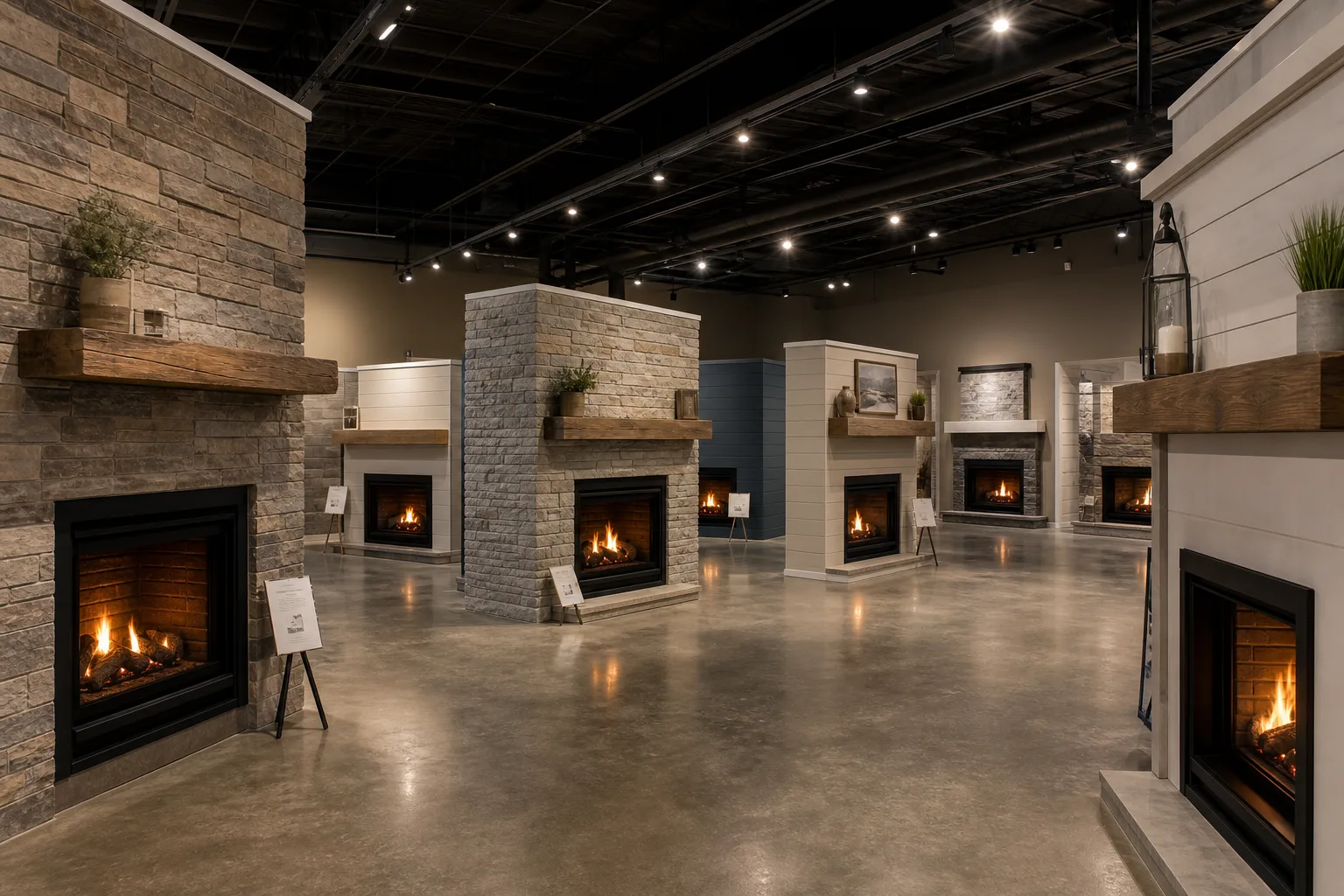
Walk into a fireplace showcase on a Saturday in October and the first thing that reaches you is the heat. Not from one unit, from six or eight of them burning at once across a polished concrete floor, each one set into its own little wall of stacked stone or tile or painted shiplap, each one with a mantel and a spec card on a small easel beside it.
It is a good room. Genuinely. You can finally see how big a thirty-six inch firebox reads on a wall, watch a real flame instead of a product photo, stand close enough to feel what the blower actually pushes into a room.
But there is one question a fireplace showcase cannot answer, and it is the question that decides which of those burning units you are actually allowed to put in your house. It is not about style or budget or brand. It is about the hole in your roof.
I will get to it in the second section, and once you see it you will not be able to unsee it on any showroom floor again. Before that, here is what is actually in front of you when you walk in, and what it is worth.
What You Actually See on a Fireplace Showcase Floor
Almost every fireplace showcase is laid out the same way, which is helpful once you know how to read it.
The live-burn wall
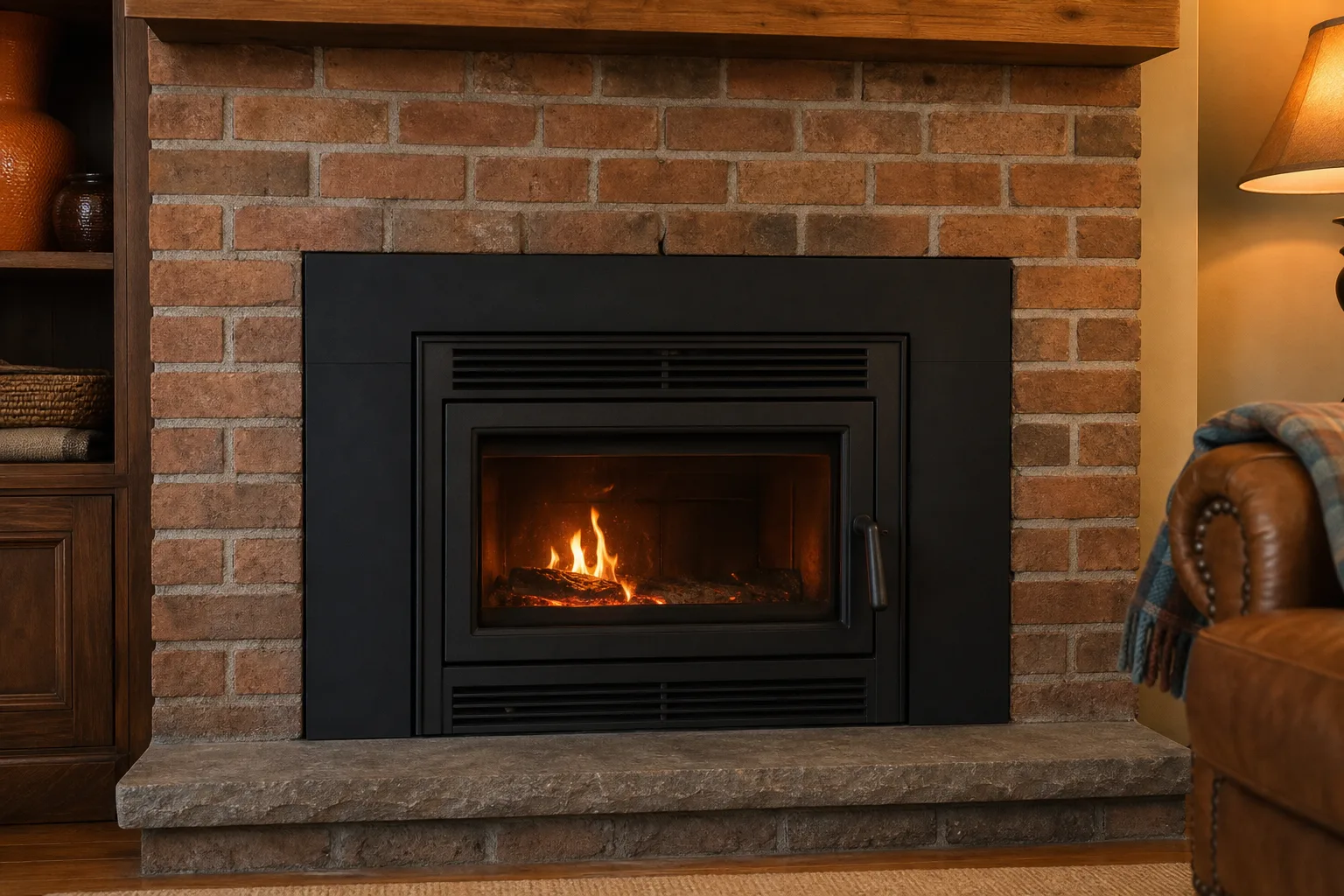
The centerpiece is a row of working units running hot. Gas inserts with their glass fronts and steady flame, wood inserts with real fire behind ceramic glass, sometimes a pellet unit ticking quietly through its auger cycle.
This is the part that earns the trip. A flame picture is a genuinely subjective thing, and no photograph settles it. Some gas units read convincingly like wood, others read like a very nice gas appliance, and only your own eyes can tell you which you can live with for fifteen years.
Stand in front of a burning unit for a full two minutes. That is longer than it sounds, and it is long enough for the novelty to wear off and your actual opinion to show up.
Freestanding stoves, inserts and built-ins
Off to the side you will find freestanding stoves on raised hearth pads, black or enameled in cream or deep red, with brass or nickel door hardware.
Then the inserts, which are heavy steel or cast iron boxes designed to slide into an existing masonry fireplace. And the built-ins, which are new fireboxes framed into new walls, for a room that has no fireplace at all today.
Those three categories point at three completely different jobs in your house. Knowing which one you are shopping for before you arrive saves you an hour.
Mantels, surrounds and the styled vignette
The finish displays are the seductive part and the most useful part at the same time. Tile fields, stacked stone, poured concrete, reclaimed timber mantels, flat black steel surrounds.
Seeing a surround material at full scale under real light is worth more than any sample chip. A stone that looked warm on a phone screen can read gray and cold across eight feet of wall.
Good to know: hearth shopping is seasonal, and showroom traffic climbs as the weather turns cold. Going early in the season generally means a calmer floor and more of a salesperson's attention than going the week after the first hard freeze.
The One Question a Fireplace Showcase Floor Cannot Answer
Here is the thing almost nobody notices, and it is not a scandal, it is just how these rooms get built.
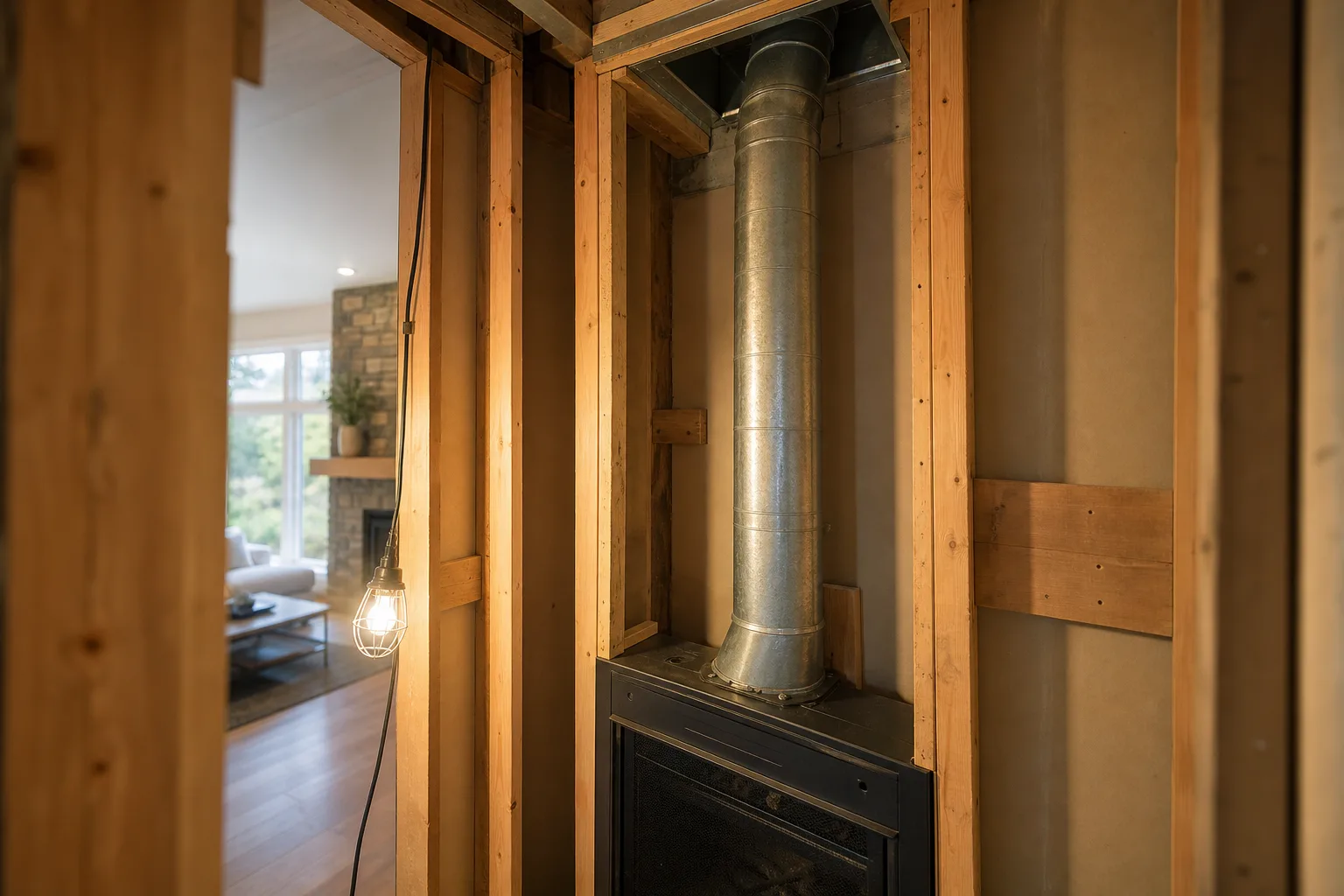
Look behind one of those display walls. There is no chimney back there.
Each partition is a stub wall framed and finished to look like a fireplace wall, and behind it runs sheet metal vent pipe into the wall cavity or straight up into the ceiling plenum. Every unit on that floor was installed under perfect conditions, into venting sized and routed exactly the way its manufacturer drew it.
Your house is not that. Your house has a specific flue, of a specific diameter, in a specific condition, built in a specific decade for a specific purpose. That flue is the actual gatekeeper of this purchase, and it is sitting a few miles away while you stand on the showroom floor falling for a unit.
What a fireplace showcase is genuinely good at
Scale and proportion. Finish and color at full size. Flame quality. The sound a blower makes at high, which is a real consideration in a quiet living room. How heavy a door feels, how a handle operates, whether the glass gasket looks like something you want to maintain.
All of that is real information you cannot get any other way, and it is why the trip is worth making.
What it structurally cannot tell you
Whether your flue is the right diameter for the unit you like. Whether the clay tile liner inside it is cracked. Whether there is a liner at all. Whether the masonry above your roofline is sound enough to carry a new stainless liner. Whether your prefab chase will even accept an insert.
Nobody on that floor is withholding this from you. A fireplace showcase simply does not have the information, because nobody has looked up your chimney yet.
Myth vs. fact: the myth is that if a unit is sitting on the showroom floor, it will fit your fireplace. The fact is that fit is two separate problems: the box has to fit the firebox opening, and the exhaust has to fit the flue. Plenty of units clear the first and fail the second.
Know what your chimney can take, before you shop
A Level 2 inspection puts a camera in your flue and documents its size and condition. That is the information any appliance-specific vent sizing decision starts from, and it is worth having before you shop. VIO matches you with an independent chimney company near you.
Call (513) 655-6702 or request service.
Measure and Photograph This Before You Go
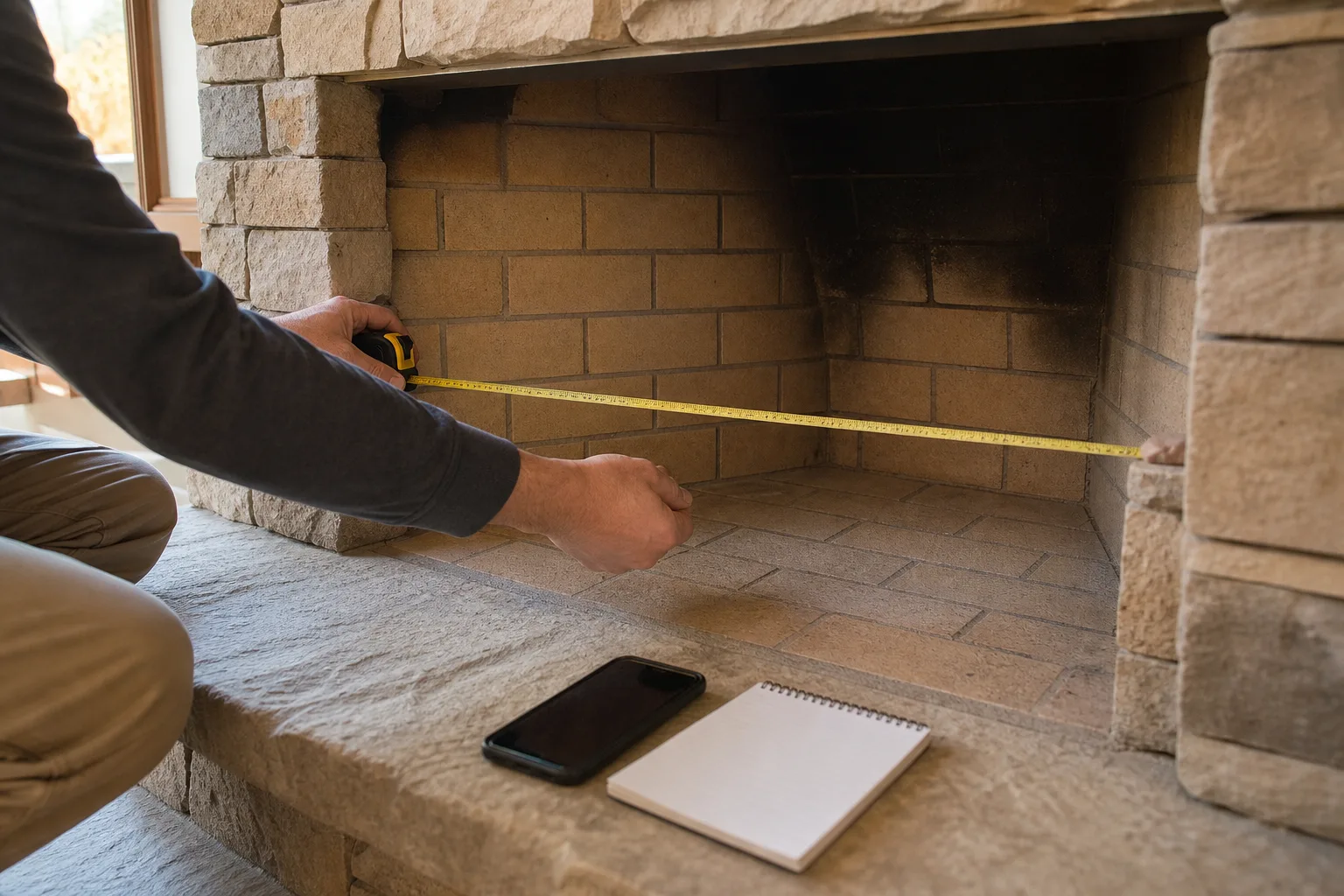
This is a ten minute job at your own fireplace, and it changes the entire quality of the conversation you are about to have.
Shoppers who arrive at a fireplace showcase with numbers and photographs get specific answers. Shoppers who arrive with a mood board get shown the display floor.
The four measurements
Masonry fireboxes taper. The back wall is narrower than the opening, sometimes by several inches, and that taper is where insert purchases go wrong.
So measure twice, front and back, and write down both.
- Width at the front opening, and width at the back wall
- Height at the front opening, and height at the back
- Depth, from the front edge of the firebox to the first obstruction
- The smallest number in each pair is the one that matters
Take those four numbers with you. When a salesperson pulls up a specific model, ask to see that model's dimension drawing and compare it against your smallest numbers, not against a category.
The five photographs
Your phone is the best tool you own for this.
- The fireplace opening, straight on, with a tape measure extended across it for scale
- The inside of the firebox, including the back wall and the side walls
- The damper at the throat, looking up, with the flashlight on
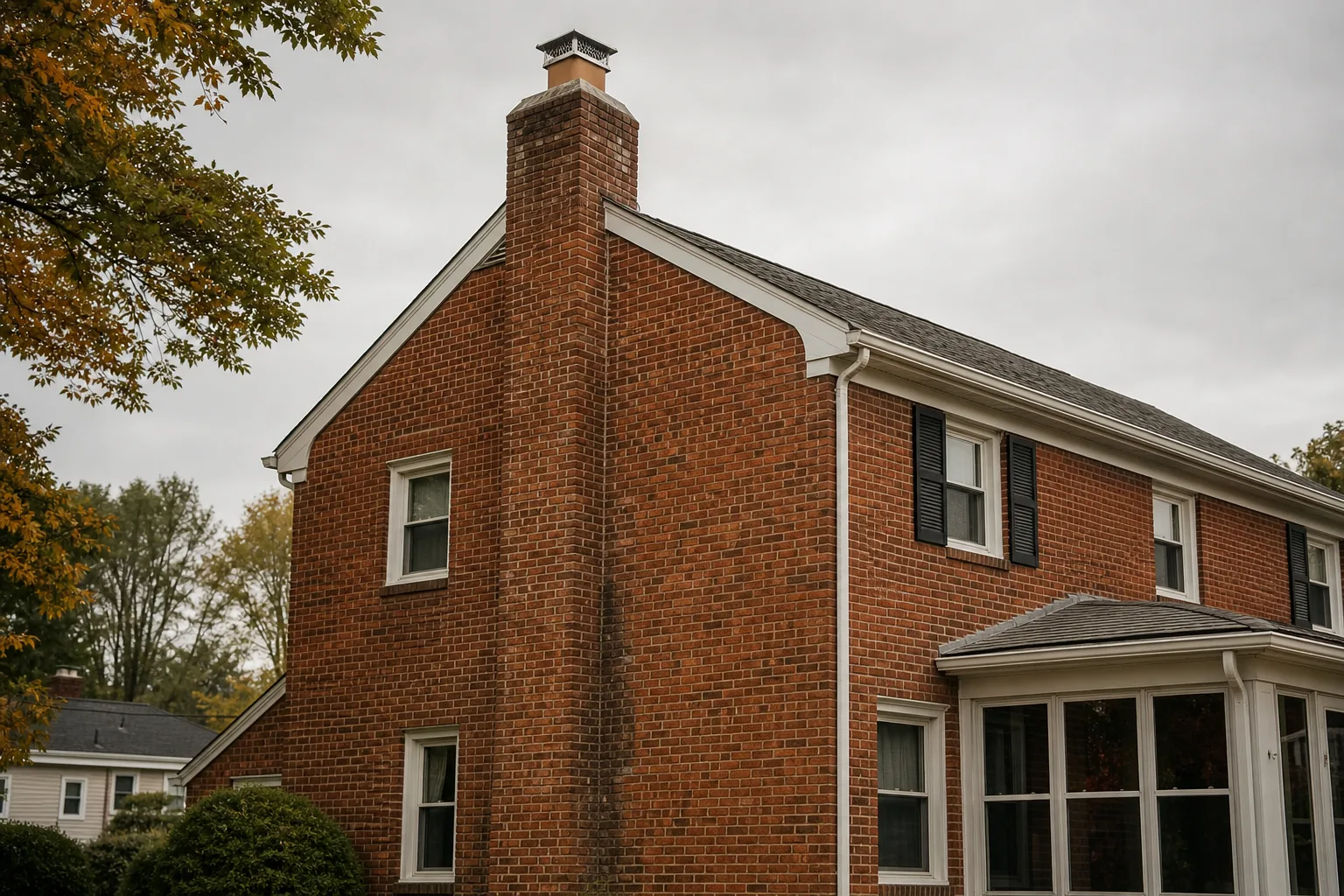
- The chimney from outside, the whole run from roofline to top
- The cap and crown from the ground, zoomed in as far as your phone allows
That last pair matters more than people expect. A cracked crown or a missing cap is a different conversation than a sound stack, and it is the kind of thing a hearth salesperson will genuinely want to know before recommending anything.
The two numbers worth hunting for
Flue size, if you can find it. Sometimes it is stamped on paperwork from a previous inspection, sometimes a previous owner left a folder.
And whether there is a liner in there at all. An unlined masonry chimney and a lined one lead to two different shopping trips.
Pro tip: measure the back of the firebox, not just the opening. It is the single most common measurement people skip and the single most common reason a unit that looked perfect in the showroom will not go in.
Gas, Wood, Pellet or Electric: How Your Chimney Narrows the Choice
Fuel type is usually framed as a lifestyle decision. Do you want to haul wood, do you want a remote control, do you want real fire.
That framing is fine as far as it goes, and it is how the question gets presented at most any fireplace showcase. It just skips the part where your chimney votes.
| Fuel type | What it needs from your chimney | What usually has to change | Best fit |
|---|---|---|---|
| Wood insert | A correctly sized stainless liner running from the insert collar to the top, sound masonry to carry it | The flue is evaluated first and relined if it is not sound or not correctly sized, sometimes crown or cap work before that | A sound masonry chimney and someone who wants real fire and real heat |
| Gas insert, direct vent | Its own sealed vent path, often run up through the existing flue as a chase | A dedicated vent kit, and the old flue becomes a pathway rather than the vent | Houses where the existing flue is questionable, though the chimney or chase still has to be evaluated for routing, clearances, condition and compliance with the appliance manual and local code |
| Gas insert, vented into the existing flue | A flue whose diameter actually matches the appliance | Often a properly sized liner, because the existing flue is too big | Only where sizing genuinely matches, which is less often than people assume |
| Pellet insert | A sized vent path, usually a liner, plus an electrical outlet at the hearth | Liner and often an outlet | Someone who wants automated heat and does not mind an auger running |
| Electric | Nothing at all, it does not vent | The flue above it still needs to be sealed and maintained, or it becomes a draft and moisture path | A room with no viable flue, or a purely decorative goal |
The row that surprises people is the third one. There is a documented failure mode here that is worth understanding, because it is counterintuitive.
A large diameter masonry flue, the kind originally built to serve an older oil furnace, typically produces inadequate draft for a modern high efficiency gas insert. The exhaust is cooler and there is less of it, so a big cold flue does not pull. That can lead to backdrafting, or to condensate collecting and damaging the liner.
Oversizing cools the gases. With wood, cooler gases mean more creosote. Undersizing chokes the draft. The vent has to closely match the appliance outlet size and category, and that matching is an actual calculation, not a guess.
One more thing worth knowing while you shop solid fuel. EPA New Source Performance Standards took effect on May 15, 2020 for wood stoves and inserts, and units sold new today are certified under that step. Compliant designs get there either through secondary combustion or through a catalytic combustor, which is a real difference in how you operate and maintain the unit. Ask which one you are looking at.
Safety note: a gas insert is not automatically liner free. That idea gets repeated constantly and it is wrong often enough to matter. Whether a gas appliance needs a liner depends on its venting category and on the size and condition of what it is venting into.
Questions to Ask at the Fireplace Showcase
None of these are gotcha questions. A good hearth salesperson at any fireplace showcase will be pleased you asked, because it means the sale is less likely to fall apart at the install.
About the unit itself
- Is this catalytic or non catalytic? It changes maintenance, operation and long term cost of ownership.
- What is the actual firebox opening this model requires, front and back? Get the drawing, not the marketing dimension.
- What is the efficiency rating on this specific unit's label? Category averages are meaningless, the label is real.
- How is the glass cleaned and how is the gasket replaced? You will do both.
About venting and your specific house
- What does this unit require for venting, exactly? Diameter, type, and whether it is direct vent or vents into an existing flue.
- If my flue is oversized for this unit, what happens? The answer should involve a liner, not a shrug.
- Here are my firebox measurements and photos. What do you see? This is where your ten minutes at home pays off.
About who installs it and what happens if the flue fails
- Who actually performs the installation, and are they the same people who evaluate the chimney? Sometimes yes, often not.
- What happens to my order if an inspection finds the flue needs work first? Ask before you sign, not after.
- Is the chimney evaluation included, quoted separately, or assumed to be handled by someone else? All three exist.
From the field: the shoppers who walk in with photographs of their own firebox have a visibly different conversation than the ones who walk in with a saved folder of inspiration images. The questions get sharper, the recommendations get narrower, and the sales pitch gets shorter. It is not that anyone is treating them better. It is that specific information makes specific answers possible.
What Happens After You Pick a Unit
Here is the sequence that follows a fireplace showcase visit, which almost nobody publishes because most pages on this topic are written by people who sell the appliance.
The Level 2 inspection, and why it is required here
NFPA 211 requires a Level 2 inspection when changes are made to the system, and installing an insert into an existing fireplace is a named example of exactly that kind of change.
A Level 2 is also required at the sale or transfer of a property, after a malfunction, after a chimney fire, and after an external event such as an earthquake, severe weather or a lightning strike.
What separates it from a basic inspection is that it covers accessible attics, crawl spaces and basements, and it includes a visual inspection by video scanning or equivalent means of the internal surfaces and joints of every flue liner in the chimney. A camera goes up. That is the part that answers your question.
Sizing and relining
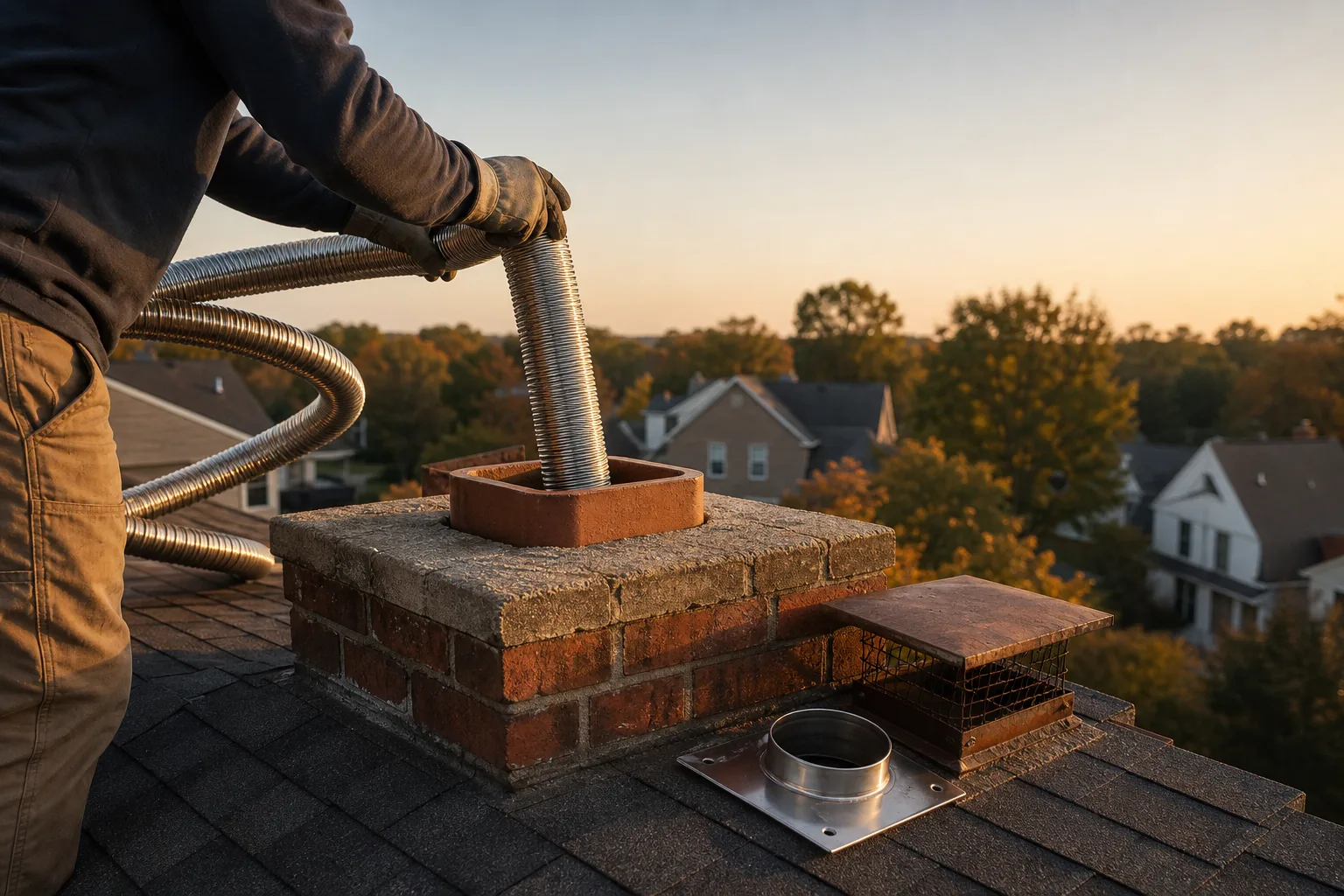
If the evaluation finds a problem, the flue gets relined before the insert goes in. This is not an upsell pattern, it is the documented order of operations: evaluate the existing flue, reline if necessary, then install.
The liner also has to be the right size for the appliance rather than merely present. Sizing fails in both directions, and both failures are real.
Install day
With a sound, correctly sized flue, the install itself is usually undramatic. The liner comes down from the top, connects to the appliance collar, gets sealed at the top plate under a new cap, and the unit slides in behind its surround panel.
Good to know: the Level 2 inspection is required at a system change regardless. Doing it before you shop does not add a step to your project, it just moves the step earlier, to the point where the answer can still change which unit you buy.
How VIO Helps With Your Fireplace Showcase Visit
VIO does not sell fireplaces. We are a referral network, not a hearth dealer and not a chimney company, and we have no stake whatsoever in which unit you choose. That is the entire reason this page could be written the way it was.
What we do is match you with an independent local chimney company that can put a camera in your flue, tell you its size and condition, and tell you plainly what it will and will not accept. If a liner is needed, the company we match you with can handle that work.
On money, so you know how to hold us to it: we ask every company in the network to put its estimate in writing before any work starts, and you should insist on exactly that. If anyone proposes to begin work on a verbal number, that is your signal to slow down.
The pro we send is an independent contractor working in your area, not a VIO employee. Ask them directly for their licensing, certification and insurance details and confirm those yourself, the same way you would with any contractor. We make the match, they do the work, and you deal with them directly on scheduling and scope.
Go Look at the Fire
Go to the fireplace showcase. Spend the afternoon. Stand in front of the burning units and figure out which flame you actually like, because that part genuinely requires being in the room.
Just do it in the right order. Get the flue looked at first, so you arrive with the constraint already known instead of discovering it four weeks later. Then walk into the fireplace showcase with your measurements, your photographs and your ten questions, and let the room do what it is good at.
The best version of this purchase is the boring one. You knew what your chimney could take, you picked a unit that fit it, and nothing surprising happened on install day.
Step one, before the showroom
Get the flue looked at, then walk into the showroom knowing your numbers.
Call (513) 655-6702 or request service and we will match you with a local chimney company.
Symptom checker
What is your chimney doing?
Tap the closest match for an honest first answer.