



On this pageWhy You Get a Smoke Smell From Fireplace When Not in Use7 sections+6
Quick answer
A smoke smell from fireplace when not in use happens when two things line up: creosote deposits inside the flue that turn sharp and smoky in humid air, and household air pressure that pulls flue air down into the room instead of up the chimney. Exhaust fans, dryers and air conditioning create that pull. Sweeping reduces the deposits, but sealing the top of the flue is usually what stops the smell.
The fireplace has been cold since March. Nothing has burned in it for months. And yet the living room smells like a campfire that went out a long time ago, and today it is stronger than it was yesterday.
A smoke smell from fireplace when not in use is one of those household problems where the obvious explanation turns out to be only half of the answer. Yes, there is something inside your chimney that smells. But something else has to happen for that smell to travel out of the flue, across the firebox and into the room where you are sitting. This article deals with both halves, because the second one is where the answer often turns out to be.
Two things have to be true at the same time for you to smell smoke from a fireplace nobody has lit. There is a source, and there is a delivery. Either one is worth attacking, and knowing which one you are dealing with tells you where to start. Understand which one is yours and you stop guessing, and you stop paying for work that was never going to help.
Why You Get a Smoke Smell From Fireplace When Not in Use
Think of your chimney as a tall pipe of stale air sitting above your living room all year. That air has a smell. Whether you notice it depends on which direction it is moving.
The Source: Creosote Does Not Leave When the Fire Does
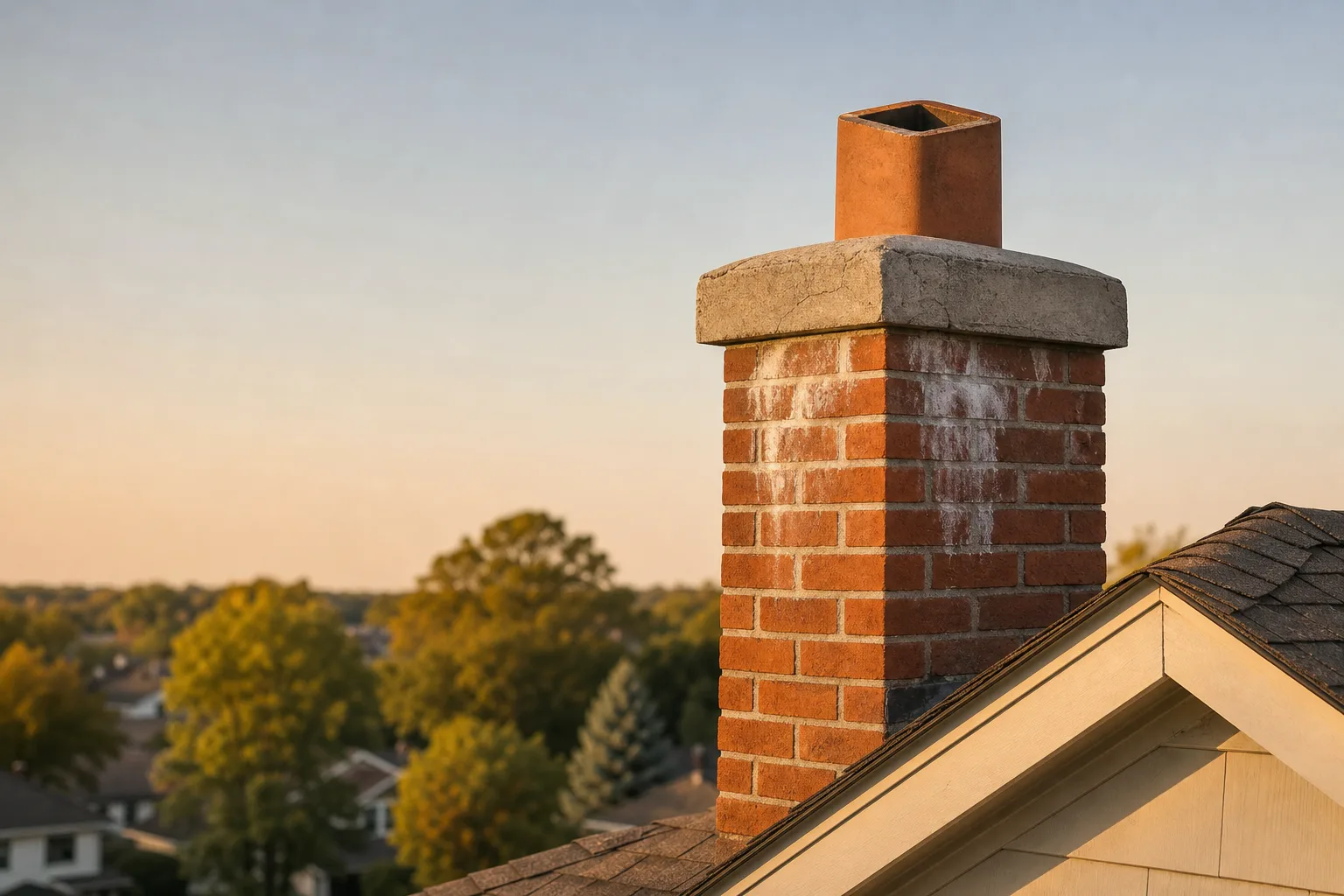
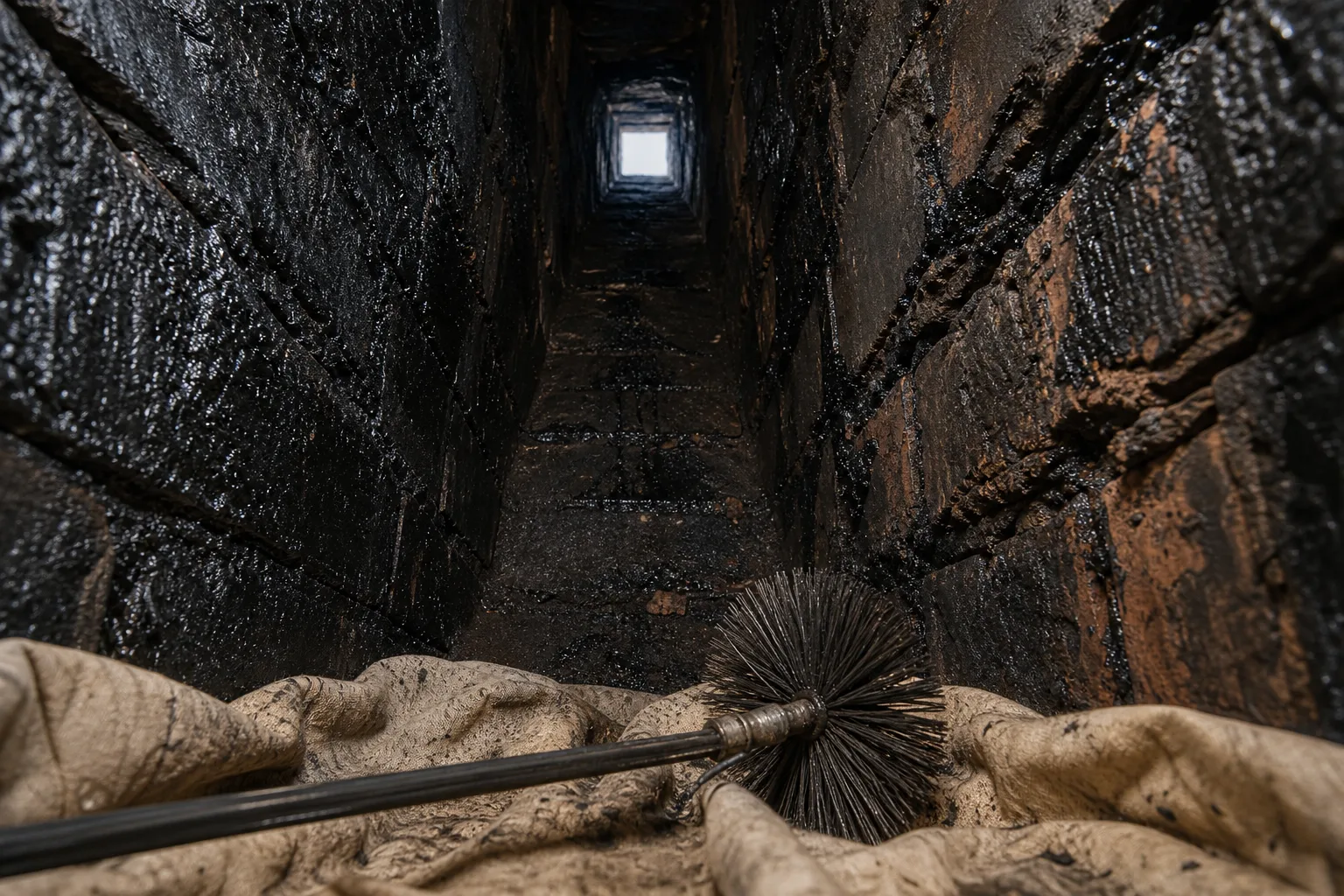
Every time you burn wood, some of the combustion does not finish. What is left condenses on the cool inner walls of the flue as creosote, a tar-like deposit ranging from shiny black glaze to matte flaky crust. It builds a little more with every fire.
Creosote also takes on moisture out of the air. When it does, it releases a sharp, acrid, unmistakably smoky odor, and it does this whether or not there has been a fire in the last six months. Certified sweeps and the Chimney Safety Institute of America describe the same pattern: the deposits are the smell, and humidity wakes them up.
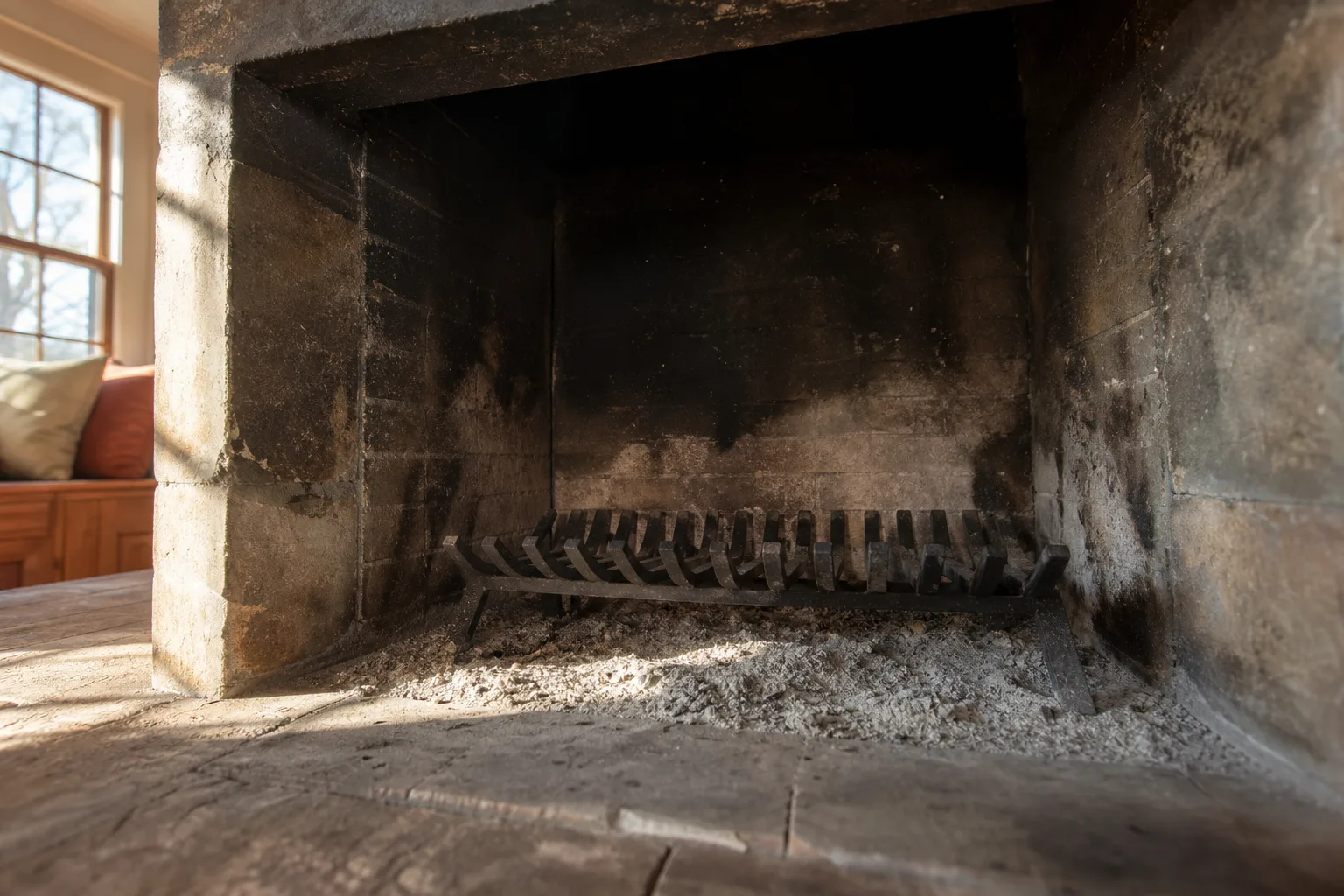
Old ash sitting in the firebox and a layer of soot and dust on the smoke shelf add their own note, usually a duller, more musty version of the same thing. That part you can reach yourself, and it responds to ordinary masonry cleaning.
The Delivery: Your House Is Pulling Air Down the Flue
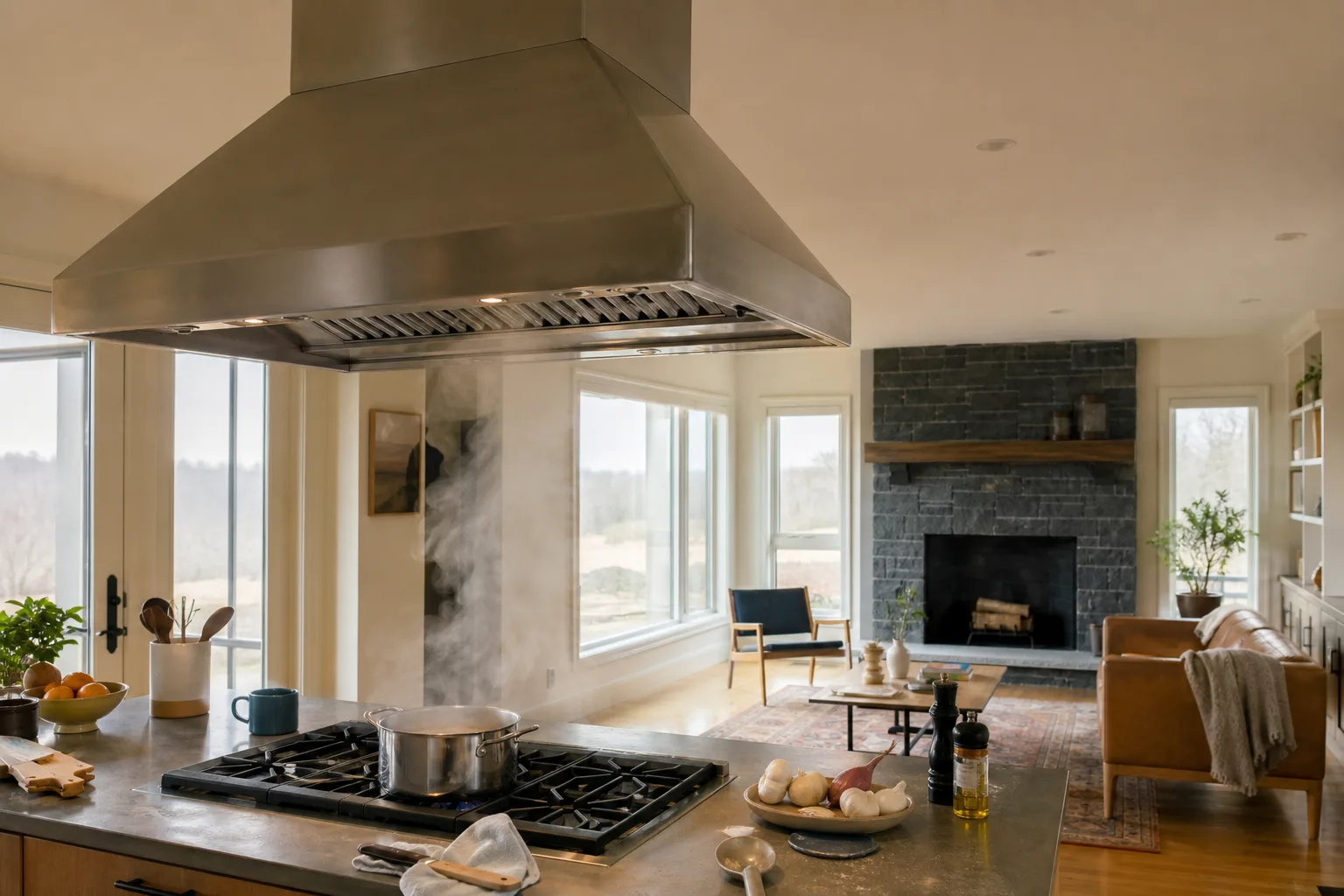
Here is the part the service pages skim. Air does not leave your house without being replaced. Run a bathroom fan, a range hood, a clothes dryer, a basement air handler, and an equal volume comes back in from somewhere. It arrives through whatever opening offers the least resistance.
Sometimes that opening is your chimney.
A second force works alongside it. Warm indoor air rises and escapes high in the house, leaving the lower floors at slightly lower pressure than the outdoors. That is the stack effect, and it gets stronger in tall houses and where the chimney runs up an exterior wall and stays cold.
When either force wins, the flue stops being a chimney and starts being an air intake. Everything sitting in it comes down into the room.
Good to know: The cast iron damper just above your firebox opening was designed to close off draft, not to seal. Most of them leak, and plenty of them are warped or rusted after years of heat. Closing it is worth doing, and it is rarely enough on its own.
What Makes a Smoke Smell From Fireplace When Not in Use Worse in Summer
Summer is the cruel joke of this problem. You are not burning anything, so the chimney should be the last thing on your mind, and instead the muggiest stretch of the year is when you start noticing it.
Two reasons, and they stack. Humid air loads the creosote and the odor gets stronger. Then the air conditioning runs, the house tightens up, the pressure balance tips, and the flue starts feeding air into the room. CSIA makes the point directly: chimney odor is usually worse in summer, when humidity is high and the air conditioner is on.
Which is why a smoke smell from fireplace when not in use so often arrives in the same week the weather turns muggy, and why it can vanish for a month and then come back without you touching a thing.
First, the Safety Question
Before any of the fixing, settle the thing that made you search in the first place. A smoke smell from fireplace when not in use sets off an old instinct, because a smell of burning in a house where nothing is burning is alarming, and it deserves a straight answer rather than a paragraph of reassurance.
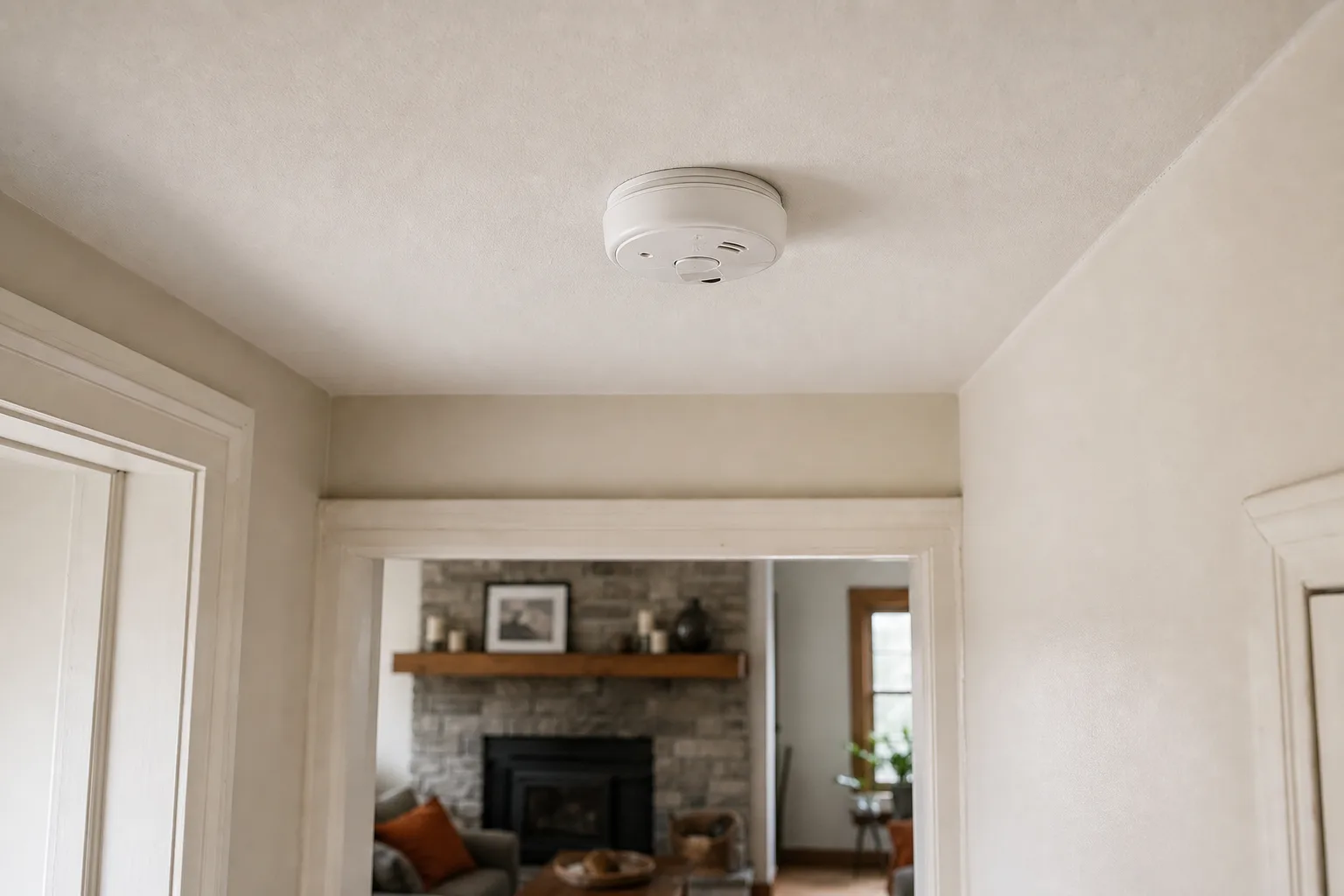
Carbon monoxide has no smell. None. It is colorless and odorless, and no human being has ever detected it with their nose. So the smoky odor you are dealing with is not a carbon monoxide warning, and just as importantly, the absence of a smell tells you nothing either. Your nose is not an instrument here.
Safety note: The only reliable way to know about carbon monoxide in your home is a working CO alarm. If you have fuel-burning appliances, a furnace, a water heater, a gas range, a gas fireplace, you want alarms installed and tested, independent of anything to do with this odor.
If You Smell Rotten Eggs or Sulfur, That Is Something Else
Natural gas is odorless on its own, so utilities add mercaptan, which smells like rotten eggs or sulfur. That smell is not the subject of this article, and it is not a maintenance issue.
If you smell it, get everyone out of the house, and from outside call 911 or your gas utility's emergency number. Do not go looking for the source, do not flip switches. This applies whether or not you have a gas fireplace, because the gas line serving a range or a water heater is the same hazard.
A stale, smoky, campfire odor from a cold firebox is a different situation, and it is telling you something real about your chimney. But a burning smell you cannot place, or one that reads sharp and electrical, does not belong in the chimney file. Get that identified first.
The Dusty Smell on the First Fire of the Year
Worth naming because it gets confused with this: the first fire of the season often produces a dusty, slightly plasticky, burning-hair sort of smell for a few minutes. That is household dust, pollen and pet dander cooking off surfaces that have sat still for months. It clears on its own.
Find Your Cause: The Five-Minute Test
This is the step that almost nobody hands you. The standard article about a smoke smell from fireplace when not in use lists five suspects and leaves you to pick one, which is how people end up buying a cleaning for a problem that was never about dirt.
You can narrow it down yourself, right now, with no tools and nothing bought.
Pro tip: Start with the fan test before you read any further. It takes about thirty seconds and it is the single most useful thing you will do today.
Test One: The Exhaust Fan
Close the windows. Turn on the bathroom exhaust fans, the kitchen range hood on high, and the clothes dryer if it vents outside. Let them run two or three minutes, then stand at the fireplace opening and breathe in.
If the smell gets noticeably stronger, or if you can feel cool air drifting out of the firebox, your problem is air pressure. The house is pulling down the flue and using your chimney as a vent.
Test Two: The Open Window
Same setup, fans still running, but now crack a window open a few inches on the same floor as the fireplace. Wait a minute.
If the smell drops off, that is confirmation. You just gave the house an easier place to get its replacement air, and it took it. Cracking a window is not a fix, it is a diagnosis.
Test Three: The Day After Rain
Pay attention to timing over a week or two. A smell that spikes the day after heavy rain, or that reads more musty and basement-like than smoky, points at water getting into the chimney rather than at pressure.
Water gets in through a cracked crown, through a missing or damaged cap, through failed flashing where the stack meets the roof, or straight through porous brick. Wet masonry and wet deposits smell, and they keep smelling until the water stops arriving.
Test Four: At the Damper Versus Across the Room
Put your head into the firebox opening and sniff up toward the damper, then step back six feet and sniff again.
Strong at the damper and faint in the room means the odor is in the flue and is not being delivered anywhere yet. That is the easier version, and the hardware group below is aimed at it. Strong across the whole room, or upstairs, means air is actively moving into the house: a pressure problem on top of a deposit problem.
While your head is in there, listen. Scratching, fluttering, chirping or a rustle means an animal or a nest, and the smell you are chasing may not be creosote at all.
Read Your Result
| What you noticed | What it most likely means | What actually fixes it | Who can do it |
|---|---|---|---|
| Worse when fans, dryer or AC run; cool air slides out of the firebox | Negative pressure, the flue is an air intake | Top-seal the flue, tight glass doors, make-up air | You for the free steps, a chimney company for hardware |
| Worse in humid weather, smoky and acrid | Creosote deposits taking on moisture | Sweeping, then sealing the flue | A chimney company |
| Spikes the day after rain, musty more than smoky | Water entering the chimney | Cap, crown repair, flashing, waterproofing | A chimney company, ladder work |
| Rustling, scratching, chirping, an ammonia note | Animals or a nest in the flue | Removal, then a cap with mesh sides | A chimney company, plus local wildlife rules |
| Faint, dusty, strongest at the firebox floor | Old ash and soot in the firebox | Clean the firebox and smoke shelf | You, with the right vacuum |
| Rotten eggs or sulfur, any strength | Gas, not chimney odor | Leave and call the gas utility | The gas utility, immediately |
A smoke smell from fireplace when not in use can have two of these running at the same time, which is the reason a single fix sometimes disappoints.
From the field: The hardest version of this to pin down is the one where the smell tracks the household routine instead of the weather. If it turns up at the same hour every day, look at what runs at that hour rather than at the thermometer. Pressure problems like to hide inside habits.
So you have a direction. One honest note on where the line falls: the free steps are genuinely free, and the rest happens on a roof, looking into a flue you cannot see from the ground. If your result points up there, you can request service and have a local company make that look for you.
Test says it's the chimney, not the room?
Tell us what the smell does when the AC kicks on, and what you can see at the top of the stack. We'll match you with a local chimney company, and you can ask them to look at both sides of this, the deposits inside the flue and the way air moves through your house.
We ask every company in the network to put its estimate in writing before any work starts, and you should insist on exactly that.
Request service, or call (513) 655-6702.
How to Stop the Smoke Smell From Fireplace When Not in Use
The fixes for a smoke smell from fireplace when not in use fall into three groups, and only two of them involve spending anything. Work through them in order.
Group One: Costs Nothing, Try Tonight
Close the damper if it is open, and check by feel rather than by the handle position, because a warped plate can sit at "closed" and still gap.
Clean out the firebox completely. Cold ash, charred scraps, the gray dust, the flaky debris on the smoke shelf behind the damper if you can reach it. Use a vacuum rated for fine ash, not a household one. Old ash is a real odor source and the easiest one to delete.
Ease the pressure on the house. Run one exhaust fan at a time instead of three, crack a window when the dryer runs, and watch whether the smell follows.
Absorbers in the firebox, vinegar, baking soda, charcoal, do something, but be honest about what. They mask temporarily while the source sits up there. Useful for a dinner party, not a solution.
Group Two: Hardware That Seals the Flue
If your test pointed at pressure, this is the group aimed at the delivery rather than the source, which is where the effort usually belongs.
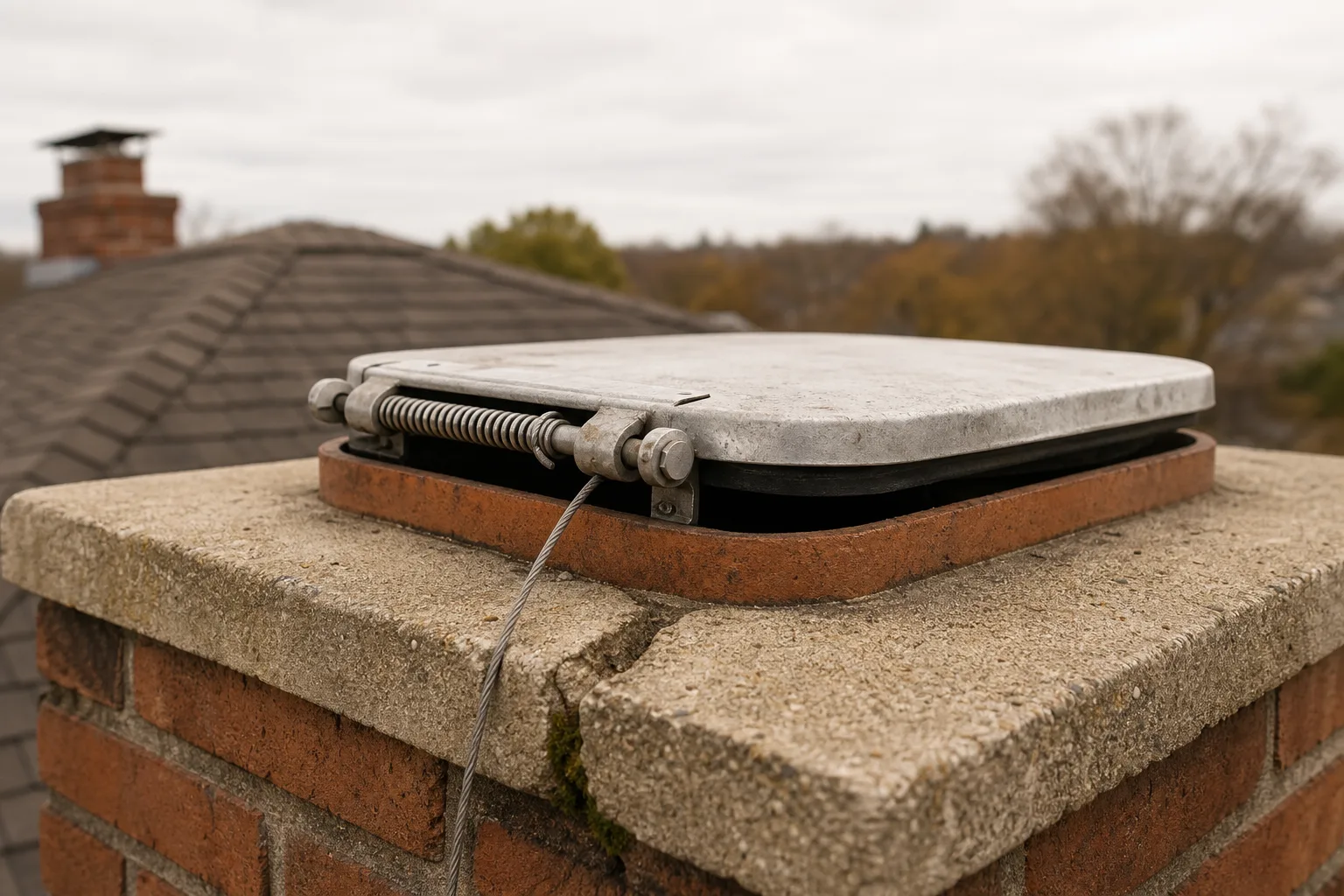
A top-sealing damper mounts at the top of the flue: a cast aluminum lid with a silicone gasket underneath, held by a spring, worked by a thin stainless cable running down to a handle inside the firebox. Closed, it seals the chimney at the top instead of six feet above your carpet, and keeps rain and animals out while it is at it. For odor arriving down the flue, it is the strongest single move available.
A chimney cap with mesh sides is the baseline. It keeps rain, leaves, twigs and animals out of the flue. If you do not have one, you have been running an open pipe into your house.
Safety note: Sealing is for a flue that serves a wood-burning fireplace and nothing else. If a gas log set, a gas insert, a furnace or a water heater vents into that chimney, do not seal or block it: a blocked flue can stop combustion gases venting and let carbon monoxide build up. Have a pro confirm what uses the flue before anything is closed off.
Tight-fitting glass doors across the fireplace opening reduce how much flue air reaches the room. They are a good partner to a top-seal, and a reasonable step on their own if the odor is mild.
Group Three: The Work That Needs Someone on the Roof
Sweeping to bring the deposits down. Crown repair and waterproofing if the masonry is taking on water. Flashing where the stack meets the roof. Animal removal, then exclusion. And an inspection of the flue liner, because a cracked liner lets moisture and odor into the surrounding masonry, which turns a flue problem into a chimney problem. Where the liner has failed outright, chimney flue liner installation enters the conversation.
There is also a whole-house version of the fix. If the pressure imbalance is severe, the real answer is giving the house a controlled source of make-up air and providing combustion air to other fuel-burning appliances, so the chimney stops being the path of least resistance. That is a conversation between a chimney company and, sometimes, an HVAC contractor.
Here is the order to work through:
- Firebox emptied, ash and soot removed, smoke shelf cleared
- Damper checked by feel and closed properly
- Fan test and window test run, results written down
- Timing tracked against rain for a week or two
- Cap confirmed present, with mesh, and intact
- Inspection booked if anything points above the firebox
- Top-sealing damper priced if the tests pointed at pressure
- Annual inspection scheduled before the first fire of the season
What a Chimney Sweeping Will and Will Not Fix
Myth vs. fact: Myth, a sweeping ends the smell. Fact, no sweep can remove every last trace of creosote from a flue, and CSIA's own guidance is that a good sweeping can help with chimney odor but may not completely solve it.
Booking a sweeping is a reasonable first instinct when you get a smoke smell from fireplace when not in use, and the callout above is why it can end in disappointment. Pay for a cleaning in spring, get a few better weeks, then the air turns humid and the smell is back. The work can be done properly and the expectation still be wrong.
Sweeping reduces the source. It does not change the direction the air is moving, and it cannot strip the flue walls down to bare tile. So if your smoke smell from fireplace when not in use is being delivered by household pressure, a cleaning alone was never going to be the whole answer.
What you are buying with that visit is a look inside a structure you cannot see, and a judgment about which of your two problems is bigger. That is worth paying for. A cleaning sold as an odor cure is not.
One more thing that pays off later: if you do burn, drier and better seasoned wood lays down less creosote in the first place, and the same goes for how you run and service a wood stove. Less deposit this winter means less smell next summer.
If You Are Never Going to Light It Again
Plenty of people searching for this have no intention of ever using the fireplace. The firebox is where the candles go. In that case the advice above is half wrong for you, because you are not maintaining a heating appliance, you are managing an unused hole in your roof.
For these readers, a smoke smell from fireplace when not in use is not a seasonal annoyance. It is a standing condition of the house, and it will keep announcing itself every humid week until something changes at the top of the flue.
A dormant chimney still takes on rain. It still hosts animals. The dust and old deposits inside it still absorb moisture, which is why the smell in a never-used fireplace often reads musty rather than smoky. Time makes this worse rather than better, because nothing ever dries the flue out.
Assuming a pro has confirmed that the flue serves the fireplace and no gas appliance, the right move is sealing at the top, with a top-sealing damper or a sealed cap, and closing the fireplace opening with something removable, a fitted plug or tight glass doors. What you do not want is insulation stuffed up the throat or the opening bricked over for good, which traps moisture in the masonry and hides whatever is happening in there.
Pro tip: A dormant flue needs a cap more than an active one does. An active chimney gets warm and dry a few times a week all winter. A decorative one never does.
And the inspection still applies. NFPA 211 calls for chimneys, fireplaces and vents to be inspected at least once a year for soundness, freedom from deposits and correct clearances, with no exemption for the ones you stopped using. It also sets out when a deeper Level 2 inspection is required rather than optional: sale or transfer of the property, a change to the system, a malfunction, a chimney fire, and an external event such as a storm. About to list the house with a fireplace you never touched? That one is not a suggestion.
How VIO Helps
VIO Chimney is a referral service. We do not sweep chimneys or install dampers. We match homeowners with independent local chimney companies, and those companies do the work.
For a smoke smell from fireplace when not in use, the useful part is that you do not have to walk in knowing whether you have a deposit problem or an air problem. Bring what your tests told you, and ask the company we match you with to look at both things, the deposits inside the flue and the way air is moving through your house.
Timing is on your side right now. You are weeks from the first fire of the season, so it is worth asking whether the odor and the annual inspection can be looked at on the same trip. Tell us what you are smelling and when, and we will get the right kind of visit booked.
On money: we ask every company in the network to put its estimate in writing before any work starts, and you should insist on exactly that. Any homeowner should.
The smell is a message about two things, deposits and airflow. Neither one gets better by waiting for the weather to change, and both are worth putting in front of someone who can see up the flue.
Get it looked at before the first fire
Booking before burning season is your chance to raise both the odor and the annual inspection NFPA 211 asks for. Tell us what you are smelling and when, and we'll match you with a local chimney company that handles this kind of work.
Ask for the estimate in writing before any work starts.
Request service, or call (513) 655-6702.
Symptom checker
What is your chimney doing?
Tap the closest match for an honest first answer.