



On this pageWhat a Wood Fireplace Inserts With Blower Setup Actually Does9 sections+8
- What a Wood Fireplace Inserts With Blower Setup Actually Does
- Is the Blower Worth It?
- The Three Ways Wood Fireplace Inserts With Blower Are Sold
- The Outlet Problem
- What Your Chimney Needs Before Any Insert Goes In
- What to Confirm Before You Order
- Noise, Dust, and the Switch That Fails
- How VIO Helps
- Before You Click Buy
Quick answer
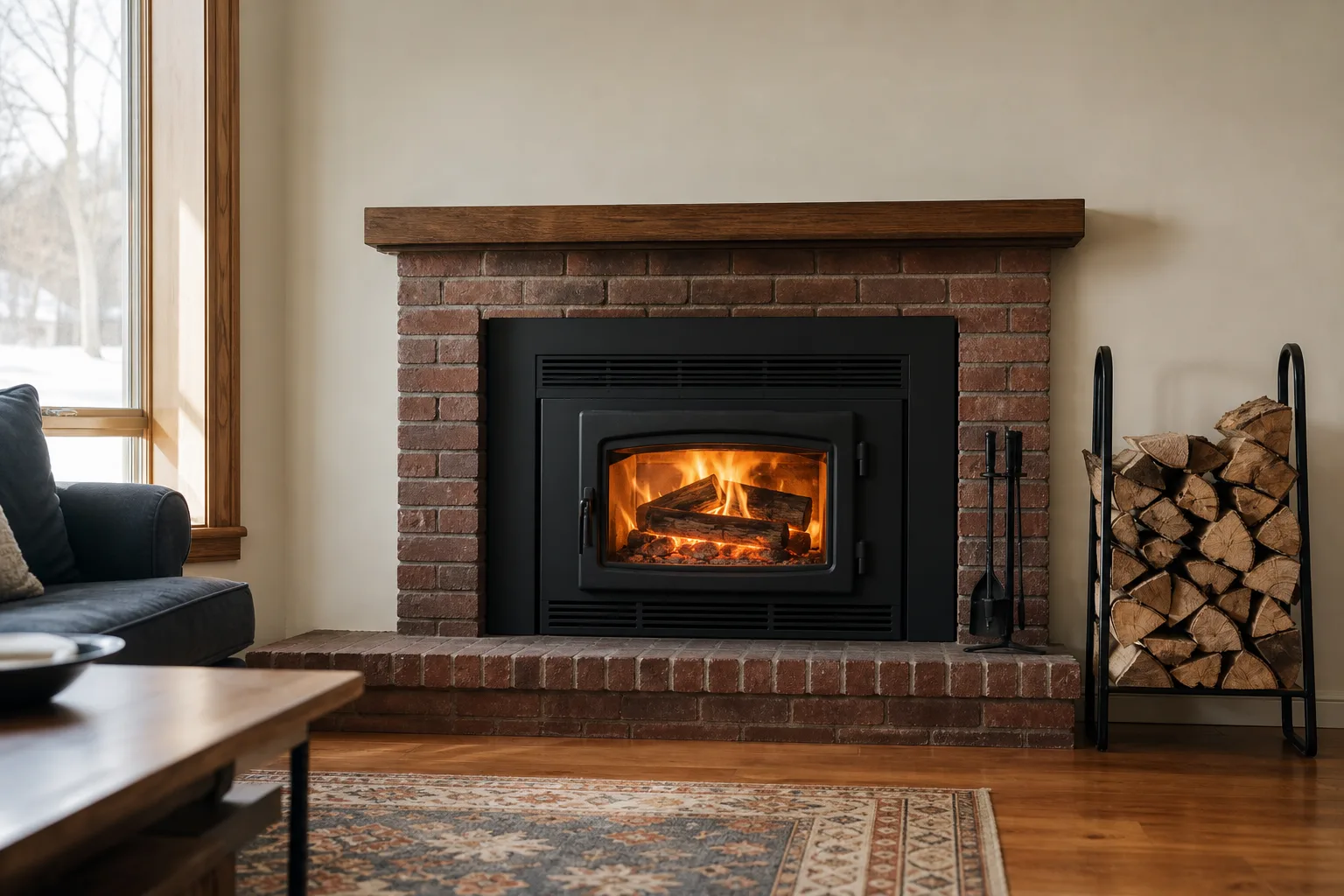
Wood fireplace inserts with blower systems use a fan to pull room air across the outside of the hot firebox and push it back into the room, so heat spreads instead of pooling at the hearth. That air never touches the fire. The fan turns on by itself through a thermal switch at roughly 115 to 120°F, and it needs a standard 110 volt outlet. It distributes heat rather than producing more of it.
You can stand in front of an open masonry fireplace with a good fire going and still be cold six feet away. The furnace keeps cycling, the room never really warms up, and the heat that fire makes is going up the chimney instead of into the room. That is the problem wood fireplace inserts with blower systems are built to solve.
It is also why the phrase gets typed into search boxes by people who have already made up their minds about the appliance and are now stuck on one accessory.
Here is the honest version of what follows. There is one question on this topic that is much easier to answer before the purchase than after, and it has nothing to do with the blower. We will get to it.
By the end of this you will be able to answer three things: whether you want the blower at all, which of the three ways to buy it makes sense for you, and what your chimney needs before any insert goes anywhere near it.
What a Wood Fireplace Inserts With Blower Setup Actually Does
The blower moves room air. That is the whole mechanism, and getting it right changes how you shop.
Where the air actually goes
On a common arrangement, air is pulled in through louvered slots low on the insert's trim panel, travels across the outside of the firebox shell, which is the hottest metal in your living room, picks up heat from it, and returns to the room through openings higher up. Intake and discharge positions vary by model, and the manufacturer's instructions for your unit govern.
None of that air touches the fire. It is not combustion air, it is not smoke, and it is not being blown into the firebox. The fire has its own separate air supply and its own separate path up the flue.
The practical translation is warm air moving steadily through the room, not a blast of hot air off the front of the appliance.
Myth vs. fact: The blower does not make the fire hotter, and it does not change the appliance's tested efficiency. The insert makes the heat. The blower decides where that heat ends up. If you see an efficiency gain attributed to the fan itself, treat it as a claim rather than a rating.
The switch that turns it on for you
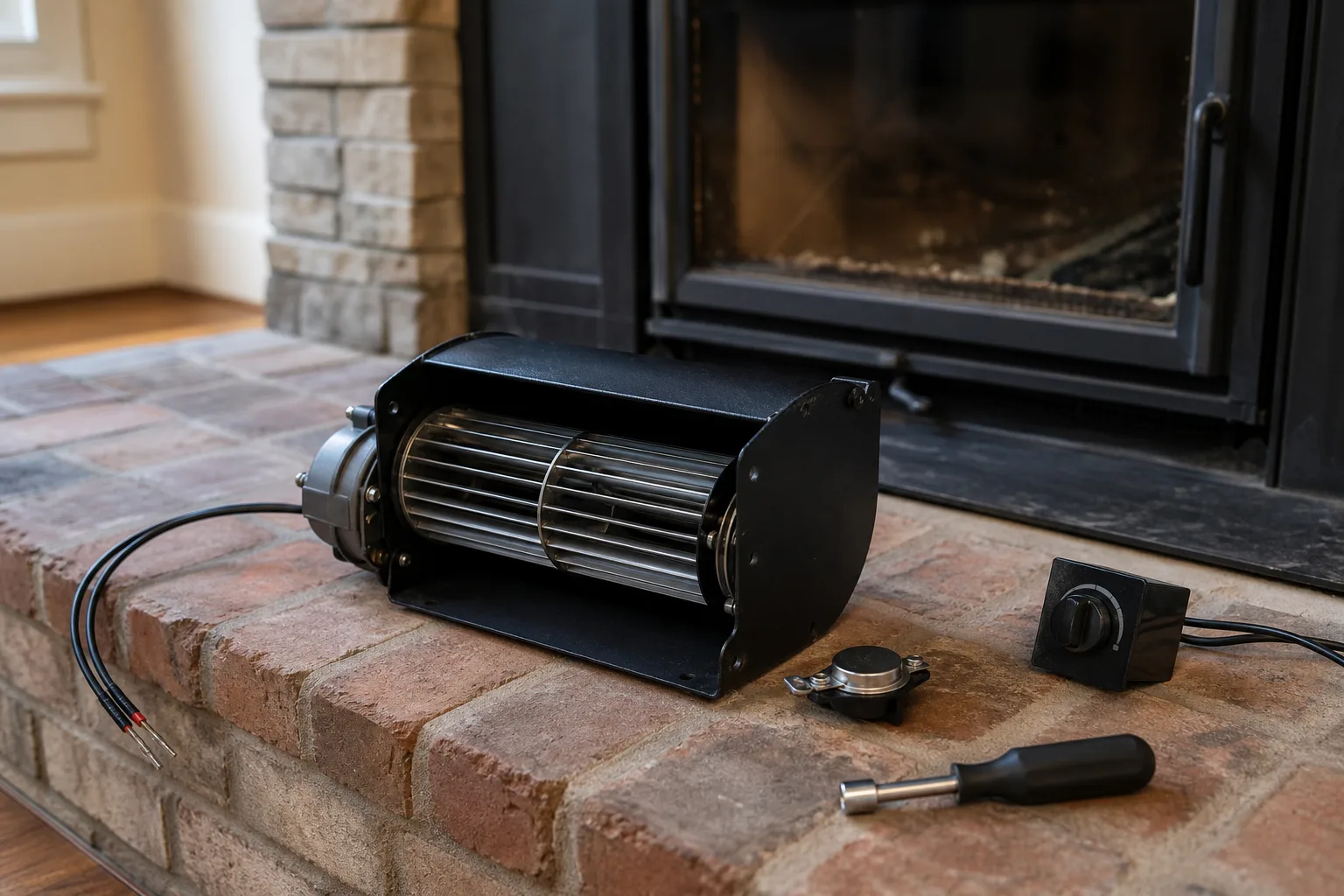
You do not flip the blower on. A thermal snap-disc switch does it, and it lives out of sight near the firebox shell, sometimes on a magnetic bracket.
Commonly sold switches close at about 115 to 120°F and open again at about 90°F. That is why the fan starts a while after you light the fire and keeps running for a stretch after the fire dies down.
It is also a standard replaceable part, which matters later.
Variable speed control is standard on current wood fireplace inserts with blower hardware, so you can set circulation to match how hard the fire is running. You will use it more than you expect. The arrangement is the same one you find on a freestanding wood stove with a blower, just packaged to sit inside an opening you already have.
Is the Blower Worth It?
In a room bigger than the reach of the fire's radiant heat, yes. On wood fireplace inserts with blower packages it is also the smallest decision in the project, and the easiest one to revisit.
Radiant heat off a hot steel or cast-iron box is genuinely good heat, but it obeys line of sight and it falls off fast with distance. If the sofa sits across the room rather than in front of the hearth, a fan is what closes the gap.
Where it earns nothing: a small room where you are already sitting inside the radiant zone. Some people also just prefer the silence of a fire without a fan humming under it, and that is a real preference, not a mistake.
Two limits worth knowing before you get your hopes up.
A blower is not a duct system. It circulates air within the room it sits in, and it should not be counted on to warm a bedroom down the hall.
And it needs electricity, which sounds trivial until you look at where your fireplace is.
Good to know: There is no published figure for how much more heat you get with a blower versus without, so treat any percentage attached to that comparison as a claim rather than a rating. What you can check is real: look your exact model up in the EPA Certified Wood Heater Database and read its tested emissions and efficiency numbers.
The Three Ways Wood Fireplace Inserts With Blower Are Sold
Three phrases, three different things, and the difference is worth having straight before you walk into a showroom.
Blower included
The fan is in the box, installed at the factory or fitted during installation, wired to the thermal switch and ready to plug in. Nothing else to buy and nothing to source later.
Blower-ready
The appliance is built to accept a specific blower, with the mounting points and the wiring provision already there, but the fan itself is not included. This is the option that trips people up.
Aftermarket blower kit
A kit bought separately, sometimes years later, sometimes for an insert that has already been in the wall for a decade.
The question here is not whether a kit physically fits. A listed insert has to be installed and accessorized according to its listing and the manufacturer's instructions, so confirm the kit is approved for your exact model before you buy it. A universal part that fits is not the same thing as an approved one.
| Option | What you get | How you pay for it | What to check |
|---|---|---|---|
| Blower included | Fan, housing, thermal switch, speed control, all fitted | Bundled into the appliance | That it is genuinely included and not a listed accessory |
| Blower-ready | Mounting and wiring provision only | Less up front, the kit comes later | The kit is model-specific; "ready" does not mean "compatible with anything" |
| Aftermarket kit | Fan assembly plus switch, fitted to an existing insert | Separate purchase, varies by kit | That the kit is approved for your exact model under the appliance's listing, not just that it fits |
Buying blower-ready is a reasonable way to stage the purchase, as long as you go in with your eyes open. Settle the kit question while the model number is still in front of you.
Pro tip: If you buy blower-ready, write down the exact kit part number for your specific model before you leave the showroom. Not the brand, not the model of the insert, the part number of the blower kit itself. That one line of text saves an afternoon of phone calls later.
The Outlet Problem
All wood fireplace inserts with blower hardware run on ordinary 110 to 120 volt household power. The fan plugs into the thermal control, and the thermal control plugs into a wall receptacle.
Now go look at your fireplace.
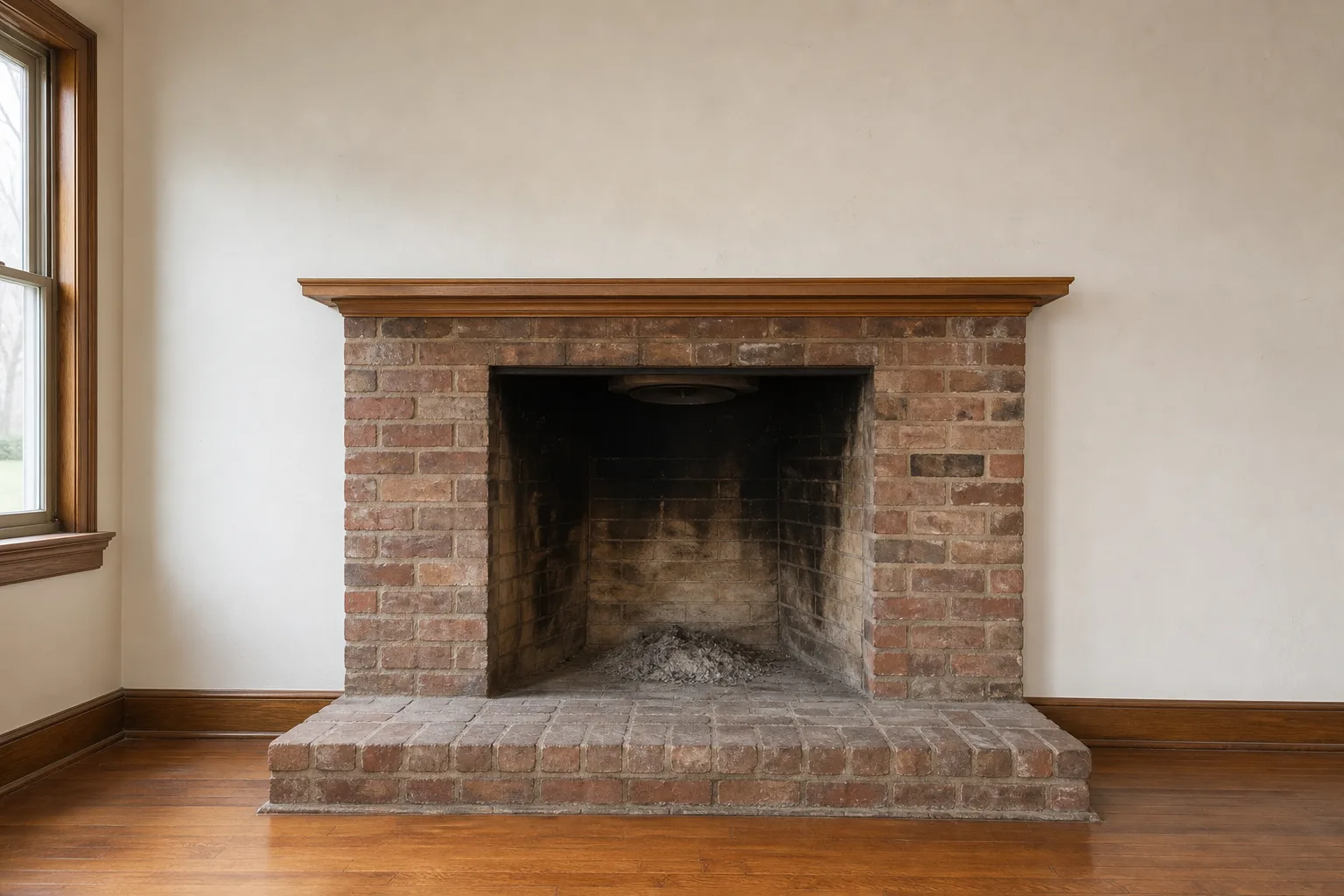
Old masonry fireboxes were built to hold fire, not to power appliances. An older firebox can easily have no receptacle inside the opening, none on the side wall, and nothing within reach of a normal appliance cord. The brick simply ends where the outlet should be.
This is the question from the opening, the one that is much easier to handle early than late. It is not a hard problem to solve. It is an electrician and a new receptacle, ideally set inside the fireplace opening or immediately beside the hearth so the cord disappears behind the surround panel.
What makes it painful is meeting it on installation day, with the appliance already sitting in the driveway.
So check it now, before you order. Walk over, look inside the opening, look at the wall on both sides, and find out whether power is there.
If it is not, that is a phone call to make in parallel with everything else, not after.
Safety note: Do not run an extension cord across a hearth or tuck one under an insert to reach a distant outlet. Cord routing is part of a correct installation, not something to improvise around a hot appliance. If the cord cannot reach cleanly, the answer is a properly installed receptacle.
What Your Chimney Needs Before Any Insert Goes In
This is the part that determines the real scope of the project, and it has nothing to do with which appliance you liked in the showroom.
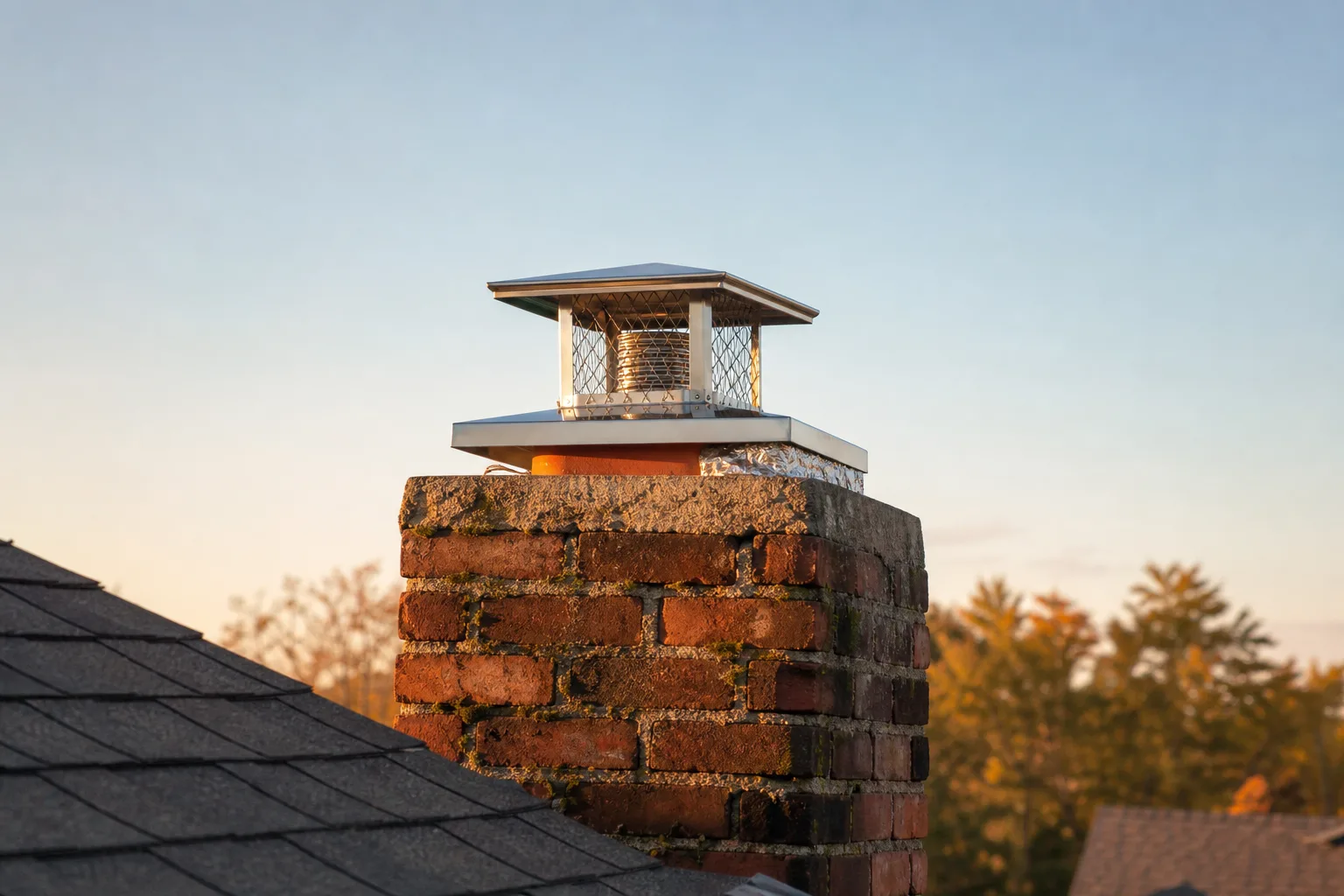
Wood fireplace inserts with blower systems and plain ones alike need a full-length chimney flue liner running from the appliance's flue collar all the way to the top of the chimney. Not partway. Not to the smoke chamber. To the top.
That is not a preference. Wood-burning inserts listed to UL 1482 require that liner as a condition of their listing, and IRC 2024 and NFPA 211 both carry the requirement.
The obvious follow-up is whether the clay flue already in the chimney counts. Generally it does not, for three reasons that stack.
It is too large in cross-section for the appliance. Its shape is wrong. And it was not designed for the condensing flue gas of a modern high-efficiency insert, which runs cooler than an open fire and puts moisture where the old flue did not expect it.
There is also a condition standard the existing liner has to meet on its own terms. Clay tiles with offset joints, cracks wider than 1/8 inch, or missing mortar joints fail that standard regardless of how well the fireplace has seemed to draw. "It works" and "it passes" are different sentences.
Adding an insert is a system change, and under NFPA 211 a Level 2 inspection is required at system changes, at sale or transfer of a property, after a malfunction, after a chimney fire, and after an external event likely to have caused damage. Yours falls under system changes.
So the order of operations matters here. Get the flue evaluated first, then choose the appliance.
A Level 2 inspection documents the flue's size and condition, and whether the crown and the surrounding brick need masonry restoration first. That is the information the liner sizing and the rest of the plan start from, and none of it changes based on which brand you picked.
Safety note: A blower is a heat-distribution device, and it does not address the condition of the flue above it. Warm air can circulate around a room while a problem sits above the damper, unseen. Keep the chimney question separate from the appliance question, and raise it yourself.
Find out what your chimney needs before you order the insert
Inserts listed to UL 1482 require a full-length liner, and whether your flue can take one is a question that gets answered by looking, not guessing. VIO connects you with independent chimney companies in your area who inspect first. On estimates, the move is yours: insist on a written estimate before any work starts, and do not let work begin without one in your hands.
Call (513) 655-6702 or request service online.
What to Confirm Before You Order
Screenshot this one. It is the list to carry into any showroom selling wood fireplace inserts with blower options, and the order is deliberate.
- The flue evaluation. First. Everything below depends on what it turns up.
- Firebox opening width, height, and depth. Measure all three, and measure the depth at the back of the firebox, not at the front. Fireplaces taper. That back measurement is where inserts stop fitting.
- The height of the opening at the lintel. Some units need more vertical room than the front face suggests.
- Hearth extension. How far the hearth projects in front of the opening, and what it is made of. Requirements vary by appliance.
- EPA certification. Confirm the model is certified and look it up in the EPA Certified Wood Heater Database. The current standard is the 2020 Step 2 limit, 2.0 grams per hour on crib wood or 2.5 on cord wood.
- Blower option and part number. Included, ready, or neither, and the exact kit number if it is ready.
- A receptacle within reach. With the cord route decided, not assumed.
- Liner diameter and insulation. Comes out of the inspection, and it shapes what the chimney liner installation involves.
- Surround panel size against your opening. The trim has to cover the gap between the insert body and the masonry. An oversized opening can need a larger panel than the standard one.
- Clearance to a combustible mantel. Wood mantels and shelves have listed minimum clearances, and an older fireplace can sit closer than a current unit allows.
- Permits and local code adoption. Your jurisdiction decides which code edition applies. Confirm it with your building department before the install gets scheduled.
Matching wood fireplace inserts with blower options to your room
Size the appliance to the space you actually heat, not to the biggest box that fits the hole. An oversized insert can end up run at a smothered, low burn to keep the room bearable, and that is the condition creosote forms in. Fuel matters for the same reason, and a firewood moisture meter settles the argument about whether a stack is ready to burn.
Pro tip: Photograph the firebox opening, the mantel and the surrounding wall on your phone before you shop. You will be asked for something you did not think to write down, and a photo answers questions a tape measure cannot.
Noise, Dust, and the Switch That Fails
Now the noise question, plainly, because it is worth knowing before you live with one. Wood fireplace inserts with blower hardware make sound, and how much depends on the speed you run.
On low, it is background. You will forget it is running. On high, it is audible, closer to a bathroom fan than to silence, and high is not where you will want it sitting all evening. Variable speed is the reason this stays a non-issue rather than a complaint.
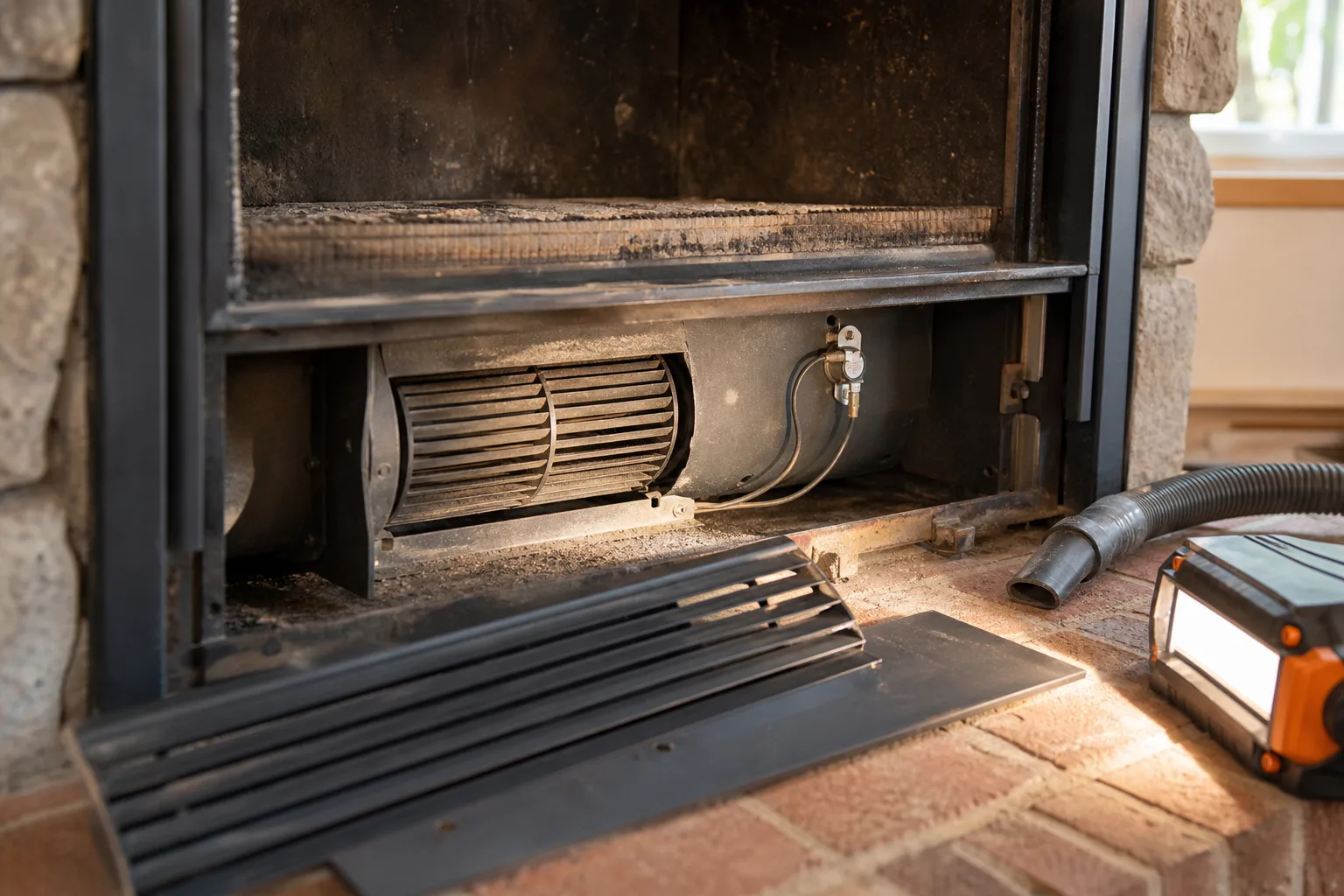
A squirrel-cage fan, a drum of small curved blades in a scroll housing, is one common design, mounted out of sight behind or beneath the firebox. Arrangements differ between models, so your manual is what tells you which one you have and how to reach it. Whatever the design, it collects dust, and a dusty fan gets louder and moves less air. Cleaning it is worth doing whenever the rest of your chimney maintenance gets done for the year, by the method the manual specifies.
Then there is the thing worth knowing before you ever need it.
From the field: A fan that has gone silent and an appliance that has failed produce the same symptom, a cold room, and they get confused for each other. Before concluding anything about the insert, walk the simple electrical path: power at the receptacle, then the thermal switch. The switch is a standard replaceable part, and looking at it takes nothing but your time.
If your fan goes quiet, work through the simple causes first. Confirm the receptacle has power. Confirm the appliance actually got hot enough for long enough to close the switch. Then look at the switch itself.
How VIO Helps
VIO does not install anything. We are a referral service, and what we do is match homeowners with independent chimney companies working in their area.
For this situation, that is worth more before you buy than after. The company we match you with can run the Level 2 inspection and document what is actually up there, so you are choosing an appliance against real information instead of a guess.
That is the sequence that keeps people out of trouble on wood fireplace inserts with blower projects: inspection, then numbers, then purchase.
On estimates, the move is yours: insist on a written estimate before any work starts, and do not let work begin without one in your hands. Get the scope on paper, including the liner, the insulation and the labor, and read it before anyone begins.
The company we match you with is an independent local business, and its license, its insurance, and its certifications are yours to ask for and yours to verify.
Before You Click Buy
Go back to that cold spot six feet from the hearth. It is a real problem and a good insert solves it, and the fan is a genuine part of why.
But the blower was the small decision here. It is the smallest line in the project and the easiest one to change your mind about later.
The large decision is the chimney above the fireplace, and it gets made whether you participate in it or not. A week spent comparing wood fireplace inserts with blower options is half a project if the flue question never gets asked. Look up before you buy, and the rest of it is just shopping.
Ready to talk to someone who has seen your kind of chimney
You now know what to ask about: the liner, the outlet, the blower kit, the Level 2 inspection. VIO matches you with an independent chimney company near you, and you bring the questions.
Call (513) 655-6702 or request service online.
Symptom checker
What is your chimney doing?
Tap the closest match for an honest first answer.