



On this pageWhat Chimney Cleaning Services Actually Include7 sections+6
- What Chimney Cleaning Services Actually Include
- Sweeping and Inspecting Are Two Different Jobs
- The Three Inspection Levels Under NFPA 211
- What a Chimney Cleaning Visit Actually Looks Like
- When to Book, and What Sets the Cadence
- What to Ask Before You Book Chimney Cleaning Services
- How VIO Helps You Find Chimney Cleaning Services
Quick answer
Chimney cleaning services combine two separately defined jobs: a sweep, which is the mechanical removal of creosote and soot from the flue, and an inspection, which reports on the system's condition. NFPA 211 provides for annual inspection and defines three inspection levels. Companies in this trade commonly also offer caps, chase covers, flashing and crown repair, liner evaluation and masonry work, none of which is automatically part of a cleaning.
It is easy to picture chimney cleaning services as one thing happening. A brush goes up the flue, soot comes down, the fireplace is safe again.
That is part of it. It is not the whole scope of work, and the gap between those two things is the most useful thing you can learn before you pick up the phone.
A sweep and an inspection are two separately defined jobs. They are commonly sold together as a single annual visit, which is why the words blur together, and which is exactly why homeowners end up unsure what they actually paid for.
There are a lot of pages selling chimney cleaning services, and they are built to explain why you need the work. This one is about what the work is.
So this is the other article. What is in the service, where its scope stops, what the visit looks like from your own living room floor, and the questions worth saying out loud before you agree to anything.
You do not need to become an expert on any of this. You need enough to book without feeling like a mark.
What Chimney Cleaning Services Actually Include
When a company advertises chimney cleaning services, the phrase covers a bundle rather than a single task. Pulling that bundle apart is the fastest way to understand what you are buying.
There are three pieces to it. The sweep, the inspection that travels with it, and everything else on the menu that is not automatically included.
The sweep itself
A sweep is the mechanical removal of creosote, soot and debris from inside the flue. That is the definition, and it is narrower than the phrase suggests.
Rods screw together end to end. A brush sized to the flue's own dimensions goes on the last one. The brush is worked the length of the passage, and the material it dislodges is captured by a vacuum running at the opening.
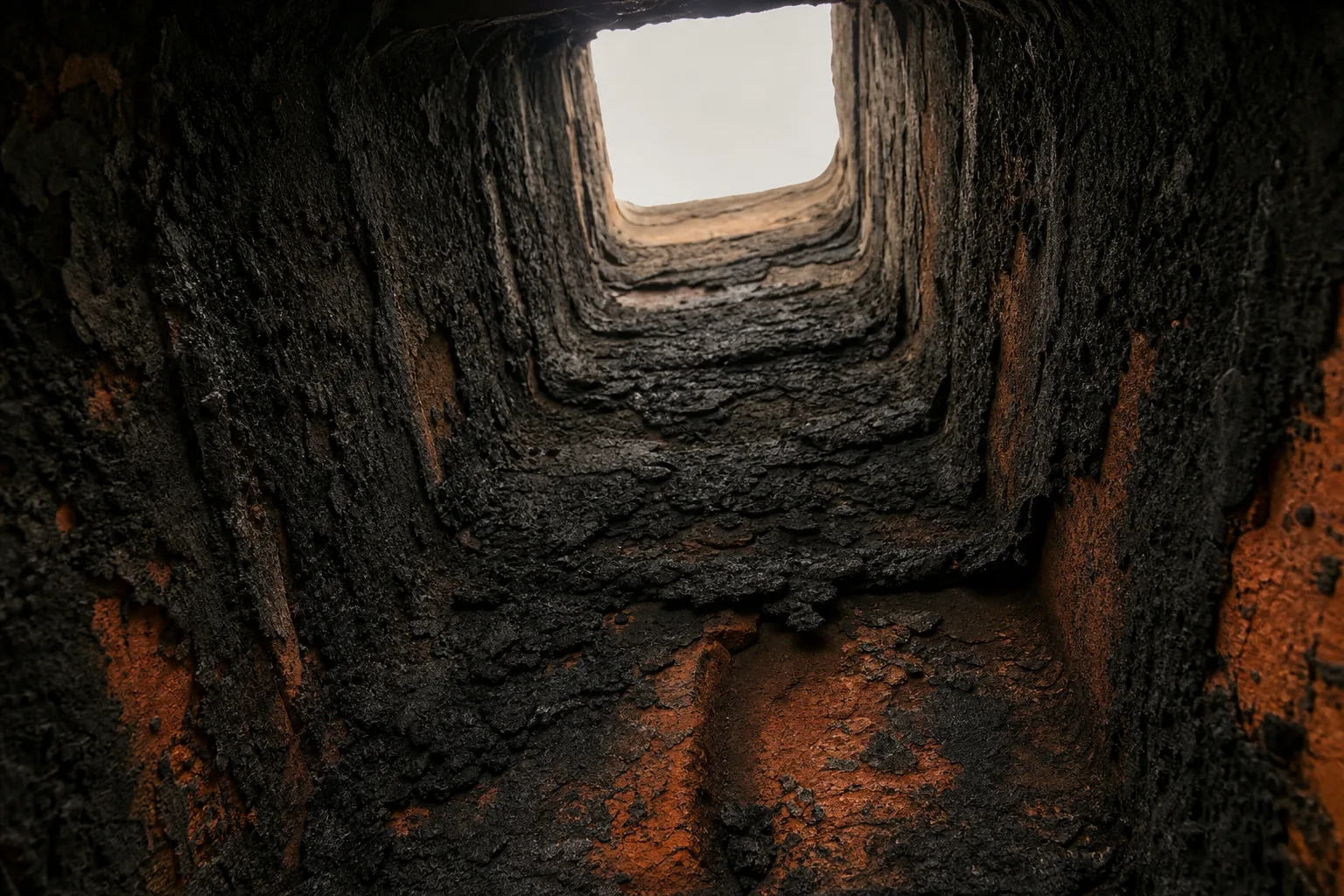
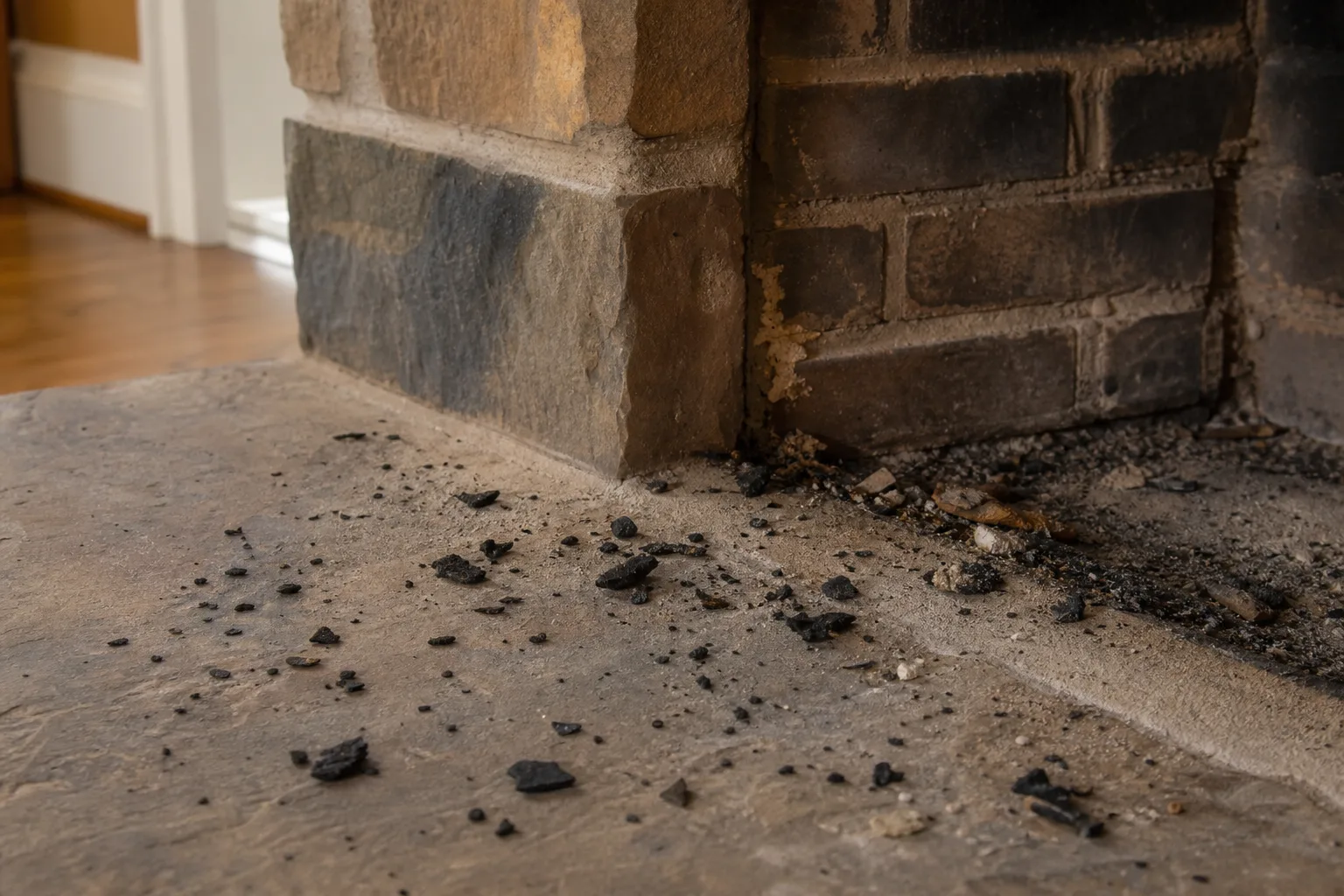
Creosote is the combustible residue that wood burning leaves behind on flue walls. It is the reason wood-burning flues get swept at all.
The trade sorts creosote into three degrees, and those degrees describe what removal involves rather than anything else. Degree I is loose and flaky. Degree II is hardened and tarry. Degree III is glazed and hard, and glazed deposits go to a professional evaluation.
Gas and oil systems leave different deposits and raise different questions. They are inspected too, on the same annual cadence.
The inspection that rides along
The second job, the one commonly booked alongside the sweep, is a look at the system. The firebox, the damper, the connector between the appliance and the chimney, the accessible run of the flue, the accessible exterior.
Under NFPA 211, that baseline look has a name and a defined scope. It is a Level 1 inspection.
Which brings us to the single most useful paragraph in this article.
Good to know: A Level 1 inspection covers readily accessible portions of the chimney, the appliance and the connector. It does not by itself guarantee that anyone climbs onto your roof or runs a camera down the flue. A company may well do both as a matter of course. The scope of a Level 1 does not require it. If you want the roof looked at, ask when you book, not while someone is loading the van.
Where chimney cleaning services stop
You typed the phrase in the plural, and the plural is honest. Companies in this trade commonly carry a good deal more than sweeping.
Caps and spark arrestors. Chase covers on prefab chimneys. Flashing repair and crown repair. Liner evaluation and relining. Masonry and tuckpointing. Water repellent. Animal removal.
None of that is automatically part of a cleaning. All of it is something a company may raise after looking at your system.
Knowing the menu exists ahead of time is what turns an uncomfortable surprise into an ordinary conversation. You are not being upsold when someone tells you your chase cover is rusting through. You are being told something true that you could not see from the ground.
Sweeping and Inspecting Are Two Different Jobs
This is the distinction to slow down for, because the rest of what you decide about chimney cleaning services follows from it.
What a sweep is
Removal. Physical, visible, done or not done.
A sweep does not tell you whether your liner has cracked, whether your crown is shedding water the way it should, or whether the flashing at the roofline has quietly given up. It takes material out of a passage, and that is a real and necessary thing.
What an inspection is
Diagnosis. Someone examines the system and reports its condition to you.
An inspection removes nothing. It tells you what is there.
The exterior half of it is the part homeowners forget entirely. Where the stack passes through the roof plane, thin metal flashing is tucked under the shingle courses and let into the mortar joints above. It is unglamorous, it is easy to ignore, and it is one of the places water gets into a house.
Sold together, sweeping and inspecting feel like one service with one name. They are not. The practical consequence arrives later, when something goes wrong and you are trying to remember what you actually bought.
Myth vs. fact: The claim is that a cleaning and an inspection are the same visit. The provision in NFPA 211 is that inspection is its own defined scope, at one of three levels, each with its own criteria. Sweeping is removal work. One visit can carry both, and they remain two things.
Here is why that matters on the phone. When you ask what a visit includes and the answer uses both words, the company is describing the scope accurately. That costs you nothing to check and it tells you a lot.
The Three Inspection Levels Under NFPA 211
There are three of them and they are not upsell tiers. Each has its own trigger written into the standard, and one does not follow from another.
This is the part of chimney cleaning services that gets described the least and matters the most, because the level determines the scope, and the scope determines what anybody can honestly tell you afterward.
Here they are in one place, which is more than the first page of search results is going to hand you.
| Level | When it applies | What it covers | What to ask |
|---|---|---|---|
| Level 1 | The system is unchanged and will keep being used as it has been | Readily accessible portions of the chimney, the appliance and the connector; soundness of structure and freedom from obstruction and deposits | "Is a Level 1 what is included in this visit?" |
| Level 2 | Sale or transfer of the property; a change to the system; a malfunction; a chimney fire; an external event likely to have caused damage | Everything in Level 1, plus accessible attics, crawl spaces and basements, plus video scanning of the flue interior | "I am selling the house. Can you perform a Level 2?" |
| Level 3 | There is reason to suspect a concealed hazard that cannot be evaluated at the accessible levels | Concealed areas, reached by removing or destroying portions of the chimney or the building structure | "What exactly do you suspect, and what would need to be opened?" |
Level 1
This applies when nothing about the system has changed and you plan to keep using it the way you have been. At this level the inspection verifies that the structure is sound and that the flue is clear of obstruction and combustible deposits, working from readily accessible areas.
It is the baseline scope of inspection that the standard defines. Whether it is part of the visit you are booking is a question to ask the company directly.
Level 2
NFPA 211 calls for a Level 2 in specified situations. At the sale or transfer of the property. On a change to the system, such as the fuel type or the shape or material of the flue or the addition of a new appliance. After a malfunction. After a chimney fire. After an external event likely to have caused damage.
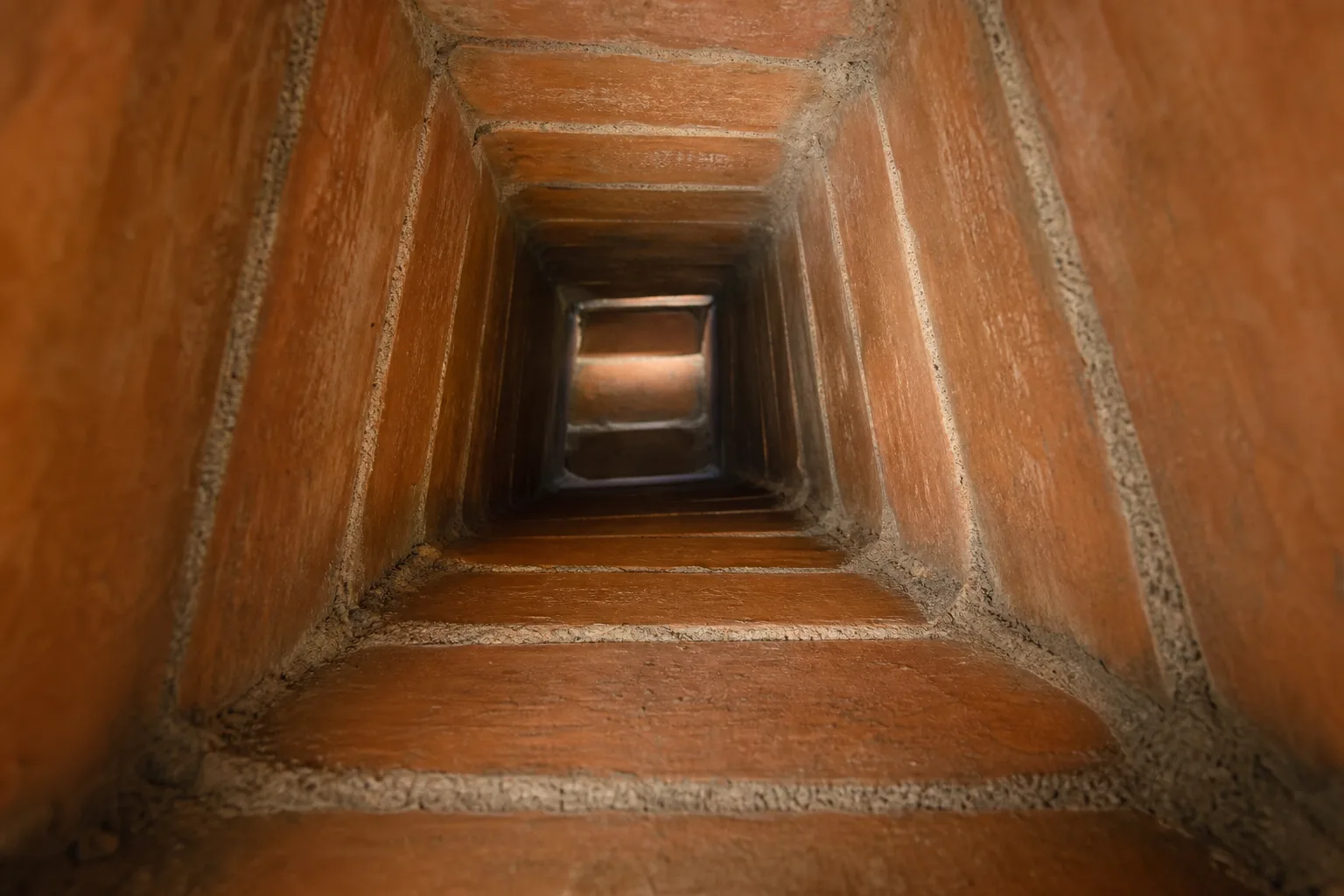
It reaches further than Level 1 does. Accessible attics, crawl spaces and basements come into scope, and video scanning of the flue interior is part of it.
If you are buying or selling a house with a fireplace, this is the one to ask for by name. It is a specified trigger, not a preference.
Level 3
A Level 3 applies where there is reason to suspect a concealed hazard that cannot be evaluated at the accessible levels. Gaining that access may require removing or destroying portions of the chimney or the building structure.
It is invasive and it is not undertaken casually. Understanding its own trigger, on its own terms, means you can neither be talked into one nor talked out of one that is warranted.
What a Chimney Cleaning Visit Actually Looks Like
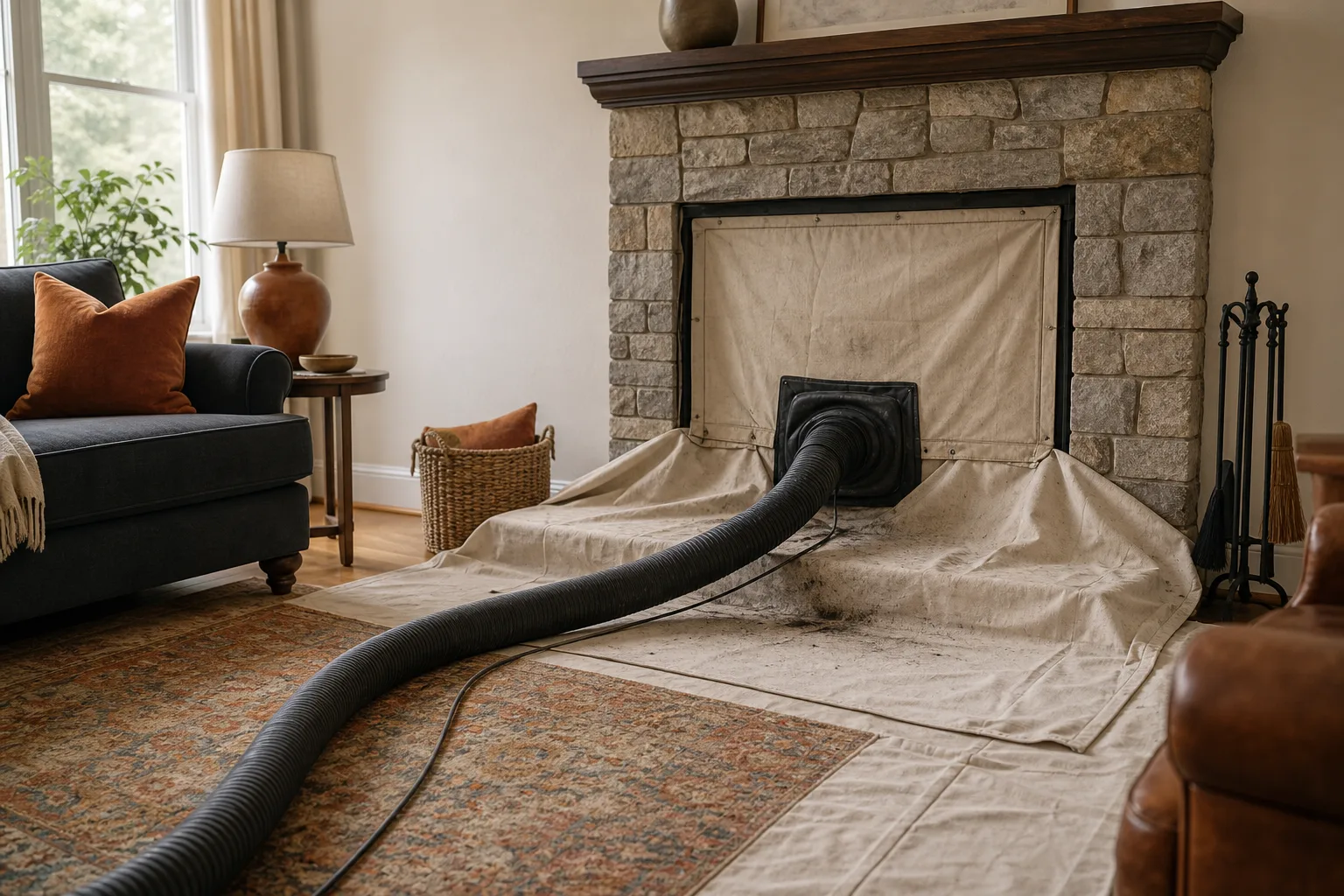
The visit itself is the product, and it deserves a description. If you have never watched chimney cleaning services performed in your own house, here is the shape of it, and here is how the flue itself gets cleaned.
It is less dramatic and more methodical than people expect. That is a good thing.
Before anyone touches the fireplace
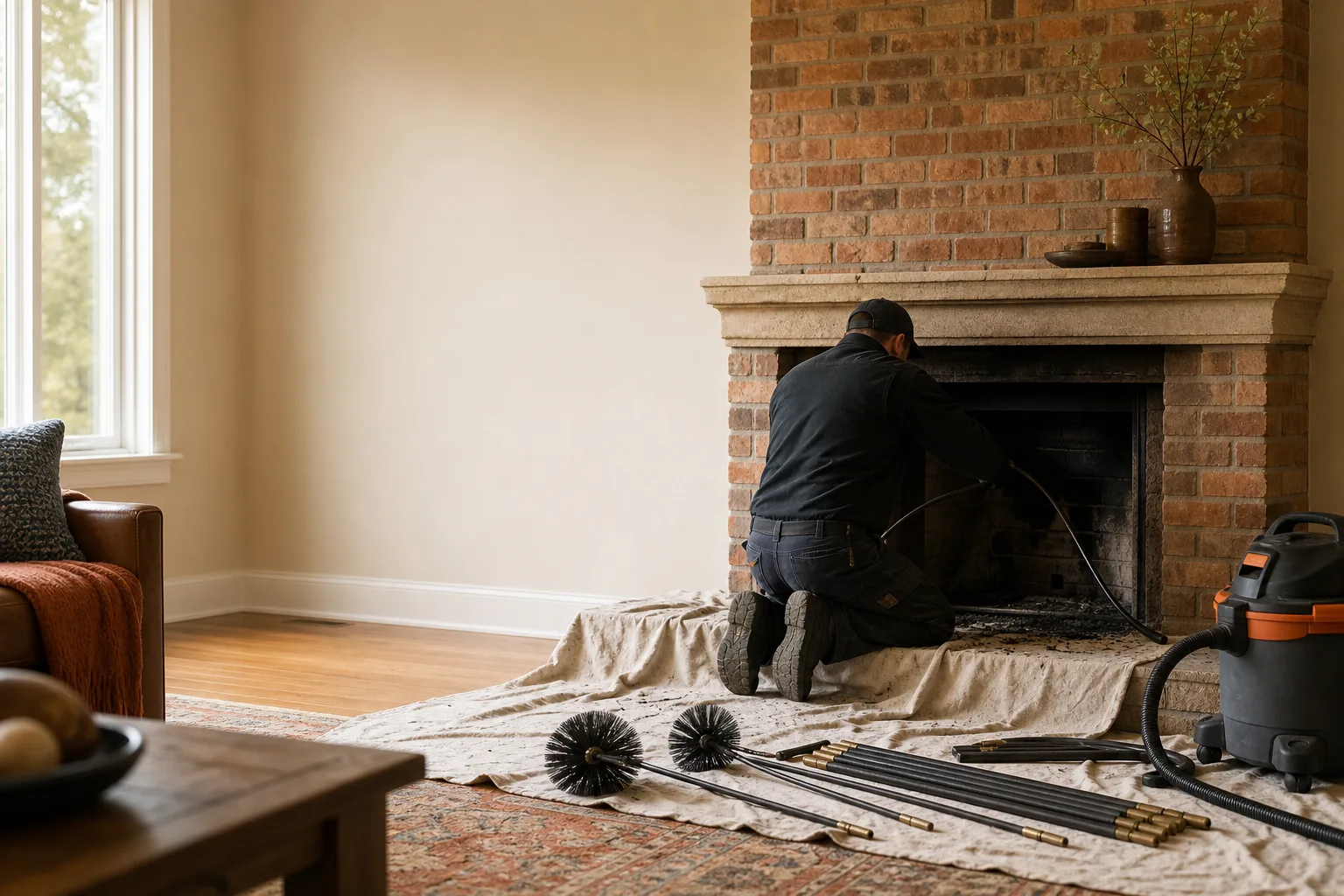
Drop cloths go down first. Heavy canvas or plastic over the hearth, spreading several feet out onto the floor in front of it.
Then containment. A vacuum with fine filtration sits near the opening with its hose into the firebox, running the entire time, holding the fine black dust inside the system rather than in your living room.
If nothing is protecting your floor before the work starts, that is worth raising before the work starts rather than after.
The sweep, step by step
The rods come out as a bundle. Fiberglass, flexible, screwing together one length at a time. The brush goes on the end.
Then it is repetitive and unhurried. Push, turn, feel for the change in resistance, add another rod, keep going.
You hear it more than you see it. A dry scraping travelling up through the wall of your house, which is a strange sound to listen to from your own couch.
Material comes down into the firebox and into the vacuum. The tools get filthy in the process. Nothing about this work is clean, and a set of gear that looks showroom new has not been used.
The walkthrough at the end
This is the part to pay attention to, and it is easy to let it slide past while you are reaching for your wallet.
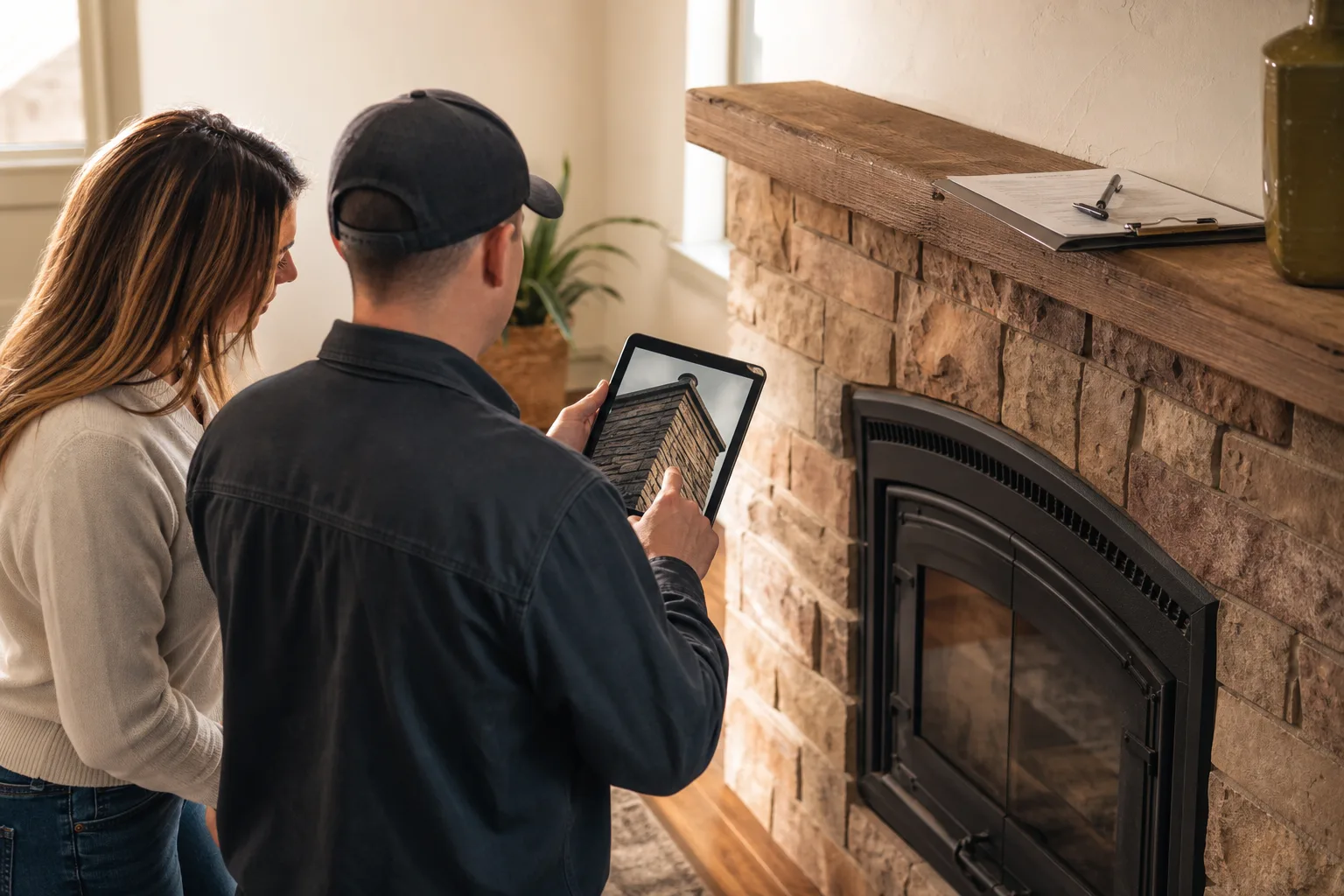
The company should tell you what it found, in plain language, and show you rather than describe. Ask to see photographs if a camera was used. Ask what the liner looked like. Ask what, if anything, they would want to come back for and why.
From the field: The walkthrough is the only part of the visit where what the company saw becomes something you know. Treat it as the point of the appointment rather than the wrap-up, and ask your questions while the tools are still out.
Not sure which service you actually need? You do not have to figure that out alone. Tell us what you are burning, what you have noticed and where you are, and we will match you with an independent local chimney company that handles it. Call (513) 655-6702. Then ask that company for its license and insurance details and check them yourself, and insist on a written estimate before any work starts.
When to Book, and What Sets the Cadence
NFPA 211 provides for annual inspection of chimneys, fireplaces and vents. That holds whether you burned every weekend last winter or barely lit the thing once.
The standard also sets a measurable cleaning trigger for wood-burning systems. Creosote or soot accumulation reaching one eighth of an inch in the flue.
Those two provisions sit side by side. Neither one replaces the other, and neither one is contingent on the other.
Everything else you do between visits falls under ordinary chimney maintenance, which is its own subject.
Late summer is a genuinely good moment to handle this, for one reason that has nothing to do with anybody's calendar but your own. The burning season has not started yet. You are making a decision with time in hand rather than during a cold snap with a fireplace you wanted to use tonight.
What you burn belongs in this conversation too. Wood that has not been dried and stored properly behaves differently inside a flue than wood that has, and the difference shows up in what comes down the rods.
None of that changes the cadence. It changes what a sweep is dealing with when it arrives, which is a separate thing worth caring about.
Safety note: Test your smoke alarms and your carbon monoxide alarms monthly, every month of the year. Not at the start of the burning season. Monthly, all year round, regardless of what you heat with.
What to Ask Before You Book Chimney Cleaning Services
You are now in a position to interview a company rather than simply hire one. These are the questions that make chimney cleaning services legible before you commit to anything.
Read them out loud on the phone. Every one of them is fair, and none of them are rude.
- Does this visit include an inspection, or only a sweep?
- Which inspection level are you performing, and what does that level cover?
- Will anyone go onto the roof? Will a camera go down the flue?
- Who is doing the work, and what certification does that person currently hold?
- Can you send me your license and insurance details so I can check them?
- Will I have a written estimate before any work starts?
- What is not included in this price?
- If you find something, will you show me before you recommend anything?
Pro tip: The last two questions are the ones that separate a straight quote from a bait price. A company that tells you plainly what is excluded is easier to trust than one that says everything is included, because nothing is everything.
Write the answers down. Not because you are going to forget them, but because a company that can hear you writing has a reason to be precise.
A word on certification. CSIA is the recognized certifying body for chimney sweeps in the United States, and asking whether the person arriving at your house holds a current certification is an ordinary question. So is asking for license and insurance details and then actually checking them yourself. Both are reasonable things to ask, and you are entitled to a straight answer to each.
And if a firm price appears before anyone has looked at your chimney, treat it as a starting point rather than a quote. No one can see the inside of a flue over the phone.
How VIO Helps You Find Chimney Cleaning Services
Plainly, and without dressing it up: VIO does not clean chimneys. VIO is a referral service.
You tell us what your system is, what you have noticed and where you are, either by phone or by requesting service online. We match you with an independent local chimney company that handles that kind of work. The work is done by that company, not by us.
Being clear about that arrangement is the entire point of saying it out loud. When the company we match you with arrives, ask for its license and insurance details and check them yourself. Insist on a written estimate before any work starts, and do not let work begin without one in your hands.
Then bring this article's questions to that call. The real value of understanding what chimney cleaning services include is that you can hear, inside the first two minutes of a phone call, whether the person on the other end is describing the scope accurately or talking around it.
That is a skill you now have and did not have twenty minutes ago.
Ready to book chimney cleaning services? VIO is a referral service, not a chimney company. We connect you with independent local chimney companies, and the work is done by that company, not by us. Call (513) 655-6702 and tell us what your system is and what you have noticed. Bring the questions from this article to the call you have with the company we match you with. Insist on a written estimate before any work starts, and do not let work begin without one in your hands.
Symptom checker
What is your chimney doing?
Tap the closest match for an honest first answer.