



On this pageWhat Chimney Doctors Actually Do7 sections+6
- What Chimney Doctors Actually Do
- The Name Is a Metaphor, Not a Credential
- Your Symptom, and What It Usually Means
- Credentials: What Actually Separates One Company From the Next
- How to Vet Chimney Doctors Before You Let Them on the Roof
- What Happens When Nobody Looks
- How VIO Helps You Find Chimney Doctors You Can Trust
Quick answer
Chimney doctors is a trade name used by many unrelated, independently owned chimney companies across the US, not a single national brand and not a certification. The credential that actually means something is a CSIA Certified Chimney Sweep, and the standard the work follows is NFPA 211, which defines three inspection levels. Hire on current certification, proof of liability insurance and a written scope, not on the name.
There is no national company called Chimney Doctors. If you searched for chimney doctors expecting to find one brand with locations in every state, the honest answer is that you found something else: a handful of unrelated, independently owned businesses in Minnesota, Wisconsin, Colorado, Tennessee, West Virginia and California that all happened to land on the same good metaphor.
Different owners. Different states. No parent company, no franchise agreement, no shared training program.
That matters more than it sounds like it does, because a lot of people type this phrase assuming the name means something. It does not. Anyone can print it on a truck.
What you actually want is a person who knows what they are doing on your roof and inside your flue, and there is a real way to identify that person. It has nothing to do with the word on the door.
This guide covers what chimney doctors do, how to translate the thing your chimney is doing into a problem with a name, which credentials are real, and the short list of questions that separates a good company from one you should send home.
What Chimney Doctors Actually Do
The trade is narrower than most homeowners expect and deeper than the name suggests. A company advertising as chimney doctors is generally offering some mix of six things.
Sweeping. Inspection. Relining the flue. Masonry repair and tuckpointing. Caps, crowns and flashing. Draft and smoke problems.
Some outfits do all six. Plenty specialize, and a good one will tell you when a job belongs to someone else.
Good to know: the sweep and the inspection are two different products, priced separately, and they are not interchangeable. A company that quotes you one number for "cleaning" without saying what inspection is included has left the most important part vague.
The Sweep Is the Part You Can See
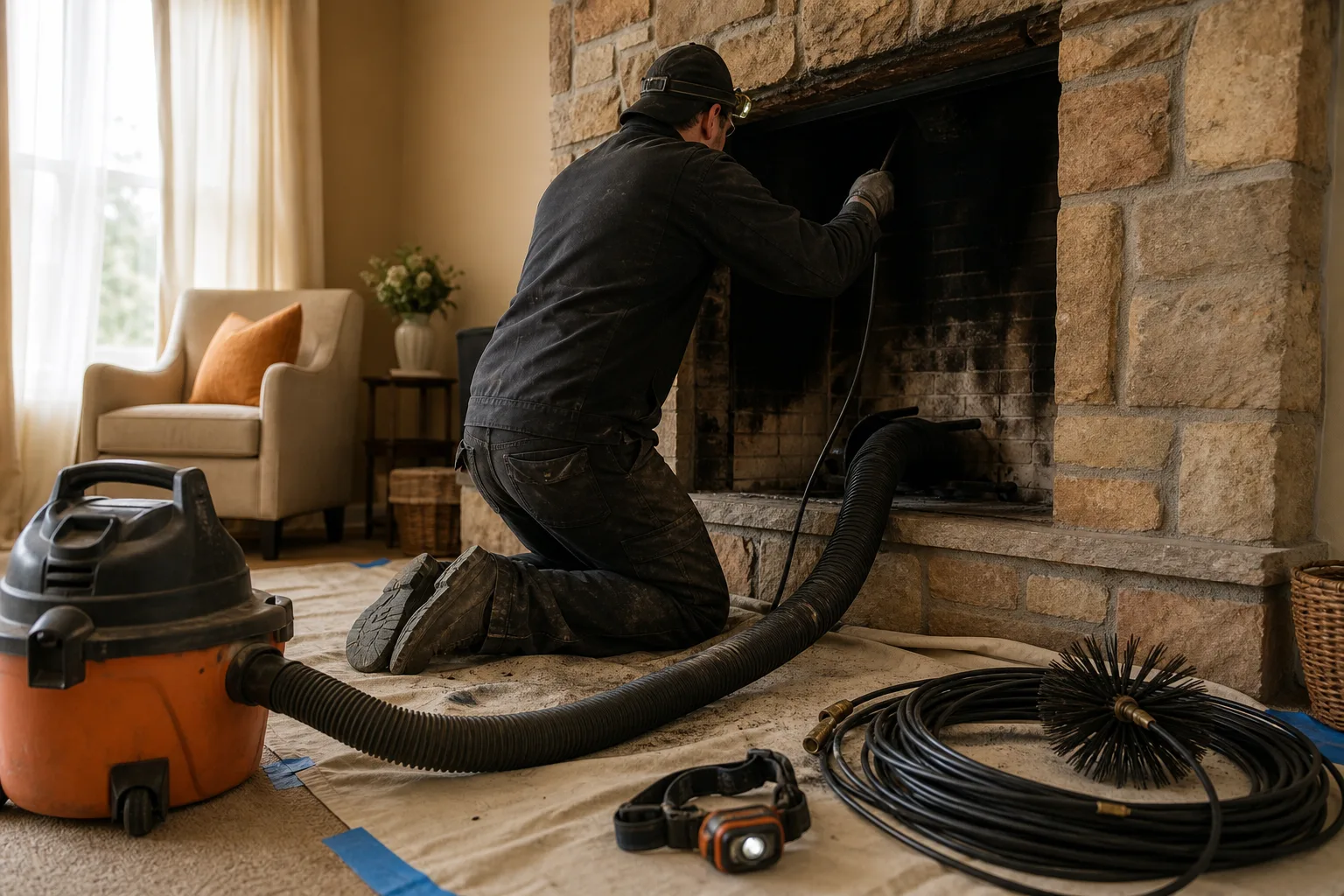
This is the job everyone pictures. Drop cloths taped over the hearth opening, a shop vacuum running the whole time, rotary brushes on flexible rods worked up the flue from below or down from the roof.
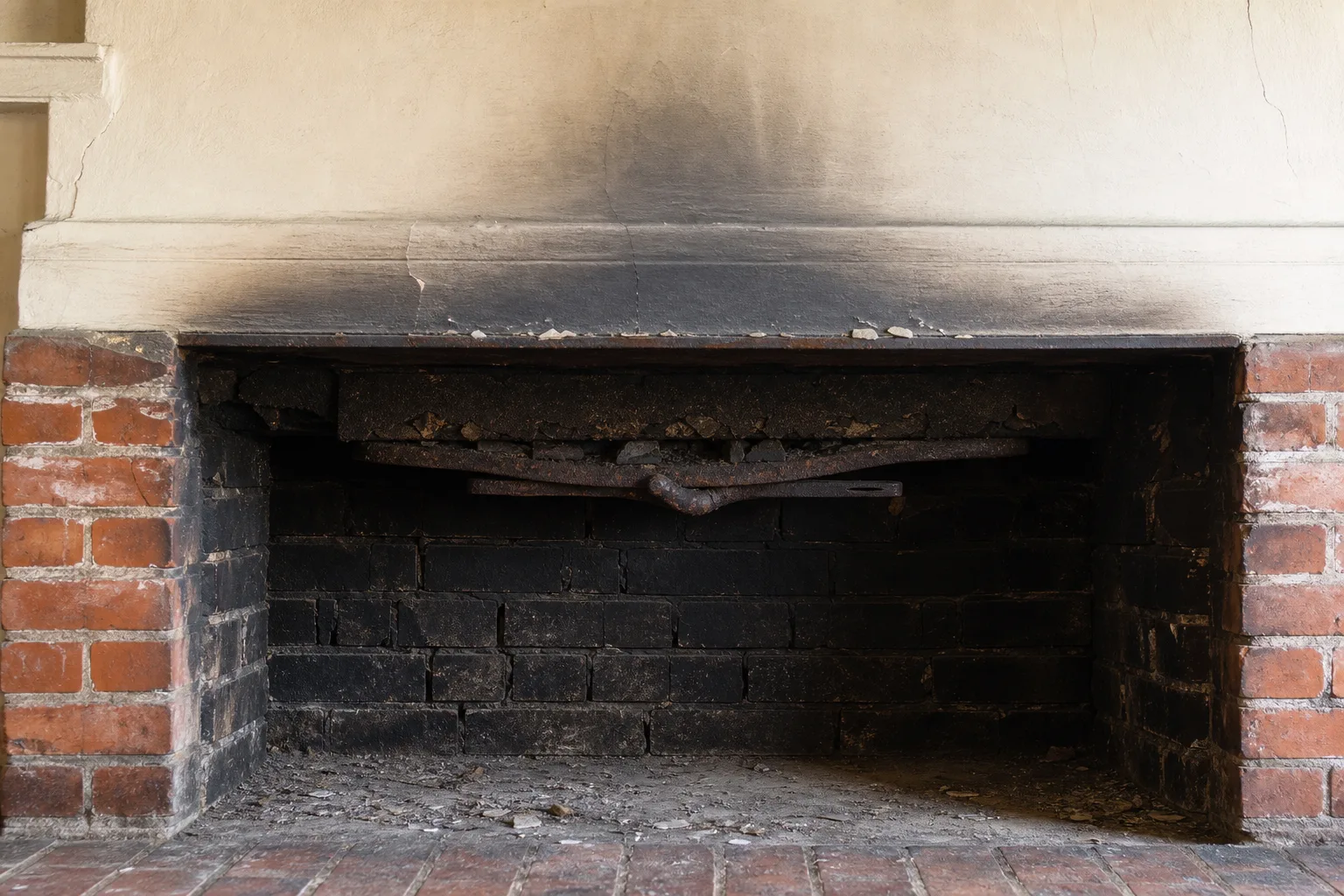
The point is removing creosote, the black residue that condenses out of wood smoke and builds on the flue walls. Early on it is flaky and matte. Left long enough it turns into a hard, shiny, tar-like glaze that is genuinely difficult to remove.
A clean job leaves your living room the way it was found. Soot on your carpet is not an unavoidable side effect of the work.
The Inspection Is the Part That Matters
The sweep gets the buildup out. The inspection is what tells you whether the structure carrying your fire is sound.
That is where cracked flue tiles show up, and failed mortar joints, and a crown that has split, and flashing that stopped keeping water out three winters ago.
Sweeping without inspecting is like getting your teeth cleaned by someone who never looks at the x-rays.
What Good Chimney Doctors Check on Every Visit
Regardless of what you called them about, a competent visit covers the same ground: the firebox and its firebrick, the damper, the smoke chamber and smoke shelf, the flue interior top to bottom, the appliance connection, and the exterior of the stack including the crown, the cap and the flashing.
If someone spends eleven minutes at your fireplace with a flashlight and hands you a bill, you did not get an inspection. You got a visit.
The Name Is a Metaphor, Not a Credential
Here is the thing nobody on the first page of search results will tell you, for the simple reason that everybody on that page is a company trying to sell you a service.
No certifying body in this industry issues the title "chimney doctor." There is no exam for it, no registry, no code of conduct attached to it. It is a name, chosen because it is memorable and because it describes the relationship well.
Myth vs. fact: the Chimney Doctors you find in Milwaukee has no connection to the Chimney Doctors in Burnsville, Minnesota, which has no connection to the one in Conifer, Colorado. Same name, seven or more separate businesses, zero shared standards.
I actually like the metaphor. It is accurate about the relationship: you have a system you cannot see inside of, something is wrong with it, and you need someone who can diagnose before they treat.
But extend it all the way. You would not let a stranger operate on you because the sign outside said doctor. You would want to know where they trained, whether their license is current, and whether the procedure they are recommending is the one you actually need.
Apply exactly that standard here and you will be fine. Skip it and the name on the truck is doing all your thinking for you.
Your Symptom, and What It Usually Means
Most people searching for chimney doctors cannot name their problem yet. They know what they noticed. They do not know what it is called or who fixes it.
So here is the translation, from what you see to what it usually points to.
| What you notice | What it usually points to | What kind of visit you need |
|---|---|---|
| Smoke rolls into the room when you light a fire | Draft problem: blocked flue, closed or stuck damper, negative pressure in the house, or a flue sized wrong for the opening | Inspection first, diagnosis before any repair |
| Sharp, sooty smell that gets worse in warm damp weather | Creosote buildup in the flue, sometimes combined with a missing cap letting moisture in | Sweep plus inspection |
| Water stain on the wall or ceiling beside the fireplace | Failed flashing where the chimney meets the roof, a cracked crown, or a missing cap | Inspection with exterior access |
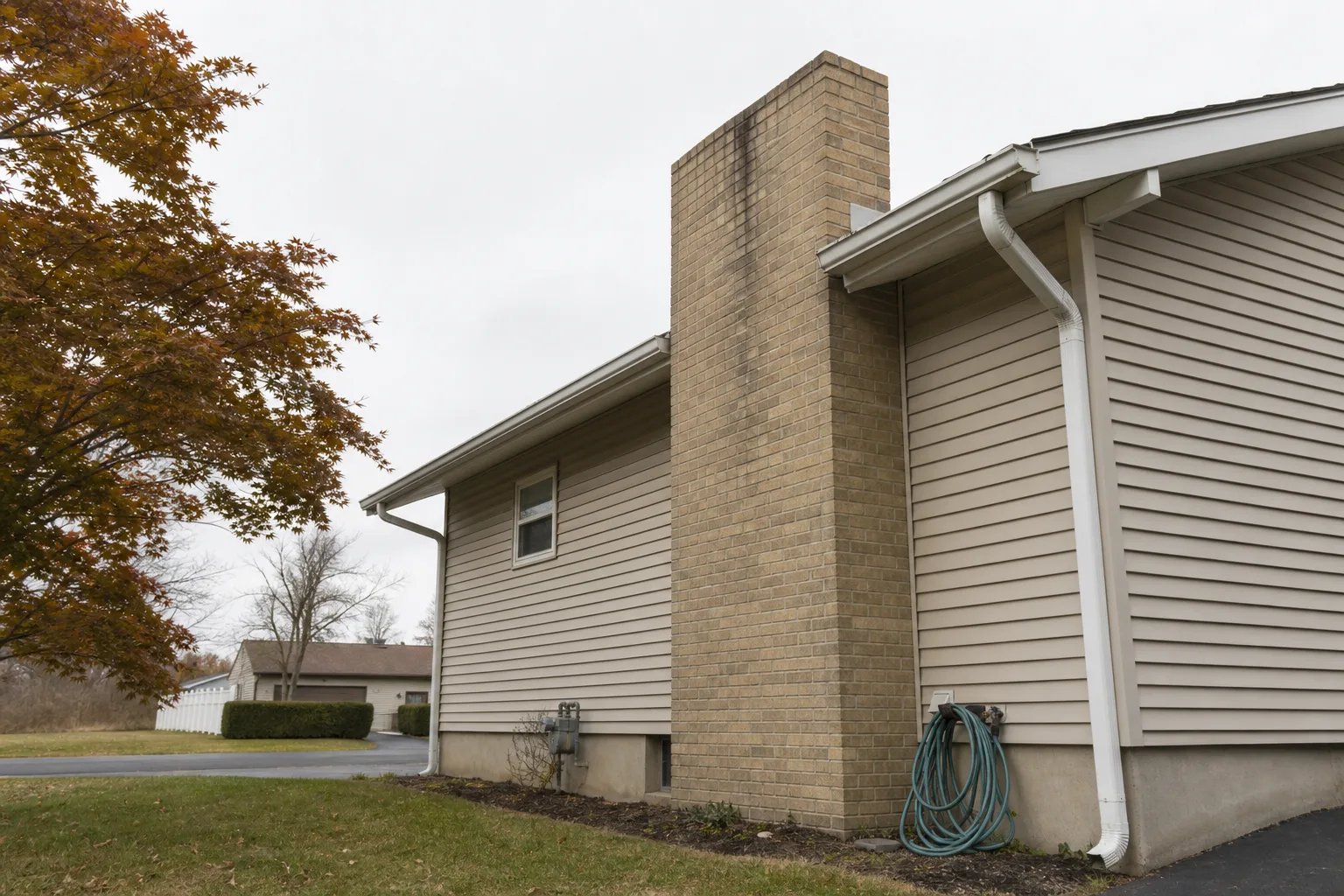
| Chalky white bloom on the outside brick | Efflorescence: salts moving through masonry that is absorbing water | Masonry evaluation |
| Flakes or chunks of brick face on the ground | Spalling, usually from water getting into the brick and freezing | Masonry evaluation, often tuckpointing |
| Damper will not move, or will not seal | Rust, warping, or debris on the smoke shelf | Inspection, damper repair or replacement |
| Scratching, chirping or rustling above the firebox | Animals or nesting material in the flue, almost always a missing or damaged cap | Inspection and cap work |
| You just bought the house | Unknown history, and an unknown history is the whole problem | Level 2 inspection |
Safety note: under NFPA 211, the standard the trade works to, a Level 2 inspection is required at the sale or transfer of a property, after any change to the system such as a new appliance or a new liner, after a malfunction, after a chimney fire, and after an external event like a severe storm or an earthquake. Those are not upsell situations. Those are the ones written into the standard.
If your symptom is on that list, you are not overreacting by calling someone. If your symptom is smoke in the room, do not keep lighting fires while you wait.
A few of these are smaller than they feel, too. Replacing a damper that will not seal is a contained job, not a rebuild, and knowing that before the quote arrives is useful.
Credentials: What Actually Separates One Company From the Next
Since the name means nothing, something else has to do the work. Two things do, and both of them are things you can ask about over the phone before any chimney doctors set foot on your property.
What CSIA Certification Means
The Chimney Safety Institute of America runs the credential most of this industry recognizes: CSIA Certified Chimney Sweep.
It is not a form you fill out. A technician attends a CSIA review course, then passes a written exam covering the NFPA 211 inspection levels, sweep methodology, combustion chemistry, creosote formation and grading, masonry defects, liner systems and draft dynamics.
They also sign the CSIA Code of Ethics, which commits them to honest service, transparent pricing and proper scope of work. Certification is maintained through continuing education credits on a three year cycle.
That last detail is worth more than it looks.
Pro tip: the useful question is not "are you certified." It is "is your certification current, and who on your crew holds it?" A card from six years ago that was never renewed still photographs beautifully on a website.
Worth saying plainly: CSIA certification is voluntary in most places. Licensing rules for this work vary by state and by municipality, so what is legally required where you live is a separate question worth asking your own building department.
The Three Inspection Levels, and Which One You Need
NFPA 211 defines exactly three, and knowing them turns you from someone being sold to into someone buying.
Level 1 is the annual maintenance standard. The technician examines the readily accessible parts of the chimney inside and out, plus the accessible portions of the appliance and the chimney connection. They are confirming basic structural soundness, that the appliance is installed and connected correctly, and that the flue is clear of obstructions and combustible deposits.
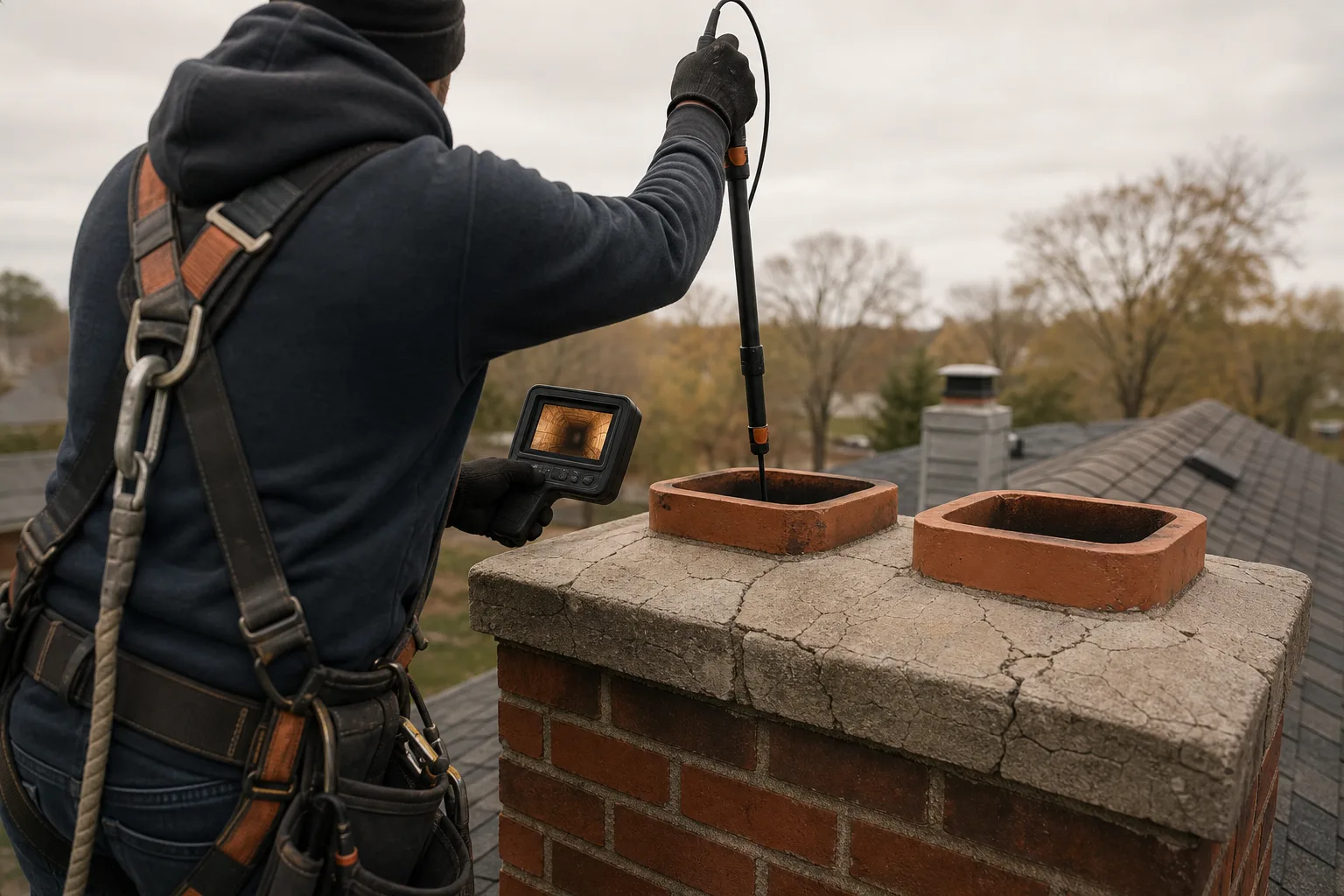
Level 2 adds a video camera scan that records the interior of the flue, plus accessible attics, crawlspaces and basements. This is the one required at sale or transfer, on a system change, after a malfunction, after a chimney fire, and after an external event.
Level 3 includes everything in Level 2 plus invasive work: removing parts of the chimney or the surrounding structure to reach a hazard that is suspected but concealed. Nobody sells you a Level 3 casually. It is what happens when Level 2 found something it could not see the end of.
From the field: the companies that answer credential and inspection level questions easily, without getting defensive, tend to be the same companies that hand you documented findings afterward. The reaction to the question is itself information.
How to Vet Chimney Doctors Before You Let Them on the Roof
You are about to give a stranger access to your roof and your home. Ten minutes of vetting is proportionate, and the same questions apply whether you are booking a routine chimney service call or a full masonry rebuild.
The Questions Worth Asking Out Loud
- Is anyone on the crew a CSIA Certified Chimney Sweep, and is that certification current?
- What inspection level are you quoting, and why that one for my situation?
- Are you carrying current liability insurance, and can you send me the certificate?
- Are you licensed for the work you are quoting in my city or county?
- Can I have the scope and the estimate in writing before anything starts?
- Can you give me two recent local references?
- If you find something beyond the quote, what happens next, and do I approve it before you proceed?
- Will I get photos or video of what you found?
Question seven is the one that saves people. A company with a good answer to it has thought about the difference between finding a problem and inventing one.
Pro tip: asking for proof of liability insurance is not rude, and a company that treats it as rude has answered a different question you did not ask. Ask for the certificate rather than a verbal assurance.
Red Flags Worth Walking Away From
These are documented patterns in this trade, not hypotheticals.
The contractor arrives unsolicited, knocking on your door. That is the loudest one, and it is also the one people most often ignore, because the person is standing right there being friendly.
Pressure to sign or pay immediately for a large sum. Work that begins before there is a signed contract. Refusal or inability to produce a license, a registration, or proof of insurance.
A price low enough that the labor, the time and the equipment could not possibly be covered by it. A heavy push toward cash or a prepaid card, which conveniently leaves you no way to dispute the charge with your bank.
And the one that does the most damage: catastrophe framing used to force a decision today. Chimney fires and carbon monoxide are real risks and a serious professional will tell you about them plainly. What a serious professional does not do is use them as a closing technique on your porch.
If the fear is arriving before the evidence, that is the tell.
Do not want to run this checklist yourself? Some of it is still yours to do, but VIO takes the first pass. We match homeowners with independent local chimney companies, we ask about credentials and insurance when a company joins the network, and we ask every company in it to put its estimate in writing before any work starts. Insist on exactly that yourself, and verify the certification and the insurance certificate directly with whoever shows up. Call (513) 655-6702.
What Happens When Nobody Looks
It helps to know what chimney doctors are actually looking for up there, because the damage that matters almost never announces itself from inside the house.
Picture a homeowner with a 1920s brick stack who has never had anyone up on the roof. Nothing dramatic has happened. The fireplace works.
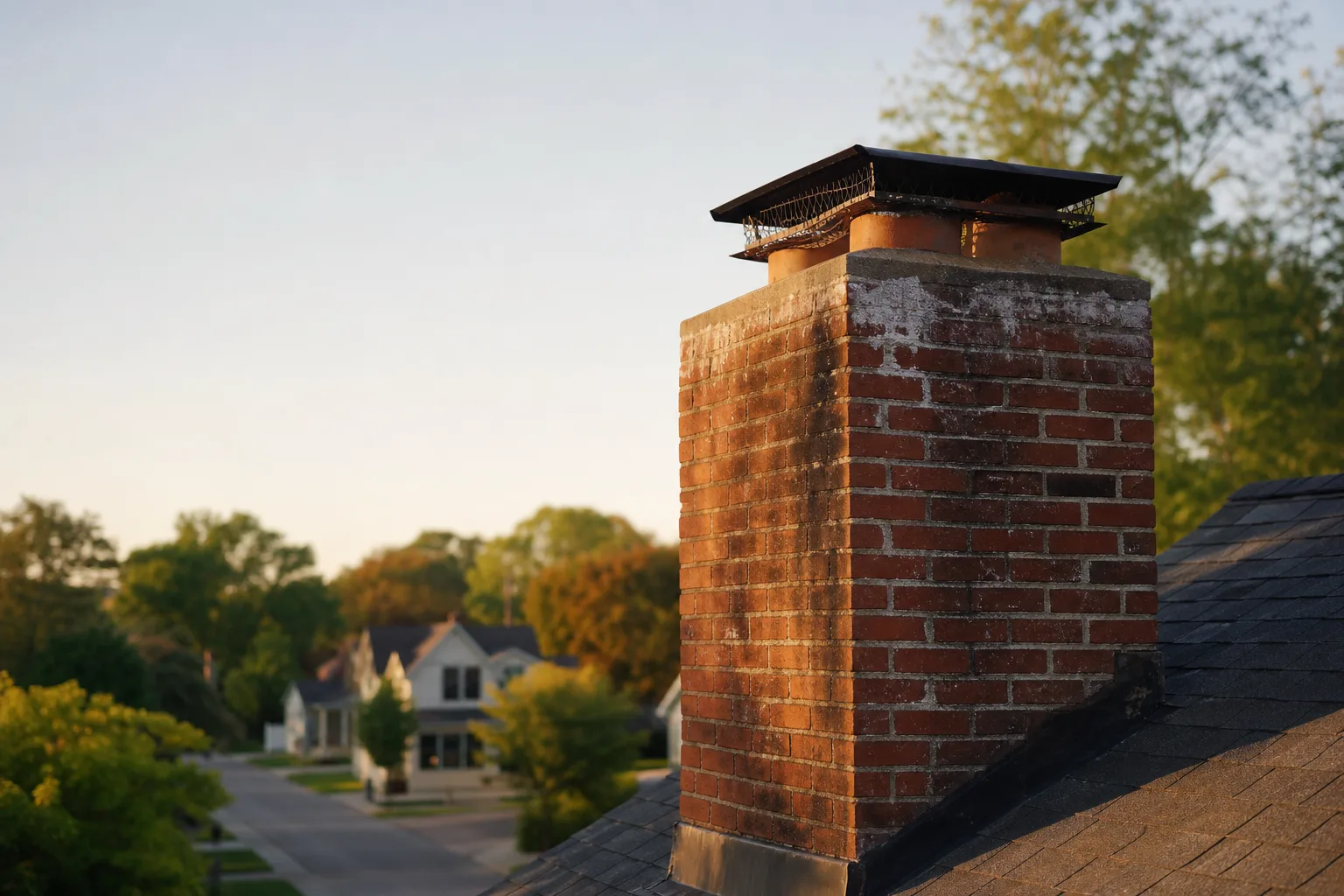
Meanwhile the crown, the sloped slab at the very top that is supposed to shed water away from the flue, has spiderwebbed with cracks. Water gets in.
The cap is gone, or was never there, so rain drops straight down the flue onto the smoke shelf. Mortar joints on the weather side have gone sandy and recessed. Brick faces have started popping off in flakes, leaving pale pitted craters.
None of that announces itself from the living room. All of it compounds.
From the field: in this trade the patient enemy is water, not fire. Fire damage is loud and gets attention. Water works quietly for years and is usually what turned a small repair into a rebuild by the time anyone climbs up to look.
Brick repair on a stack like that is not glamorous. Repointed joints in fresh grey mortar against old weathered brick, a rebuilt crown with a proper drip edge, a new stainless cap with mesh sides sitting over the flue tiles.
It looks like a chimney that someone paid attention to. That is the whole goal.
How VIO Helps You Find Chimney Doctors You Can Trust
Here is what VIO is, stated plainly, because you should know who you are talking to.
VIO is a referral service. We do not sweep chimneys and we do not rebuild them. The work is done by independent local companies, and the company we match you with is a separate business that runs its own crew and answers for its own work.
What we do is the matching part. We ask about credentials, insurance and track record when a company joins the network, and we ask every company in it to put its estimate in writing before any work starts.
None of that replaces your own check, and you should not let it. Whoever turns up at your house, ask for the current CSIA certification, ask what licensing your city or county requires for the work being quoted, and ask for the certificate of liability insurance before anyone touches the chimney. Any company worth hiring will hand all three over without friction.
You describe the problem once when you request service, and we take the matching from there.
We ask every company in the network to put its estimate in writing before any work starts, and you should insist on exactly that. Written scope, written number, your approval before anything changes.
And if the pro we send finds something outside the original scope, the expectation we set is the same one you should set yourself: it comes back to you as a decision, not as a surprise on the invoice.
Ready to have someone look at it? Tell us what your chimney is doing and roughly where you are, and we will match you with an independent local company that handles that kind of work. No obligation on the call. Call (513) 655-6702.
The metaphor was always a decent one. A chimney really is a system you cannot see inside, and diagnosis really does have to come before treatment.
Just take the metaphor seriously in both directions. When you go looking for chimney doctors, hire the way you would choose an actual doctor: on credentials, on a clear explanation of what is wrong, and on a plan you understood before you agreed to it.
The name on the truck is marketing. The certification, the inspection level and the written scope are the real thing, and now you know how to ask for all three.
Symptom checker
What is your chimney doing?
Tap the closest match for an honest first answer.