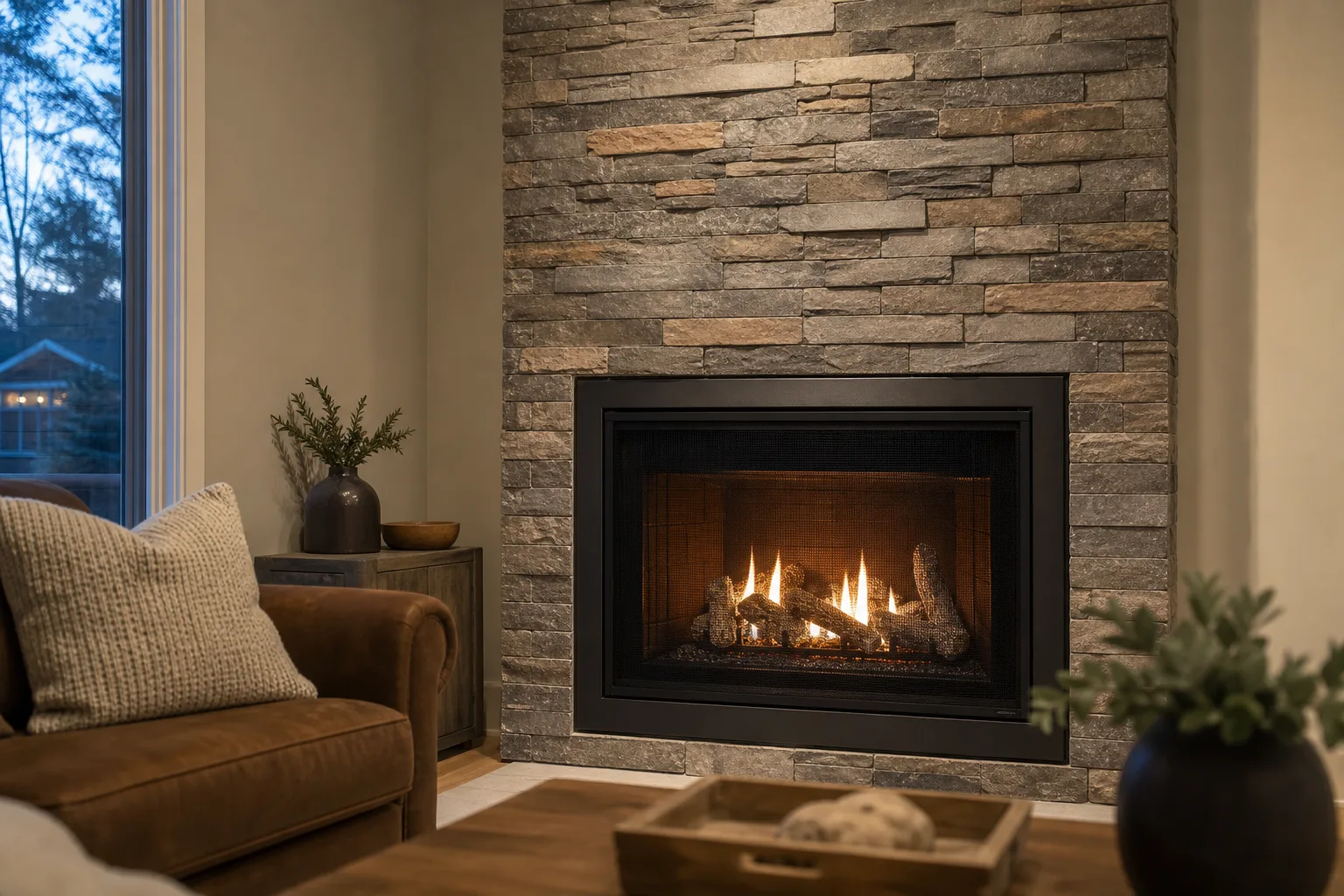




On this pageWhat a Zero Clearance Gas Fireplace Actually Is7 sections+6
- What a Zero Clearance Gas Fireplace Actually Is
- Zero Clearance Gas Fireplace vs. Insert vs. Vent-Free
- How These Fireplaces Vent, and Why It Decides Everything
- Reading the Age and Condition of the Unit You Already Have
- Repair, Rebuild, or Replace: How the Decision Gets Made
- Inspections, Standards, and When One Is Required
- How VIO Helps With a Zero Clearance Gas Fireplace
Quick answer
A zero clearance gas fireplace is a factory-built gas fireplace listed for installation into framed combustible walls at reduced, manufacturer-specified clearances, not zero distance. Most are direct vent: a sealed firebox behind fixed glass that draws combustion air from outdoors and exhausts through a coaxial pipe out a wall or roof. No masonry chimney is needed, but a listed vent system and an approved termination are.
Somebody said the words "zero clearance gas fireplace" to you, and now you are looking at your own living room differently.
Maybe it was a home inspector. Maybe a chimney company on the phone, or a line on a disclosure form in the middle of a house sale. Either way the phrase showed up without a definition attached, which is a strange way to find out that the appliance you have been lighting every winter belongs to a category you had never heard of.
Here is the problem with a zero clearance gas fireplace. Almost everything that determines whether it is safe sits behind a glass front and a sheet of painted steel.
You cannot see the panels. You cannot see how the vent was run. You cannot see whether the unit left the factory with a barrier screen, or whether somebody took it off and put it in the garage.
So this article opens the box. What the thing actually is, how to tell it apart from the two products it gets confused with constantly, how it vents, how to read its age and condition, and how the repair-or-replace decision really gets made.
What a Zero Clearance Gas Fireplace Actually Is
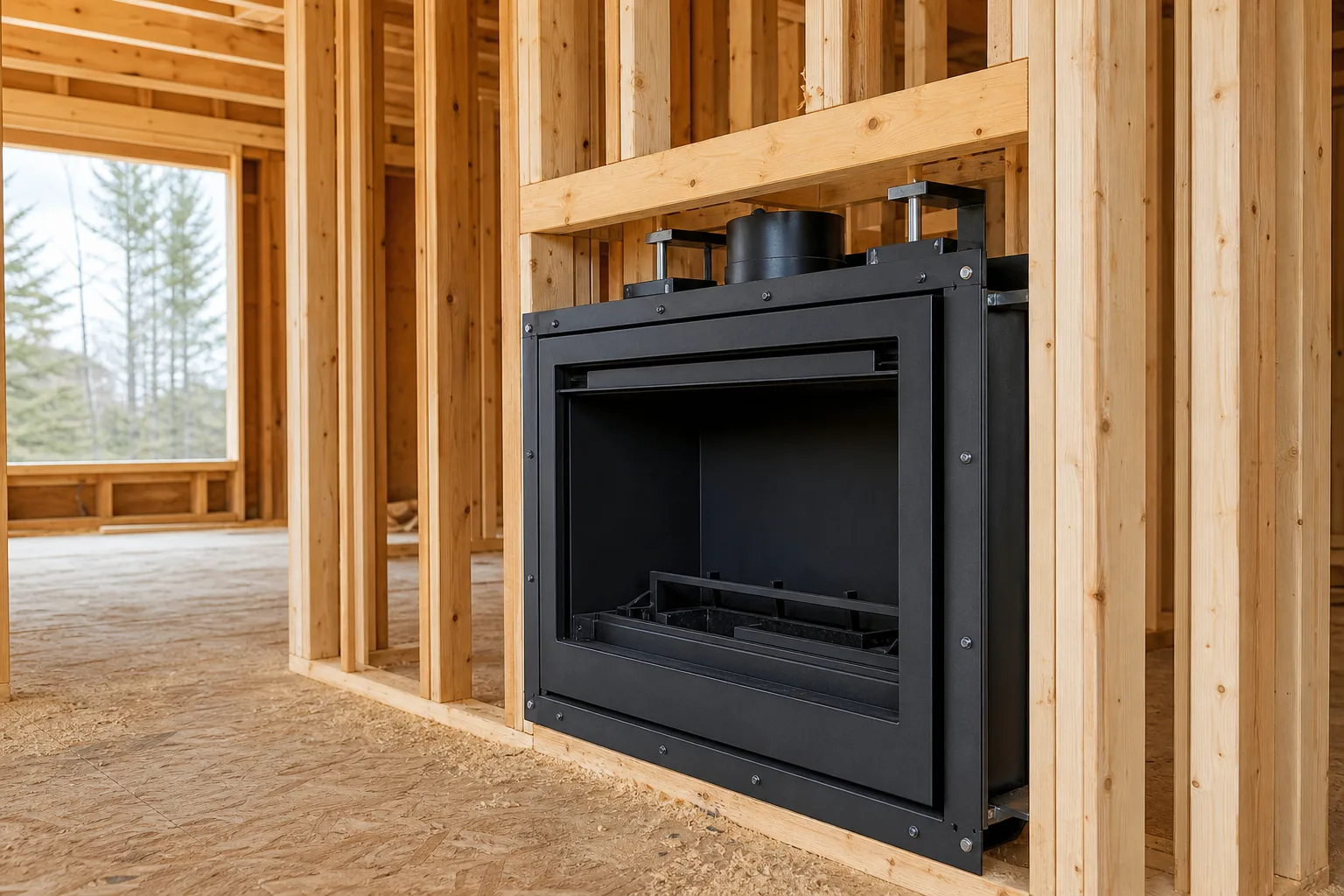
Pull the trim off one and you find a rectangular steel box.
Matte black, roughly the size of a small chest freezer, with sheet-metal nailing flanges running down both sides and standoff spacers holding the framing off the back and top. Those flanges are the entire idea. The box gets fastened straight into a wood-framed cavity, the way a window does.
Inside, the back and side walls are lined with tan and gray panels molded to look like brick or herringbone. A burner pan sits low, with a set of ceramic fiber logs resting on it. On a direct vent unit a fixed pane of glass closes the front, and on units built since 2015 a black steel mesh barrier screen clips over that glass. A trim kit frames the whole opening once the drywall and tile go on.
That is the appliance. A factory-built gas fireplace, listed and tested as a complete system, engineered to be installed into combustible framing rather than into masonry.
The most useful picture of one is the picture almost no homeowner ever sees: the bare box sitting in open studs, before the drywall. Once you have that image, the term stops being jargon and starts being an object.
Why "Zero Clearance" Does Not Mean Zero Distance
This is where the product pages get lazy.
"Zero clearance" is a category name. It describes a unit built so that its exterior surfaces stay cool enough to live near wood framing, with clearances dramatically reduced from what masonry demands.
Reduced is not zero. Every listed unit ships with an installation manual stating exact dimensions: inches to the framing at the sides, inches at the top, requirements for mantel height, allowable vent runs and elbows.
Myth vs. fact: The myth is that a zero clearance unit can be pressed flat against wood. The fact is that the unit's listing and the manufacturer's installation instructions define the real clearances, and nothing else does. Open the installation manual for any listed unit and the front pages say the same sentence: install in accordance with these instructions and local codes.
That matters more than it sounds. The clearances in that manual were tested with that firebox, that vent pipe and that trim kit. Substitute a component and the tested assembly is no longer the assembly sitting in your wall.
Factory-Built vs. Masonry: Who Built Your Fireplace
A masonry fireplace was built on site by a mason, out of brick, mortar and clay tile flue liner, usually while the house was going up.
A factory-built fireplace arrived on a truck.
Telling them apart takes about ten seconds. Look up into the firebox with a flashlight. Masonry shows you a brick or stone throat and a cast-iron damper plate you can swing with a handle. A factory-built gas unit shows you smooth molded panels, sheet metal above them, and no damper you can operate at all.
Good to know: Every factory-built unit carries a rating plate, a metal or foil label listing the model number, the standard it was certified to, and usually a date. It normally hides inside the firebox on a side wall, behind the lower louver, or under the bottom trim panel. That label is the fireplace's identity. Without it, nobody can tell you much about your unit that is worth acting on.
So now you know what is in the wall. The next question is whether it is even the product you think it is, because the internet gets this wrong on an industrial scale.
Zero Clearance Gas Fireplace vs. Insert vs. Vent-Free
Search the term and one of the first results you will hit is a national retailer filing zero clearance units under "gas fireplace inserts."
They are not inserts. An insert is a sealed gas appliance that slides into a fireplace opening that already exists, and vents up the existing flue through a liner. A zero clearance gas fireplace is the fireplace itself. It creates an opening where the house never had one.
If you arrived at this page unsure which of the two you own, that filing error is a fair place to put the blame.
| Zero clearance gas fireplace | Gas fireplace insert | Vent-free gas appliance | |
|---|---|---|---|
| What it is | A complete factory-built firebox | A sealed unit fitted into an existing firebox | A burner or firebox that sends nothing outdoors |
| Needs an existing fireplace | No | Yes, masonry or factory-built where the manufacturer permits it | No |
| Installs into | Wood framing, at the listed clearances | A masonry or factory-built opening | Varies by product and by local rules |
| Venting | Listed vent system, out a wall or through the roof | Usually a liner up the existing chimney | None |
| Combustion air | Outdoors, on direct vent models | Depends on the model | From the room you are sitting in |
| Glass front | Fixed and sealed on direct vent models | Usually fixed and sealed | Often open, screened, or unsealed |
| Masonry chimney required | No | No; it uses the flue of the fireplace it goes into | No |
| Who it suits | New walls, additions, homes built without a fireplace | Upgrading a fireplace you already own | Spaces where venting is impractical, where local rules allow it |
One more distinction worth holding onto. Zero clearance describes the box and how it mounts. Direct vent, B-vent and vent-free describe how it breathes. Zero clearance gas fireplace models are frequently sold as direct vent units, but the category is not a synonym for it, and zero clearance vent-free units are sold as such.
When an Insert Is the Right Answer Instead
If you already have a sound masonry fireplace and you want gas heat out of it, an insert is usually the shorter road. The structure is there, the flue is there, and the work concentrates on the liner and the connection.
If what you have is a tired factory-built firebox, it becomes a harder conversation. Fitting one appliance inside another listed appliance is only allowed where the manufacturer of the fireplace says it is, so that has to be checked in the manual rather than assumed either way.
Which is a good moment for something no company selling fireplaces will tell you: sometimes the honest answer is that your fireplace is fine and the money belongs in your gutters.
The component that decides most of this, though, is not in the room at all. It is on the outside of your house.
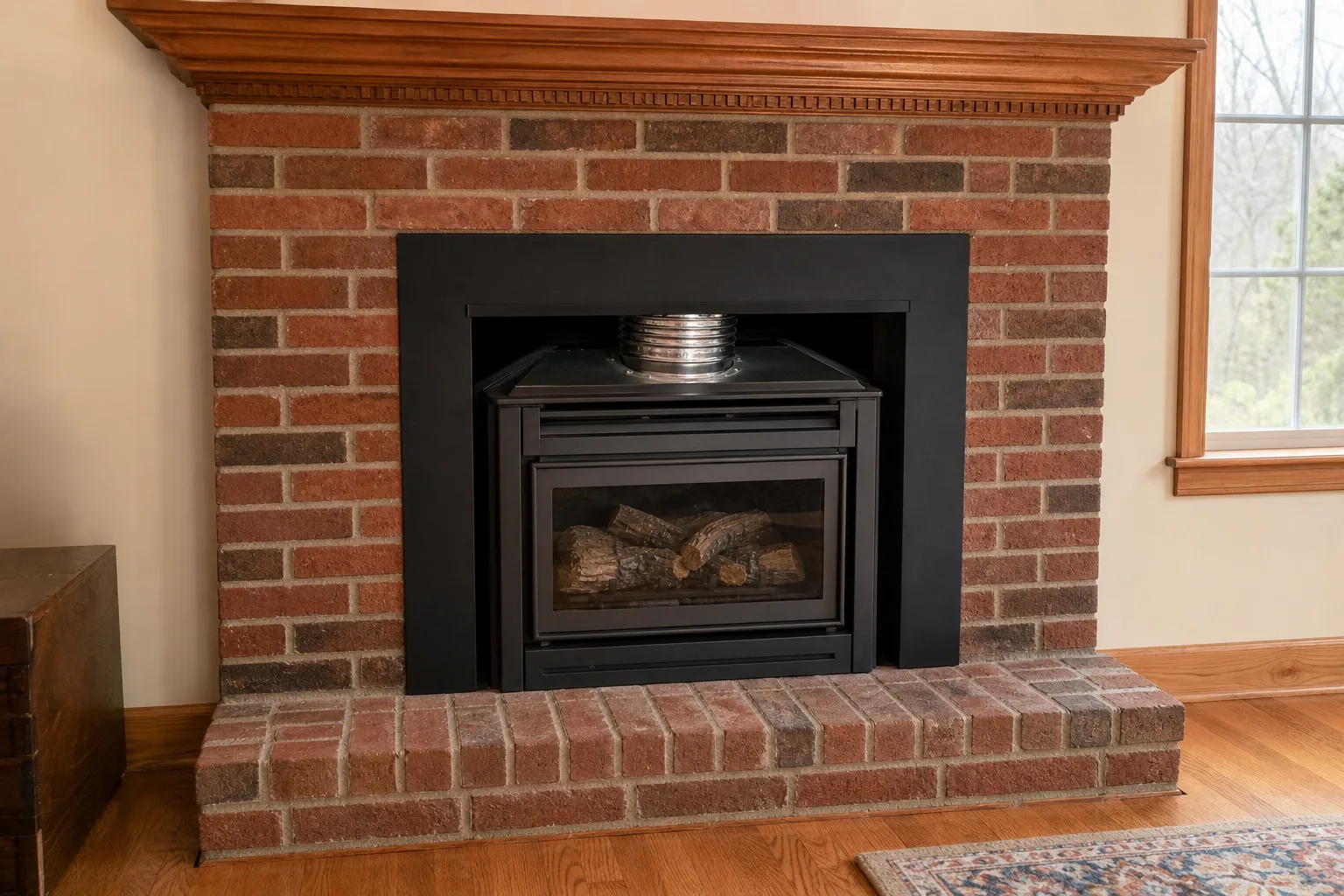
How These Fireplaces Vent, and Why It Decides Everything
A masonry chimney runs on heat and height. Hot gas rises, the flue is tall, and the draft pulls the byproducts out.
A zero clearance gas fireplace does not get to rely on any of that. It has no mass, no height, and in plenty of installations no vertical run at all. So the engineering moved into the vent pipe itself, and the way your unit breathes tells you more about it than the brand name on the trim.
There are three arrangements, and direct vent is the one these units are often sold as.
Direct Vent
A direct vent unit is a sealed combustion appliance, and that phrase deserves unpacking.
The vent is coaxial, a pipe running inside another pipe. Fresh air for combustion comes in through the outer passage, straight from outdoors. Exhaust leaves through the inner pipe. The firebox is sealed off from your living room by that fixed pane of glass.
So the air your burner consumes is never air from the house. That is why the glass does not open, and why a direct vent unit can sit in a tight modern house without competing with the furnace for oxygen.
It also means the glass is not decoration. A cracked or missing pane on a direct vent fireplace is not a cosmetic problem. It is a breach of the sealed system.
B-Vent
B-vent, sometimes called natural draft, is the older arrangement.
It draws combustion air from the room, burns it, and relies on natural draft through a Type B vent with a draft hood to carry the byproducts up and out. A Category I appliance, in code language.
The tell is that draft hood, a bell-shaped gap above the firebox where room air joins the flue gases. If you can see one, or dark staining around it where spillage has happened, you are looking at a B-vent unit and it deserves attention from someone qualified.
Vent-Free
Vent-free appliances send nothing outdoors. They burn gas in the room and leave the combustion products in the room with you.
They fall under a different set of requirements than vented units, and legality varies. Some jurisdictions restrict or prohibit vent-free appliances outright. Others permit them with conditions attached.
Safety note: Do not assume a vent-free unit in your home is permitted just because it is installed and working. Rules on vent-free appliances are set locally, and whether yours complies is a question for your code authority or an inspector who works in your jurisdiction, not for a product page.
Where the Vent Comes Out: Wall Terminations and Chases
Go outside and look at the wall behind your fireplace.
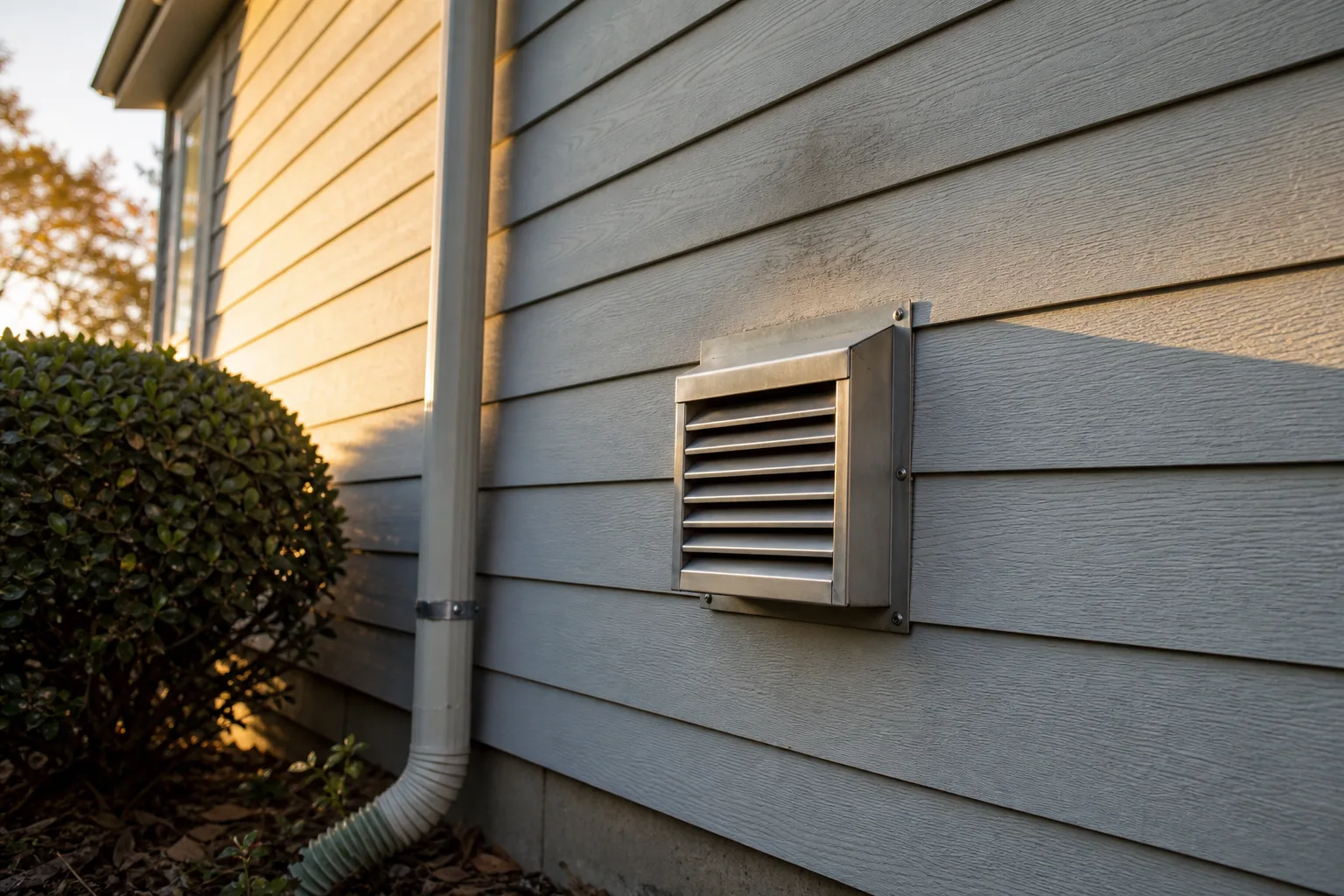
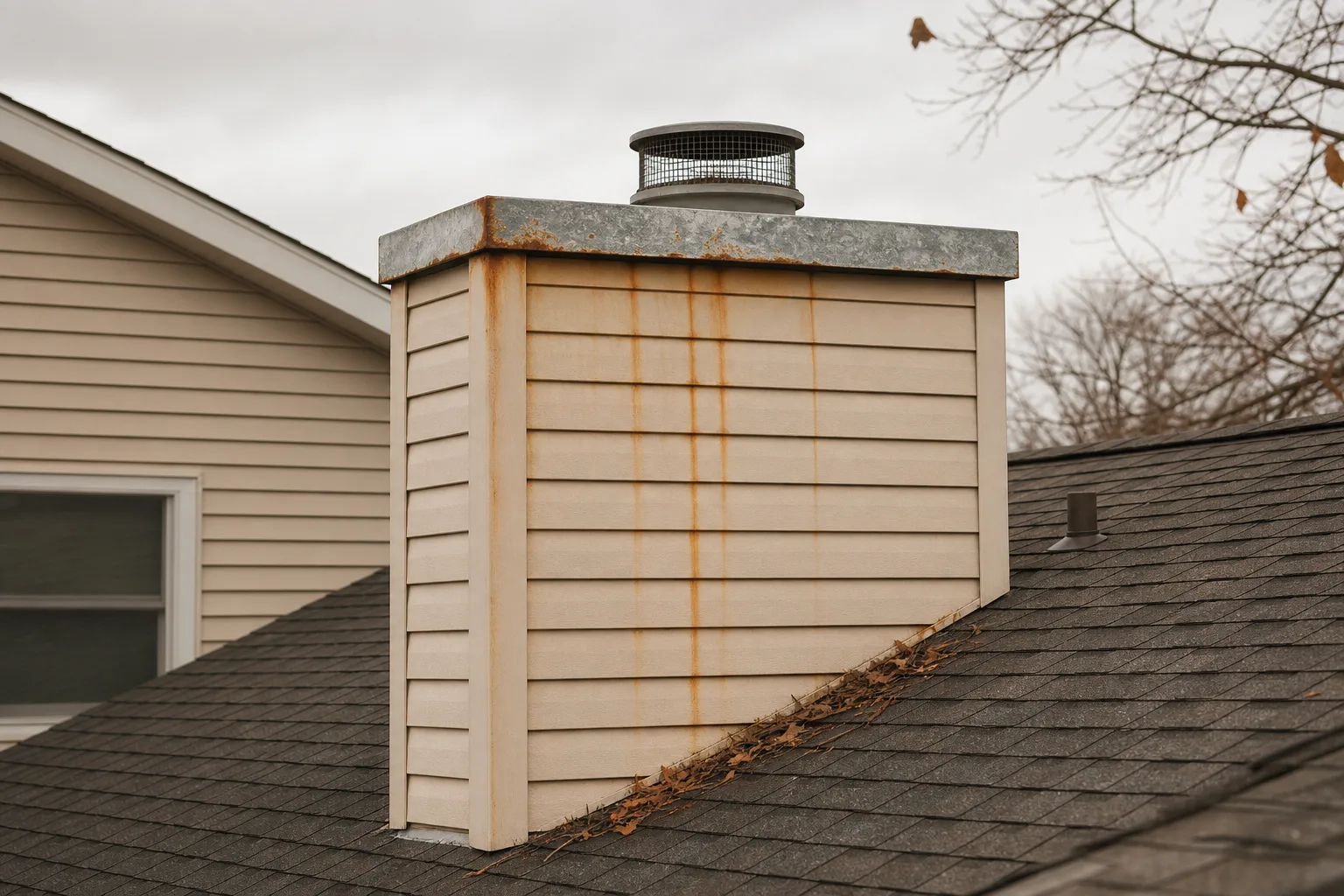
On a horizontal run you will find a termination cap, a squared metal cover with horizontal louvers, mounted on the siding a foot or two above fireplace level. On a vertical run you will find something bigger: a boxed wood chase, clad in the same siding as the house, rising past the roofline with a sheet-metal chase cover on top and a round or square shroud above it.
Those parts live outdoors and nobody ever looks at them, which is reason enough to put them on the list for an inspection.
From the field: Some of these conversations do not start with the fireplace at all. They start with a rust streak running down the siding, or a stain on the ceiling near the chase, and the homeowner is convinced the roof has failed. A chase cover that has been sitting under standing water is worth ruling out before anyone opens up the roof.
Reading the Age and Condition of the Unit You Already Have
Now the practical part, written for the reader who did not choose this fireplace and inherited it with the house.
You are establishing four things: what it is, roughly when it was made, whether the sealed system is intact, and whether the interior has started coming apart.
The Barrier Screen Question, for Anything Built Before 2015
This is the most useful date in the whole topic.
In January 2015, ANSI and its Canadian counterpart began requiring vented gas fireplaces to include a safety barrier screen as standard equipment. The reasoning is blunt. The glass front on these fireplaces can reach upward of 500°F, and a toddler's hand cannot tell hot glass from cool glass until it is too late.
So a unit manufactured before that date may have left the factory with no barrier screen at all. Aftermarket barrier solutions are made for older units, and the installer is responsible for making sure a barrier is fitted per the manufacturer's instructions and local codes before leaving the job.
Safety note: If there are small children in the house and your glass front has no mesh screen over it, treat that as the first thing to solve, ahead of everything else in this article. Check the rating plate date before you assume your unit came with one.
What Cracked Refractory Panels Mean
Lift the screen and put a flashlight on the back and side panels.
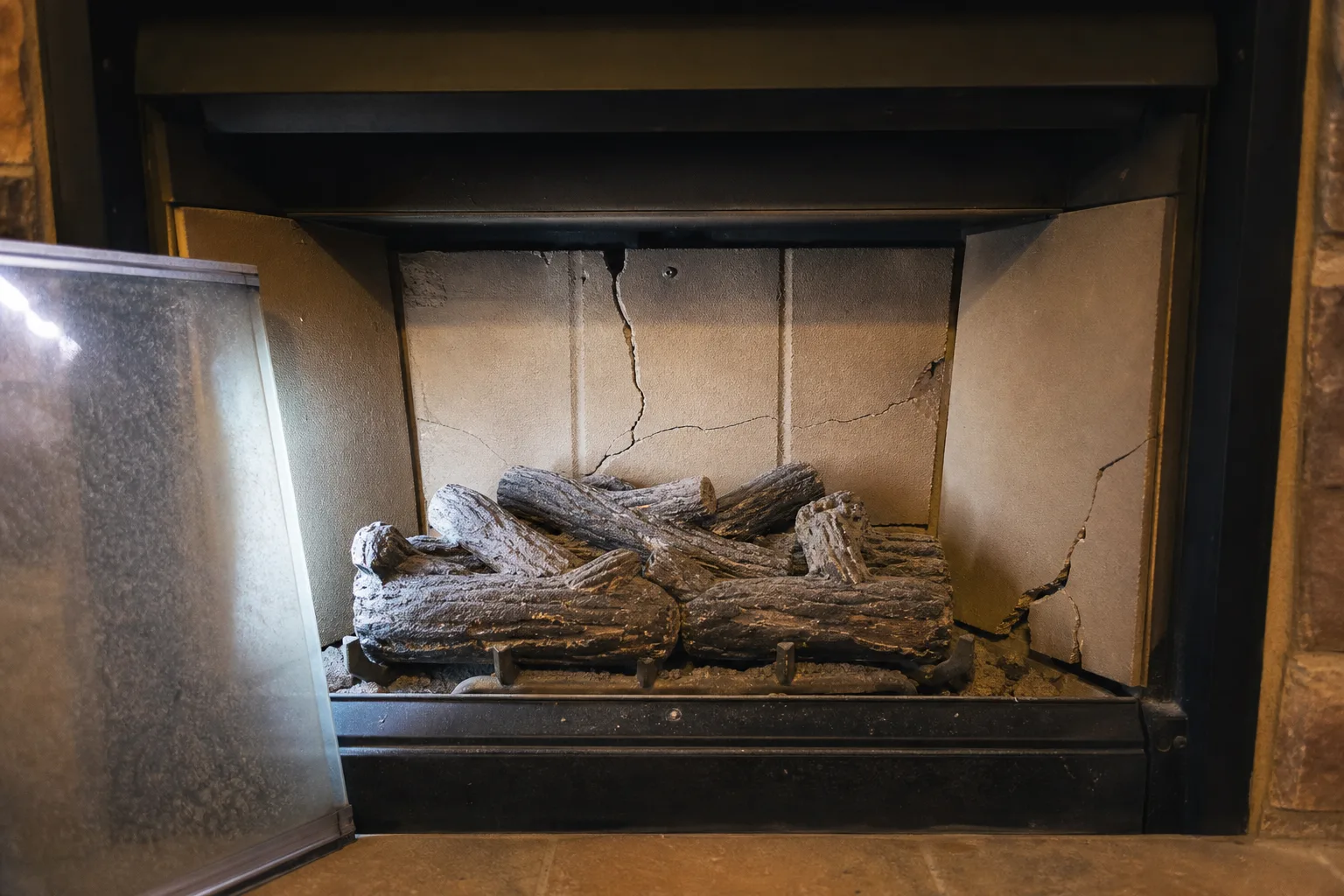
Those molded panels take a beating: high temperatures, heat that cycles up and down, and moisture that works its way in from above. Over time they craze, then crack, then start losing corners and faces.
Pro tip: The Chimney Safety Institute of America gives a test you can perform yourself. If a nickel stood on edge fits into a crack, or if the surface has worn away more than a quarter inch, the panel is due for replacement. Wider than a coin is not a hairline. It is a gap.
Panels are a wear item on a zero clearance gas fireplace, and replacing the refractory panels is ordinary work. Hearth suppliers sell them in stock sizes and cut to order. What is not ordinary is ignoring them, because the panel is what stands between the fire and the sheet metal behind it.
What You Can Check Yourself, and What You Cannot
Yours to check: the rating plate and its date. Whether a barrier screen is present. Whether the glass is clear or carries a white sulfur haze. Whether the panels are cracked past the coin test. What the termination cap or chase cover looks like from the ground.
Not yours to check: the gas connection, the glass gasket, the vent joints inside the wall, the condition of the firebox shell behind the panels, or anything that involves taking the glass assembly off.
That line is not about liability. It is that a direct vent fireplace is only safe while it is sealed, and putting a sealed system back together correctly is a trained job.
Not sure what is behind your fireplace glass?
Zero clearance units hide almost everything important behind a glass front and a steel wall. An inspection by an independent local company tells you what you have, how it was vented, and what needs attention before the first cold night.
Call (513) 655-6702 and VIO will match you with a chimney company in your area.
Repair, Rebuild, or Replace: How the Decision Gets Made
Two facts govern this, and neither is the one homeowners expect.
The first is that a factory-built fireplace is a listed system, not a pile of parts. It earned its certification as an assembly: this firebox, these panels, this glass, this vent.
The second is that model lines get discontinued. A unit from the 1990s may have no parts stream left at all, which turns what should be a small repair into a replacement conversation for reasons that have nothing to do with how the fireplace looks.
Why Parts Have to Match the Listing
Panels cut from generic stock, glass from a different model, a vent component from another brand. Replacement panels are sold in stock sizes and cut to order, so the question is never whether a piece can be made to fit.
The question is whether the appliance listing and the manufacturer's installation instructions accept it. That is where compatibility gets decided, part by part, and a fireplace operating outside its listing is an appliance nobody can certify.
Good to know: When a company tells you a repair calls for the manufacturer's part rather than a universal one, that is not automatically an upsell. On a listed appliance the specified part can be part of the safety case, and the manual is where you check.
The Signs That Point Toward Replacement
Panel damage on a unit whose panels are no longer made. Rust or perforation of the firebox shell itself, not just the panels. A vent system that was never right and cannot be corrected inside the existing walls. Water that has been running through the chase long enough to reach the metal.
None of those is a verdict you can reach from your sofa. What you can do is arrive at the appointment prepared.
Take this to the inspection:
- The model number and serial number off the rating plate, photographed
- The manufacture date, if the plate shows one
- Whether a barrier screen is present, and whether you have the original
- Photos of the panels, taken with a flashlight held to the side
- A photo of the exterior termination cap or the chase and its cover
- Any owner's manual or paperwork that came with the house
- What the fireplace does that concerns you, in plain words, including smells, sounds and soot
- Whether a sale, refinance or appraisal is pending, and the date
- Ask for the inspection findings in writing, with the level of inspection named
Inspections, Standards, and When One Is Required
People assume an inspection is optional maintenance. For gas appliances there are moments when a Level 2 inspection is required, and NFPA 211 names them plainly.
A Level 2 inspection is required at sale or transfer of the property, when the system is changed (fuel, flue or appliance), after a malfunction, after a chimney fire, and after an external event such as a weather event, an earthquake or a building fire.
Read that list again and notice the first item. If you found this article because a house sale put the term in front of you, you are not looking at a recommendation. You are looking at the standard's own trigger.
The appliance standard behind these units is ANSI Z21.88 and CSA 2.33, covering vented gas fireplace heaters. Venting rules for direct vent, B-vent and vent-free sit in the IRC at section R1006, though which edition your jurisdiction has adopted is a local question.
What a Level 2 Inspection Looks at on a Zero Clearance Gas Fireplace
The accessible portions of the firebox and panels, the glass and its gasket, the barrier screen, the clearances to combustibles as the manual specifies them, the full vent run including the parts in the chase, the termination and its clearances outdoors, and the gas connection and controls.
It is a documented inspection, and the documentation is the point when a closing date is involved.
How VIO Helps With a Zero Clearance Gas Fireplace
VIO is a referral service. We do not perform chimney or hearth work, and we do not sell fireplaces. We match homeowners with independent local companies, and the company we match you with does the work.
For a zero clearance gas fireplace specifically, the match matters more than usual. A mason who is excellent with brick may not be the right kind of chimney specialist for a listed factory-built appliance with a sealed glass front and a coaxial vent.
So when you call, or when you request service online, say that your fireplace is factory-built and, if you know, that it is direct vent. That one sentence gets the right person to your door with the right knowledge.
We ask every company in the network to put its estimate in writing before any work starts, and you should insist on exactly that. Ask for the inspection level in writing too, particularly if a sale is driving the timeline.
Get your zero clearance gas fireplace looked at before heating season
If a sale is pending, if the unit predates the barrier screen rule, or if you have simply never had it inspected, this is the month to book it.
VIO is a referral service: we match you with independent local chimney companies, and we ask every company in the network to put its estimate in writing before any work starts, and you should insist on exactly that.
Call (513) 655-6702.
Symptom checker
What is your chimney doing?
Tap the closest match for an honest first answer.