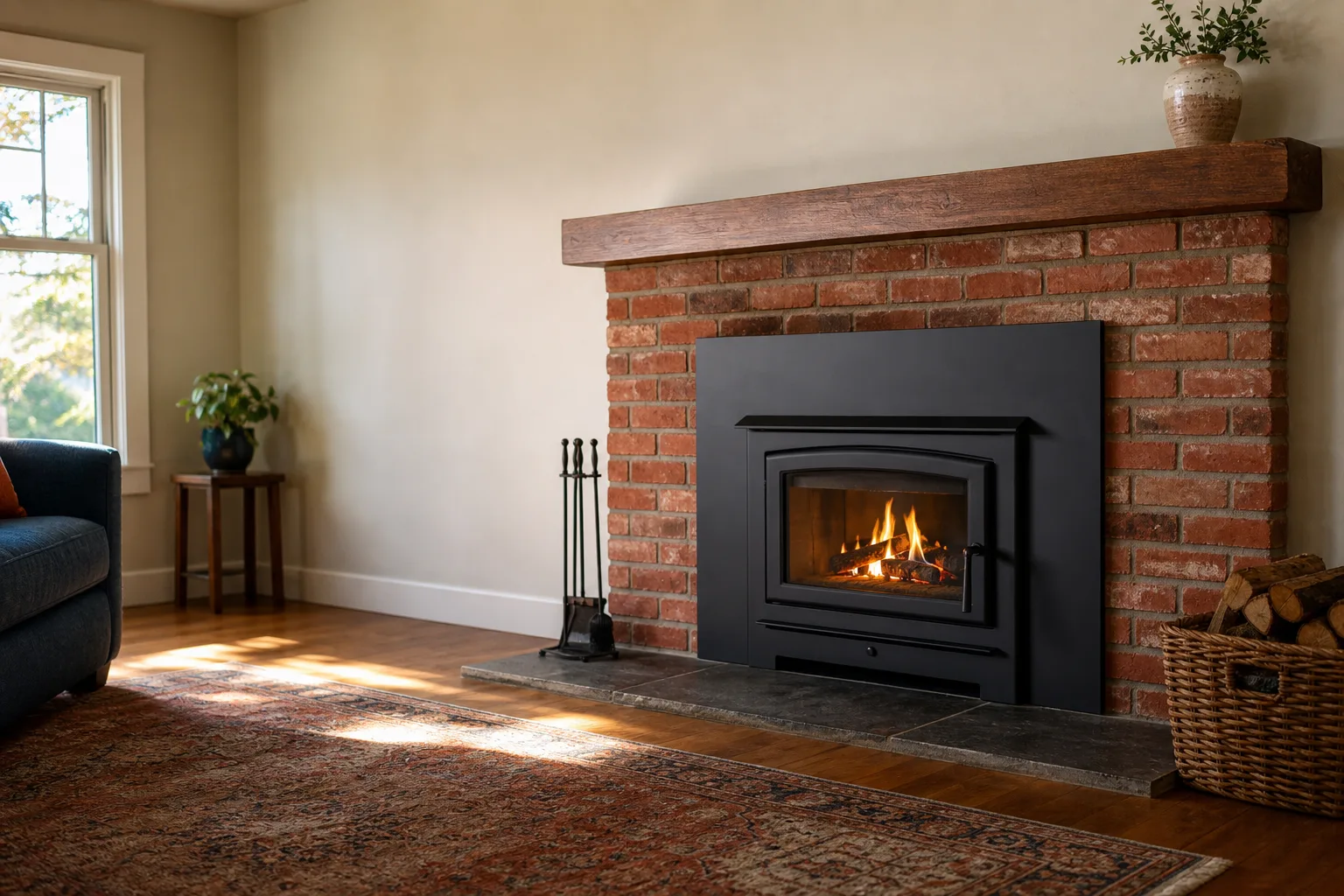




On this pageFireplace Insert Installation Cost: What You Are Actually Paying For9 sections+8
- Fireplace Insert Installation Cost: What You Are Actually Paying For
- Why the Same Job Gets Two Wildly Different Quotes
- The Liner Is Not an Upsell, It Is the Installation
- Every Line That Can Appear on the Quote
- Start With the Inspection, Not the Quote
- Gas or Wood: How the Choice Moves the Money
- The Tax Credit Changed, and Most Pages Have Not Caught Up
- How to Compare Two Fireplace Insert Installation Cost Quotes
- How VIO Helps With Fireplace Insert Installation Cost
Quick answer
Fireplace insert installation cost is driven far more by your chimney than by the appliance you pick. Every quote breaks into four buckets: the appliance, the venting, the trades, and any repairs. A wood insert listed to UL 1482 requires a stainless liner from the flue collar to the chimney termination, and exterior chimneys require that liner insulated, which is why an inspection has to come before any firm price.
Most people researching fireplace insert installation cost want one number, and the honest answer is that the number is sitting inside their chimney where they cannot see it.
Here is the part that should bother you. Two cost guides ranking side by side on the first page of search results right now contradict each other outright on the same job.
One publishes a modest national average for a gas insert. The other reports that the quotes homeowners actually receive, the ones that include a new liner and electrical work, come in at a multiple of that average.
Neither of them is lying. They are pricing two different jobs, and which job you have depends on the condition of a flue nobody has looked at yet.
That gap is the whole story of fireplace insert installation cost, and by the third section you will know which of those two numbers is closer to yours.
Fireplace Insert Installation Cost: What You Are Actually Paying For
You came here for a number, and I am not going to hand you a fake one. What I can hand you is the structure underneath the number, which is the thing that lets you read your own quote.
Every fireplace insert installation cost breaks into the same four buckets. The order below is roughly the order in which they surprise people.
| Bucket | What it covers | What decides its size |
|---|---|---|
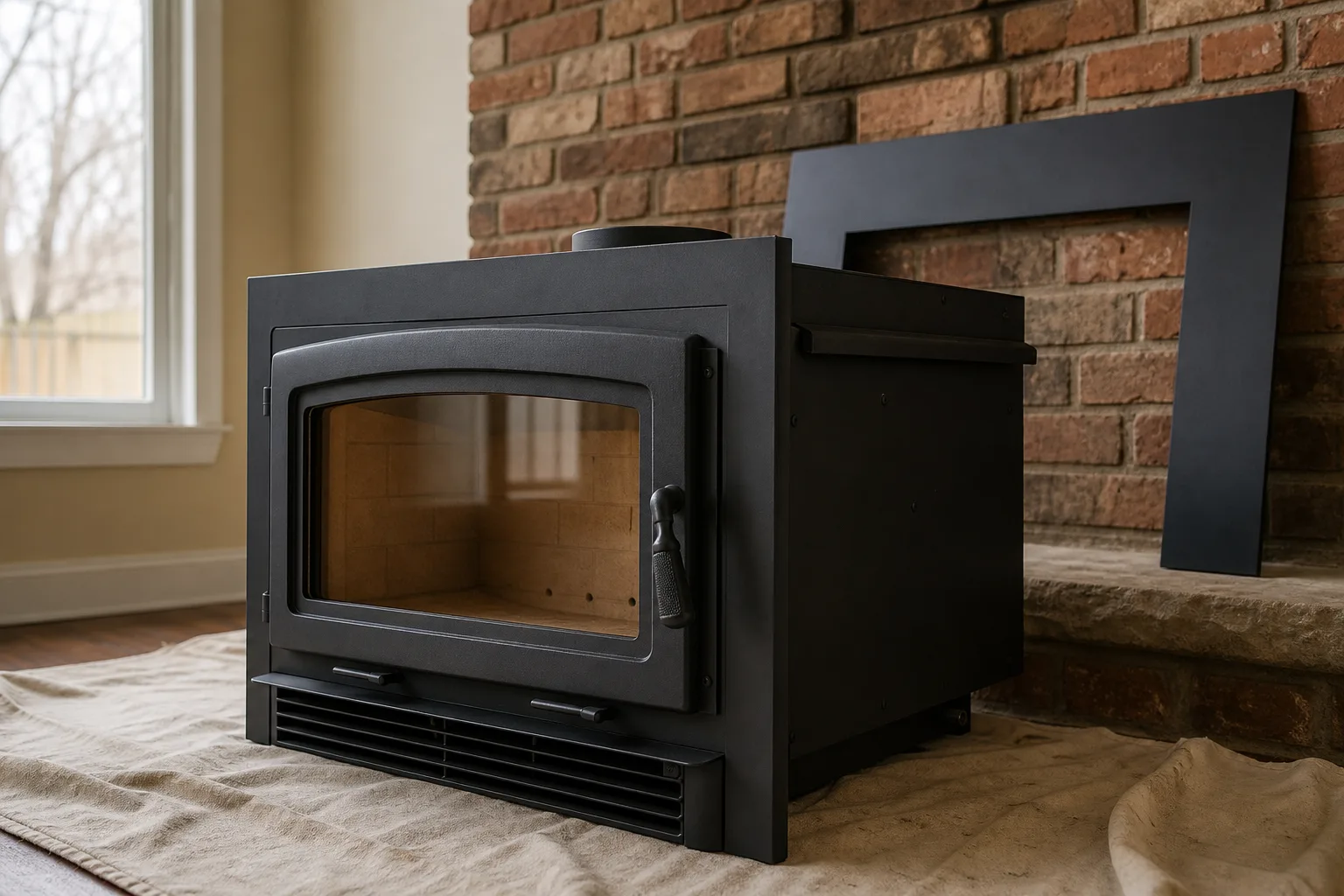
| The appliance | The insert itself, plus the surround panel that covers the gap to your masonry | Firebox size, materials, door hardware, fuel type |
| The venting | Liner or flex run, insulation, top plate, cap, block-off plate | Your flue's condition, size and whether the chimney is interior or exterior |
| The trades | Setting the unit, electrical for the blower, gas line and shutoff | What already exists at your fireplace, and how many trades have to show up |
| The repairs | Crown, mortar, smoke chamber, hearth extension | Entirely what the inspection finds |
Most homeowners shop the first row and get blindsided by the second and fourth.
That is the single most useful thing on this page. The appliance is the part you can price online tonight. It is also the part least likely to be the reason two quotes differ.
One more boundary worth drawing. An insert goes into the firebox you already have. If you are also planning to rebuild the surround, the mantel or the hearth, that is a separate budget entirely, and our guide to fireplace remodel cost covers that side of it.
Good to know: A gas log set is not a fireplace insert. Logs drop into your open firebox and mostly produce a view. An insert is a sealed steel or cast-iron firebox that slides into the opening and is engineered to push heat into the room. If a quote looks suspiciously cheap, check which one it is actually for.
Why the Same Job Gets Two Wildly Different Quotes
Time to close the loop I opened at the top.
The aggregator averages and the contractor quotes are measuring different scopes, and neither side says so out loud. Both are describing fireplace insert installation cost. Only one of them is describing your installation.
What a fireplace insert installation cost average actually assumes
A national average is built from a pile of finished jobs, and the cheap end of that pile is dominated by the easiest version of the work: an insert dropped into a masonry fireplace whose flue is already sound, already the right size, and already lined in good condition.
Set the appliance. Connect the venting. Seal, trim, done.
That job exists. It is a real job and some readers have exactly that chimney. It is also the version that national averages are quietly built around, which is why those averages feel low to so many people who then go get a quote.
What gets added when the flue is not ready
The other pile of jobs starts the same way and then the camera goes up.
Now the scope grows: a full stainless liner run from the appliance to the top of the chimney, an insulation blanket around that liner, a new top plate and cap at the crown, a block-off plate at the damper, maybe a circuit for the blower, maybe mortar work before any of it can happen.
Same appliance. Same living room. A substantially bigger invoice, because it is a substantially bigger job.
Myth vs. fact: A high quote is not automatically a padded quote. Most of the time the expensive quote is the one that priced the whole job and the cheap quote is the one that assumed a chimney nobody inspected. The second kind of quote has a habit of growing after the truck is in your driveway.
The Liner Is Not an Upsell, It Is the Installation
This is the section I would keep if I had to throw the rest away.
Homeowners treat the liner line item as the contractor's profit center. Often it is not.
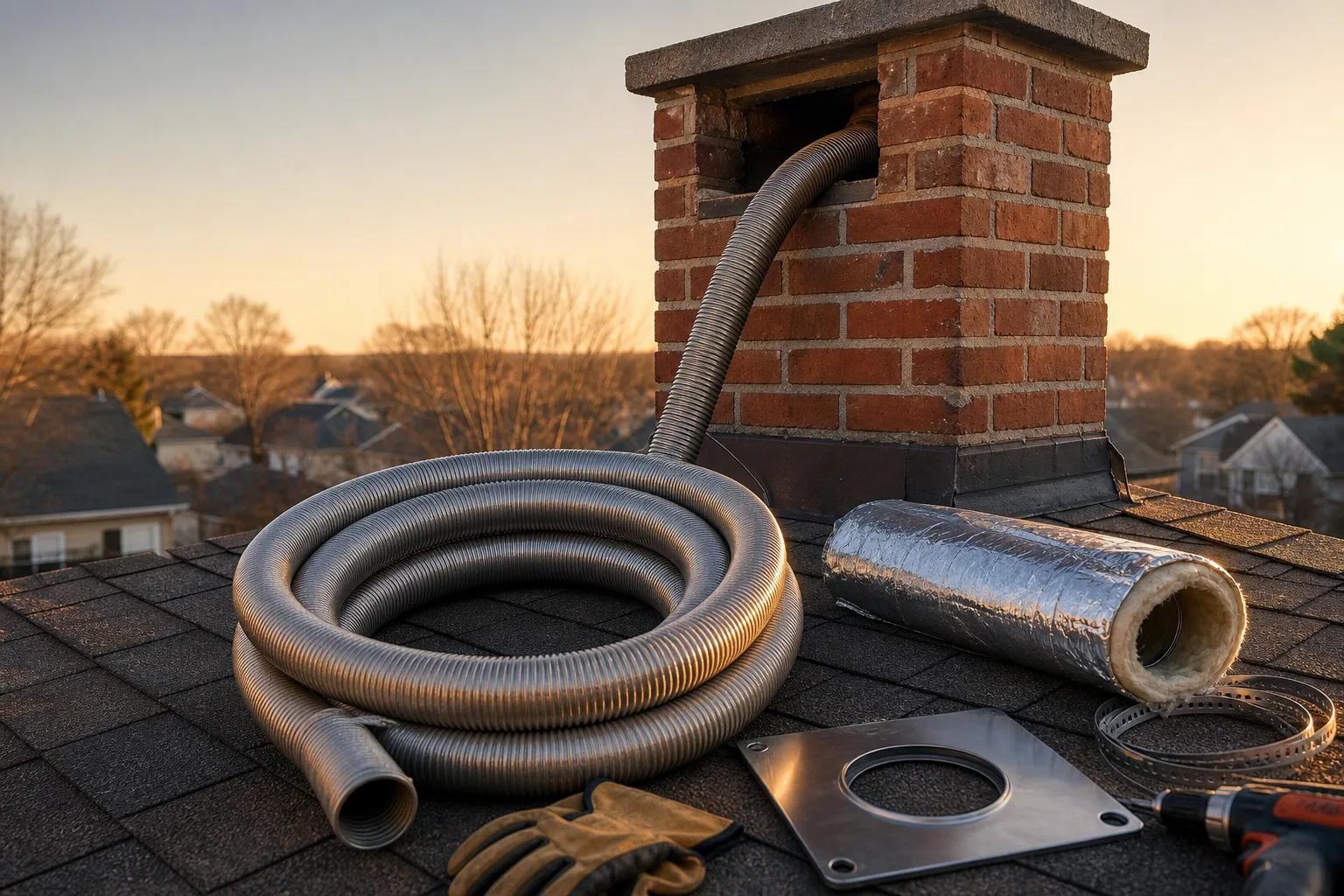
Wood-burning inserts listed to UL 1482 require a liner running from the insert's flue collar all the way to the chimney termination. That requirement is part of the listing itself. Install such a unit without it and the appliance is no longer being used the way it was tested and certified to be used.
What governs your specific installation is your appliance's own listing, the manufacturer's instructions that came with it, and your local authority having jurisdiction, which can be stricter than either. Read the manual, and ask the installer which of those three they are working from.
NFPA 211 points at UL 1777-listed liners for solid-fuel work. And if your chimney runs up the outside of the house rather than through the middle of it, that liner needs to be insulated, because cold masonry pulls flue gas temperature down and cool flue gas leaves creosote behind faster, which feeds straight into how often you should clean your chimney once the insert is running.
So when you see "stainless liner, insulated" on a quote for a wood insert, you are not looking at an add-on. You are looking at the installation.
Which is also why the liner is the single largest swing in fireplace insert installation cost. It is rarely the most expensive item on the page, but it is the item most likely to be present on one quote and missing from another.
Safety note: An insert vented into a bare masonry flue is not a cheaper version of the same installation. The insert's flue collar is much smaller than the original fireplace flue, and a large cold flue above a small appliance outlet is how you get poor draft, condensation and creosote accumulation in the same chimney.
The visible parts of this are simple once you know what to look for. A corrugated stainless tube, silver-gray, sometimes wrapped in a foil-skinned blanket, fed down the chimney from the roof and clamped to a flat stainless plate at the crown, with a cap over it.
Pro tip: Ask the estimator which standard the liner on the quote is listed to, and whether it is insulated. A company that answers instantly, without having to go look anything up, is telling you something about how routine this work is for them.
Every Line That Can Appear on the Quote
Here is the full vocabulary of fireplace insert installation cost. You will not have all of these lines on your quote. You should recognize all of them anyway, because the ones you do not recognize are the ones that get left off.
The lines almost every job has
The appliance. The insert itself, and the price tier is mostly about firebox size, materials and door hardware.
The surround or faceplate. The flat panel that covers the gap between the insert body and your original masonry opening. Sometimes included, sometimes its own line.
Labor. Setting a cast-iron firebox that weighs a few hundred pounds is not a one-person afternoon.
Venting. For wood, the liner. For a sealed-combustion gas unit, a co-linear or coaxial flex run up the same flue.
Disposal and protection. Old damper hardware out, drop cloths down, shop vac with a HEPA filter running.
The lines that depend on your chimney
Liner insulation. Required on exterior chimneys, often sensible on interior ones.
Top plate and cap. The stainless plate that seals the flue opening around the liner, and the cap above it. This is where metal chimney caps do their work, keeping rain and animals out of a flue you have just spent money lining.
Block-off plate. Seals the old damper throat so your heated room air stops escaping around the insert.
Electrical. Most gas inserts and many wood inserts with convection blowers need power at the firebox. If there is no outlet there now, someone has to run one.
Gas line and shutoff. Only if you are going gas and the line does not already reach the fireplace.
Permit and inspection. Permanent installations generally require a permit, and the requirements are set by your local building department, so they vary. Ask early rather than late.
Masonry repair. Cracked crown, failed mortar joints, a damaged smoke chamber. None of this is insert work, and all of it can gate insert work, so it is worth understanding what brick chimney repair involves before you are standing in the driveway hearing about it for the first time.
Hearth extension. Some units require more non-combustible floor in front than your current hearth provides.
From the field: The lines that surprise homeowners are almost never the appliance. They are the ones nobody could have seen from the living room floor. The conversation goes differently when the camera footage is on a screen in front of you.
Not sure which of these lines your job actually needs?
Nobody can price the liner, the insulation or the masonry work without getting a camera up your flue first. VIO connects you with an independent local company that starts there.
Call (513) 655-6702, or request service and tell us what your fireplace is doing now.
We ask every company in the network to put its estimate in writing before any work starts, and you should insist on exactly that.
Start With the Inspection, Not the Quote
The sequence almost everyone uses is backwards. They call for prices, collect three numbers, pick one, and then discover the scope.
The sequence that works is inspection, findings, scope, price. Fireplace insert installation cost is the last thing anyone should be able to tell you, not the first.
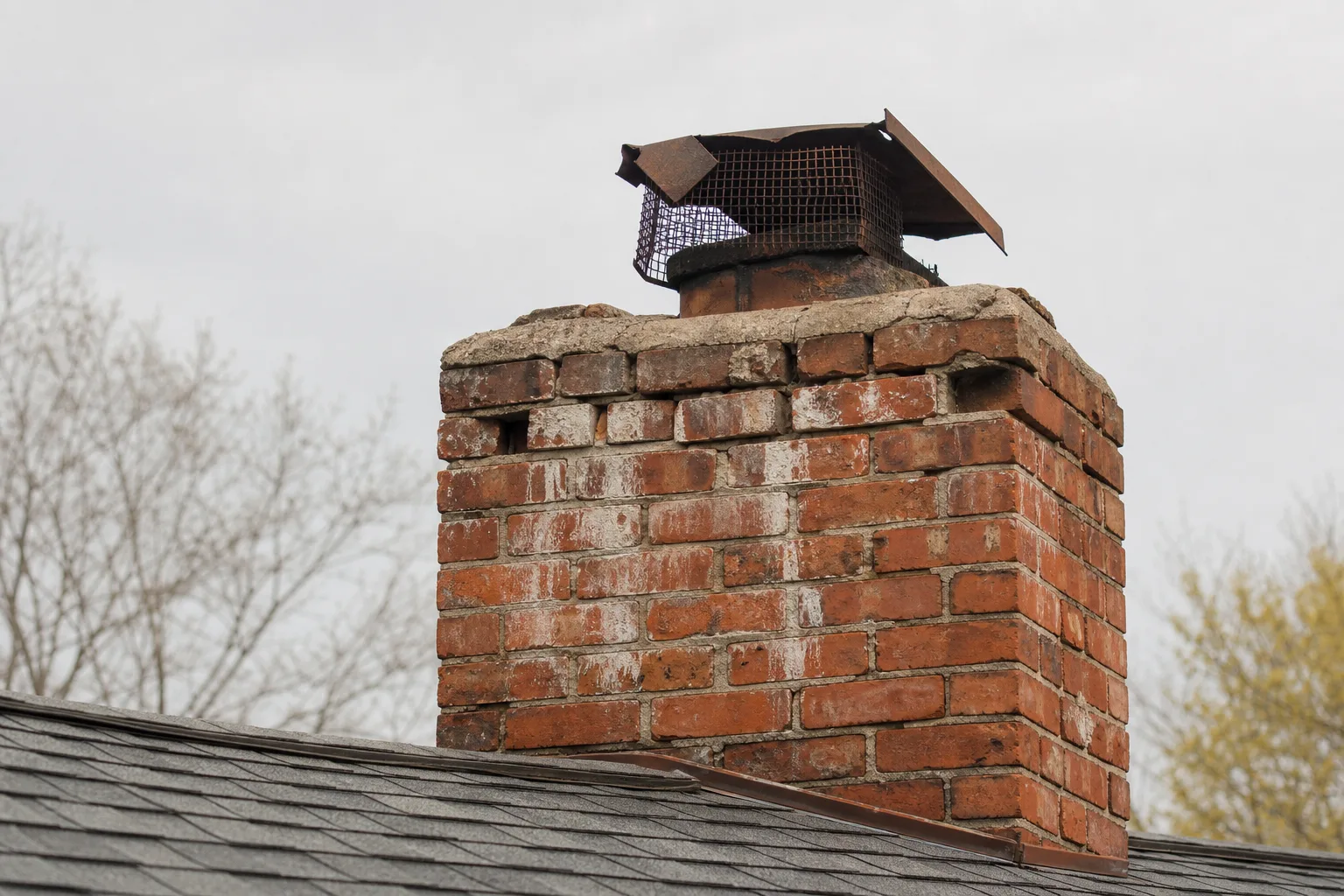
There is also a standards reason to do it that way. NFPA 211 defines Level 1, Level 2 and Level 3 inspections, and a Level 2 is required when there is a change to the system. Putting an insert into an open fireplace is a change to the system. It is the same trigger list that requires a Level 2 at sale or transfer of a property, after a malfunction, after a chimney fire, and after an external event like severe weather or an earthquake.
A Level 2 includes video scanning of the internal flue surfaces. That is the part that matters to your wallet.
What a Level 2 inspection finds that changes the fireplace insert installation cost
Picture two homeowners with the same 1950s brick chimney and the same insert picked out.
The first chimney's camera pass comes back clean. Intact clay tiles, sound mortar joints, a crown with no significant cracking. Straightforward liner run, straightforward install, and a quote that covers the appliance and the venting and not much else.
The second one has a shifted tile at the smoke chamber and mortar dropout behind it. Now there is masonry work in front of the liner work, and the liner work is in front of the appliance. The job did not get more expensive because someone wanted to sell more. It got more expensive because it got bigger.
Pro tip: Anyone who gives you a firm, final price for an insert installation without looking up your flue is guessing, and you are the one carrying the risk of that guess.
Gas or Wood: How the Choice Moves the Money
Most articles frame this as a lifestyle question. Let me frame it as a cost question, since that is why you are here.
Fuel choice does not raise or lower fireplace insert installation cost so much as it moves the money to a different trade.
Gas tends to move money toward utilities. You need a gas line at the fireplace with a proper shutoff, and you need power for the valve, the fan and the controls. If both already exist at the hearth, gas is often the cheaper install. If neither exists, two trades are now involved.
Wood moves money toward the chimney. The full liner, the insulation, the top plate. There is no gas line to run and usually less electrical, but the venting work is not optional and not small.
If you already have gas at the fireplace
You are in the best position on this list. The line is there, the shutoff is there, the venting flex is comparatively simple to run, and one fewer trade has to be scheduled.
If the line is not there yet and you are weighing the switch, the tradeoffs are their own subject, and we walk through them in our guide to converting a wood fireplace to gas.
If you are burning wood
Budget for the chimney first and the appliance second. That inverts how most people shop, and it is the right order.
Pellet sits between the two, with its own venting rules and its own numbers, and if you are still deciding, compare against pellet stove installation cost before you commit to cordwood.
Good to know: EPA certification describes the appliance and how cleanly it burns. It is a real and useful marker when you are choosing a wood unit. It is not a discount, and in 2026 it does not attach to a federal tax credit. More on that next.
The Tax Credit Changed, and Most Pages Have Not Caught Up
If you are budgeting a wood or pellet insert for this winter, read this paragraph twice.
The federal 25C biomass tax credit, the one that returned a capped share of qualifying high-efficiency biomass heater projects to homeowners, expired on December 31, 2025. There is no federal biomass credit available for a 2026 installation.
Plenty of pages ranking today were written between 2023 and 2025 and still tell readers to plan on that credit coming back to them at tax time. They were accurate when they were published. They are not accurate now.
If you have been running your fireplace insert installation cost numbers with a credit in the bottom line, take it out and look at the total again before you commit to a unit.
If you completed a qualifying installation on or before December 31, 2025, that is a different situation and the credit may still be claimable on the relevant return. Talk to whoever does your taxes.
Some states and some utilities still run their own rebate or voucher programs, and they vary enormously by location. I am not going to name amounts, because the ones I can verify belong to states that are not yours. Your state energy office is the place to check.
Myth vs. fact: "The federal credit will cover part of this." Not on a 2026 install. If a contractor or a website is still building that credit into your math, the math is stale, and it is stale in the direction that hurts.
How to Compare Two Fireplace Insert Installation Cost Quotes
This is the part to screenshot.
Two fireplace insert installation cost totals are not comparable until two scopes are comparable. Put both quotes side by side and check that each one answers all of the following. If one of them is silent on a line, that silence is the difference in price.
- The appliance. Make, model, fuel, and whether the surround or faceplate is included.
- The venting. Liner or flex, the material, the diameter, and the standard it is listed to. For a wood insert, confirm it runs from the flue collar to the termination.
- Insulation. Whether the liner is insulated, and if not, why not. Exterior chimney means it should be.
- The top of the chimney. Top plate, cap, and any crown work.
- The block-off plate. Present or absent. It is a small line that affects how the room actually feels all winter.
- Electrical. Existing circuit reused, or new one run, and by whom.
- Gas. Line run, shutoff, and who is pulling that portion of the work.
- Permit and inspection. Who files, who pays, and whether it is in the total or excluded.
- Masonry. Any repair identified, priced separately, and clearly conditional or not.
- What happens if the chimney surprises everyone. How change orders get handled and approved.
Pro tip: Compare scope before you compare totals. When you normalize two quotes to the same scope, the spread between honest companies usually shrinks to something reasonable, and the outlier that stays cheap is telling you what it left out.
How VIO Helps With Fireplace Insert Installation Cost
Plainly, so there is no confusion about what we are.
VIO is a referral network. We do not install fireplace inserts ourselves. We match homeowners with independent local companies that do this work, and the company that comes to your house is its own business, not our staff.
For this exact situation, what that gets you is a company that will look before it prices. The company we match you with can run the Level 2 inspection, scan the flue, and tell you which of the line items above your chimney actually requires. That is the only path to a fireplace insert installation cost figure that means anything for your house rather than for a national average.
We ask every company in the network to put its estimate in writing before any work starts, and you should insist on exactly that. Get the scope on paper, line by line, before anyone touches your chimney. That advice holds whether you call us or not.
Your fireplace insert installation cost was decided years ago, by whoever built your chimney and by every winter since. The only thing left to do is find out what they decided.
The next step is smaller than the decision.
It is a look up the flue, not a commitment. VIO is a referral network: the company that comes out is an independent local business we match you with, not VIO staff.
Call (513) 655-6702, or request service online.
We ask every company in the network to put its estimate in writing before any work starts, and you should insist on exactly that.
Symptom checker
What is your chimney doing?
Tap the closest match for an honest first answer.