



On this pageChimney Service and Repair Are Two Different Jobs7 sections+6
- Chimney Service and Repair Are Two Different Jobs
- What Your Chimney Is Telling You Right Now
- The Inspection Levels That Decide Which One You Need
- What Actually Happens During a Chimney Service Visit
- The Repairs You Will Hear Named Most Often
- How to Tell an Honest Recommendation From an Upsell
- How VIO Helps With Chimney Service and Repair
Quick answer
Chimney service and repair are two different jobs. Service is scheduled, preventive work such as sweeping the flue to remove creosote, soot and debris. Repair is triggered by a specific failure, such as a cracked crown, a missing cap, deteriorated mortar or damaged flashing. An inspection is the step that tells you which one you need. NFPA 211 defines three inspection levels, and Level 1 is the annual baseline for a system in continued service with no changes.
Look at the words you typed. You searched for chimney service and repair, both halves at once, and that tells me something specific about where you are standing right now.
Nobody who knows what they need types both.
A person whose crown is visibly cracked searches for crown repair. A person on a steady maintenance rhythm searches for a sweep. You typed both because you cannot yet tell which side of the line your chimney is on, and because the ten results above this one are all companies telling you they do everything, which helps you not at all.
So let's fix that first, before you call anyone.
Service and repair are two different jobs with two different triggers. There is also a third thing sitting between them, the inspection, and it is the part that gets skipped past even though it is the only thing that actually answers your question. Somewhere below are five situations where the national standard stops treating an inspection as optional. If one describes your house, it changes what you ask for on the phone.
You will know which by the time you finish reading.
Chimney Service and Repair Are Two Different Jobs
Here is the line, and it is cleaner than the industry's marketing makes it look.
Chimney service is scheduled. You decide when it happens, it happens on a calendar you control, and its purpose is to keep a working system working. Chimney repair is triggered. Something failed, or something was found, and the work exists to correct that specific thing.
One is a habit. The other is a response.
What counts as chimney service
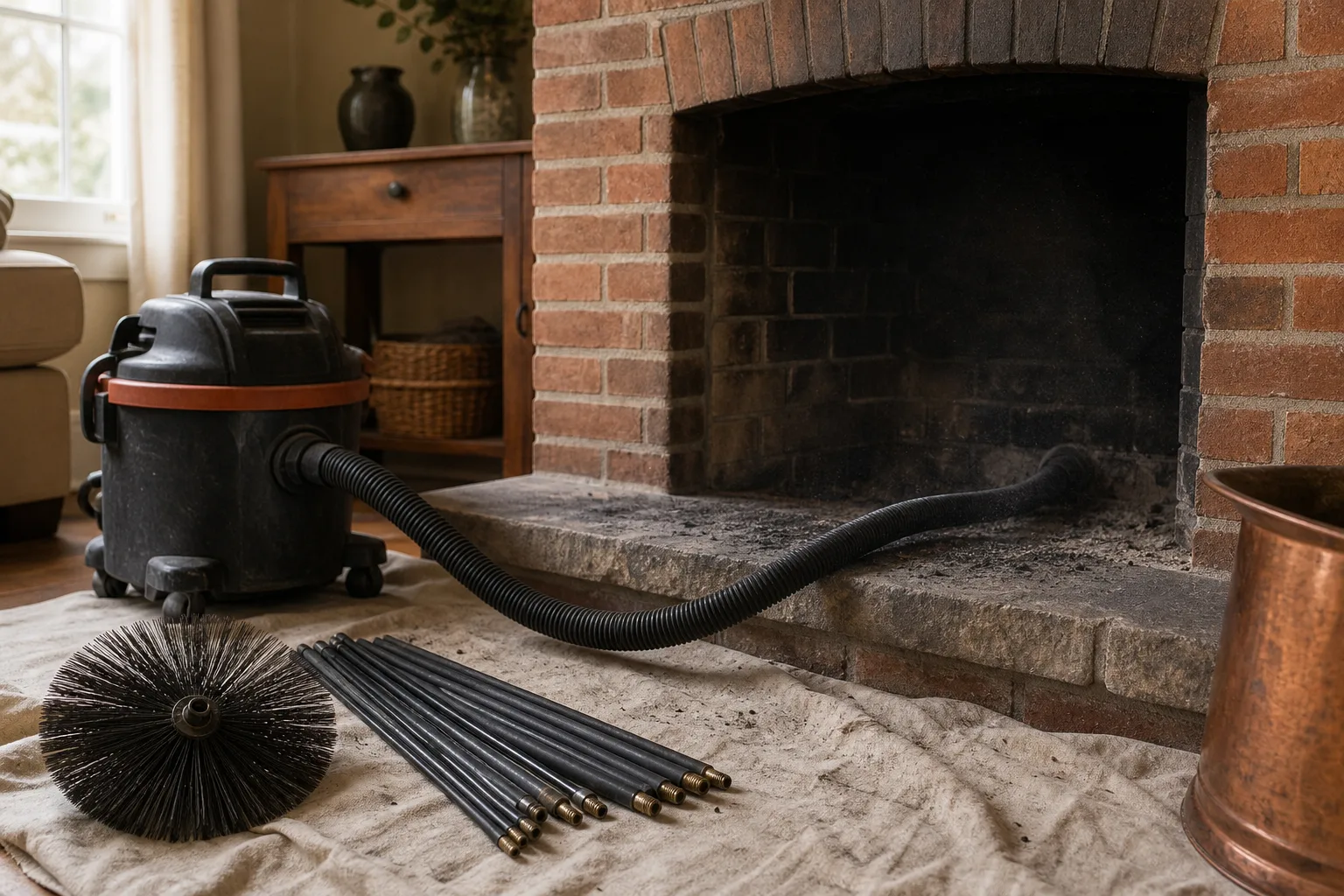
Service is the sweeping and the looking. A sweep removes creosote deposits, soot and debris from the flue using flexible rods, specialized brushes and a HEPA-filtered vacuum, and the flue gets examined while they are in there with the equipment already set up.
The scope is predictable before anyone arrives. That predictability is the whole point of it.
Keeping a flue clear is not only about fire, and how often the flue needs sweeping depends on how you burn. A clear flue maintains the airflow that helps prevent condensation inside the chimney, and condensation is where a surprising amount of slow masonry damage begins.
What counts as chimney repair
Repair is scoped to the thing that failed. Crown repair. Cap replacement. Liner repair or relining. Masonry repointing. Flashing work. Firebox and damper repairs. Partial or full rebuilds at the far end.
Nobody can quote a repair honestly without knowing what is wrong, which is why a company that names one before looking deserves a raised eyebrow.
| Chimney service | Chimney repair | |
|---|---|---|
| What triggers it | Your calendar, your season, your use | A found condition or a failure |
| Scope known in advance? | Yes, before anyone arrives | No, not until something is inspected |
| Who typically handles it | A chimney technician | A technician or a brick mason, depending on the work |
| What it is aimed at | Keeping a sound system sound | Correcting one specific failure |
| How it ends | A report on condition | A repaired component and a record of what was done |
| Get it in writing | What the visit includes | The full scope, before any work starts |
Good to know: this trade is really two trades wearing one name. Brick masons rebuild structure. Certified chimney technicians work on flue condition and fire safety. A company that is excellent at one is not automatically excellent at the other, and it is a fair question to ask which one is coming to your house.
Hold that table in your head. The confusing conversations you can have about chimney service and repair come from somebody blurring those two columns together.
What Your Chimney Is Telling You Right Now
Go outside and look up. Then come back in and look at the ceiling beside the chimney breast.
Chimneys fail slowly and they announce it early, but the announcements are quiet and easy to file under "something to deal with eventually."
Signs you can see from the ground
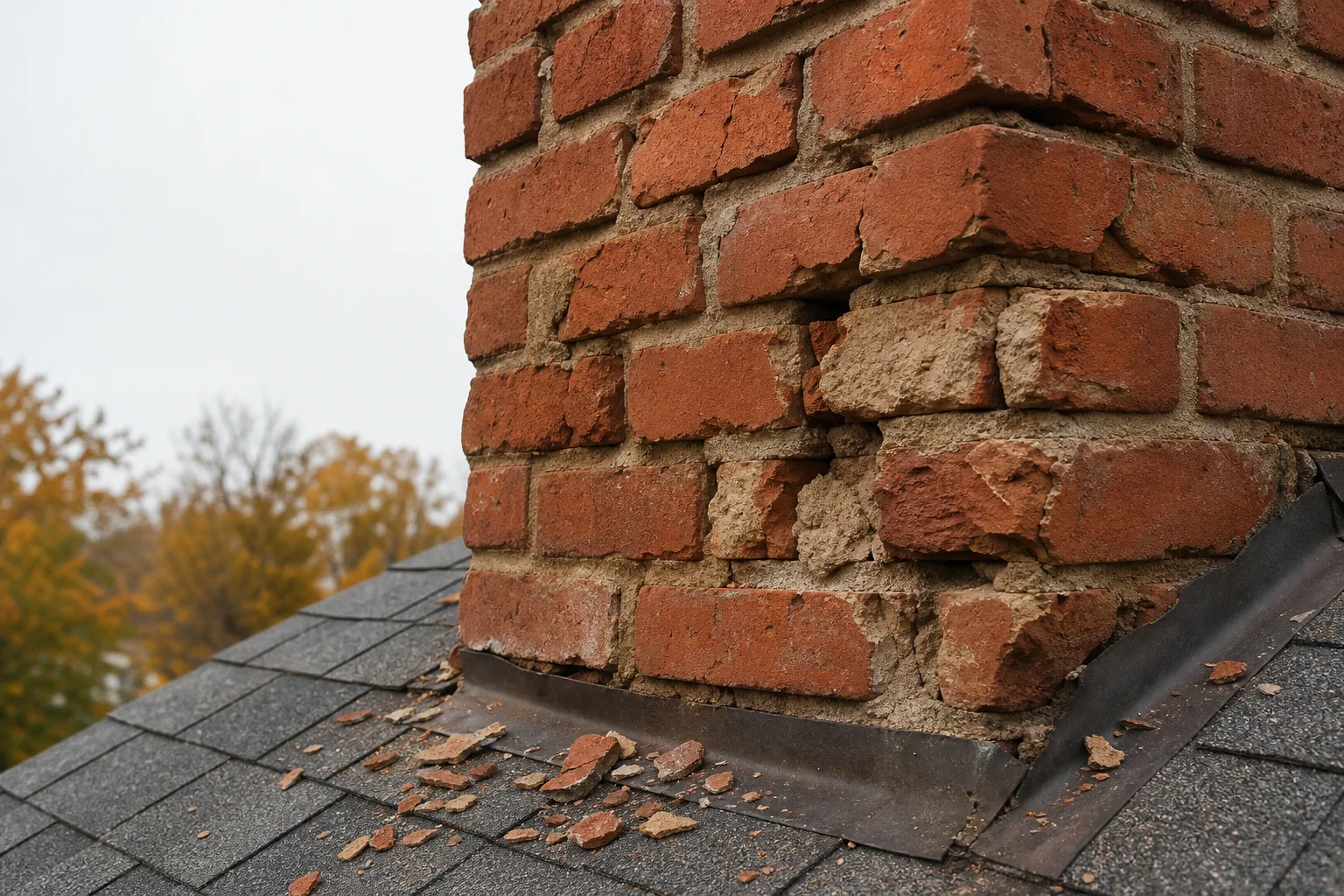
Brick flakes in the flower bed. That is spalling, and the mechanism is worth understanding because it explains the urgency better than any warning could. Water soaks into the brick, freezes, expands, and breaks the face apart. The brick face flakes, chips or pops off, leaving a pitted, crumbling surface and exposing the softer interior underneath to faster decay.
A spalled brick does not heal. It keeps going.
Mortar joints that look sandy and recessed, the kind you could dig at with a house key, are the same story one step earlier. So is a chimney with no cap, where you can see the bare terracotta clay flue tile poking up, open to the sky and to every rainfall.
The confirmed water paths into a chimney are short and specific: cracked crowns, deteriorated or missing mortar, hairline openings in the brick, and gaps where the chimney meets the roof. If water is getting in, it is getting in through one of those.
Signs you notice indoors
Smoke that pushed back into the room the last time you lit a fire. A water stain on the ceiling or the wall beside the chimney breast. An odor from the fireplace on a humid day. Debris sitting on the smoke shelf that was not there last year.
Any one of these is a reason to have someone look. None of them, by itself, tells you which half of chimney service and repair you are about to buy.
Safety note: creosote is a flammable deposit that builds up inside the flue and hardens with use. It is the reason sweeping exists, and it is not something to evaluate from the hearth with a flashlight and an opinion.
The Inspection Levels That Decide Which One You Need
This is the part of chimney service and repair that nobody explains, so read it slowly.
NFPA 211, the Standard for Chimneys, Fireplaces, Vents, and Solid Fuel-Burning Appliances, adopted three levels of inspection on January 13, 2000. The Chimney Safety Institute of America tests certified sweeps against those same three levels. They are not a menu of products. They are scopes, and each one exists for a different situation.
Level 1: the annual baseline
Level 1 applies to a chimney and venting system in continued service, with the same appliance, the same fuel, no changes and no known hazards. It covers the readily accessible portions of the chimney interior and exterior and the accessible appliance connections.
Now the part nobody tells you.
A video camera is not required at Level 1, and rooftop access is not within Level 1 scope.
Read that twice, because if you assumed an inspection means somebody climbs up and puts a camera down your flue, you were assuming Level 2. Knowing the difference changes what you ask for when you book.
Level 2: the triggered inspection
Level 2 is required, not suggested, in five situations:
- Sale or transfer of the property.
- A change to the system, meaning a change of fuel type, a change to the shape or material of the flue, or the addition of a new appliance.
- An operating malfunction.
- A chimney fire.
- A potentially damaging external event, such as a building fire, an earthquake or severe weather.
Those are the five I promised you. Run them against your own situation right now.
A Level 2 inspection includes everything in Level 1, plus the accessible portions of the chimney exterior and interior including attics, crawl spaces and basements, and it addresses proper clearances from combustibles in accessible locations. Level 2 does include a video scan that records the interior of the flue.
If you bought the house last spring and nobody did this, that is worth knowing tonight rather than in January.
Level 3: when something is hidden
Level 3 is performed only when there is reason to suspect concealed hazards that cannot be evaluated through a Level 1 or Level 2 inspection. It addresses the construction and condition of concealed portions of the chimney structure and flue, and completing it can require removal or destruction of permanently attached portions of the chimney or the building structure.
That last clause is why Level 3 is rare and why no honest company opens with it.
Myth vs. fact: the myth is that every chimney inspection includes a camera down the flue and a trip to the roof. The fact is that this describes Level 2's scope, not Level 1's. Ask which one you are booking, and ask before the van is in your driveway.
You now know which level your situation calls for, which is more than the person who called this morning knew. That is the useful moment to talk to somebody. VIO is a referral network: we match you with an independent local company that does chimney service and repair in your area, and that company, not VIO, does the work. We ask every company in the network to put its estimate in writing before any work starts, and you should insist on exactly that. Call (513) 655-6702, or tell us what you are seeing and we will take it from there.
What Actually Happens During a Chimney Service Visit
Booking feels like committing to work you have not agreed to yet. It is not, and knowing what the visit physically looks like takes most of the weight out of the decision.
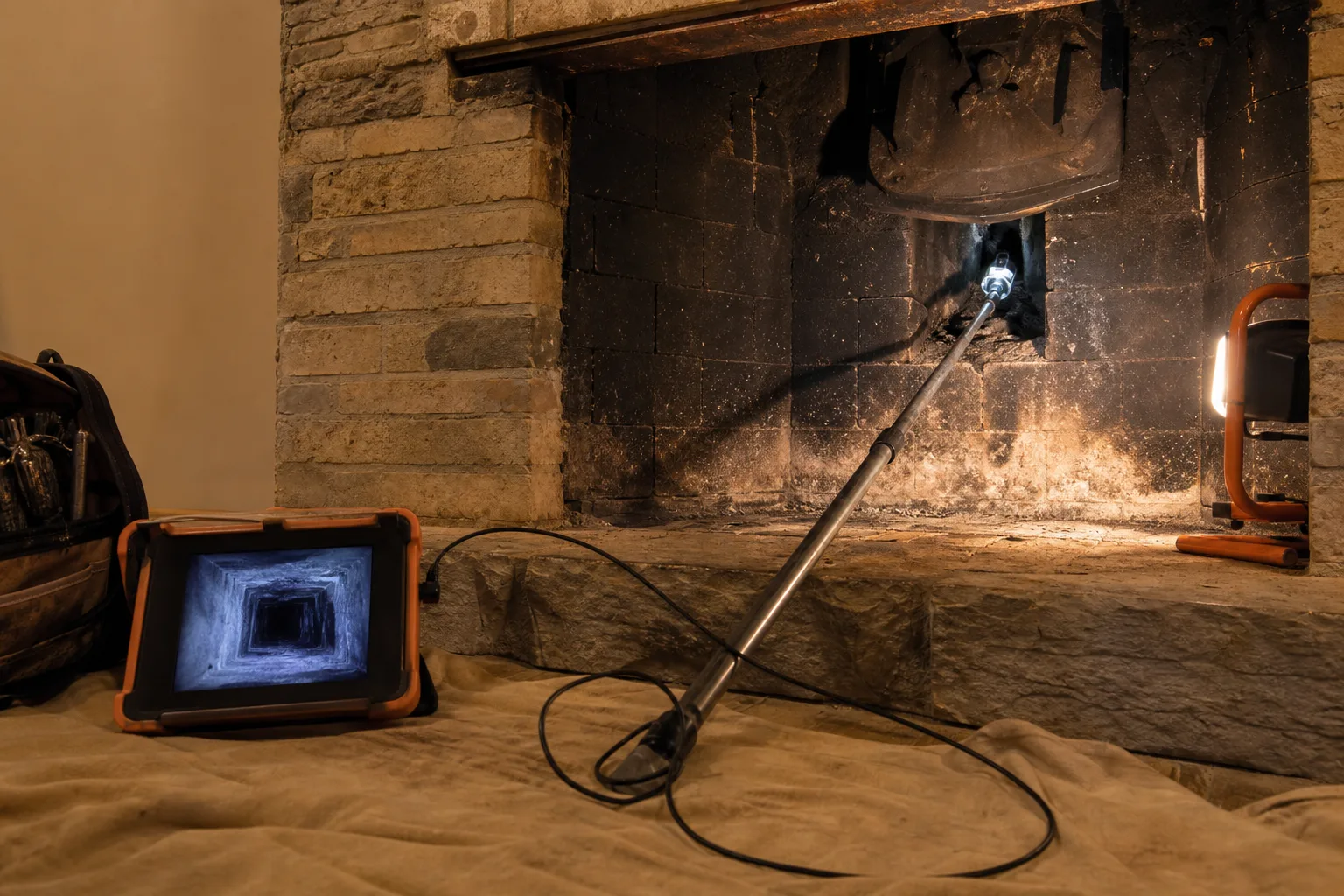
A drop cloth goes over the floor in front of the hearth. A HEPA-filtered vacuum comes in with a hose run to the fireplace opening, which is what keeps the room clean while the flue is being worked. Flexible rods screw together section by section, a brush sized to your flue goes on the end, and the sweep works the deposits loose.
Then the looking happens. On a Level 2 visit, a video inspection camera goes down the flue on a pole and feeds a small screen, and you can stand there and watch it with them.
It is dusty work. Nothing about it is showroom-clean, and a company that shows up looking like a catalogue photograph is a company that has not been on a roof yet today.
Pro tip: ask what the visit includes before they arrive, and ask specifically whether rooftop access and a camera scan are part of it. The answer tells you which inspection level you actually booked, and that one question heads off a misunderstanding between you and the chimney service and repair company before it starts.
From the field: the difference between a flue that has been kept clear and one that has not shows up on the camera screen long before it shows up from the hearth. By the time something is visible standing in the living room, it has been developing for a while.
The Repairs You Will Hear Named Most Often
If a repair does get recommended, it will have a name. These are the names that come up in chimney service and repair, what each part actually is, and what failure looks like.
The crown
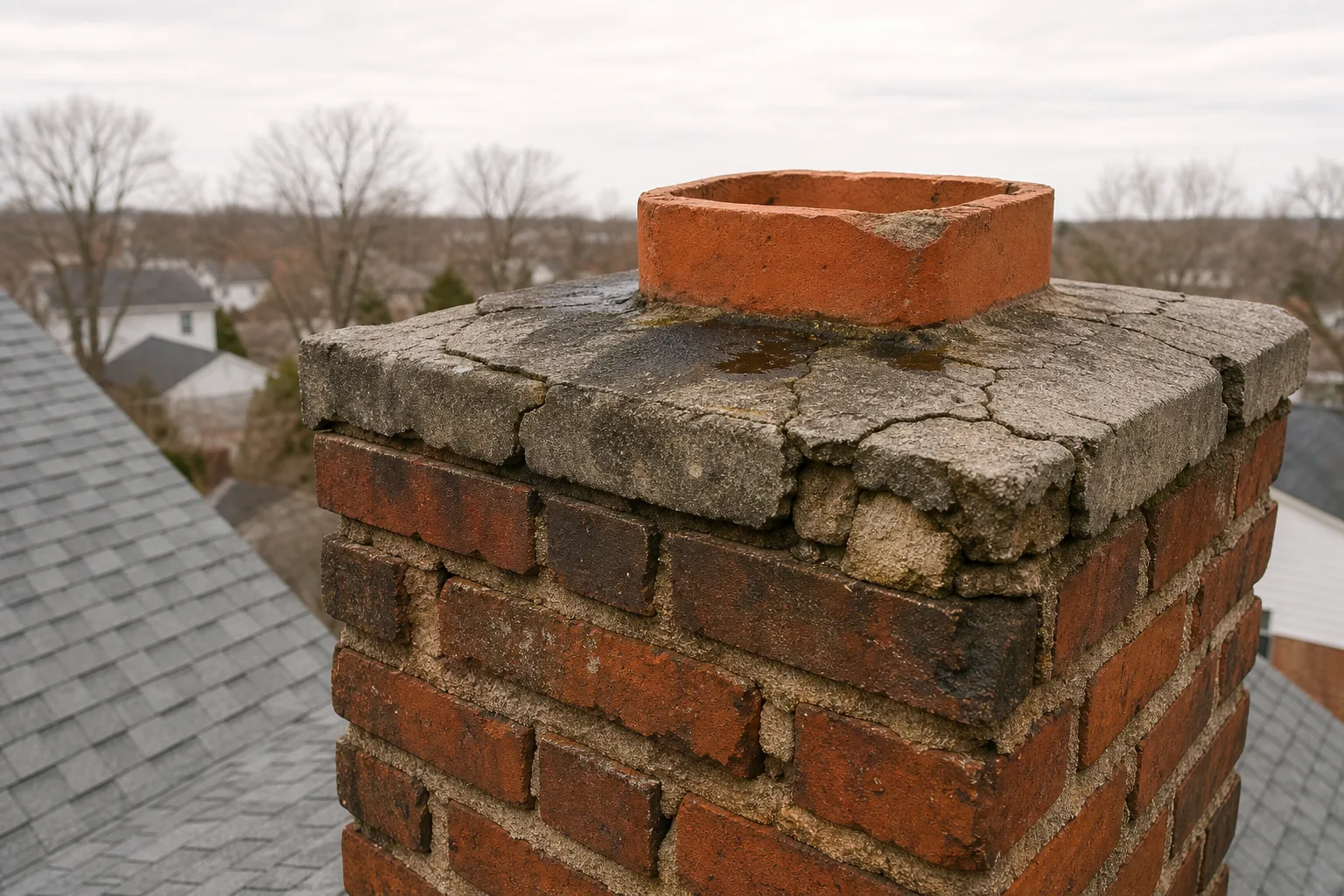
The crown is the slab capping the very top of the brickwork, typically concrete, sloped so rain runs away from the flue opening rather than into the masonry.
A failing crown shows map-pattern cracking, crumbling edges, and dark staining where water sits instead of shedding. It is a small piece of the chimney with an outsized job.
The cap and the flue tile
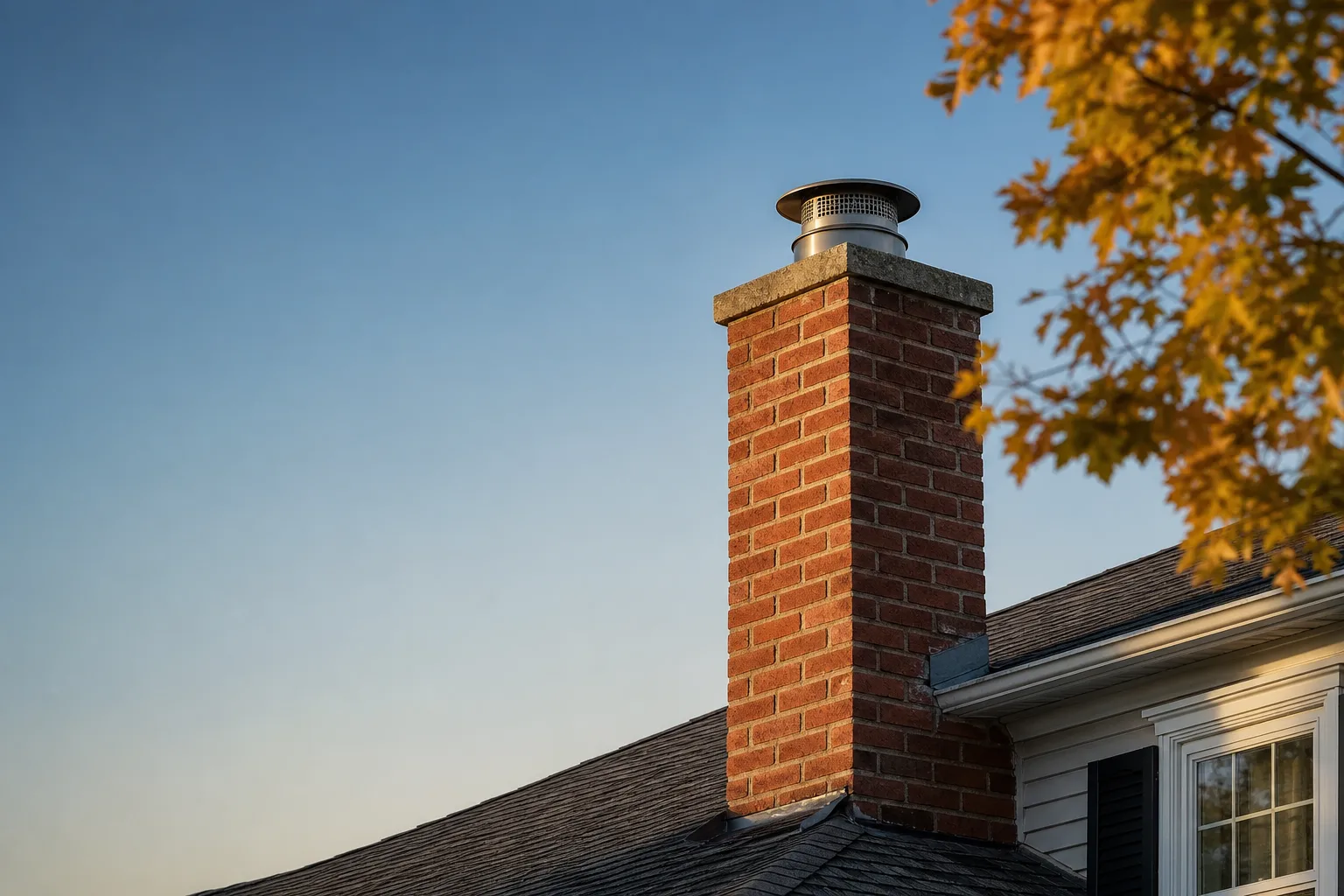
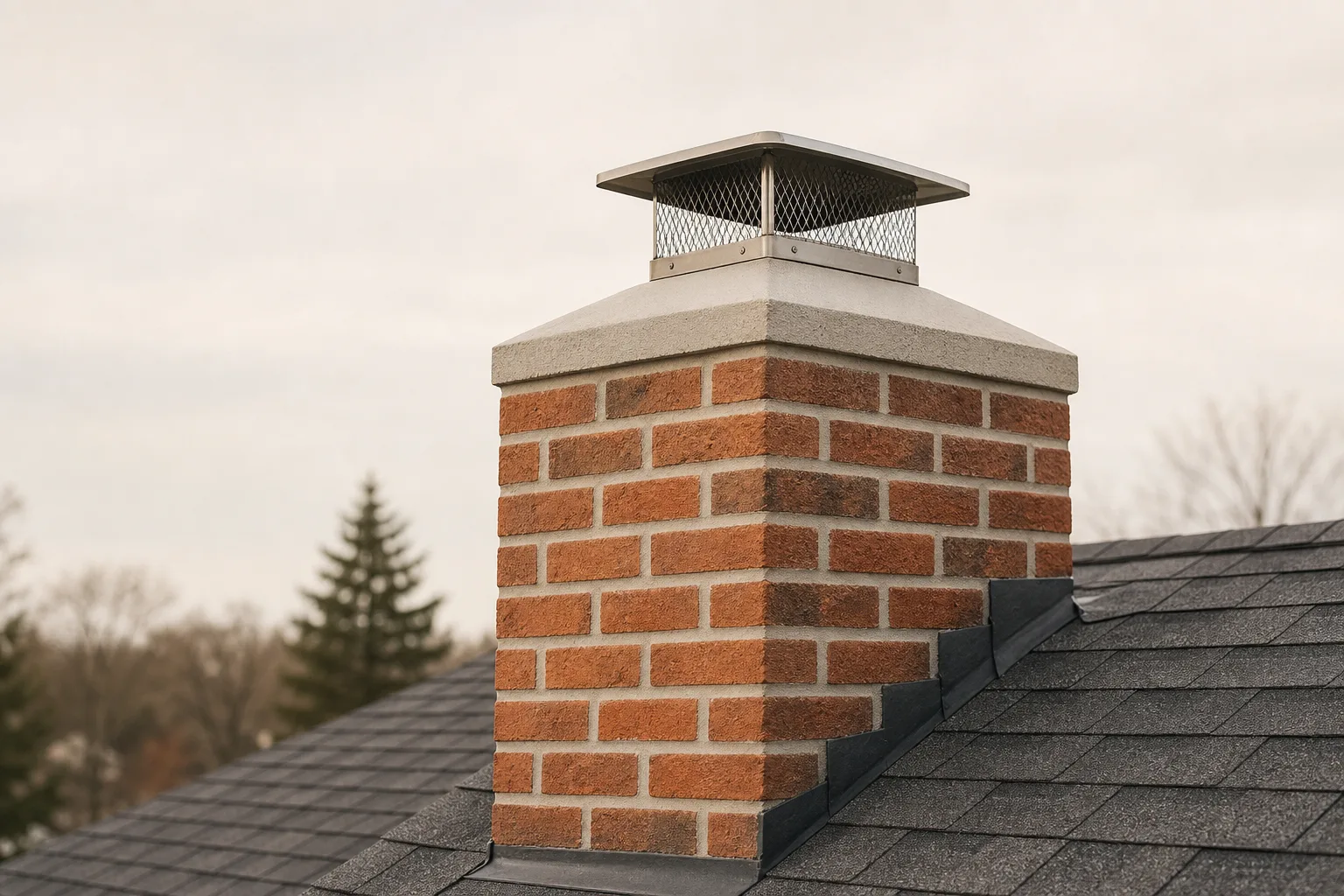
The cap is the metal box or lid over the flue opening, made of galvanized steel, stainless or copper, and it may have mesh screening on the sides to keep animals and debris out.
With no cap, what you see from the ground is bare terracotta clay flue tile, open to the sky. Every rainfall goes straight in.
Mortar joints, repointing and tuckpointing
Repointing means removing damaged mortar joints and replacing them. Tuckpointing, strictly speaking, is a finishing technique that uses two different colors of mortar so the new joint blends with the brick.
Here is the thing worth knowing: the trade uses those two words interchangeably in everyday conversation. If a quote says one and a conversation said the other, that is vocabulary drift, not two separate line items. Ask what physical work is being described and the confusion evaporates.
Flashing
Flashing is the thin metal sealing the joint where the chimney passes through the roof, protecting the corners and the mortar joints at that junction. Over time it loosens or falls off, and water follows the gap.
Look for metal that is lifted, rusted or curled. Look also for black roofing tar smeared across it, which is the signature of a previous quick fix that bought time rather than solving anything.
Liners
The liner is the surface the flue gases actually travel through, and its condition is the reason Level 2 inspections put a camera down there. Liner work sits at the more involved end of chimney service and repair, and it is the category where you most want the scope written down before anything starts.
Pro tip: freeze-thaw damage is a cold-season mechanism, because it needs water in the brick and a temperature that drops below freezing. That is the honest reason autumn is a comfortable window for open mortar joints and a cracked crown. Not a rule about a date on the calendar, just the physics of when the damage happens.
How to Tell an Honest Recommendation From an Upsell
You arrived worried about exactly this. You are better equipped now than you were fifteen minutes ago, and the equipment is what matters, not reassurance.
What a straight company will show you
Evidence, before a recommendation. Camera footage you can watch. Photographs of the thing they are describing. A written scope that names the component and the work, not a category and a number.
They will also be comfortable when you run the five Level 2 triggers against your own house out loud. A recommendation that matches one has a standard behind it. One that does not is a judgment call, which is fine, as long as it is presented as one.
Questions worth asking before anyone books chimney service and repair
- Which inspection level is this visit, Level 1 or Level 2?
- Does the price of this visit include rooftop access and a camera scan?
- Are you a chimney technician, a mason, or both, and which does my situation need?
- Can you show me a photograph or footage of what you are describing?
- Which of the five NFPA 211 Level 2 triggers applies to my house, if any?
- Is this repair addressing a safety condition, a water condition, or an appearance condition?
- What happens if I do nothing for one more season?
- Will the full scope be in writing before any work starts?
- Does this work need a permit where I live?
Nobody can price chimney service and repair from a screen. What moves the scope is how much of the stack is affected, whether the failure is on the surface or in the structure, and whether reaching it requires roof work and the setup that comes with it. A cracked crown and a rebuilt crown are different conversations, and only somebody standing in your yard can tell you which one you are having.
Good to know: whether a chimney repair needs a permit varies by jurisdiction, and it can depend on the scope of the work as well as where you live. Ask the company, and if the answer is vague, ask your local building department directly.
How VIO Helps With Chimney Service and Repair
Here is what VIO is, stated plainly, because the rest of this article was about not being sold to.
VIO is a referral network. We do not sweep flues, we do not repoint brick, and we do not do any of the work ourselves. What we do is match you with an independent local company that handles chimney service and repair in your area, and that company does the work.
That distinction matters more than it sounds like it does. It means we have no reason to steer you toward a bigger job, because we are not the ones quoting it.
What we can do is set the terms of the introduction. We ask every company in the network to put its estimate in writing before any work starts, and you should insist on exactly that, from us or from anyone else you call.
You already have the rest. You know the two columns in that table, you know which inspection level your situation points to, and you know what evidence looks like when somebody has actually found something.
Bring all of that to the conversation. A homeowner who walks into a chimney service and repair discussion already fluent in it tends to have a very different conversation than one who walks in hoping for the best.
Start with an honest look, then decide what to do about it. That is the entire ask. Tell us what you are seeing, whether it is a stain on the ceiling, flakes in the flower bed, or just a fireplace nobody has checked since you bought the house, and we will match you with an independent local company near you. We ask every company in the network to put its estimate in writing before any work starts, and you should insist on exactly that. Call (513) 655-6702 or start here.
Symptom checker
What is your chimney doing?
Tap the closest match for an honest first answer.