



On this pageWhy People Want to Convert Gas Fireplace to Wood7 sections+6
- Why People Want to Convert Gas Fireplace to Wood
- The Three Fireplaces This Question Gets Asked About
- Five Things to Check Before You Call Anyone
- What Changes When You Convert Gas Fireplace to Wood
- The Inspection That Comes First, and Why It Is Required
- The Honest Alternative: A Wood Insert or a Freestanding Stove
- How VIO Helps You Convert Gas Fireplace to Wood
Quick answer
Whether you can convert gas fireplace to wood depends on which of three fireplaces you own. A masonry fireplace with gas logs dropped in usually converts. A masonry fireplace with a sealed gas insert often can. A factory-built gas fireplace cannot, because it is listed to gas standards rather than for solid fuel. Either way, NFPA 211 requires a Level 2 inspection, since a change of fuel type is a change to the system.
You are standing in front of the fireplace again, looking at those ceramic logs. They have not moved in six years. They glow the same orange at the same three spots, and the flame does that flat little wave it always does.
You want a fire. A real one, with the smell and the crack and the heat that pushes you back a step.
So you went looking for how to convert gas fireplace to wood, and you found eight pages that all say roughly the same thing: it depends, call a professional, here is our phone number. Not useful.
Here is the part none of those pages tell you. There are three completely different fireplaces that people are looking at when they type "convert gas fireplace to wood" into a search bar, and only two of them can even be candidates. The third has a hard no, for a reason that has nothing to do with skill or budget.
Candidate is the right word for the other two. The yes only becomes real once the appliance, the firebox, the flue, the clearances and your local requirements have all been evaluated by someone qualified.
Ten minutes and a flashlight will get you most of the way to knowing which one you own. That is what this article is for.
Start with why you want this in the first place, because it shapes which path is right for you.
Why People Want to Convert Gas Fireplace to Wood
Nobody does this to save money.
Firewood is not free, seasoning it takes a year, and the chimney needs sweeping in a way a gas flue never did. If someone sold you on a conversion as a savings play, be suspicious of the rest of what they told you.
People do it for the fire itself. The smell of woodsmoke. The sound. The fact that a wood fire is different every night and a gas fire is identical every night.
Then there is the practical reason, and it shows up every winter in storm country. A lot of gas fireplaces need electricity. The blower needs it, and on many units the electronic ignition needs it too.
Good to know: If your gas fireplace has a wall switch, a remote, or a blower, check the owner's manual for whether it uses a millivolt standing pilot or electronic ignition. Millivolt units will usually light during an outage. Electronic ignition units generally will not. A lot of people discover this on the second day of a power outage, which is exactly when they start looking into how to convert gas fireplace to wood.
Then there is the inherited-house version. The gas logs came with the place, and you have never once used them.
All of these are good reasons. The decision to convert gas fireplace to wood is not a silly one, and the tone on some competitor pages, the sort of gentle "are you sure, dear" tone, is not warranted.
What matters is whether your house allows it. Which brings us to the three boxes.
The Three Fireplaces This Question Gets Asked About
Whether you can convert gas fireplace to wood comes down to one thing: what is behind the logs, and what is above it.
Two of the three can be candidates for conversion, subject to what an inspection finds. One cannot, and it is the common one in houses built since roughly the mid-1980s. Read all three, because people misidentify their own fireplace constantly.
Case 1: A Masonry Fireplace With Gas Logs Dropped In
This is the easy one, and honestly it is closer to a restoration than a conversion.
Somebody built a real wood-burning fireplace out of brick or stone. Later, somebody else set a ceramic log set inside it and ran a gas line to it. The fireplace underneath never stopped being a wood fireplace.
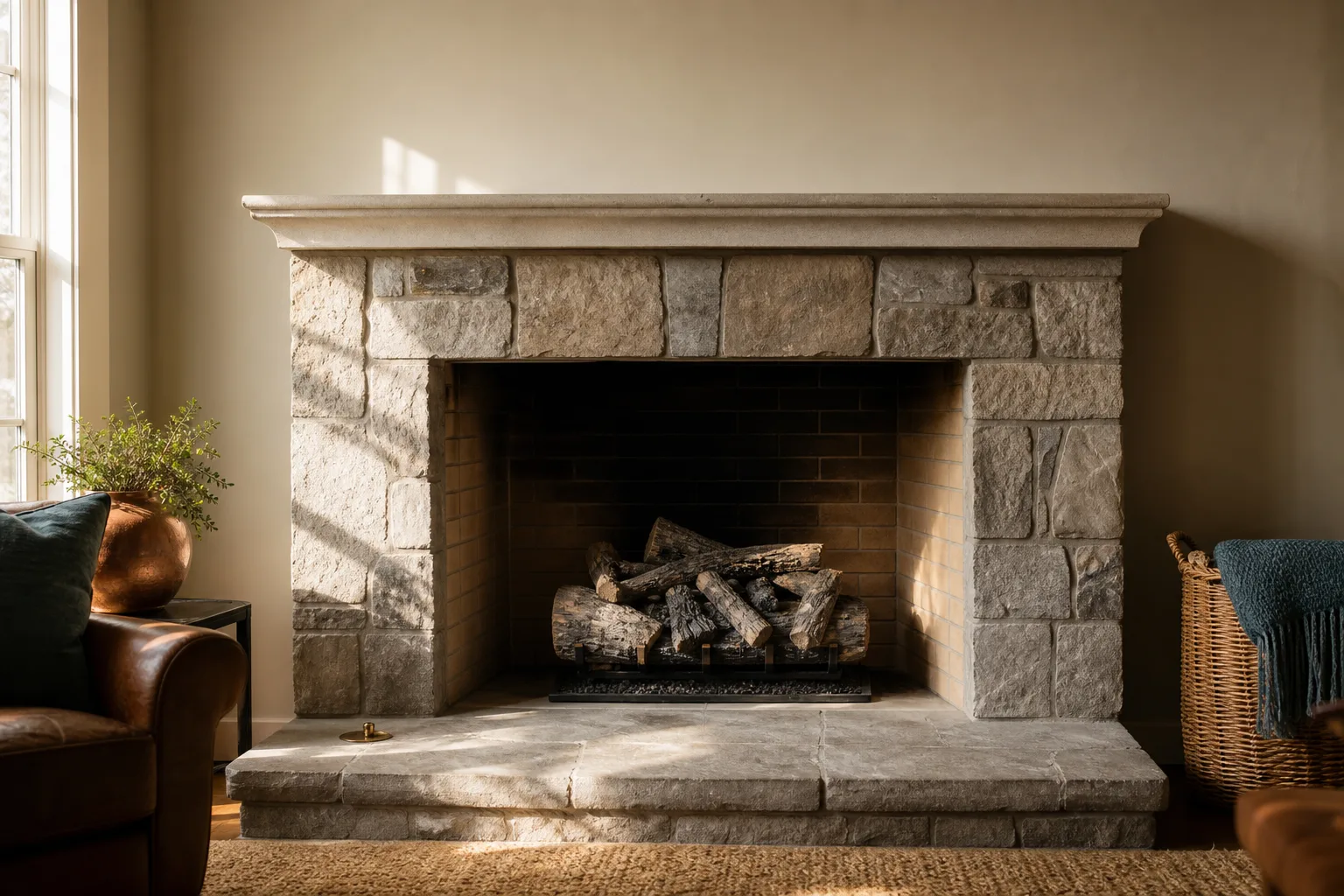
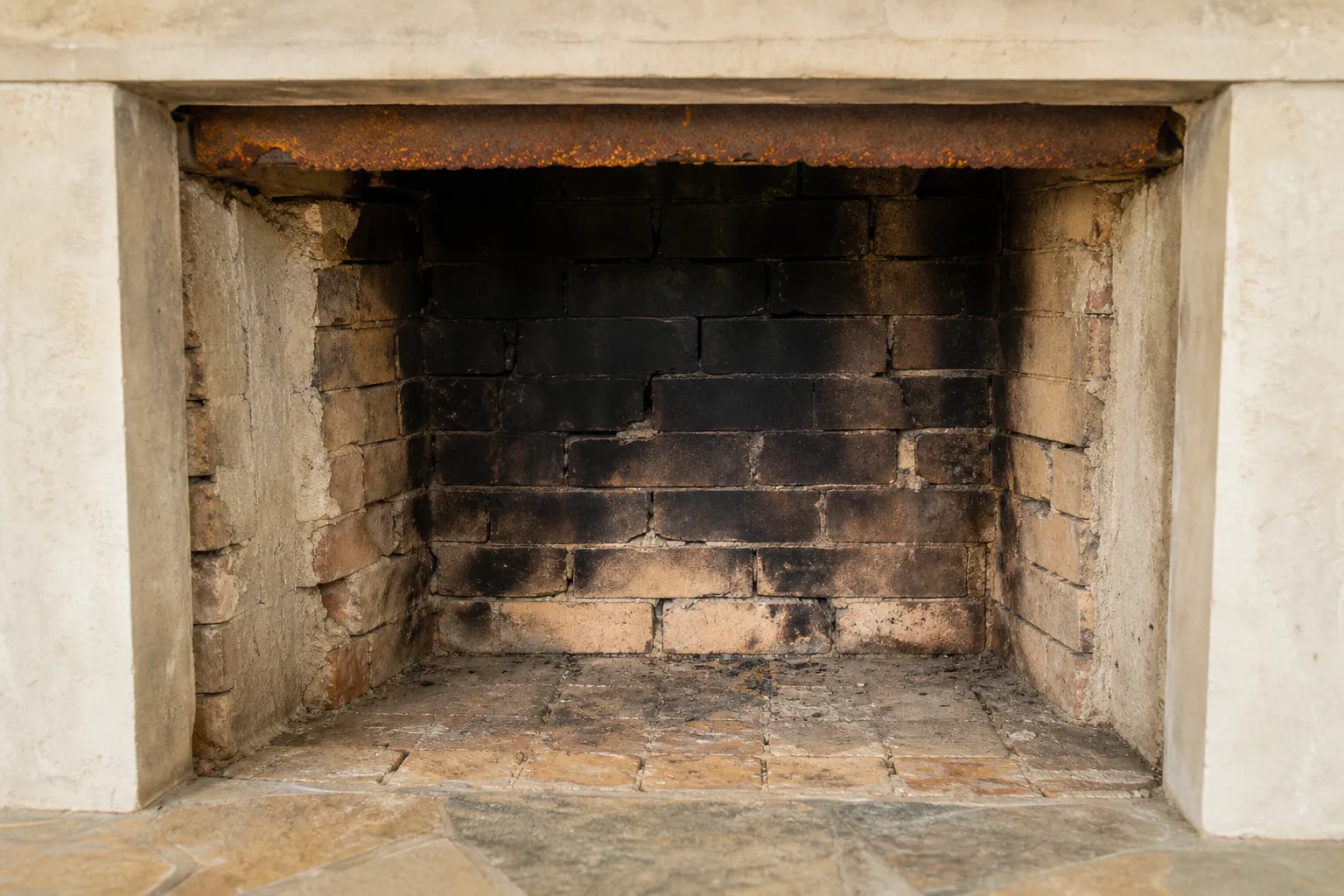
You will know it by the firebox: tan or buff firebrick, laid in a pattern, usually sooted darker toward the back. There is a damper handle inside the top of the opening. Up on the roof there is a masonry stack with a clay flue tile poking out of the crown.
The answer here is usually yes, subject to inspection. The flue might have been relined for gas, the damper disabled, the firebox left in rough shape. But the bones are right.
Case 2: A Masonry Fireplace With a Sealed Gas Insert Shoved In
Same masonry fireplace as Case 1, except instead of a log set someone slid an entire sealed appliance into the opening.
You will see a metal surround panel covering the old fireplace opening, and behind it a factory-made box with glass across the front. There is a liner running up the old flue to serve it, usually flexible metal, sometimes aluminum.
The answer here is "maybe, and it is a bigger job." The insert and its liner come out, and only then can anyone see the original firebox and flue. Sometimes that is a beautiful 1920s firebox. Sometimes it is a mess that was easier to cover than to fix.
Case 3: A Factory-Built Gas Fireplace, Where You Cannot Convert Gas Fireplace to Wood
This is the no.
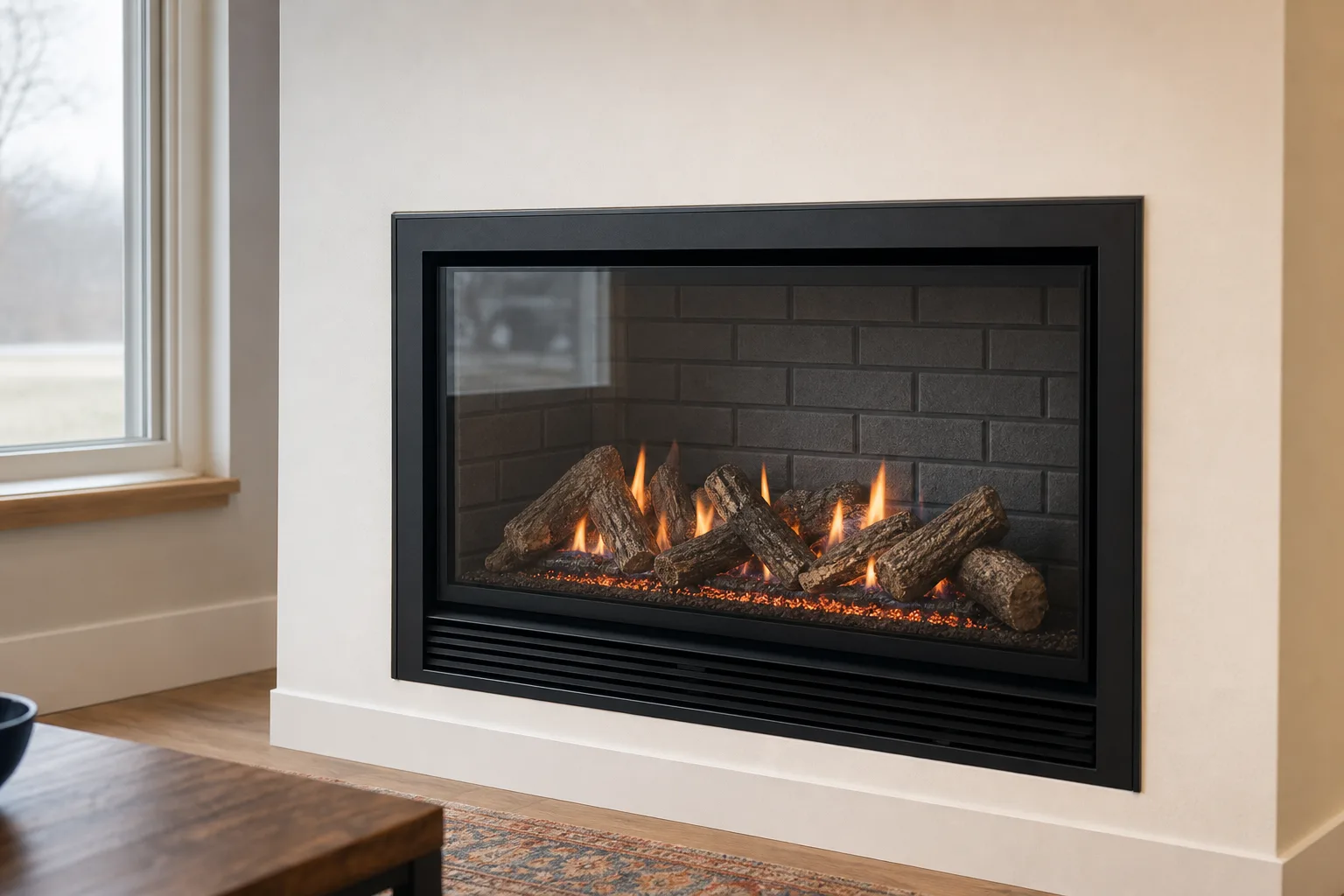
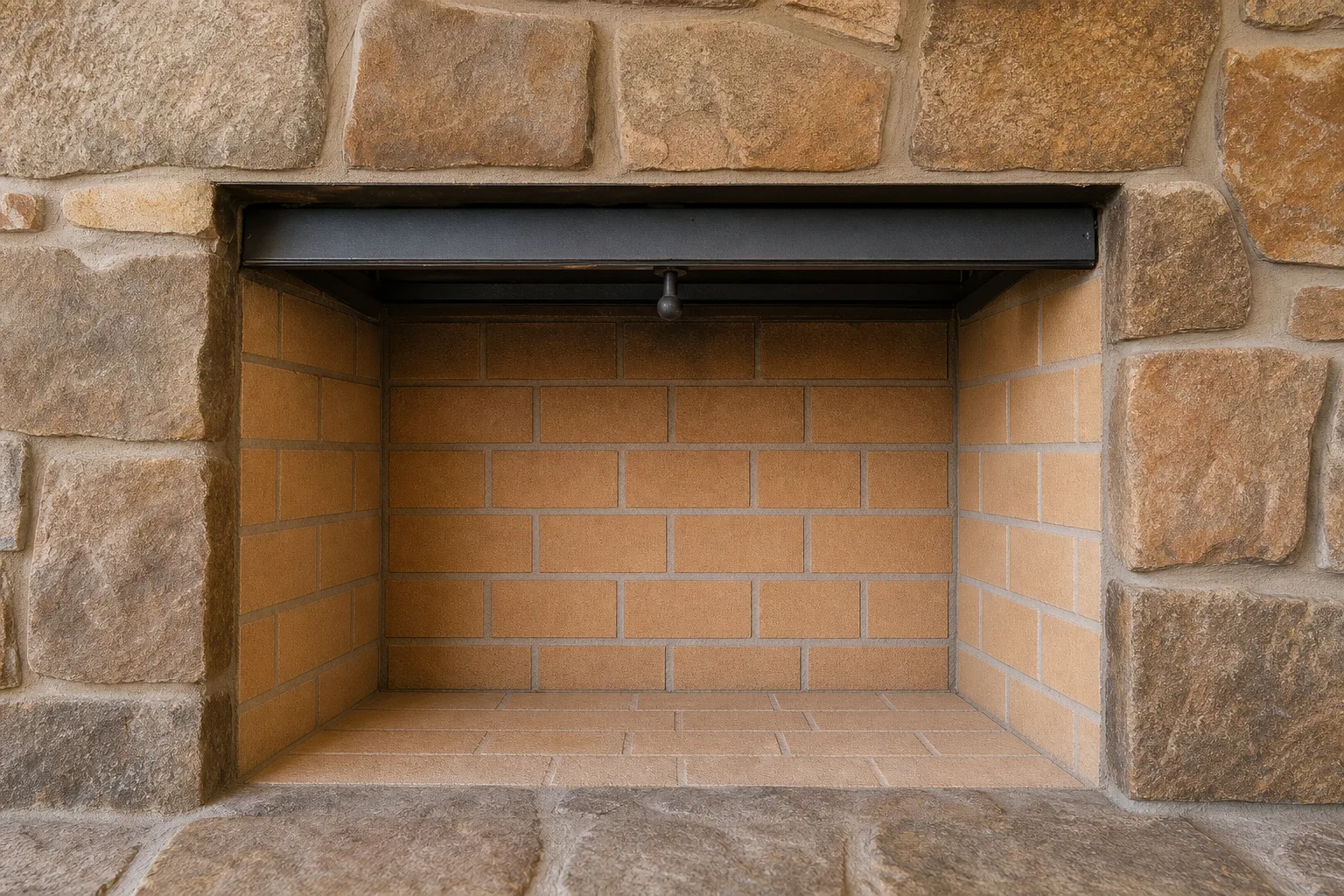
A factory-built gas fireplace, also called a zero-clearance unit, is a manufactured steel box set into a wood-framed wall or chase during construction. The front is glass, often fixed and sealed. Inside, the back wall is a molded refractory panel, and it is usually clean, because a correctly burning gas appliance leaves little soot. Soot in there means something is wrong with the combustion or the venting.
Go outside and look. If you see a round or square metal cap on the wall of the house with concentric rings or louvers in it, that is a direct-vent termination. A metal chase cover with a round vent sticking out of it, instead of a masonry crown and clay tile, tells you the appliance is factory-built. It does not by itself tell you the fuel, because factory-built wood-burning fireplaces vent through chases too. The label settles that.
Safety note: A factory-built gas fireplace is listed and labeled for gas. Direct-vent and B-vent gas fireplaces are listed to the gas appliance standards, ANSI Z21.88 and ANSI Z21.50. The standard that covers factory-built fireplaces intended for solid wood or coal is a different one, UL 127. Burning wood in an appliance that was never listed for solid fuel is outside its listing, and the venting is the bigger half of the problem: a direct-vent pipe is a sealed coaxial assembly and a B-vent is a gas vent. Neither one is a chimney.
Add to that the framing. Many direct-vent units carry a zero-inch clearance rating, which is why they sit tight against wood studs. That rating was earned with a gas flame inside the box.
So for Case 3 the honest phrasing is not "convert." It is "replace the appliance and the venting," a real project with a real answer, and we get to it below.
Myth vs. fact: "It is a fireplace. A fire is a fire." No. These are two different appliances that happen to share a shape, and the differences are invisible from your couch: what the box is made of, what the vent is rated for, how hot the framing is allowed to get, and whether anything in the system was built to handle creosote.
Now go find out which one you have.
Five Things to Check Before You Call Anyone
Get a flashlight. Each check takes about ninety seconds, and together they narrow the field.
One thing first: only the rating plate and a qualified inspection actually decide this. The other four checks tell you what to expect, not what you have.
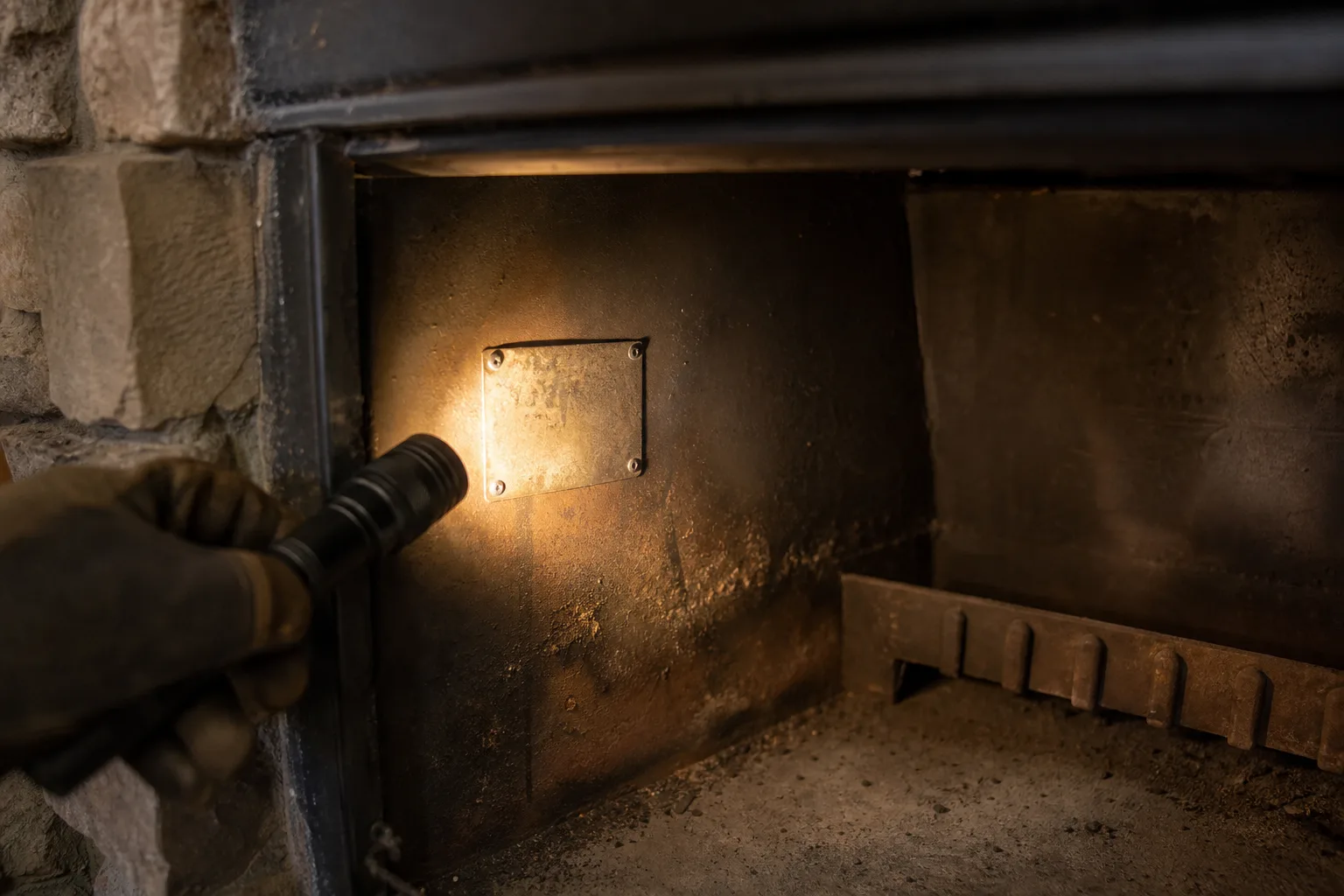
1. Find the rating plate. Nearly every factory-built appliance carries a metal or foil label, usually on a side wall inside the firebox, sometimes behind the lower louver. It lists the model, the listing standard, and the fuel. If it names a gas standard, you have your answer. Photograph it.
2. Look at what the firebox is made of. Real firebrick, individual tan bricks with mortar joints between them, means masonry, which means Case 1 or 2. A one-piece molded panel, black painted steel, or a smooth refractory back with a brick pattern pressed into it means factory-built. Not automatically gas, though: factory-built wood-burning fireplaces use molded refractory panels too, which is exactly why the plate exists.
3. Check the front. A permanently sealed glass panel that does not open points strongly toward a direct-vent gas unit, and an open front or one with a removable screen points toward masonry or a B-vent unit. Treat both as a lean, not a finding, and confirm on the label.
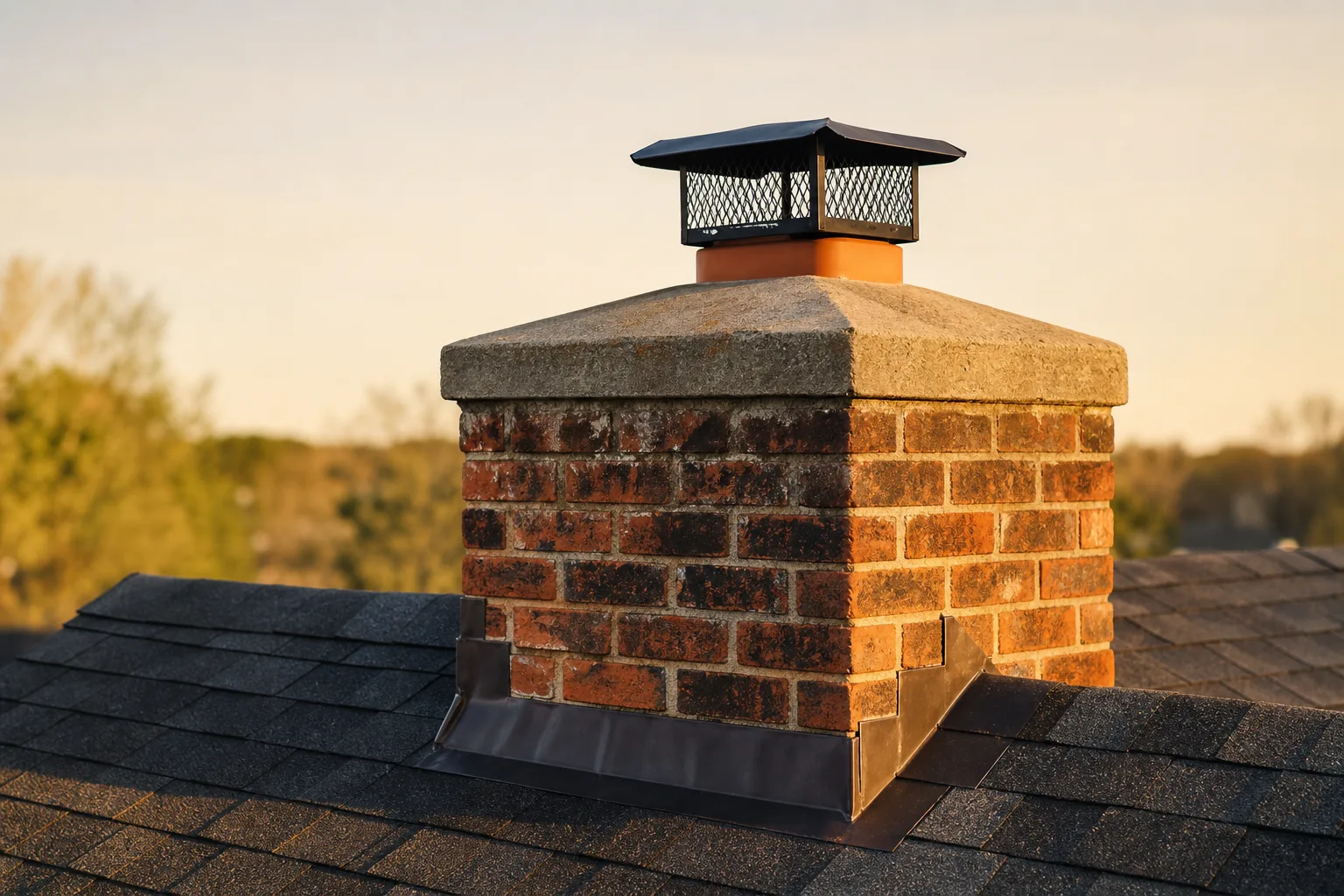
4. Go outside and look up. A brick or stone chimney with a concrete crown and an orange-tan clay tile standing proud of it is a masonry chimney. A small metal termination on the house wall with concentric rings or louvers is direct-vent gas. A boxed chase with sheet metal on top and a round metal vent means factory-built, which again covers both fuels.
5. Find the damper and the key valve. Reach up inside the opening and feel for a damper handle or a rotary control. Then look at the hearth floor or the wall beside it for a small brass or chrome plate covering a gas key valve. Both together is the classic Case 1 signature.
Pro tip: The rating plate is the piece of evidence almost nobody mentions, and it is sitting inside your fireplace right now. Every page you have read on this topic says "consult a professional," and none of them tell you that the appliance itself is carrying a label that answers your question. Find it, photograph it, and you have skipped a whole round of guessing.
From the field: When a fireplace goes over to gas logs, the damper does not always get left alone. It is common to find the plate clamped or blocked partly open on purpose, and not unusual to find it removed outright. Vented gas log sets are often required to run with the damper fixed open, while vent-free sets are a separate case, and what applies depends on the listed appliance and your local rules. Assume the damper needs attention rather than assume it is sitting there waiting.
Five checks, ten minutes, and you almost certainly know your case. That is further than most people ever get before they call somebody to convert gas fireplace to wood.
The remaining uncertainty is all inside the flue, and nobody can resolve that from the living room floor.
What Changes When You Convert Gas Fireplace to Wood
This section is for Cases 1 and 2 only. If you landed on Case 3, skip ahead to the alternatives, because none of this applies to you.
The parts list on other pages is real enough: a working damper, a flue that can take solid fuel, a cap with a spark arrester, a proper grate, the gas line dealt with. What those pages get wrong is the order. They present it as shopping when it is diagnosis.
The Flue Is the Real Gate
Everything else on the list is a part you can buy. The flue decides.
A chimney serving gas logs has had a different life than one serving wood. Gas burns clean and cool. Wood does not, and a wood fire wants a flue that is intact, correctly sized, and rated for solid fuel from the smoke chamber to the cap.
Three things commonly go wrong in a flue that has been on gas.
The first is liner material. If the flue was relined when the house went to gas, there is a reasonable chance the liner in there is aluminum.
Good to know: An aluminum liner is a normal, correct, code-accepted choice for certain gas appliances. It is nowhere near a wood fire. If a camera finds aluminum in your flue, that liner is not getting reused, and relining for solid fuel becomes part of the job rather than a maybe.
The second is condition. Clay tiles crack. Mortar joints wash out. A flue can carry gas exhaust for fifteen years with a defect that would be a serious problem the first night you burn oak in it.
The third is sizing. A flue sized for a gas log set is not automatically sized for the fireplace opening below it, and an undersized flue over an open firebox is how you end up with a living room full of smoke.
The Gas Line Is Not a Four-Word Job
Every article on this topic says "cap the gas line" and moves on.
In many jurisdictions, gas piping work is licensed work, and capping or removing a line commonly requires a permit and an inspection. Permit fees for something this small are usually modest. The licensing is the part people underestimate, not the cost.
There is also a choice nobody offers you. You do not have to remove the line. A gas log lighter, a perforated tube under the grate that lights the wood, is a legitimate thing to keep, and plenty of old masonry fireplaces have had one since they were built.
Beyond that: the firebox needs to be sound, meaning firebrick with tight joints and intact refractory mortar rather than spalled faces and washed-out gaps. A steel wood grate replaces the flimsy grate a log set sits on.
Notice there is not a single dollar figure in this section. That is deliberate. The pages that quote a range are averaging three different jobs, and the gap between "the flue is fine" and "the flue needs a stainless liner" is the whole number.
The Inspection That Comes First, and Why It Is Required
Under NFPA 211, the standard for chimneys, fireplaces, vents and solid fuel-burning appliances, a Level 2 inspection is required when changes are made to the system. A change in fuel type is explicitly one of those changes. So is a change to the shape of the flue, or to the material in it, which is what relining is.
Gas to wood is a change of fuel type. That is not an interpretation, it is the plain reading, and it means the inspection is not optional when you convert gas fireplace to wood.
Level 2 is also required at the sale or transfer of a property, after an operating malfunction, after a chimney fire, and after an external event likely to have damaged the chimney.
What a Level 2 Inspection Finds That You Cannot
A Level 1 inspection looks at readily accessible areas. That is a visual check of what a person can see and reach.
A Level 2 goes further. It includes a video scan of the flue liner and covers accessible portions of attics, crawlspaces and basements, the parts of the house you never look at.
What it is hunting for: cracked clay tiles, deteriorated mortar joints, an unsuitable or damaged liner, and clearances to combustibles.
Safety note: Clearance to combustibles is the defect that scares experienced sweeps most, because it is invisible and cumulative. A joist end too close to a masonry flue can sit there harmlessly for decades on gas, then start pyrolyzing once the flue runs at wood temperatures. You cannot find this from the firebox.
So the order is: identify your case, get the Level 2, then talk about parts. Anyone quoting a conversion price before a camera has been in your flue is quoting a guess.
Find out what is actually in your chimney
A change of fuel is a change to the system, which means a Level 2 inspection with a camera in the flue before anyone talks about parts. VIO matches you with an independent chimney company in your area that can run that inspection and tell you which of the three situations you are in.
Tell them you are looking to convert gas fireplace to wood and they will know exactly what to look for.
Call (513) 655-6702, or tell us about your fireplace and we will match you.
The Honest Alternative: A Wood Insert or a Freestanding Stove
Now the opinion, and it is a real one. For most people in Case 2, and for everyone in Case 3, a wood-burning insert or a freestanding stove is the better answer than chasing a restored open fireplace. Not the consolation prize. The better answer.
Here is why. An open fireplace is a poor heater. It is wonderful to sit in front of, but a large share of the heat goes up the flue along with a steady draw of air you already paid to warm.
An insert is a closed firebox with a glass door and its own liner, seated in the existing masonry opening. Same fire to look at, much more of the heat staying in the room, better control over how long a load burns.
Pro tip: For Case 2, the insert path is often less work than the restoration path, not more. The sealed gas insert is coming out either way, and putting a wood insert and a new stainless liner into that same opening skips the question of whether a firebox nobody has looked at since 1994 is still sound.
For Case 3 it is a different project again. The gas unit and its vent come out, and a listed wood-burning appliance with listed solid-fuel venting goes in, usually a freestanding stove with its own chimney system. It is a real construction job, and the only honest version of a yes for that case.
Here is how the three paths line up.
| Restore to wood fireplace | Wood insert or stove in the opening | Replace the appliance | |
|---|---|---|---|
| Who it is for | Case 1, and some of Case 2 | Case 2, and Case 1 owners who want heat | Case 3 |
| What you end up with | An open wood-burning fireplace | A closed firebox with a glass door | A listed wood appliance with new venting |
| What has to change | Flue evaluated and often relined, damper, cap with spark arrester, grate, gas line | Old unit out, new stainless liner, insert or stove set and connected | Gas unit and its vent removed, new appliance, new solid-fuel chimney |
| Heat you actually keep | The least of the three | The most, for the fuel burned | High, depends on the appliance |
| What disqualifies you | A flue that cannot be made suitable, or a firebox past repair | Very little, if the masonry opening and chimney can take a liner | Clearances, chimney routing, structure, appliance listings and local rules can all rule out a given installation |
Pick the column that matches your case, not the one that matches the phrase you searched. Plenty of people who set out to convert gas fireplace to wood end up in the middle column and are happier there.
One line that applies to all three columns: once you burn wood, you are on a sweeping schedule. Creosote is a byproduct of burning wood and gas does not make it. That is a permanent change to how you own the house, and it is worth knowing before you start rather than after.
How VIO Helps You Convert Gas Fireplace to Wood
Plainly: VIO is a referral service. We connect homeowners with independent local chimney companies. We do not sweep chimneys, install liners, or do the work ourselves.
What that is worth to you here is the first appointment. You need someone who will run a Level 2 inspection, put a camera in the flue, read the rating plate, and tell you which of the three cases you are actually in before anyone sells you a part.
That is a specific ask. The independent company you are matched with should arrive expecting a fuel-change evaluation, not a routine sweep.
When you call, say you want to convert gas fireplace to wood and that you need a Level 2 inspection because of the change of fuel. Mention which of the three cases you think you have, and say you photographed the rating plate. That call goes very differently from "how much to switch my fireplace over."
On estimates: we ask every company in the network to put its estimate in writing before any work starts, and you should insist on exactly that, from us or from anyone else you call. A written scope is how you tell the difference between a flue that needs a liner and a flue somebody would like to sell you a liner for.
And if the answer turns out to be no, a good company may be able to establish that during the initial evaluation and show you the label that says so.
Start with the inspection, not the parts list
Whether your fireplace converts, takes an insert, or stays gas, the same first step answers it. VIO is a referral service: we connect you with independent local chimney companies, and we do not do the work ourselves.
We ask every company in the network to put its estimate in writing before any work starts, and you should insist on exactly that, from us or from anyone else you call.
Call (513) 655-6702, or request service.
Symptom checker
What is your chimney doing?
Tap the closest match for an honest first answer.