



On this pageWhat a Fireplace Smoke Guard Actually Is7 sections+6
- What a Fireplace Smoke Guard Actually Is
- The 10:1 Rule: Measure Before You Buy a Fireplace Smoke Guard
- Seven Reasons a Fireplace Smokes, and Only One Is a Smoke Guard Problem
- Choosing a Fireplace Smoke Guard: Height, Width, and Finish
- Installing a Fireplace Smoke Guard and Testing Whether It Worked
- When a Fireplace Smoke Guard Is the Wrong Answer
- How VIO Helps With a Smoking Fireplace
Quick answer
A fireplace smoke guard is a strip of non-combustible steel fitted across the top of a fireplace opening to lower its height. Reducing the opening area cuts how much room air enters the firebox, which rebalances the air going in against what the flue can carry out. Common heights are 4 and 6 inches, with adjustable models fitting openings about 28.5 to 48 inches wide. It only corrects an opening that is oversized relative to the flue.
A fireplace smoke guard is a strip of non-combustible steel that fits across the top of your fireplace opening and makes that opening shorter. That is the entire product. Whether it stops your fireplace from smoking depends on one thing you can check yourself, with a tape measure, in about five minutes.
Before anything else, look at the brick directly above your fireplace opening.
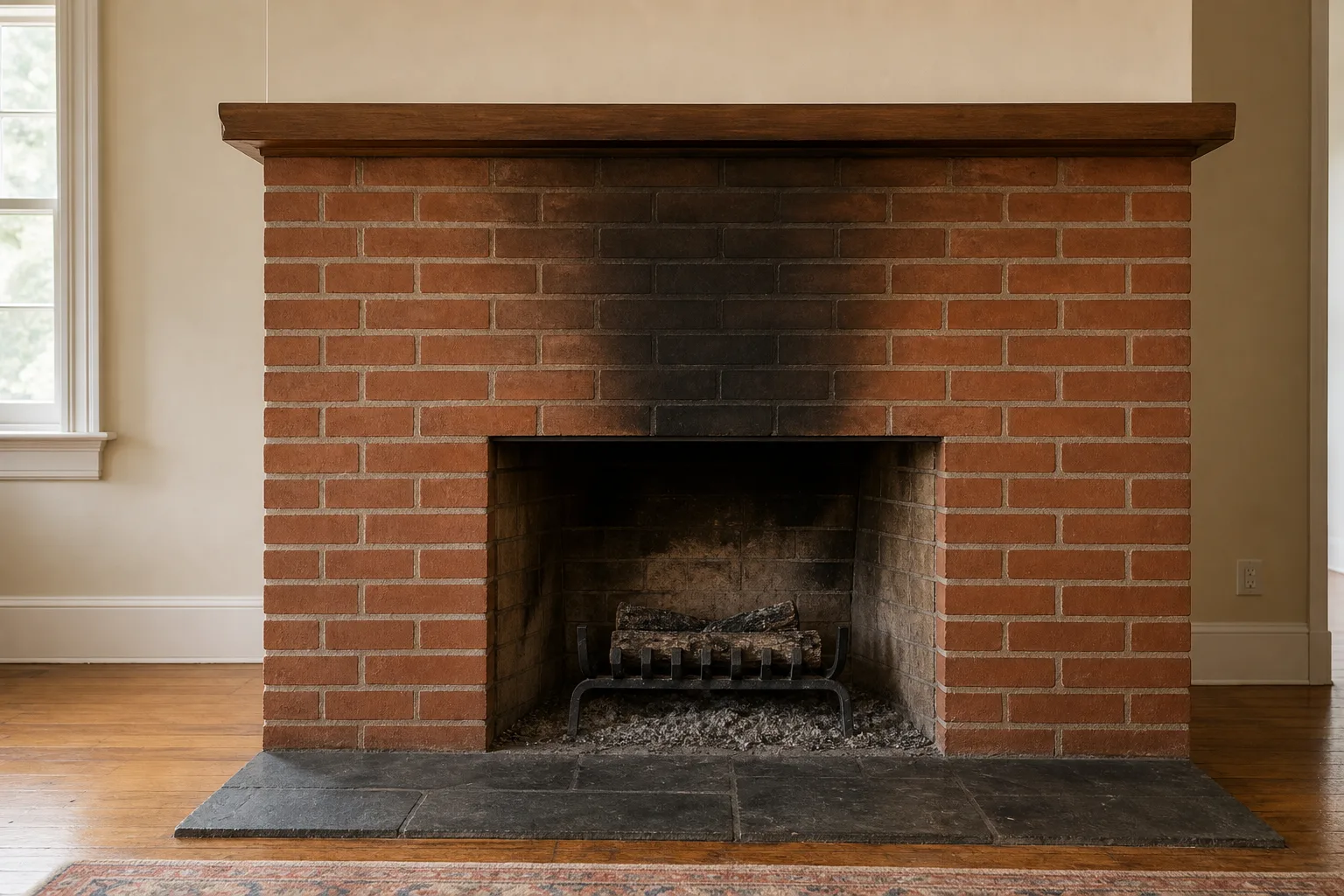
If your fireplace has been smoking for more than a season, there is a gray-brown smudge up there. Wider at the top than the bottom. Shaped a little like a feather.
That stain is a record. Every time smoke rolled out of the top of the opening instead of going up the flue, it climbed the face of the masonry and left a trace. It is easy to live with that stain for years without reading it as evidence.
It is a starting point rather than a diagnosis, and it is why you are reading about a fireplace smoke guard right now.
Here is what the product pages ahead of this one will not say: this part fixes one cause of a smoking fireplace. There are at least seven. If yours is one of the other six, the guard does nothing, and you have spent money making a symptom quieter without making the house safer.
What a Fireplace Smoke Guard Actually Is
The part itself
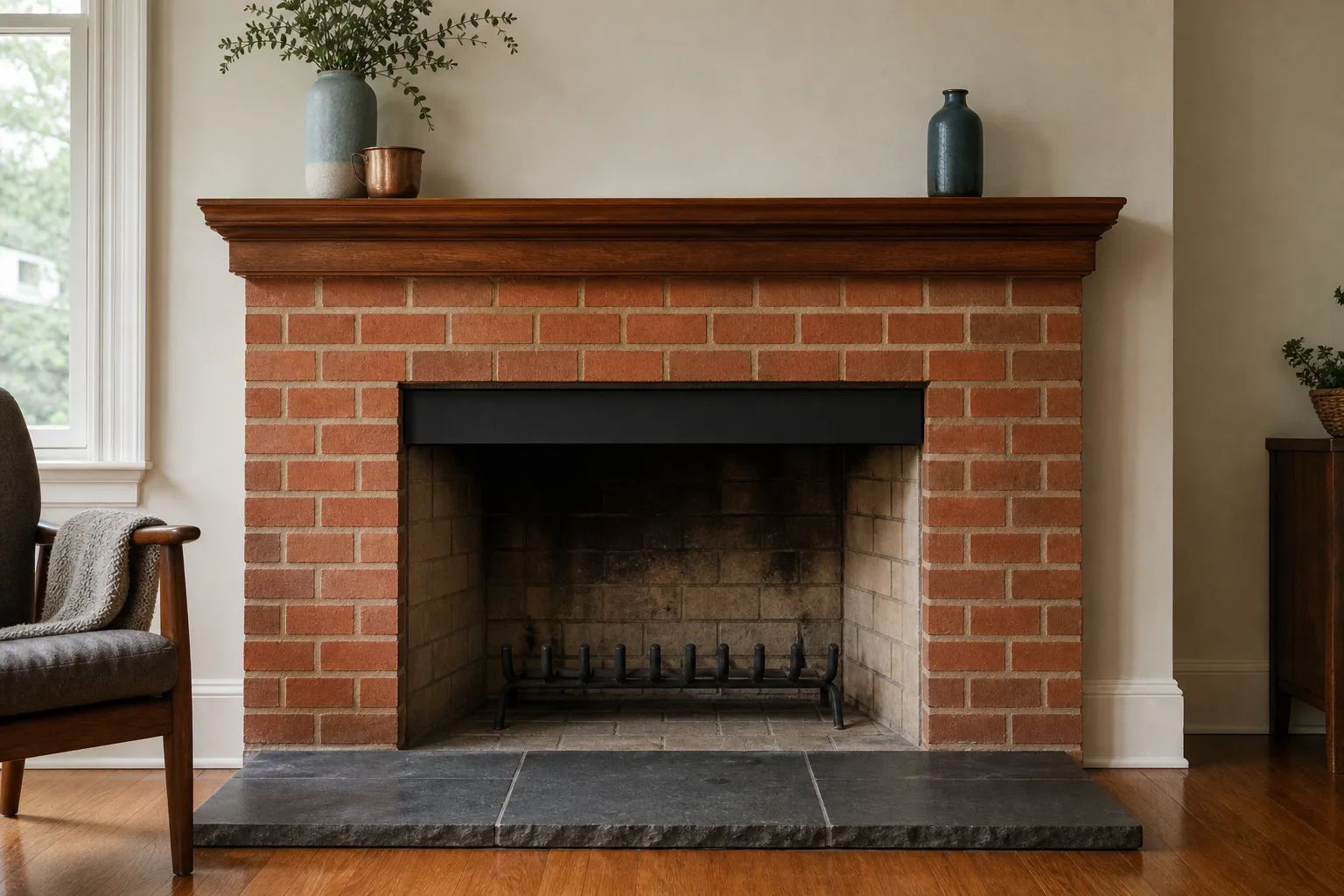
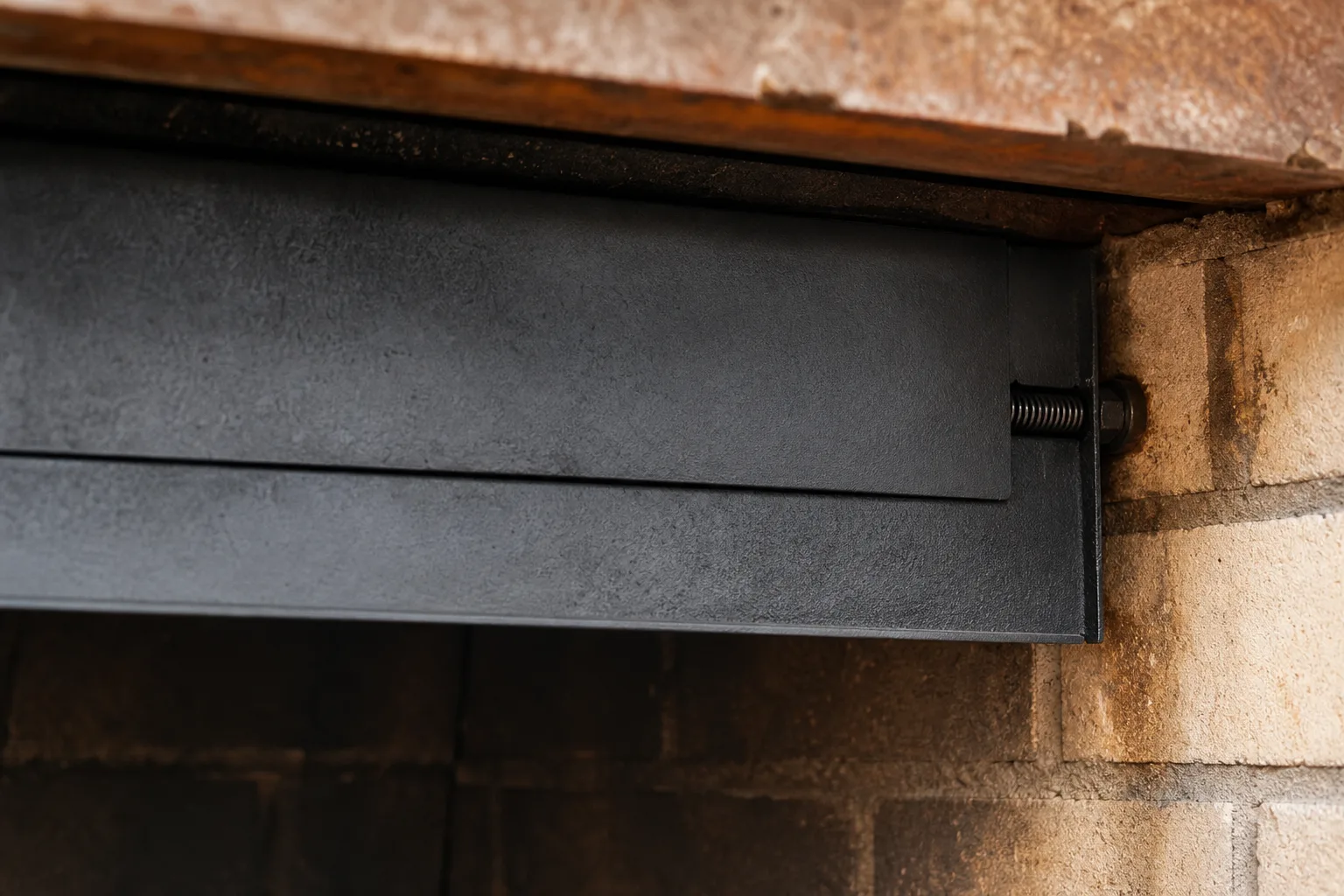
Picture a black visor across the top of your firebox opening, four or six inches tall, running the full width.
It is sheet steel, usually matte black powder coat, though stainless and copper exist. It mounts up under the lintel, the horizontal steel angle iron carrying the masonry above the opening.
Adjustable models are two overlapping telescoping panels with spring tension at each end. Squeeze them, slide the assembly into the top of the opening, release, and the springs press the ends against the firebox walls. No tools, no drilling. Common models cover openings from about 28.5 to 48 inches wide.
You will see the same object sold as a smoke hood or a smoke deflector. Different shelf label, same thing.
Why lowering the opening changes anything
A fireplace balances two numbers: how much air the opening lets in, and how much the flue can carry out.
The opening is the intake. The flue is the exhaust. If the intake outruns the exhaust, the excess air goes somewhere, and where it goes is back into your living room, carrying smoke with it.
A fireplace smoke guard shrinks the intake. It cannot make your flue bigger, so it works the only side of the equation you can change without masonry work. Less air entering means less pressure on the system, which lets the flue draft properly.
Myth vs. fact: The myth is that a smoke guard fixes a smoking fireplace. The fact is that it fixes one geometry problem, an opening oversized relative to the flue. Put one over a stuck damper and the smoking continues, because the guard was never addressing that.
Which raises the question every retailer in this market steps around. How do you know your opening is the problem?
The 10:1 Rule: Measure Before You Buy a Fireplace Smoke Guard
There is a conventional standard for masonry wood-burning fireplaces, and it has held for a long time.
The flue's cross-sectional area should be roughly one tenth of the fireplace opening's area. Ten to one. Round flues are commonly held closer to twelve to one, because a round flue drafts more easily, smoke rising in a spiral rather than fighting corners.
That ratio assumes a standard American fireplace, the kind with a sloped rear wall forming a flattened smoke shelf. It turns a guessing game into arithmetic.
Measuring the opening
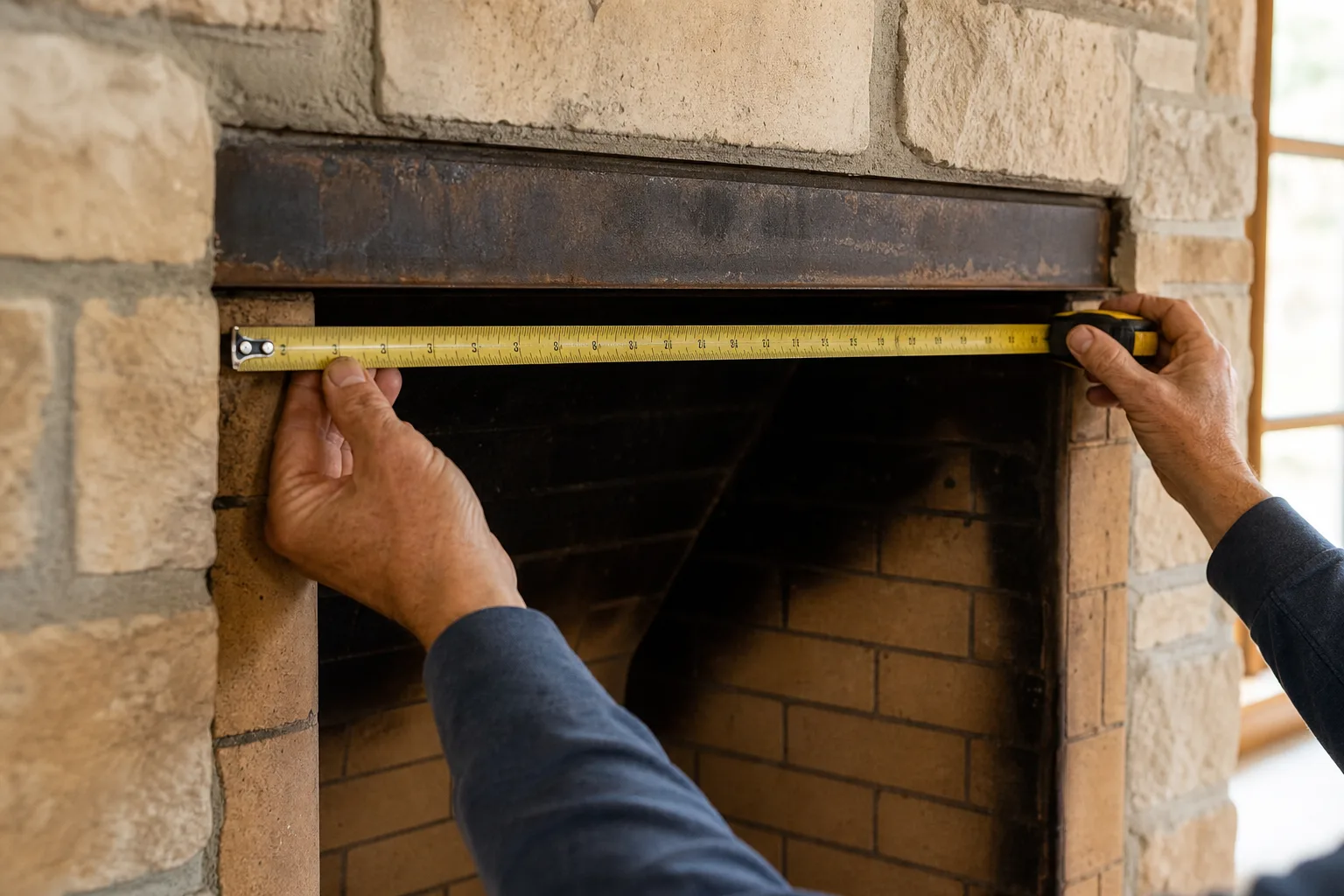
Take a tape to the face of the fireplace, not the inside of the firebox. Measure width and height in inches and multiply. That is your opening area.
An opening 36 inches wide and 29 tall gives 1,044 square inches. Yours will be its own number.
Pro tip: Measure the width at top and bottom, and the height at both ends. Old masonry is rarely square, and a guard that seats at one end and gaps at the other lets smoke through the gap, which defeats the point.
Finding the flue's cross-section
The harder number, and where most homeowners stop.
If you can safely see past the damper with a flashlight, a rectangular clay tile might be 8 by 12 inches inside, which is 96 square inches. A round liner is measured by inside diameter, area being pi times the radius squared.
If you cannot see it or are not confident what you are looking at, that is a fair place to have someone look. Guessing this number is worse than not having it.
Reading the number you get
Divide opening area by flue area. Your target is about ten for a square or rectangular flue, about twelve for a round one.
At or near your target, the geometry is within the conventional standard, and an oversized opening is probably not what is smoking you out. Look at the other six causes.
Meaningfully above it, say fourteen or eighteen against a ten target, and the opening is too large for the flue. The chimney cannot clear combustion byproducts fast enough, and a fireplace smoke guard is aimed at exactly your problem.
Now run it backward. Take four inches off the height, recalculate, divide again. Then try six. Take the height landing nearest your target without overshooting well below it, because a flue oversized relative to the opening runs cool, and a cool flue invites condensation and creosote.
No retailer walks you through that, because sometimes it tells you not to buy.
Seven Reasons a Fireplace Smokes, and Only One Is a Smoke Guard Problem
Here is the rest of the list, and what each looks like from your side of the hearth.
The damper
Worth ruling out first, and easy to get wrong. A damper partially closed, rusted at half travel, or warped will choke the flue no matter how well proportioned the opening is.
Reach up with a flashlight and look. Handles lie. The plate does not.
A blocked or sooted flue
A nest, a fallen brick, a heavy creosote glaze, or a collapsed tile section all block the exhaust. The tell is hard, consistent smoking even on good days: dry wood, open damper, mild weather.
You cannot rule this out from the living room, which is the honest limit of any home diagnosis. It takes a light and a look up the flue, which is why an annual inspection is the standard habit, with chimney cleaning services done as the deposits and conditions call for.
Safety note: A fireplace smoke guard installed over a blocked flue makes the smoking less visible without addressing anything. Backdrafting pushes combustion byproducts back into the house, and carbon monoxide is among them. If the fireplace smokes hard every burn, get the flue looked at before you buy a part.
The house is under negative pressure
Modern houses are sealed tight, and cold weather seals them tighter.
Run a range hood, a bath fan, a dryer, and the house can sit at lower pressure than the outside air. The chimney becomes the easiest place to pull replacement air from, and it pulls downward.
The test is almost too simple. Crack a window near the fireplace an inch and light up again. Noticeable improvement means a pressure problem, not an opening problem.
A cold flue on the first fire
A cold column of air in the flue is denser than the warm air trying to rise through it, and it sits there like a plug.
This shows up as smoke on startup that clears once the fire is going. Different from a fireplace that smokes the whole burn, and not a job for a fireplace smoke guard. A rolled newspaper torch held near the damper for a minute usually breaks it.
Wet wood
Wood that has not dried spends the first part of the burn boiling water instead of making heat, and cool wet smoke does not rise well.
If the fire hisses, if the split ends look fresh, if it needs constant attention to stay lit, rule this out before blaming geometry. Properly seasoned firewood burns hotter and makes a smoke column that wants to go up.
Species matters too. Whether you can burn pine in a fireplace comes up constantly, and the short version is that it is more about dryness than about the tree.
A chimney that is too short
There is a code rule for this, in NFPA 211 and IRC R1003.9, known in the trade as the 3-2-10 rule.
A chimney must extend at least 3 feet above the highest point where it passes through the roof, and at least 2 feet higher than any part of the building or obstruction within a 10-foot horizontal radius.
The reason is wind. Air hitting a sloped roof curls over the ridge into a turbulent low-pressure pocket, and a flue terminating inside that pocket runs backward.
Stand in the yard and look. If the stack barely clears the shingles, or a taller wing sits close by, this is a candidate. Codes are enforced locally, and your authority having jurisdiction has the final word.
An opening too big for the flue
And here is the one a fireplace smoke guard was built for.
The signature is steady, low-level smoking from the top few inches of the opening, on almost every fire, regardless of weather or wood. Not a dramatic event. A leak that stains brick.
| Cause | What you notice | Does a smoke guard help? |
|---|---|---|
| Damper closed, stuck or warped | Heavy smoke immediately, every time | No. Fix the damper. |
| Blocked or sooted flue | Hard smoking even on good days | No, and it can hide a hazard. |
| House under negative pressure | Improves when you crack a window | No. Address the air supply. |
| Cold flue at startup | Smoke on lighting, clears once hot | No. Warm the flue first. |
| Wet or unseasoned wood | Hissing, sluggish, hard to light | No. Burn dry wood. |
| Chimney too short for the roofline | Worse on windy days, downdrafts | No. Height is the fix. |
| Opening oversized for the flue | Steady light rollout from the top | Yes. This is the one. |
Six no's and one yes. That ratio is why this guide exists.
From the field: The stain above the opening is easy to overlook. It has been there so long it reads as part of the fireplace rather than as a symptom, and pointing at it changes the conversation, because it shows rollout has been happening for a while. What it cannot tell you is why. Only a look at the system answers that.
Not sure a fireplace smoke guard is your problem?
Tell us what your fireplace is doing and we will match you with a local chimney company that looks at the flue, the damper and the opening before anyone sells you a part.
Call (513) 655-6702 or request service.
Choosing a Fireplace Smoke Guard: Height, Width, and Finish
Say the arithmetic came out above ten. Three decisions are left, and only one is interesting.
Four inches or six
Retailers stock both and none of them tell you how to choose. The honest rule is to take the smallest height that gets your ratio near ten.
A six-inch guard reduces the opening more, which sounds like more fixing. It is also six inches of fire you can no longer see and six inches of firebox no longer radiating into the room.
Good to know: Lowering the opening trims both the view of the fire and the radiant heat reaching the room. Nobody selling one mentions it. If your real complaint was heat rather than smoke, a fireplace insert with blower is a different and more expensive conversation, but it is the honest direction.
Getting the width right
Adjustable models typically span 28.5 to 48 inches. Measure at the top, where the guard will sit, not at the hearth.
If your opening falls outside that range, or the firebox sides flare, an adjustable unit may not seat. Fixed-width and custom guards exist for that.
Where a Fireplace Smoke Guard Has to Sit
Tight to the lintel, flush across the full width, ends pressed firmly against the side walls.
Gaps are the enemy. Smoke behaves like water finding a crack, and a half-inch gap at one end carries the same rollout you were trying to stop.
Finish, and what it does not do
Black powder coat, stainless, copper. Pick the one you want to look at.
Finish is cosmetic. None drafts better than another, and the fire-facing side blackens within a few burns. A months-old guard is not glossy, whatever the product photo showed.
Installing a Fireplace Smoke Guard and Testing Whether It Worked
The tool-free install
Squeeze the telescoping panels together, angle the assembly into the top of the opening, slide it up under the lintel, and release so the springs push the ends outward.
Push on it. It should not shift, and the top edge should meet the lintel rather than sit an inch below. Do this on a cold fireplace.
The test burn
This is the part that matters, because a fireplace smoke guard is as much a diagnostic instrument as a repair. If it works, your problem was geometry. If it does not, you have learned something valuable for the price of one part.
- Burn on a mild, still day. Wind is a variable you do not want in the experiment.
- Use dry, well seasoned wood.
- Confirm the damper is fully open by looking with a flashlight, not by feeling the handle.
- Turn off the range hood, bath fans and dryer for the duration.
- Warm the flue first with a rolled newspaper torch near the damper.
- Light the fire and watch the top few inches of the opening for ten minutes.
- Repeat on a different day before concluding anything.
If the rollout stops or drops to almost nothing, you found it. If smoke still curls out with everything else controlled, the guard was not your answer, and you have narrowed the field considerably.
Pro tip: Test with the smaller guard first if you are between sizes. You can always step up to the taller one. You cannot get the view back once you have given it away.
When a Fireplace Smoke Guard Is the Wrong Answer
The signs you have a bigger problem
Some symptoms should send you past the parts aisle entirely.
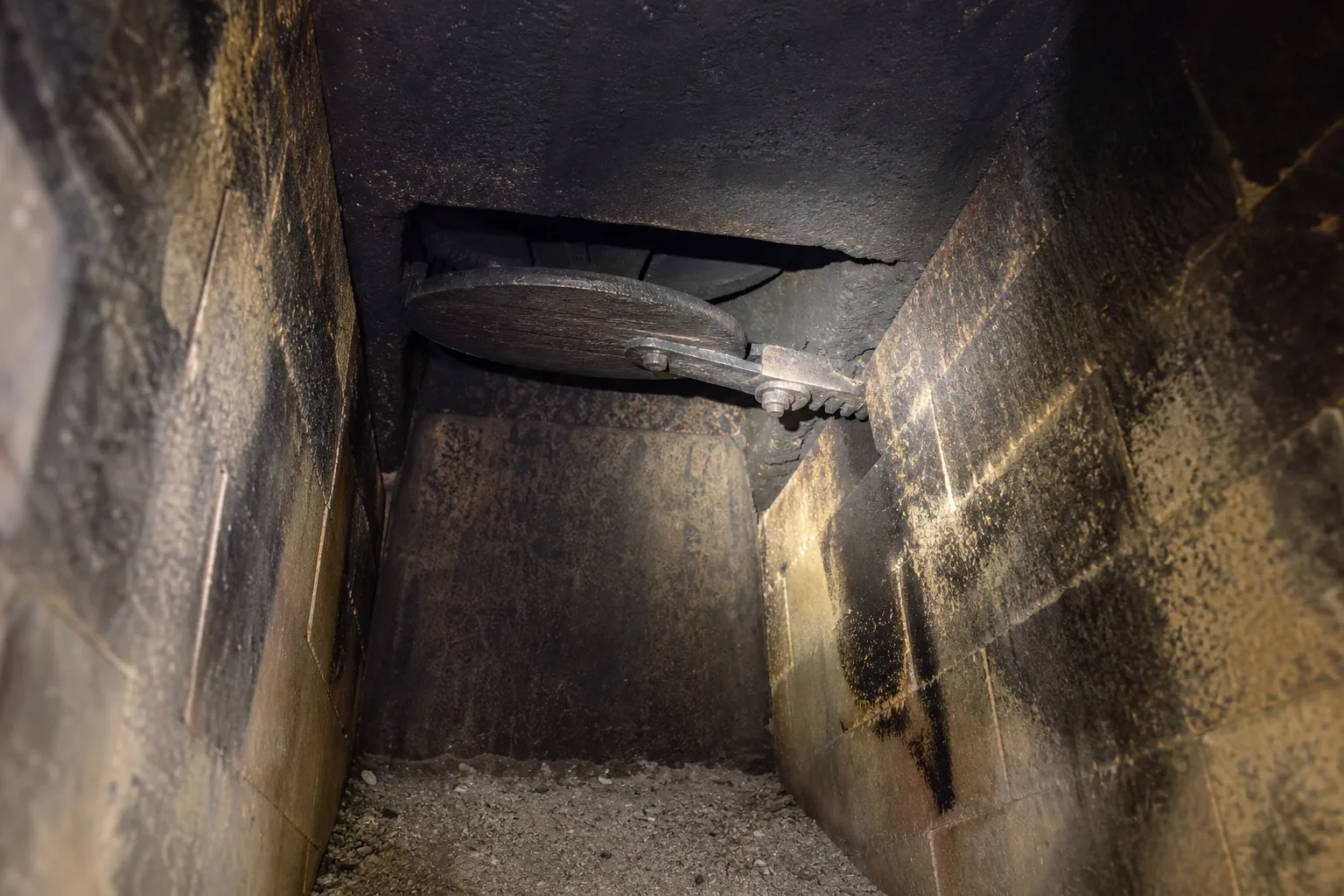
Smoke that pours rather than curls. Smoke with no fire lit. An acrid smell in the house on windy days. Spalling brick, daylight through the masonry, a stack that has changed shape. A carbon monoxide alarm that has gone off, ever.
Add anything you cannot see. The parts of a chimney that fail are mostly the parts invisible from the room, and a walk through the chimney parts above the damper is a reasonable place to start understanding the system.
Deteriorating masonry is its own category. If the stack is shedding mortar or the brick faces are flaking, that is a structure question, and brick chimney repair is a different job from anything you fix at the opening.
What NFPA 211 calls a malfunction
NFPA 211 defines the levels of chimney inspection and specifies when the deeper one applies. A Level 2 inspection is required at sale or transfer of a property, when the system is changed, when there has been a malfunction, after a chimney fire, and after an external event such as a storm or earthquake.
A fireplace that smokes into the room every time you light it is a malfunction. Not a preference. Not an annoyance.
That does not mean something is badly wrong. It means the right next step is for somebody to look, with a light or a camera, at the flue and the smoke chamber, before you spend another winter putting steel over the symptom.
How VIO Helps With a Smoking Fireplace
VIO is a referral service. We are not a chimney company, we do not send crews, and we do not do the work. What we do is match homeowners with independent local chimney companies and stay out of the way.
For this situation, that means a company that will look up the flue, check whether the damper actually opens, measure the opening against the flue area, and tell you whether a fireplace smoke guard is even the right tool for what your fireplace is doing. Before anyone sells you a part.
We ask every company in the network to put its estimate in writing before any work starts, and you should insist on exactly that. If someone will not, that tells you something.
If the answer is a straightforward chimney service visit and a sweep, that is a short conversation. If it is a smoke chamber defect, a liner problem, or a chimney that never met the 3-2-10 rule, at least you know what you are dealing with before the cold sets in.
Either way, you can request service and describe what your fireplace is doing in plain language. The stain above the opening is worth mentioning.
Before the first real fire this season
A fireplace that smokes every time you light it is a malfunction, and under NFPA 211 that is one of the triggers for a Level 2 inspection. We will connect you with an independent chimney company in your area that can do it.
Call (513) 655-6702 or request service.
Symptom checker
What is your chimney doing?
Tap the closest match for an honest first answer.