



On this pageWhat people actually want when they search pellet stove maintenance near me7 sections+6
- What people actually want when they search pellet stove maintenance near me
- Your stove tells you before it fails
- What a real annual service covers
- The venting side nobody looks at
- The maintenance you own between visits
- How to vet the tech before they park in your driveway
- When to book, and what waiting actually costs you
Quick answer
A real pellet stove maintenance visit is a teardown, not a quick vacuum. Expect the heat exchanger and ash traps opened, the burn chamber cleaned to bare metal, both blowers pulled and cleaned, the vent pipe disconnected and brushed through, gaskets and the vacuum switch checked, and the stove test-fired and watched before the tech leaves. Book it before the heating season, and ask what the service covers before you agree to a price.
A pellet stove doesn't die all at once. It gets louder, then it gets lazy, then one cold morning it throws an error code and sits there while you stand in front of it in a bathrobe. That slow slide is why people end up searching pellet stove maintenance near me in the first place, not because something broke, but because something feels off and they'd rather not find out the hard way. Here's what that service should actually include, what you can handle yourself between visits, and how to tell whether the person showing up knows the difference between a pellet appliance and a wood stove.
The distinction matters more than most homeowners expect. A wood stove is a steel box with a hole in the top. A pellet stove is a machine: a motor turning an auger, a combustion blower pulling air through a firepot, a convection blower pushing heat into your room, a vacuum switch watching for leaks, a control board deciding what happens next. Every one of those parts wears. None of them fail politely.
What people actually want when they search pellet stove maintenance near me
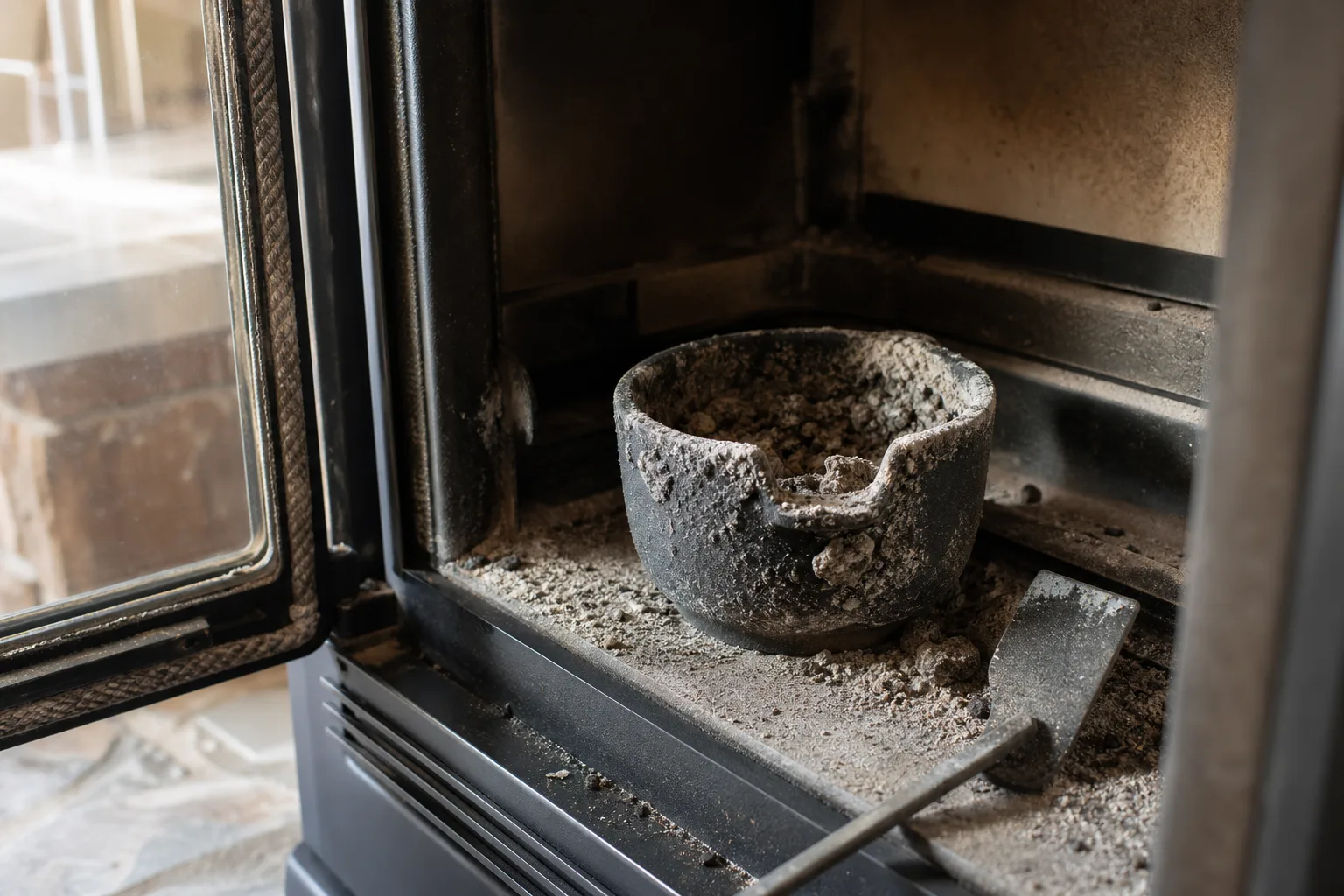
Search intent here is refreshingly honest. Nobody types pellet stove maintenance near me because they're curious about combustion science. They want a competent person, reasonably close, who will show up and make the stove behave. But underneath that there's a second question they usually don't ask out loud: how do I know this person actually works on pellet stoves?
It's a fair worry. Plenty of outfits will happily clean anything with a flue attached. Pellet units reward specific knowledge: where ash packs into the heat exchanger channels, which gaskets go hard first, why a stove that runs fine on low starts surging on high. If the tech's mental model is "chimney," you'll get a clean vent pipe and a stove that still misbehaves.
So the useful version of this search isn't just a phone number. It's knowing enough to ask three or four pointed questions before you book, which is most of what this guide is for. If you're weighing whether you even need a specialist or a general sweep, our overview of chimney sweep near me covers where the two trades overlap and where they don't.
Good to know: Pellet stoves burn at a much lower moisture content than cordwood and produce far less creosote, but "less" isn't "none," and pellet venting is a smaller-diameter pipe that plugs faster when it does foul. Low-creosote is not the same as low-maintenance. If you want the chemistry behind that, we broke it down in what is creosote.
Your stove tells you before it fails
Most service calls I'd classify as emergencies weren't. The stove had been complaining for weeks and the homeowner had gotten used to the new normal. Learn the vocabulary and you convert a January breakdown into an August appointment.
Noise changes. A healthy stove has a steady, boring hum. When a bearing starts going in the combustion or convection blower, you get a whine that rises with fan speed, or a rhythmic tick. Auger motors that are struggling make a low grinding sound instead of the clean click-pause-click of normal feed.
Flame character. This is the single best diagnostic and it costs nothing. A properly running pellet flame is bright, active, and mostly vertical — lively, not lazy. A dark orange, rolling, sooty flame that licks the glass means the burn is starved for air. Usually that's a fouled firepot, a plugged heat exchanger, a dirty vent, or a leaking door gasket. Sometimes it's all four at once.
Ash and soot volume. If the ash pan fills noticeably faster than it did last season with the same pellets, something changed in the combustion. Black soot on the glass within a day or two of cleaning it is the same signal. Fine grey ash is normal. Sticky black film is not.
Shutdowns. A stove that runs an hour and quits, or that won't hold a fire on the lowest setting, is often reading a vacuum or temperature condition it doesn't like. That's the safety system doing exactly what it's designed to do. Don't defeat it, and don't ignore it.
Safety note: If the stove ever pushes smoke into the room, shut it down and stop using it until someone inspects the venting. Pellet exhaust contains carbon monoxide, and a positive-pressure vent system that has developed a leak will put it where you breathe. Working CO alarms on every level of the house are not optional with any solid-fuel appliance.
What a real annual service covers
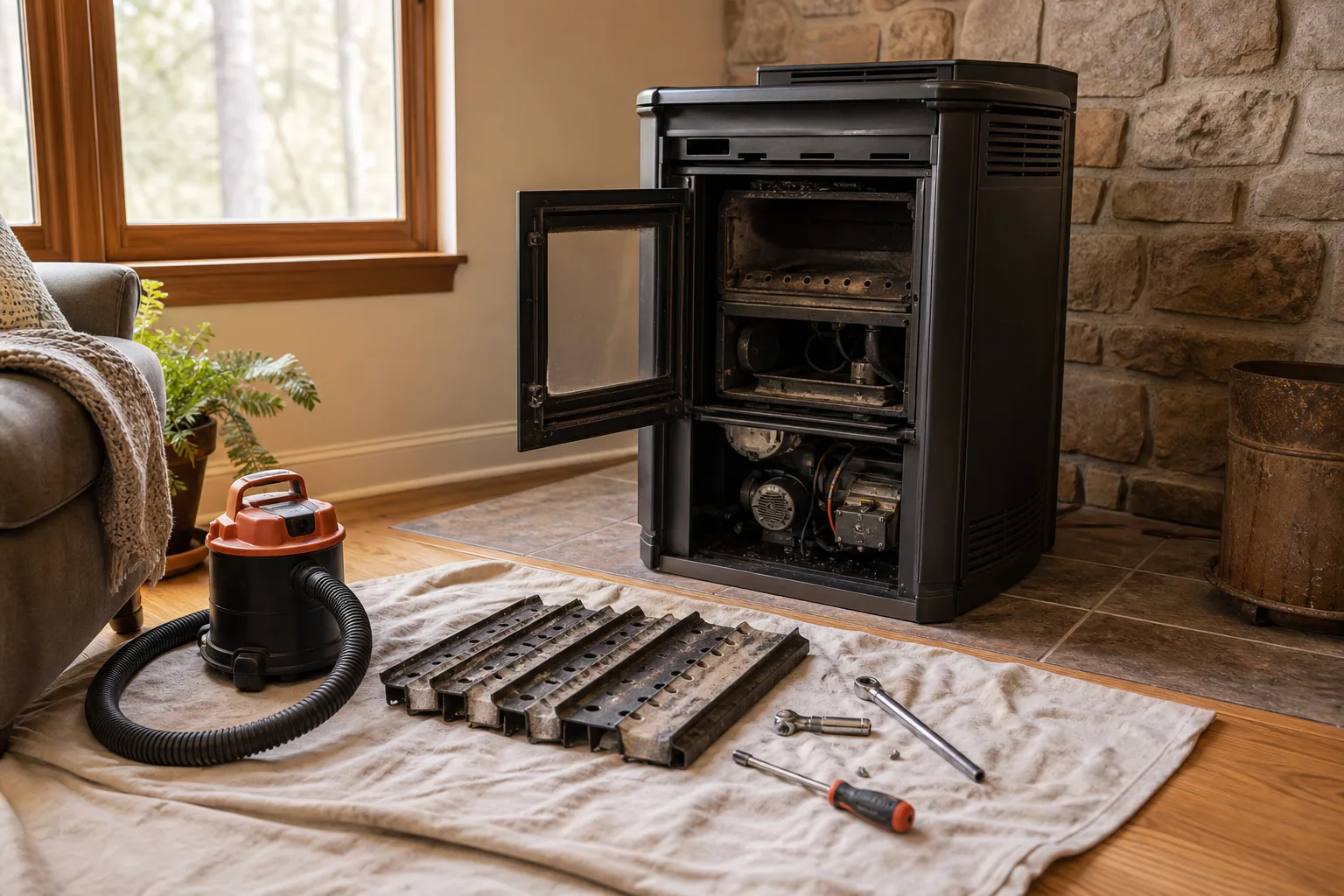
Here's where expectations diverge sharply. Some visits are a shop vac and twenty minutes. A genuine annual service is a teardown-and-inspect on a machine you rely on for heat.
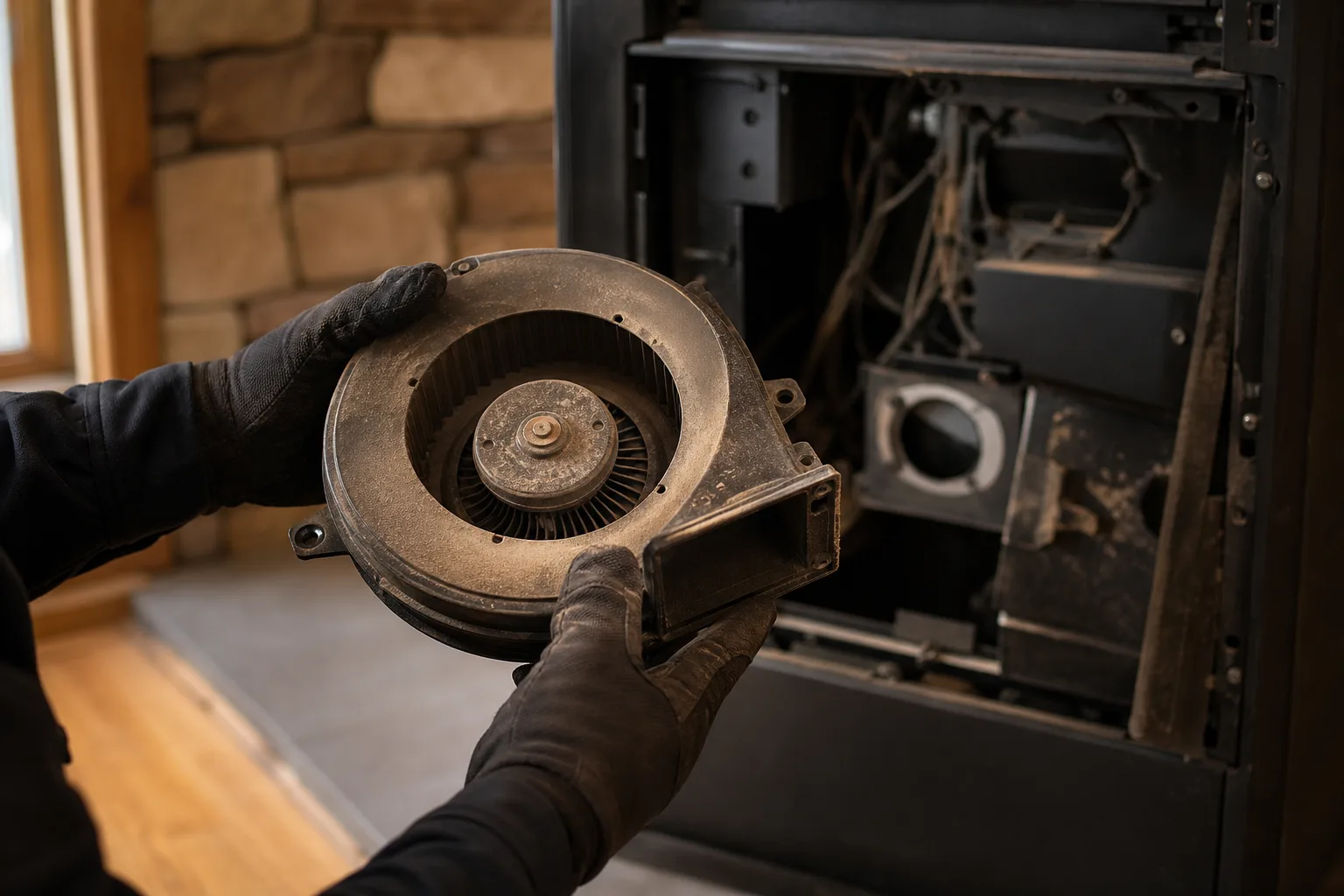
The stove should come apart. Baffles or heat exchanger plates out, ash traps opened, the burn chamber taken back to bare metal, exhaust passages brushed rather than just vacuumed at the opening. The vent pipe should be disconnected and cleaned through, not tapped and declared fine. Blowers should be pulled and cleaned. A convection fan caked in dust moves less air and runs hotter, and a combustion blower with buildup on the impeller quietly changes the whole air balance of the stove.
Then the electrical and mechanical side: auger motor function, igniter condition, vacuum switch and its hose (that little hose plugs constantly and causes a shocking share of "my stove keeps shutting off" calls), door and glass gaskets checked with a dollar-bill drag test, hopper lid seal, and control board connections.
| Task | Quick clean | Full annual service |
|---|---|---|
| Ash pan and firepot emptied | Yes | Yes |
| Heat exchanger tubes/plates removed and brushed | No | Yes |
| Ash traps and rear passages opened | Rarely | Yes |
| Vent pipe disconnected and brushed through | No | Yes |
| Combustion blower removed and cleaned | No | Yes |
| Convection blower cleaned | No | Yes |
| Vacuum switch and hose checked | No | Yes |
| Gaskets inspected and drag-tested | No | Yes |
| Igniter and auger tested under load | No | Yes |
| Stove test-fired and observed through full cycle | Sometimes | Yes |
That last row deserves attention. A service that ends before the stove has been lit and watched through startup, ramp-up, and a few minutes at high output is an incomplete service. Startup is when igniters reveal themselves. High output is when air leaks reveal themselves.
Pro tip: Ask whoever you hire whether they clean the vent from inside the house or from the termination outside. Both can be done well. But the answer tells you instantly whether they've thought about your specific setup, or whether they're reciting a script. Someone who asks about your pipe run and elbow count before quoting is someone who has done this before.
The venting side nobody looks at
Pellet venting is its own animal. It runs under positive pressure, which means every joint is a potential exhaust leak rather than a place air gets pulled in. It's typically 3- or 4-inch double-wall pellet pipe with sealed, gasketed joints. That's not the single-wall connector you'd run off a wood stove, and not something to improvise with. If you're comparing systems or planning a change, we cover the differences in wood stove pipe.
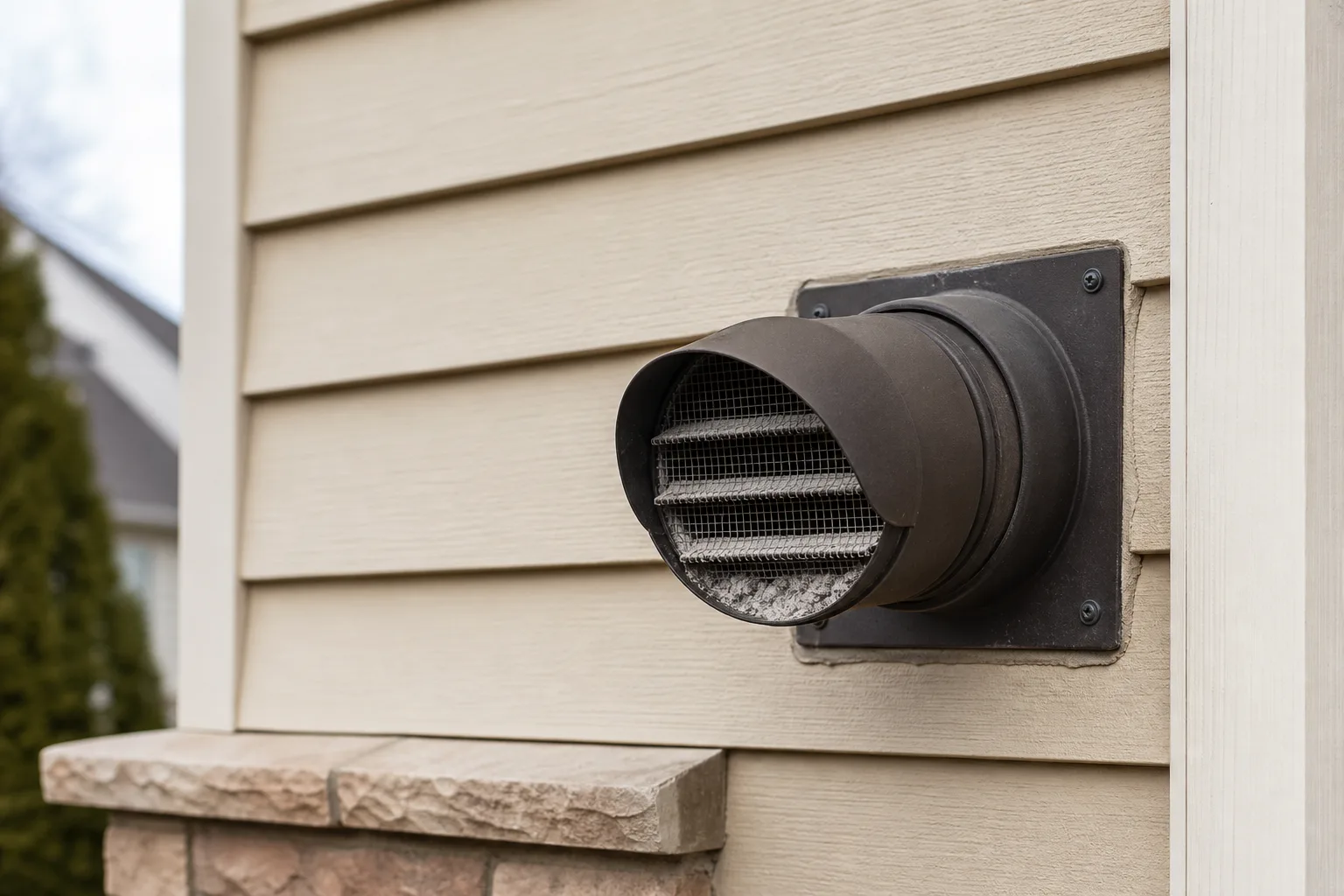
Three failure points come up again and again. First, the horizontal run: any sag or long unsupported section collects ash at the low spot and slowly chokes the draft. Second, the termination cap outside: screens and louvers on pellet terminations clog with fly ash, and a plugged termination will shut a stove down while everything inside looks spotless. Third, the seals at each joint, which get disturbed every time someone disconnects the pipe and doesn't re-seal it properly.
If your pellet stove vents into an existing masonry chimney through a liner, that liner is part of the appliance system and needs the same scrutiny: sizing, condition, and connection all matter. Chimney liner walks through how liners are matched to appliances, and chimney cap covers what belongs on top of a masonry flue.
Myth vs. fact: Myth: pellet stoves vent horizontally through a wall, so the chimney trade has nothing to do with them. Fact: code treats a chimney and a pellet vent as distinct systems, but both fall under the same inspection standard, and the vent fails in chimney-like ways. NFPA 211 requires a Level 2 inspection when a property is sold or transferred, when the system is changed (including a change of fuel or appliance), after a malfunction, after a chimney fire, or after an external event likely to have caused damage, such as an earthquake or a severe storm. Swapping a wood insert for a pellet unit is a system change. That's a Level 2, not a courtesy glance.
Not sure whether your stove needs service or repair?
Tell us what it's actually doing (surging flame, shutting itself off, ash filling faster than usual), and we'll give you a straight answer about whether that's routine maintenance or a fault worth looking at before the season. No pressure, no upsell script.
Call (513) 655-6702 or request service and include your stove's make, model, and roughly when it was last serviced.
The maintenance you own between visits
An annual service resets the machine. It doesn't cover the next eight months of burning, and pellet stoves are genuinely high-touch appliances compared to almost anything else that heats a house. This is the part where the owner does real work, and stoves that get it run noticeably better than stoves that don't.
Daily or every couple of days during the burn season, scrape the firepot. Ash and clinker build a crust over the air holes, the burn goes lazy, and everything downstream gets dirtier faster. Ten seconds with a scraper tool solves it. Empty the ash pan on whatever schedule your stove and pellets demand. Hardwood and softwood pellets behave differently, and ash content varies by brand, so watch yours rather than following a calendar.
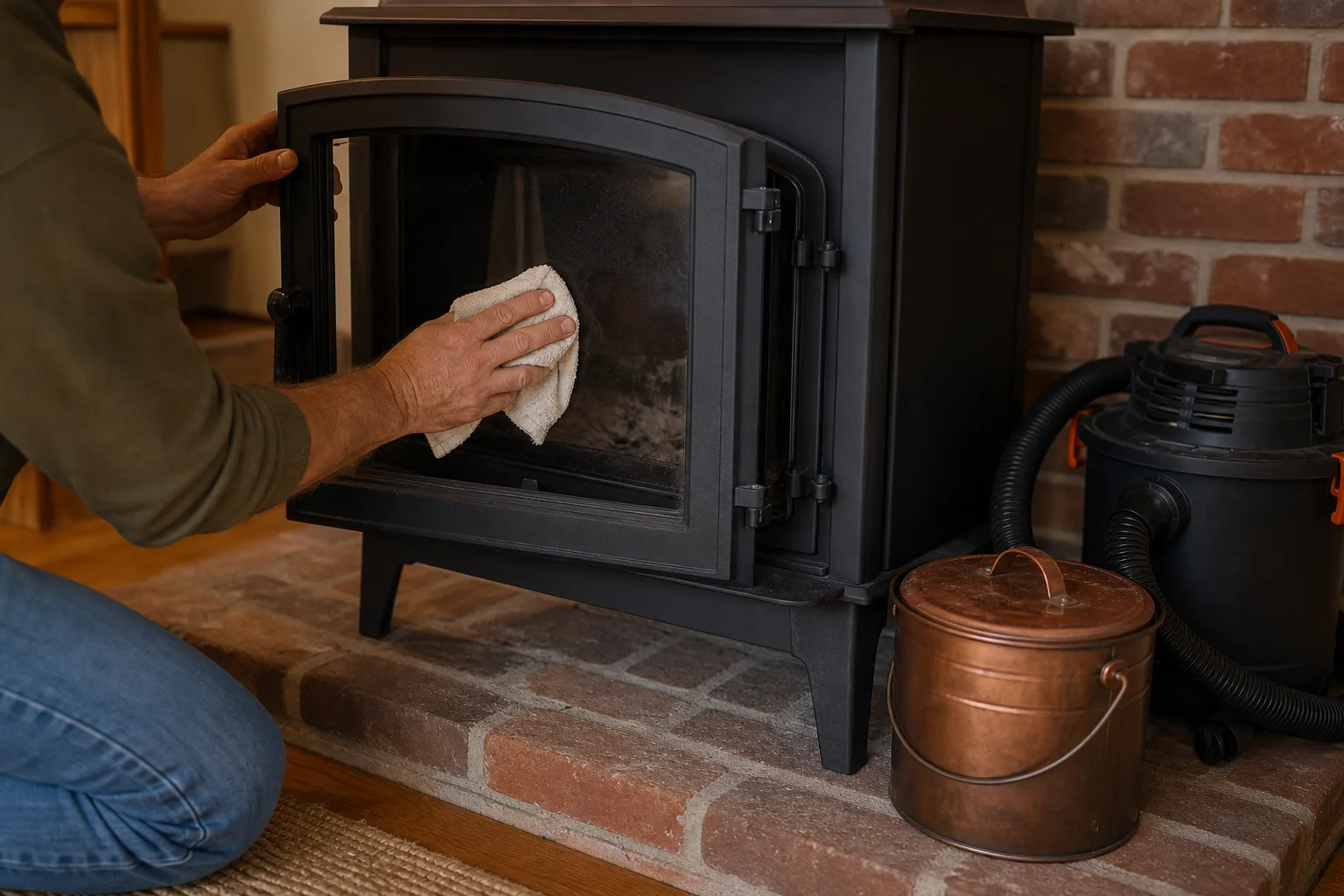
Weekly, or thereabouts: clean the glass with a dedicated stove glass cleaner or damp newspaper dipped in cold ash. Run the heat exchanger scraper rods if your unit has them. A lot of owners never touch these and don't realize they exist. Vacuum the burn chamber with an ash vacuum, and only with an ash vacuum, and only once the ashes and embers are completely cold, unless the vacuum is specifically listed for hot ash. A household shop vac will pass fine ash straight through its filter and redistribute it across your living room, and a warm ember in a plastic canister is a fire you started on purpose.
Monthly during heavy use: pull the ash pan area apart a bit further, check the door gasket for hard or flattened spots, brush what you can reach of the exhaust passages, and look at the outside termination for fly ash accumulation.
Between-visit checklist:
- Firepot scraped clear of clinker and ash crust
- Ash pan emptied into a metal container with a lid, stored outdoors away from the house
- Glass cleaned and inspected for cracks or chipped edges
- Heat exchanger scraper rods cycled several times
- Burn chamber vacuumed with an ash vacuum only, and only when completely cold
- Door gasket checked: does it still compress and spring back?
- Hopper checked for sawdust buildup and any foreign debris
- Outside vent termination checked for fly ash and blockage
- Pellets stored somewhere genuinely dry; damp pellets crumble and jam augers
- CO and smoke alarms tested
From the field: The single most common thing I see on a stove that "just doesn't heat like it used to" is a heat exchanger the owner didn't know could be cleaned. The firepot is spotless, the glass is clean, the ash pan is empty, and the tubes behind the baffle are packed. Heat goes up the vent instead of into the room. It isn't neglect. It's a manual nobody read past page four.
How to vet the tech before they park in your driveway
You have more leverage on the phone than you'll ever have once someone is kneeling in front of your stove with it in pieces. Use it.
Ask whether they service pellet appliances specifically, not just chimneys. Ask what their annual service includes, and listen for whether blowers come out and whether the vent gets disconnected. Ask about certification. Recognized industry credentials for sweeps and hearth technicians exist and mean something, and a company that carries them will tell you without hesitating. Ask about insurance, because someone is working on an appliance inside your house. And ask what happens if they find a failed part mid-service: do they stop and call you, or keep going and hand you a surprise?
Two answers should make you pause. If someone quotes a firm price for a pellet service without asking a single question about your stove or your vent configuration, they're selling a time slot, not a service. And if the plan doesn't include running the stove afterward, you'll be the one discovering the problem.
Pro tip: Have your model number ready before you call. It's usually on a metal plate on the back or inside the hopper lid. Two minutes finding it saves a lot of guessing, and it lets a good tech show up already knowing what your unit's known quirks are.
Worth knowing too: the same visit is a reasonable moment to look at other vented systems in the house. If a tech is already out, a dryer vent cleaning is a sensible add-on, since lint blockage is a genuine fire hazard and most people never think about it until the clothes stop drying. And if you have a second appliance (a gas insert, a masonry fireplace), a chimney inspection near me search on a separate day is one visit you could have consolidated.
When to book, and what waiting actually costs you
The pellet stove maintenance near me searches spike when the weather turns, which is precisely the worst time to be starting the conversation. Not because of anything about scheduling, because of what a service visit can find.
Say the tech pulls the combustion blower and the bearing is going. Or the igniter is drawing but not lighting reliably. Or the door gasket has gone hard and flat. Every one of those is a small, ordinary fix. But it's a fix that requires the stove to be down for a bit, and there's a large difference between the stove being down on a mild evening in early fall and the stove being down on the coldest night of the year with the whole family in one room. Late summer and early fall service isn't about beating a rush. It's about giving yourself room to find things.
The other argument for pre-season timing is that everything you learn is still fresh. You remember how the stove behaved last winter: the surging, the shutdown that one week, the smell. Wait until December and those details blur into "it's been acting weird."
Good to know: If you've just bought a home with a pellet stove already installed, treat it as unknown. You don't know what was burned in it, whether the vent was installed correctly, or whether the previous owner ever had it serviced. A property transfer is one of the conditions where NFPA 211 calls for a Level 2 inspection, and it's the one time I'd tell someone not to skip it regardless of how clean the stove looks.
A note on scope, since it comes up: if your stove is new to the house or you're moving one, that's an installation question with its own code requirements (clearances, vent routing, termination height). It's covered separately in pellet stove installation. Maintenance assumes an installation that was correct to begin with. If the original install was wrong, no amount of cleaning fixes it, and a good tech will tell you so on the first visit.
So what does staying on top of it actually buy you? Not longevity in the abstract. Three specific things.
Heat you paid for. A fouled heat exchanger and a dust-caked convection blower both send warmth up the pipe instead of into the room. You burn the same pellets and feel less of them. That's the quietest cost of skipping service, and the one nobody attributes correctly.
Fewer failures at the worst moment. Pellet stoves fail on cold nights because cold nights are when they run hardest and longest. Components that were marginal in October are the ones that quit in January. Catching a worn part while it's still working is the entire point of an inspection.
A stove that's safe to run unattended. Pellet units are often left running overnight or while nobody's home, which is a level of trust we don't extend to a wood fire. That trust has to be earned by the equipment. Intact gaskets, sealed venting, a functioning vacuum switch, and clean exhaust passages are what make it reasonable.
There's a broader version of this too. If your pellet stove shares a chimney structure with anything else, or if you have masonry involved at all, the surrounding components matter: flashing, crown, cap. Water getting into a chimney does damage that has nothing to do with what you burn. Fireplace chimney repair covers that side if it applies to your setup.
Safety note: Never store pellets against the stove, never use starter gel or accelerant in a pellet appliance, and never run the stove with the door or hopper lid open or the ash pan removed. All three break the sealed-combustion design the stove depends on, and on a positive-pressure system that means exhaust in the room.
If you've read this far, you know more about your stove than most people who own one. You know what a real service includes, what you're responsible for between visits, and what to ask before you hand over a date. That's the whole job of a guide like this — not to sell you a cleaning, but to make you hard to sell a bad one.
Get the annual service done before the first cold night
Full pellet stove service: stove disassembled and cleaned to bare metal, heat exchanger and ash traps opened, blowers pulled, vent disconnected and brushed through, gaskets and safety switches checked, and the stove test-fired and watched before we leave. We'll tell you what we find, including the things that don't need fixing yet.
Call (513) 655-6702 or request service. Have your make, model, and last service date handy and we can tell you what to expect before anyone comes out.
Symptom checker
What is your chimney doing?
Tap the closest match for an honest first answer.