



On this pageWhat a Chimney Sweep CT Homeowners Hire Actually Does7 sections+6
- What a Chimney Sweep CT Homeowners Hire Actually Does
- Why Connecticut Chimneys Need This More Than Most
- Sweeping Versus Inspection: The Part That Decides Your Bill
- The Connecticut Rule Nobody on Page One Tells You
- How to Hire a Chimney Sweep CT: The Questions and the Red Flags
- What Good Work Looks Like When It Is Finished
- How VIO Helps You Find a Chimney Sweep CT You Can Check
Quick answer
A chimney sweep CT visit normally means cleaning the flue plus an NFPA 211 Level 1 inspection of the readily accessible parts of the system. Connecticut does not register sweeps, because the state does not treat chimney sweeping as home improvement. Chimney repair is different: cap, liner and mortar work require an active Home Improvement Contractor registration, which you can verify at eLicense.ct.gov before the work starts.
Somebody is going to spend a while working inside a part of your house you have never laid eyes on, with a brush and a vacuum, and then tell you what it needs.
That is the real reason you typed chimney sweep CT into a search box this month. What came back was a page of company homepages, most of them advertising how long they have been in business, plus a couple of directory listings. None of it helped you tell one from another.
So this page does that instead.
There is one Connecticut rule that decides whether the person writing your quote has to be registered with the state. Most homeowners learn it after they have already paid someone. It comes up about halfway down, and it is the most useful paragraph here.
Before that: what the visit is, why the houses here make it matter, and the three inspection levels that quietly decide the size of your bill.
What a Chimney Sweep CT Homeowners Hire Actually Does
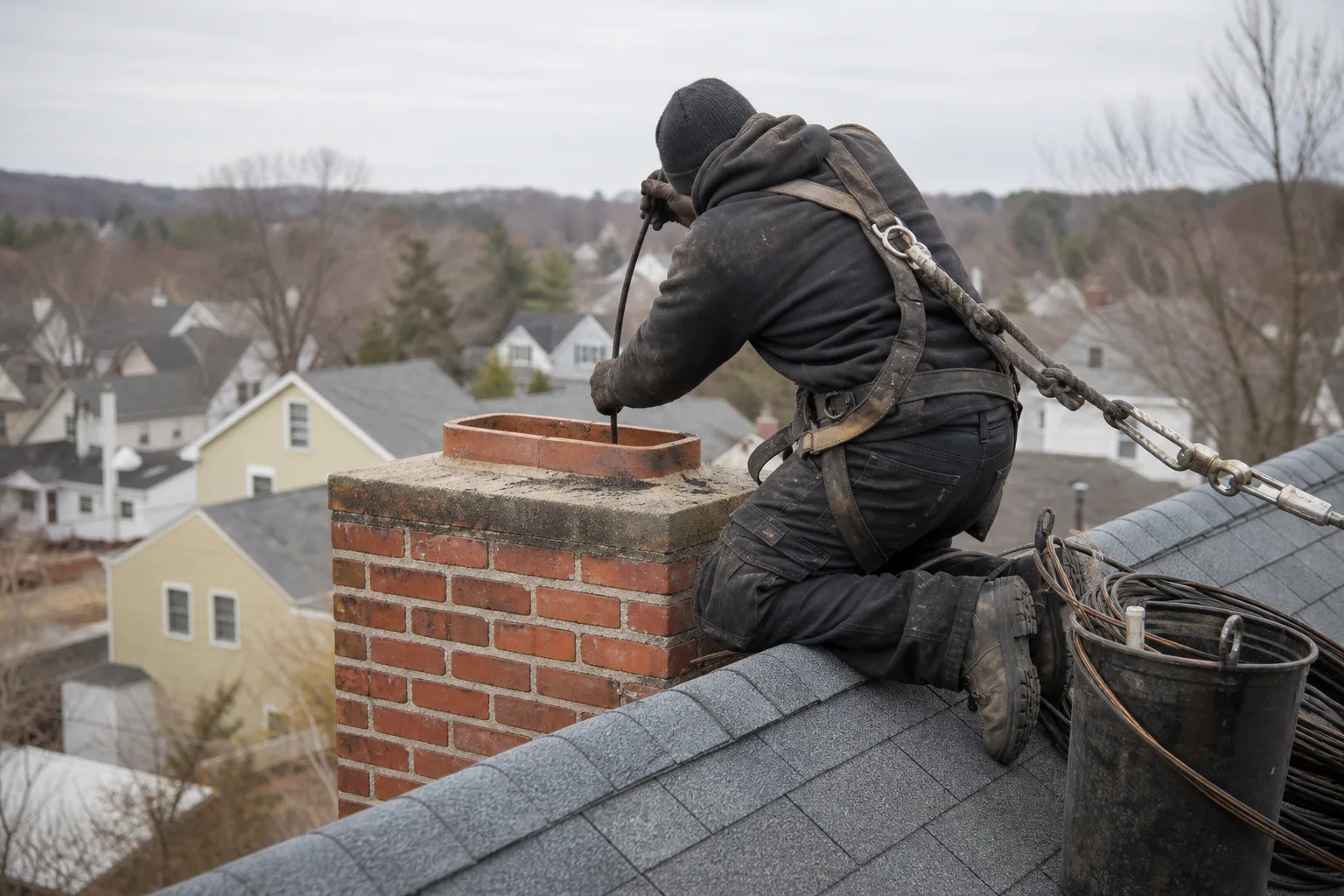
The job has a Dickensian name and a very ordinary reality. A sweep removes combustion deposits from the inside of your flue, and then looks at the system to tell you whether it is safe to light.
That second half is the part people underestimate.
The sweep itself, start to finish
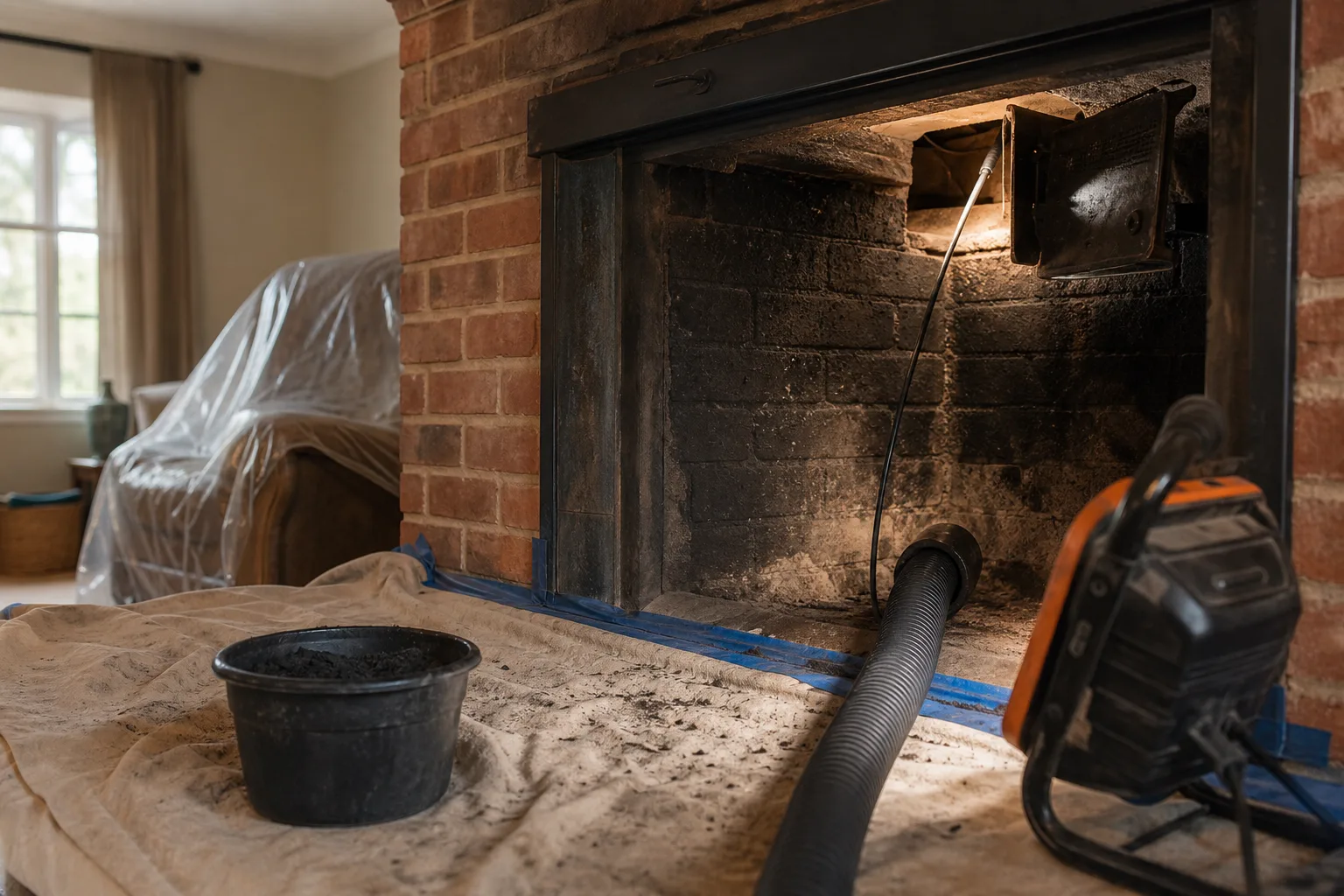
The truck shows up. Before anything touches your chimney, canvas drop cloths go down across the hearth, plastic sheeting goes over whatever furniture sits closest, and a long hose from a HEPA-filtered vacuum goes into the firebox to hold the room under slight negative pressure. If that setup does not happen, you are about to have a very bad afternoon with a dust cloth.
Then the brushing. A rotary or poly brush on flexible fiberglass rods goes up the flue from the firebox, or down it from the roof, depending on the chimney and the sweep's preference. Neither approach is the "right" one, and anybody who tells you the other way ruins chimneys is selling something.
Soot and loose creosote come down into the vacuum and a bucket. Glazed deposits, the shiny tar-looking kind, do not brush off, and a sweep who finds those should say so out loud.
After the cleaning comes the looking: a work light, a mirror or a camera on a cable, the damper worked open and shut, the smoke shelf checked, the cap and crown eyeballed from the roof if the roof is safe to walk.
Then the conversation on your front step. That conversation is the product. Everything before it was just clearing the glass so somebody could see.
What the sweep is not
A sweep is not a repair. Cleaning a flue and relining a flue are different jobs, under different Connecticut rules, which is the thing I promised you further down.
A sweep is also not automatically a full inspection. Cleaning usually comes bundled with the most basic inspection level, and that is fine for a system that has not changed since last winter. It is not fine if you just bought the house.
From the field: You can often feel a problem through the rods before you see it. A brush that drags, catches, or changes sound partway up is telling you something about the liner, and a sweep who notices that and mentions it unprompted is a sweep who was paying attention.
Why Connecticut Chimneys Need This More Than Most
Connecticut has one of the oldest housing stocks in the country. The median home here was built around 1966 or 1967, against a national median closer to 1980, and roughly one in five Connecticut houses went up before 1940.
That is not trivia. It means the masonry behind your wall was very likely laid by somebody who died before you were born, in lime mortar, to standards that predate the ones your inspector reads from.
Connecticut also still leans harder on heating oil than the country as a whole, a holdover from cold winters, old houses, and gas lines that never reached everywhere. Oil appliances vent, oil appliances get neglected, and the flues serving them are often the ones nobody has looked at in a decade.
Add the weather. A New England heating season is long, and the freeze-thaw cycle that follows it is brutal on an exterior brick stack: water gets into a joint in November, expands in January, and takes a little more of the joint with it every year.
That is the backdrop any chimney sweep CT works against: old masonry, long winters, and flues that have outlived two or three sets of owners.
So the failures here have a pattern, and it repeats from Greenwich to Putnam.
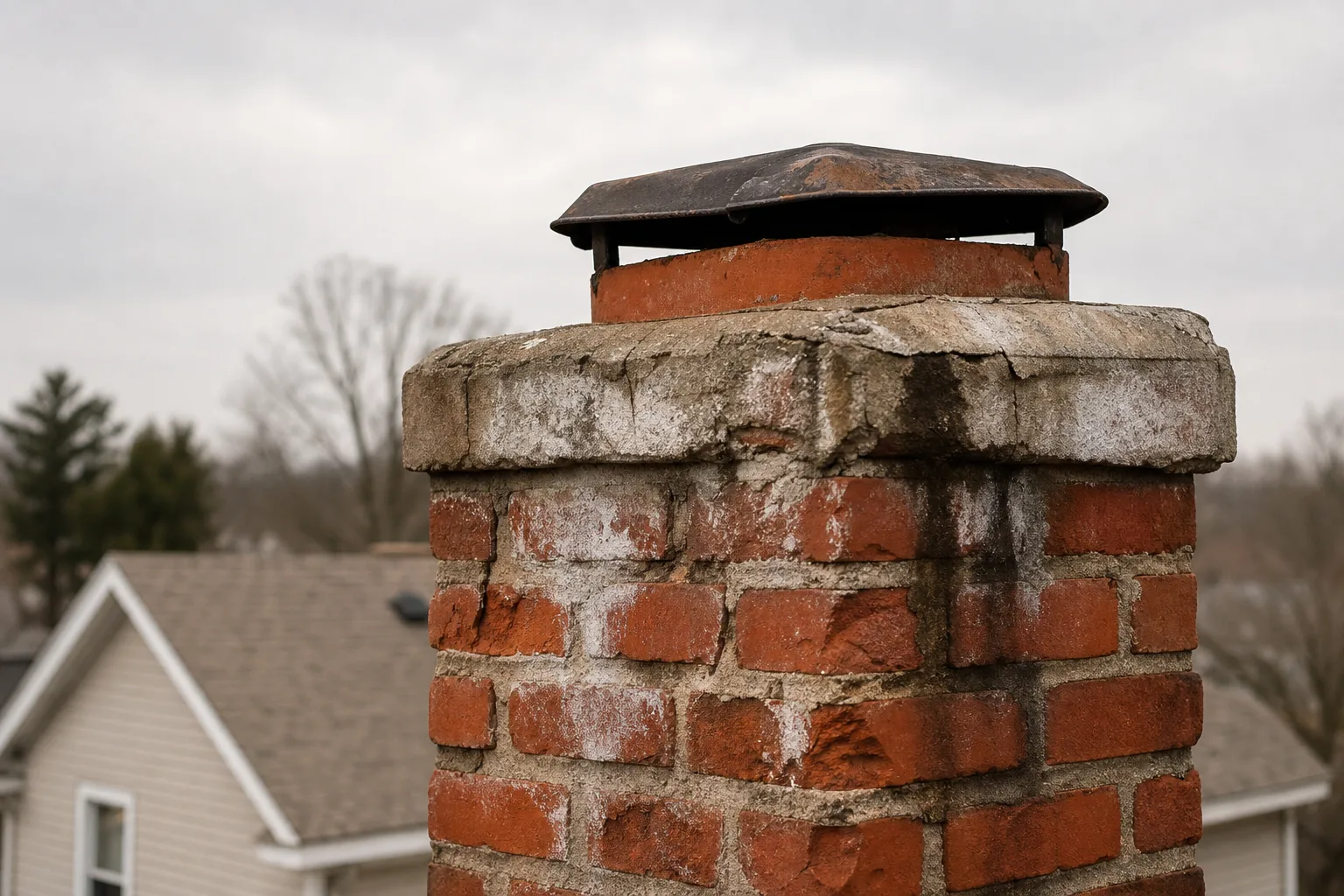
- Mortar joints eroded back from the face of the brick, especially on the weather side
- A crown, the sloped slab on top of the stack, cracked straight through
- A cap either rusted, dented, or simply gone
- Clay flue tiles with gapped or missing mortar joints between them
- Spalled brick faces, where the front of the brick has popped off in flakes
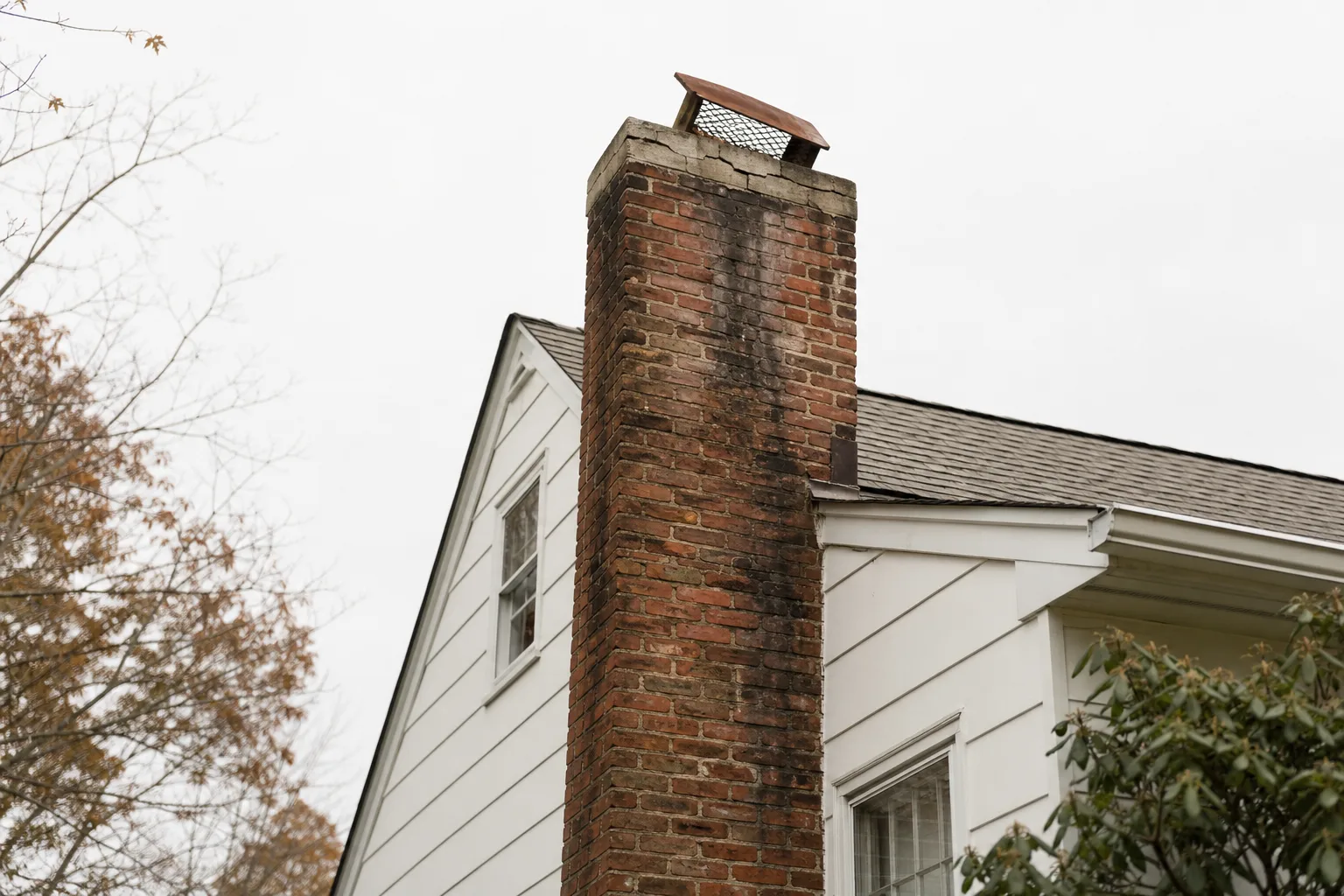
Good to know: You can read the water story from your own driveway. A white chalky bloom on the brick, called efflorescence, means water is moving through the masonry and carrying salts out with it. Dark staining under the crown means the same thing. Neither is an emergency, both are a reason to have somebody look before you light a fire.
Sweeping Versus Inspection: The Part That Decides Your Bill
Here is the thing nobody selling this service puts on their homepage. The cleaning is the simple, predictable half of the relationship. The inspection is where every expensive decision in your chimney's future gets made.
Which means the question that matters when you book a chimney sweep CT is not "how much to clean it." It is "what level of inspection am I getting."
Three levels exist, and they come from NFPA 211, the standard the trade works to. Knowing which one applies is the best defense against being sold work you do not need.
Level 1
The annual baseline. It applies when the system has been in continuous service with nothing changed: same appliance, same fuel, same flue, no problems reported.
A Level 1 covers the readily accessible portions of the chimney exterior, interior, and the connections to the appliance. This is what rides along with a standard cleaning.
Level 2
Level 2 adds a video scan of the full flue interior, top to bottom, which is the only way anybody can honestly tell you what the inside of a concealed liner looks like.
It is not an upsell. NFPA 211 calls for a Level 2 in specific situations, and they are situations, not opinions:
- At the sale or transfer of the property
- When the system changes, including a new or dissimilar appliance or a relining
- After a malfunction
- After a chimney fire
- After an external event such as a lightning strike, an earthquake, or a severe storm
If you bought a Connecticut house this year and the sweep is quoting you a Level 1, you are the one who should be asking for more.
Level 3
Level 3 is for suspected structural trouble, and it can mean removing part of the chimney or the surrounding structure to reach concealed areas. Nobody performs one casually, and nobody should be proposing one on a first visit without showing you why.
Ask any chimney sweep CT which row of this table applies to your house. It is a fair question, and it has a factual answer rather than an opinion.
| Inspection level | What it covers | When it applies |
|---|---|---|
| Level 1 | Readily accessible parts of the chimney exterior, interior, and appliance connections | Annual check when nothing about the system has changed |
| Level 2 | Level 1 plus accessible attic and crawl space areas, and a video scan of the full flue interior | Sale or transfer, system change or relining, malfunction, chimney fire, external event such as lightning or severe storm |
| Level 3 | Concealed areas, reached by removing portions of the chimney or structure | Suspected structural hazard that the lower levels cannot resolve |
Myth vs. fact: A clean-looking firebox means a clean flue. It does not. The firebox is the part you look at every day and wipe out when it bothers you. The flue is twenty-odd feet of masonry you have never seen, and the deposits that matter collect where the gases cool, which is up near the top, not down where your eyes are.
The Connecticut Rule Nobody on Page One Tells You
This is the paragraph I promised.
The Connecticut Department of Consumer Protection draws a hard line through this trade, and it is worded about as plainly as a state agency ever manages. Chimney sweeping, DCP says, "is not considered home improvement." A chimney sweep CT homeowners hire for a cleaning therefore needs no state registration to do that work.
Chimney repair is a different animal. DCP states that "persons who perform chimney repair must be registered as a home improvement contractor in Connecticut," and it names the work it means: installing or repairing a chimney cap, replacing or repairing a liner, and even replacing mortar.
Read those two sentences together and you have the whole game. The moment a visit stops being a cleaning and starts being a repair, a registration requirement switches on.
What needs registration and what does not
Sweeping and cleaning: no Home Improvement Contractor registration required by the state.
Cap installation or repair, liner replacement or repair, mortar replacement, and the masonry work that follows from them: an active Home Improvement Contractor registration is required.
Which is exactly why the upsell at the end of a cleaning deserves a second look. Not because it is dishonest, it usually is not, but because the person proposing it has just crossed from the unregistered side of that line to the registered side.
How to check a registration in two minutes
Ask to see the Connecticut-issued home improvement registration certificate. DCP tells homeowners to do this, so nobody legitimate will be offended.
Then verify it yourself at eLicense.ct.gov, or call DCP at 860-713-6110, which will confirm whether a certificate is real and tell you about complaints filed against that contractor.
Two more entitlements, yours whether or not anyone mentions them. Connecticut requires a written and signed contract for home improvement work. And you have a three-day right to cancel one, including a contract to repair your chimney.
Safety note: The registration question is not paperwork pedantry. Liner and mortar work sits directly between a fire and the wooden frame of your house, which is reason enough to know whether the person doing it is registered.
For sweeping itself, where the state registers nobody, the credentials DCP points homeowners toward are the voluntary ones: certification through the Chimney Safety Institute of America, or membership in the National Chimney Sweep Guild. Neither is required by law. Both tell you somebody chose to be held to a standard.
You now know what to verify. We can handle the sorting part.
Tell us your town and what you are burning, and we will match you with an independent chimney company that works in your corner of Connecticut. Call (513) 655-6702, or request service and we will take it from there.
How to Hire a Chimney Sweep CT: The Questions and the Red Flags
Everything above was so this part would be short.
The chimney sweep CT results you started with were not useless, they were just unsorted. A company with forty years in Madison and a company with forty years in Simsbury are both plausible, and nothing on either homepage helps you choose. These questions do.
Questions to ask before you book a chimney sweep CT
Keep this on the counter and run it past any chimney sweep CT you are considering, on the phone, before a date goes in the calendar. Six questions, two minutes, and the whole visit changes character.
- Which inspection level comes with the cleaning? You want to hear "Level 1," and you want to hear why if the answer is something else.
- Is a camera scan included, or extra? If your situation is one of the Level 2 triggers, this is the question that matters most.
- If you find something that needs repair, are you registered as a home improvement contractor in Connecticut? Ask it before the visit, not after the quote.
- Will the estimate be in writing before any work begins? Insist on this one. Connecticut law requires a written and signed contract for home improvement work, and a company that will not put its number on paper first is telling you something.
- What does your setup and cleanup involve? Drop cloths and a HEPA vacuum should be in the answer without you prompting.
- Are you insured, and can I see the certificate? A yes with no paperwork behind it is a no.
The red flags Connecticut regulators actually named
On November 3, 2025, the Department of Consumer Protection published a warning aimed specifically at chimney sweep and repair scams, after logging 48 complaints about chimney services since the fall of 2024. The patterns it described are worth memorizing, because they tend to arrive in October and November.
- Door-to-door solicitors offering a low price, then discovering urgent structural problems
- No written contract offered
- Out-of-state plates on the vehicle, New York ones in particular
- High-pressure demands for an immediate decision or immediate payment
- Payment requested by cash, wire transfer, or prepaid card
- Unsolicited calls from 800 numbers
- A deal that sounds too good to be true
Pro tip: Watch for the scare sentence. Fraudulent pitches lean on carbon monoxide and house fires to compress your decision down to the length of one conversation. The irony is that those risks are real, which is what makes the tactic work. A legitimate chimney sweep CT company will tell you about a hazard and then be completely relaxed about you taking a day to think, or calling somebody else for a second look.
What Good Work Looks Like When It Is Finished
You should know what you bought. A chimney sweep CT works mostly in a part of your house you will never inspect yourself, so here is the honest version.
A stack in typical Connecticut condition before the work looks tired rather than dramatic: mortar joints raked back by weather, a crown with a crack running across it, a cap gone orange with rust or missing entirely, staining down the brick where water has been running for years. Nothing collapsing. Nothing you would notice from the street.
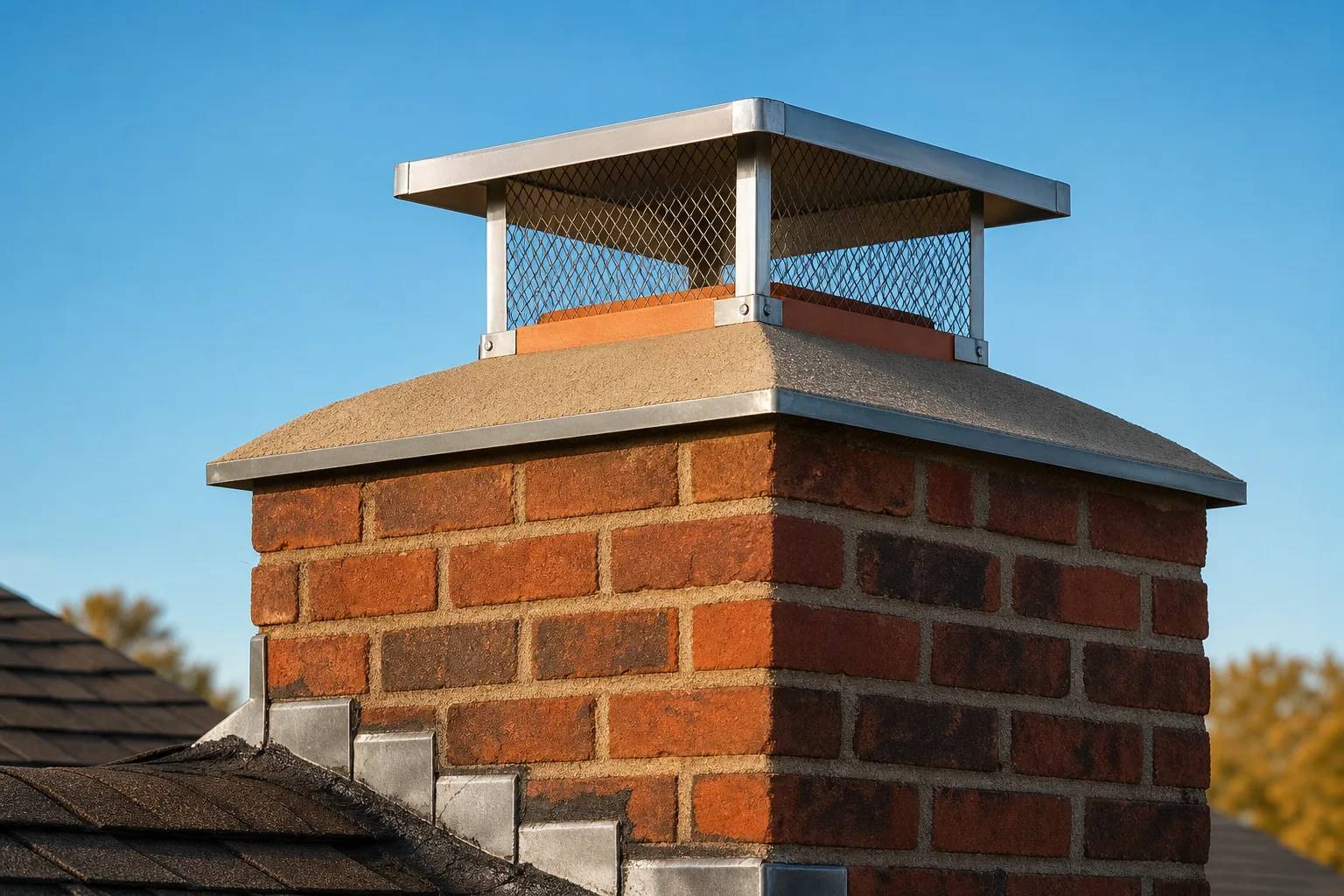
The same stack sound looks almost boring. Joints repointed and flush with the brick face. A crown with an intact slope and a clean overhang. A stainless cap sitting square with its spark-arrestor mesh unbent. The brick dry.
Inside, the difference is more obvious. A neglected clay liner is matte black with soot or shiny black-brown with glazed creosote. A clean one is terracotta orange, and you can see the mortar joints between the tiles, which is also how anybody can tell whether those joints are still there.
This is the front end of the 2026 to 2027 heating season, and the right time to do it is before the first cold snap makes you want a fire tonight.
Good to know: Ask for the findings in writing, and ask for photographs of anything the sweep says needs attention. A camera was already up there. Getting the images costs nobody anything, and it means the next opinion you seek, if you seek one, starts from evidence instead of memory.
How VIO Helps You Find a Chimney Sweep CT You Can Check
Let us be straight about what VIO is.
VIO is a referral network. We do not sweep chimneys. Independent local companies do the work, and our job is matching you with one of them that actually covers your part of Connecticut.
Searching chimney sweep CT gave you a list of names and no way to rank them. That is a sorting problem, and sorting is the thing we are built for. You tell us your town, your appliance, and what is going on, and we point you at a company that works in your area rather than one that will drive ninety minutes and price the drive into the job. The chimney sweep CT you end up with should be close enough to come back if something needs a second look.
Two things we will not pretend about. We cannot promise you an outcome, and we would be lying if we said every chimney in Connecticut needs the same thing.
What we can tell you is how we conduct ourselves. We ask every company in the network to put its estimate in writing before any work starts, and you should insist on exactly that, from the pro we send and from anybody else you call.
And run the checks in this article on whoever shows up, including the company we match you with. If a referral cannot survive the reader auditing it, the referral was not worth much. That standard is the whole reason this page exists instead of another forty-years-in-business homepage.
One call, and the shortlist problem is over.
Describe your fireplace or stove, your town, and when you want it done. We will match you with an independent local company, and you can run every check in this article on them before anyone gets on a ladder. Call (513) 655-6702.
Symptom checker
What is your chimney doing?
Tap the closest match for an honest first answer.