



On this pageWhat a Chimney Inspection in CT Actually Covers8 sections+7
- What a Chimney Inspection in CT Actually Covers
- Level 1, Level 2, or Level 3: Which Chimney Inspection CT Homeowners Need
- What Actually Happens During the Visit
- How to Read the Inspection Report You Get
- Connecticut Conditions That Change What an Inspection Finds
- How to Hire for a Chimney Inspection CT Job Without Getting Sold
- How VIO Helps With a Chimney Inspection in CT
- Before the First Fire
Quick answer
A chimney inspection CT homeowners need comes in three levels under NFPA 211. Level 1 is the annual baseline when nothing about the appliance, chimney or venting has changed. Level 2 is required on the sale or transfer of a home, after a system change or fuel conversion, after a malfunction, a chimney fire or an external event, and it includes a video scan of the flue. Level 3 opens concealed areas when a hazard may be hidden.
A stranger comes down off your roof, pulls off a glove, and says a number out loud. You have no way to check it, no way to see what he saw, and a fire you were planning to light on Saturday. That gap is the real reason people go looking for a chimney inspection CT homeowners can trust, and almost nothing ranking for the phrase addresses it.
The pages you find are storefronts. Good companies, probably, but they tell you they exist, not what you are buying.
So here is the page that tells you what you are buying: a table naming which of the three levels is yours, a walk through the visit itself, a section on reading the report you get handed, and Connecticut's own consumer warnings, which are better ammunition than anything I could write.
One more thing before we start. A single question separates an honest inspection from a sales call, and it has nothing to do with chimneys. It shows up later. Ask it and most of your risk goes away.
What a Chimney Inspection in CT Actually Covers
The chimney inspection CT homeowners tend to picture, a guy glancing up the flue with a flashlight, is not the job. An inspection is an evaluation of a system.
It covers the system from the appliance, the fireplace or wood stove or furnace, up to the top of the stack above your shingles. How much of that gets examined depends on the level you book, which is the next section. Most of it is out of sight.
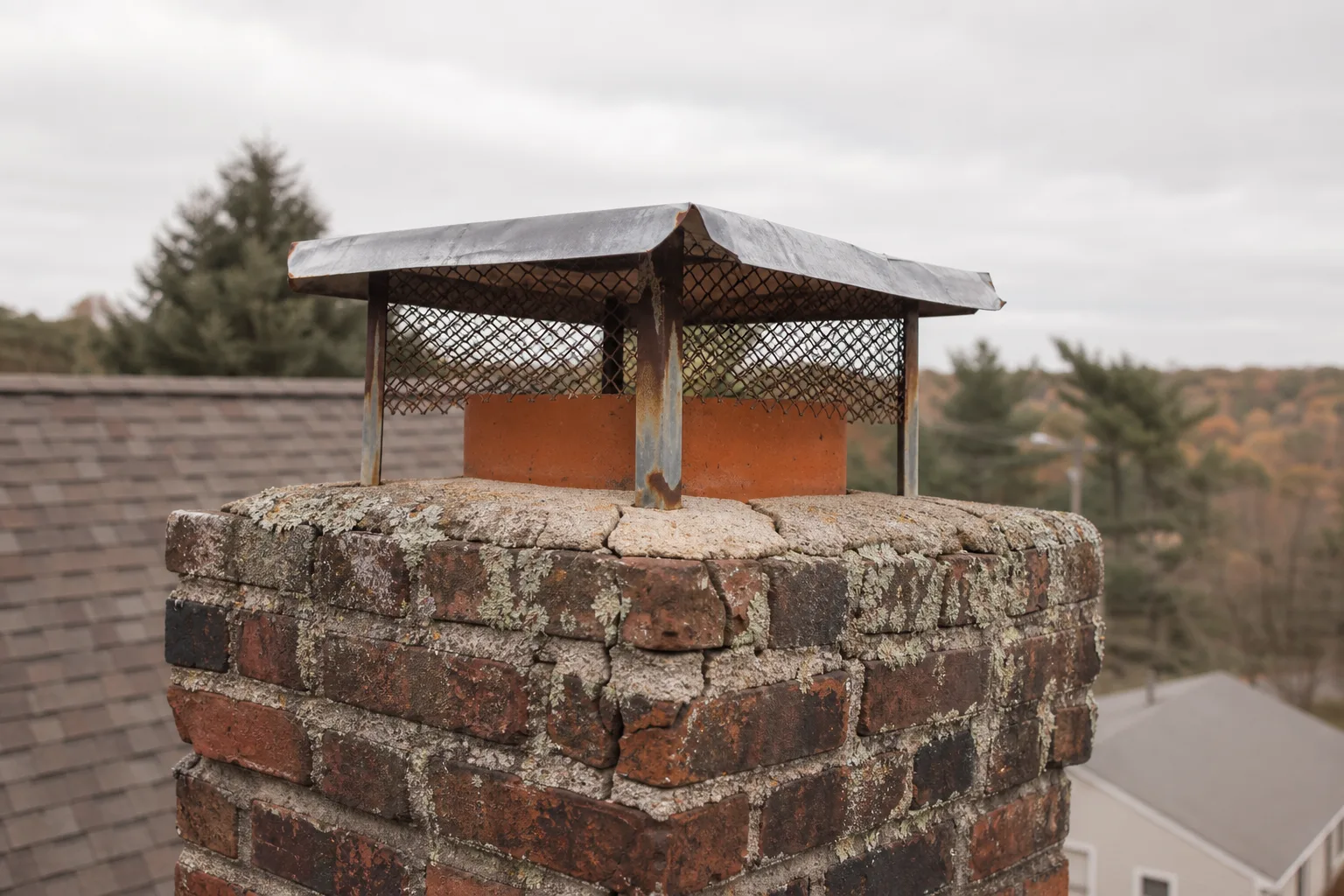
The outside: crown, cap, flashing, masonry
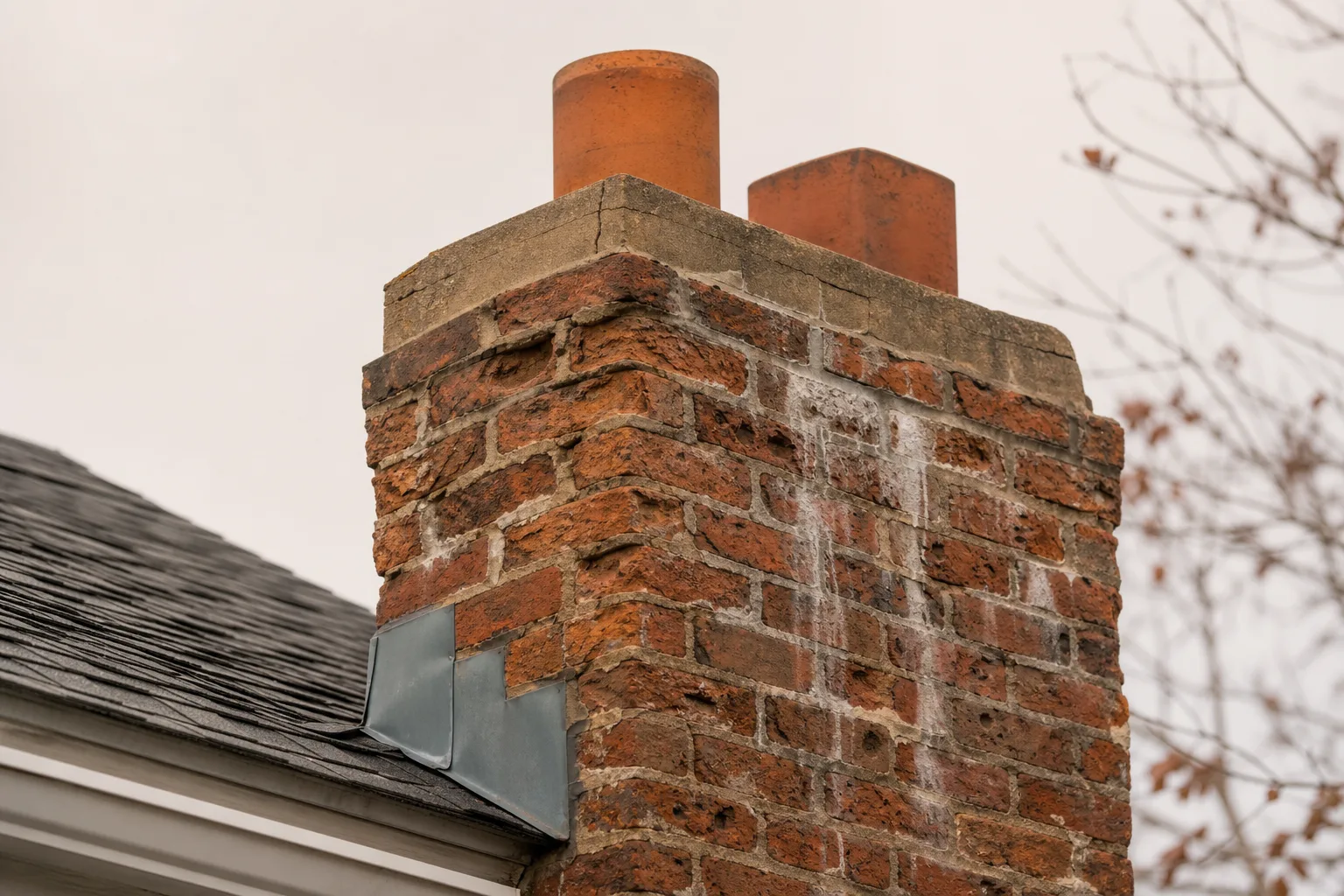
The chimney crown is the sloped slab of mortar or concrete on top of the brick, poured around the flue tile. It is the roof of your chimney, and it takes weather that no other part of the stack has to.
Cracks in a crown let water into the masonry. Water in masonry freezes, expands, and lifts the faces off brick in flakes, which the trade calls spalling.
The cap is the metal lid on legs over the flue opening, with mesh screening on the sides. It keeps rain, squirrels and birds out and slows embers on their way up. Some older chimneys were built without one, and if yours has no cap, an inspector should tell you so.
Then the flashing, where the chimney passes through the roof. When somebody has smeared roofing tar across that joint instead of replacing metal, an inspector notices, and so should you.
The inside: firebox, damper, smoke chamber, flue
From inside the house the work goes upward. Firebox first, where the firebrick and the joints between them get checked for cracks and open gaps. Then the damper, the plate at the throat, which in old houses is often seized.
Then the smoke chamber, the transitional space that funnels smoke into the flue. It is hard to see from the firebox, which is why an inspector should look at it deliberately rather than in passing.
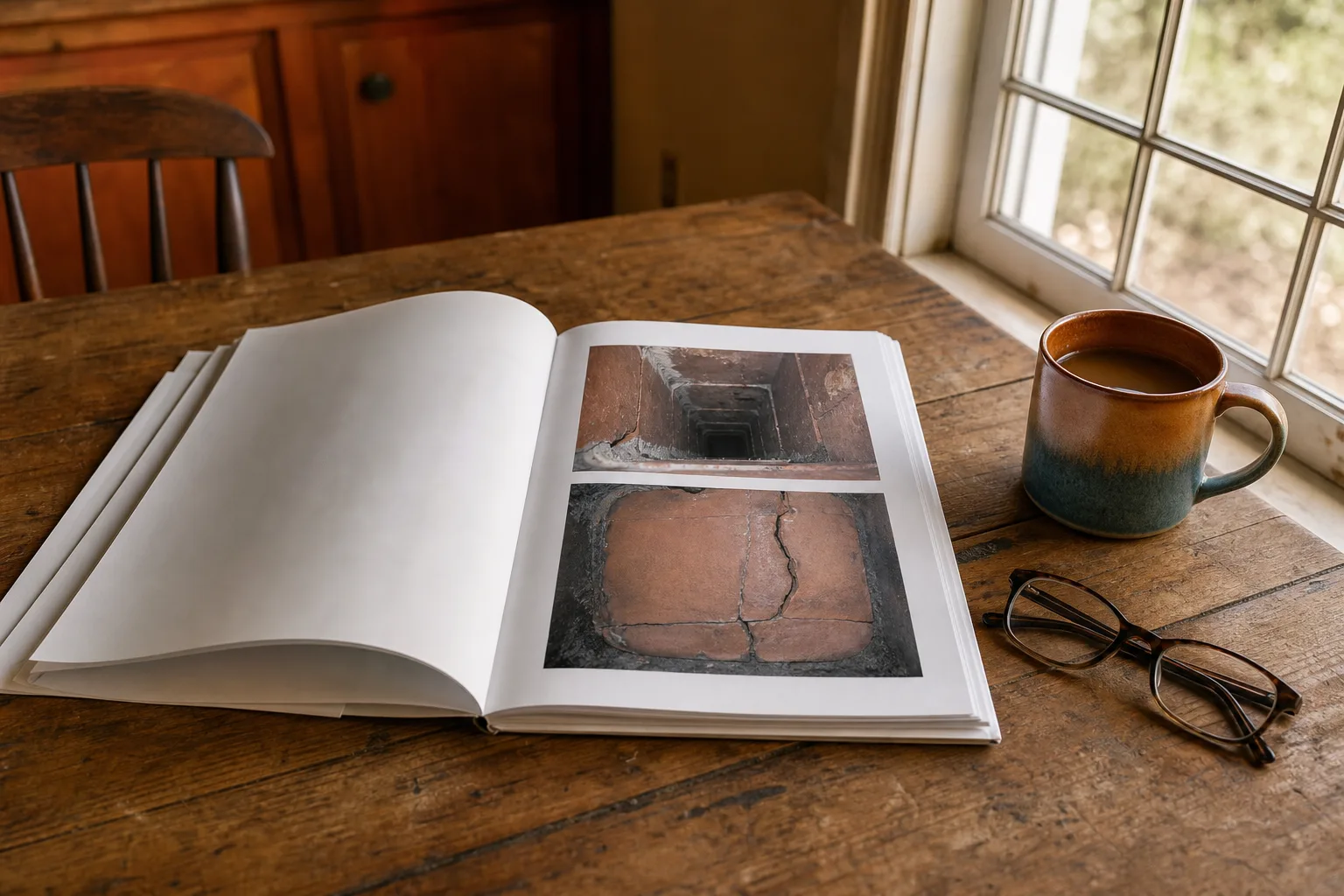
Then the flue itself. A masonry chimney may be lined with terracotta clay tile, which can crack, and an older stack may have no liner at all. If you have never had a reason to learn what a chimney liner is and what it does, this is the week.
The basement nobody thinks about
At the base of many masonry chimneys sits a small cast iron cleanout door, usually in an unfinished basement, usually behind a storage bin. It is unglamorous and it does not lie.
Debris in a cleanout fell from somewhere above. If what comes out includes broken pieces of clay, that is the liner failing, and you now have a reason to get a camera up there.
Good to know: What you are buying is a document. The visit is the process, the report is the product. If nobody hands you a written record of what was found and whether the system is safe to use, you did not get an inspection. You got a visit.
Level 1, Level 2, or Level 3: Which Chimney Inspection CT Homeowners Need
Three levels exist, defined in NFPA 211, the national standard covering chimneys, fireplaces, vents and solid fuel burning appliances. Most homeowners have never been told which one applies to them.
This is also where price shopping goes wrong, because a Level 1 and a Level 2 are not the same purchase, and comparing their numbers tells you nothing.
Level 1, when nothing has changed
Level 1 is the baseline. It applies when you have not changed the appliance, the chimney or the venting, and you intend to keep using the system the way you always have.
The inspector examines readily accessible portions of the chimney inside and out, plus accessible appliance connections. No camera is required, and rooftop access is not within its scope.
When people ask which chimney inspection CT level covers a routine yearly check, this is the one. NFPA recommends having a chimney inspected every year, including one that sits unused, because deterioration does not wait for you to light a fire.
Level 2, when something changed or the house is changing hands
Level 2 is where the standard stops recommending and starts requiring. It contains everything in Level 1, adds accessible attics, crawlspaces and basements, and requires a video scan of the inside of the flue.
The camera is the whole point. It is the only way to see cracks, gaps and deterioration inside a passage you cannot put your head into.
Safety note: Under NFPA 211, a Level 2 inspection is required on the sale or transfer of a property, after a system change (a new appliance, a different fuel, a change in flue material or shape), after an operating malfunction, after a chimney fire, and after an external event likely to have caused damage. If any of those describe your situation, a Level 1 is not the inspection you need, whatever it costs.
Level 3, when the answer is hidden behind something
Level 3 is an escalation, not a premium tier you pick off a menu. It applies when a Level 1 or Level 2 raises valid suspicion that a concealed part of the chimney, the structure, or an adjacent wall is hiding a fire hazard or an installation that does not meet code.
Reaching that area can require removing or destroying portions of the chimney, the structure, or finished walls. Nobody should spring that on you mid visit, which is why it helps to know the level exists first.
The table: find your row
| Your situation | Level | What it adds | Flue camera |
|---|---|---|---|
| Annual check, nothing changed | Level 1 | Accessible interior, exterior, appliance connections | Not required |
| Buying or selling a Connecticut home | Level 2 | Accessible attic, crawlspace, basement | Required |
| New wood stove or insert, or a fuel conversion | Level 2 | The new appliance and its connection | Required |
| After a chimney fire or a malfunction | Level 2 | Heat and pressure damage | Required |
| After an external event likely to have caused damage | Level 2 | Structural damage | Required |
| A Level 1 or 2 found something it could not see | Level 3 | Concealed areas, possibly opening masonry or walls | Required |
Find your row, then stop negotiating about the other ones.
Know which level you need? Start the request. Tell us your town in Connecticut and what is going on with the chimney, whether that is a first fire coming up or a closing date on the calendar. We match you with an independent local company that works your area. We ask every company in the network to put its estimate in writing before any work starts, and you should insist on exactly that. Call (513) 655-6702 or send the request online.
What Actually Happens During the Visit
Here is what a chimney inspection CT homeowners have booked can look like from the inside. Practice varies between companies, so read this as what to expect rather than a fixed procedure.
What you do before they arrive
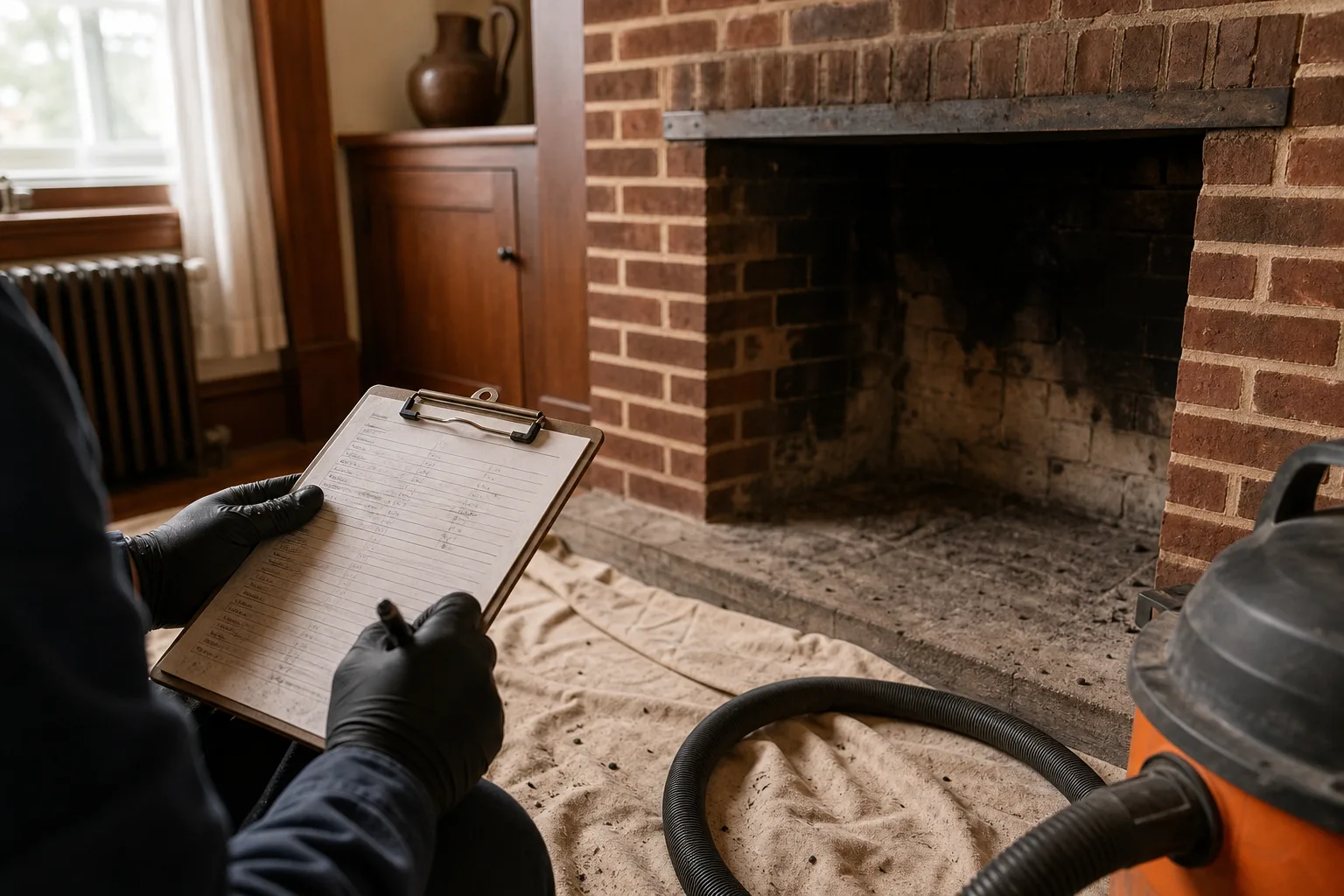
Clear the hearth and give the person room for a drop cloth. Make the basement cleanout reachable, because moving a storage bin now prevents an argument later about what could not be checked.
If you have a wood stove, expect to be asked to let it go cold well in advance. Nobody can work on a hot appliance, and if this is your first season with one, the basics of wood stove maintenance are worth reading first.
Plan to be home. The useful part of this appointment is the conversation at the end, and you cannot have it by text message.
Inside the house
Expect a drop cloth over the hearth. A vacuum, ideally one with a sealed filter, belongs at the firebox, because soot travels and this is somebody's living room.
Then flashlight work: firebrick, joints, damper operation, up into the smoke chamber. If a sweep is part of the same appointment, brushing tends to happen around this point, and the two can be booked together on one visit.
On the roof, and why Level 1 is not
Myth vs. fact: Almost everyone assumes the roof is the inspection. Under the standard, rooftop access is not within the scope of a Level 1. A Level 1 can be completed without a ladder ever coming off the truck, and that is not a shortcut, it is the definition. If you want the crown, the cap and the flashing examined from above, say so when you book, and confirm that the scope you are quoted covers work from the roof.
When somebody does go up, they are looking at the crown for cracks and missing chunks, the cap and its mesh, the top courses of brick, whether the flue tile is sound where it protrudes, and the state of the flashing at the roof line.
On shoreline houses, the metal deserves a harder look than the brick does.
The camera scan
This is the part buyers and sellers should insist on, because it is the difference between an opinion and evidence.
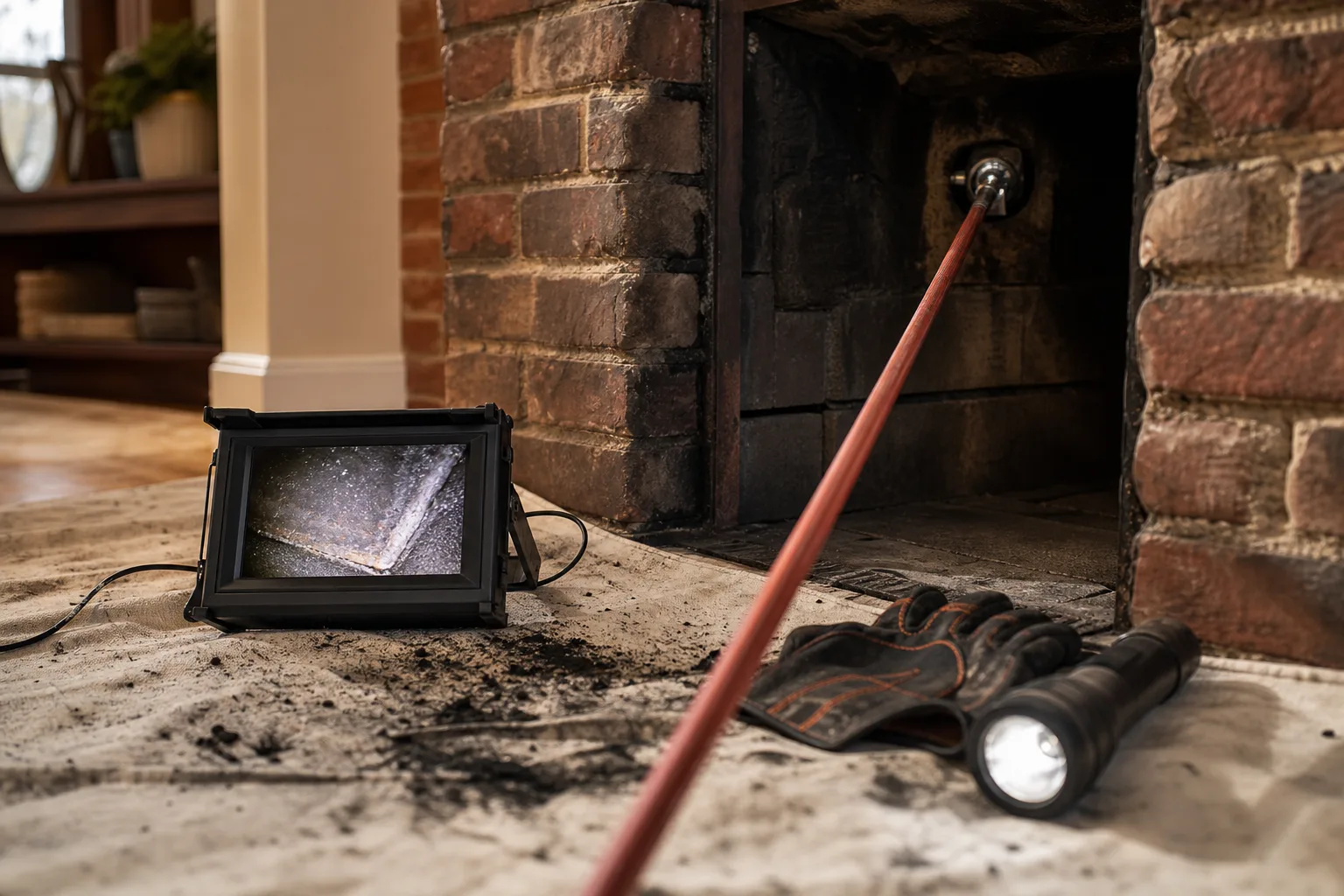
A small camera on a long fiberglass rod goes down the flue from the top or up from the firebox. On a screen you see the inside of your own chimney: tile joints, cracks, creosote buildup, water staining, places where mortar has gone.
Watch the screen with them and ask what you are looking at. Somebody confident in a finding will slow down and show you.
How to Read the Inspection Report You Get
This is the section nobody else on this topic writes, and it is where the chimney inspection CT homeowners paid for either becomes useful or becomes paper in a drawer.
What a real report contains
At minimum: the level performed, the date, which appliances and flues were covered, the condition found at each part of the system, photographs or video stills of anything called a defect, and a plain statement about whether the system is safe to use as it stands.
That last line matters more than everything above it. It should be unambiguous, in ordinary English, and easy to find.
If what you receive is a one line invoice reading "inspection performed, repairs recommended," you have nothing. You cannot act on it, hand it to a buyer, or get a meaningful second opinion from it.
Urgent findings versus findings that are a plan
Not everything in a report is an emergency, and a good inspector sorts them for you without being asked.
Urgent means do not use the system until this is addressed. A breached flue, a cracked liner venting into a wall cavity, a blocked passage, evidence of a chimney fire that already happened.
The second category is maintenance with a horizon. Eroded mortar joints, a crown that wants sealing, a missing cap, tired flashing. Real work with real consequences if it is ignored for years, and not a reason to sign anything tonight.
Pro tip: Here is the question I promised, and notice that it is not about chimneys. Ask: "Can you show me the photo or video of my flue, and tell me where on my house it was taken?" It takes ten seconds and collapses an entire category of problem. Connecticut's Department of Consumer Protection tells homeowners outright to verify that photographic evidence actually shows their own home. An honest inspector answers happily, because they took the picture.
What to do when a finding does not sit right
Get a second opinion. That is not me being cynical about a trade I like, it is the state's own instruction: Connecticut's consumer protection agency tells homeowners to demand a second opinion when a claim about liner damage seems questionable.
Nothing about a chimney requires a same day decision. If a system is genuinely unsafe, the correct instruction is "stop using it," which costs you nothing and buys you time.
And if you are being pressured to sign now, the pressure itself is information.
Connecticut Conditions That Change What an Inspection Finds
Every page competing for this search lists towns. None names a single Connecticut condition, which is odd, because the housing stock here is what makes a chimney inspection CT properties need different from a generic one.
Old stacks, clay tile, and unlined flues
Many Connecticut chimneys were built long before anyone thought about a stainless liner. Center chimney colonials, Capes, Victorians, brick and brownstone stacks that have stood through a century of New England winters.
Clay flue tile has been the standard liner for generations and it is decent material, but it is brittle. Heat cycling cracks it, a chimney fire can shatter it, and settlement opens the joints between sections.
The oldest stacks may have no liner at all, just brick and mortar between the flue and the framing of your house. That is not a scare tactic, it is a construction era, and it is what the camera exists to settle. If the scan finds a failed liner, chimney flue liner installation becomes its own decision with its own questions.
Water, freeze-thaw, and shoreline air
Connecticut runs the full freeze and thaw cycle, over and over, every winter. Water finds a cracked crown or an open mortar joint in November and expands inside it in January.
That mechanism does slow damage that no fire ever causes. Spalled brick faces, recessed sandy joints, chalky white efflorescence where water has moved through the masonry and carried salts back out. That staining is a symptom before it is an appearance problem, which is why masonry cleaning should follow the water fix rather than replace it.
Down near the Sound, in the shoreline towns of Fairfield and New Haven counties, add salt air. Metal takes it worse than brick, so caps, flashing and liner tops age faster there.
From the field: On older Connecticut stacks, the crown and the top few courses of brick are where the story shows itself first. They take the most weather and get the least attention, because nobody can see them from the driveway. When a homeowner tells me a chimney "looks fine," what I want to know is whether anyone has actually looked at the top of it.
Fuel conversions and new wood stoves
Connecticut changes heating systems. Oil to gas, one gas appliance swapped for another, a wood stove insert dropped into a fireplace that was never sized for it.
Every one of those is a system change, and a system change puts you at Level 2 under NFPA 211. Not because somebody wants to sell you more, but because a flue that suited the old appliance may be wrong for the new one.
Gas appliances vent cooler and wetter than wood does, and an oversized masonry flue can condense as a result. If the finding sits in the appliance rather than the masonry, the factors behind gas fireplace repair cost are a different set of questions from the ones on this page.
How to Hire for a Chimney Inspection CT Job Without Getting Sold
Chimney Inspection CT Licensing: Sweeping Is Not Repair
This is the detail that reframes the whole transaction, and I have not seen a competitor mention it once.
In Connecticut, chimney sweeping is not considered home improvement, and no state license is required to sweep a chimney. Repair is a different matter: anyone performing it must be registered as a home improvement contractor with the Connecticut Department of Consumer Protection.
The state names the covered work explicitly, and that list includes installation or repair of a chimney cap, liner replacement or repair, and mortar replacement.
Read that twice. The person who inspects your chimney and tells you the liner is finished may not be registered to replace it.
Good to know: A registered contractor carries a Connecticut issued home improvement registration certificate, and you are entitled to ask to see it. You can check a registration yourself by calling the state at 860-713-6110 or using the Department of Consumer Protection's online license verification. Connecticut's home improvement law also requires a notice of cancellation in the contract, giving you three days to change your mind.
Credentials worth asking about
CSIA certification, from the Chimney Safety Institute of America, is a voluntary professional credential. Membership in the National Chimney Sweep Guild is a trade association, not a license.
Both mean something. Neither substitutes for Connecticut registration, and a company that blurs the two is being loose with you on the first phone call.
The hiring checklist
Hiring for a chimney inspection CT job comes down to one phone call and seven questions.
- Which level are you performing, and why that one for my situation?
- Does it include a video scan of the flue?
- Will I receive a written report with photographs?
- Are you registered as a home improvement contractor in Connecticut, and can I see the certificate?
- If you find repairs, who does that work, and is that company registered?
- Will the estimate be in writing before any work starts?
- Can you show me the image of my own flue and tell me where on my house it was taken?
Anybody who gets irritated by that list has told you something useful for free.
What the state itself warns you about
Connecticut's consumer protection agency publishes guidance on this trade, and it is blunt. Closely paraphrased:
- Never hire a sweep who shows up uninvited.
- Be wary of unsolicited telemarketing offers at extremely low prices.
- Verify that photographic "evidence" of damage actually shows your home.
- Demand a second opinion when a claim about liner damage seems questionable.
- Recognize scare tactics, including language about carbon monoxide poisoning or house fire.
- Do not make a decision under pressure.
None of that means hazards are imaginary. Some chimneys genuinely should not be used, and a good inspector says so plainly. The difference is that an honest one shows you the evidence and then waits while you think.
How VIO Helps With a Chimney Inspection in CT
VIO is a referral service, and what we do about a chimney inspection CT request is narrow and specific. We match.
Nobody on our staff climbs your roof. You tell us your town in Connecticut and what is going on, whether that is a first fire coming up or a closing date on the calendar, and we connect you with an independent local company that works your area.
We ask every company in the network to put its estimate in writing before any work starts, and you should insist on exactly that. It is the standard we hold the network to, and it is your footing in the conversation.
We also keep doing what this page has been doing, which is pointing you at the state's own tools. Ask the company for its Connecticut home improvement registration certificate, and verify it yourself at 860-713-6110. That check is the strongest protection a Connecticut homeowner has in this trade.
Before the First Fire
The reason to book a chimney inspection CT homeowners can act on is not that something is definitely wrong up there. It is that you are about to light a fire inside a system you have not looked into since spring, and there is an ordinary way to know.
Find your row in the table. Ask the seven questions. Get the report, read the line about whether the system is safe to use, then keep it, because the next owner of your house will want it and the standard will call for a Level 2 anyway.
That is the whole method behind a chimney inspection CT properties deserve, and it works the same in Hartford, in Stamford, in Norwich and on the roads between.
Book your chimney inspection in CT before the first fire. One request, an independent local company in your part of the state, and a written scope you can actually read. Ask to see the Connecticut home improvement registration certificate before you agree to any repair work, and remember that you can verify it yourself with the state at 860-713-6110. Call (513) 655-6702 to get matched.
Symptom checker
What is your chimney doing?
Tap the closest match for an honest first answer.